-
-
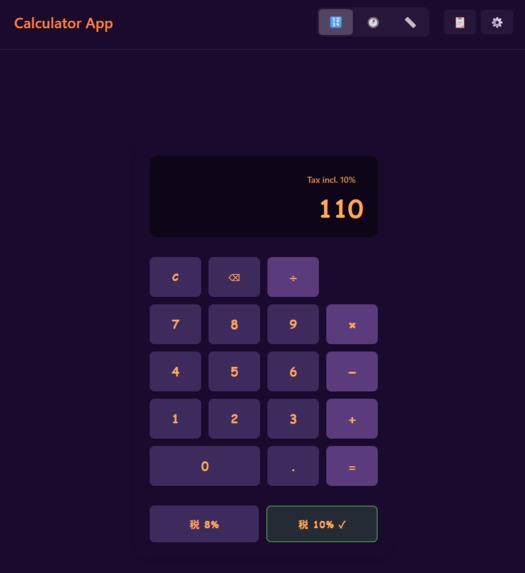
General Calculator
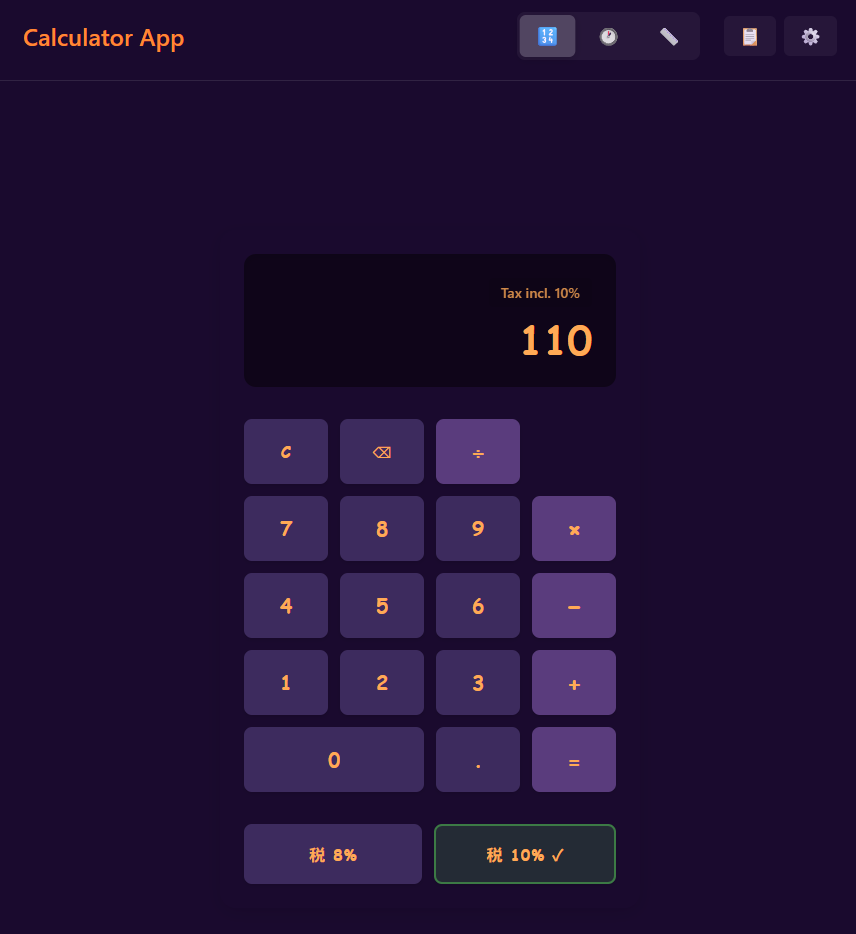
Inspiration
I used to work as a software engineer for a Japanese company that manufactured calculators.
When I thought about creating an application using Kiro, I suddenly thought of a calculator. It was easy to imagine the specific specifications, and I wanted to add some functions if I dared to use a calculator without hardware.
What it does
- General calculator
- Multiple tax rates can now be calculated with a single button
- Calculator for date and time
- Calculator for length and weight unit conversions
- Configuration changes
- Tax rate calculations can be configured
- Can change the display theme(Normal, Digital, Haloween)
How we built it
Since this was my first time developing an application with Kiro, I dared to use both Specs and Vibe coding to look for best practices.
In this case, a firm specification was not yet ready. We decided to take a strategy of modifying the specifications based on what was being produced, fine-tuning them with Specs, and if they were not good enough to change the specifications, we would complete the application with Vibe coding.
In other words, we decided to develop Kiro through trial and error.
Challenges we ran into
- The calculation results showing floating-point numbers, which occur in normal programming, are displayed.
- Although I am not very good at English, I was asked to develop the product using English.
Accomplishments that we're proud of
- I added a constraint to the steering mechanism that, instead of using floating-point numbers, calculators have a display digit limit, and this was used to display the calculation results within the specified number of digits. I believe achieving this without using Kiro would have required a significant amount of development time.
- I used the Steering mechanism to define constraints for both the application and Kiro's functions: specifically, the application display is in English, and the chat responses are in Japanese. By doing this, I was able to proceed with development quickly, even though I am not proficient in English.
What we learned
- I thought it was a best practice to develop with Specs after completely finalizing the specifications.
- Vibe was basically useful to speed up development even when the specifications were vague
- In addition, they can help with source code generation as well as steering and MCP configuration if you ask them
- If you can't write the core steering for your application requirements, you can go ahead and develop with Specs first and then let Kiro do the generation for you
- If your development is multilingual, you can set up steering to switch languages between chat answers and application display
What's next for Calculator App
This is an application that adds functions to a calculator, and the specs are also structured according to function, so it is possible to add functions using the same structure. I can also increase the number of design themes in the same way.
I thought it would be interesting to create a training mode or a game-like screen so that the calculator could be executed quickly. I had this idea after reading other people's blogs.

Log in or sign up for Devpost to join the conversation.