-
-

Cairn app icon — original 1024 × 1024, uncropped.
-
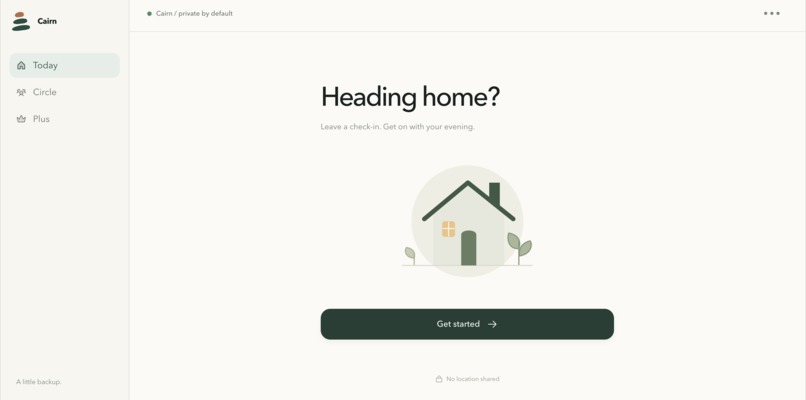
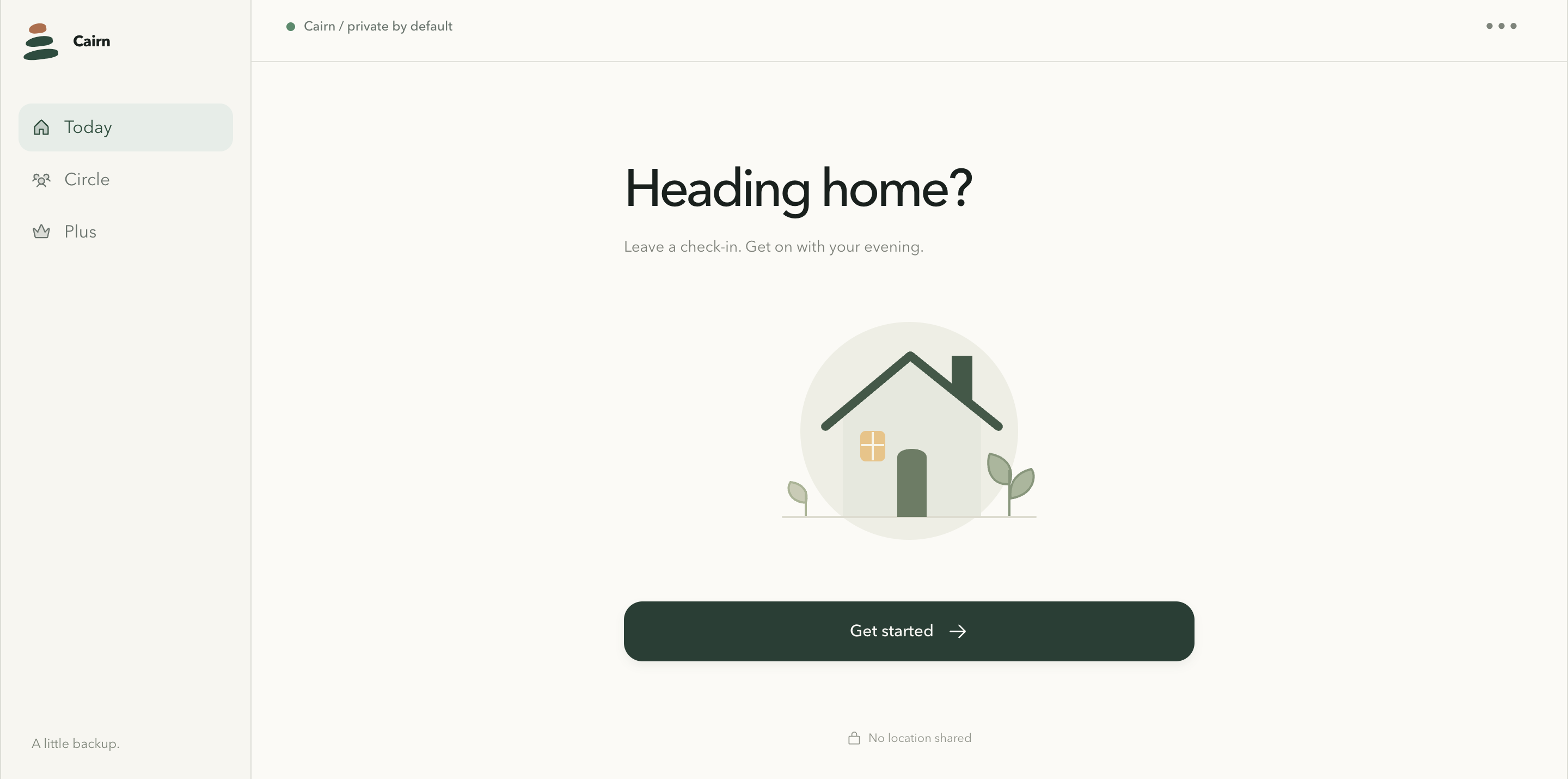
Cairn’s private check-in home screen

Inspiration
“I'll text you when I get home” is a small promise with an unclear failure path. If the message never arrives, who notices, who tries calling, and who knows whether someone else is already responding? A live map does not answer those questions.
Cairn explores a different starting point: agree the check-in, ask people to accept the response role, and make the handoff explicit. An alert reaching an inbox and a person taking responsibility must never look like the same event.
What it does
Cairn is a mobile engineering prototype for private check-ins and response coordination. Its working local rehearsal uses fictional people and a durable database. A user can register a timed check-in, finish it quietly, cancel it, or let its deadline and grace period expire. The service records the resulting incident and local inbox receipt. A separate responder identity can acknowledge it, and the sender can close it.
The interface distinguishes service acceptance, local receipt, human acknowledgement and closure. Closing an incident does not imply safe arrival or invent an acknowledgement. Responders must consent, can revoke consent, and lose access after closure. Missing location never blocks a deliberate SOS; a stale position or a gap in wearable samples never automatically creates one.
The free core includes the response drill and a downloadable practice receipt without coordinates or bearer tokens. Cairn Plus adds editable coordination templates with first-response and backup steps, which the user can copy and share themselves. RevenueCat's native SDK loads the current offering and checks the Plus entitlement after purchase or restore.
How we built it
React and TypeScript power a Capacitor app for Android and iOS. The optional local service uses Node.js and SQLite with server-owned deadlines, a durable outbox, idempotent mutations, separate sender and responder credentials, and a recorded audit trail. The client reconciles uncertain requests instead of silently declaring success, and hides responder evidence when refresh fails.
RevenueCat separates the commercial layer from incident handling. The coordination kit reads the verified purchase result; billing cannot veto, delay or initiate the core SOS drill. The contest configuration uses RevenueCat Test Store rather than charging users.
Challenges
The hardest part was giving uncertainty an honest representation. A notification receipt is not a human response. A closed incident is not proof that someone is safe. A disconnected screen must not keep presenting stale location as current. These distinctions shaped both the service and the interface.
Another challenge was making the commercial feature concrete without putting basic response behavior behind a subscription. The coordination kit gives Plus a small, working function while leaving the complete rehearsal available for free.
Accomplishments
A working consent-to-closure local response path; deadline escalation that survives service restarts; protected responder access; safe retries; a clear practice interface; retained acknowledgement evidence after closure; and an entitlement-gated coordination kit. Automated checks cover the safety state machine, UI behavior, API authorization, recovery, billing integration logic and build integrity.
What we learned
Response coordination is as much about the meaning of a state as the delivery mechanism. “Delivered,” “someone is checking,” and “closed” answer different questions. Keeping those meanings precise makes the product easier to test and easier to trust.
What's next
This entry is a fictional-data engineering prototype, not an operational emergency service. A responsible field version still needs production authentication, real notification-provider integration, encrypted storage, physical-device/background testing and a small informed pilot. Customer interviews must test whether the coordination workflow is useful enough to become a recurring habit.
Built With
- capacitor
- react
- revenuecat
- typescript
