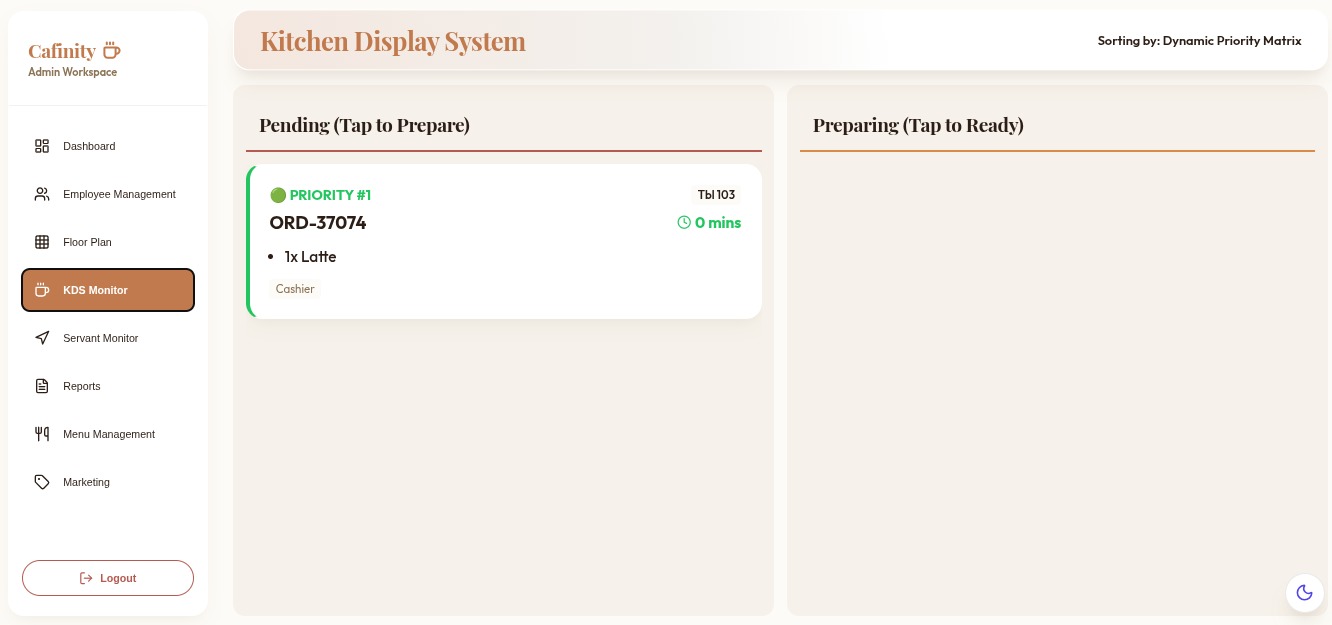
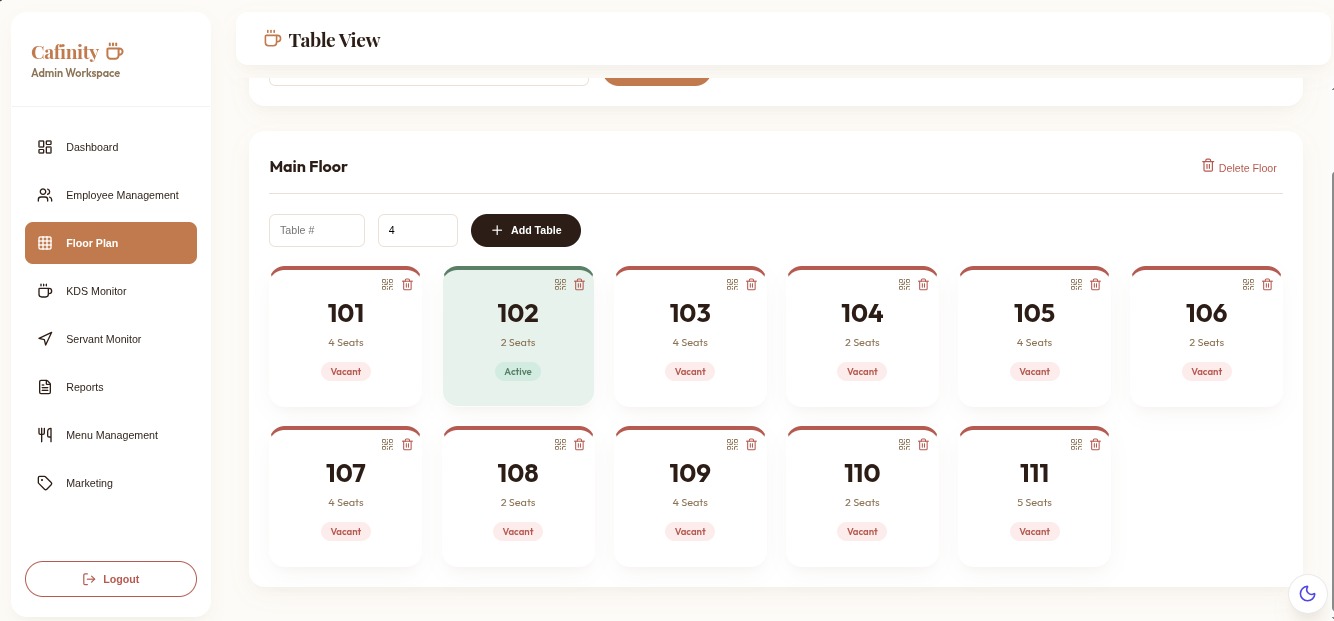
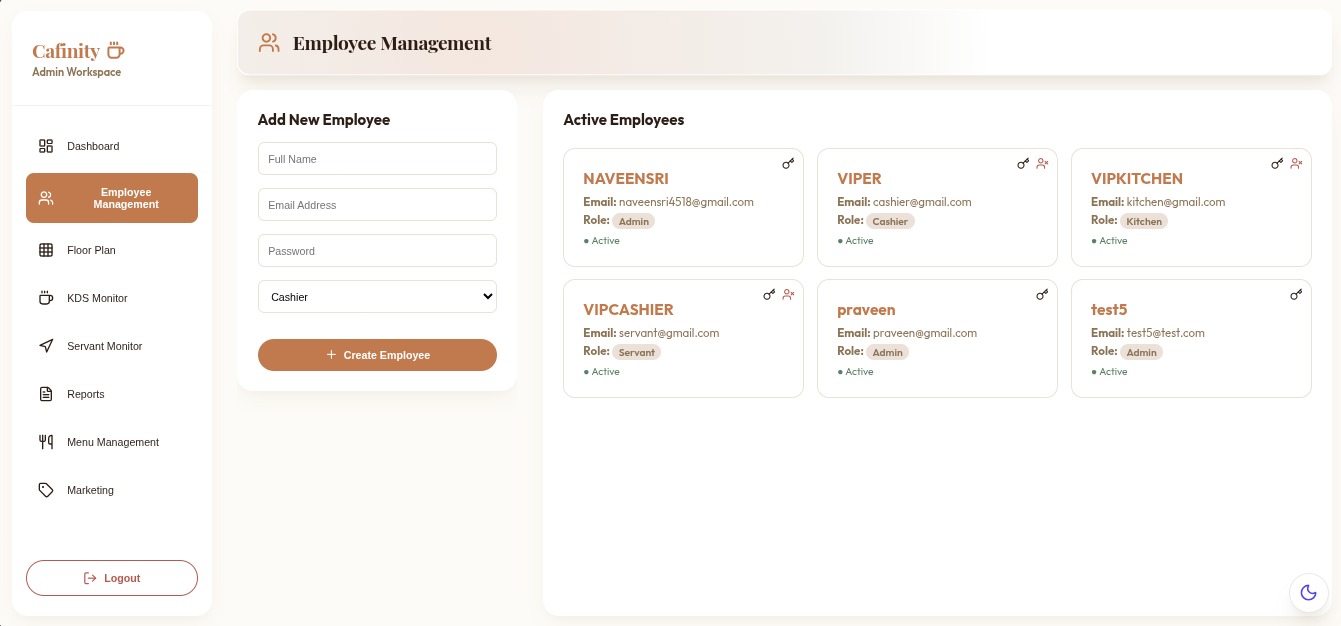
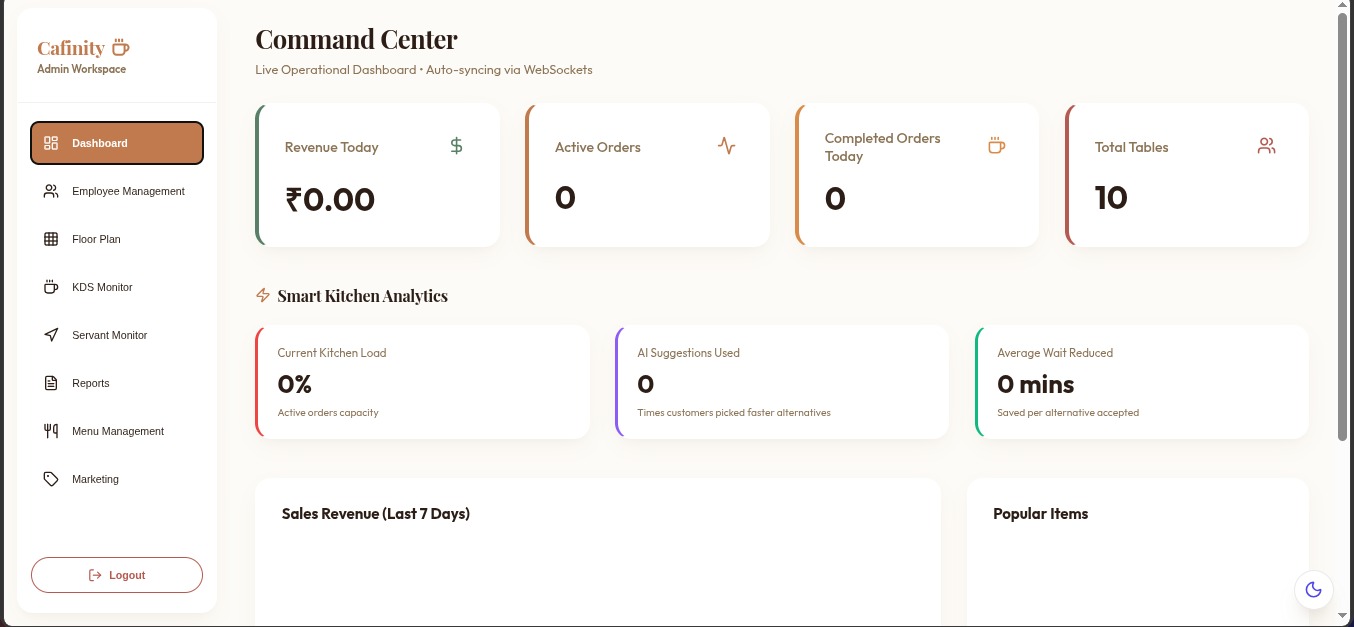
Inspiration The hospitality industry is incredibly fast-paced, and communication gaps between the floor staff, the kitchen, and the customers often lead to delayed orders, incorrect billing, and frustrated diners. We wanted to build a modern, cohesive ecosystem that bridges these gaps. We envisioned Cafinity—an all-in-one, real-time cafe management system that empowers customers to order seamlessly from their tables via QR codes, gives kitchen staff an organized display to prepare food efficiently, and equips servers with a unified portal to track deliveries and process payments without missing a beat.
What it does Cafinity is a complete end-to-end POS and restaurant management platform. It features several dedicated portals synced in real-time:
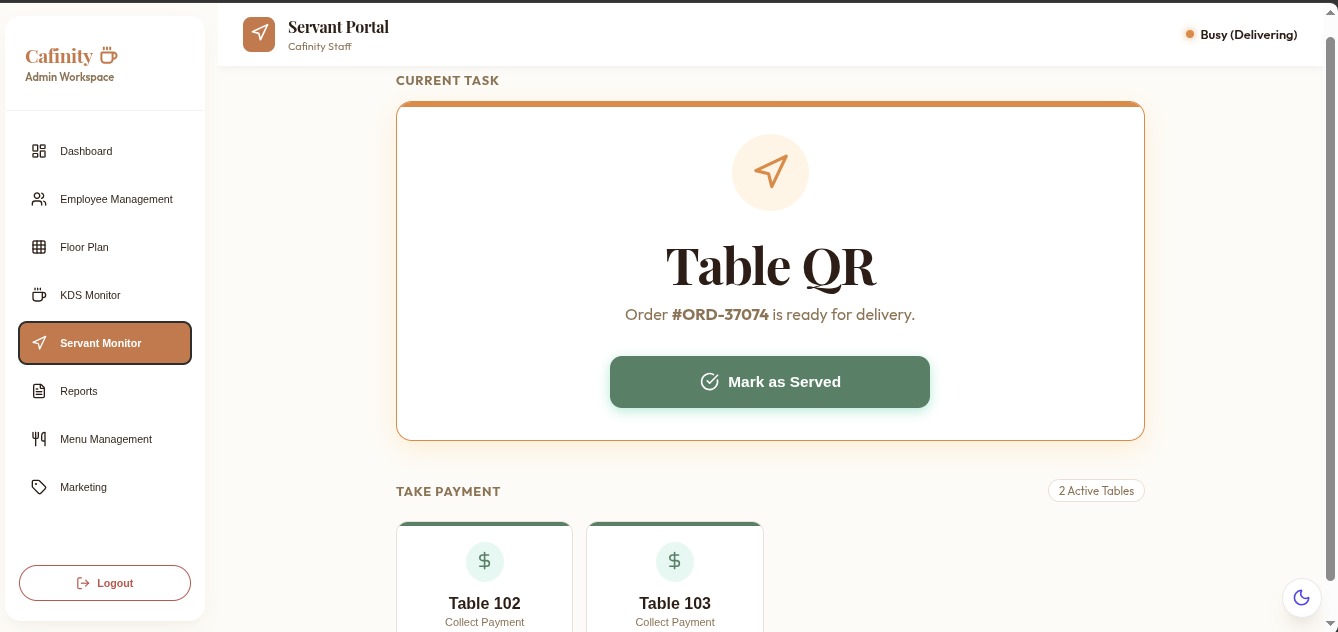
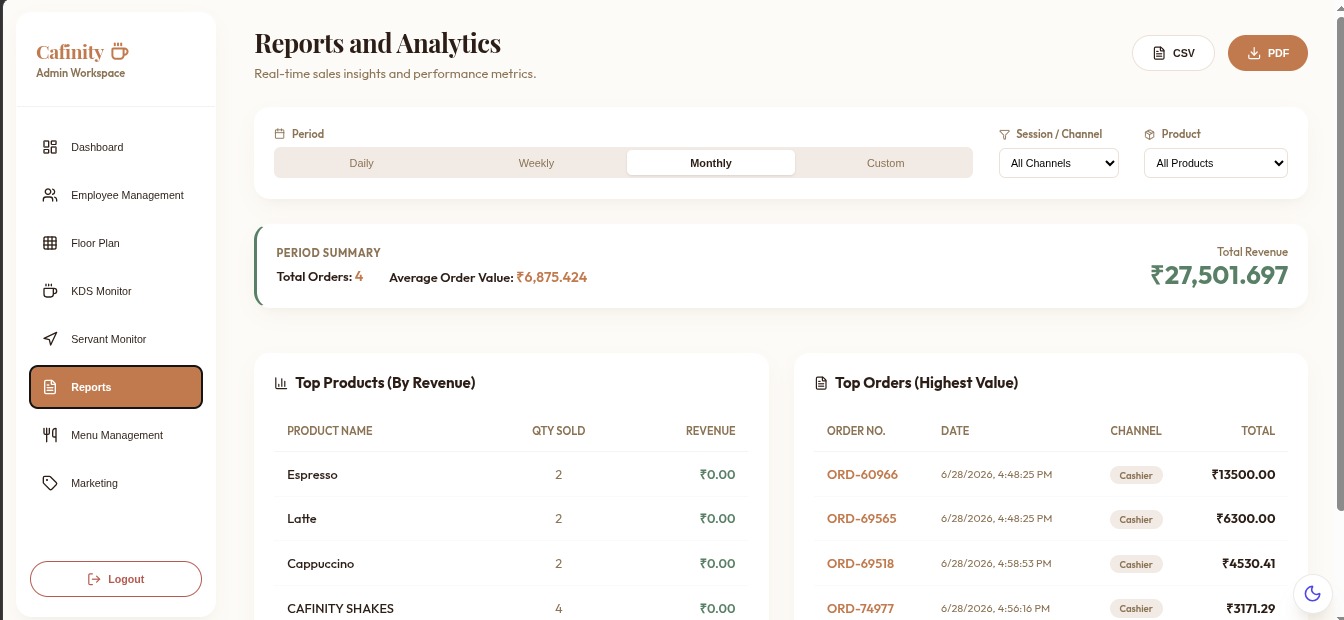
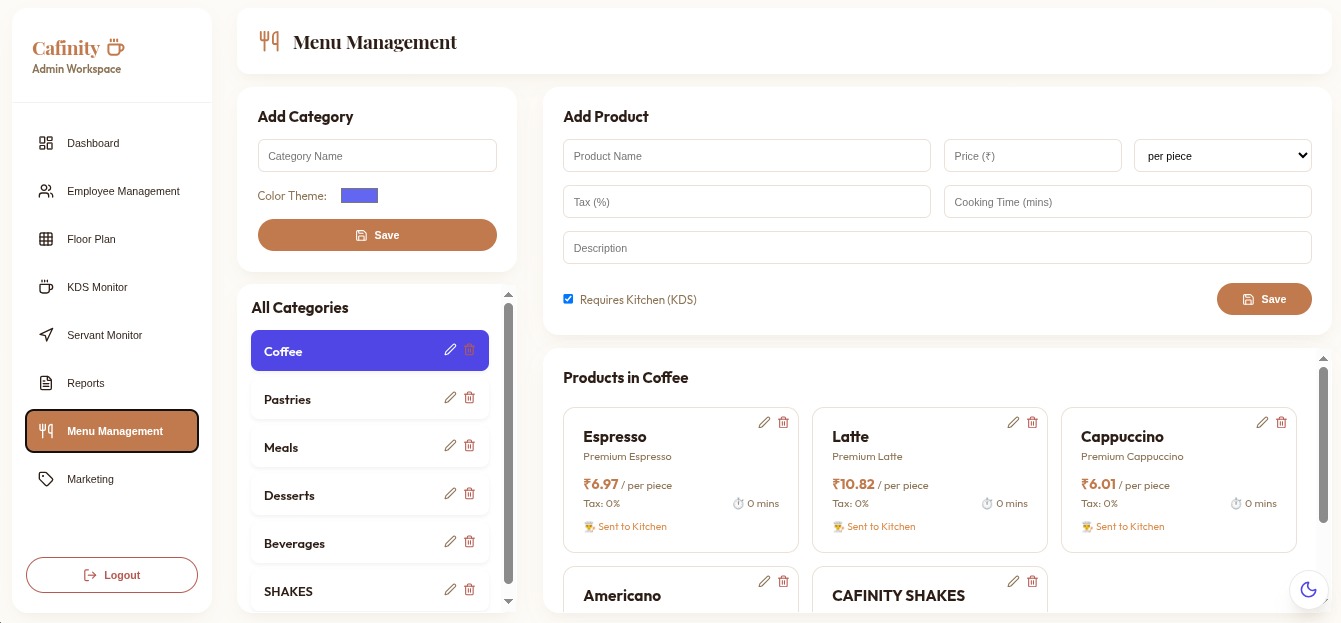
Customer QR Portal: Customers can scan a code at their table, view a beautiful digital menu, and place orders directly to the kitchen. Kitchen Display System (KDS): A dedicated view for chefs to see incoming orders, track preparation times, and mark dishes as "Ready" the moment they are done. Servant Portal: Floor staff receive instant notifications when food is ready. They can easily track active tables, mark food as "Served," and process final payments directly from the portal. Admin & Floor Plan Manager: Managers can customize the restaurant layout, manage menus, apply promotions, and view live analytics of the cafe's performance. How we built it We architected Cafinity with a focus on real-time performance, scalability, and modern UI/UX design:
Frontend: Built with React and Vite, utilizing responsive, modern glassmorphism design principles for a premium feel across mobile and desktop devices. Backend: Powered by a robust Node.js and Express.js REST API. Real-time Communication: We implemented Socket.io to ensure instant, bidirectional data flow between the customer's phone, the kitchen display, and the servant portal without requiring page reloads. Database: We used PostgreSQL (hosted on AWS Aurora) to ensure ACID compliance, relational integrity, and high availability for critical order and payment data. Cloud Infrastructure (AWS & Terraform): The entire platform is deployed on AWS using Terraform as Infrastructure as Code. The backend runs securely on AWS ECS (Fargate) behind an Application Load Balancer, with secrets securely managed via AWS Secrets Manager. Challenges we ran into One of the most complex challenges we faced was maintaining absolute data consistency across multiple real-time WebSocket clients and the database. For example, ensuring that a "Table" object reference didn't inadvertently overwrite the unique table string ID in our database during status updates (like transitioning an order from "Ready" to "Served"). Additionally, orchestrating the cloud infrastructure—specifically configuring AWS Secrets Manager to seamlessly inject environment variables into our isolated ECS Fargate containers during deployment—required extensive debugging and careful IAM role management.
Accomplishments that we're proud of We are incredibly proud of achieving true real-time synchronization. Watching an order placed on a smartphone instantly pop up on the Kitchen Display, and seeing the Servant Portal automatically update its billing state when the food is marked as "Served" is a magical experience. Furthermore, successfully containerizing the application and deploying it via a fully automated AWS ECS pipeline using Terraform ensures that Cafinity isn't just a prototype—it's a production-ready application capable of scaling to handle hundreds of concurrent diners.
What we learned Building Cafinity taught us the immense value of strictly separating concerns in our architecture. We learned advanced state management in React, the intricacies of managing persistent WebSocket connections in Node.js, and the vital importance of Infrastructure as Code (Terraform) to make cloud deployments reproducible and less prone to manual errors. We also gained deep insights into debugging database reference bugs in complex ORM/query setups.
What's next for Cafinity We plan to expand Cafinity by integrating AI-driven insights—such as predicting peak hours and dynamically suggesting menu promotions based on real-time inventory and weather data. We also plan to integrate a native payment gateway (like Stripe) directly into the Customer QR Portal to allow seamless self-checkout, further reducing the workload on floor staff
Built With
- amazon-aurora
- amazon-cloudwatch
- amazon-ec2
- amazon-ecr
- amazon-web-services
- aws-alb
- aws-application-load-balancer
- aws-cloudwatch
- aws-ecr
- aws-ecs
- aws-ecs-(fargate)
- aws-fargate
- aws-rds
- aws-rds-(aurora)
- aws-secrets-manager
- axios
- bcryptjs
- css3
- docker
- es6
- eslint
- express.js
- git
- github
- html5
- javascript
- jsonwebtoken
- jspdf
- jwt-authentication
- lucide-react
- mongodb-atlas
- mongoose
- node.js
- nodemailer
- nodemon
- pg
- postgresql
- qrcode.react
- react
- react-router-dom
- react.js
- recharts
- rest-apis
- socket.io
- tailwind-css
- terraform
- vite
- websocket

Log in or sign up for Devpost to join the conversation.