-
-
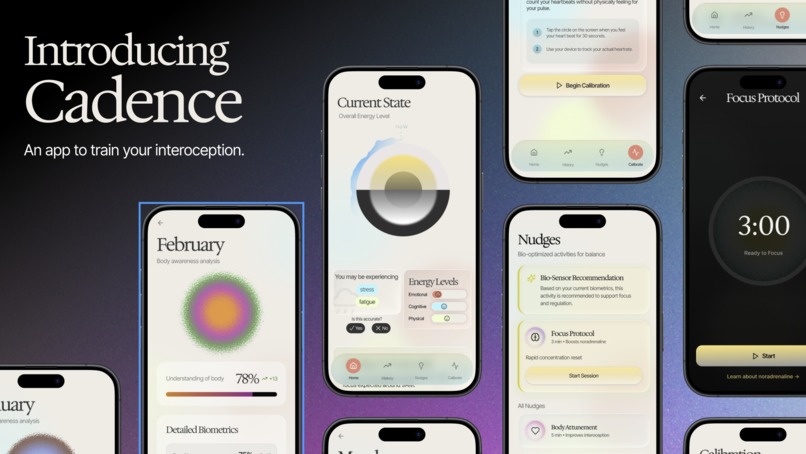
Introducing Cadence
Inspiration
Cadence was inspired by the invisible architecture of how we feel. We kept coming back to a core question: why do we feel the way we do, not emotionally, but chemically? Visual inspiration came from organic forms like moss, biological matter, brain chemical structures, and information design. Systems that are complex but have an underlying logic and beauty. We wanted the app to feel like something that could exist inside the body itself.
What it does
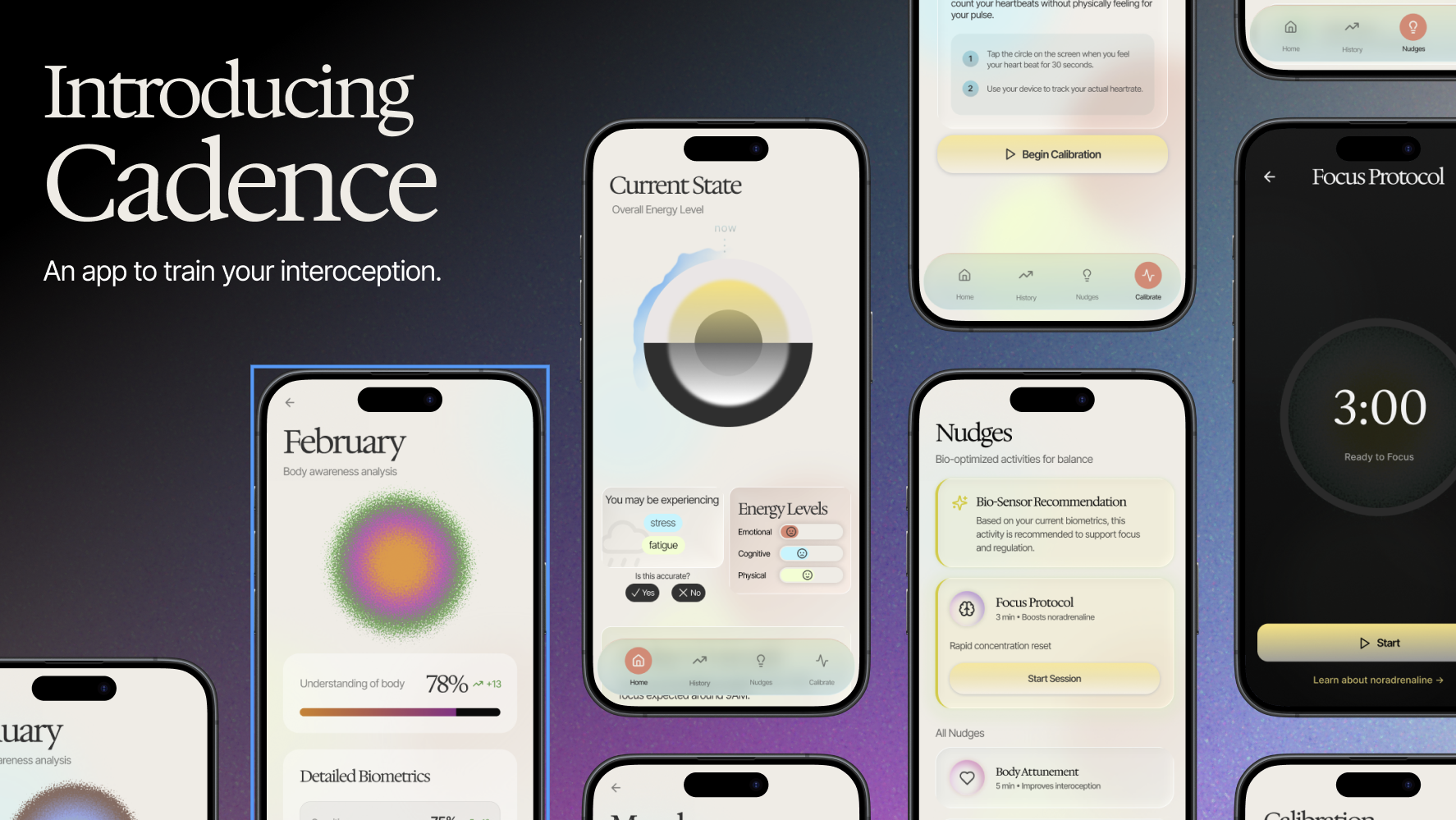
Cadence tracks neurotransmitter data to determine a user's energy levels and generate a personalized chemical forecast, like a weather app for your internal state. It stores data over time so users can view their chemical history and identify patterns. The app also delivers nudges: small, research-backed activity prompts that do two things. First, they help users ground themselves and develop sensitivity to their body's internal signals (interoception). Second, they offer practical interventions for chemical imbalances like low serotonin or cortisol spikes. To establish a baseline, Cadence uses a heartbeat counting calibration test, a validated research method for measuring interoceptive ability, so the app can personalize its sensitivity and recommendations from day one.
How we built it
We started in FigJam for ideation, using it as a shared space to brainstorm, map concepts, and align on direction. From there we moved into Figma to develop low-fidelity wireframes, using Figma Make for AI-assisted generation of some early structural layouts. We collected user research along the way through Google Forms surveys to pressure-test our assumptions. Once we had a shared style guide locked in, we divided the high-fidelity wireframe work and connected everything into a final interactive prototype.
Challenges we ran into
Because we were designing for technology that doesn't exist yet, we had to simultaneously invent the problem space and the solution, without being able to lean on existing conventions or user research. Solidifying our audience and core use case required a lot of iteration and debate. Thinking theoretically about invisible, unfamiliar experiences like neurochemical sensing, while still designing something grounded and useful, pushed us in ways a typical design brief wouldn't.
Accomplishments that we're proud of
We're proud of arriving at a unified design vision. The aesthetic feels cohesive, intentional, and novel. Given how open-ended the prompt was, achieving that kind of consistency as a team is something we're really proud of. The synergy in our collaboration meant we could challenge each other's ideas while still moving forward efficiently.
What we learned
This project taught us a lot, about neuroscience (neurotransmitters, hormones, interoception), about the real effort it takes to carry a product from ideas on sticky notes all the way to a polished prototype, and about how to work as a design team.
What's next for Cadence
Cadence is based in speculative technology, since real-time neurochemical sensing doesn't exist yet, so the product lives at the prototype stage for now. But if we continued, we'd focus on developing the onboarding experience to better acclimate new users to unfamiliar concepts, expanding the library of nudge activities, and developing a wider range of calibration tests beyond the heartbeat counting method to build a stronger picture of each user's interoceptive baseline.
Built With
- figjam
- figma
- make


Log in or sign up for Devpost to join the conversation.