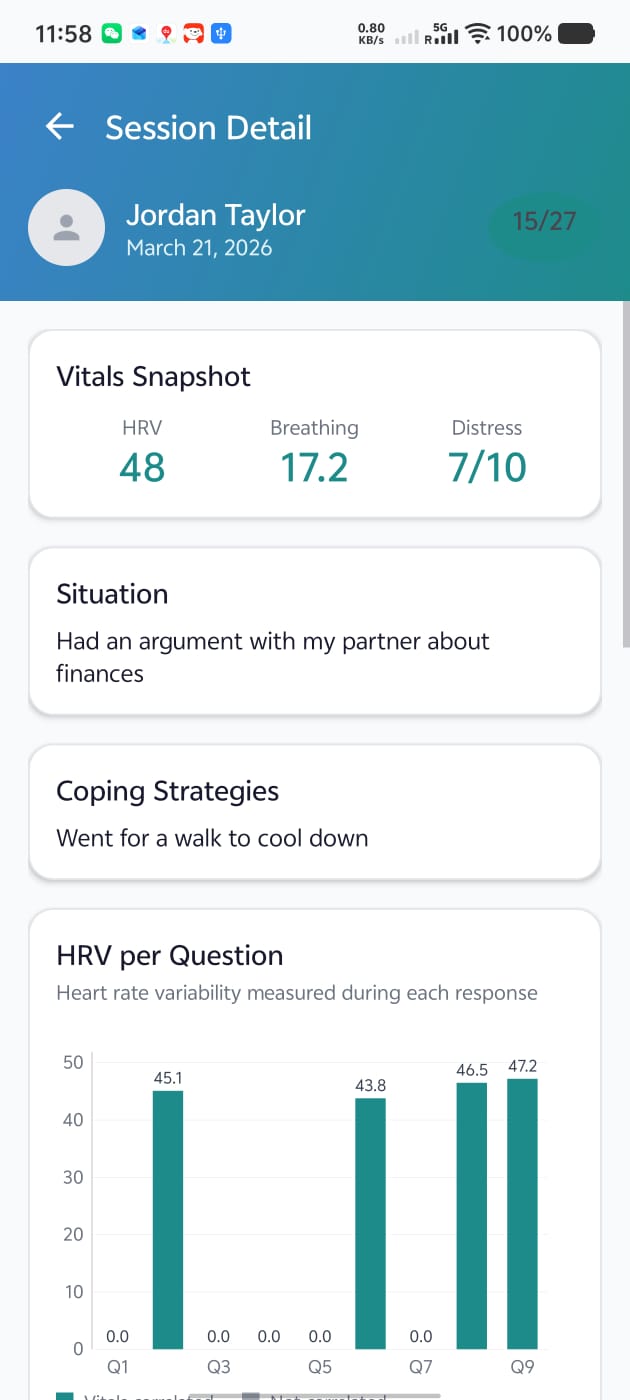
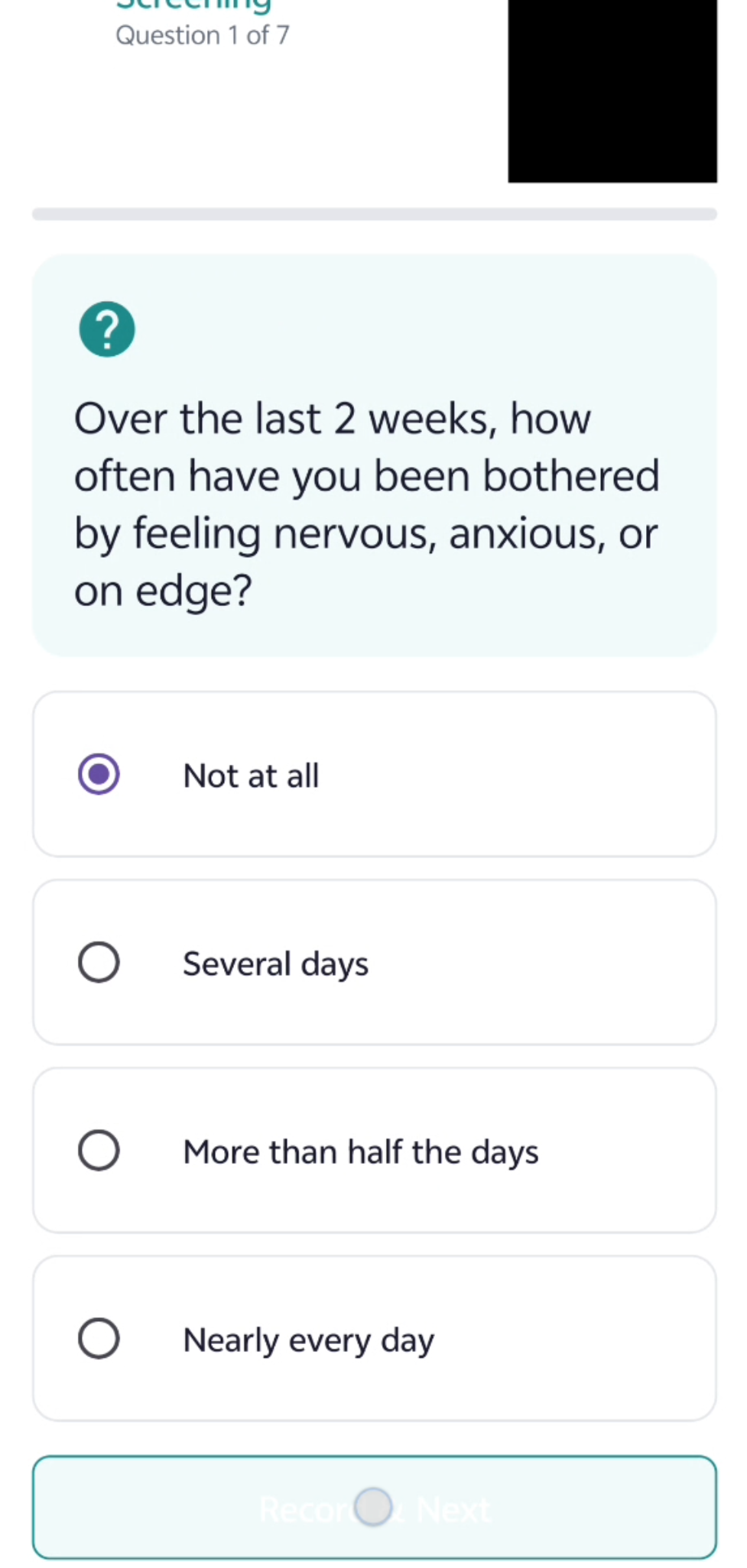
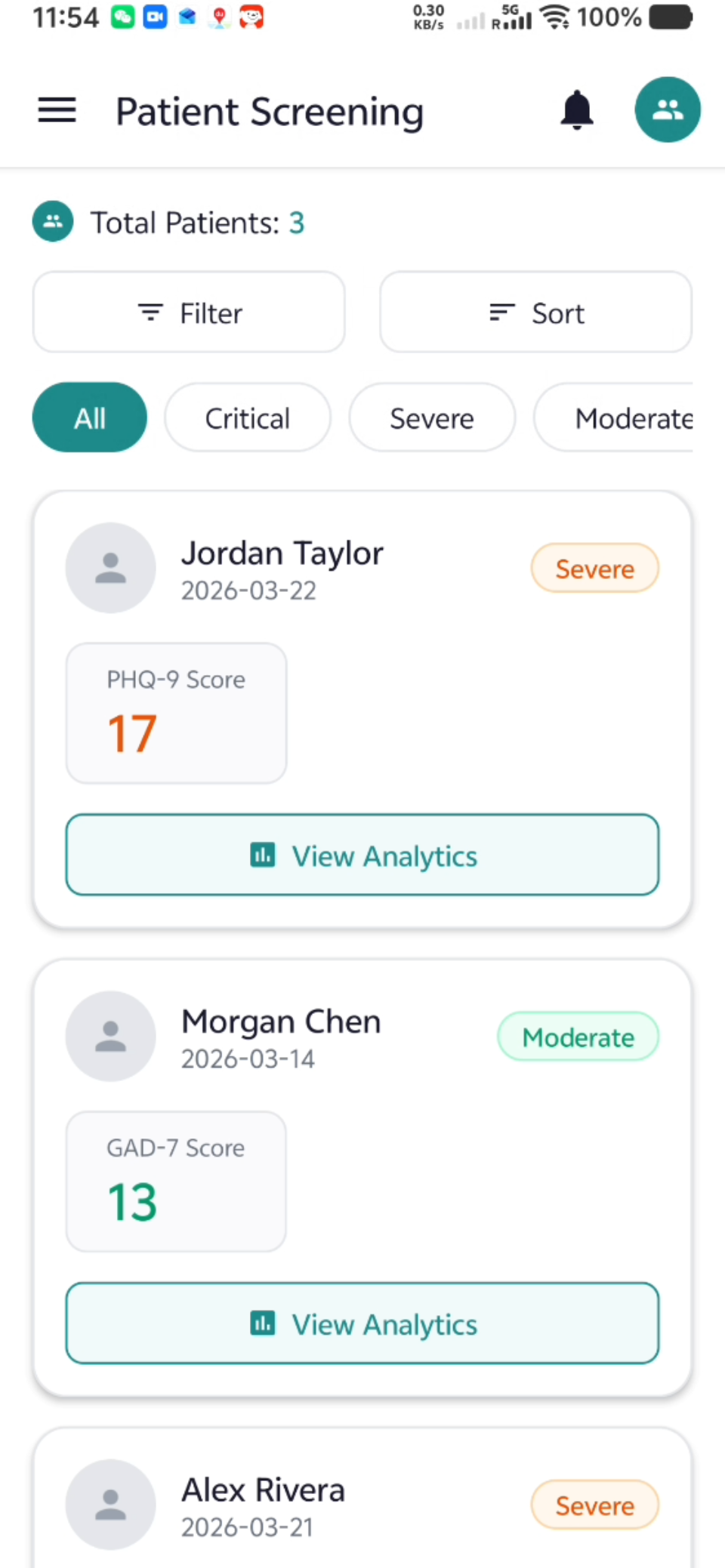
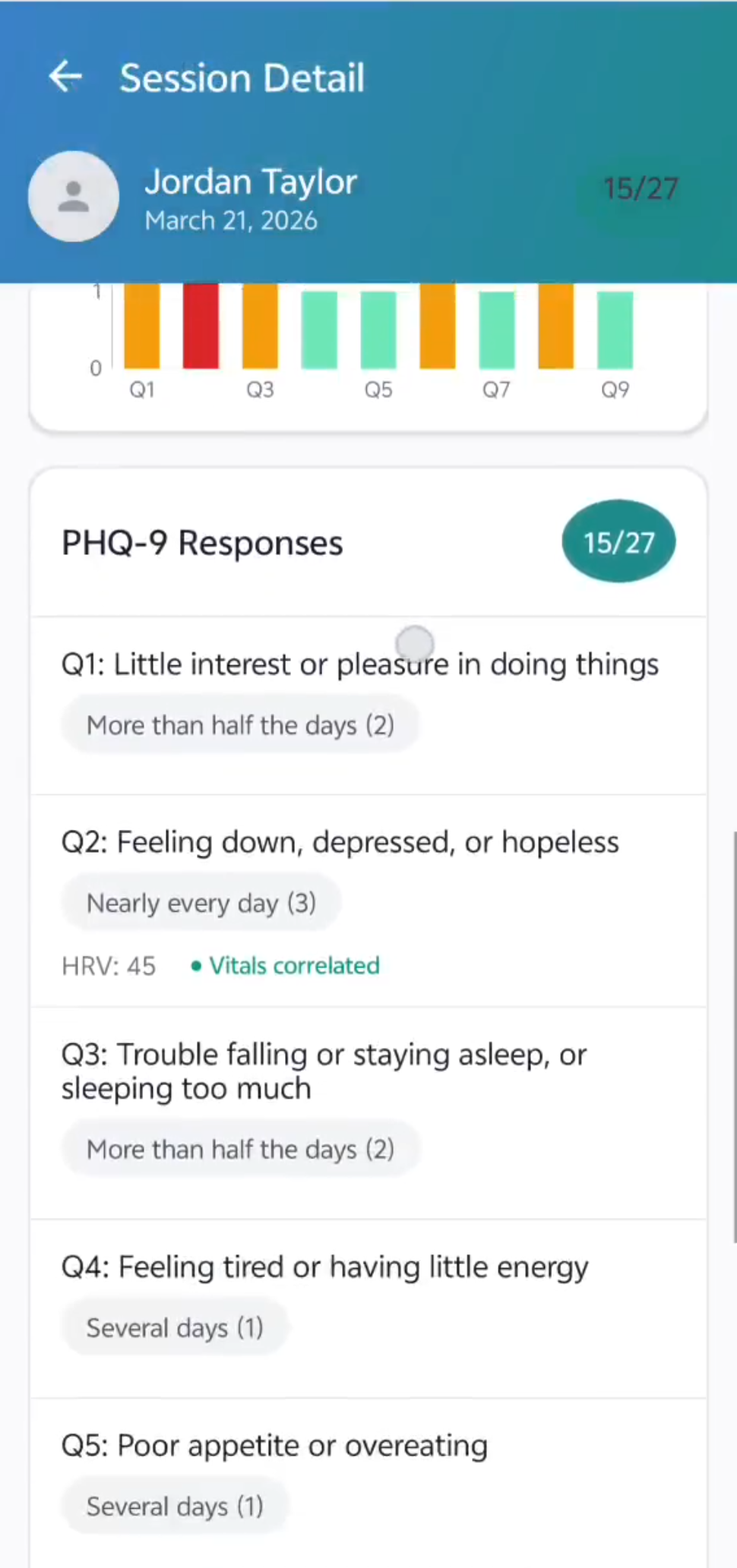
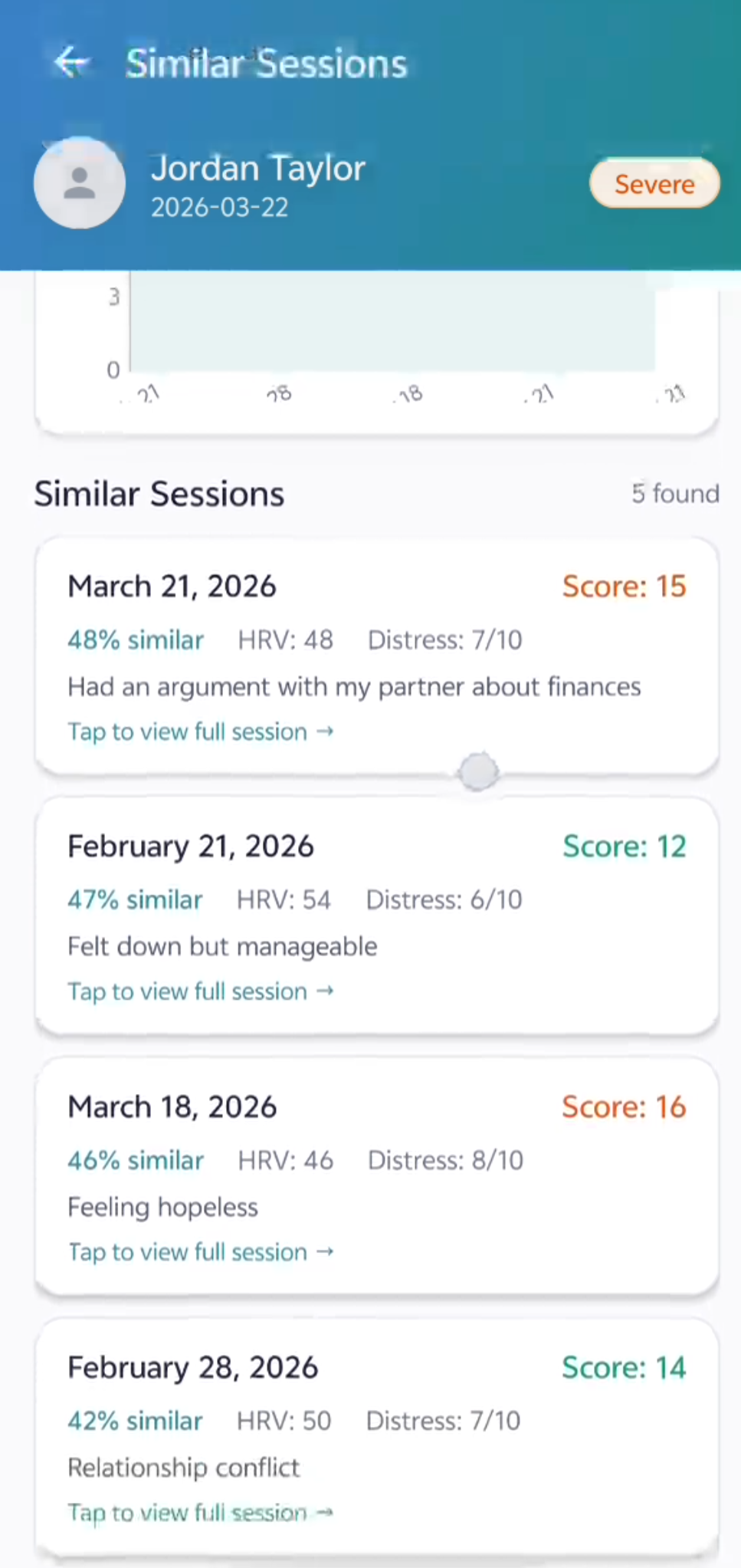
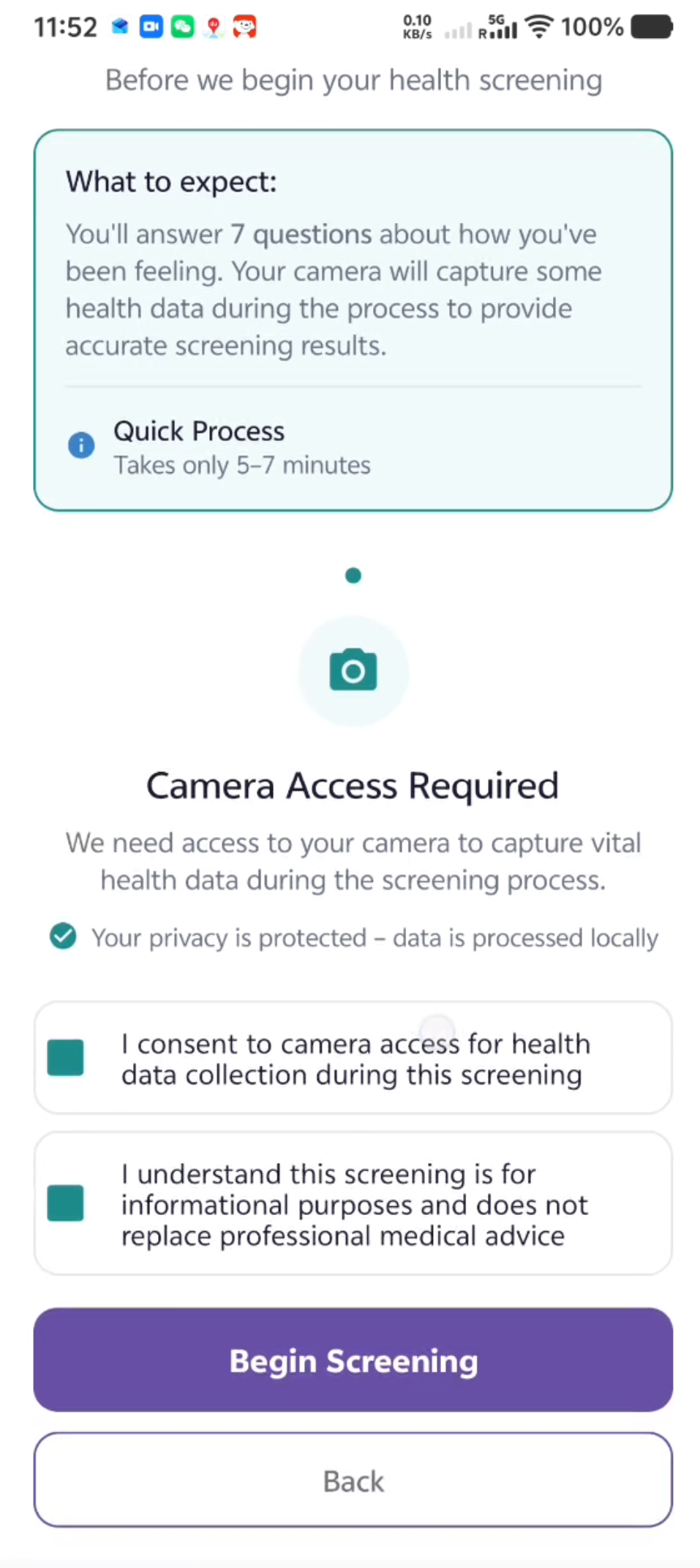
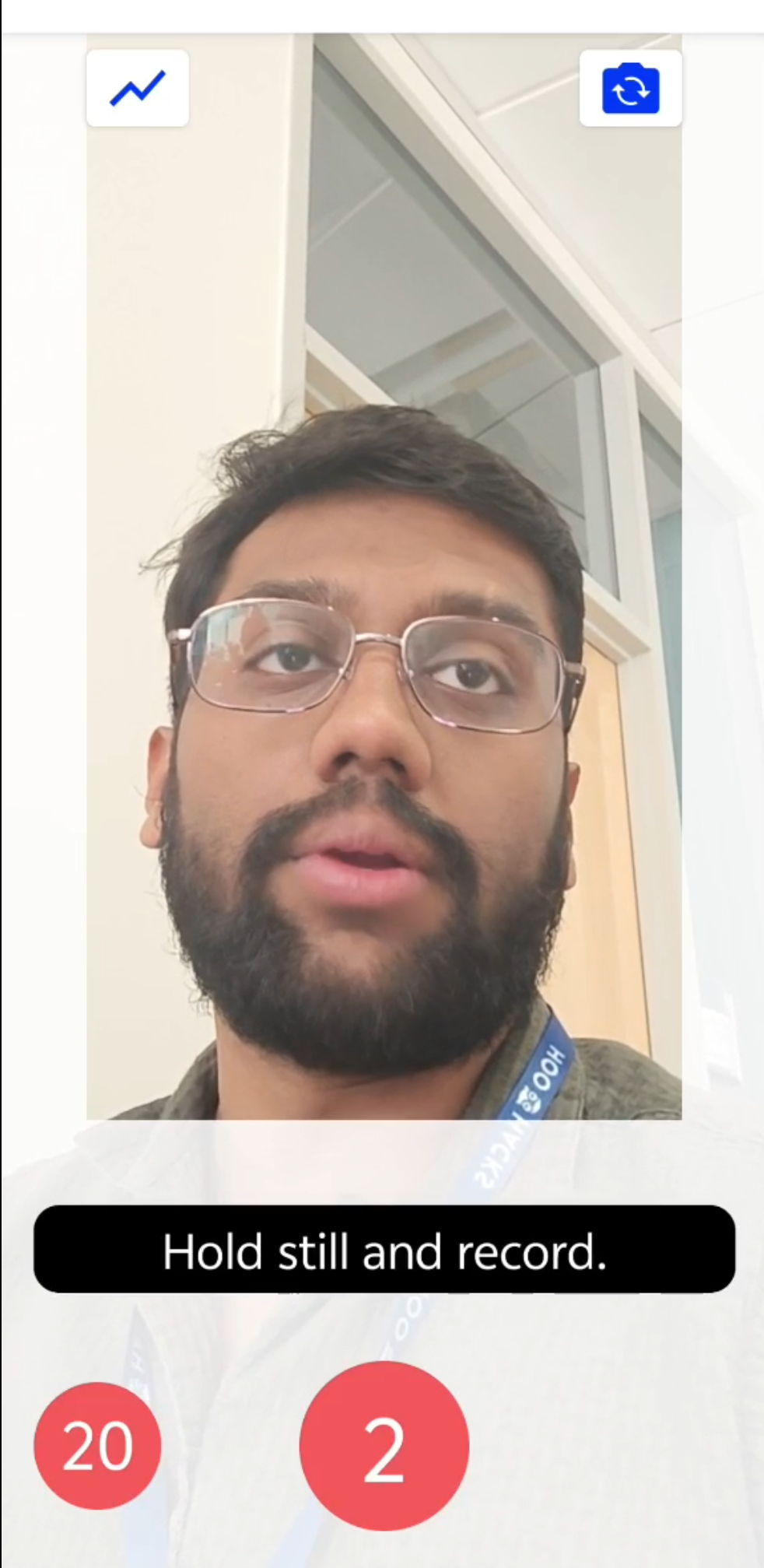
Auris is a monitoring platform for PTSD that bridges the gap between therapy sessions. By pairing clinical scales with contactless vitals tracking via camera, we tag physiological responses to specific questions. Using Snowflake, we cluster stressors to show therapists the objective triggers verbal reports often miss.
The Inspiration Auris was born from the "silent struggle" of PTSD. Patients often subconsciously minimize their symptoms or struggle to articulate specific triggers during their weekly sessions. We wanted to build a tool that proves the "body keeps the score." If a patient reports low distress while their heart rate variability drops significantly, the therapist needs to see that physiological disconnect to provide better care.
How We Built It We built the platform using a modern, data-heavy stack. The frontend uses Kotlin integrated with the Presage SmartSpectra SDK to extract medical-grade vitals from a standard camera feed. For the intelligence layer, we leveraged Snowflake Cortex to generate real-time text embeddings from patient check-ins. Rather than assigning predefined labels, we group semantically similar entries based on their embeddings. This allows therapists to observe patterns in patient experiences over time, surfacing recurring themes without forcing them into rigid categories. We ensures that this sensitive data is strictly partitioned between patient and therapist roles, while FastAPI handles the secure data transmission.
The Challenges Our biggest hurdle was the temporal correlation of data, syncing high-frequency vitals with discrete questionnaire responses. We solved this by implementing a 20 second "vitals snapshot" window after key clinical questions. This allows us to capture a clean physiological response tied to a specific thought or memory, using vitals like heart rate and respiratory rate that are commonly associated with anxiety and depression. We also focused heavily on compliance, ensuring no video or audio is ever stored, only the derived numeric data.
What We Learned The project taught us that AI in mental health shouldn't replace the human element but should enhance the therapist's "eyes." By organizing patient experiences through embedding similarity and highlighting physiological trends, we reduced the data entry burden and helped providers quickly identify key triggers. We also saw that high mental health readmission rates are often driven by missed early warning signs, reinforcing the need for continuous monitoring to enable earlier intervention.
Built With
- android-studio
- auth0
- fastapi
- kotlin
- presage
- snowflake

Log in or sign up for Devpost to join the conversation.