
Inspiration
Between doctor visits, subtle changes in how someone with Parkinson's disease speaks may go unnoticed. These changes can affect everyday communication, yet patients and caregivers may struggle to recognize gradual differences.
We realized that a microphone is already a powerful, accessible sensor. Rather than comparing someone's voice against a population average, we wanted to understand changes relative to their own normal speech patterns.
Our vision is to make everyday conversations a useful part of personalized health monitoring, helping patients recognize meaningful changes and communicate them more effectively to caregivers and healthcare professionals.
What it does
Cadence is an AI-powered, voice-guided health check-in platform.
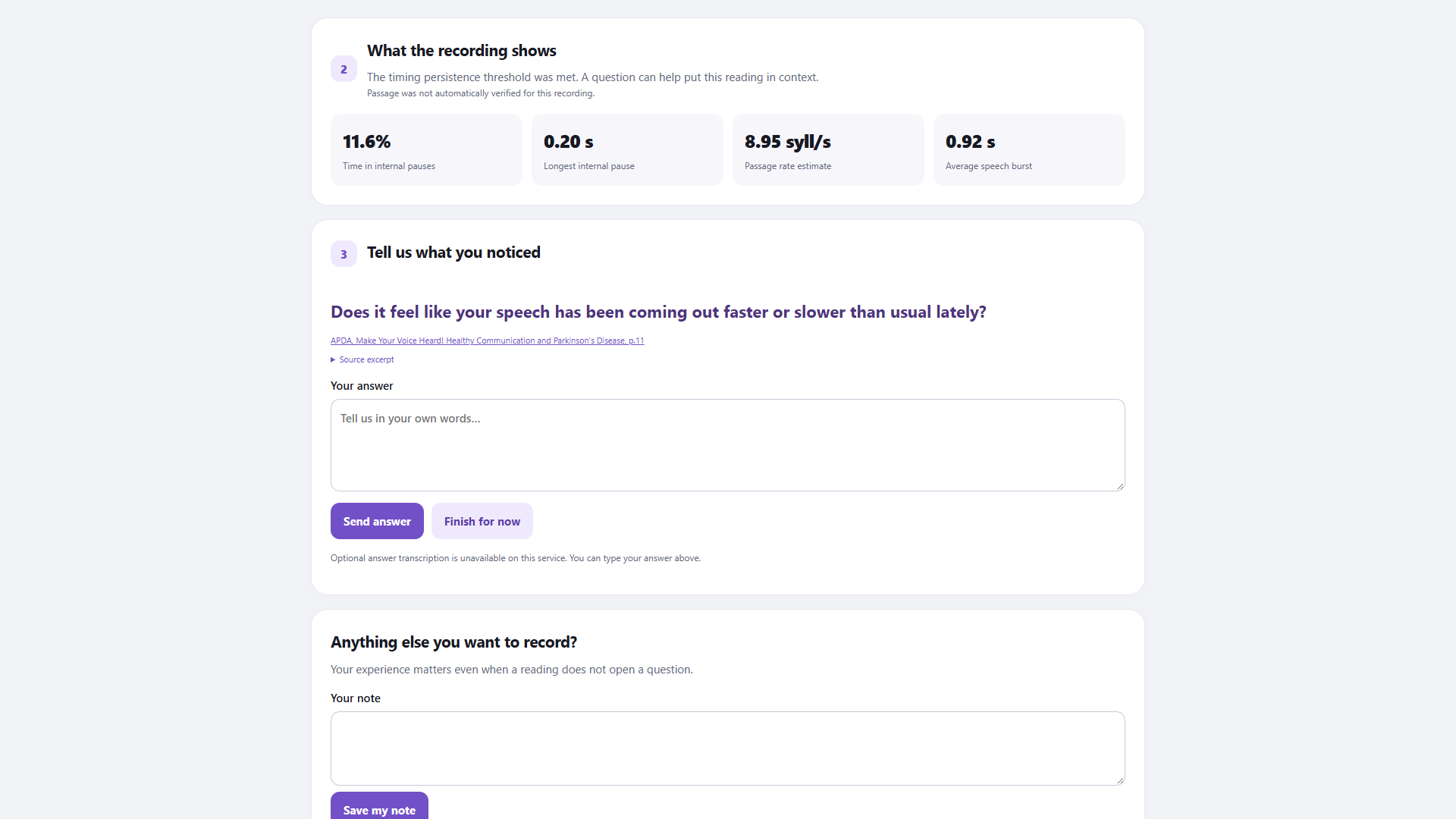
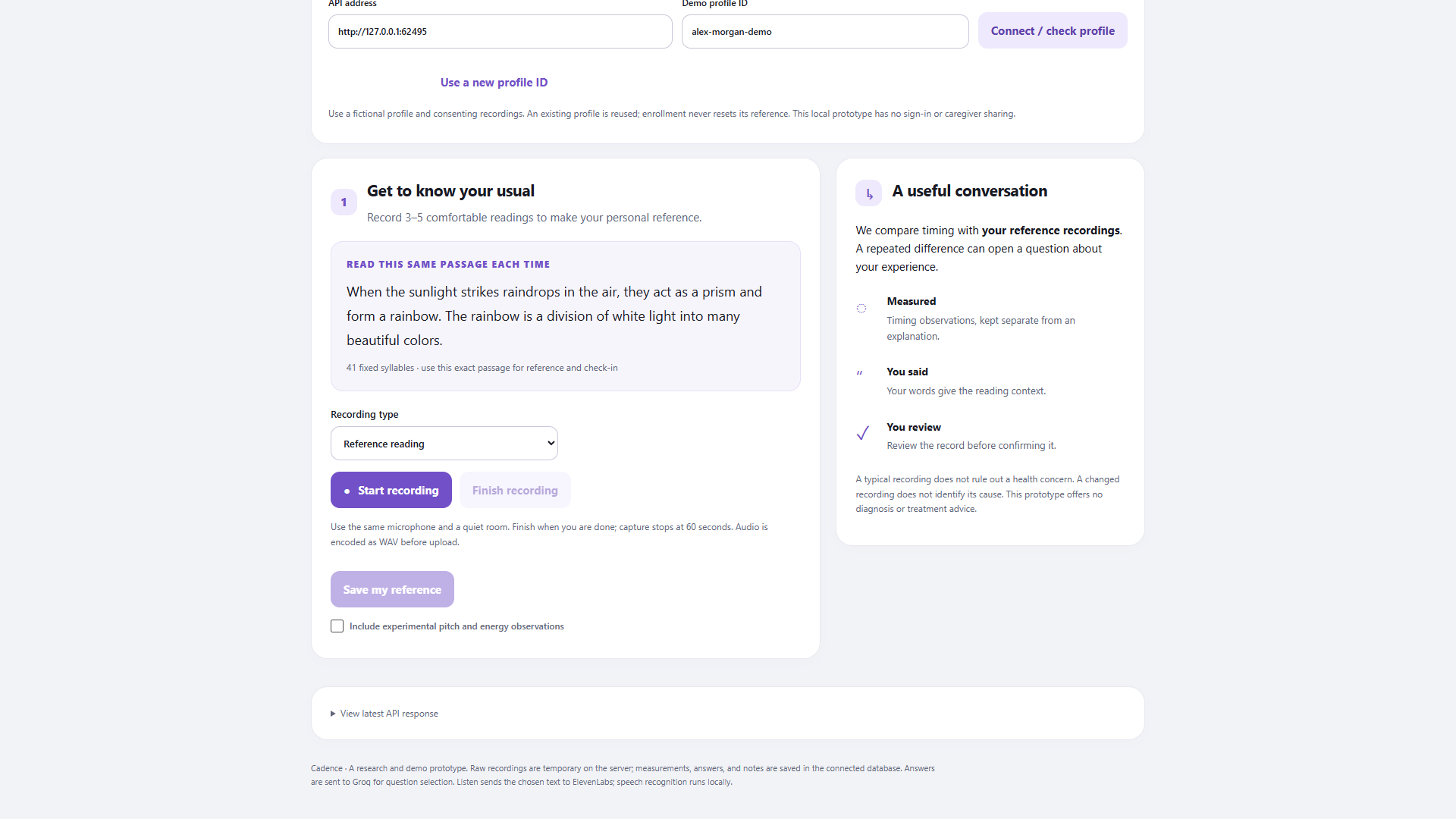
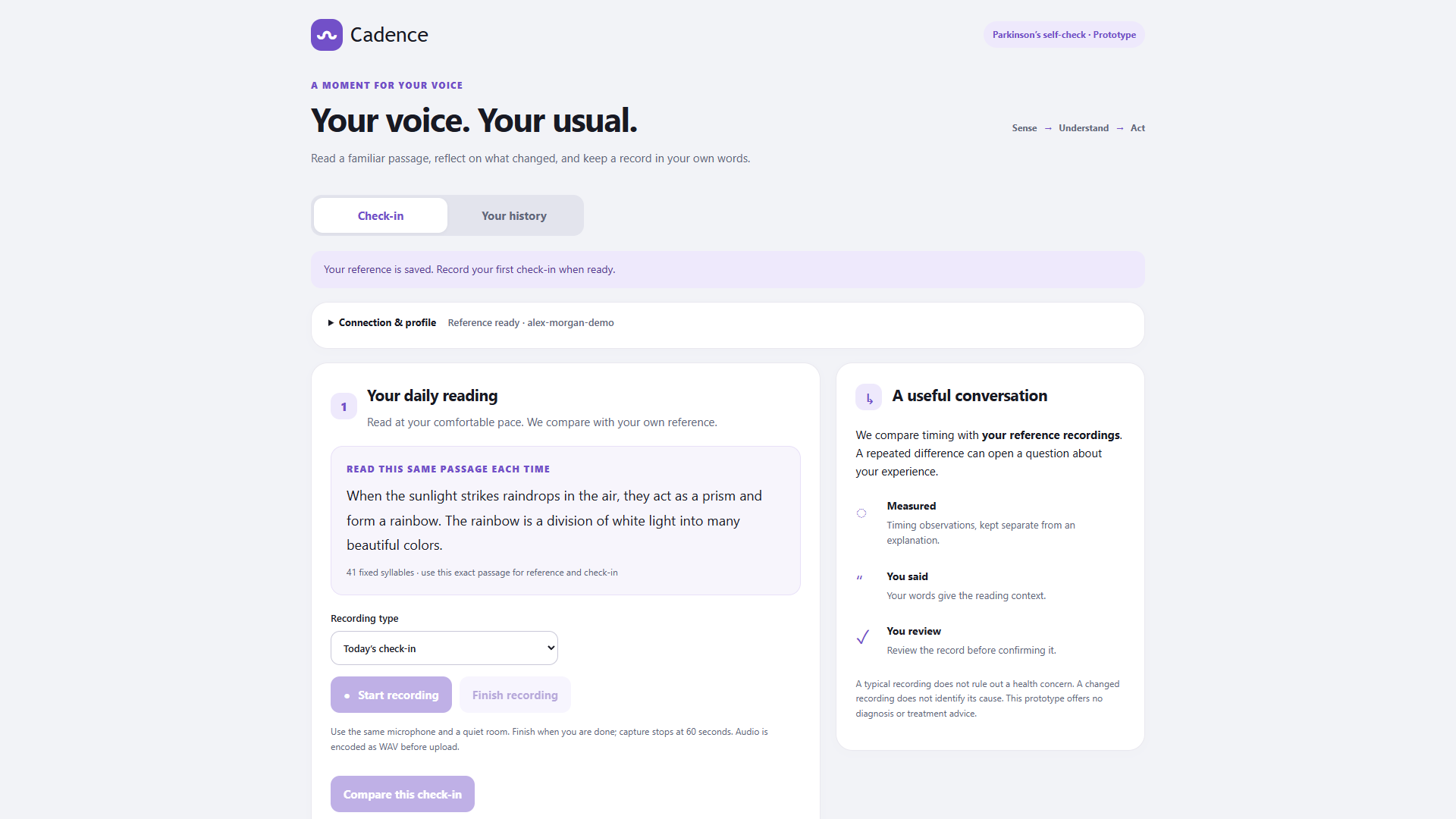
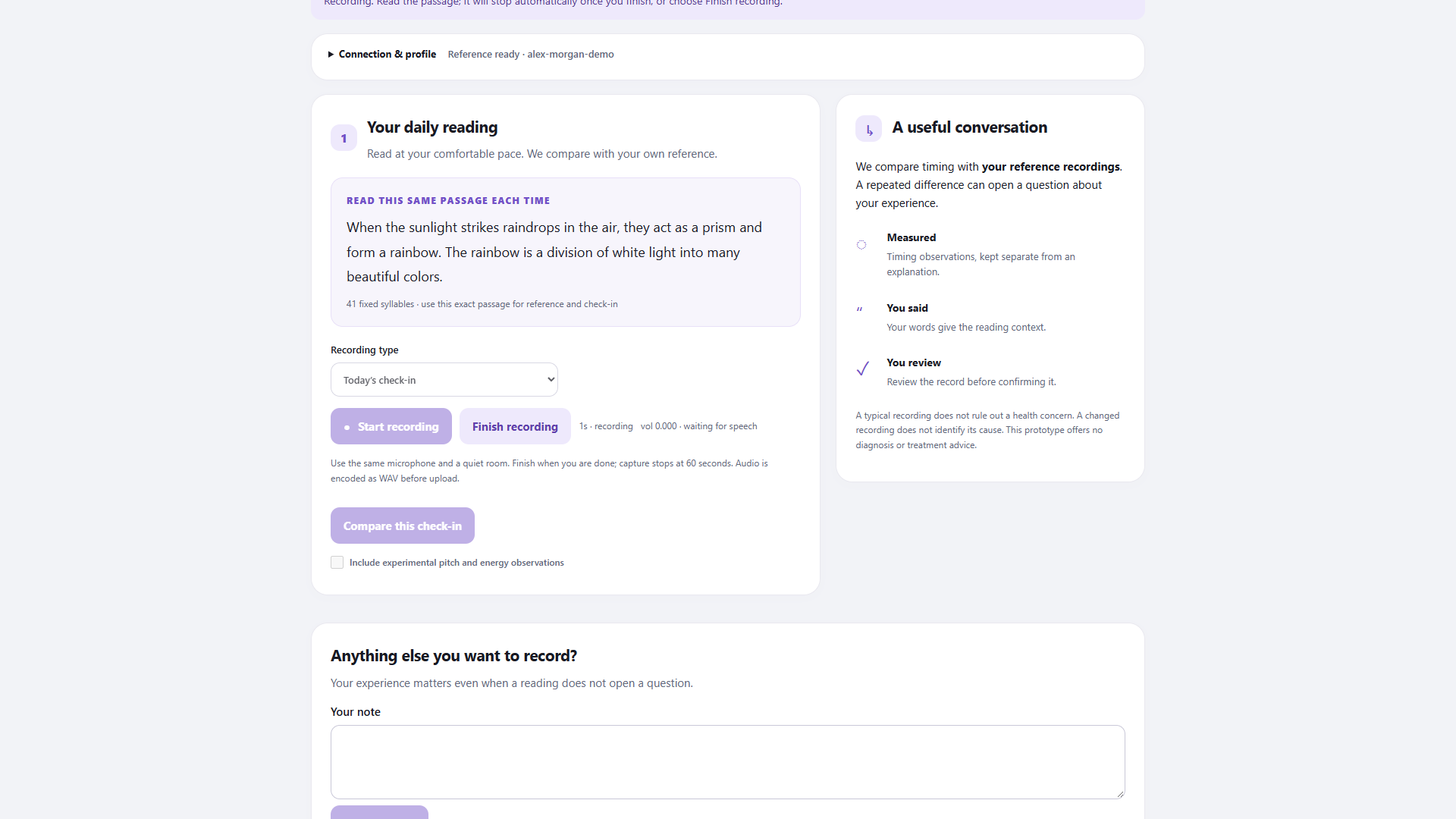
Users read the same short passage during regular check-ins. The system analyzes measurable speech features, including pauses, speaking rate, and rhythm, and compares them with the individual's personal baseline.
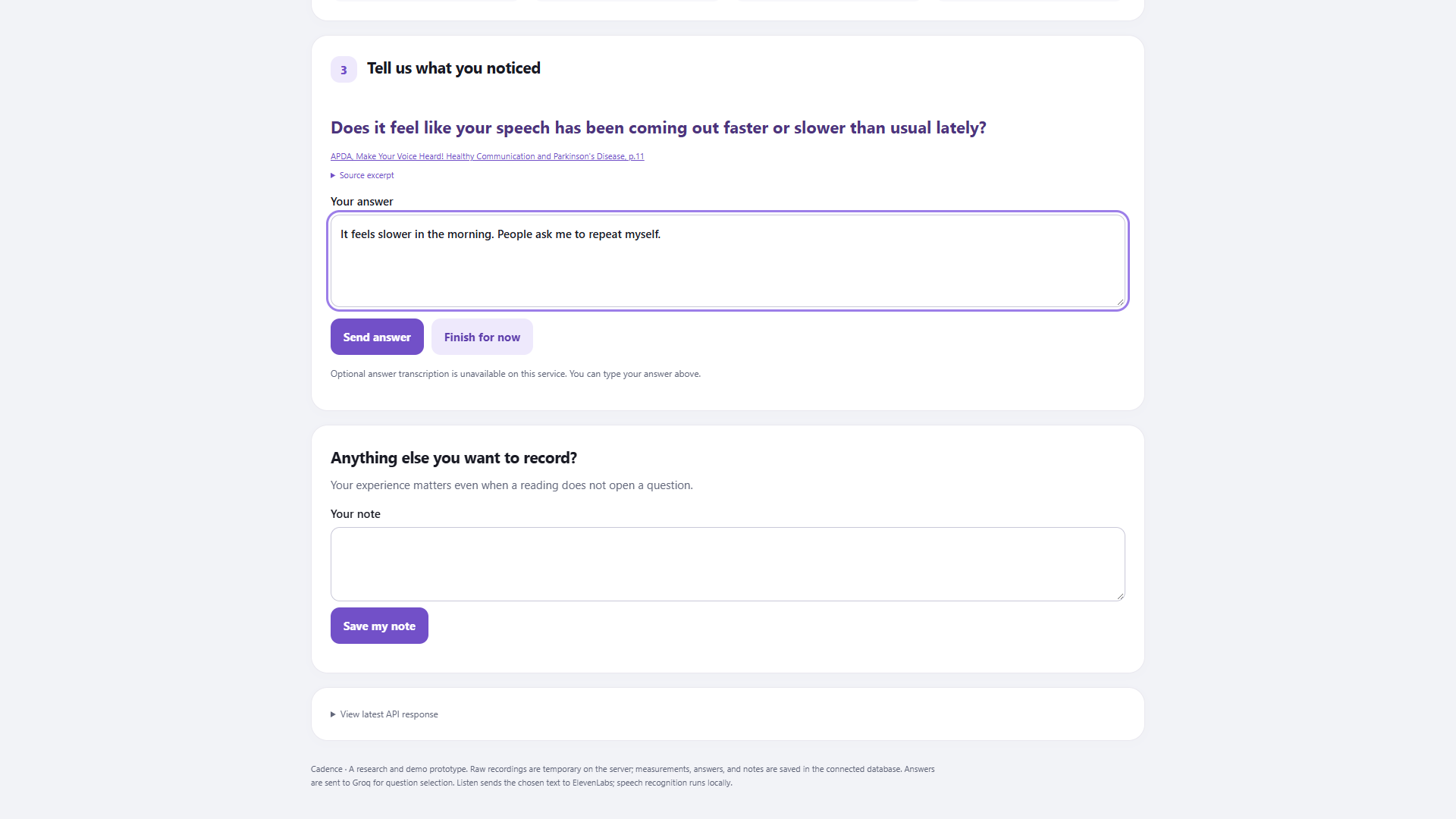
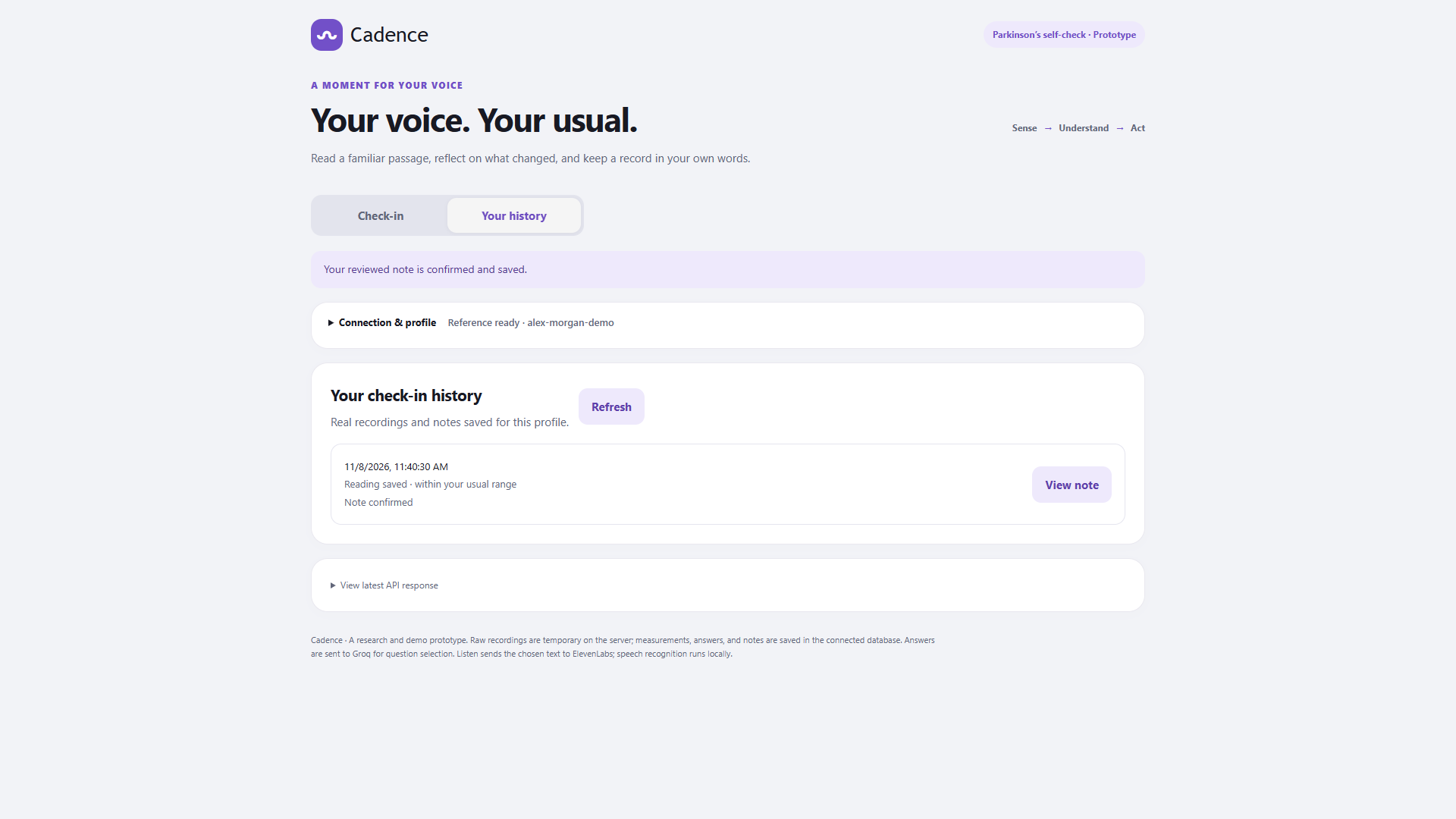
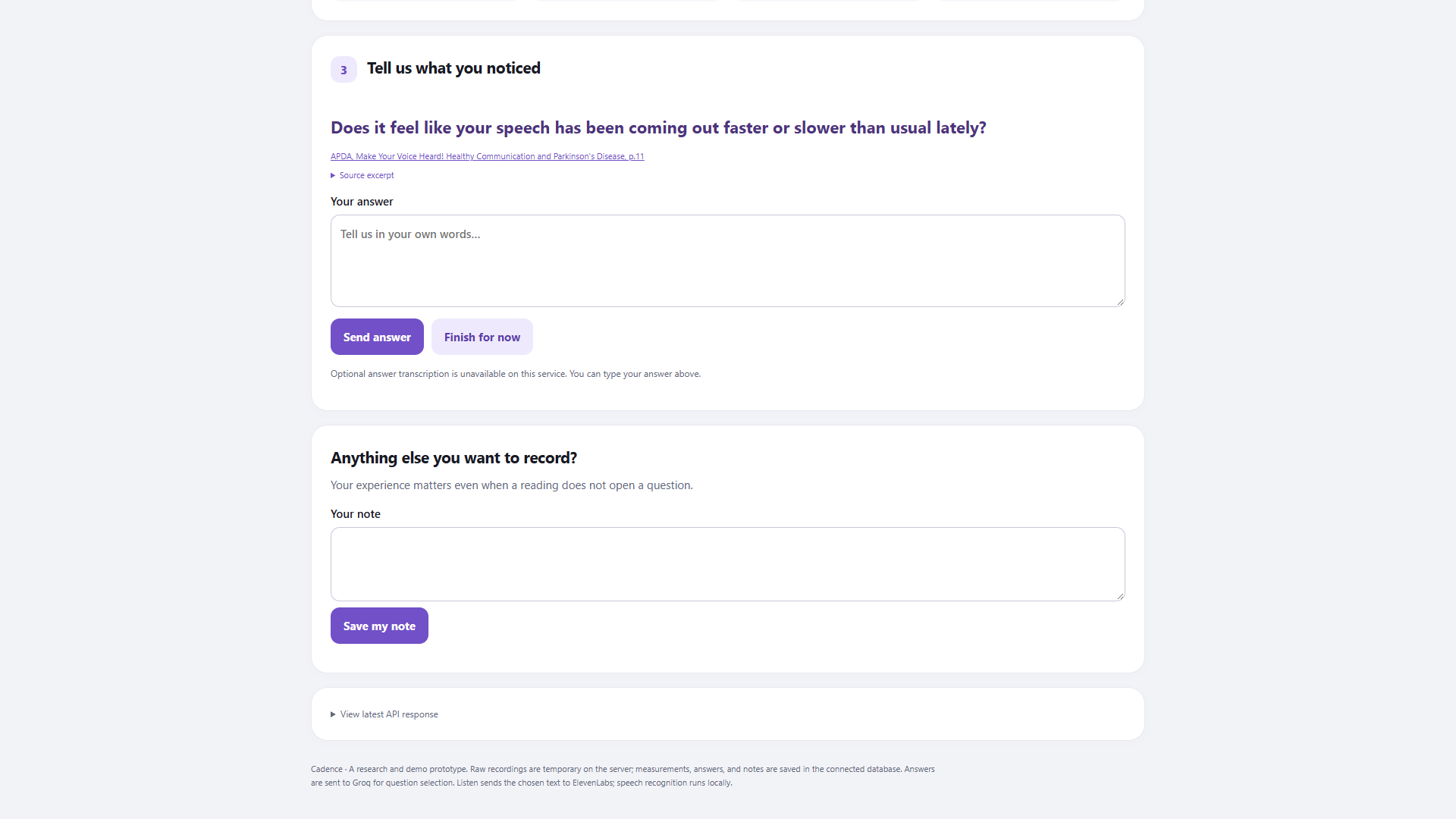
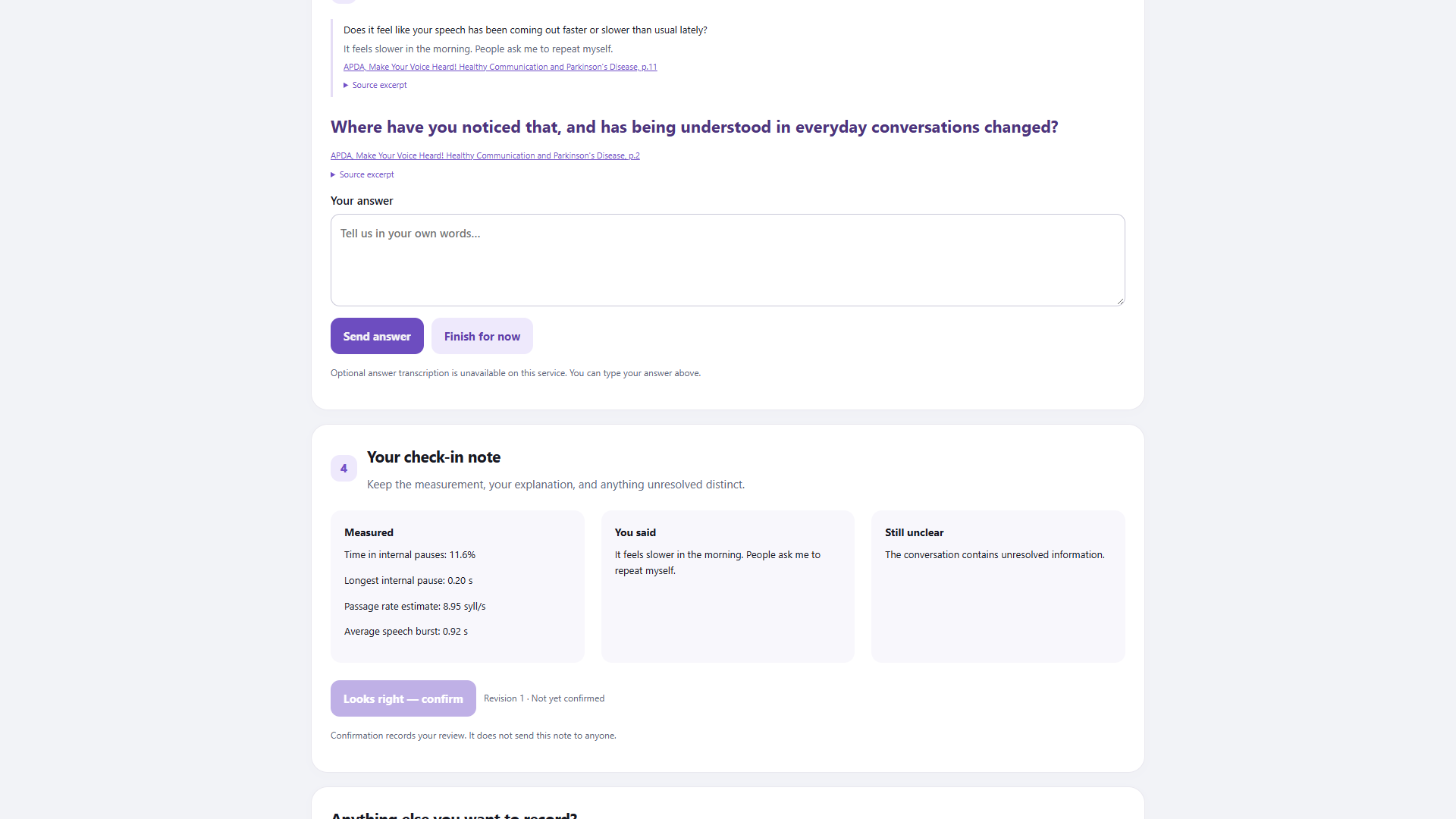
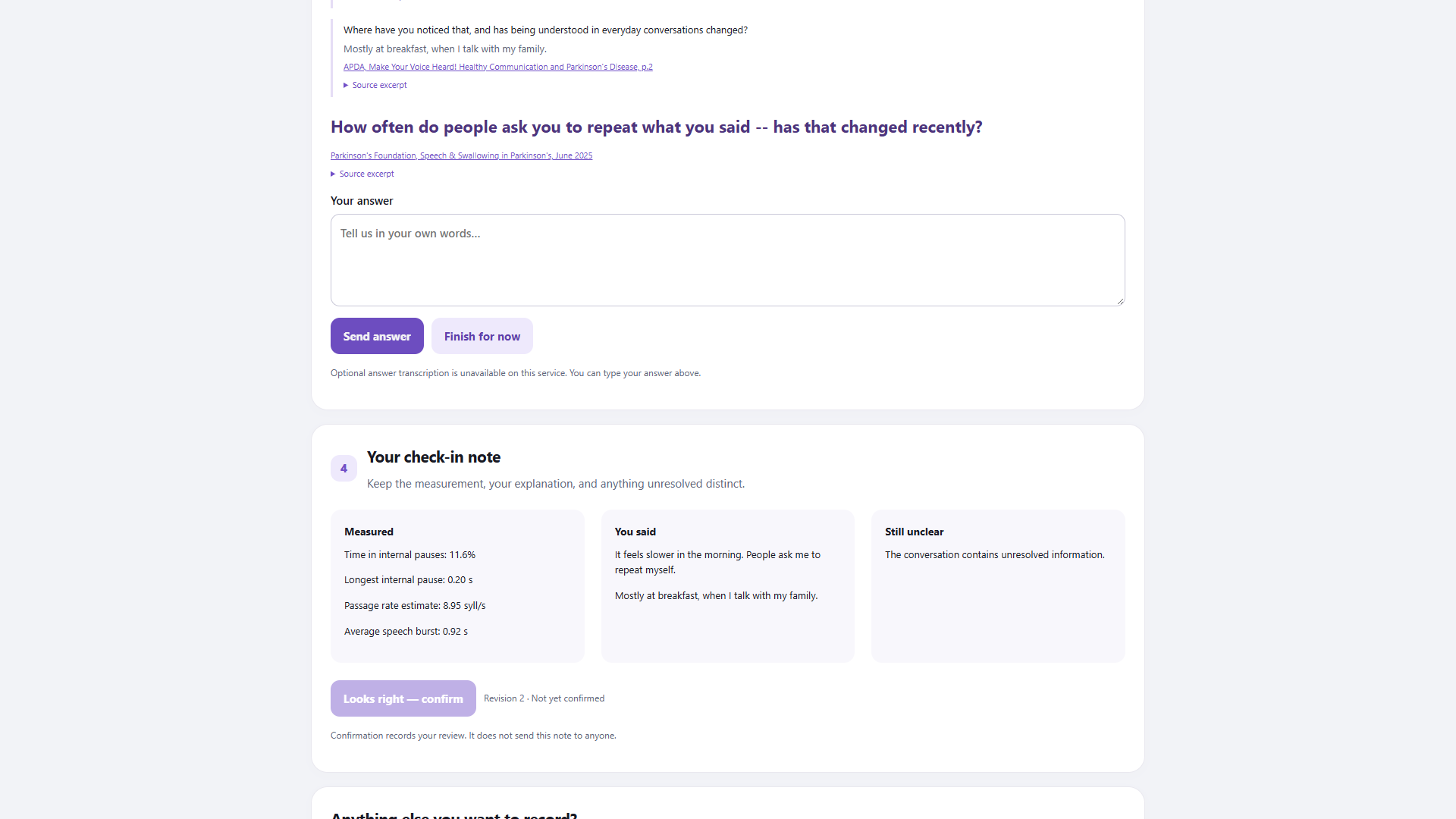
When speech patterns remain within their usual range, Cadence provides a brief, friendly check-in. When a repeatable change appears, it asks a more relevant follow-up question instead of relying on a generic questionnaire.
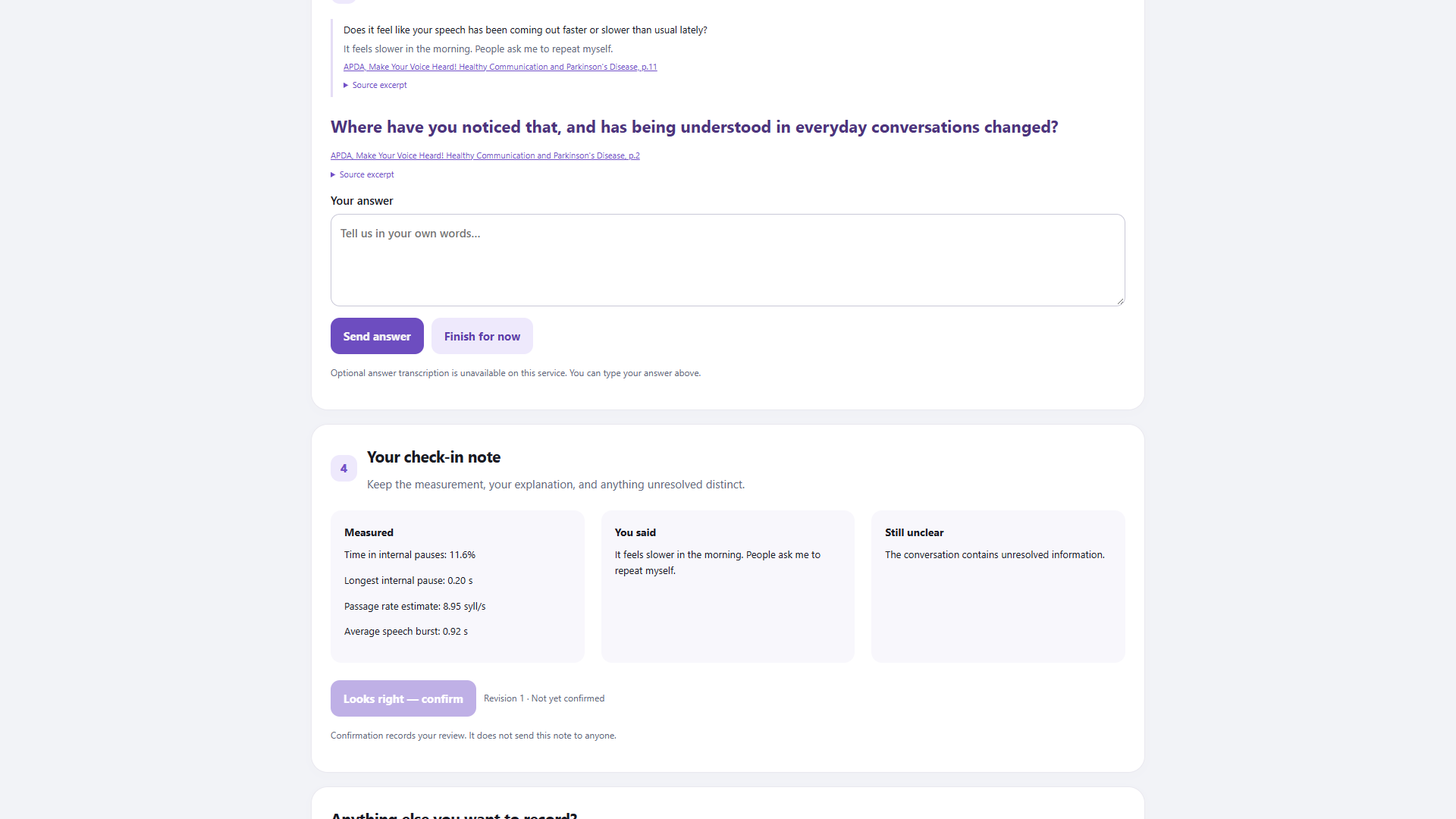
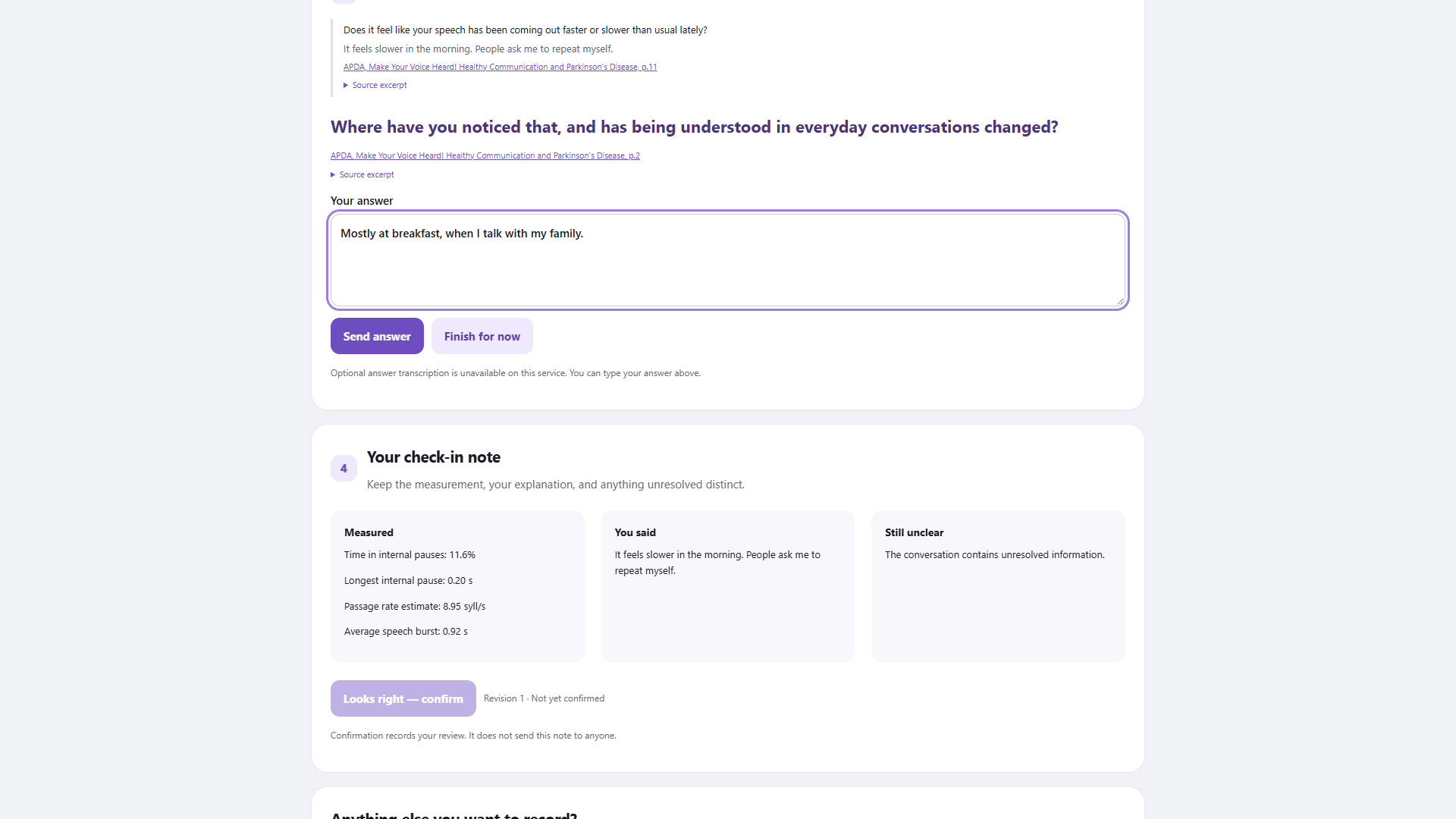
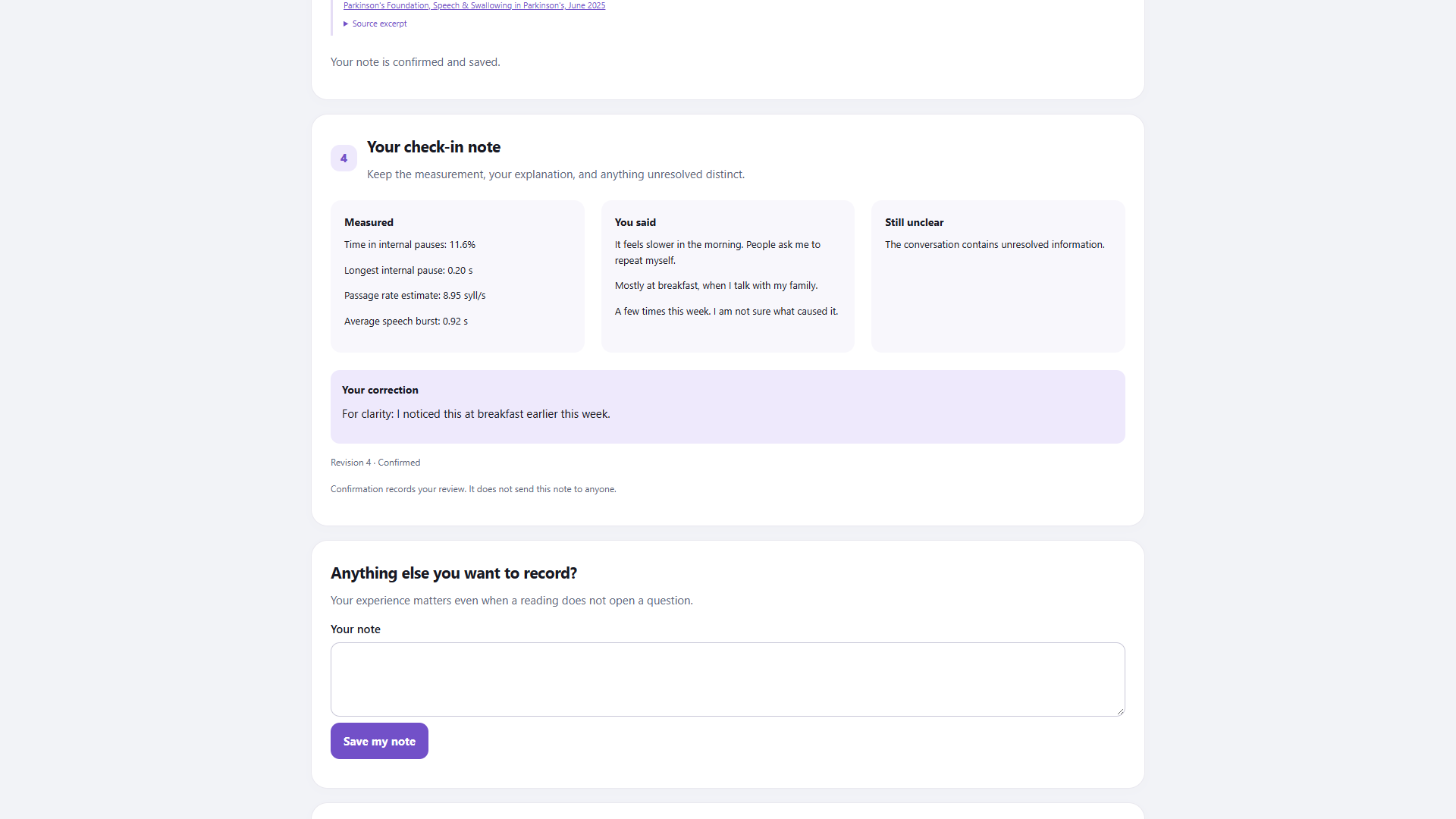
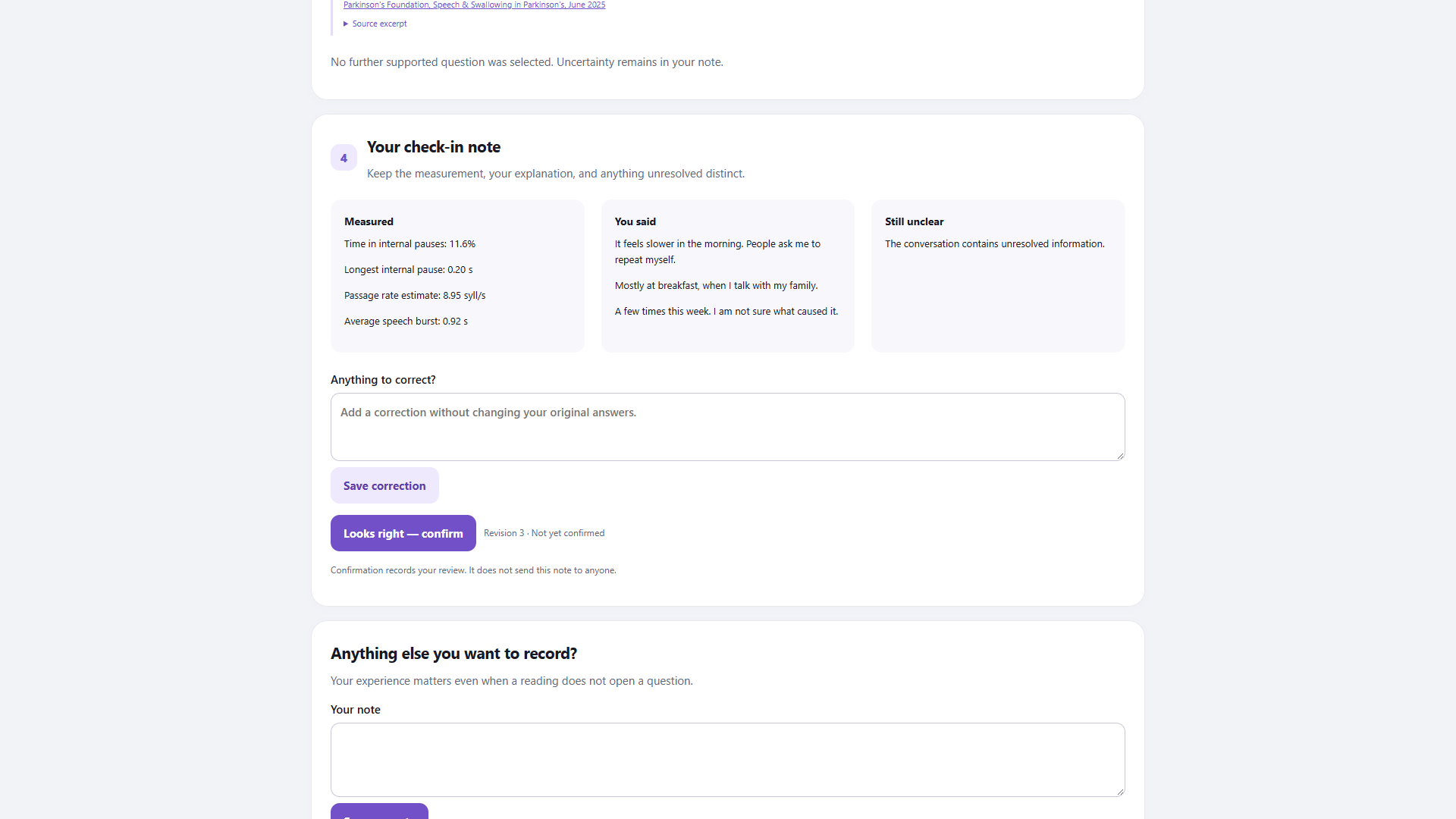
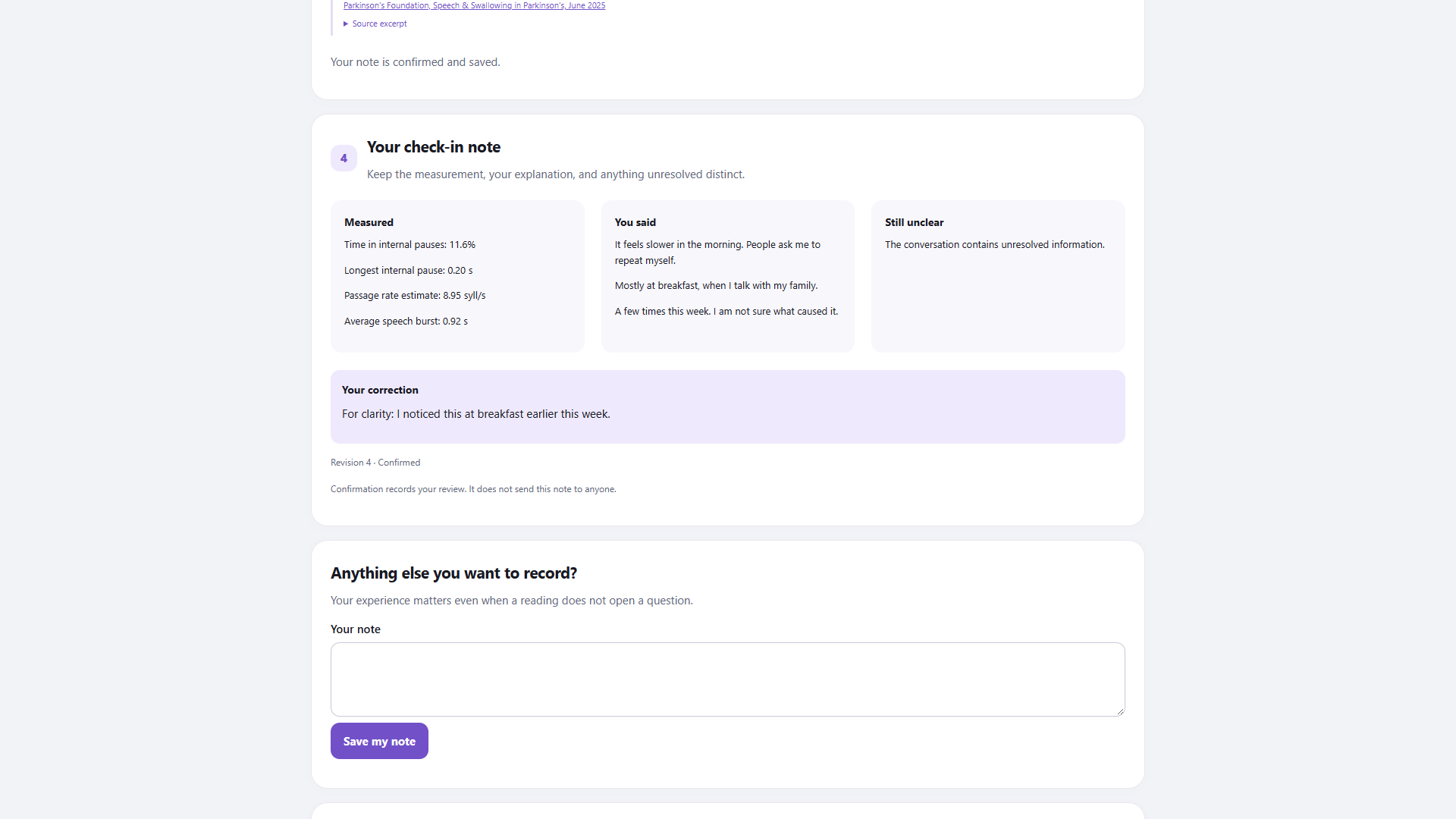
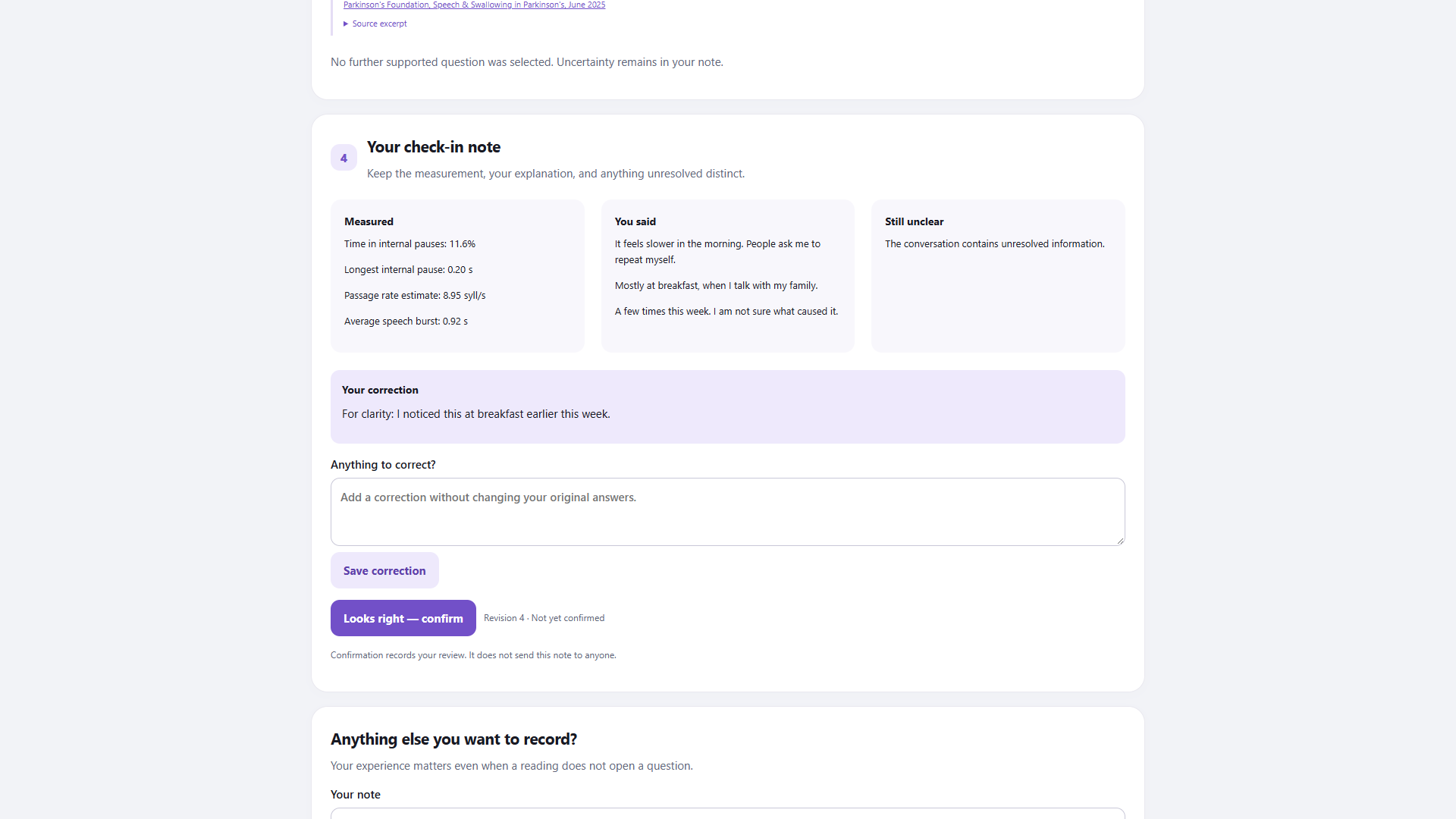
The patient's own explanation provides the context behind the measurement.
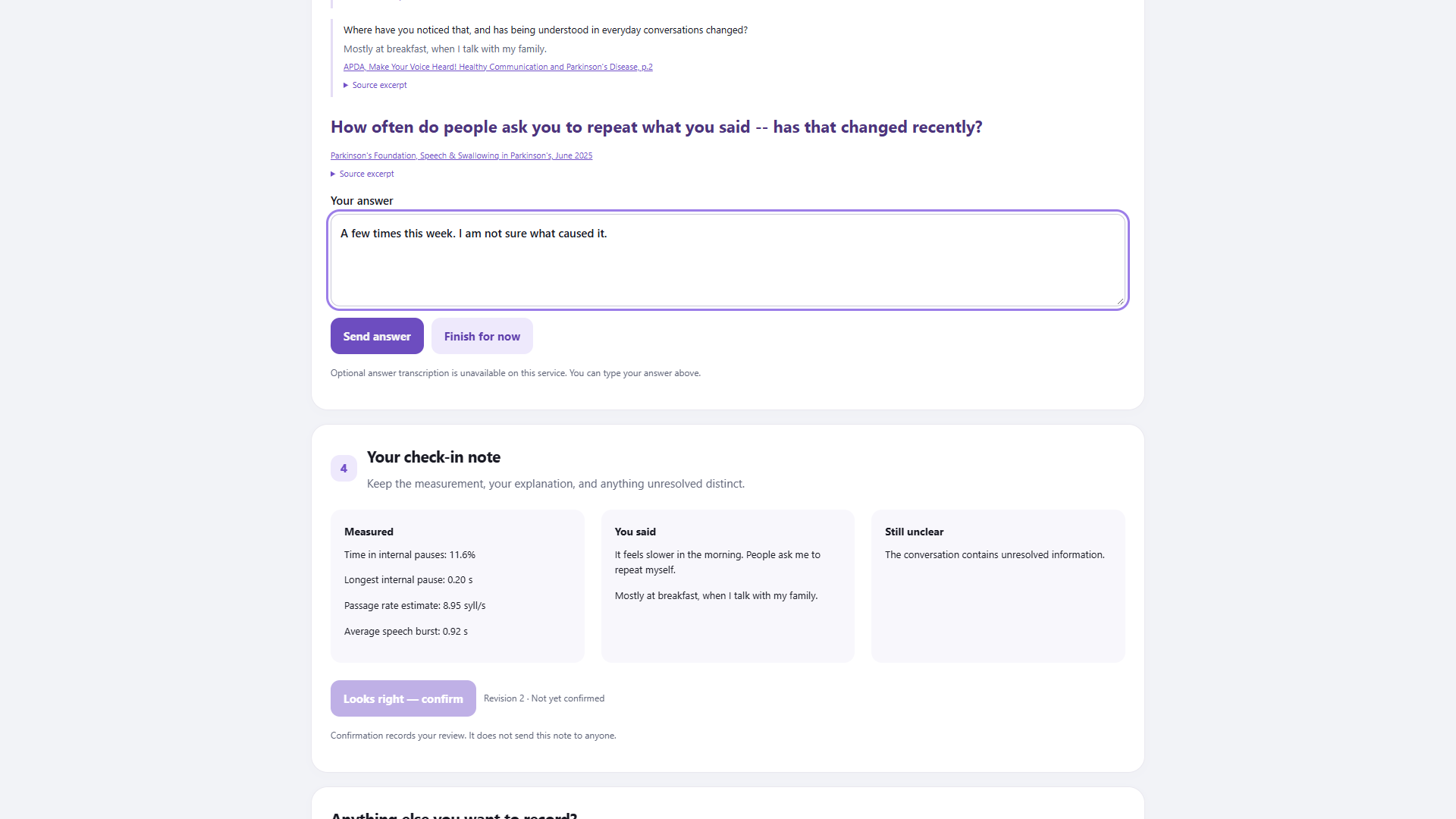
For example, a longer pause might reflect fatigue, difficulty speaking, breathlessness, or something unrelated to a medical condition. Rather than assuming the cause, Cadence asks what happened and uses the response to guide the conversation.
Cadence does not diagnose diseases. It uses measurable changes to ask better questions and document what patients actually experience.
How we built it
We designed Cadence around three principles: Sense → Understand → Act.
- Sense: Silero Voice Activity Detection (VAD) processes recorded speech and extracts interpretable timing features, including pauses and speaking rate.
- Understand: Robust statistical methods compare recordings against the individual's personal baseline rather than relying on an opaque prediction model.
- Act: A retrieval-based dialogue system selects relevant follow-up questions based on observed changes and available patient context.
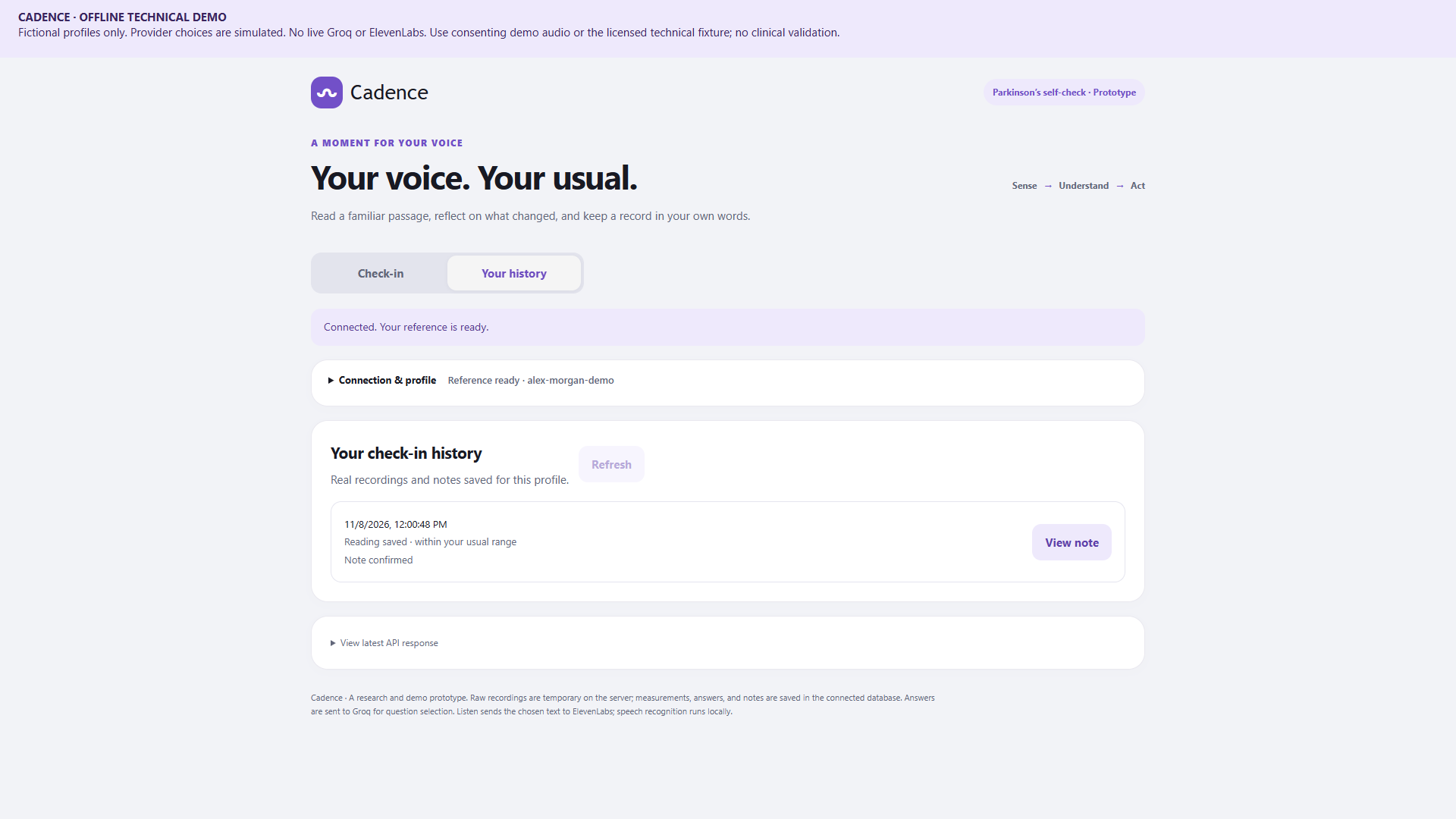
Our backend uses FastAPI, with TimescaleDB (Tiger Data) managing check-in history and longitudinal measurements. ElevenLabs enables natural spoken interaction.
We also evaluated speech features using publicly available recordings from diagnosed Parkinson's patients to investigate their relationship with clinically measured disease severity.
We deliberately separated acoustic measurement from medical interpretation. A voice difference is an observation, not a diagnosis.
Challenges we ran into
One of our biggest challenges was finding clinically relevant, publicly accessible datasets.
Although published studies have investigated speech changes in COPD patients, we could not identify an immediately downloadable COPD speech dataset that met our requirements for raw recordings and reliable diagnosis labels.
During our Parkinson's research, we also discovered and corrected a statistical bootstrap-leakage issue that could have produced overly optimistic results.
We initially misidentified a dataset's recording task based on its filenames. Checking the original documentation helped us correct that mistake.
We also experimented with a trained severity-prediction model, but its performance did not generalize reliably. Rather than presenting misleading predictions, we removed it from our approach and focused on simpler, interpretable speech features.
These challenges reinforced an important lesson: medical AI must be evaluated critically, even when its initial results look promising.
Accomplishments that we're proud of
We evaluated our core acoustic features using two independent datasets containing recordings from real Parkinson's patients, spanning two languages.
Our analysis found associations between interpretable speech features and clinically recorded disease severity. These findings support further investigation of voice-based monitoring, although they do not establish clinical diagnostic accuracy or validate longitudinal change detection in everyday use.
We also verified key parts of our backend using a real database and synthesized voice interaction, moving beyond a purely visual prototype.
Most importantly, we built a system that prioritizes measurable evidence and transparent limitations over unsupported medical predictions.
What we learned
We learned that relatively simple, interpretable speech features can provide useful research signals across different datasets and languages.
We also learned that a more complex machine-learning model is not necessarily more reliable. Our trained severity model struggled to generalize, reminding us that apparent accuracy is not enough without independent validation.
Another important lesson was that research data availability matters. The lack of accessible COPD speech datasets limited what we could responsibly claim and highlighted an opportunity for future clinical collaboration.
Above all, we learned that the goal of medical AI should not be to sound confident, but to help people make better-informed decisions from reliable evidence.
What's next for Cadence
Our current prototype focuses on Parkinson's disease, but our long-term vision goes beyond monitoring a single condition.
We aim to develop Cadence into a personalized, multimodal, evidence-based health monitoring platform capable of recognizing meaningful changes that may indicate worsening existing conditions or emerging health concerns.
Voice is our starting point, not our only source of evidence.
Speech changes can arise from multiple medical conditions, fatigue, temporary illness, aging, or recording differences. Therefore, voice alone is insufficient for reliably identifying a disease or determining its cause.
Our future roadmap focuses on six areas:
1. Expand to additional medical conditions
Investigate voice-related changes associated with COPD, asthma, and other neurological or respiratory conditions. Each new application will require appropriate patient datasets and disease-specific clinical validation before predictive claims can be made.
2. Integrate multiple health indicators
Combine longitudinal voice measurements with medical history, patient-reported symptoms, and relevant physiological data, potentially including respiratory rate, heart rate, oxygen saturation, sleep patterns, and activity levels.
This would help Cadence evaluate changes in context rather than attributing every unusual speech pattern to an existing diagnosis.
3. Develop a more advanced adaptive question engine
Move beyond a single follow-up question toward natural, multi-step conversations.
Future questions will be selected based on the patient's known medical conditions, current voice measurements, previous answers, and available clinical evidence.
Rather than guessing a disease, the system will collect information that helps distinguish possible explanations, identify missing evidence, and determine when professional evaluation may be appropriate.
4. Build a clinically validated, continuously improving question library
Collaborate with medical professionals and researchers to develop an evidence-based question library informed by clinical guidelines, longitudinal patient data, and confirmed medical outcomes.
New question sequences and decision rules will be evaluated for accuracy, relevance, patient safety, and clinical usefulness before deployment.
Our goal is to improve the questions Cadence asks as medical research advances, without allowing an AI model to independently invent diagnostic conclusions.
5. Validate through real clinical research
Partner with clinicians to evaluate the reliability of acoustic measurements, false-alarm rates, generalizability across patient populations, and whether adaptive conversations provide more useful clinical information than traditional fixed questionnaires.
We also hope to investigate whether combining multiple health indicators can help identify changes that deserve medical attention earlier.
6. Strengthen caregiver and healthcare communication
Develop the caregiver phone channel and patient-authorized notifications so family members can receive understandable updates without needing to initiate every check-in.
Future versions will generate patient-reviewed summaries that distinguish measured changes, reported symptoms, and unresolved concerns, helping caregivers and healthcare professionals understand what happened between appointments.
Our long-term vision
We envision Cadence as an intelligent health companion that learns what is normal for each individual, recognizes when something may deserve attention, and asks increasingly relevant questions supported by medical evidence.
As clinical research expands, Cadence could move beyond monitoring known conditions to help surface new health concerns that warrant further evaluation.
Our goal is not to replace doctors or diagnose diseases from a voice recording. It is to transform everyday voice interactions into more meaningful, personalized, and evidence-informed health conversations.
Built With
- elevenlabs
- fastapi
- ml
- postgresql
- python
- pytorch
- tigerdata
- timescaledb


