-
-
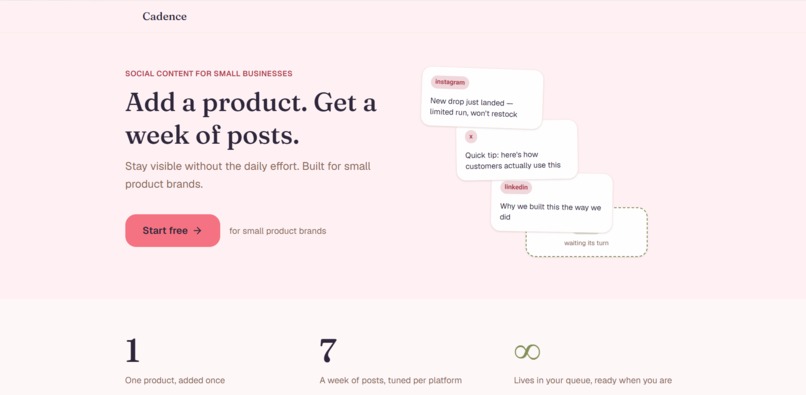
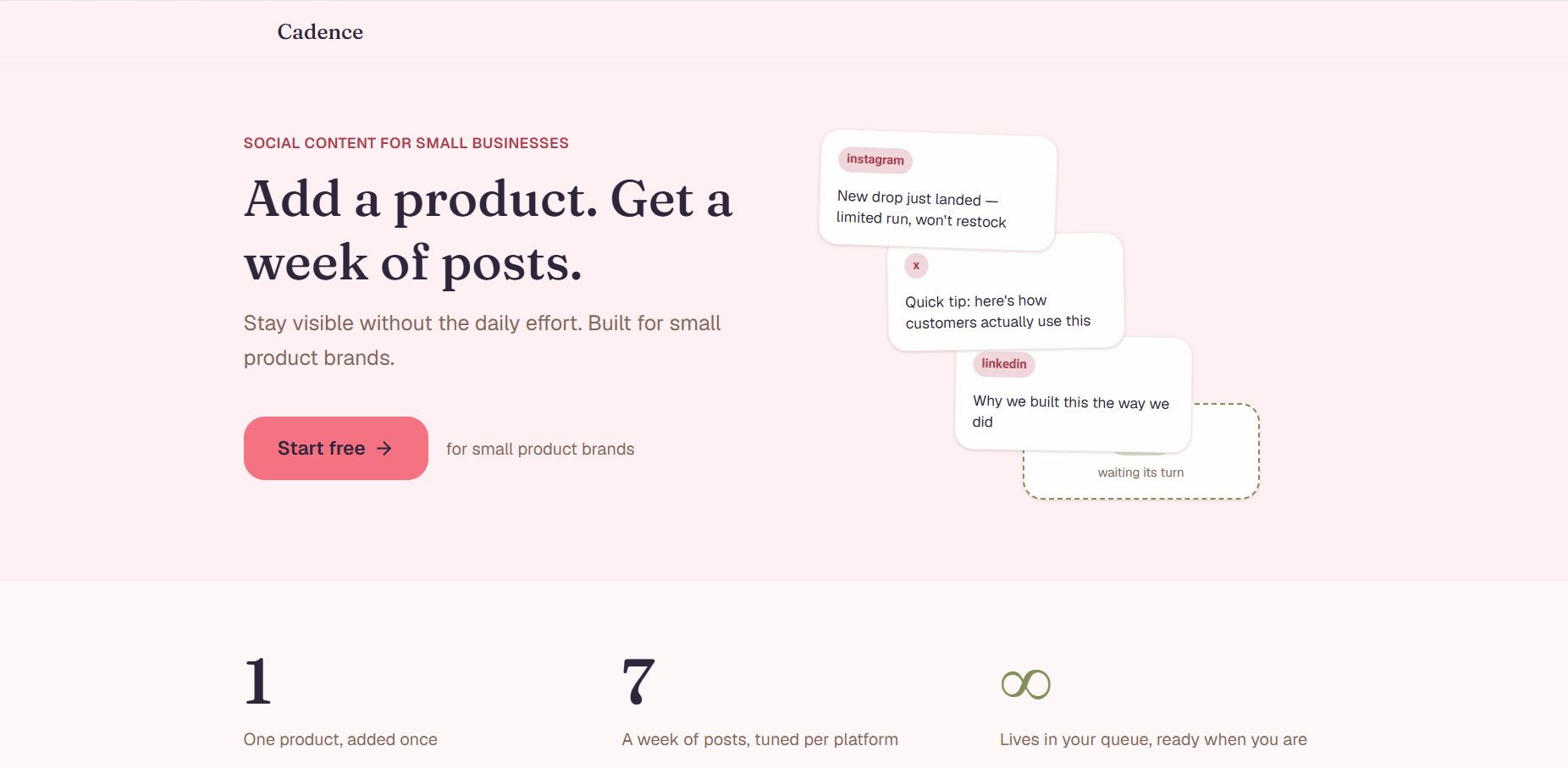
Cadence landing page
-
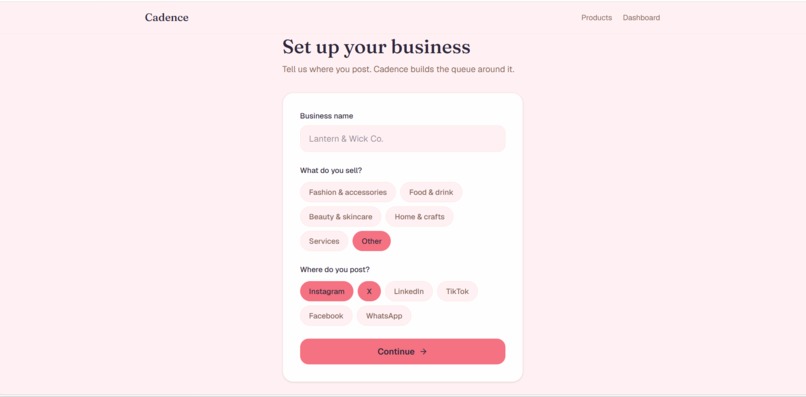
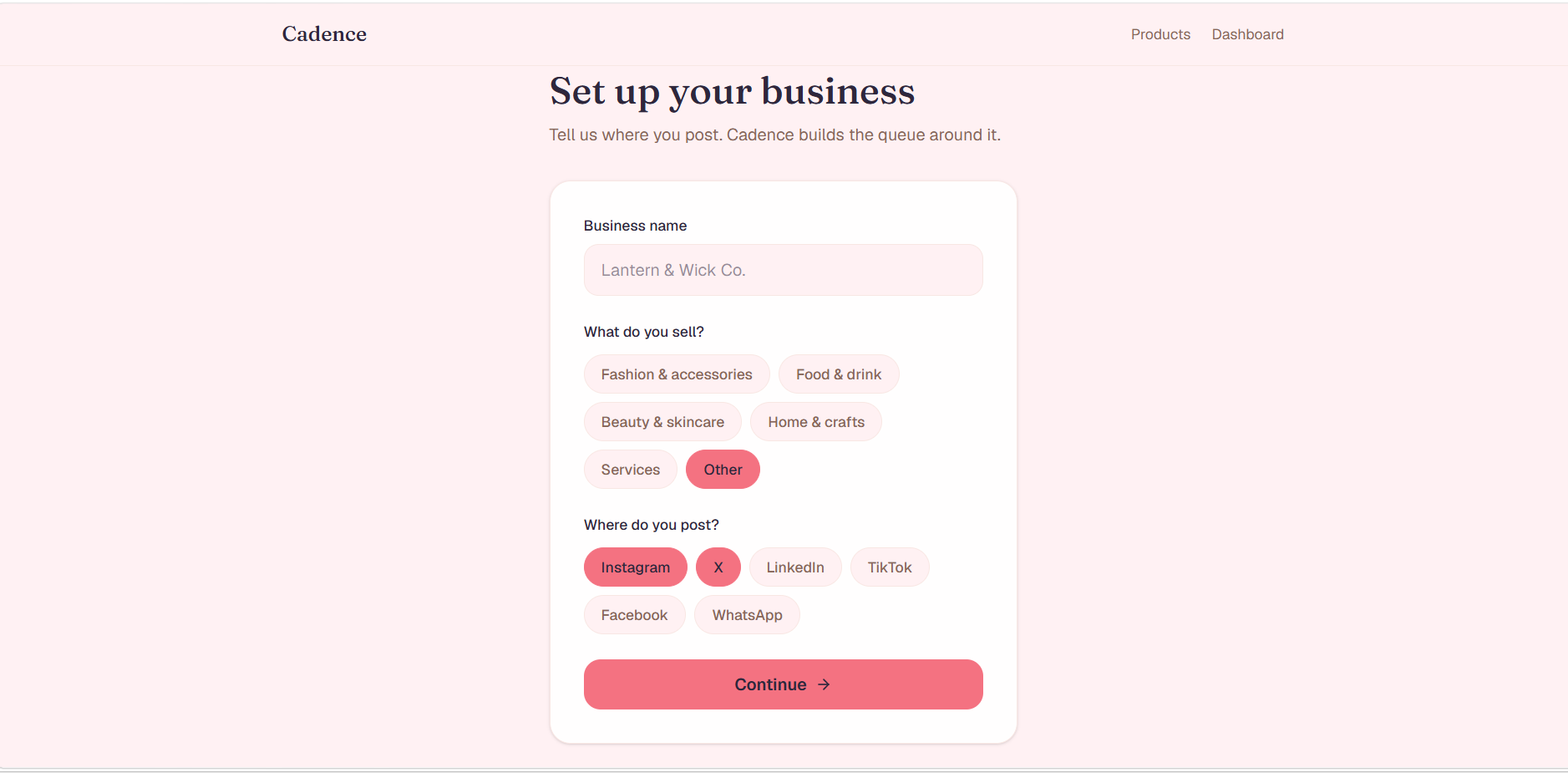
Cadence onboarding
-
-
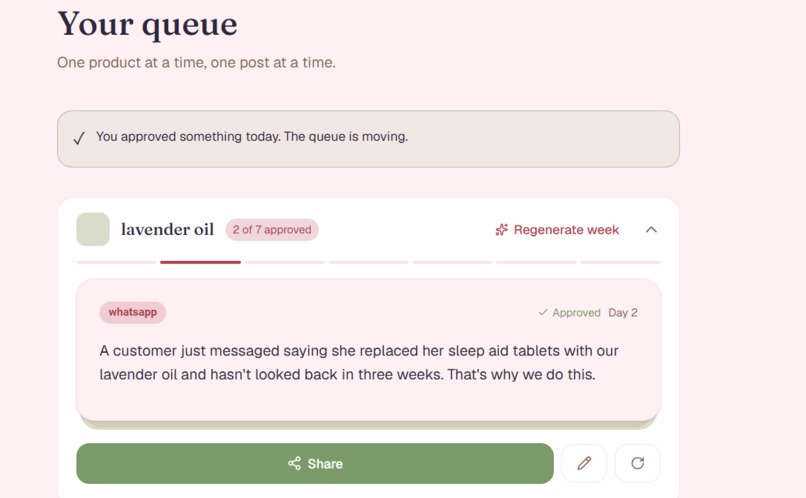
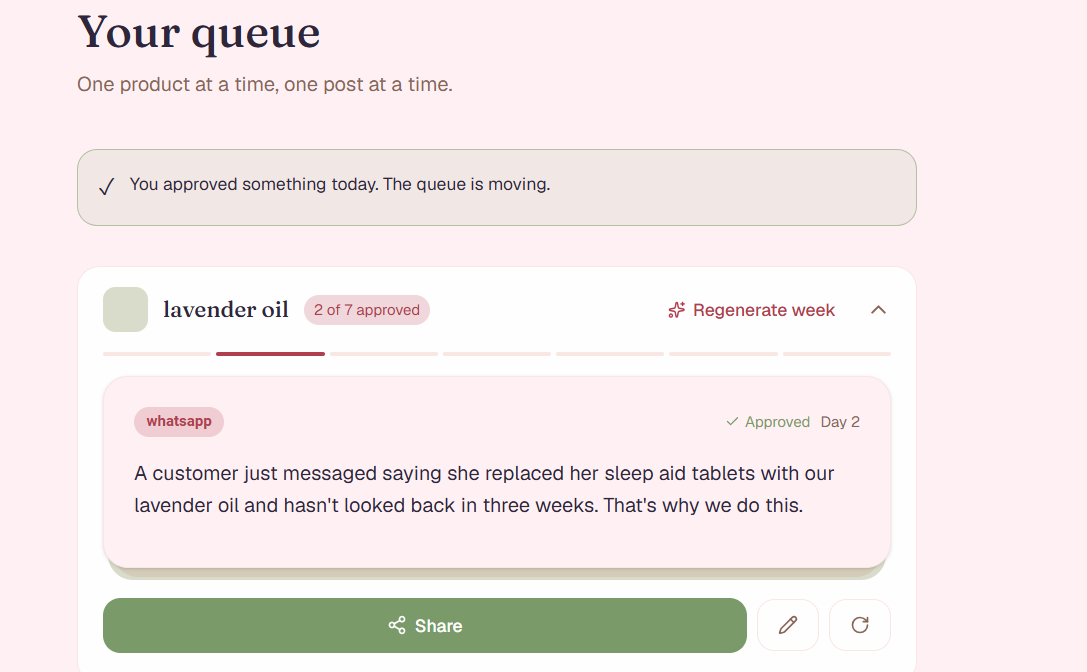
Cadence working dashboard
-
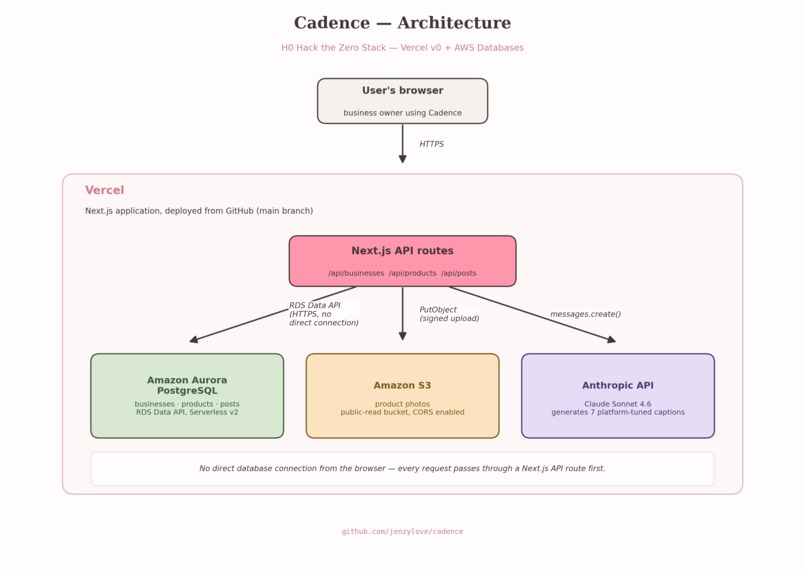
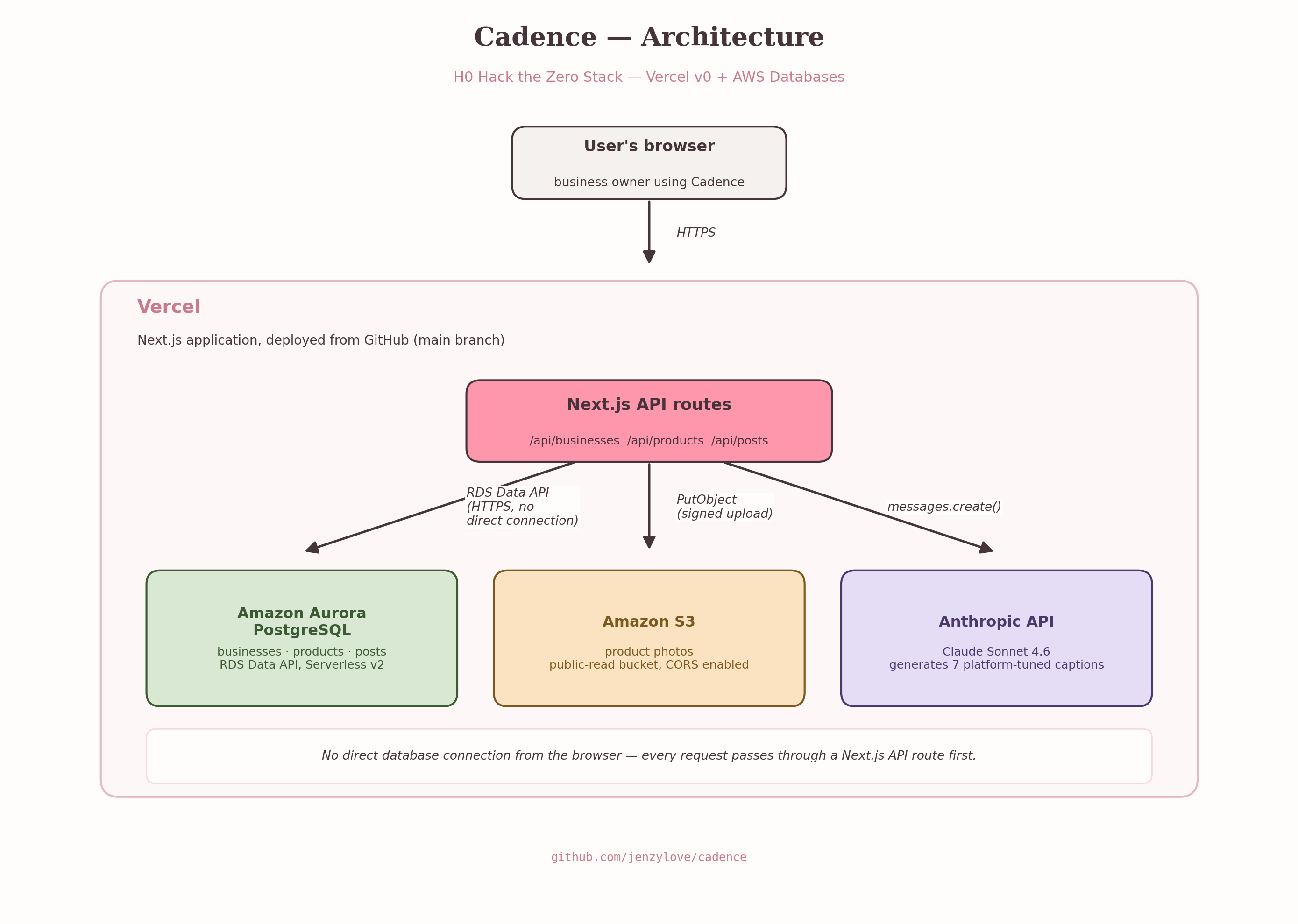
Cadence architecture
Inspiration
Small businesses don't usually fail because of a bad product. They go quiet on social media the moment life gets busy, and customers notice. The owner is the marketer, the packer, and the support desk all at once, and posting consistently is the first thing that slips. Cadence removes the daily decision entirely: add a product once, and a week of product content is already waiting.
What it does
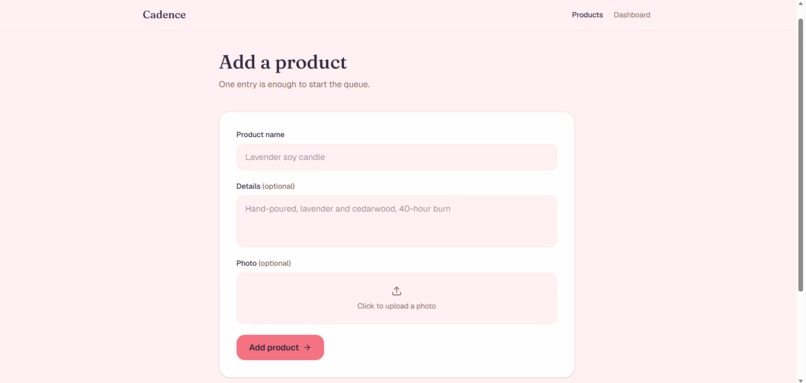
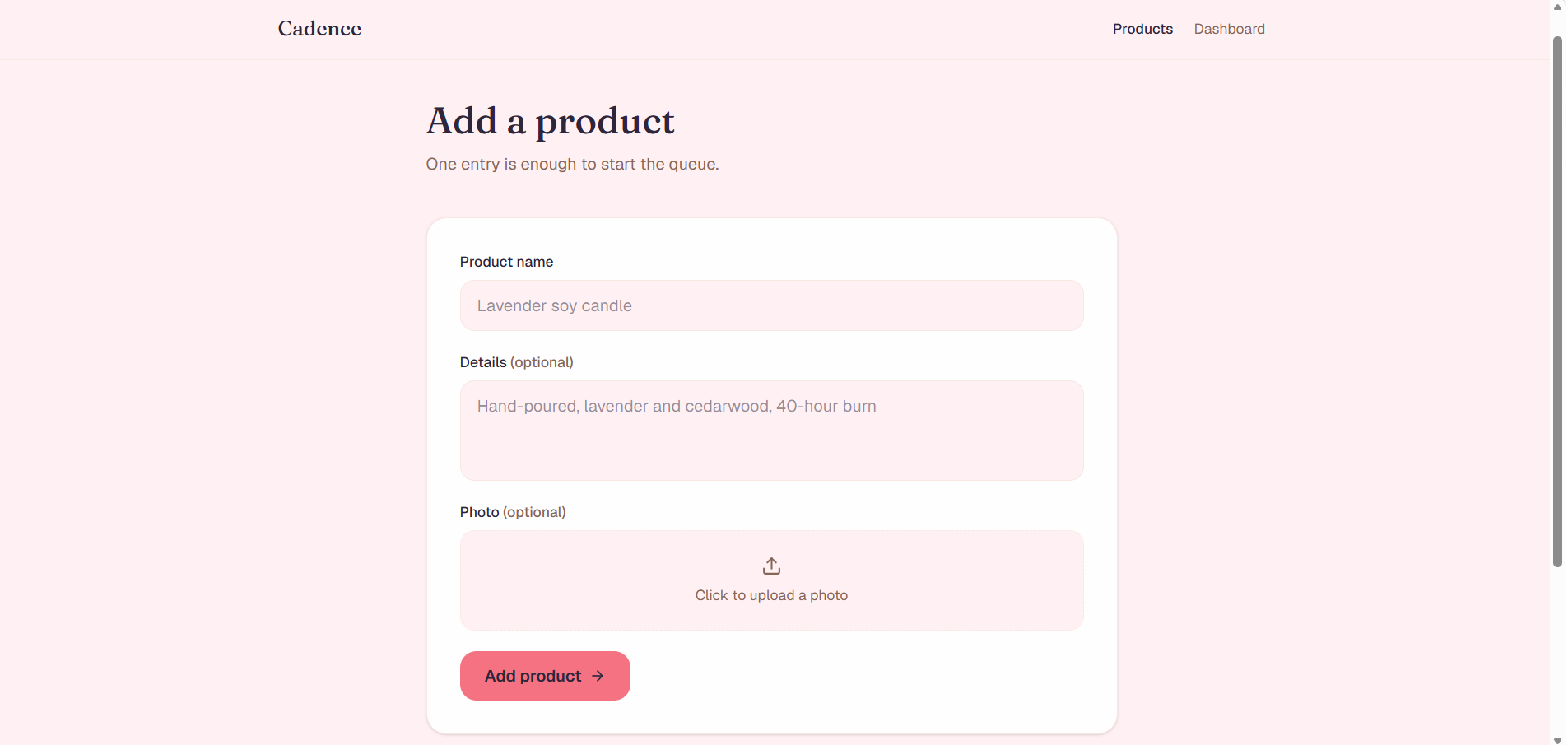
A business owner sets up their profile...what they sell, which platforms they're actually on and adds a product with a name, a few details, and a photo. Cadence then generates seven distinct posts using anthropic, each tuned to a real platform the business uses and built around different angles (a benefit, a customer story, a tip, a question, an offer, a founder story), so the week never reads like the same post seven times.
The part we think matters most: Cadence doesn't just answer when asked. It watches the business's own approval history in Aurora and surfaces something true on its own like; "it's been four days since you approved a post" before the owner has to notice it themselves. That's the difference between a content generator and something closer to an actual manager of the work.
Once a post is approved, it's ready to share immediately both the caption and product photo together, through the device's native share sheet, straight to whichever social app the owner uses.
How we built it
- Frontend: Next.js, scaffolded in v0, deployed on Vercel
- Database: Amazon Aurora PostgreSQL (Serverless v2), accessed entirely through the RDS Data API, no persistent connection pool, just HTTPS calls from serverless functions
- Storage: Amazon S3 for product photos, with a public-read bucket and CORS configured for client-side uploads
- Generation: Anthropic's Claude Sonnet 4.6, with a prompt built specifically to avoid generic AI-sounding output with explicit rules against filler phrases, dashes, and vague process claims, and angle definitions that adapt depending on whether a business makes or resells what they sell
- The manager layer: a SQL aggregation over
approved_attimestamps across every post in a business's history, computed fresh on every dashboard load, no LLM call needed for this part, just a real query doing real work
Challenges we ran into
The honest one was getting Aurora set up the way we needed as it took far longer than writing the application code. We hit an account restriction that quietly forced every Aurora cluster into an "Express configuration" mode with IAM-only authentication and no usable master password which was incompatible with how the RDS Data API actually authenticates. After working through several console paths, we traced it to our account's Free Plan tier, which restricts this specific configuration. Upgrading to a Paid Plan and provisioning the cluster through the AWS CLI with explicit password authentication resolved it cleanly, and everything else followed from there..
We also went through a real design pivot Our initial dashboard laid every post out in a flat grid, which felt like a wrapper around an API call rather than a tool with any judgment of its own. We rebuilt around a single focused card per product and added the manager layer, which queriesthe business's own approval history in Aurora and surfaces something true on its own making it different as it now acts like a social media manager.
What we learned
That the hardest part of building on managed AWS infrastructure isn't usually the code it's the account-level defaults and permission boundaries that don't show up until you hit them. And also, a generation feature alone isn't a product but a feature. What makes Cadence feel real is it's accountability; it remembers what you approved last week, notices when you've gone quiet, and says so before you have to ask.
What's next for Cadence
Real platform integrations are the next step, through both Instagram and WhatsApp's APIs which require business verification timelines which are outside a hackathon window. The architecture readily supports it already. Approved posts sit in a clear ready to send state so the next milestone is wiring up the actual platform APIs once verification clears, alongside expanding the manager layer to catch things like "you've leaned on the same angle three weeks running" or "this product hasn't had a post approved in two weeks while your other one gets all the attention."
Built With
- amazon-aurora
- amazon-web-services
- anthropic
- claude
- nextjs
- postgresql
- react
- tailwindcss
- typescript
- vercel

Log in or sign up for Devpost to join the conversation.