-
-
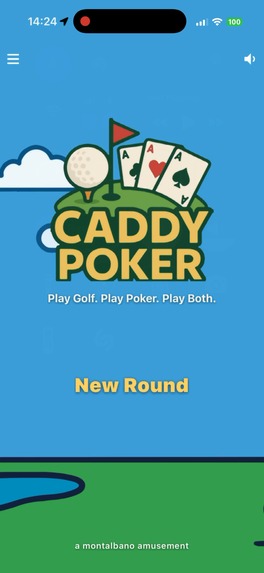
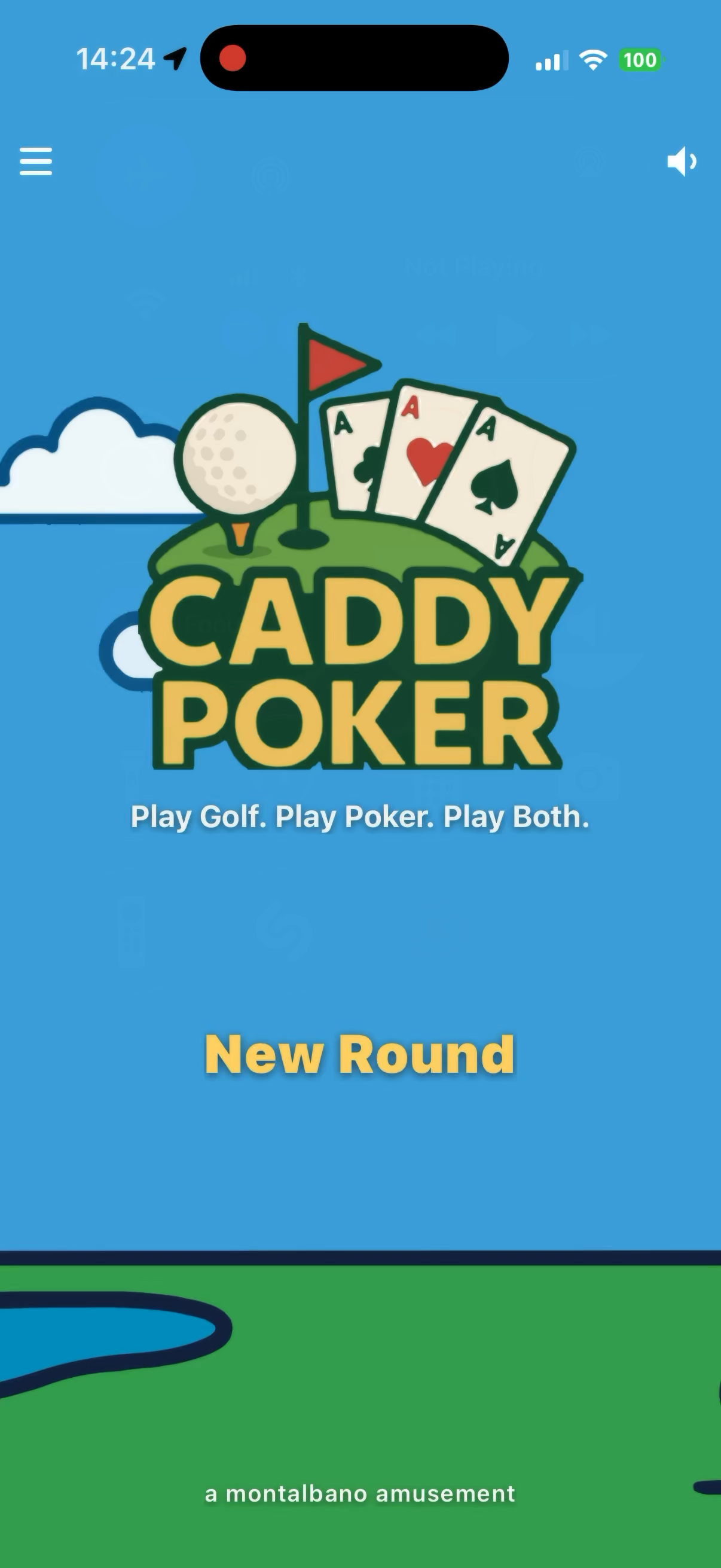
Intro screen
-
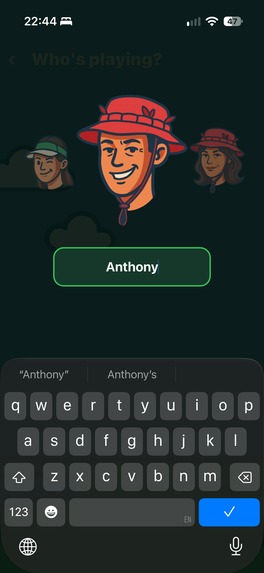
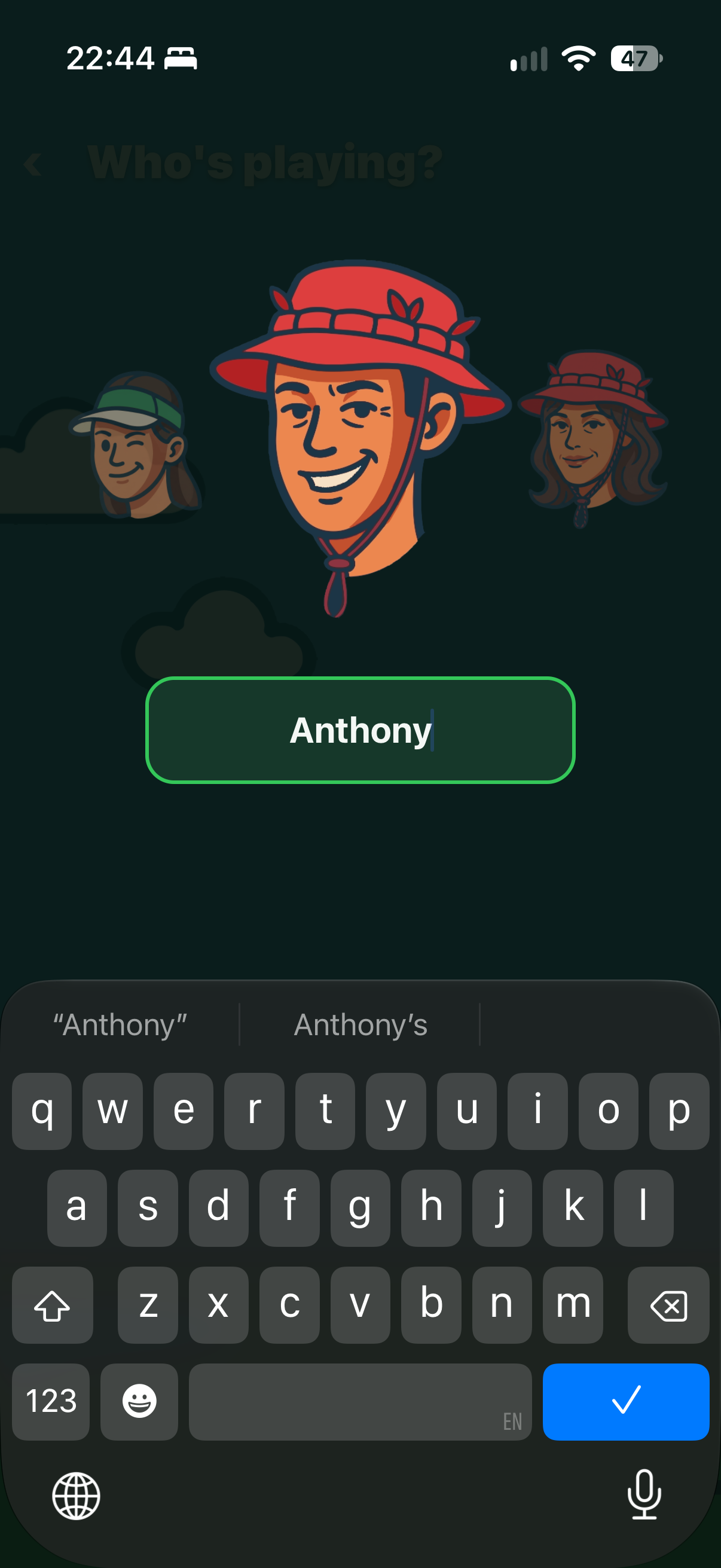
Selecting your character
-
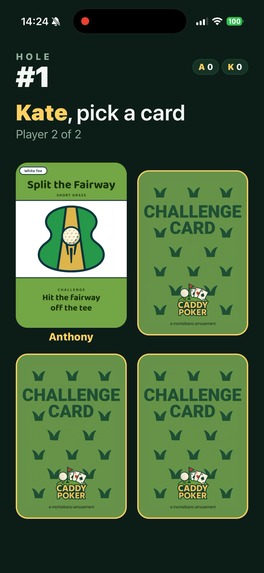
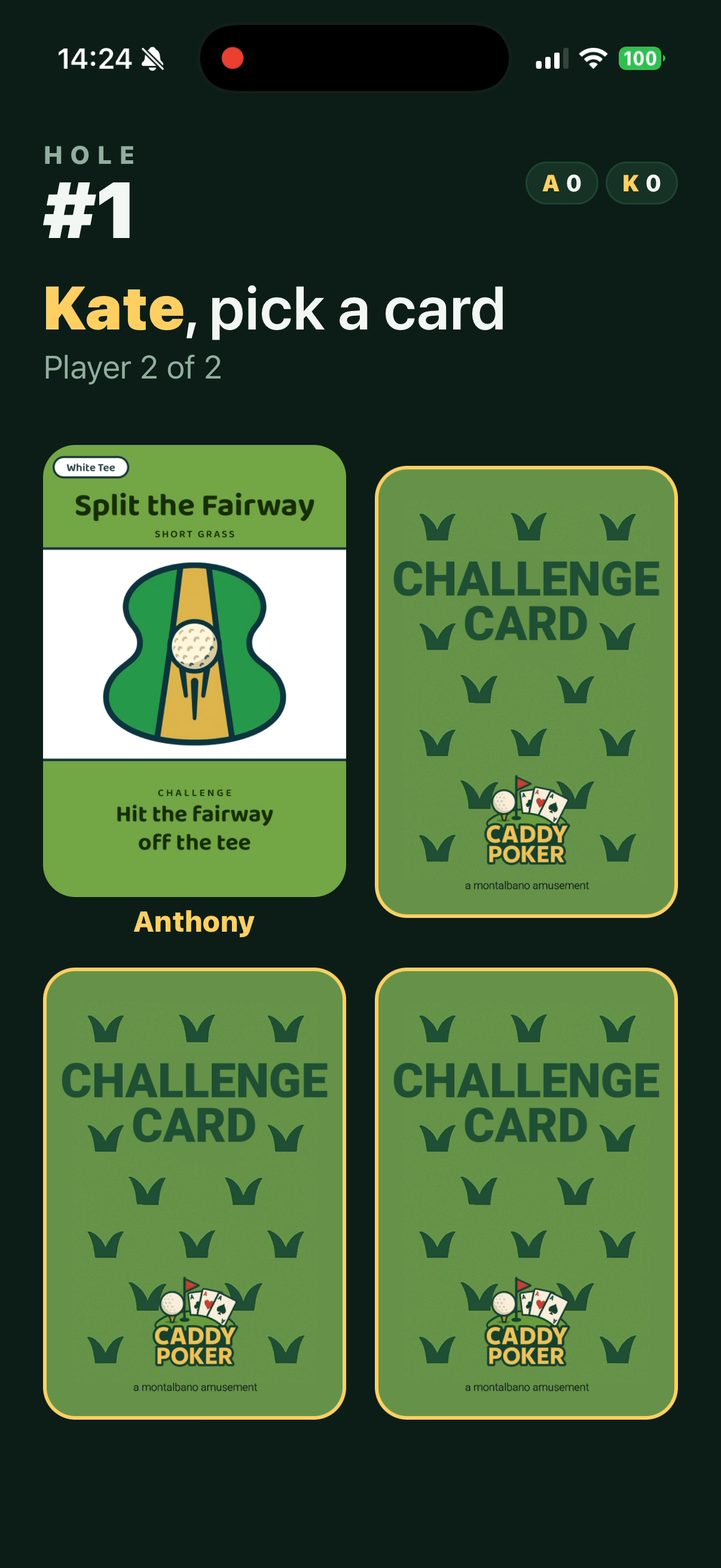
Drawing a card for a hole
-
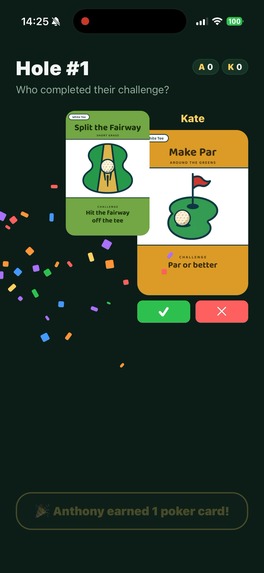
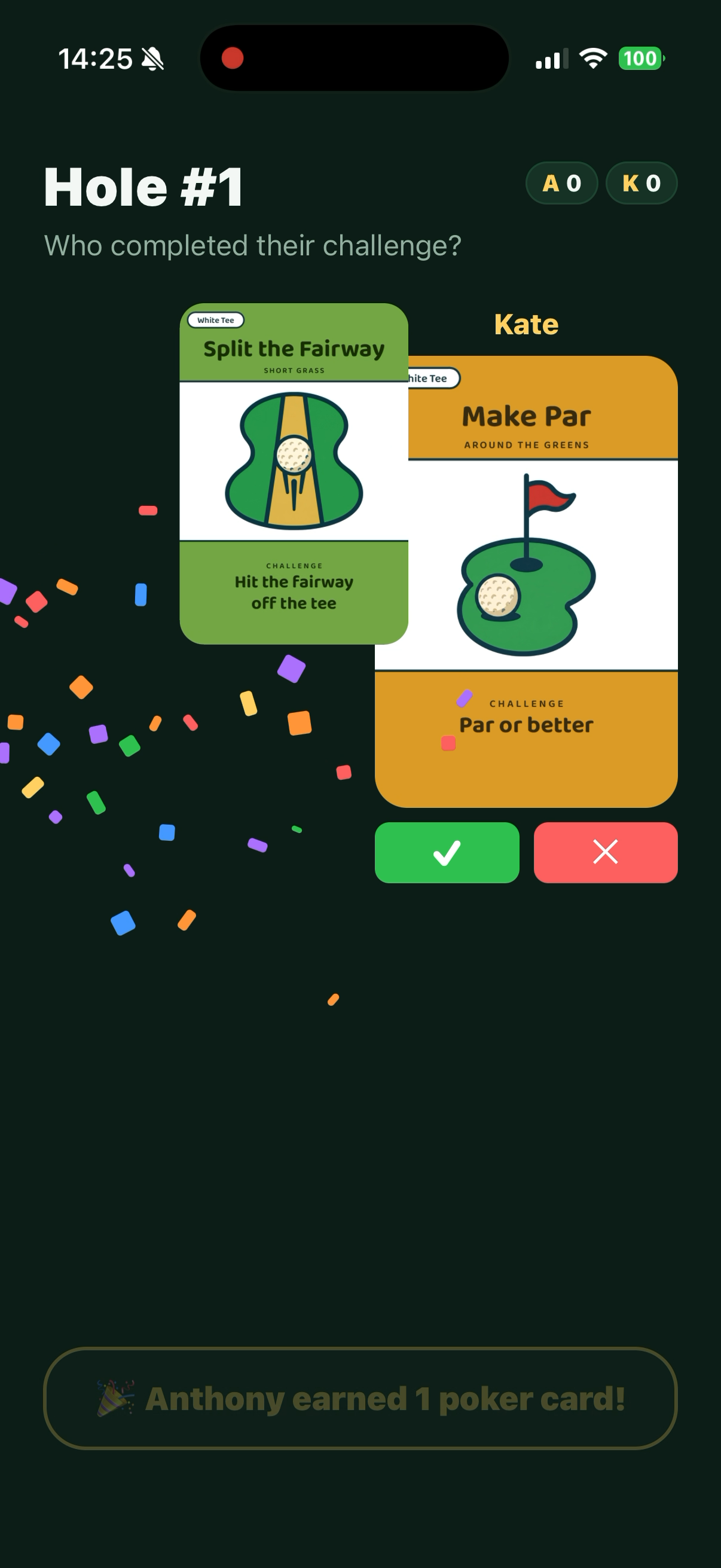
Earning a card
-
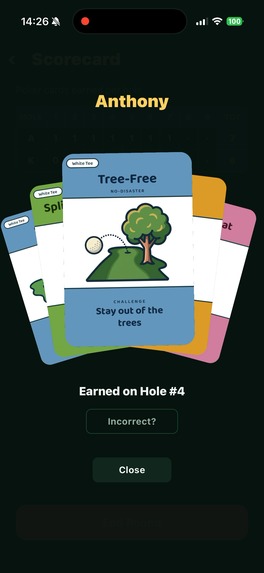
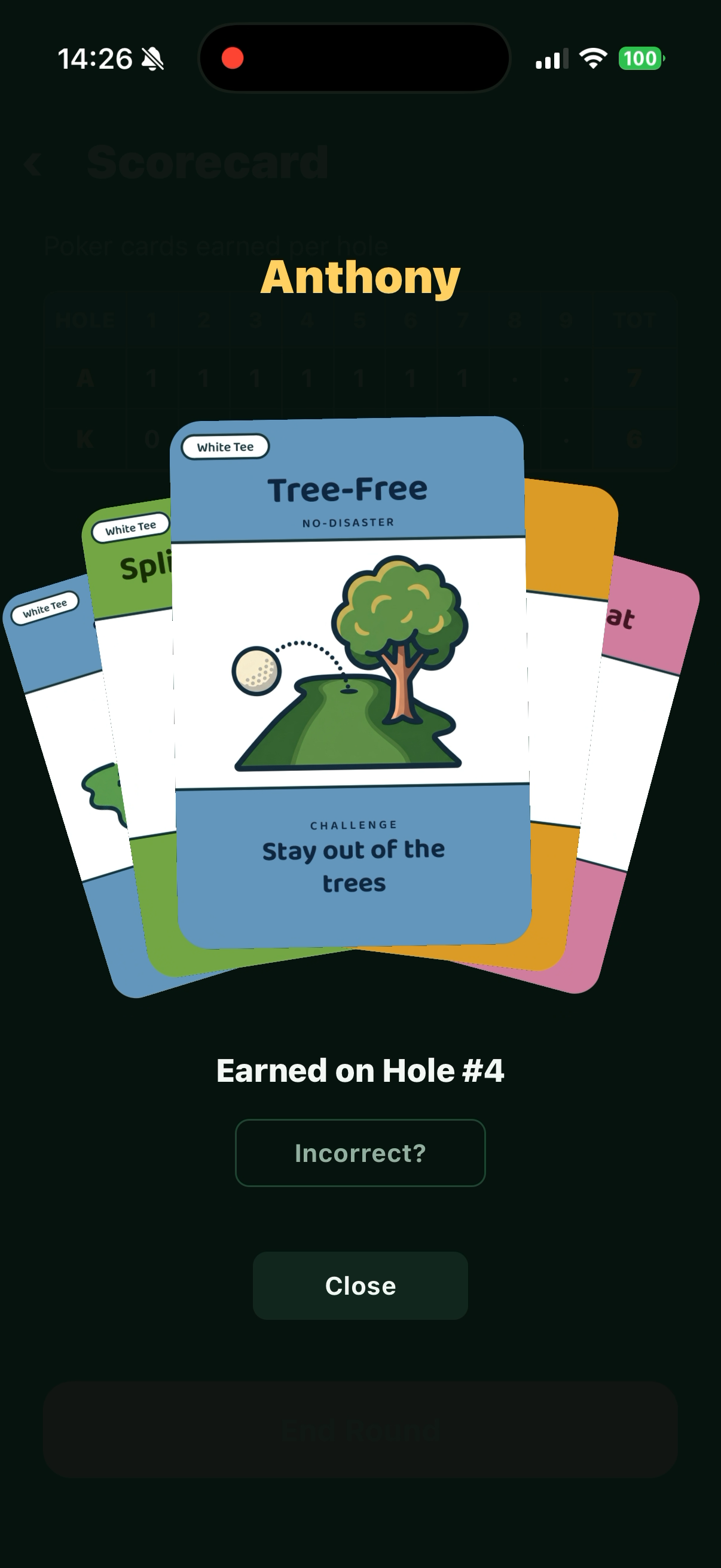
Viewing all cards you've earned
-
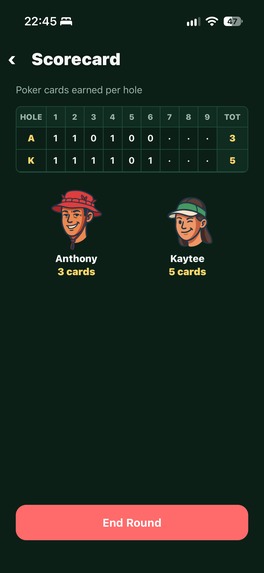
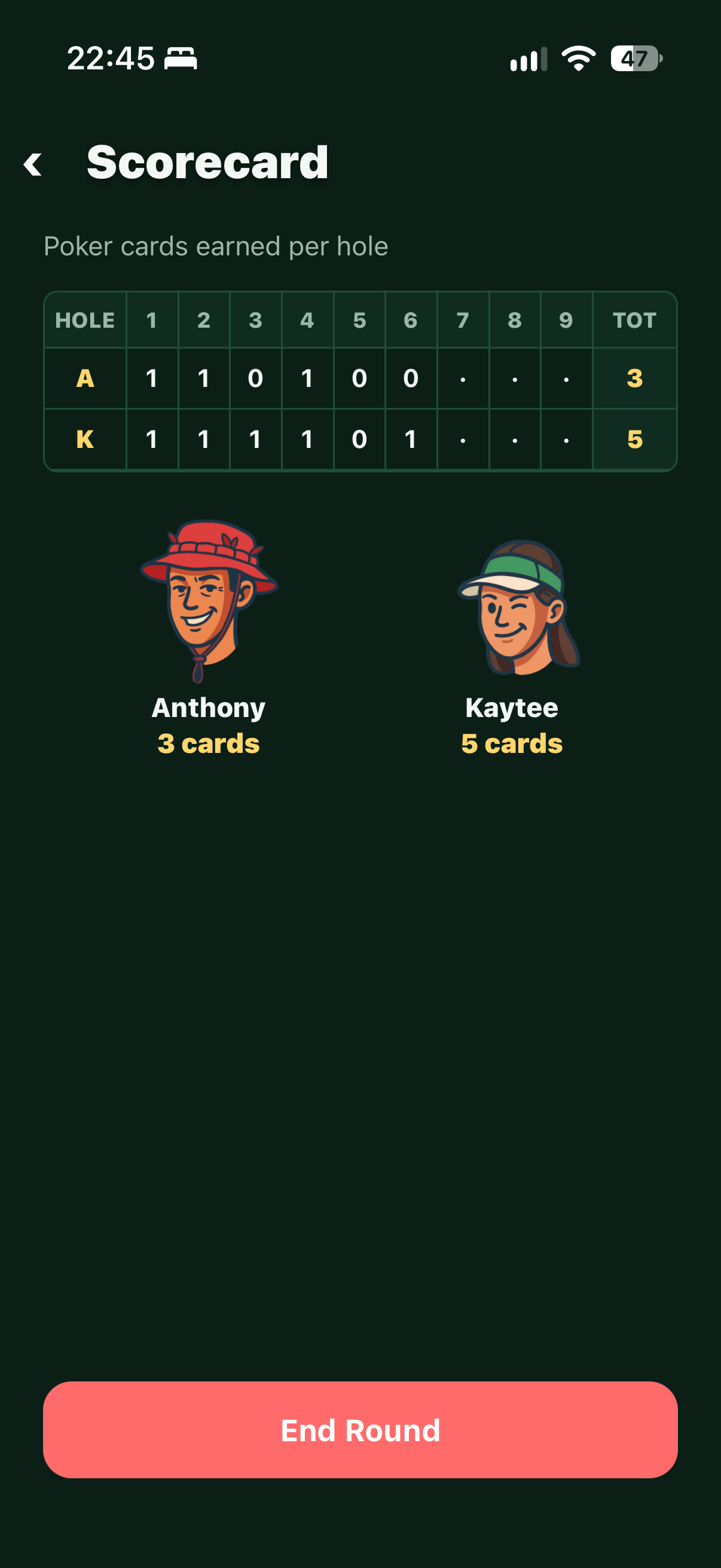
Seeing the score cards between players
-
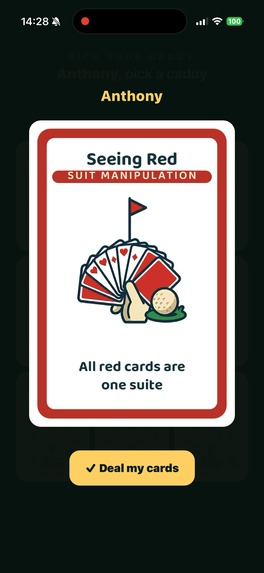
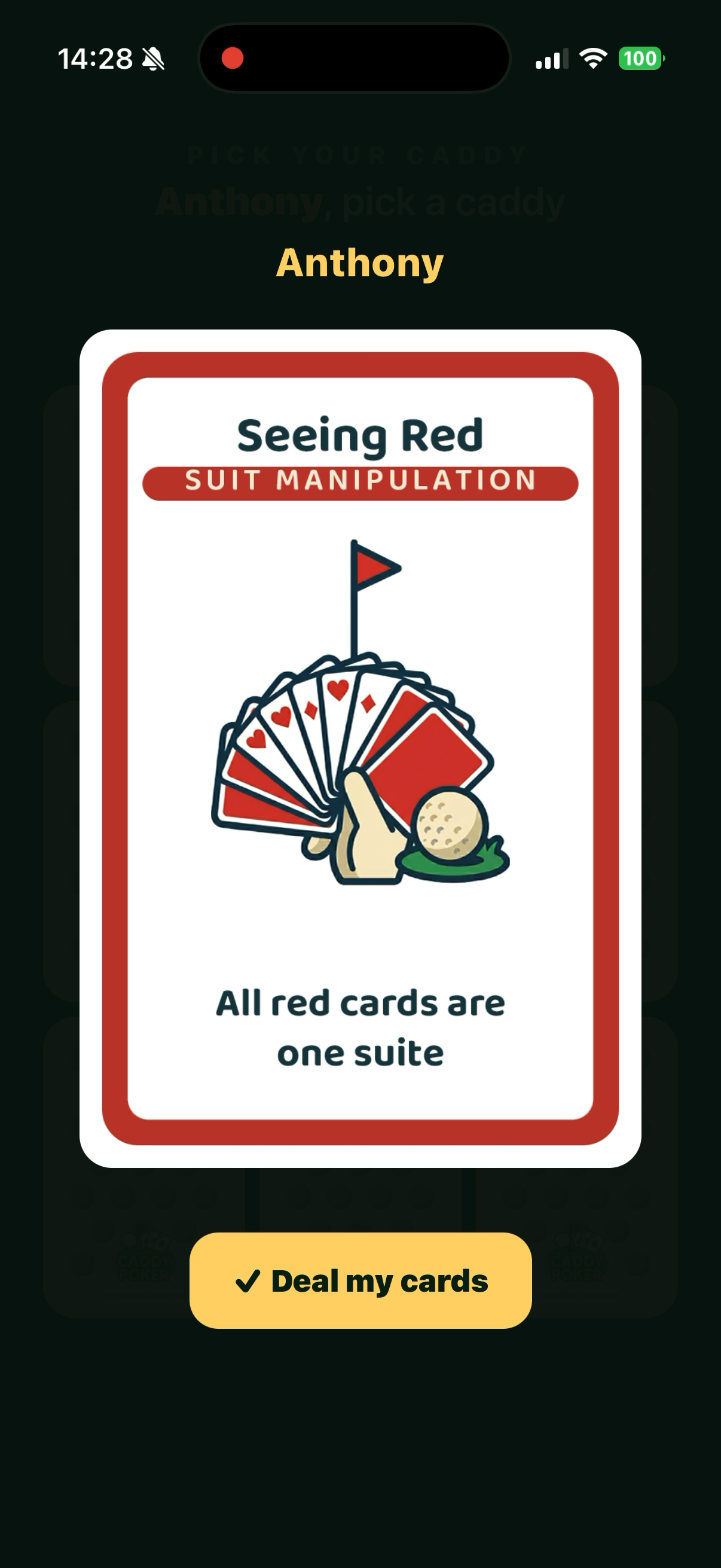
A caddy card
-
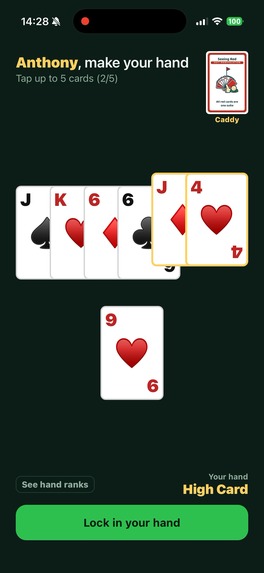
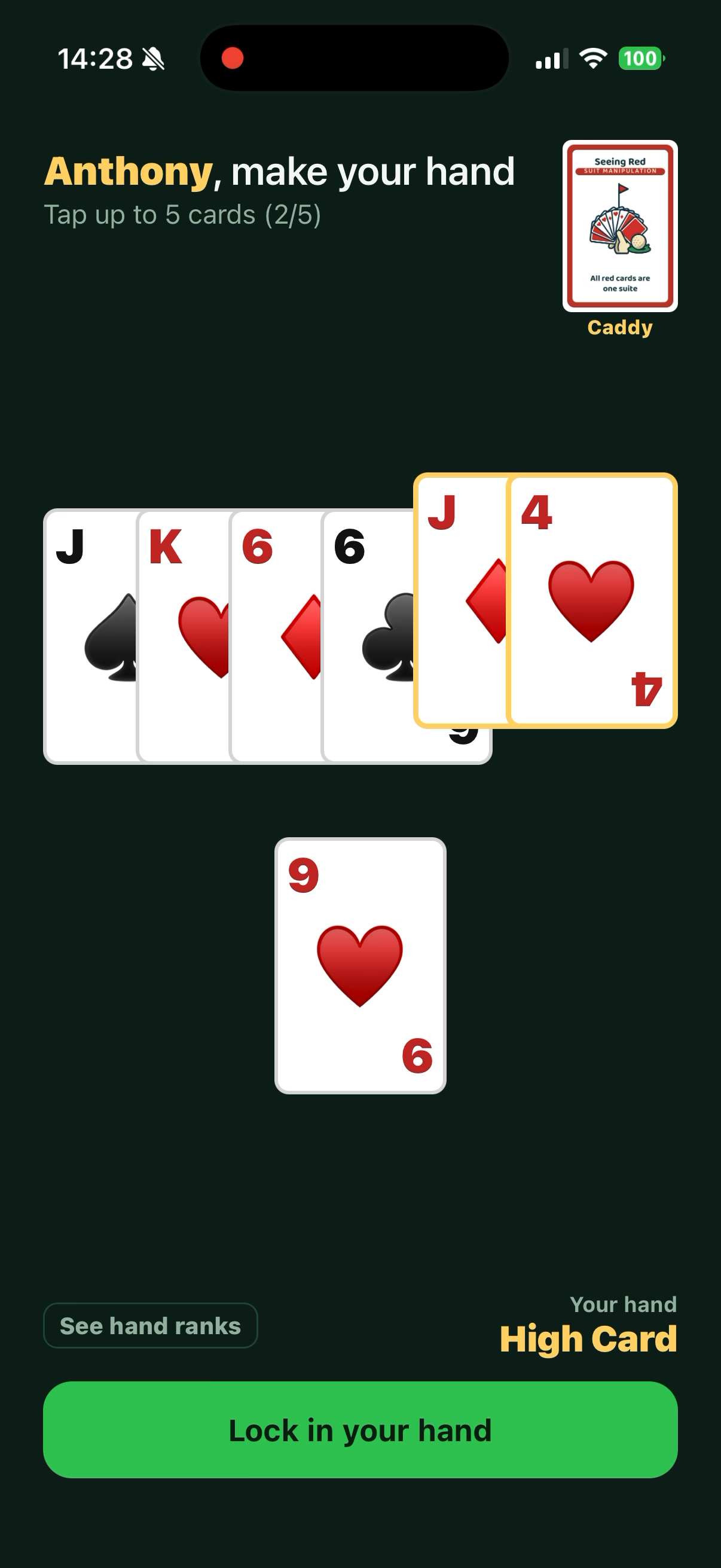
Building your poker hand
-
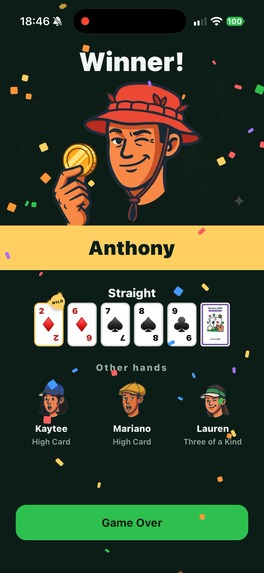
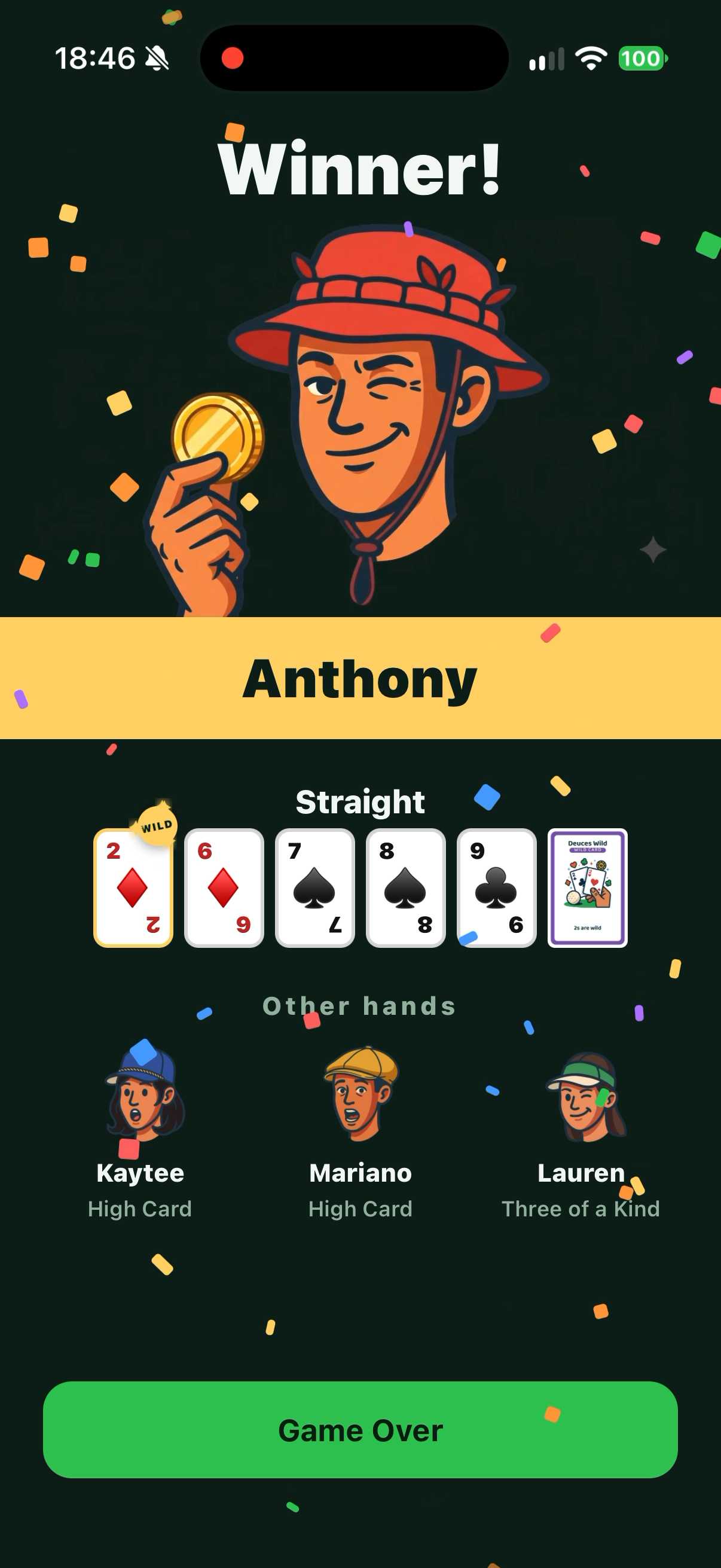
Revealing the winner!
-
Logo
Inspiration
My golf league plays a putting side game. One putt earns you two playing cards, two putts earn you one, and three or more earn nothing. At the end of the round, whoever can make the best poker hand wins. Around the same time, a friend of mine was designing a card game built around challenges on each hole.
Both games stuck with me, and I wanted to combine them: challenges that fit into a normal round without slowing it down, where completing one earns you poker cards. Most side games reward whoever is the best golfer. In this one, the worst golfer in the group can still win on the 18th green.
I started with physical cards to see which challenges actually worked. After dozens of rounds with friends, I wanted to turn it into a simpler mobile app with a retro feel. I also loved the thrill of opening Pokémon card packs, so I organized the challenges into packs you can open, each with its own mix of skill and fun.
That became Caddy Poker: Play Golf. Play Poker. Play Both.
What it does
Caddy Poker turns any round of golf into a poker game.
- Each hole comes with a challenge card. Complete it and you earn a playing card.
- Six challenge packs range from easy to hard. Some test skill, like hitting the fairway or making a 20 foot putt. Others are just about fun, like the Etiquette pack, where one challenge is simply "Don't walk on someone's putt line.". We also have the Matchup pack, where only one challenge is set for all golfers, such as "Longest drive". You can mix and match packs to create a wide variety of game plays.
- After 18 holes, every player builds their best five-card poker hand from the cards they earned. Best hand wins.
- The Caddy Deck adds a twist at the end. Each golfer draws one Caddy card, which adds a wild-card rule for the showdown, such as "All reds are one suit," "A four-card flush counts as a five-card flush," or "8s are wild." These give every player more ways to make a strong hand, so the final reveal stays unpredictable.
- A Live Activity view shows everyone's current hole challenge at a glance, so the whole group knows what's at stake without passing a phone around.
The app handles everything the paper version couldn't: dealing challenges, tracking who earned which cards, and running the showdown. Haptic feedback means you can play without staring at your phone between shots.
Pricing: You get the full game free for your first 36 holes, so a group can play two complete rounds before paying anything. After that, the free version drops to 9 holes, 2 players, and a limited set of packs. A one-time $9.99 purchase unlocks everything for good, and early players can get it for a $6.99 launch price.
How I built it
I built Caddy Poker solo, covering game design, the app, the website, and marketing.
- Paper prototype first. Before writing any app code, I tested the challenges on physical cards over dozens of rounds. The app only had to digitize a game I already knew was fun.
- App: React Native with Expo, live on the App Store, with Google Play coming soon. Key moments, like earning a card or the final showdown, trigger haptic feedback.
- Backend: Supabase for data and game state.
- Monetization: RevenueCat handles the one-time unlock (currently a $6.99 launch price, $9.99 regular) and its entitlement. The app tracks free holes played and checks the entitlement to decide when a player hits the free-tier limits. Because RevenueCat covers both platforms, the Android launch won't need separate billing code.
- Telemetry: PostHog tracks how often each challenge gets completed.
- Card design: All 100 challenge cards, spread across 6 packs, live in a structured Notion database. That made it possible to rebalance and rewrite cards in batches instead of editing them one at a time.
- Art: Illustrations were generated with Gemini, then cleaned up in Photoshop.
- Video: Tutorial and social videos were edited in CapCut.
- Website: I built caddypoker.com on WordPress. It has strong SEO tooling, and its CMS makes the content easy for me to manage.
- Tooling: I built both the app and the website in VS Code with Claude Code.
Balancing with data. The goal is for players to earn at least 4 cards over 9 holes and 8 cards over 18 holes. That's enough to build a real hand without making every hand a lock. PostHog shows how often each challenge actually gets completed, and I use that data to sort challenges into packs by difficulty. The Caddy Deck's wild-card rules then give every player more options for building a stronger hand, even on a rough day.
Challenges I ran into
- The physical version didn't scale. Players had to keep track of challenge cards, who won which poker cards, and a second deck, the poker deck, to draw from. Cards got left in golf carts and lost, and others got damaged, because that's what happens to cards outdoors. These problems are exactly what the app solves.
- Deciding what counts as a win. Players kept disagreeing about whether they had completed a challenge. I added a "How to win" line to every card that spells out exactly what counts, so groups don't argue mid-round.
- Balancing across skill levels. A card that's trivial for a single-digit handicap is impossible for a beginner. Sorting challenges into six packs from easy to hard, based on real completion data, is how I address it.
- Showing the game on camera. Generic golf footage doesn't explain Caddy Poker. The mechanic only comes across when you frame the card read, the reactions, and the showdown, not the swing.
Accomplishments that I'm proud of
- Taking a game from a league side bet to paper prototypes to a live app with working in-app purchases, as a solo developer.
- 418 holes played during TestFlight, before the app was even public.
- Launching publicly on September 10, with a 16.4% App Store conversion rate in the first week. That was late in the golf season, and before I'd spent anything on marketing.
- A game that's playable by a mixed-skill foursome, where the worst golfer in the group can still win.
- A 100-card challenge system tuned with telemetry, not gut feel.
- A distinctive retro art direction: sky blue, thick navy outlines, and chunky gold type that doesn't look like every other golf app.
What I learned
- Prototype on paper first. Dozens of paper rounds told me what was fun, and showed me which problems the app needed to solve.
- Game design is mostly tuning. The core idea came quickly. Making it fair and fun across skill levels takes ongoing iteration.
- Clarity is a feature. A single "How to win" line on each card removed most of the arguments.
- Instrument everything. Completion data on each challenge is far more reliable than my assumptions about which cards are hard.
- For short-form video, reactions beat action. Nobody scrolls for a golf swing. They stop when someone completes a challenge on the course and is rewarded.
What's next for Caddy Poker
- Launching on Google Play.
- Making the card illustrations more consistent across all packs.
- Re-sorting cards between packs as usage data comes in.
- Possibly limiting the number of redraws per game.
- Validating the pricing model against real conversion data.
- A spring 2027 marketing push timed for the start of golf season.
- Learning from players. Every round played teaches me something, and I'll keep improving the game based on what players tell me.
Built With
- activitykit
- capcut
- expo-haptics
- expo.io
- gemini
- ios
- notion
- photoshop
- postgresql
- posthog
- react-native
- revenuecat
- supabase
- swift
- testflight
- typescript
- widgetkit
- wordpress

Log in or sign up for Devpost to join the conversation.