-
-
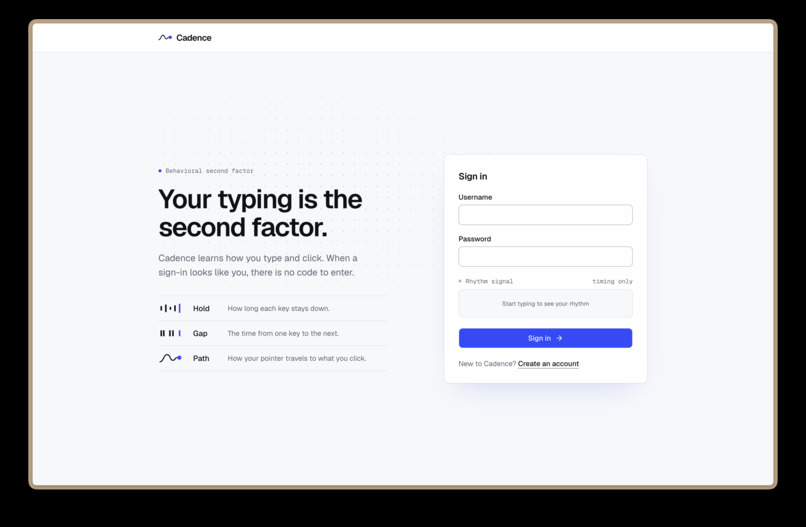
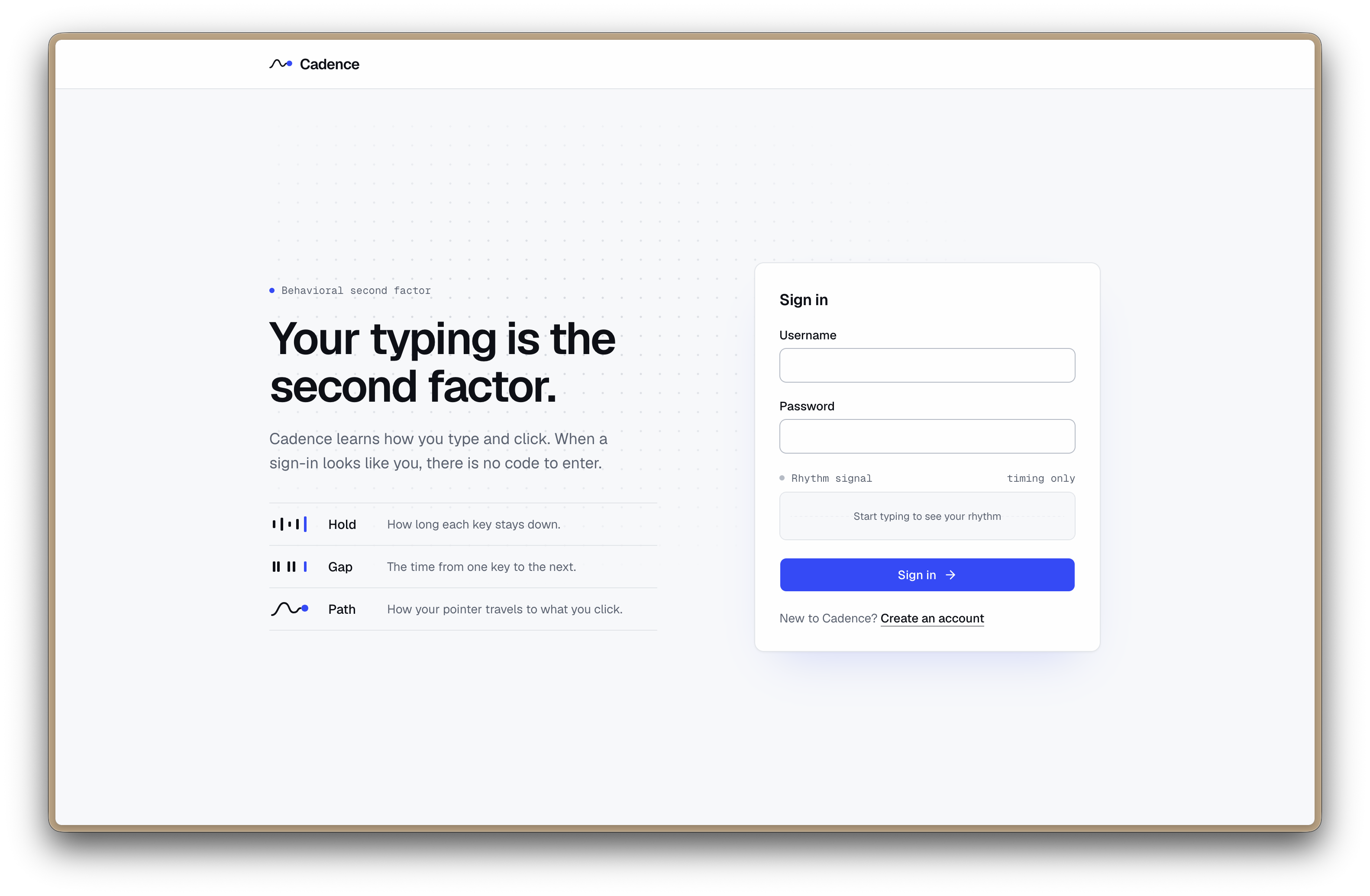
Login Page
-
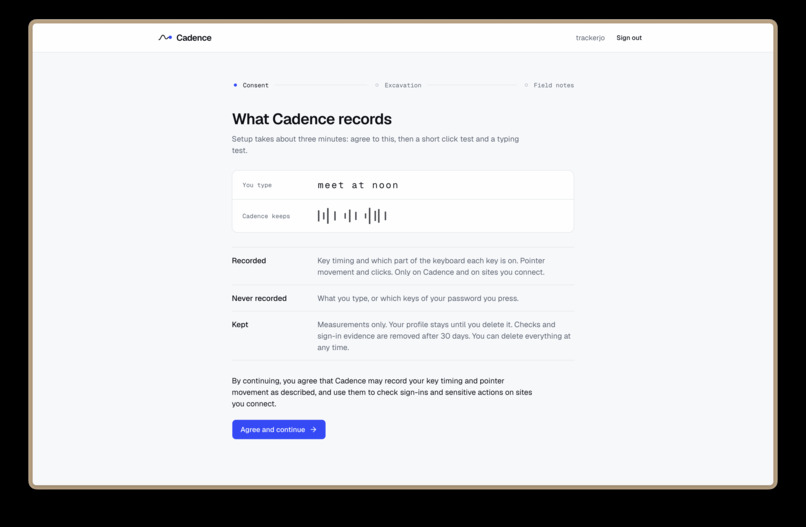
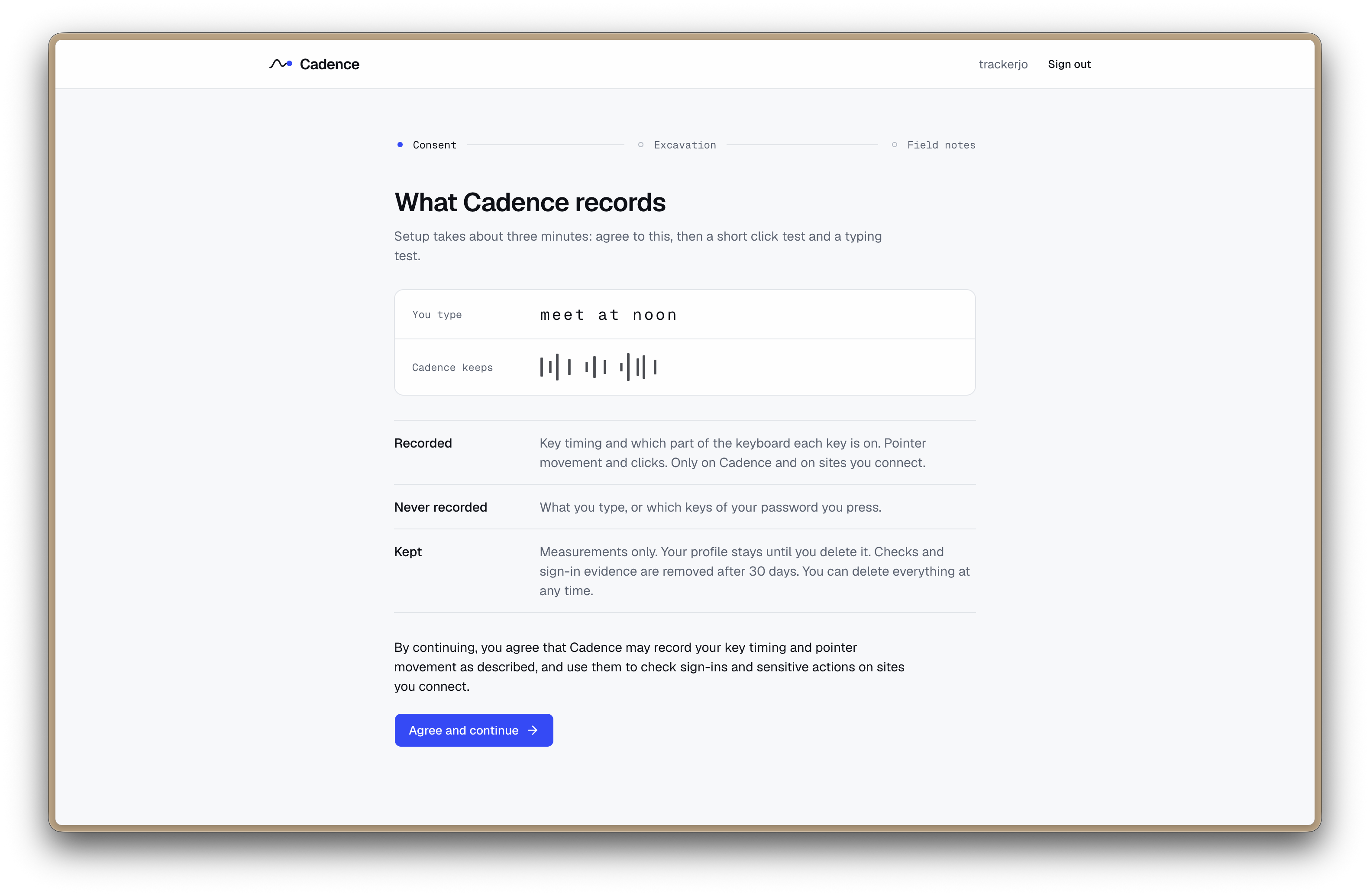
Welcome - Setup
-
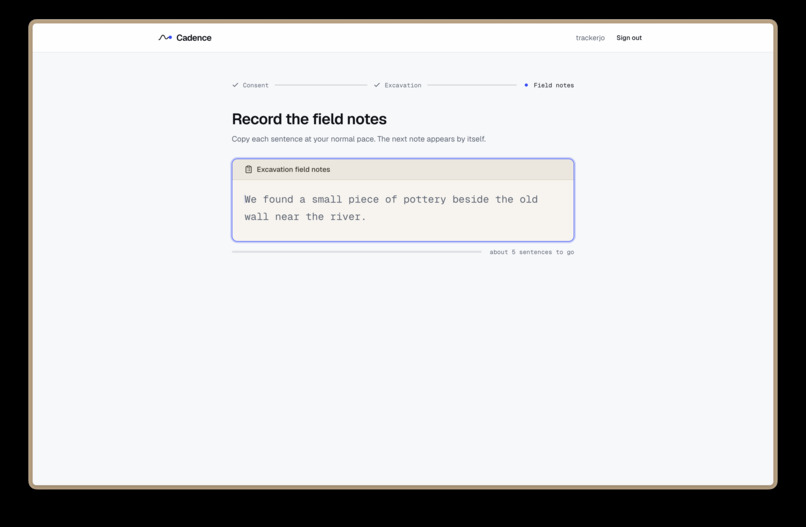
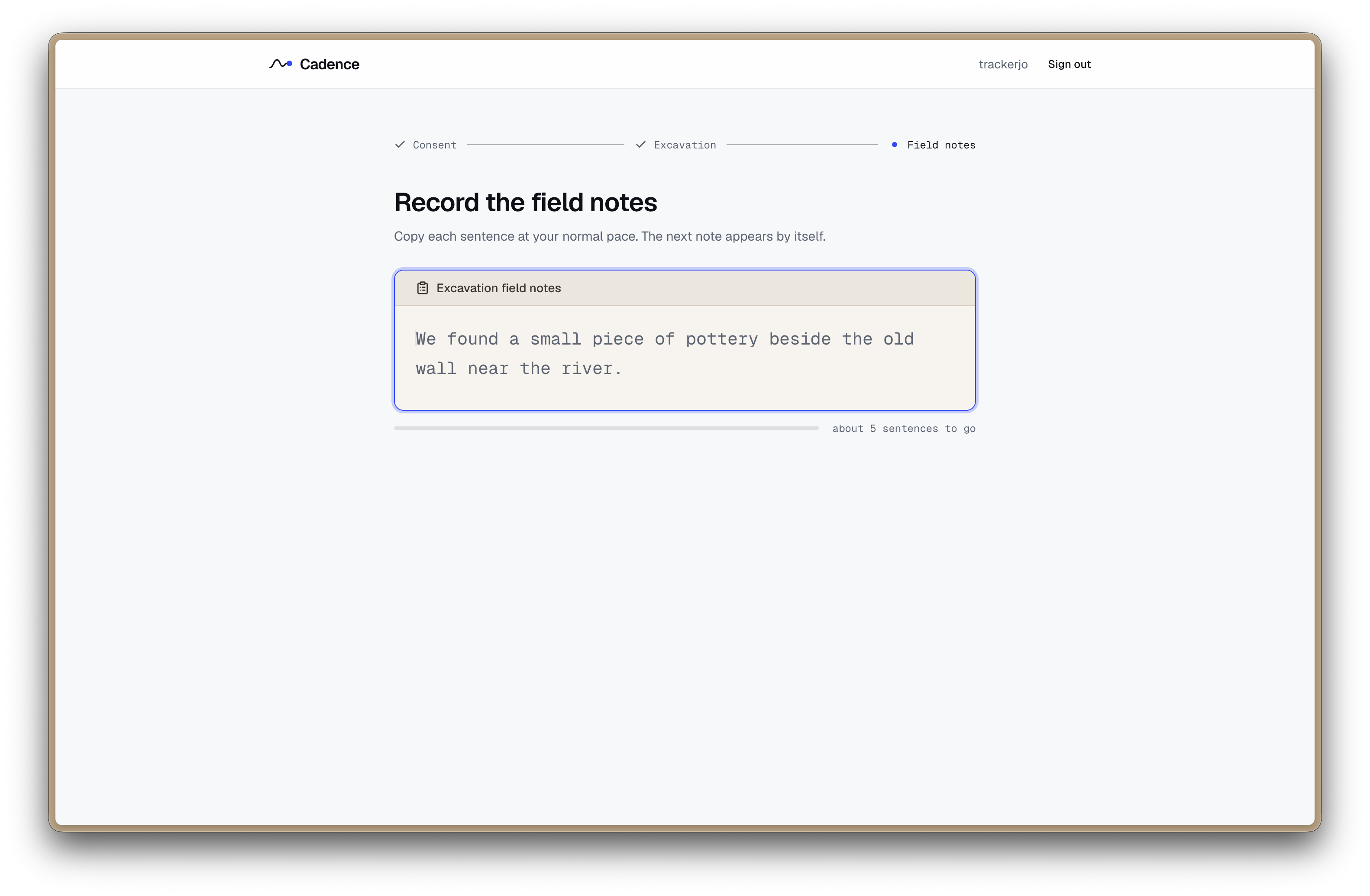
Typing - Setup
-
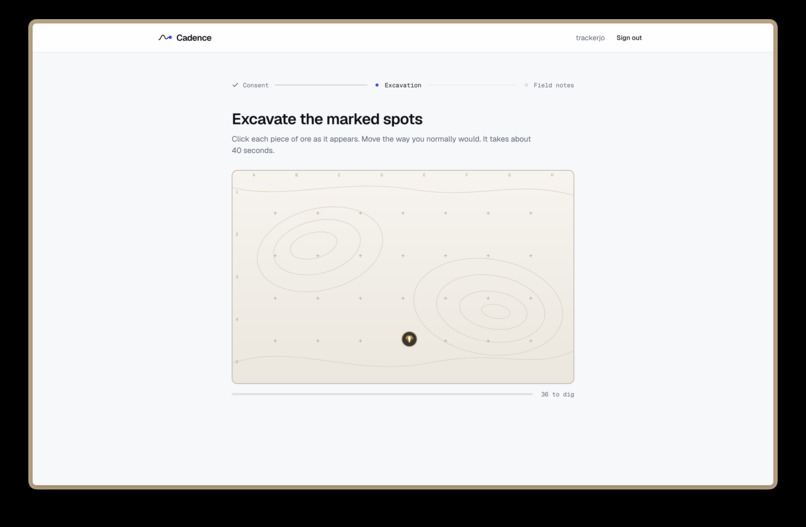
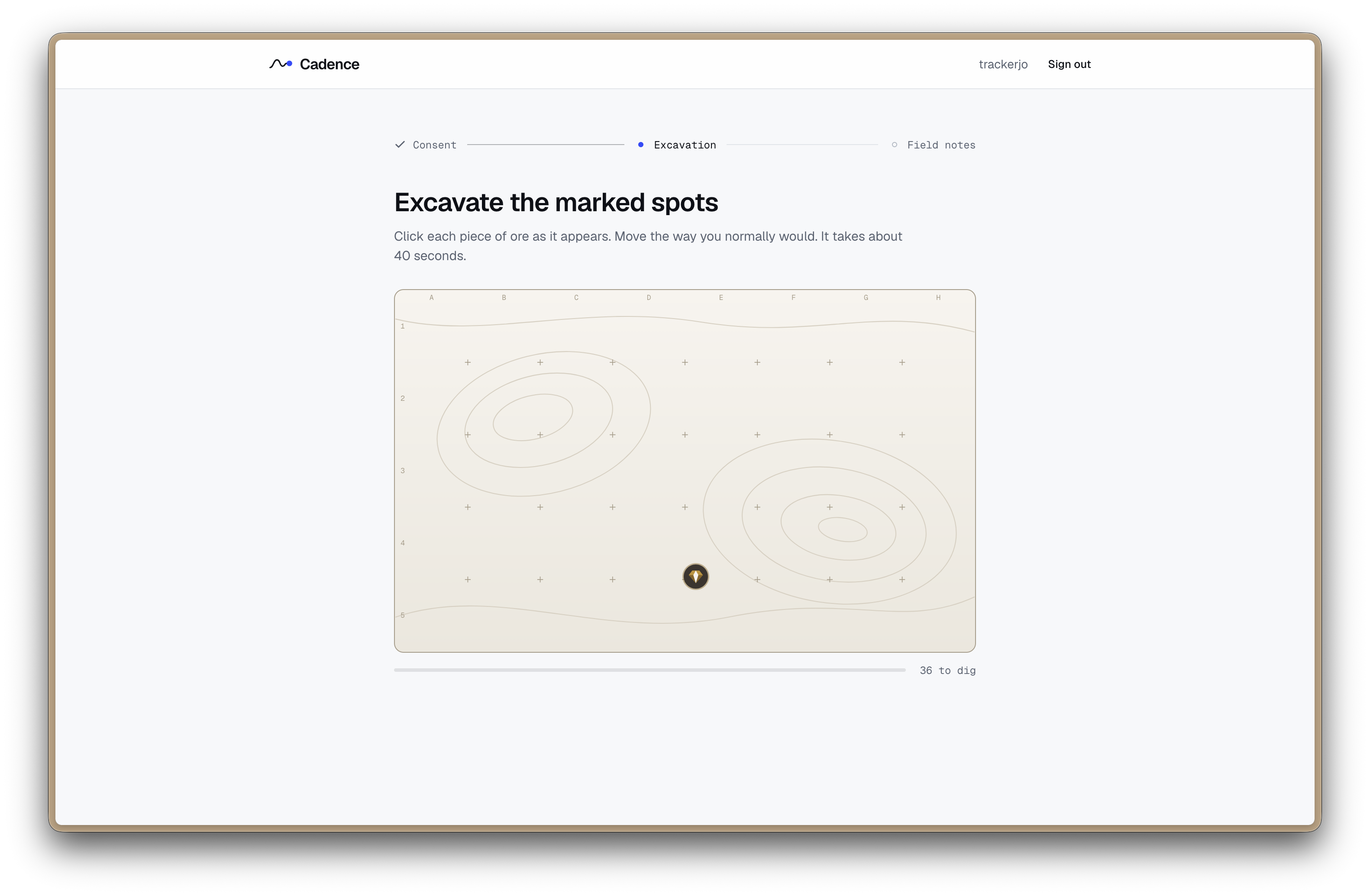
Clicking - Setup
Inspiration
We read about a Counter-Strike 2 research project that recognized players by how they moved and clicked. It made us wonder whether the same idea could make two-factor authentication easier. Could a website use the rhythm of the password you were already typing to help verify it was you?
The problem
When passwords leak, anyone who gets hold of one can try to sign in as you. Two-factor authentication adds another layer, but it often means reaching for your phone, switching apps, or copying a code. And if an AI agent already has access to your inbox or messages, it can read and enter the same one-time code you can.
That led us to ask whether the way you type and click could help a website verify it’s really you, without asking for a code every time.
What it does
Cadence is a second-factor prototype that websites can plug into. You set up a profile with a short typing and clicking exercise, then link it to a site. On your next sign-in, Cadence checks your typing rhythm. If it matches closely enough, you can continue without fetching a code. If Cadence is unsure, it offers a quick typing or clicking challenge based on which one your profile matches more reliably. The demo also offers a simulated authenticator as a fallback.
We built Northwind CRM, a fictional partner site, to show how Cadence works at sign-in and before sensitive actions like exporting customer records or deleting an account.
How we built it
We built a TypeScript browser SDK, two React apps, and a Python backend with FastAPI and SQLite. The SDK turns keystrokes into timing and broad keyboard zones before sending evidence to Cadence. Password fields send timing alone. The partner verifies the password on its own server and uses an evidence token to ask Cadence for a decision.
We trained separate scikit-learn models for short sign-ins, longer typing samples, and mouse clicks using the Aalto 136M Keystrokes and SapiMouse research datasets. Verified sign-ins can also add new samples to a user’s profile.
Challenges and what we learned
Our first prototype used a clicking game. We liked the idea, but playing a game every time you signed in would add another step to the flow we wanted to simplify. That pushed us to use ordinary sign-in typing first and save the challenge for when we needed more evidence.
A login gives the model only a few seconds of typing. In our benchmark on held-out Aalto typists, the short sign-in model reached an AUC of 0.932, compared with 0.964 for 50-keystroke samples. Those sign-in samples were cut from copied sentences, so they only approximate real logins. In an early volunteer experiment, performance fell from 0.91 AUC within one session to 0.75 across sessions.
That drop changed how we designed the experience. Cadence can ask for more evidence when a sample is too short or someone’s rhythm changes. We came away with a prototype that treats behavior as one signal in a verification flow
Built With
- fastapi
- joblib
- lucide
- node.js
- npm-workspaces
- numpy
- pydantic
- python
- react
- scikit-learn
- sqlalchemy
- sqlite
- tailwind-css
- typescript
- uv
- uvicorn
- vite


