-
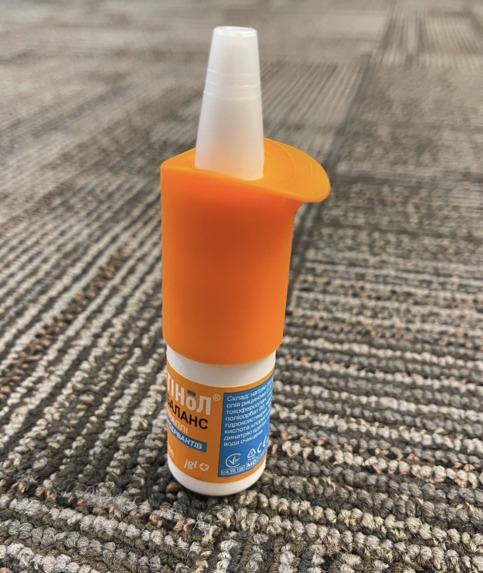
original object
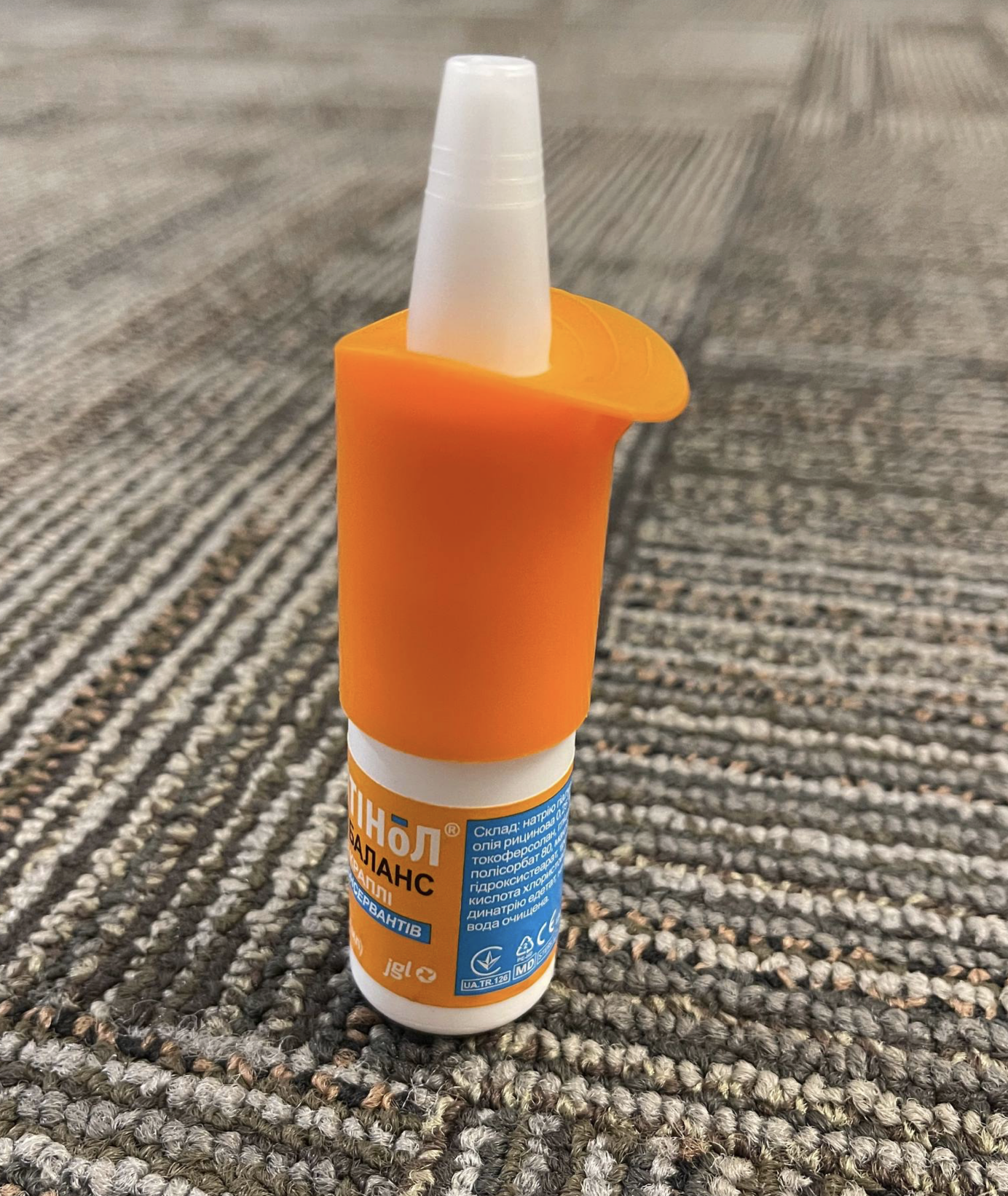
CAD-View
Photos and meshes in. Editable SolidWorks feature trees out — with honesty about what was measured vs inferred.
Inspiration
Anyone who has ever tried to reverse-engineer a physical part knows the painful middle ground: a beautiful mesh that is almost useless for engineering. Photogrammetry and neural reconstruction can give you geometry. SolidWorks wants a history — sketches, extrudes, revolves, cuts — that you can still edit next week when the supplier changes a diameter.
Most “mesh to CAD” tools stop at a dumb solid or a faceted STEP body. Once you import that, you have lost design intent. We wanted the opposite: a pipeline that treats reverse engineering as qualification, not magic. Preserve what was observed. Label what was inferred. Recover a parametric feature tree when the evidence supports it, and refuse to overclaim when it does not.
That idea came from watching real parts fail in both directions: a nasal-spray body that looked like an extrude until a scored revolve dropped the volume error from ~48% to ~2%, and mechanical parts where a single global volume score hid shallow grooves and radial holes. CAD-View exists to close that gap between “looks right in the viewer” and “opens as an editable .SLDPRT.”
What it does
CAD-View is a local web app plus geometry API that takes photos, video, or an STL/OBJ/PLY mesh and walks you toward engineering-ready output:
- Capture → observed mesh — Meshroom/AliceVision for classical photogrammetry, with VGGT + masked TSDF fusion as a neural rescue path when dense reconstruction is weak. Foreground masks (SAM 2.1) are reviewed by a human before densification so background furniture does not become part of the part.
- Qualify the mesh — Immutable source storage with SHA-256 provenance, watertightness / winding / component / Euler diagnostics, physical scale from a two-point constraint, and check dimensions with pass/fail tolerances.
- Recover editable CAD — Competing reconstruction hypotheses (prismatic extrude vs revolve about principal axes, cam-style sweep cuts, residual bosses/cuts/radial holes, revolved cuts) are scored against the mesh. Winners compile into a native SolidWorks feature tree through a typed .NET bridge (with VBScript fallbacks for simpler ops).
- Export with receipts — Download qualified meshes, STEP (analytic or faceted), SolidWorks scripts/parts, and machine-readable quality reports that say what agreed and what was left as residual.
In short: not just “AI made a 3D model,” but “here is a SolidWorks part you can edit, and here is how confident we are.”
How we built it
Frontend. React + Three.js viewer for inspection, scale picking, mask review, engine selection, and export actions. The UI stays close to the geometry: you see the mesh, the hypothesized solid, and the residual regions rather than a black-box progress bar.
Backend. FastAPI orchestration over a Python geometry stack (NumPy / SciPy / trimesh / CadQuery–OpenCascade) for diagnostics, solid agreement metrics, and parametric recipe search. Photo jobs call Meshroom; neural jobs call VGGT with confidence-masked TSDF fusion so CUDA memory can be shared with optional local scaffold models.
Parametric search. For a scaled mesh we build multiple hypotheses — for example revolve vs extrude about each PCA axis — refine parameters, and score volume agreement plus local surface residual. A residual loop then proposes additional features (bosses, cuts, radial holes, revolve_cut) under a bounded beam search so mixed histories are possible, not only a single primitive.
A typical selection objective combines global overlap with complexity control. Writing the volume IoU as
$$ \mathrm{IoU}(A,B)=\frac{|A\cap B|}{|A\cup B|} $$
we still gate acceptance of an extra feature by a minimum local improvement, because a part can sit at $\mathrm{IoU}\approx 0.97$ while still missing a hole that matters to manufacturing.
SolidWorks handoff. Accepted recipes compile to sketch + feature operations executed by a C# COM bridge (FeatureExtrusion, revolves, sweep cuts, hole cuts). The deliverable is a timestamped .SLDPRT with an editable tree, not a silent import of triangles.
Research discipline. Mesh-to-CAD literature is noisy and often mis-cited. We keep a paper ledger so every architectural bet (segmentation, residual scoring, native-kernel validation) maps to verified sources — and so we do not reinvent CADENA/CADReasoner-style loops under a new name.
Challenges we ran into
- Measurement vs inference. Neural meshes can look watertight while still inventing hollows or erasing glossy regions. We had to separate observed reconstruction from generative scaffolds and force human review of masks and scale.
- Global scores lie. High volume IoU can reject shallow grooves and thin radial holes. The spool case that “wins” as a single revolve at ~96.6% IoU still misses circumferential detail that a human sees immediately.
- Search geometry ≠ CAD kernel geometry. A cylinder that scores well as a 3D boolean can fail in SolidWorks when the exporter maps it to the wrong sketch plane or cut axis — producing under-defined sketches or rejected features.
- Feature vocabulary is unfinished. Domes become extrudes; fillets and patterns are not yet first-class operations; residual depth is bounded. Real mechanical parts outrun a short action set.
- Windows CAD automation. Sharing a GPU between vision models, keeping SolidWorks file locks honest, and making COM/VBS builds reproducible under real licenses is unglamorous and mandatory.
Accomplishments that we're proud of
- An end-to-end path from photos or STL → qualified mesh → editable SolidWorks history on a local machine.
- Hypothesis competition that correctly prefers a revolve for axisymmetric consumer parts instead of a bad default extrude (demo: ~48% → ~2% volume error).
- Mixed-history residual reconstruction that recovered a synthetic extrude + boss + annular revolved cut tree and rebuilt it natively in SolidWorks at near-perfect IoU.
- Provenance-first design: immutable sources, explicit unscaled photogrammetry labels, and quality reports instead of silent mesh surgery.
- A research ledger that keeps the roadmap honest about what papers actually solve versus what is still engineering work (frames, rollback, local scoring).
What we learned
- Reverse engineering is a search + validation problem, not a single network call. Geometry agreement, topology, and native rebuild failures all have to vote.
- Photogrammetry still needs classical craft: overlap, lighting, masks applied at the right stage, and scale anchors before any dimensional claim.
- Editable CAD means speaking the kernel’s language — sketch planes, merge flags, body counts — not only approximating solids in Python.
- Literature helps most when you ask narrow questions (intersecting primitive segmentation, local residual objectives). Broad “CAD generation” papers rarely fix the failure on your desk.
- Shipping a demable
.SLDPRTforces better product decisions than optimizing a leaderboard metric alone.
What's next for CAD-View
- Local residual objectives so small holes and shallow grooves are not drowned by global IoU.
- Primitive-aware segmentation (cylinder / torus / hole patches) to propose features humans already see.
- Complete SolidWorks frames (origin + orthonormal basis), per-feature rollback, and scoring against the native rebuild — not only the manifold approximation.
- Broader operations: local revolves/domes, fillets/chamfers, and circular/linear patterns for repeated bosses and holes.
- Richer scan UX: confidence overlays, protect/erase regions, and clearer separation of observed vs inferred surfaces.
- Longer-horizon beam search with deletion/reordering so complex mechanical trees stay editable instead of collapsing to a single best solid.
CAD-View’s north star stays the same: geometry you can trust, history you can edit, and silence where the evidence is not there yet.


Log in or sign up for Devpost to join the conversation.