
💡 Inspiration
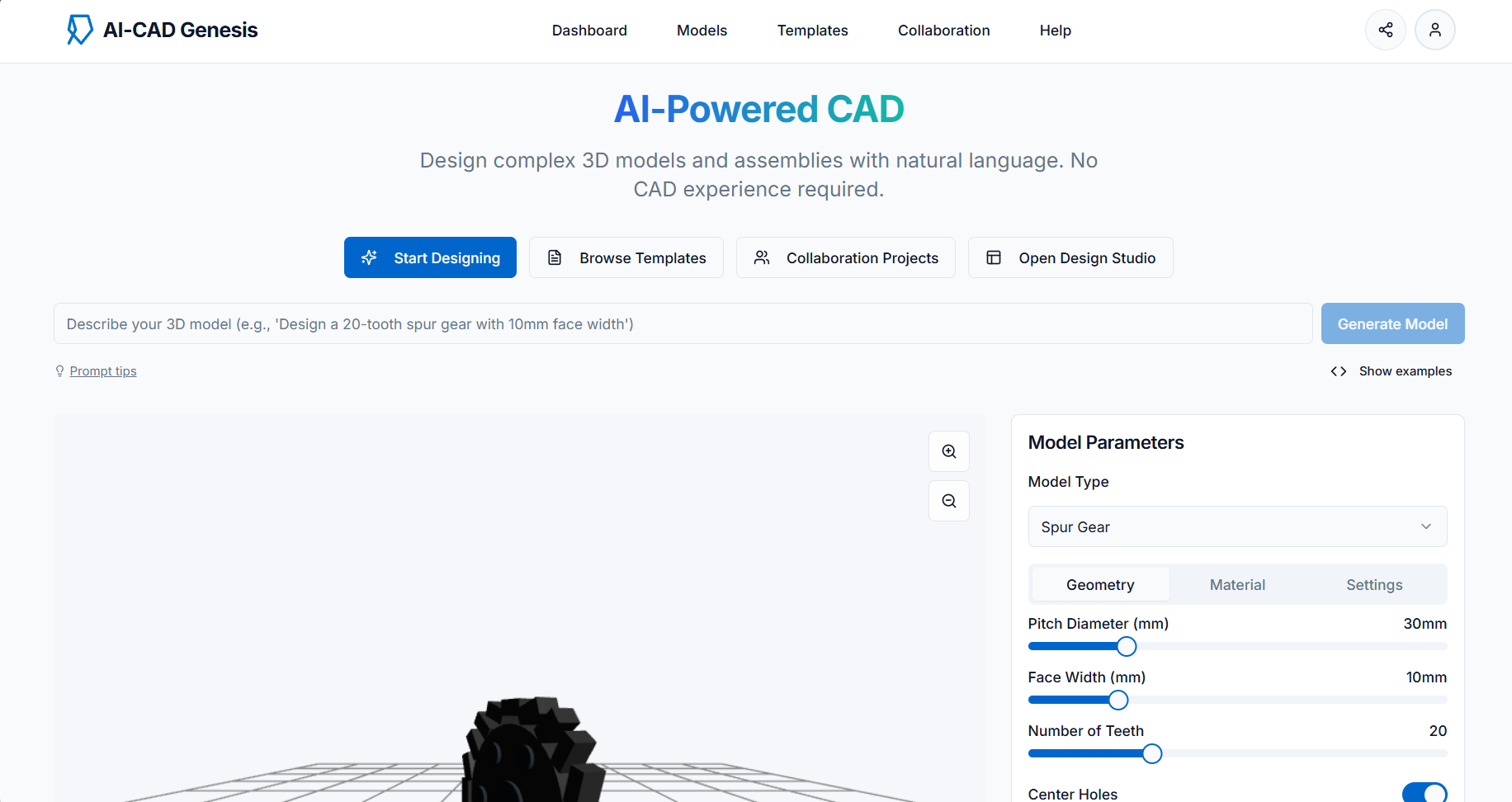
The mechanical CAD world has remained complex and manual for too long. While tools like SolidWorks, CATIA, and Fusion 360 are powerful, they require significant time, training, and domain knowledge. We envisioned a future where anyone — from a student to a seasoned engineer — could design real, simulation-ready mechanical parts and assemblies just by describing them in natural language. That vision became CAD.AI — an AI-native CAD platform that builds mechanical designs from words, not clicks.
🚀 What it does
CAD.AI is a next-gen AI-powered 3D CAD system that enables users to:
- 🧠 Prompt or voice-generate 3D parts and assemblies
- 🛠️ Fully edit features, sketches, constraints like traditional CAD
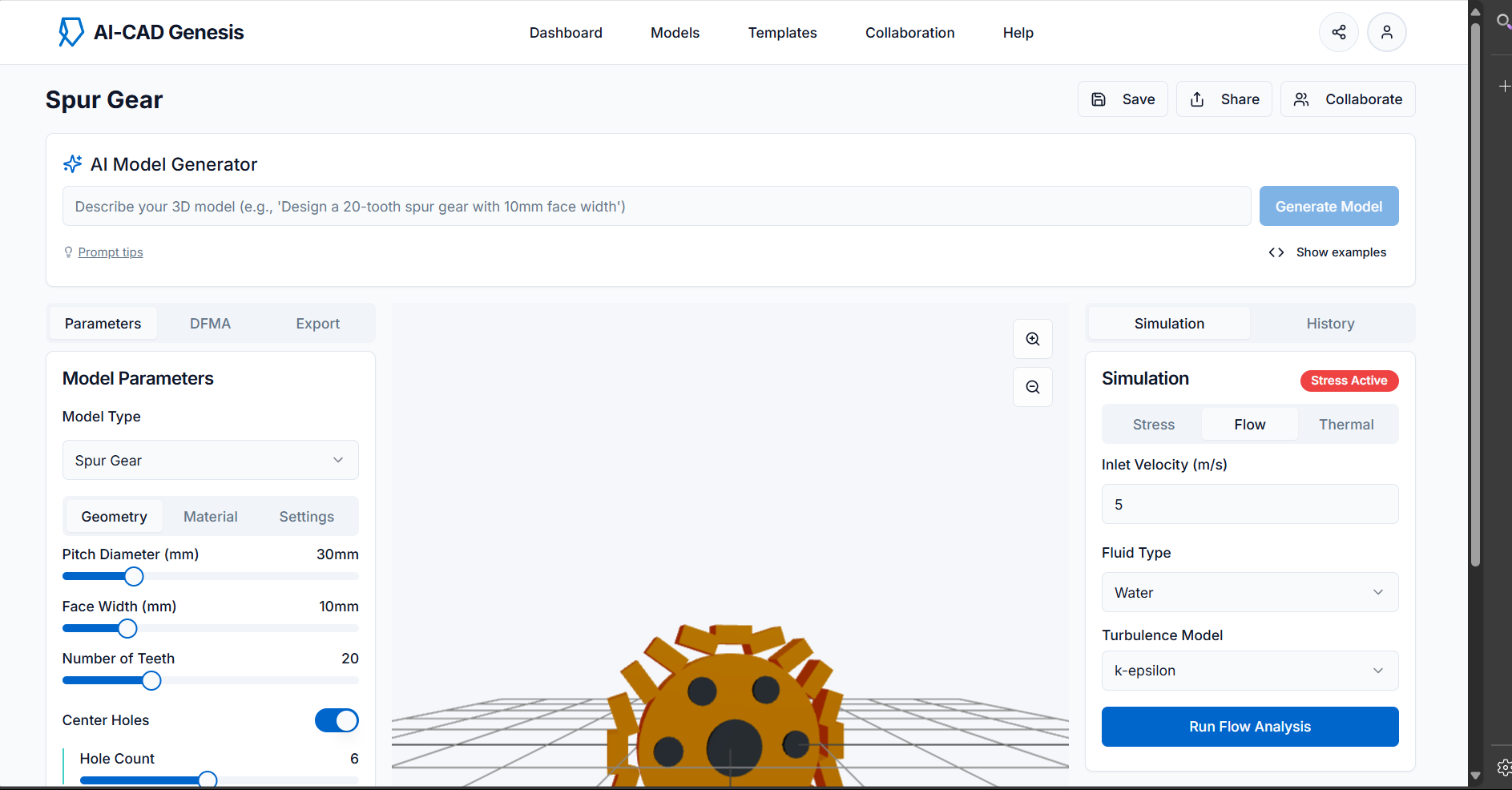
- 🧪 Run FEA/CFD simulations with smart AI-driven boundary setups
- ✅ Auto-check manufacturability with DFMA insights
- 🧾 Generate drawings, BoMs, and STL/STEP files automatically
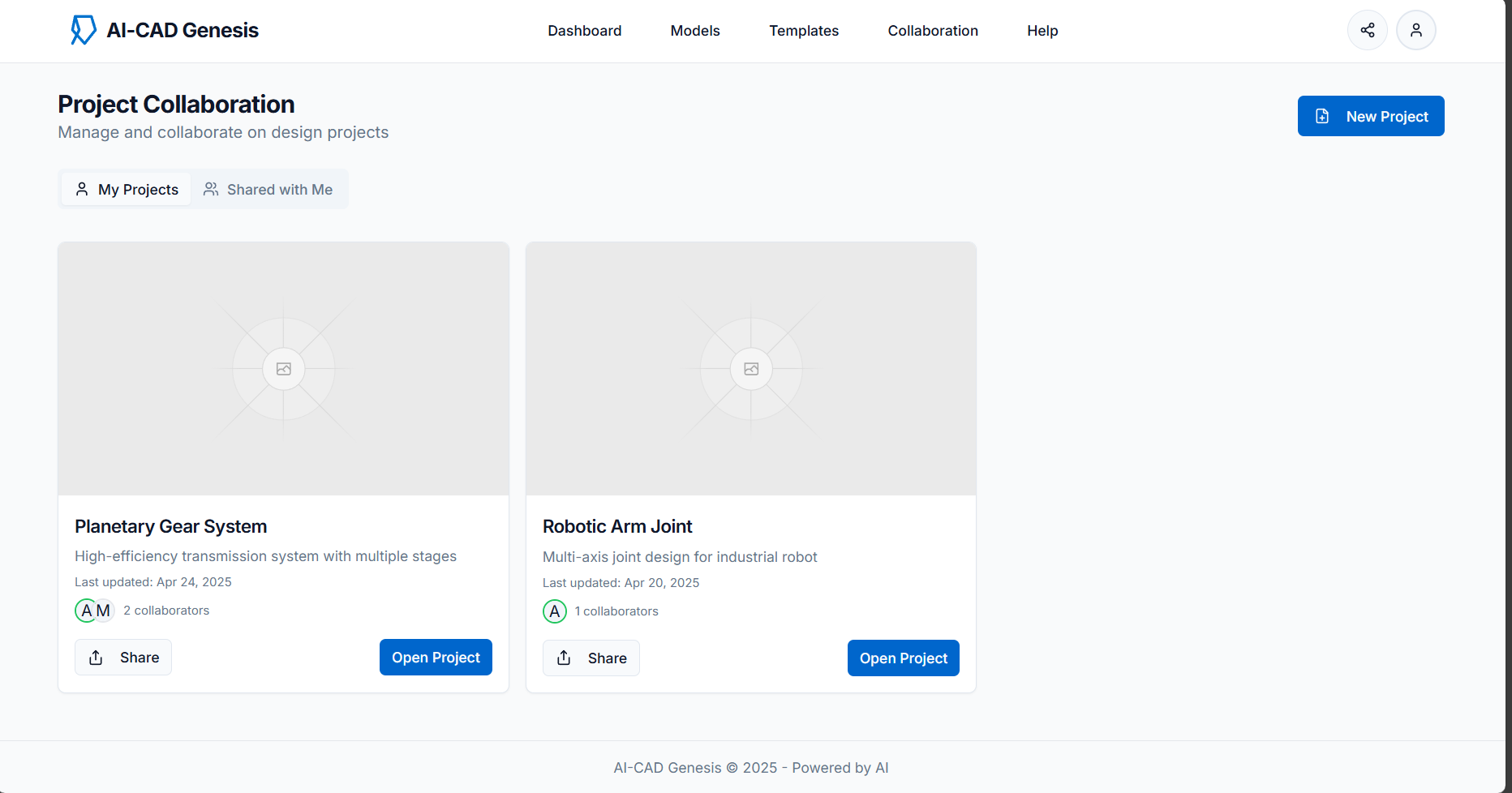
- 🤝 Collaborate with team members in real-time (Figma-style)
- 📱 Scan real-world parts and reverse-engineer with AR or image input
- 🔍 Analyze legacy files with prompt-based editing
All without touching a sketch tool — just describe what you want.
🛠️ How we built it
Our system is composed of several powerful layers:
- Frontend: React + Three.js for the interactive 3D interface and prompt input
- Backend: FastAPI and Python for AI orchestration and file generation
- CAD Core: Built on OpenCascade + custom geometry APIs for parametric control
- AI Layer: OpenAI GPT-4, Whisper (voice input), and LangChain pipelines for prompt translation and memory
- Simulation: OpenFOAM and CalculiX integrated for real-time FEA/CFD analysis
- Collaboration: WebSocket-powered real-time design sessions
We also trained custom NLP pipelines to interpret mechanical design language and developed a prompt-to-CAD DSL to bridge AI with CAD geometry.
😓 Challenges we ran into
- Translating natural language into precise parametric geometry with full constraints
- Real-time simulation integration without slowing the system
- Keeping the models editable and not just static outputs
- Designing an intuitive UI that doesn't overwhelm users with complexity
- Prompt parsing for edge cases and ambiguous mechanical terminology
🏆 Accomplishments that we're proud of
- Built a functioning prototype that generates 3D models from just one prompt
- Enabled editable CAD output that can be re-prompted or adjusted in real-time
- Successfully ran stress and thermal simulations directly on AI-generated parts
- Achieved DFMA analysis and optimization mode with one-click redesigns
- Created a full Figma-style multiplayer CAD session environment
- Integrated reverse engineering via prompt + image input (early stage)
📚 What we learned
- AI + CAD is not just a dream — it’s a solvable challenge with real-world potential
- Engineers love simplicity — hiding complexity behind AI-driven tools is powerful
- Voice input is surprisingly intuitive for CAD, especially when designing on the go
- Simulation setup is a massive bottleneck — AI-guided simulation is game-changing
- Users expect full editability even with AI-generated content — a big challenge!
🔮 What's next for CAD.AI
- 📱 Launch mobile app with scan-to-CAD and AR viewer
- 🧠 Fine-tune our GPT pipeline with more mechanical engineering examples
- 🛒 Build an integrated marketplace for AI-generated parts and manufacturing services
- 🔒 Add IP protection and patent-checking assistant for custom designs
- 🤝 Partner with universities, prototyping labs, and SMEs to roll out beta
CAD.AI is more than a product — it's the future of how mechanical engineers will think, design, and build.


Log in or sign up for Devpost to join the conversation.