Inspiration
In Colombia, "ponerle los cachos" means cheating. The joke behind Cacho-Map: when a couple's plans don't overlap, each one goes out separately, and that's where the "cacho risk" lives. Built on real taste data instead of a random quiz. It only measures plans, never real infidelity, and uses nicknames only.
What it does
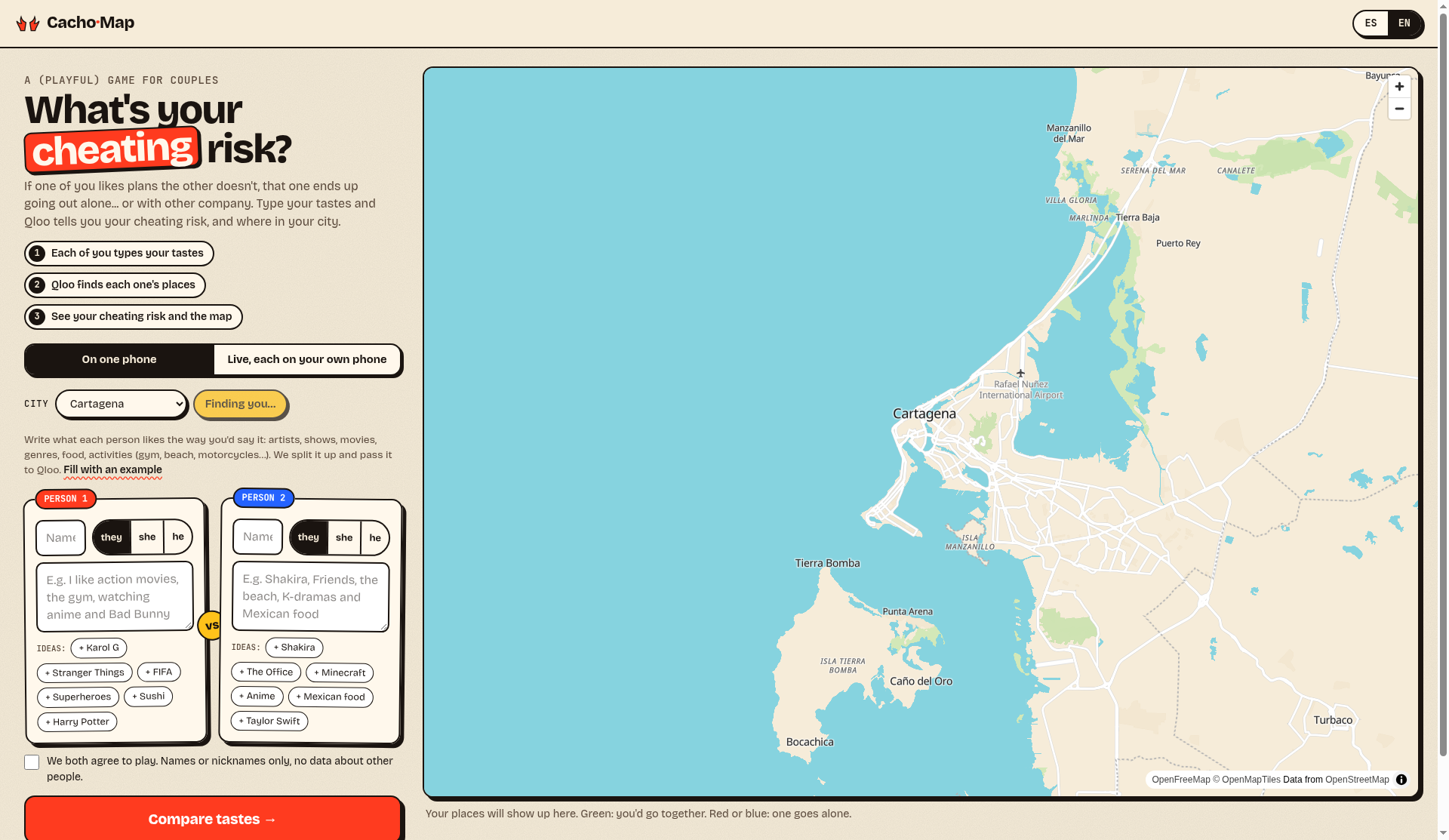
- Each person writes their tastes in free text. The agent splits them and validates each one against Qloo.
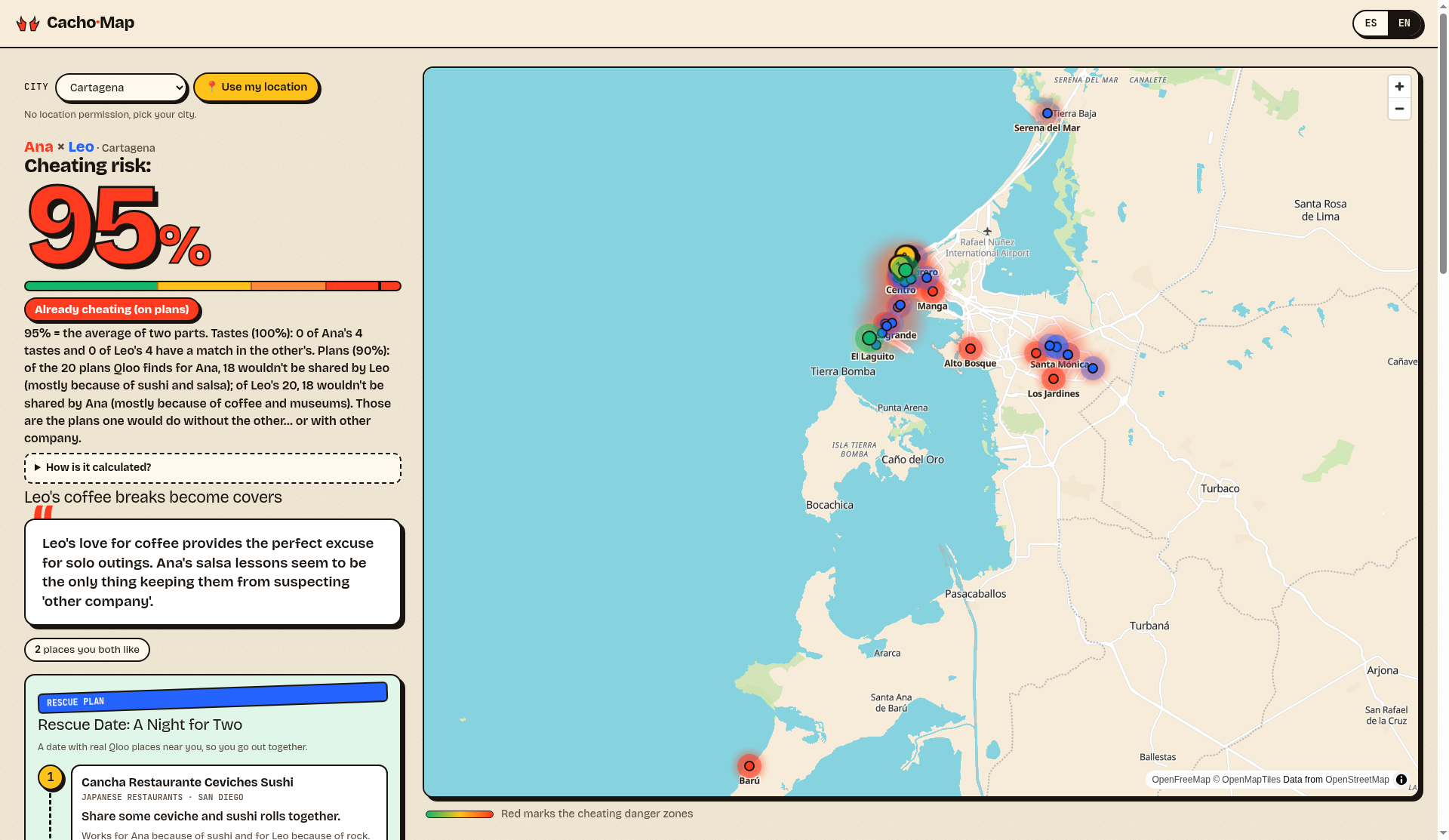
- Qloo finds each person's favorite real places near their location, and Cacho-Map computes a cheating-risk % with an explained breakdown.
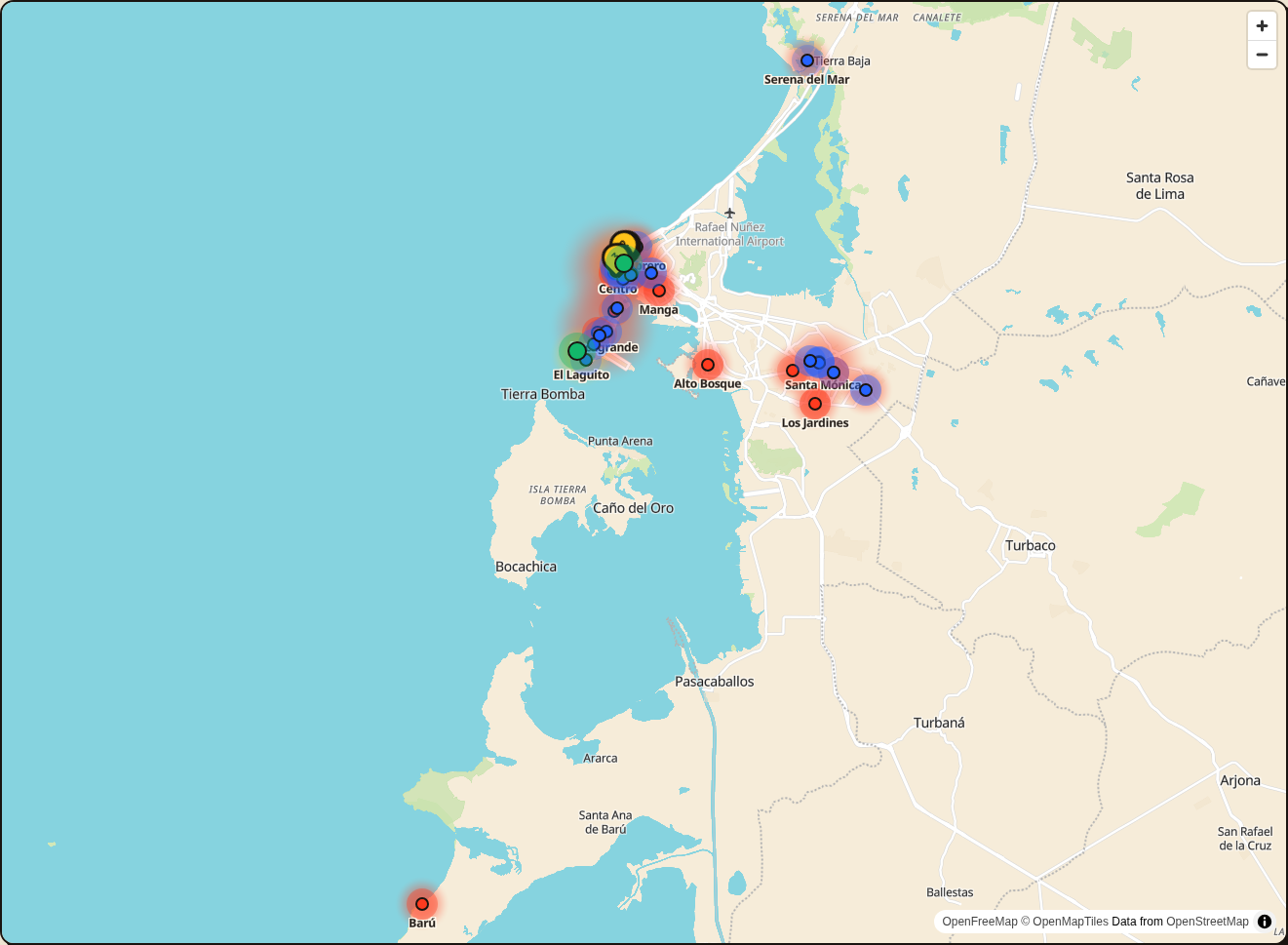
- A live map shows danger zones (places only one would go to) and safe zones, each explained by whose taste brought it there.
- A roast agent writes a pun grounded in their real tastes; a judge model rejects jokes that don't make sense.
- A rescue plan suggests 2-3 real nearby places that work for both.
- Live couple mode with two phones and a room link/QR, plus share cards in Spanish or English.
How we built it
Next.js on Vercel, AI SDK with Vercel AI Gateway, MapLibre with OpenFreeMap, Vercel Blob for live rooms, next/og for share cards. Qloo is the core of the agent: /search and /v2/tags to match and validate tastes, /v2/insights (place type, location, radius) per taste so every place is explainable, and /v2/insights/compare for shared taste tags. The agent's tools only expose Qloo-derived data, so every roast cites real tastes and places, and it streams each reasoning step with the Qloo endpoint it called.
Challenges
- Qloo always returns a best guess, so we built validation to reject wrong matches.
- Generic genres returned the same popular places; place-kind tags and a baseline fixed it.
- AI humor is usually bad, so a judge must name the double meaning.
What we learned
Taste data is far more convincing when every result says why it's there.
What's next
More cities, group mode for friends, and a WhatsApp bot.
Built With
- next
- react
- typescript
- vercel
