-
-
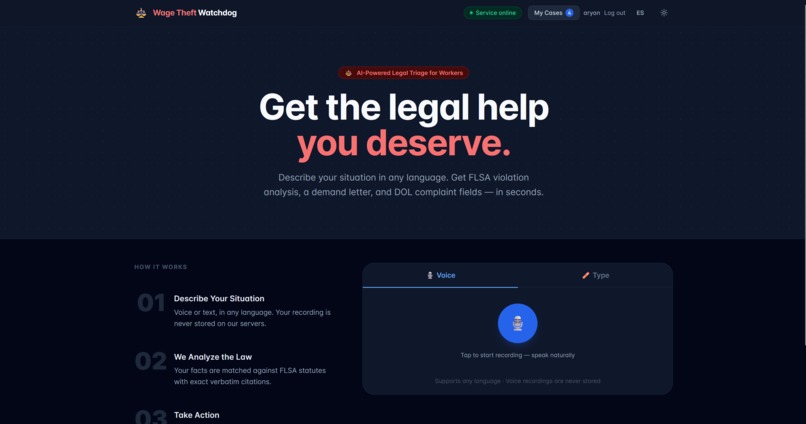
Home Page
-
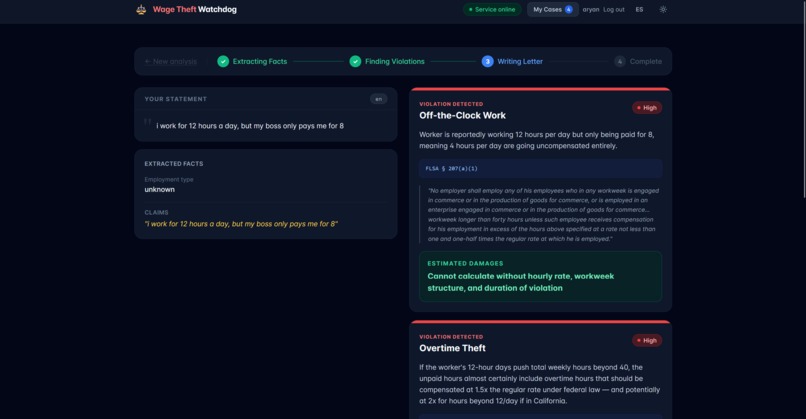
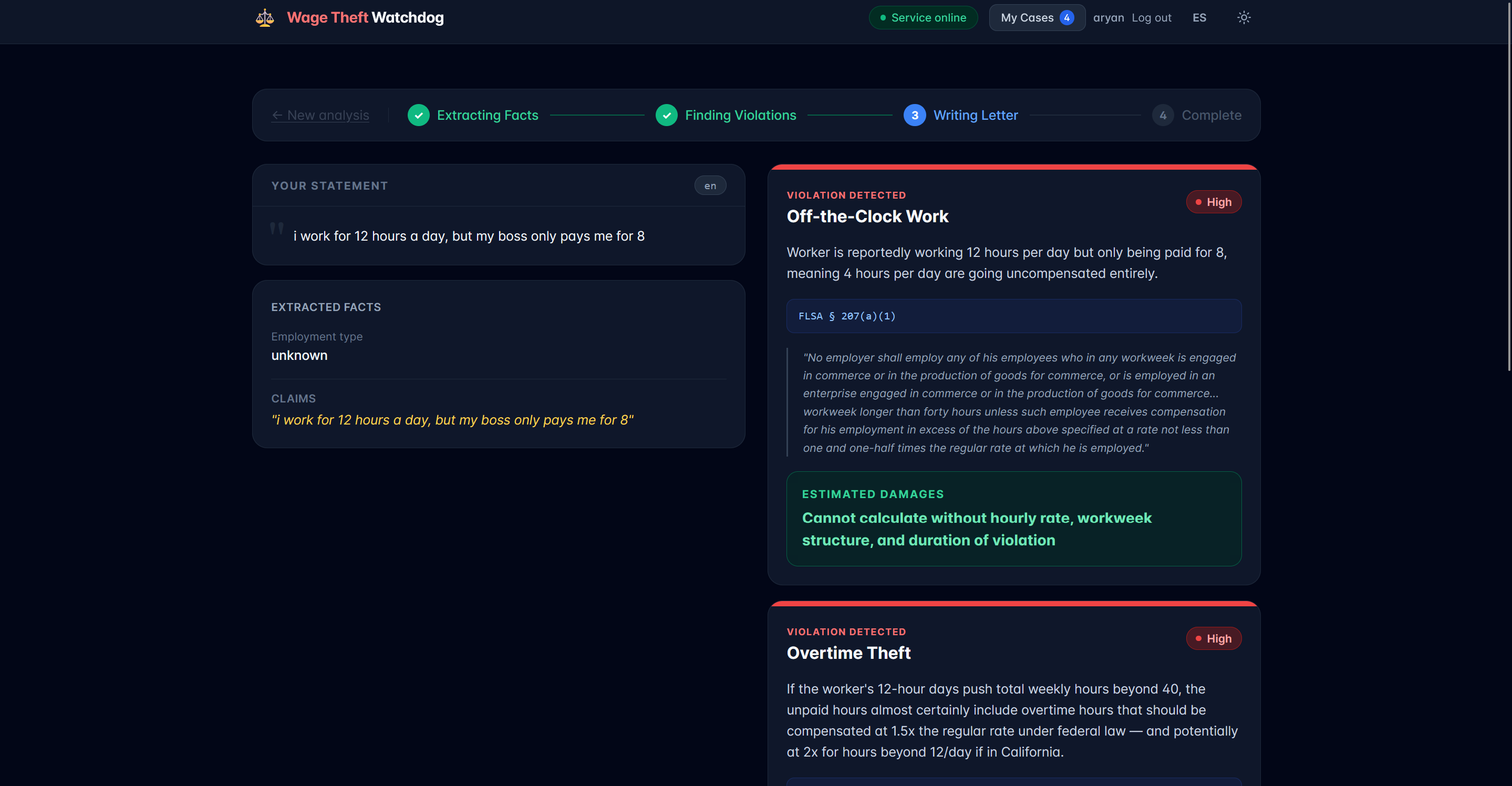
Example Violation Analysis
-
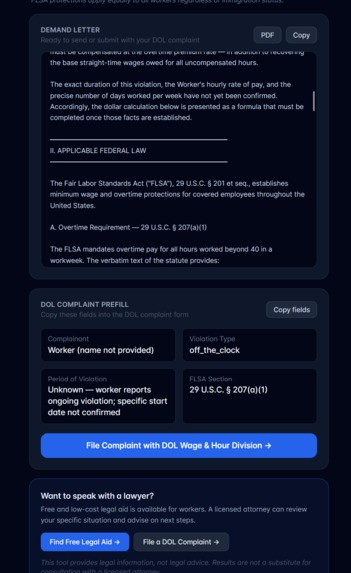
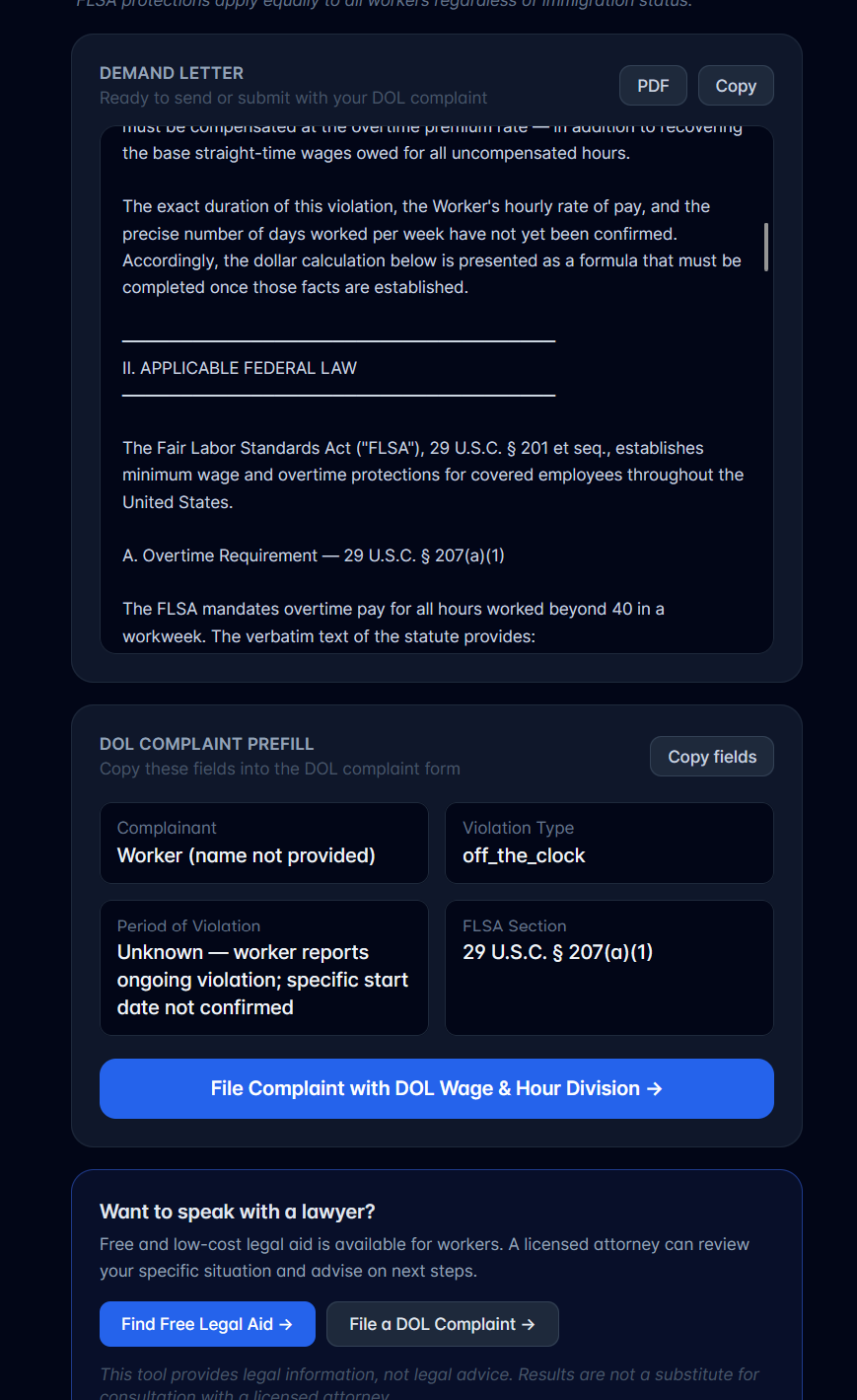
Example Letter
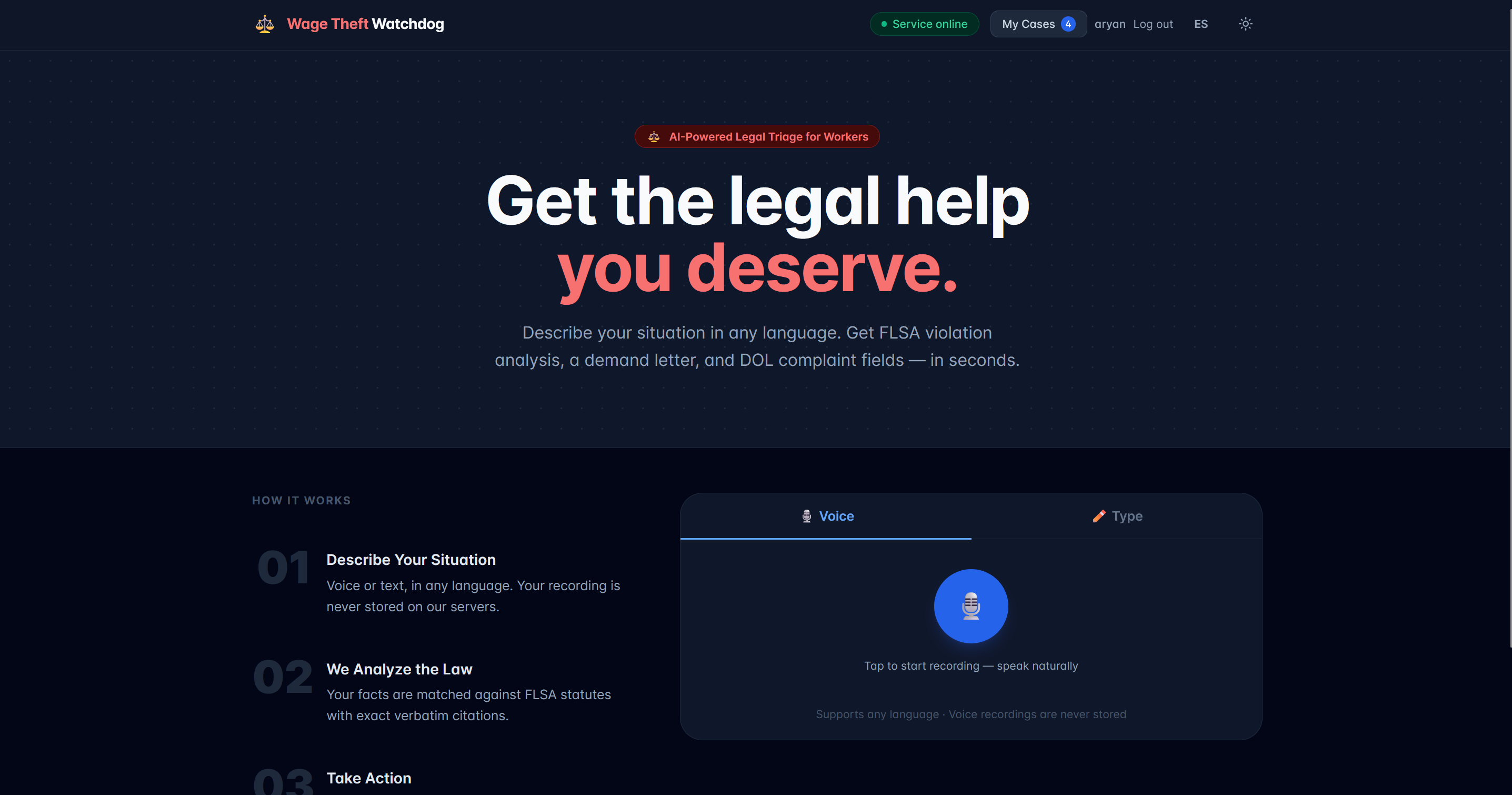
The Story Behind C-LAWD
Inspiration
A few months ago, a close friend of ours ranted about being owed over $3,000. She knew something was wrong. But she didn't know what law protected her, what to call what was happening to her, or where to even start. She was eventually able to get her money - but only after weeks of stress.
What We Built
C-LAWD - Claude-Leveraged AI for Worker Defense - is an AI-powered legal assistant tool for wage theft victims.
A worker describes their situation in their own words, in any language. C-LAWD runs it through a four-stage pipeline:
- Transcription - Groq Whisper converts voice to text
- Fact Extraction - Claude Haiku pulls structured facts (employer, hours, rate, claims)
- Legal Analysis - Claude Sonnet cross-references the facts against FLSA statutes via RAG
- Action - A demand letter and pre-filled DOL complaint form, ready to send
Every violation is backed by multiple citations. Absolutely no paraphrasing. No hallucination. The law, quoted exactly.
Challenges
The RAG retrieval problem. Dense legal text and colloquial speech live in completely different semantic spaces. A worker says "my boss docks my pay" - the statute says "no employer shall make any deduction." Cosine similarity doesn't bridge that gap reliably.
bcrypt + passlib incompatibility. We hit a hard error on every login attempt — "password cannot be longer than 72 bytes" — regardless of password length. Turned out to be a breaking API change in bcrypt 4.x that passlib 1.7.4 (last updated in 2020) never handled. We dropped passlib entirely and called bcrypt directly.
The immigration problem. FLSA explicitly covers all workers regardless of immigration status. But workers often don't know this, and employers exploit that ignorance. We built the immigration_disclaimer field into the classifier schema so the model always surfaces it when status is raised, and we actively tested it in our bias audit.
What We Learned
- Legal AI isn't about replacing lawyers - it's about closing the gap between knowing something is wrong and knowing what to do about it
- Bias testing isn't optional when the users are vulnerable. We built a 30-variant demographic audit across names, languages, immigration status, industry, and gender - because if C-LAWD treats a Latina restaurant worker's claim differently than a white tech worker's identical claim, it's not a tool for justice
- Building fast forces good decisions. Eight hours means no gold-plating — just what matters to the person who needs help
For Our Friend
She got her money back. But she shouldn't have had to fight for it alone, without knowing her rights, without a letter to send, without a form to file.
C-LAWD doesn't give legal advice. But it gives workers what they were always missing: a starting point.
"Legal information, not legal advice — but sometimes, information is everything."
Built With
- chromadb
- claude
- fastapi
- groq
- jwt
- machine-learning
- openai
- python
- rag
- react
- sqlite
- tailwind
- vite
- whisper


Log in or sign up for Devpost to join the conversation.