-
-
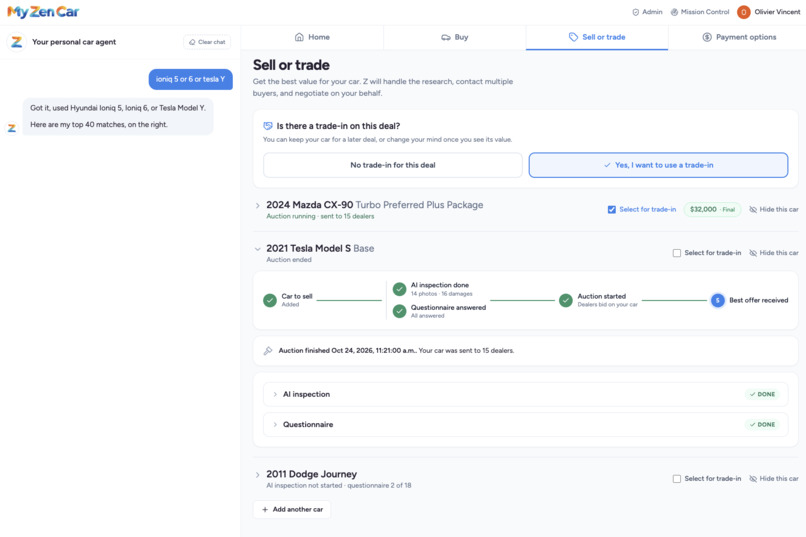
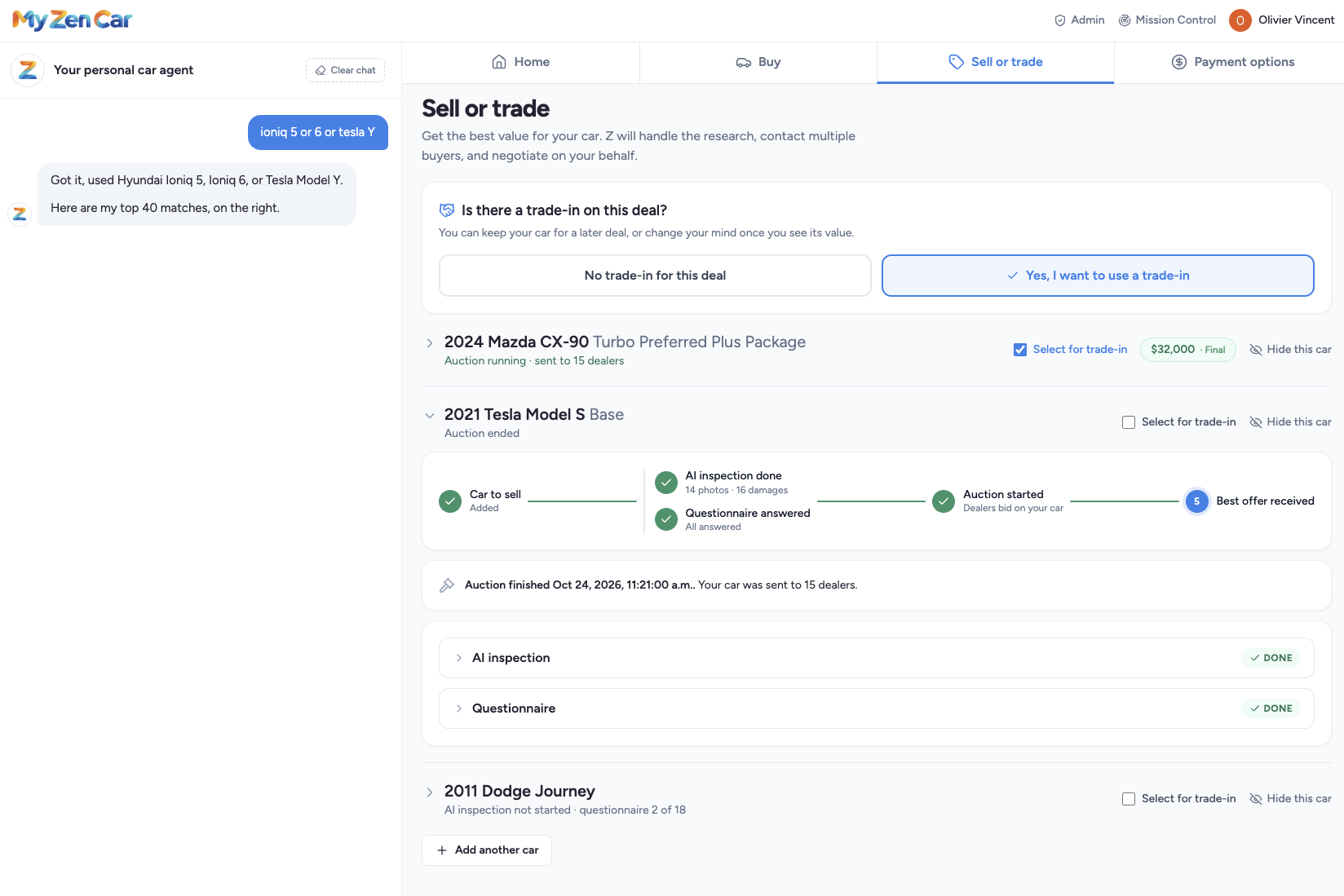
Consumer trade-in cars
-
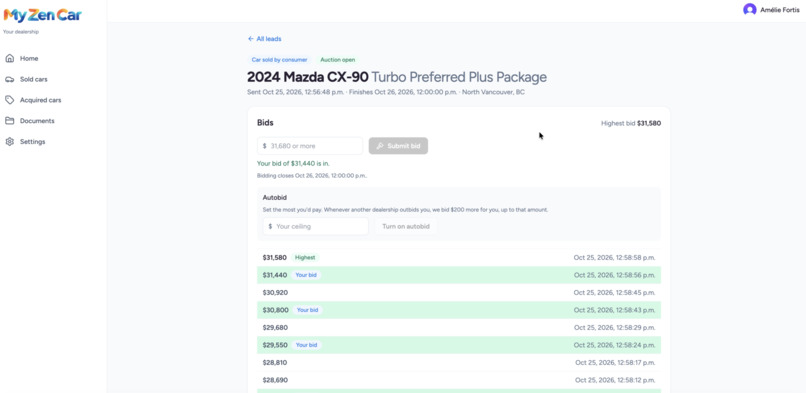
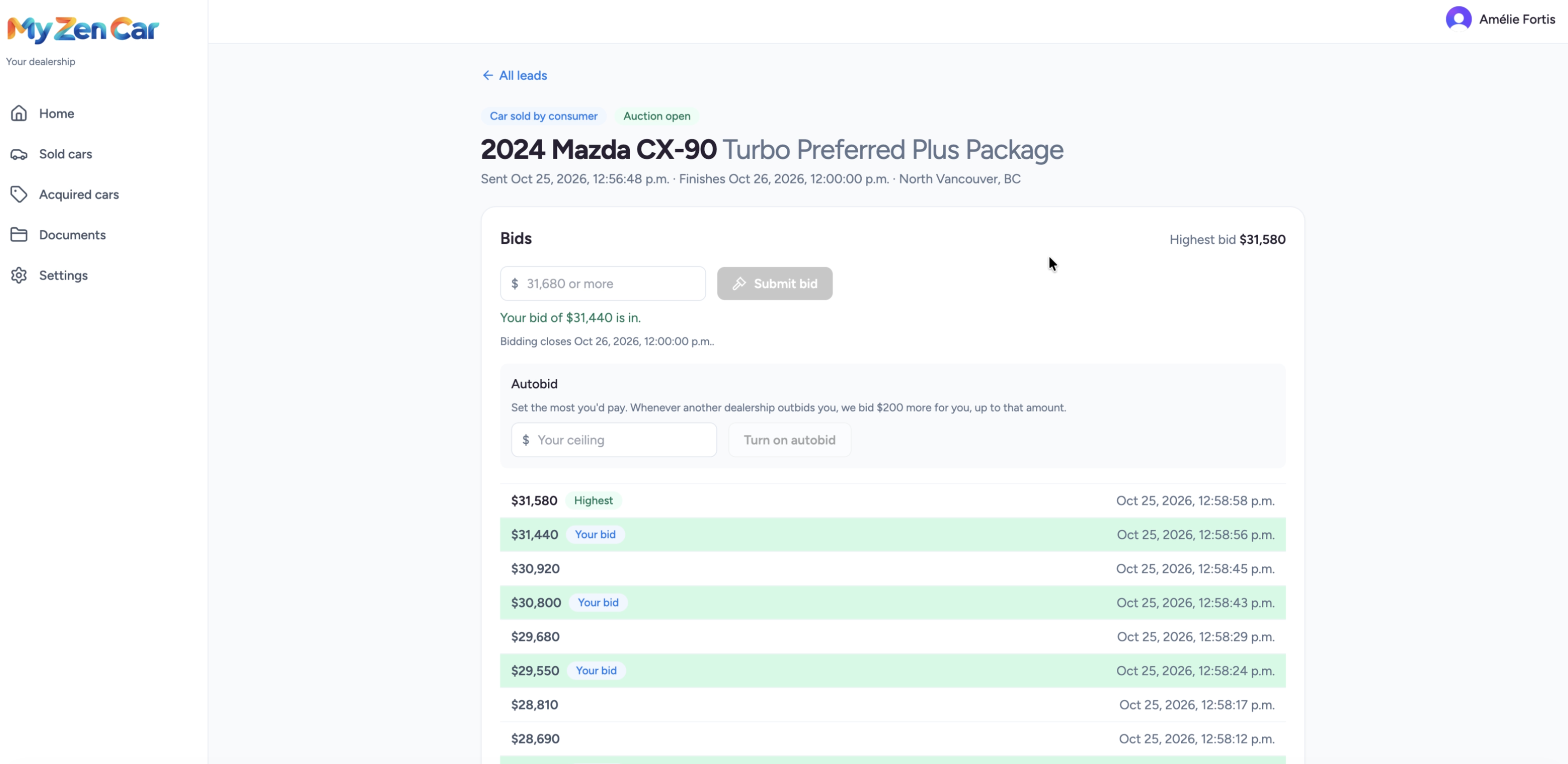
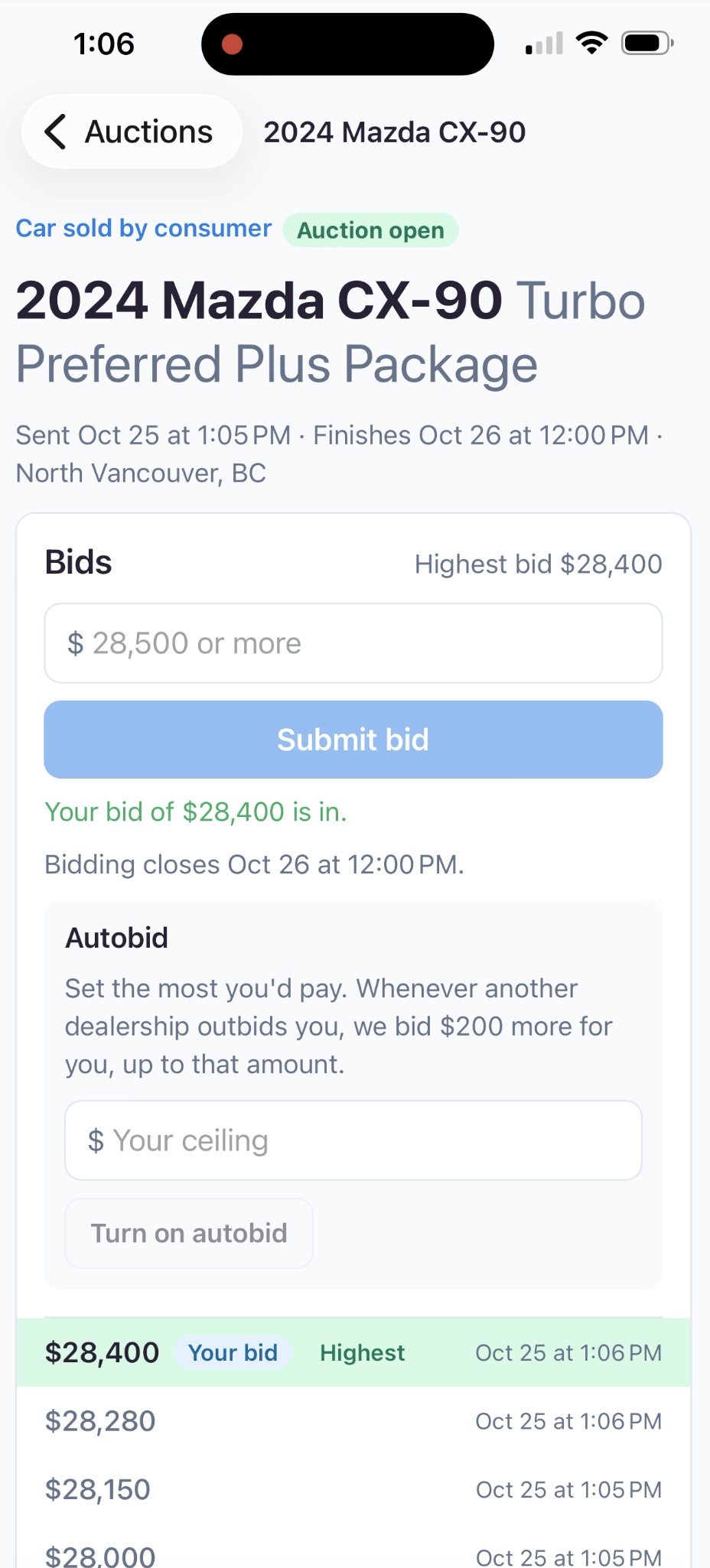
Live bidding view
-
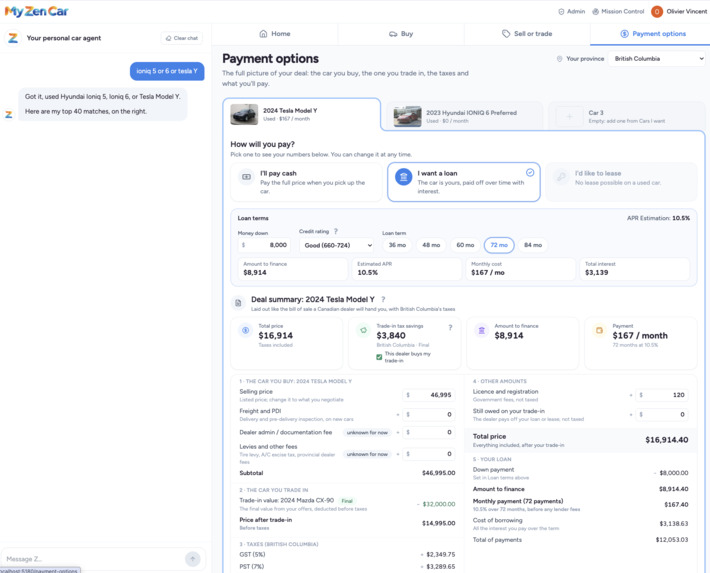
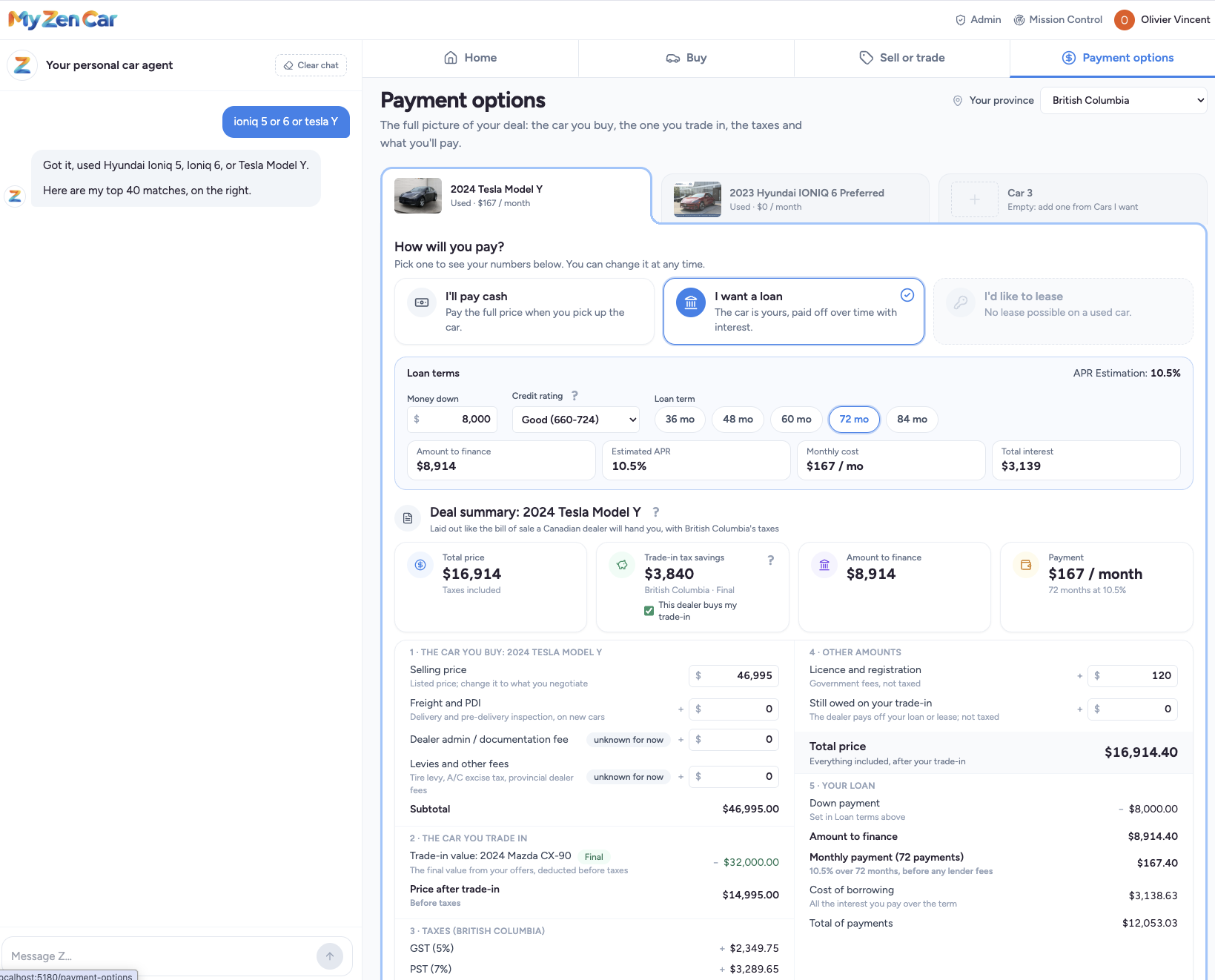
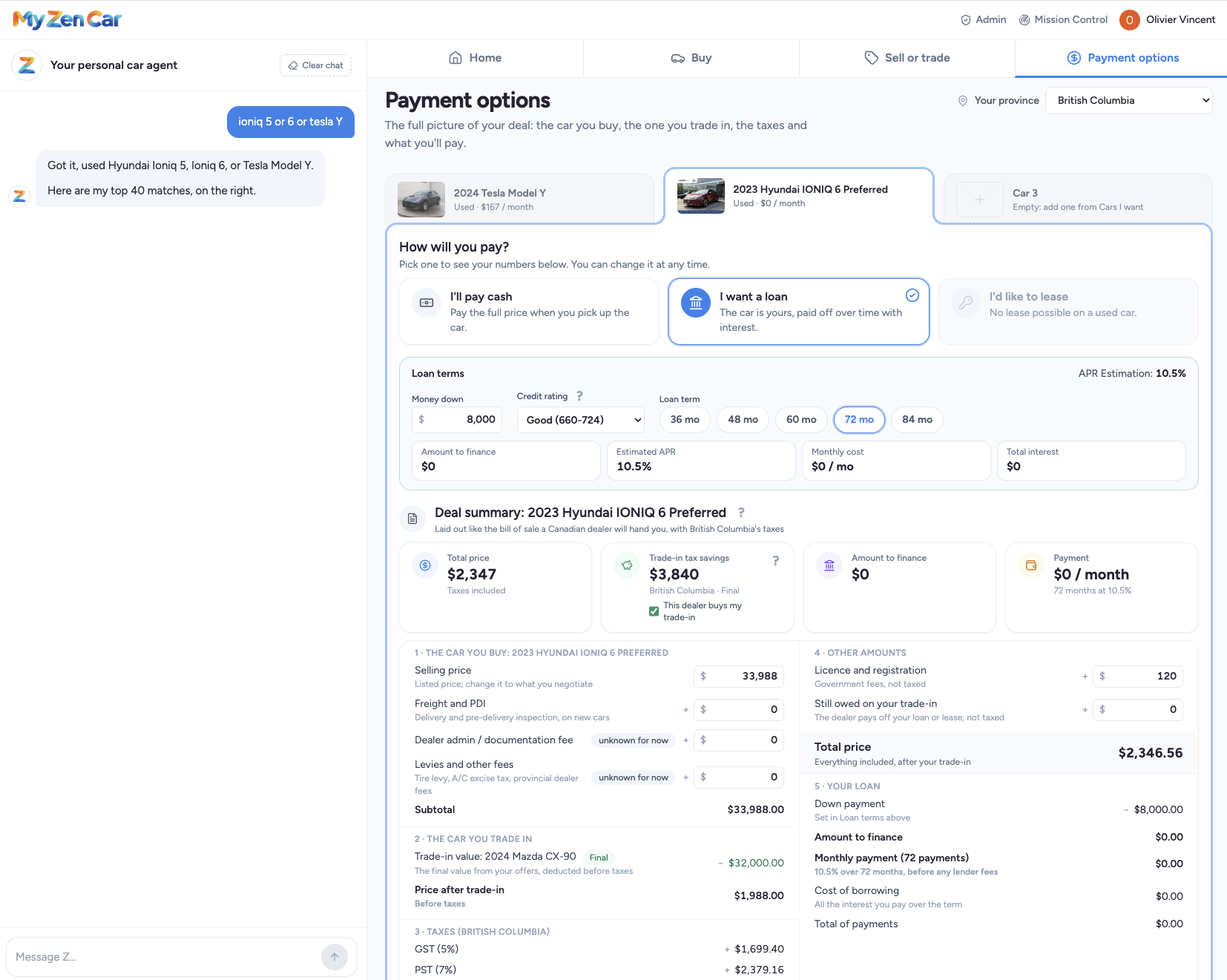
Financing terms
-
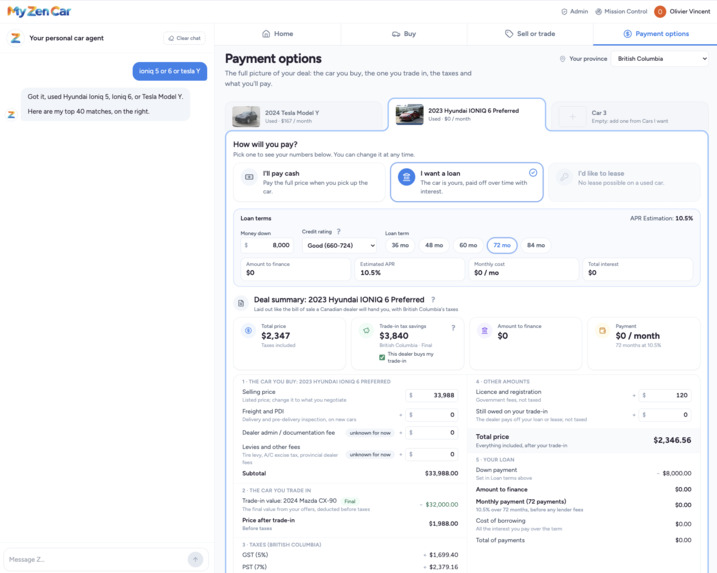
Consumer plays with Financing terms
-
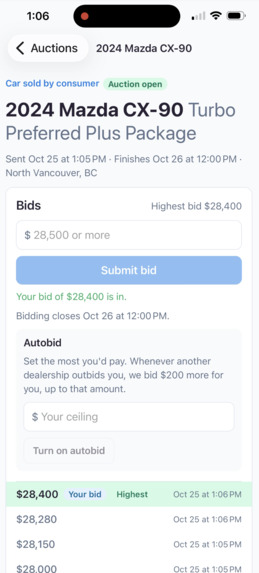
Dealer bids via its app (EXPO)
-
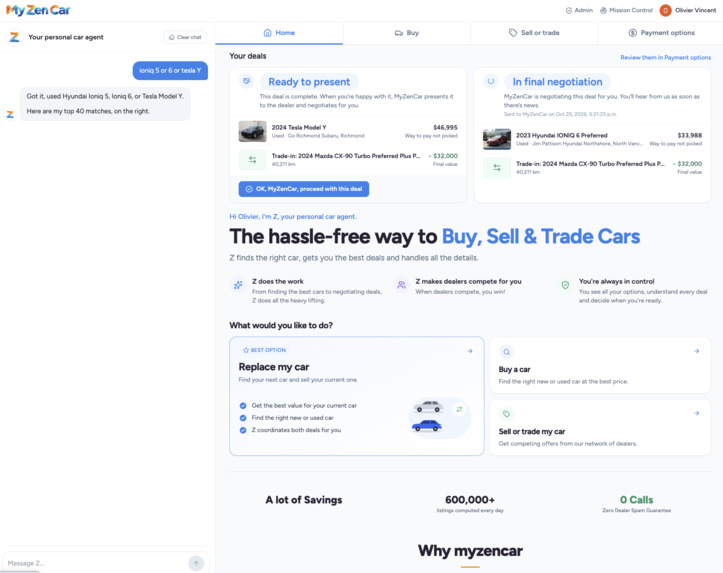
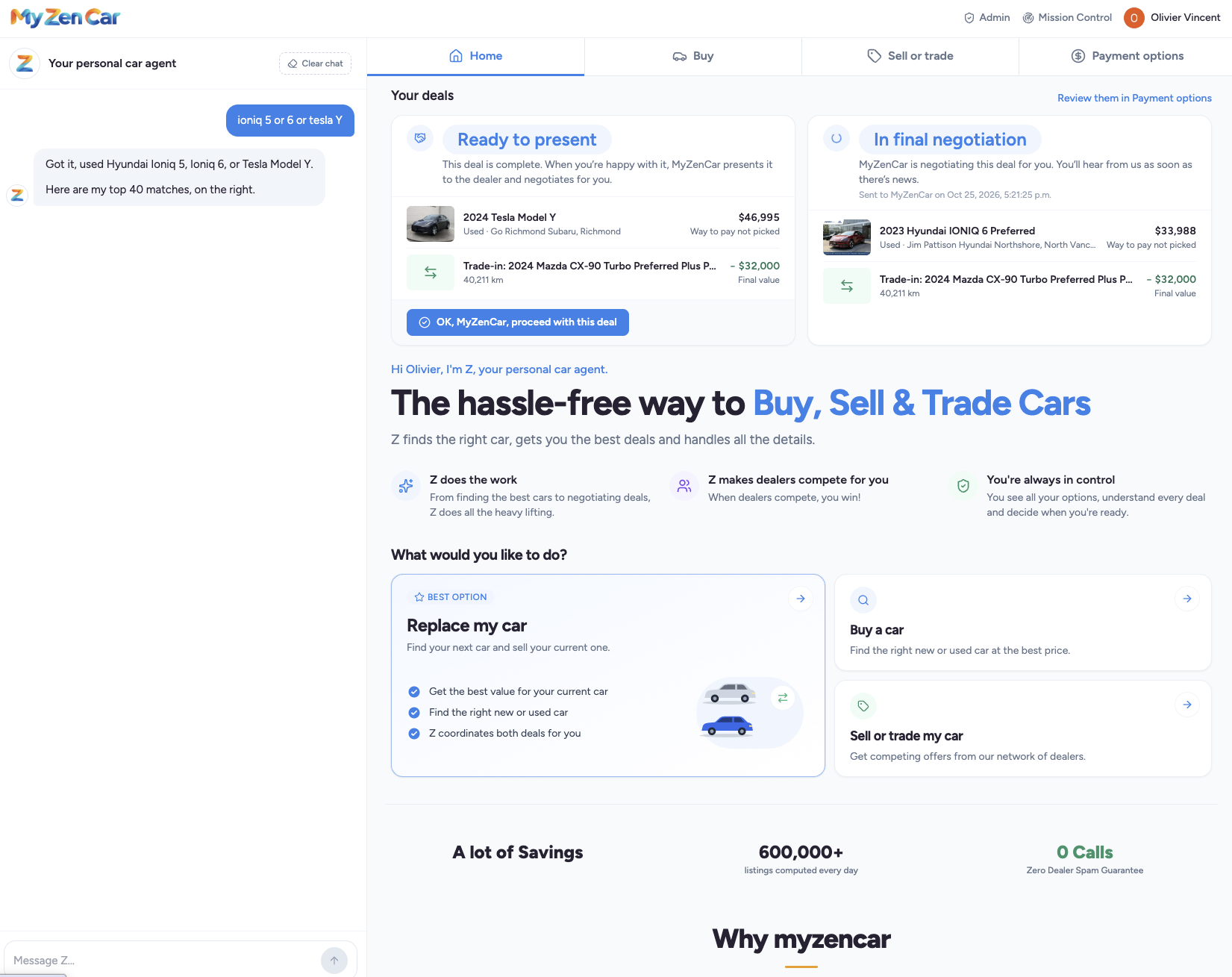
Consumer decides which deal they want to proceed with
-
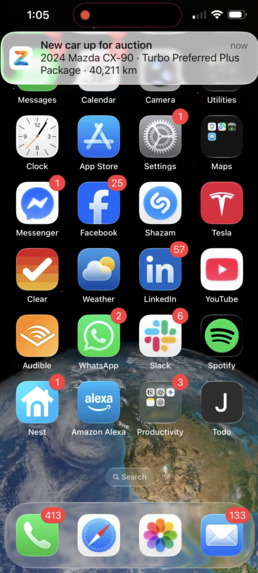
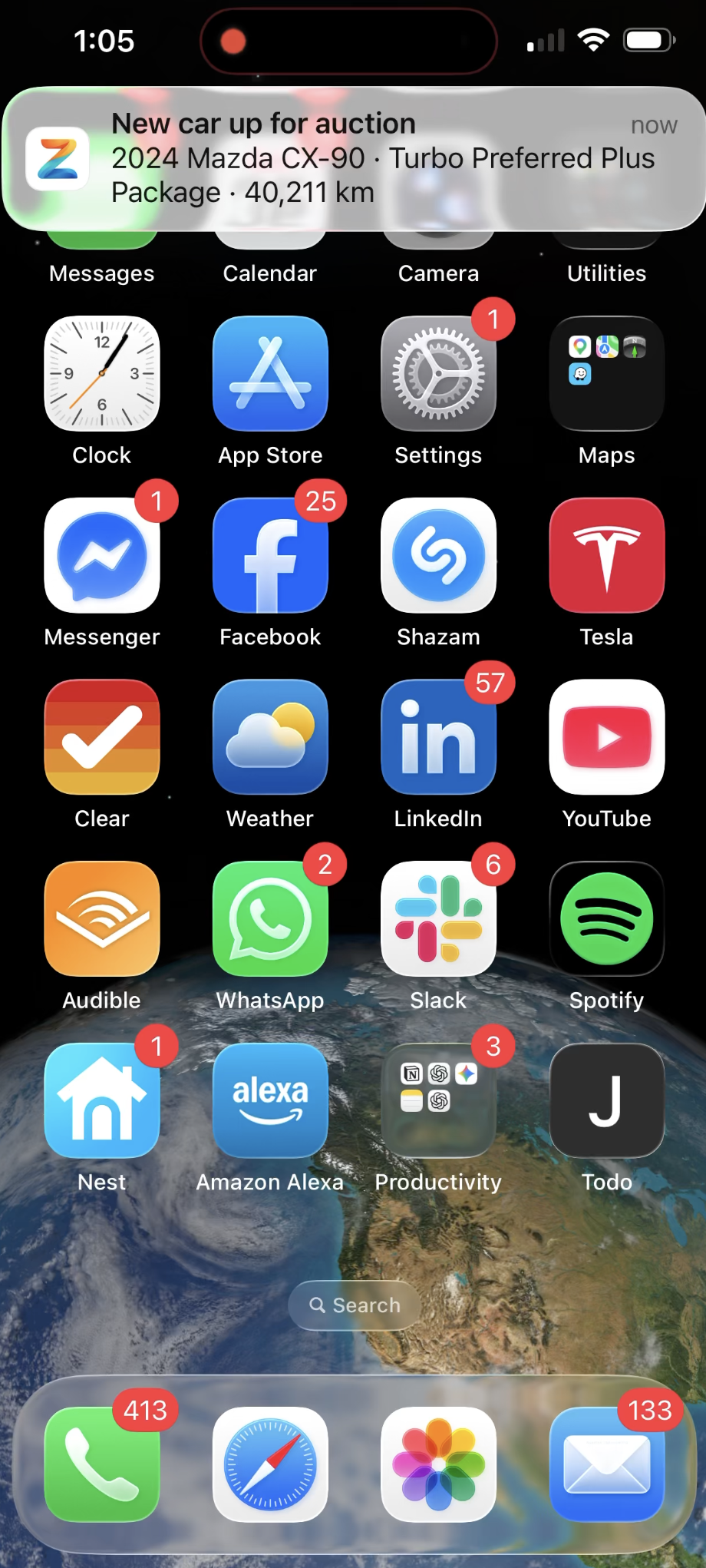
Auction starts on dealer mobile phone (EXPO)
-
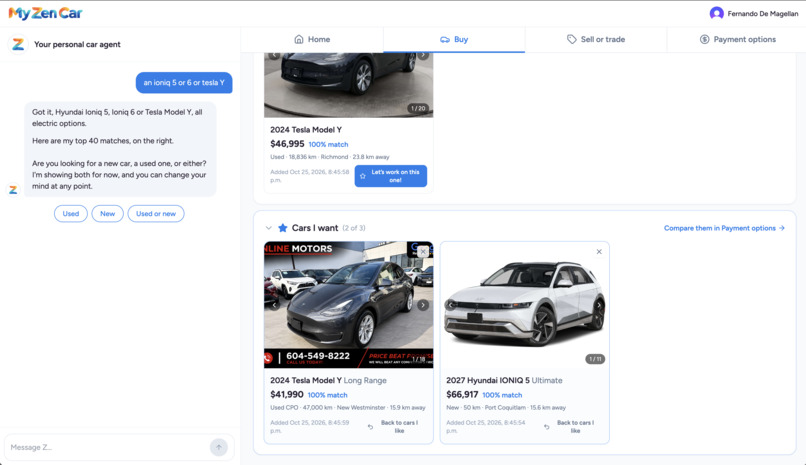
Consuemr selecte dteh 2 cars they really want to get a final deal for
-
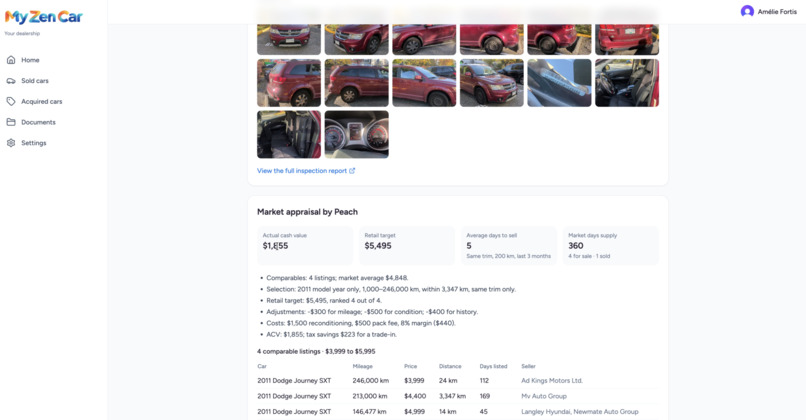
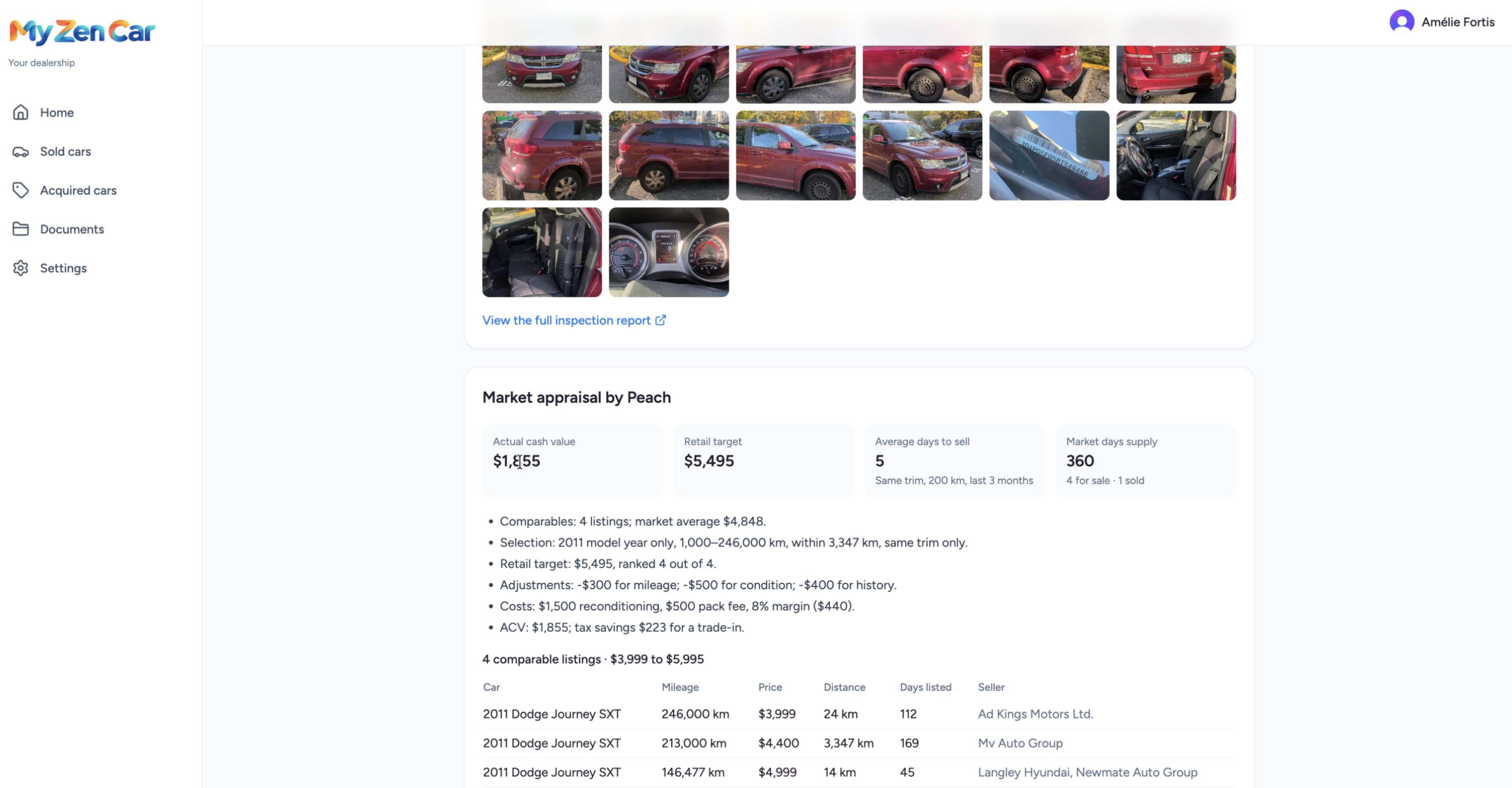
AI appraisal
-
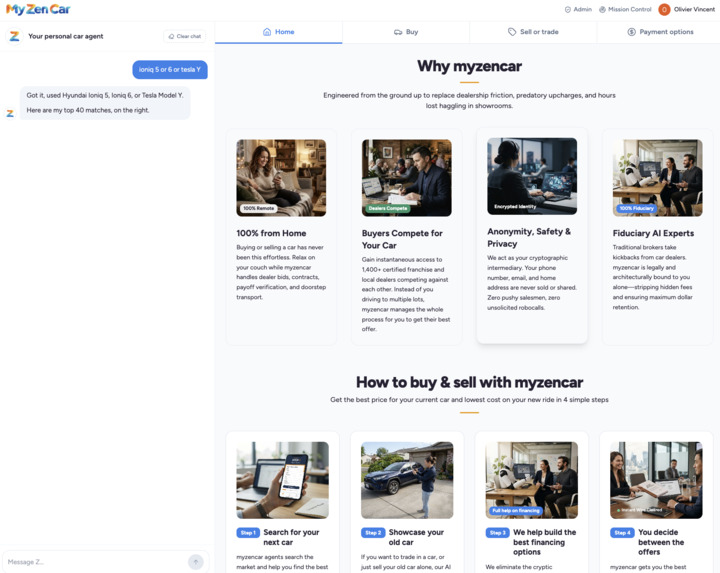
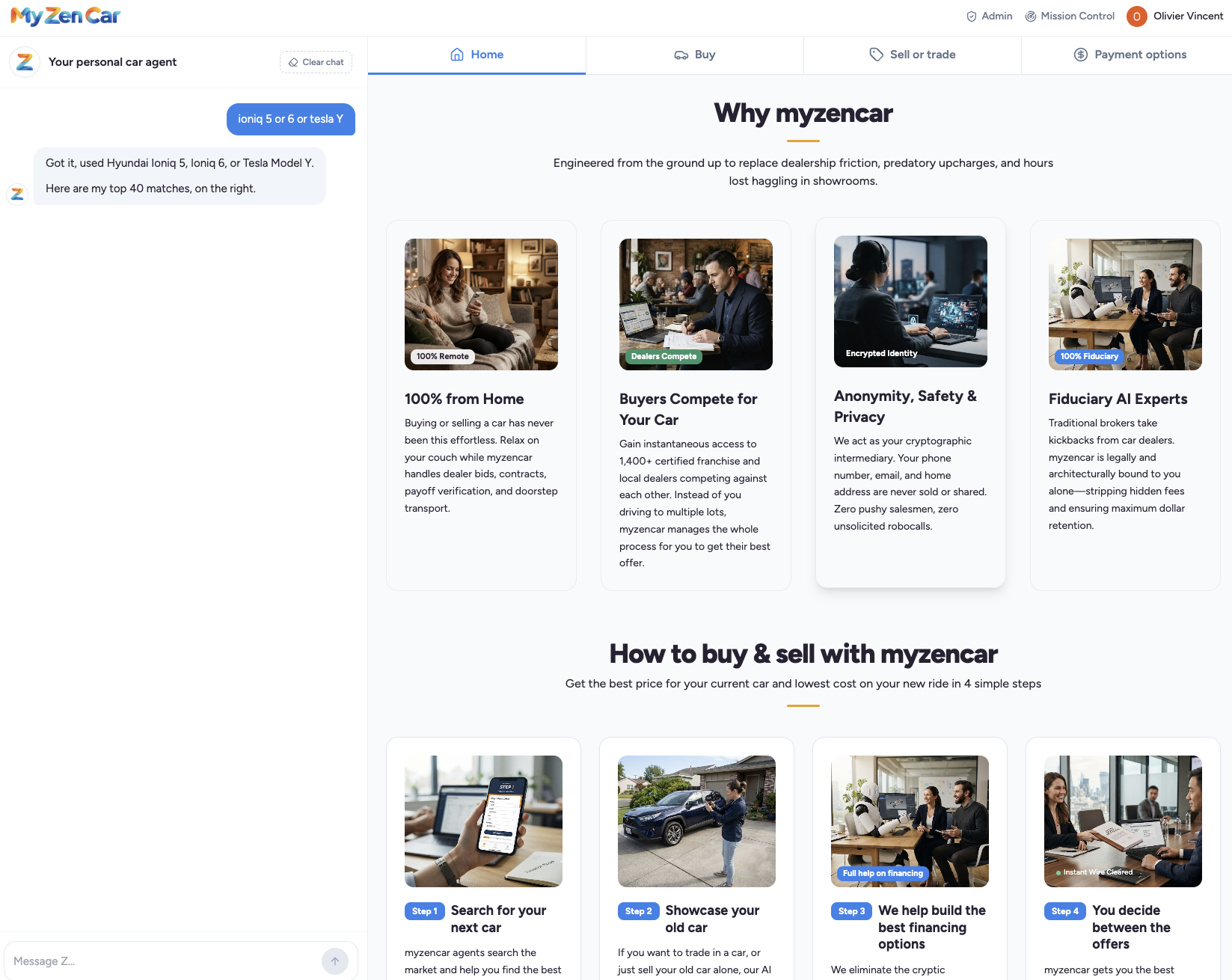
Main page marketing material for consumer
-
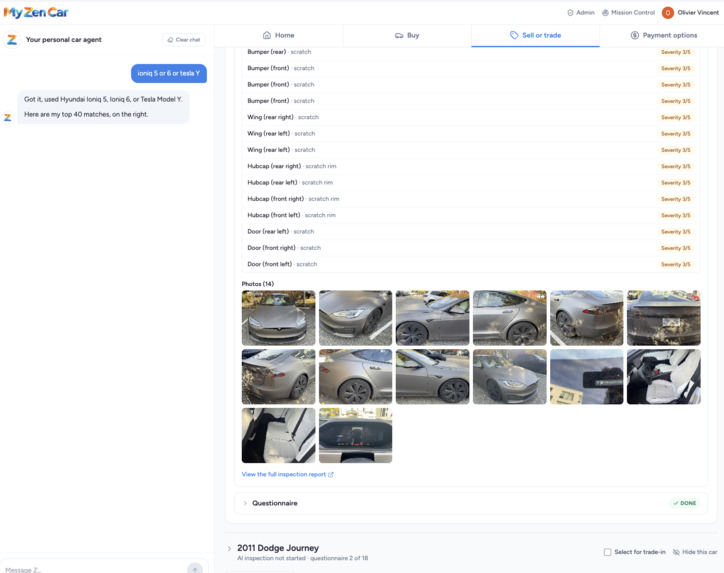
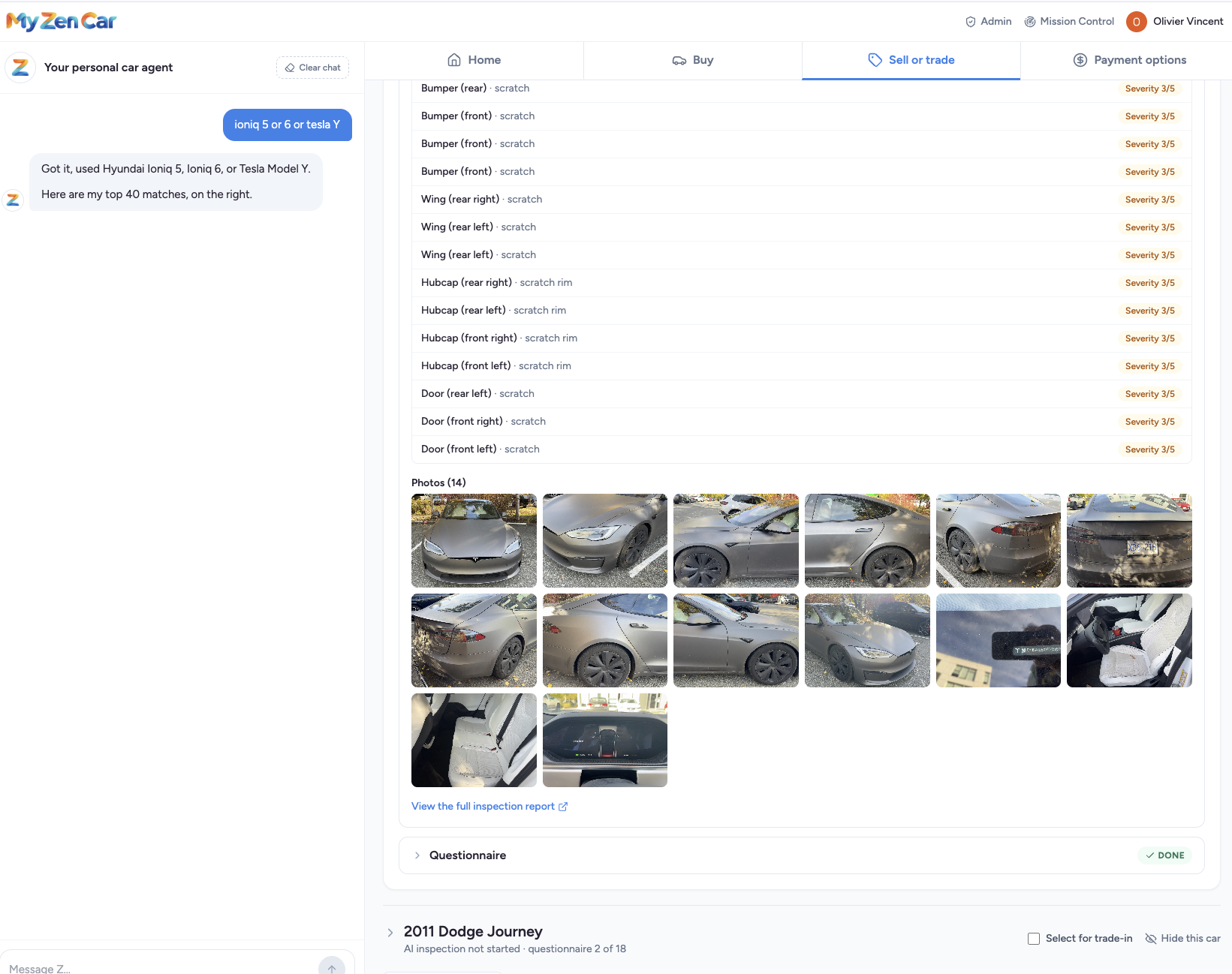
AI inspection
-
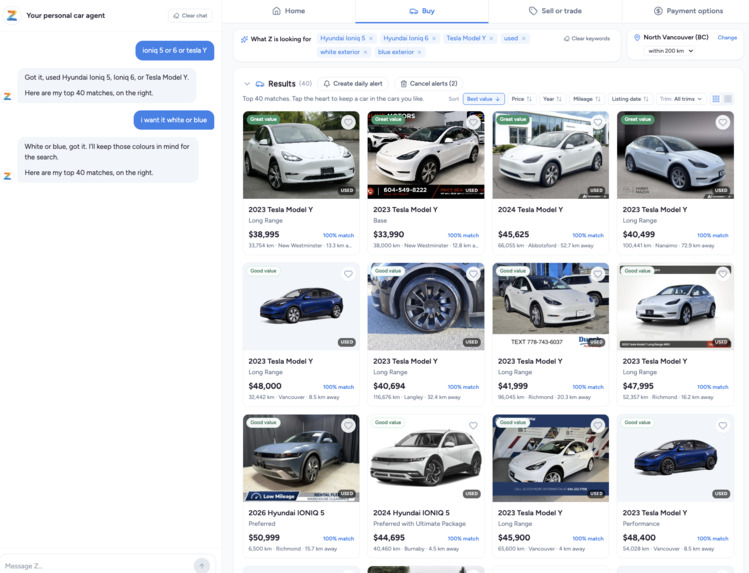
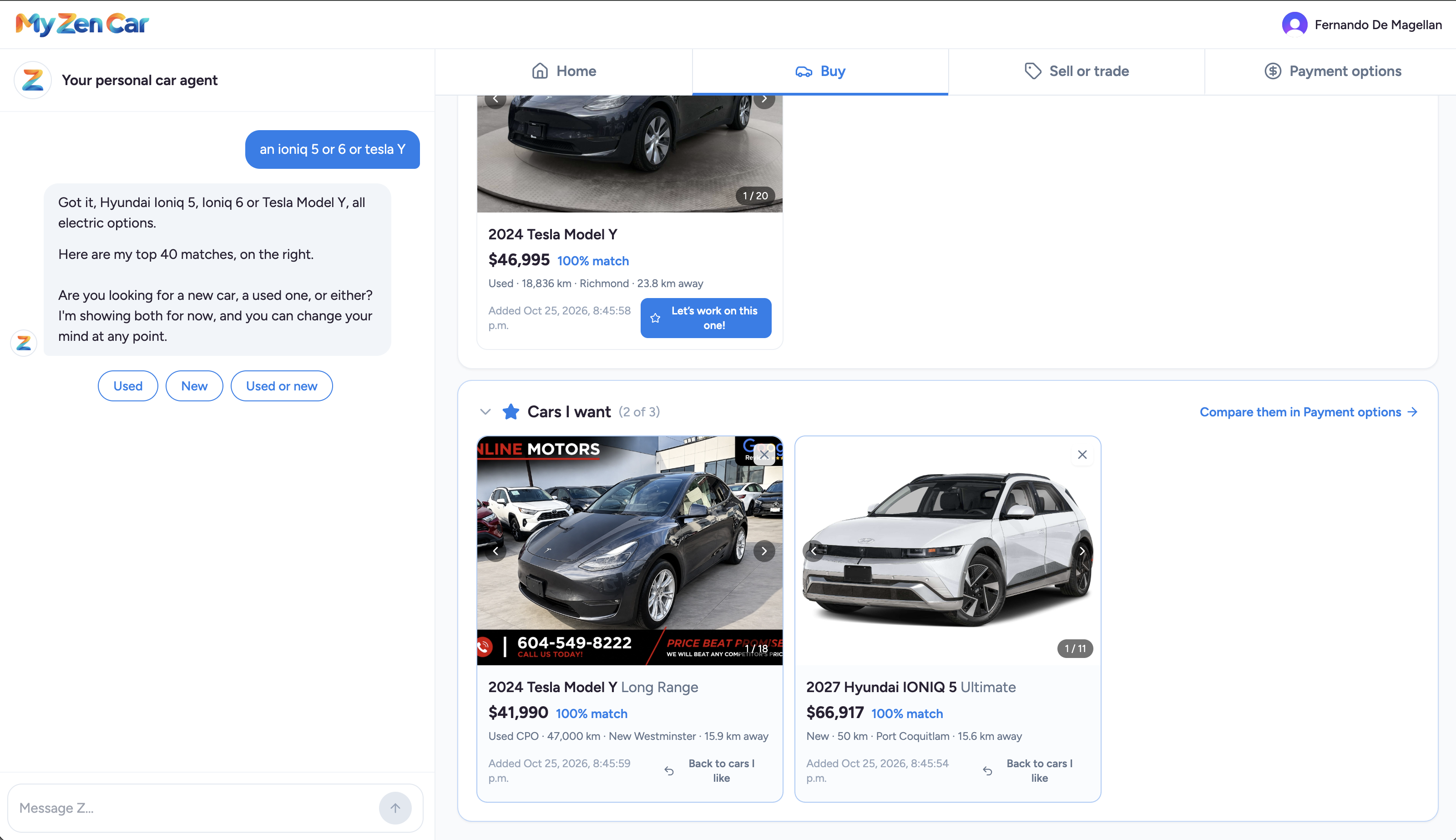
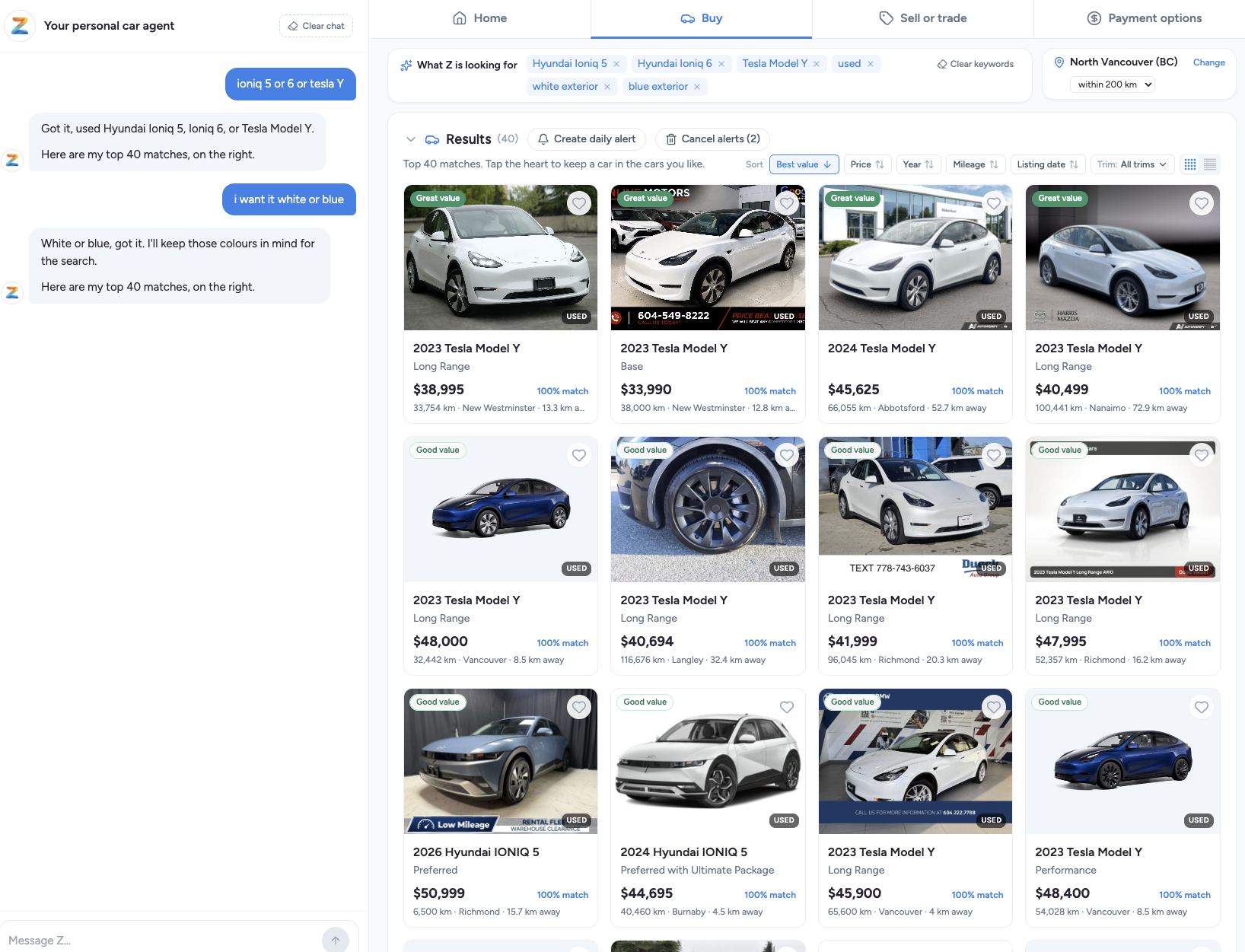
consumer AI search - app shows best deals
-
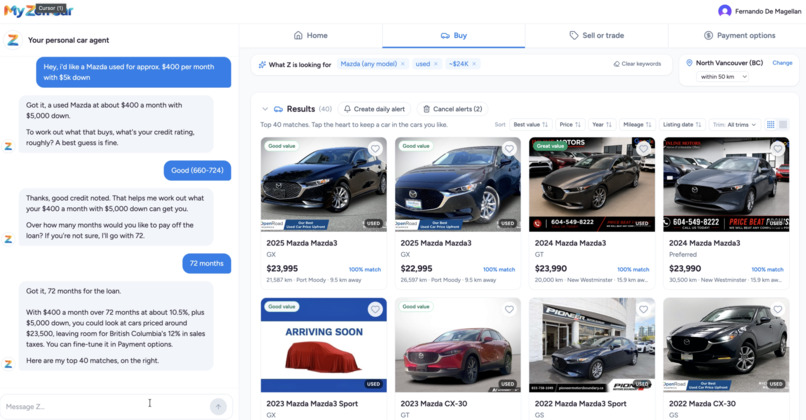
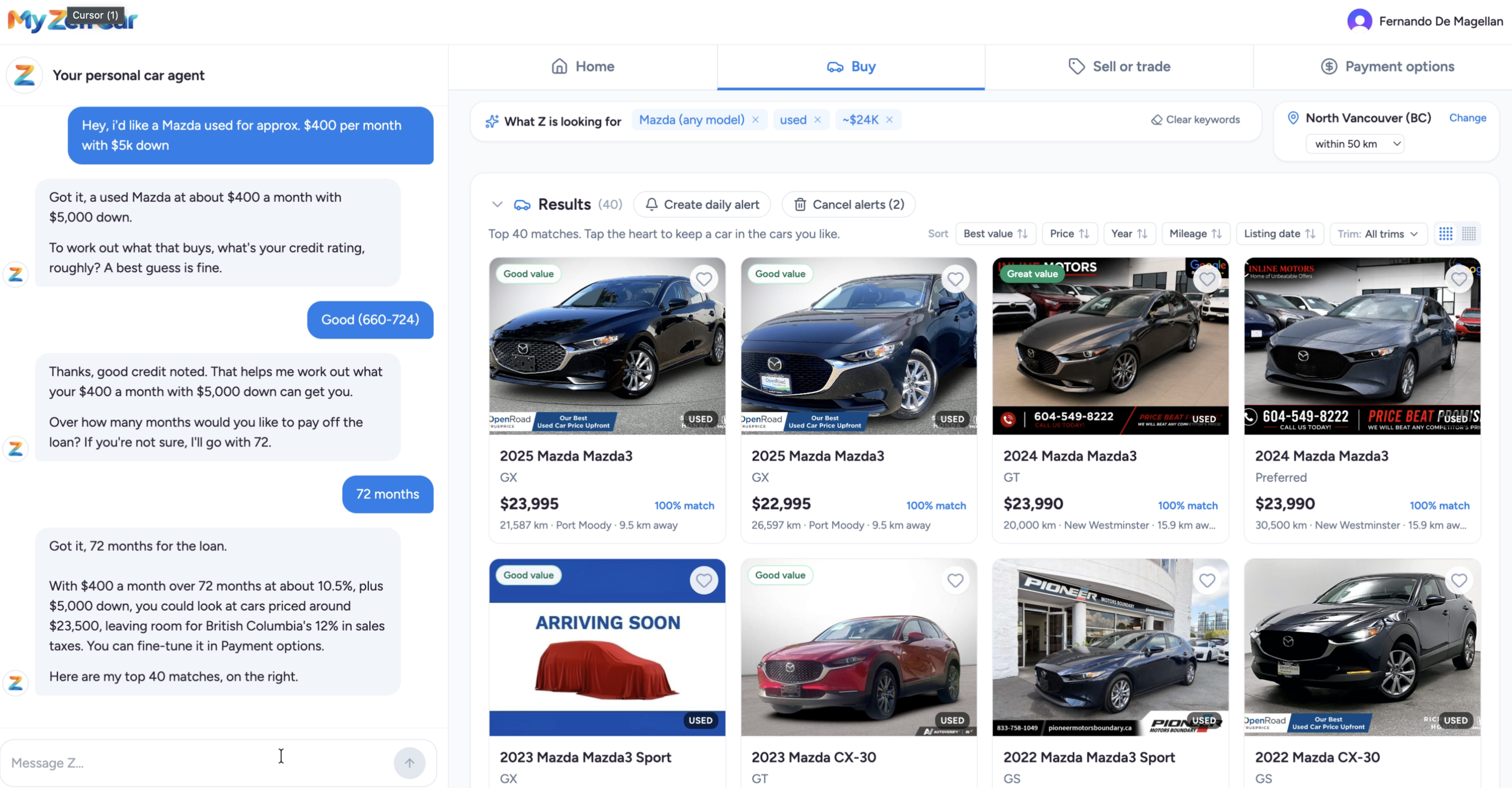
Consumer uses fiancning terms in its search
Inspiration
Buying a car should be an exciting experience, not an exhausting negotiation. Yet today, the process is broken: consumers must navigate fragmented listings, uncertain vehicle values, complex financing, and high-pressure sales processes shaped by dealer incentives that may not align with their own interests.
We imagined a “Third Voice”: a personal, data-driven AI agent that stands alongside the consumer, bringing transparency and helping them make decisions in their own best interest. Inspired by Autozen’s highly human-intensive approach to selling vehicles and powered by Peach’s rich inventory and valuation data, we set out to rethink the entire car-buying journey—a solution made possible by the latest developments in AI.
Instead of forcing people to navigate endless search filters, compare disconnected trade-in offers, and coordinate every step alone, MyZenCar learns what matters to them through natural conversation and brings together vehicle discovery, competitive trade-in bidding, and tax-aware financing in one guided experience. We want to move beyond static search forms toward progressive discovery, where the car-buying journey adapts to the person, not the other way around—and ultimately, where the car comes to you.
What it does
1. The Job to Be Done
MyZenCar brings the terms for the vehicle a consumer wants to buy and the trade-in they may present at the same time into one structured proposed deal.
MyZenCar reduces the friction, opacity, and stress of the traditional dealership experience by putting an AI-assisted broker in the consumer's corner while giving dealers structured, ready-to-appraise trade-in opportunities.
The product supports the automotive transition through four connected workflows:
- Buy a car — Discover relevant vehicles from live Peach inventory using conversational preferences instead of a long search form.
- Sell or trade in a car — Capture a vehicle by VIN or year/make/model/trim, collect mileage, condition and accident details, support a remote Tchek inspection, and invite participating dealers to bid.
- Define financing — Compare cash, loan and lease scenarios with deterministic payment, borrowing-cost and Canadian tax calculations, including the tax savings created when a trade-in is applied to the same dealer purchase.
- Evaluate the deal — Compare vehicle matches, estimated trade-in value and competing dealer bids before deciding how to proceed. Purchase-side negotiation, contracting and closing remain roadmap capabilities.
Agentic conversational control—the intelligence layer connecting the entire experience
The chat is far more than a way to ask questions or receive answers. It is the central interface through which consumers interact with the application. A conversation can update structured intent, trigger events, activate specialized AI capabilities, launch workflows, and drive actions across interconnected activities such as buying, selling and financing.
The experience is synchronized and bidirectional: conversations update the application in real time, while profile changes, searches, saved vehicles, financing choices and deal activity become context for the ongoing experience.
The result is a fundamentally new interaction model in which consumers express their intentions naturally and the application responds, coordinates specialized components and takes the appropriate actions on their behalf.
Curated vehicle recommendations
Rather than showing an unfiltered catalogue, MyZenCar searches Peach's live inventory of more than 600,000 active vehicles using the consumer's hard constraints and soft preferences. Matching can use price, location, condition, year, make/model/trim, mileage, powertrain, drivetrain, features and colours. The current experience can return up to 40 ranked listings at a time.
Dealer deal-making support
Dealers receive contact-blind trade-in leads containing vehicle details, questionnaire answers and available inspection results. They can place competitive bids or configure automatic bidding; consumer contact details are not included in the dealer lead.
Business model
Although it is too early to finalize the business model, we envision a combination of dealer-paid fees for high-intent, advanced leads—an established model in the automotive industry—and a consumer-paid success fee when MyZenCar helps complete a transaction.
2. How It Works
MyZenCar connects consumers and dealers through an AI-assisted, deterministic transaction workflow:
- Conversational discovery and intelligent orchestration — MyZenCar learns what consumers want through natural, ongoing conversations, progressively understanding their practical needs, budget, lifestyle, preferences and aspirations without burdening them with lengthy questionnaires.
The conversation goes far beyond discovery. It is dynamically connected to the application, transforming consumer intentions into structured events, actions and coordinated workflows across buying, selling and financing.
As MyZenCar learns, it retrieves and recommends real Peach vehicle listings, updates relevant sections of the interface, activates specialized AI capabilities and advances connected activities in parallel. It also builds and maintains a unified Consumer Intent Profile, including vehicles to sell or trade, their characteristics, condition and history.
The result is a continuously evolving experience in which conversation, application interfaces and specialized agents work together—turning what consumers say into actions within the product.
- Intent pipeline and deterministic orchestration — An LLM extracts strict JSON changes from each conversation turn. Server-side validation applies those changes to the Consumer Intent Profile, distinguishes hard constraints from soft preferences, computes readiness and selects the next action. Separate deterministic calculators handle loan estimates and tax-aware payment scenarios.
- Live inventory matching — The server translates the Consumer Intent Profile into Peach search filters and ranking preferences. Peach supplies the listings and match scores; MyZenCar returns the ranked results to the consumer experience.
- Trade-in operations and dealer auctions — Administrators review consumer vehicles in Mission Control, obtain market-value estimates, and send selected trade-ins to participating dealerships. Dealer web and mobile inboxes expose the vehicle and inspection package while withholding the consumer's personal contact details. Dealers then compete through manual or automatic bids.
The database includes groundwork for Blind → Contracted → Connected negotiations. Structured deal proposals and trade-in counter-values are implemented, while the full privacy-state progression, dealer-attached replacement inventory, explicit contact unlocking and digital contracting remain roadmap capabilities.
How we built it
- Monorepo architecture: A React 19 web application built with Vite and Tailwind CSS, a Node.js 20 and Express 5 API, and an Expo/React Native dealer app with push notifications.
- Conversational intent pipeline: The consumer experience uses
/api/chatand/api/intent. A configurable OpenAI-, Anthropic-, Google Gemini- or Moonshot Kimi-backed extraction model returns strict JSON changes from an allowlisted schema rather than rewriting the profile or directly executing actions. - Deterministic orchestration: Server-side code validates and normalizes every extracted change, distinguishes hard constraints from soft preferences, merges updates under a database lock, computes readiness and selects the next action. Each run is idempotent and retains its profile revision, assertion provenance and model trace.
- Data layer: PostgreSQL on Google Cloud SQL stores users, chat, Consumer Intent Profiles, inspections, auctions and bids. Dated SQL migrations version the application schema.
- Inventory and appraisal integrations: Peach supplies live vehicle listings, matching and market-value data. Tchek.ai powers remote vehicle inspections, while MyZenCar connects those results to the consumer's trade-in profile and dealer appraisal package.
- Dealer auction system: Mission Control can send reviewed trade-ins to dealerships. Dealer web and mobile experiences support manual bidding, automatic bidding, notifications and agent-driven auction simulations.
- Authentication and authorization: Clerk secures the consumer, dealer and administrator experiences, with server-side account and role checks around protected APIs.
- Testing and evaluation: Intent-evaluation scenarios and listing-search checks exercise extraction, profile updates and the mapping of consumer preferences into Peach search criteria.
- Containerized deployment: Separate frontend and backend Docker images are built and pushed by Google Cloud Build, stored in Artifact Registry and deployed to Google Cloud Run. Production secrets are supplied through Google Secret Manager.
Built during Build Week with the team’s product and engineering expertise.
Challenges we ran into
- Making a rich and complex journey feel simple: Buying, selling or trading a vehicle and defining financing involve many interconnected decisions. Our challenge was to hide that complexity behind one clear, progressive experience without removing the information consumers need to make confident choices.
- Connecting conversation to specialized components: The conversational agent must turn natural-language intent into reliable actions across vehicle discovery, trade-in appraisal and payment or financing tools. This required a shared Consumer Intent Profile and deterministic orchestration so each specialized component receives structured, validated data.
- Agent-driven auction mechanics: Trade-in auctions require coordinated dealer participation, competitive bids, automatic bidding and asynchronous updates. We built Mission Control and dealer bidding agents to exercise and support that workflow while keeping the consumer experience straightforward.
- Make it feel human: Even though we push automation to its maximum so the service can scale profitably, the experience must still feel personal, reassuring and human.
Accomplishments that we're proud of
- A conversational interface that takes action: We created a new way for people to interact with automotive technology: consumers describe what they need naturally, and the system turns that conversation into vehicle searches, structured trade-in details and financing calculations.
- Moving beyond weak search experiences: Instead of making consumers translate their needs into rigid filters and browse endless result pages, MyZenCar progressively learns what matters and returns relevant inventory that can be refined through conversation.
- Human in experience, yet automated underneath: The product keeps the interaction approachable and personal while deterministic orchestration, specialized components and dealer agents perform the complex work behind the scenes. We pushed automation as far as possible so MyZenCar can scale profitably.
What we learned
- Conversation can become an action-control interface: Natural language is more than an input method—it can steer searches, appraisals, financing calculations and dealer workflows. The key is translating an open-ended conversation into structured intent that specialized components can execute safely.
- Natural experiences require deliberate orchestration: We learned how to connect one conversation to several specialized activities and determine when the system has enough information to trigger each action. When this works, the experience feels effortless and human; building the extraction, validation, readiness rules and deterministic routing behind it is anything but simple.
What's next for MyZenCar
- A dedicated new-car experience: Extend discovery and deal comparison for new vehicles, including manufacturer configurations, incentives and a lease-focused financing experience.
- Consumer-to-consumer transactions: Expand the complete service beyond dealership transactions so consumers can safely discover, evaluate, negotiate and complete private vehicle sales.
- Dealer management of won vehicles: Give dealers a complete workflow for trade-ins they have won, from bid acceptance and acquisition status through inventory intake and resale preparation.
- Automated paperwork and digital contracting: Expand Dealer-side agents and Mission Control to prepare transaction documents, collect deposits, manage signatures and support legally binding commitments.
- Dealer outreach and negotiation voice agent: Enable MyZenCar to identify the right dealership contact, present the consumer's trade-in opportunity and negotiate the purchase price of the next vehicle.
- Real-time consumer voice support: Add a reassuring voice copilot so consumers can move through the journey naturally without relying only on typing and clicking.
Tech stack
- Consumer web: React 19, Vite 6, Tailwind CSS and React Router
- Backend API: Node.js 20 and Express 5
- Dealer mobile app: Expo 58, React Native, TypeScript, Expo Router and Expo Notifications
- Data: PostgreSQL on Google Cloud SQL with versioned SQL migrations
- Authentication: Clerk for web, mobile and server-side authorization
- AI and external APIs: OpenAI, Anthropic, Google Gemini and Moonshot Kimi LLMs; Peach vehicle data; Tchek.ai inspections; and TypeSafe JEV conversation-sentiment analysis
- Infrastructure: Docker, Docker Compose, Nginx, Artifact Registry, Cloud Build, Cloud Run and Secret Manager
Partner platforms used
- Peach by Zen AI Studio: Live vehicle listing search, preference matching, market-value estimates and full appraisal.
- Tchek.ai: Remote vehicle inspections, photos and condition reports.
- Clerk: Authentication and account management across the consumer web, dealer mobile and backend experiences.
- Expo: Cross-platform dealer application, routing and push notifications.
- TypeSafe JEV: Optional real-time analysis of consumer messages to identify frustration or distress and alert the support team through Slack.
- Google Cloud: Cloud Run hosting, Cloud Build delivery, Cloud SQL, Artifact Registry and Secret Manager.
- OpenAI, Anthropic, Google Gemini and Moonshot Kimi: Configurable LLM providers for structured intent extraction, listing analysis and deal explanations.
Built With
- anthropic
- clerk
- css
- cursor
- docker
- expo.io
- express.js
- gemini
- google-cloud
- google-cloud-build
- google-cloud-run
- google-cloud-sql
- javascript
- jev
- kimi
- node.js
- openai
- postgresql
- react
- react-native
- rest
- tailwind
- typescript
- vite


Log in or sign up for Devpost to join the conversation.