-
-
0_project_summary
-
0_outline
-
1_1_why_the_carbon_credit_market
-
1_2_why_the_carbon_credit_market
-
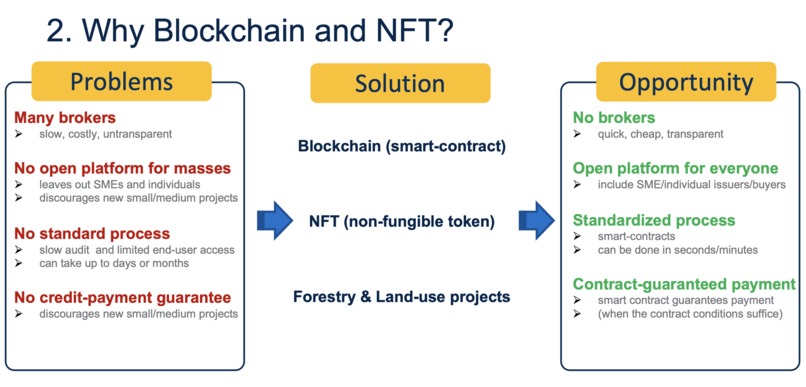
2_why_blockchain_and_nft
-
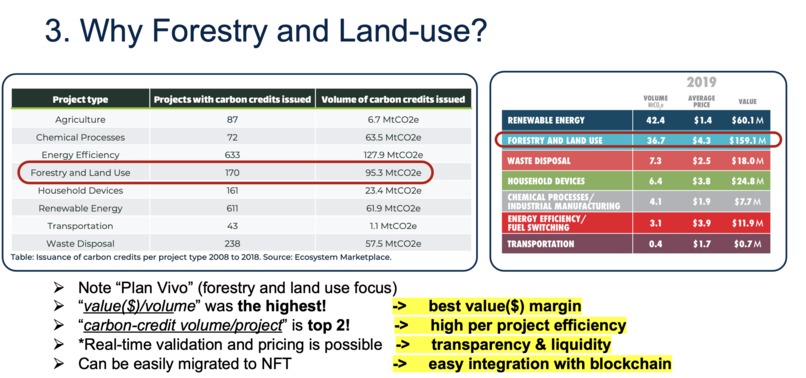
3_why_forestry_and_land_use
-
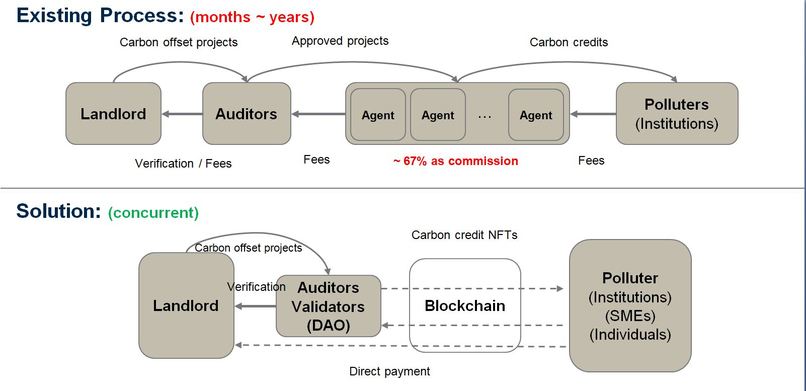
4_status_quo_vs_our_solution
-
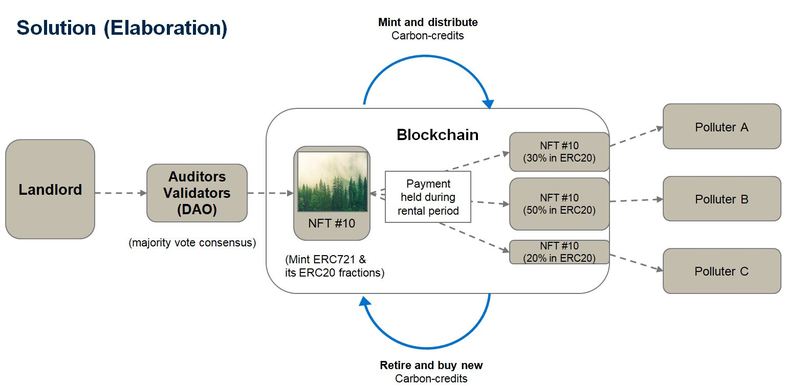
5_our_solution_elaboration
-
6_team_bio
Inspiration
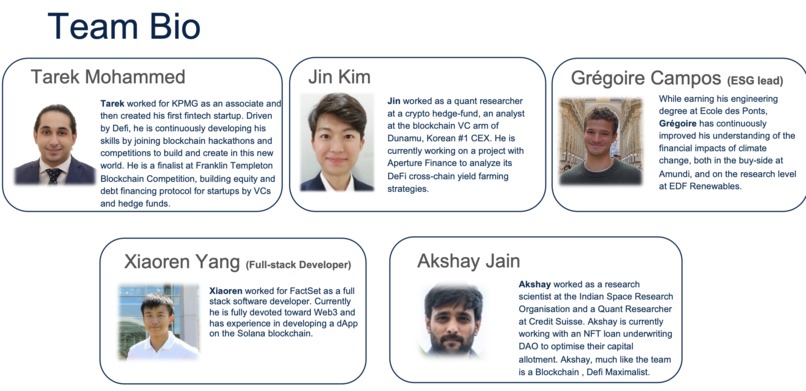
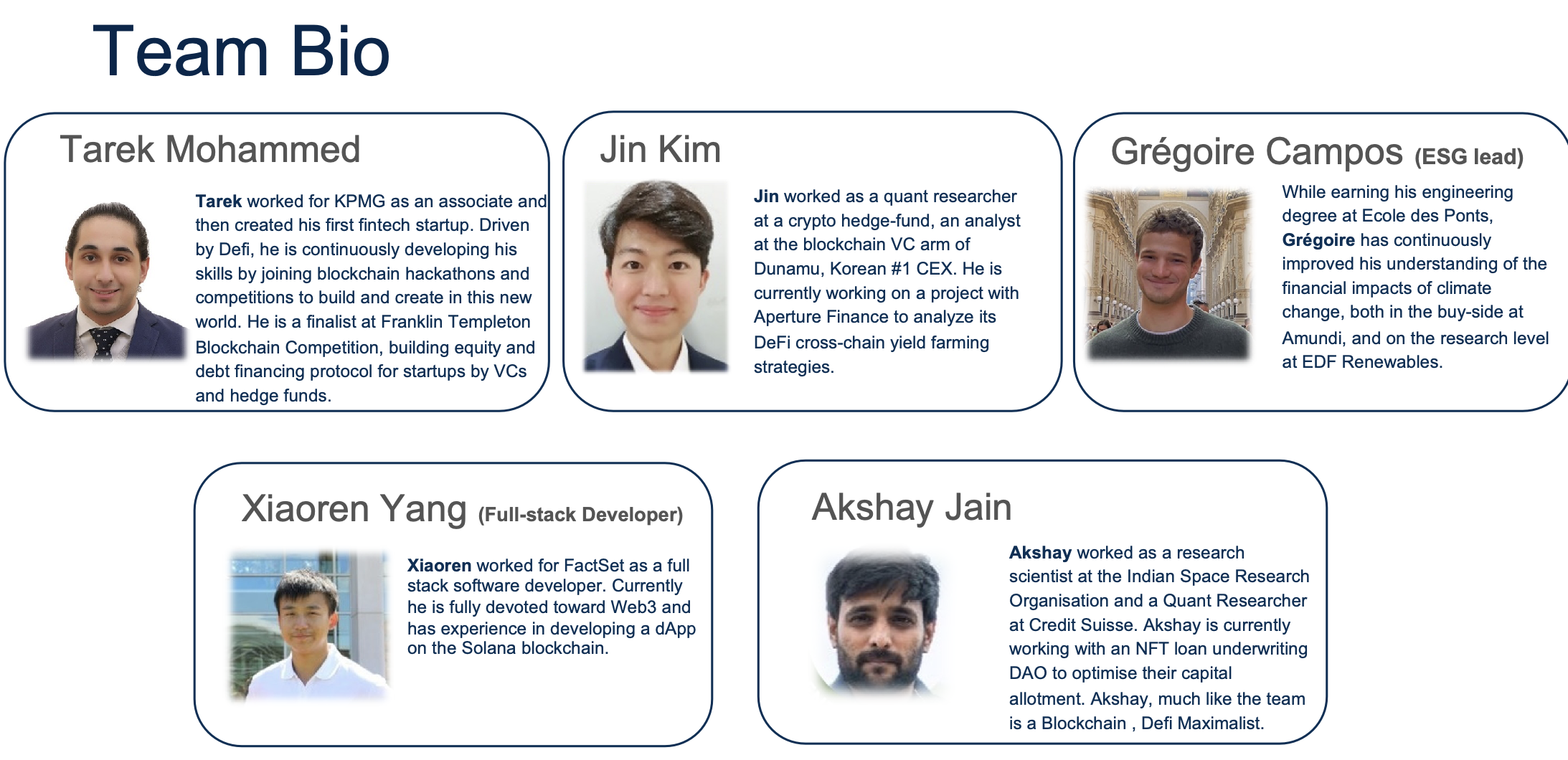
We are inspired by blockchain solutions that add not just business but also social value. Blockchain's potential for tackling environmental problems was one of them. We were already doing some ESG-fund related projects at school (Master of Financial Engineering, UC Berkeley) and doing cryptozombies during our spare time for fun. A few months ago, we came across Chainlink's hackathon and decided to learn solidity and create our own project. We had already been discussing some unique ideas on how to enhance the status quo carbon capture techniques so thought it was a wonderful idea to join the hackathon.
What it does
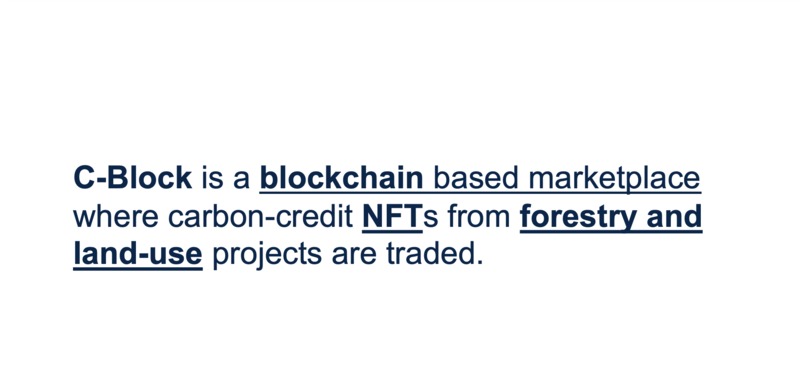
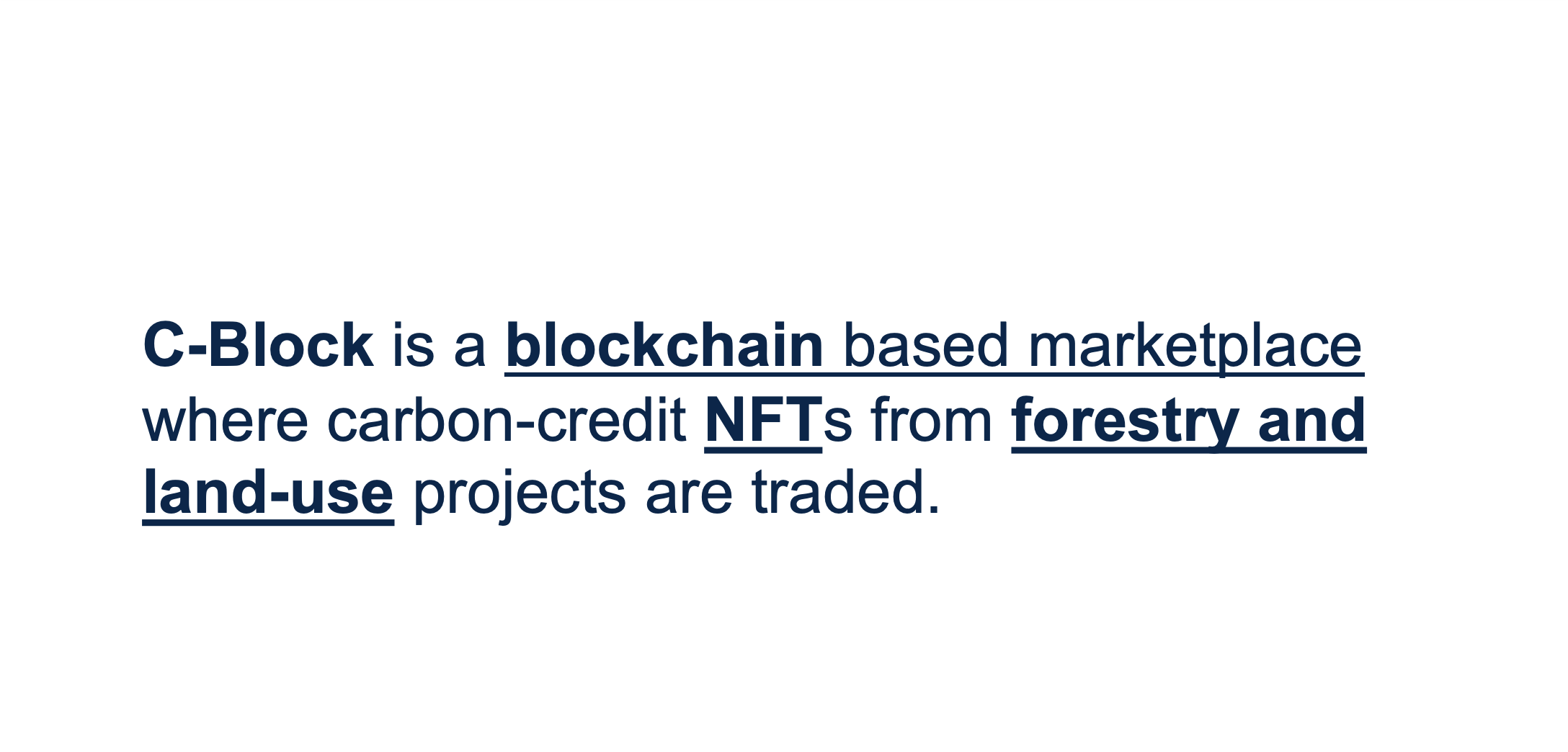
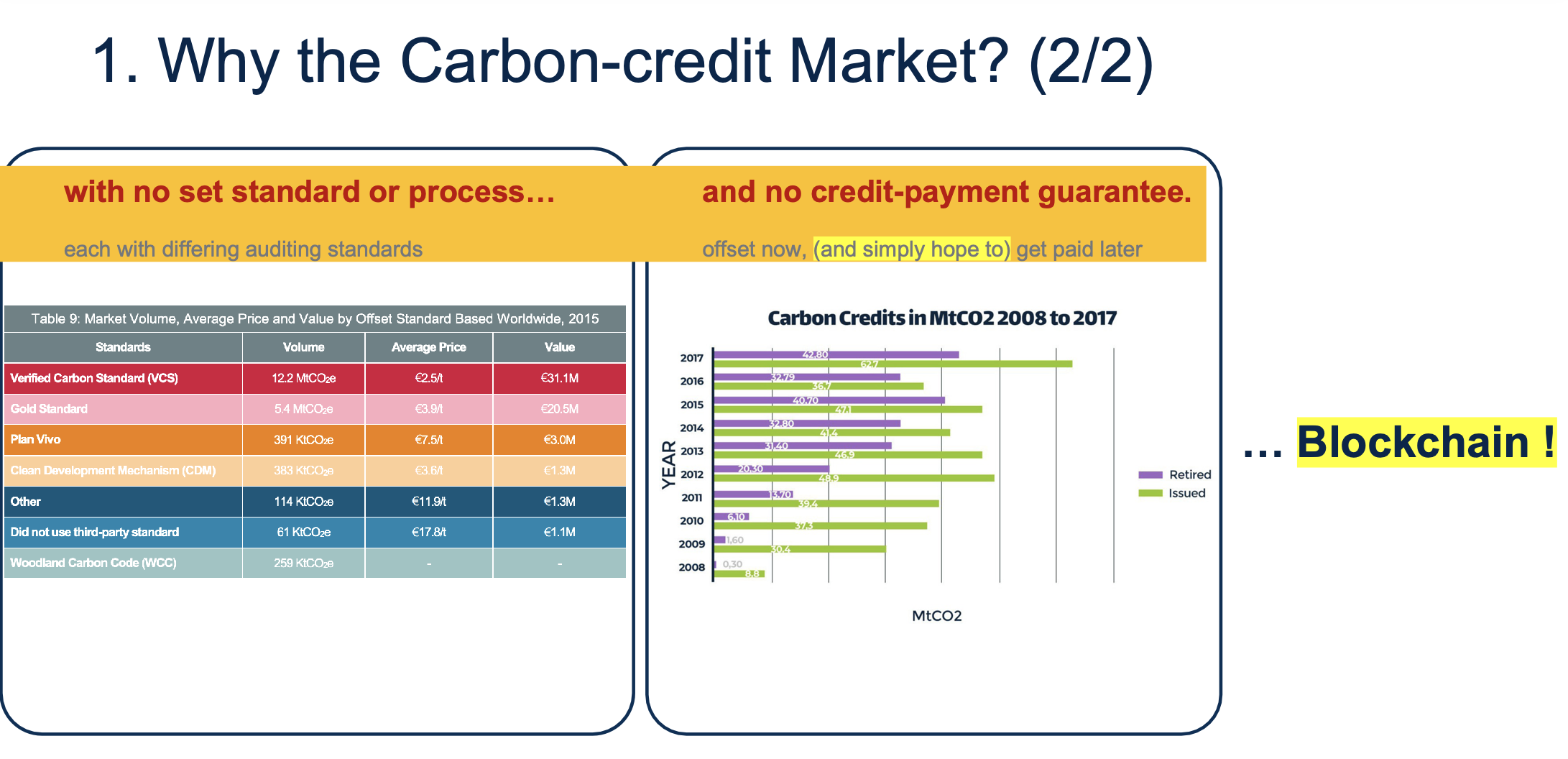
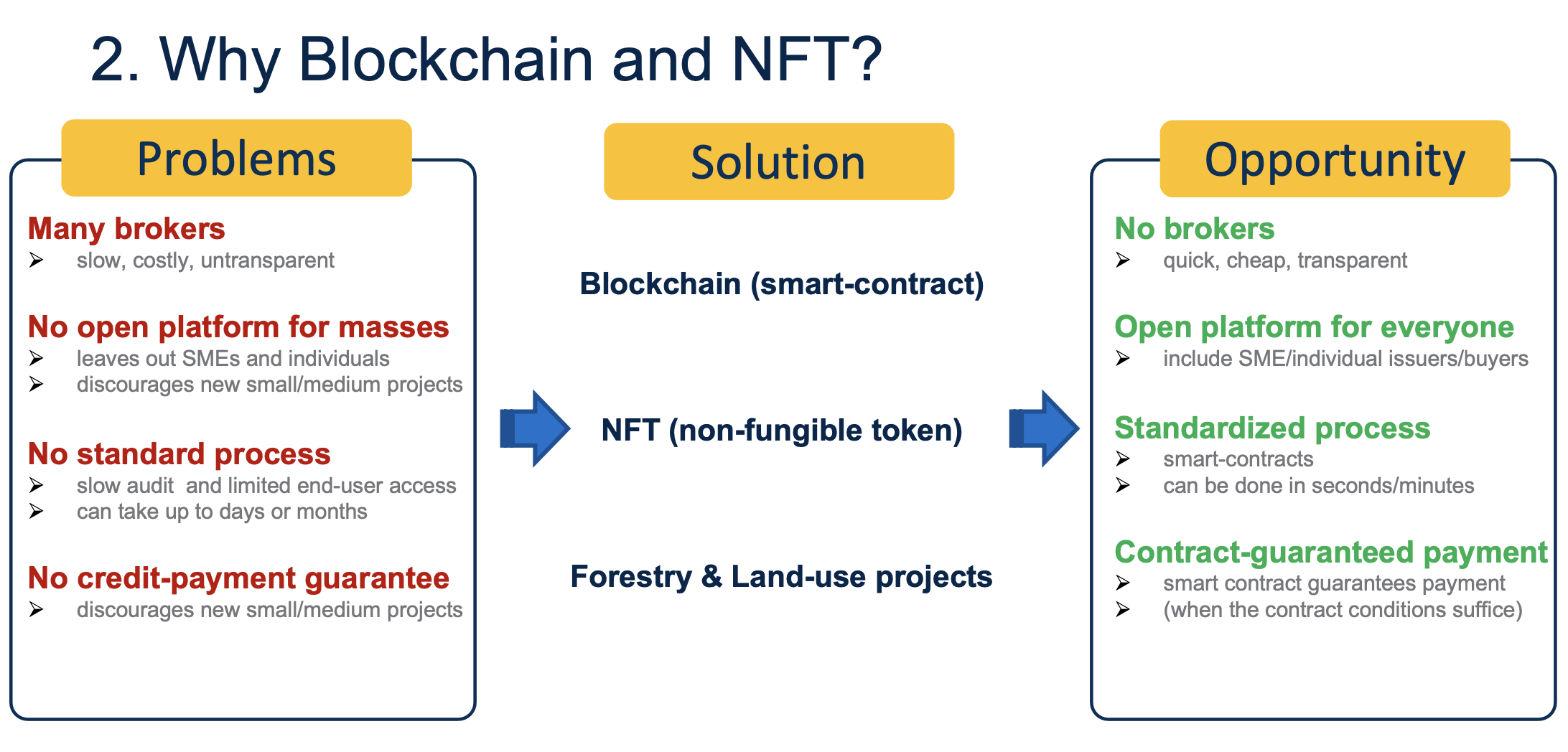
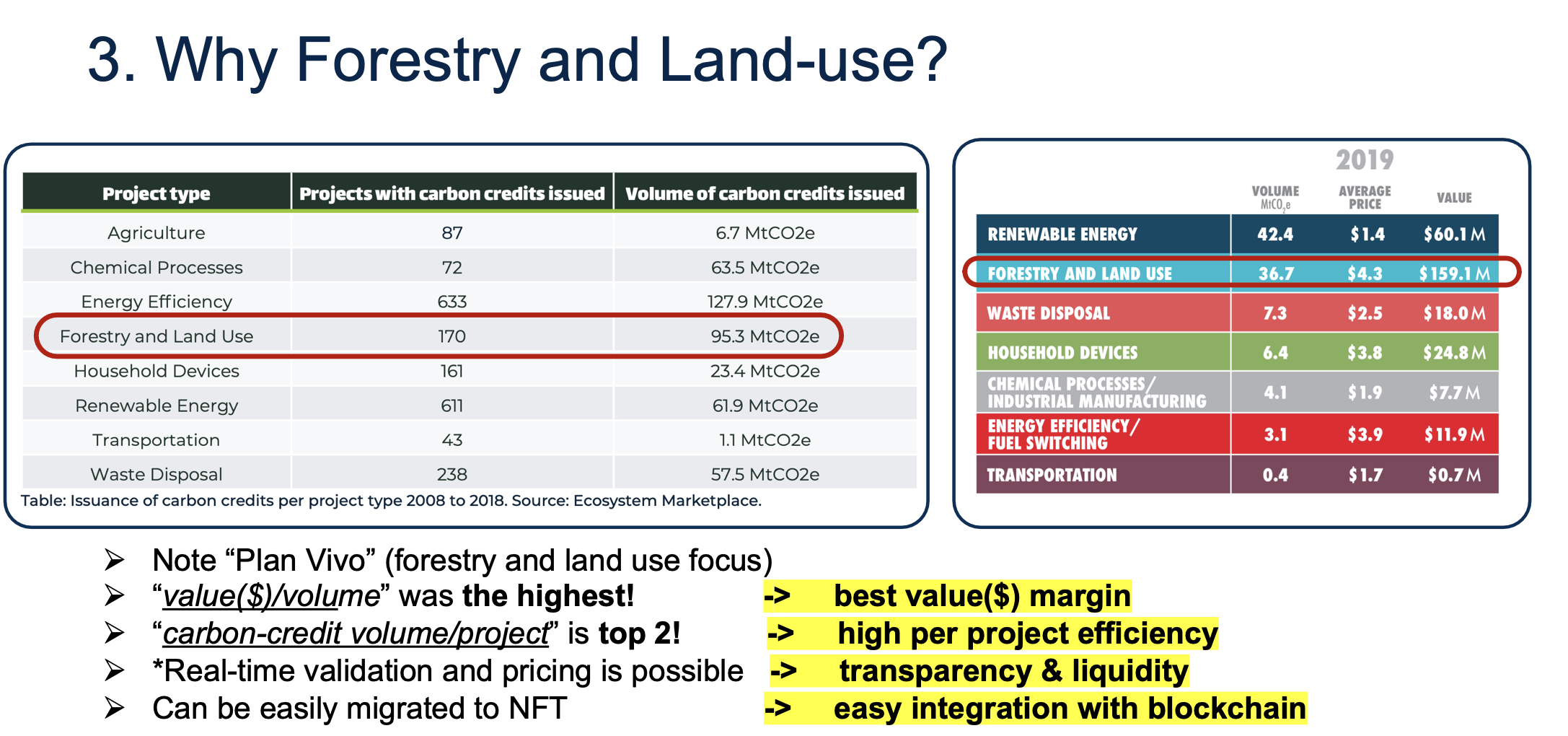
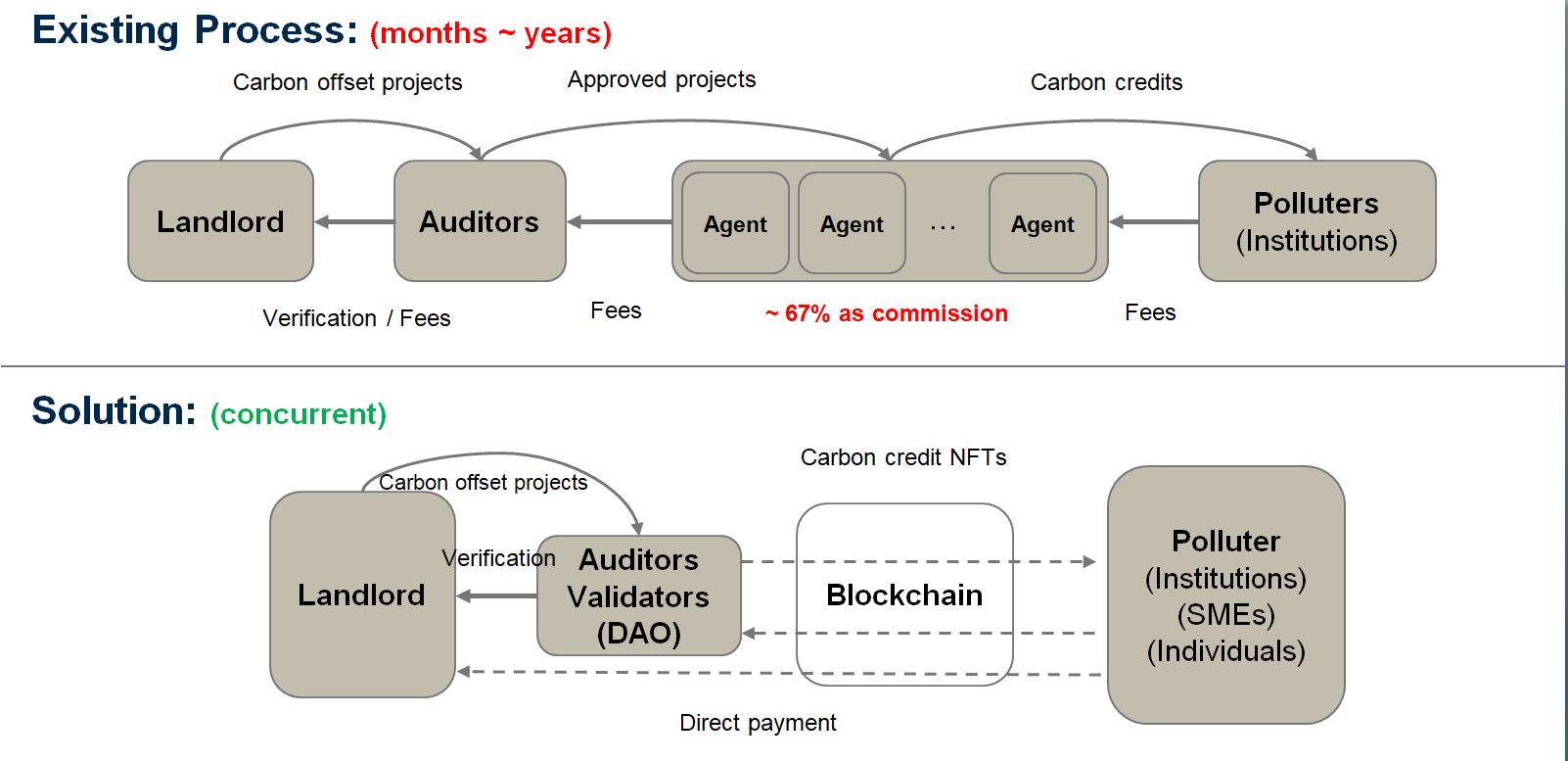
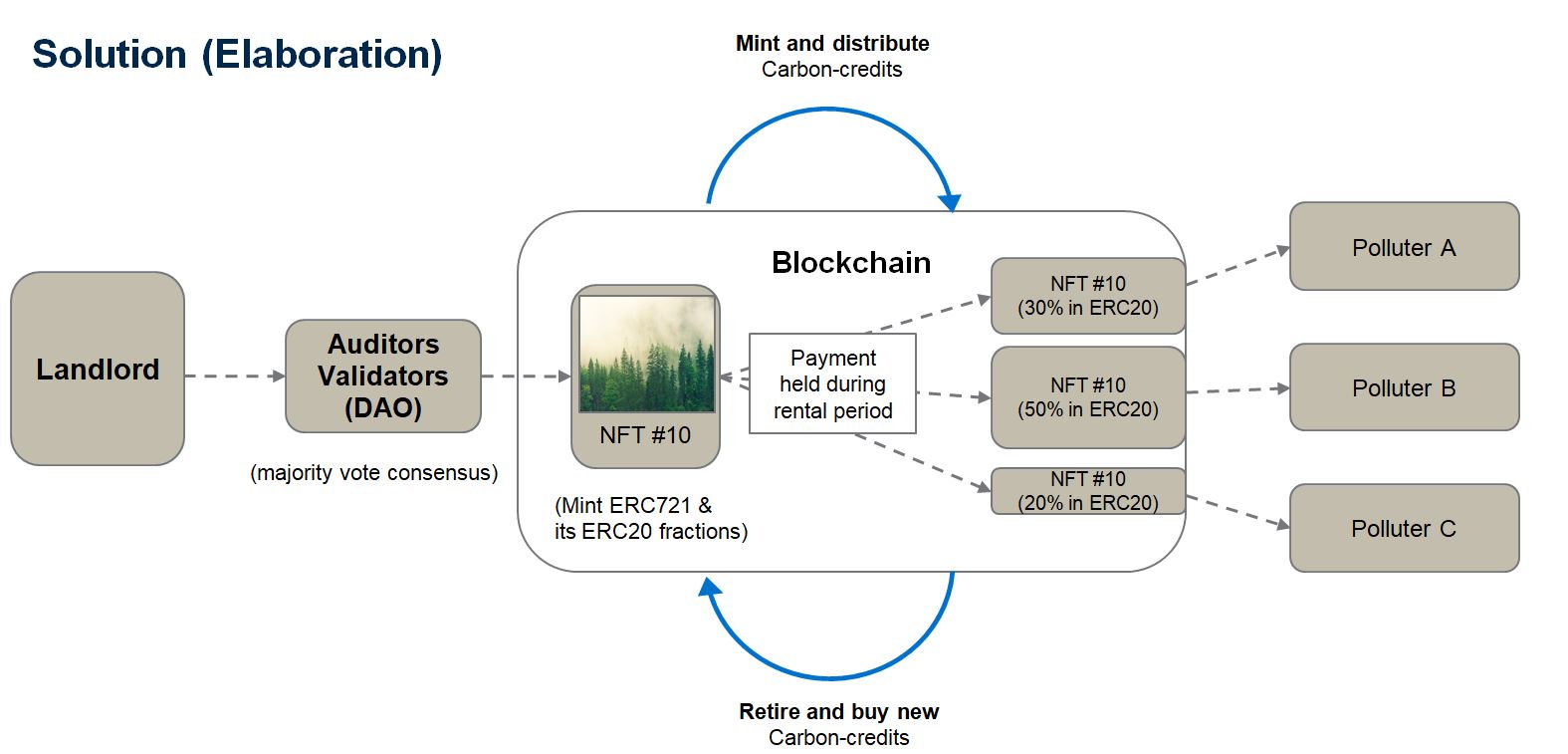
It is a marketplace for NFT-based carbon-credits from forestry and land use projects. Our project is distinct in that it uses NFT fractions which allows for a totally new business model for carbon-credits. Contrary to not only the conventional business model but also newer blockchain solutions out there, our project enables the concurrent production of carbon-credits and their real-time issue/retirement. This will serve as an inflection point for exponential growth in carbon offset speed and in market participation from both the carbon offset project provider end but also the carbon-credit buyer end.
How we built it
We spent a few days to warm up on the basics through the videos provided by Chainlink. Once this was set, we specialized on each of our roles by learning from videos of more relevance. For example, since we had 5 team members, we split the workload into 5: 1) Market research, 2) DAO, 3) ERC20, 4) ERC721, 5) Back/Front-end. Except for 1) and 5), we were able to work in parallel to economize on time. Once each vertical was done through inter-member cooperation when necessary, we merged the code to create a single workable project (due to differing dependencies, some were left as separate repositories).
Challenges we ran into
Time was an issue. All members of our team are currently in the same program, Master of Financial Engineering at UC Berkeley, which during this time of the year is very very hectic (e.g. this week is our test week and many of us are busy with job interviews!). Thereby, we spent a great amount of effort for time efficiency. For example, once one member already watched some Chainlink video, he would summarize to us its gist and guide us which part of the video to focus on. All were thankfully very cooperative and passionate throughout the hackathon which allowed us to push our hackathon objective to "learning solidity" to "creating a workable project".
Accomplishments that we're proud of
Teamwork, the learning curve, and our results!! Though we all had some python/C++ exposure, all of us were almost new to solidity. All of us did not give up even though everyone was busy. Coming up with a new business model, which took a longer time than we thought, indeed paid off when we saw how it was actually implementable. We will be further developing on our project even after the hackathon.
What we learned
We learned not only the technical parts of NFT, NFT fractionalization, and DAO, but also the more philosophical parts such as "how should the DAO reach a consensus and why?". Though implementation into code was not an easy task as we were all new to this field, in retrospect we spent much more time on why and how we should use them. After all, technology is just a means among many. We wanted to make sure that our project was not for just the sake of using blockchain but for a clear reason and agenda. It was this type of discussion that taught us a lot about blockchain in general, when/where it is best used, and its possible limitations.
What's next for C-Block: Marketplace for Carbon-credit NFT Fractions.
Though, we have made substantial progress towards our end goal of a decentralised Carbon Credit Marketplace, there are still 'Miles to go'. Some of the updates / initiatives that we have in the works -
- Implementing collaboration with off chain and other on chain Carbon Credit Marketplace to further improve the liquidity within the Market.
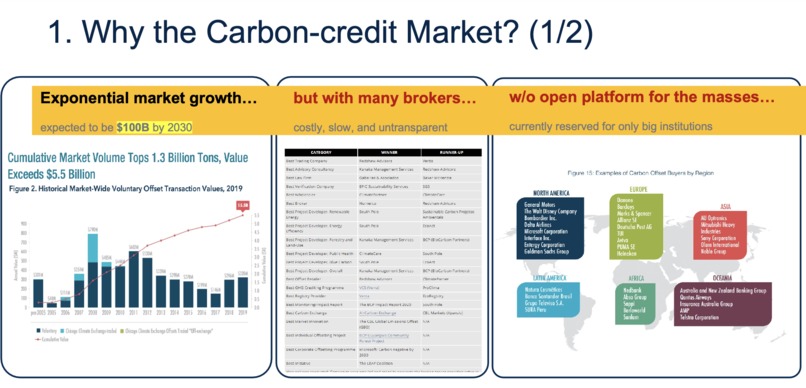
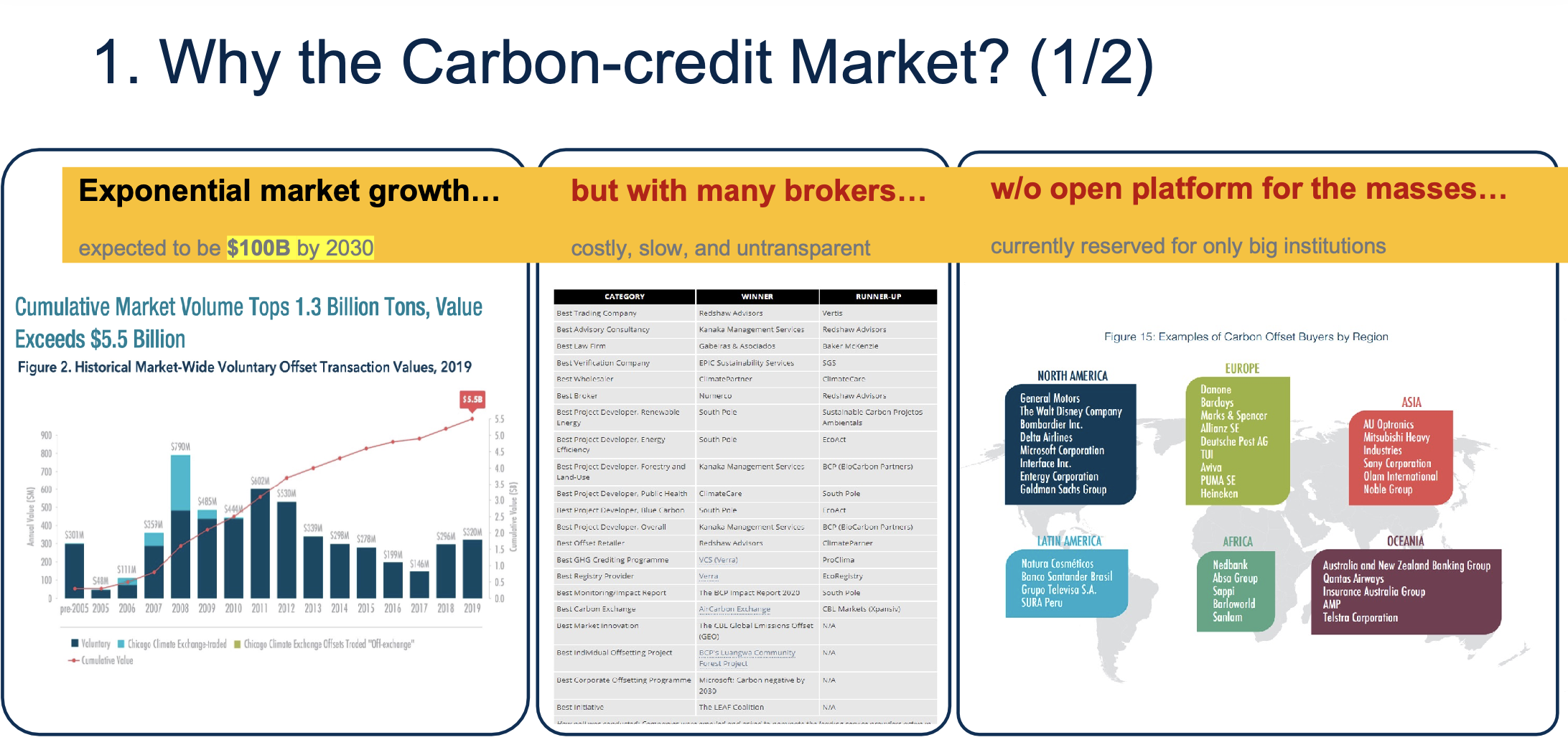
- To plan for the future - We understand the current voluntary Carbon Credit Market will grow substantially if not exponentially in the coming future. This would call for the current model to expand to other avenues of Carbon Capture, say industrial carbon capture, renewable energy projects, advanced technological projects.
- Since, the active Carbon Capture projects could be highly volatile in terms of actual output. We need to implement a methodology to source, manage and create a pool or repository of Carbon Credits to cover any potential shortfall in production.


Log in or sign up for Devpost to join the conversation.