-
-
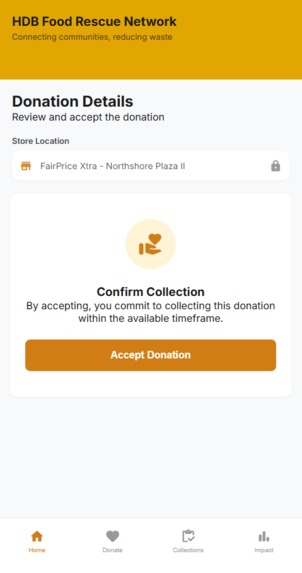
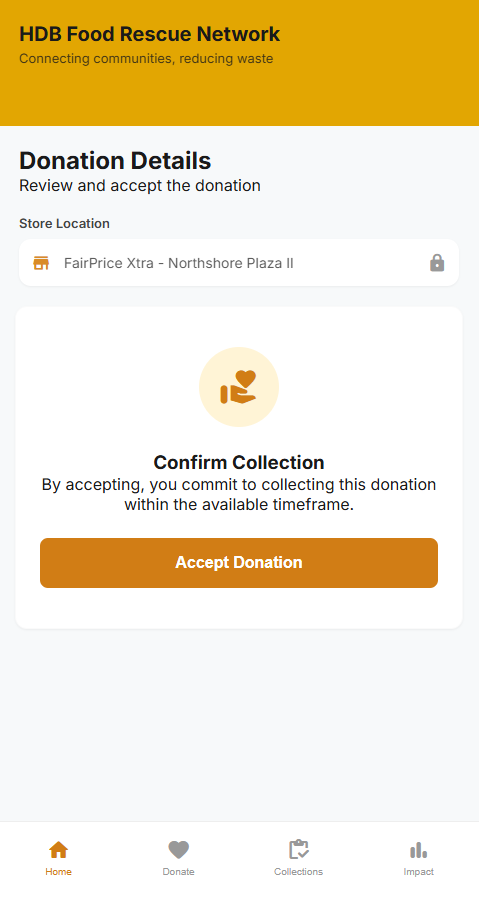
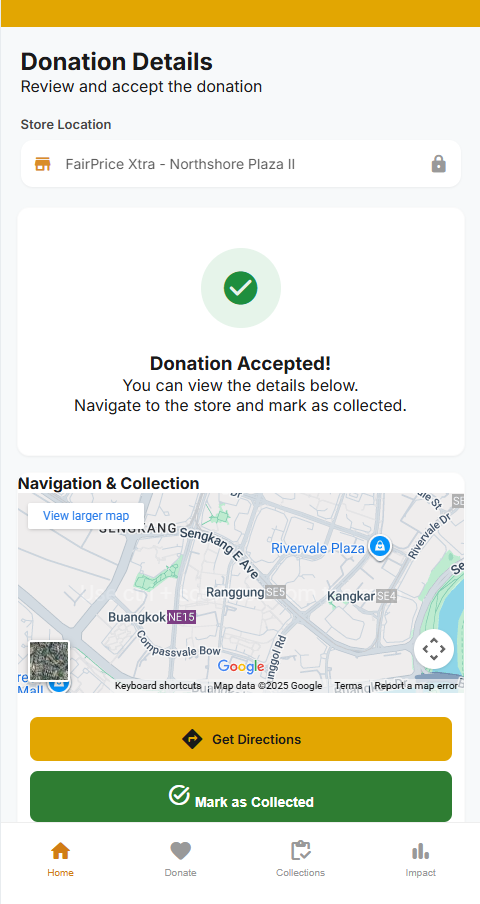
Accept Donation
-
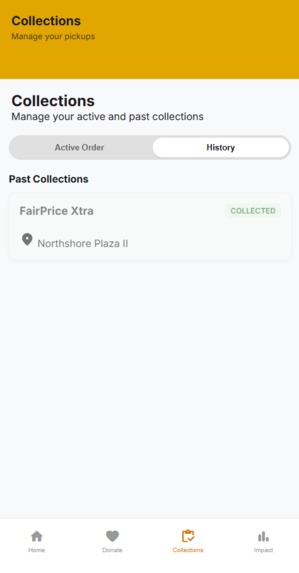
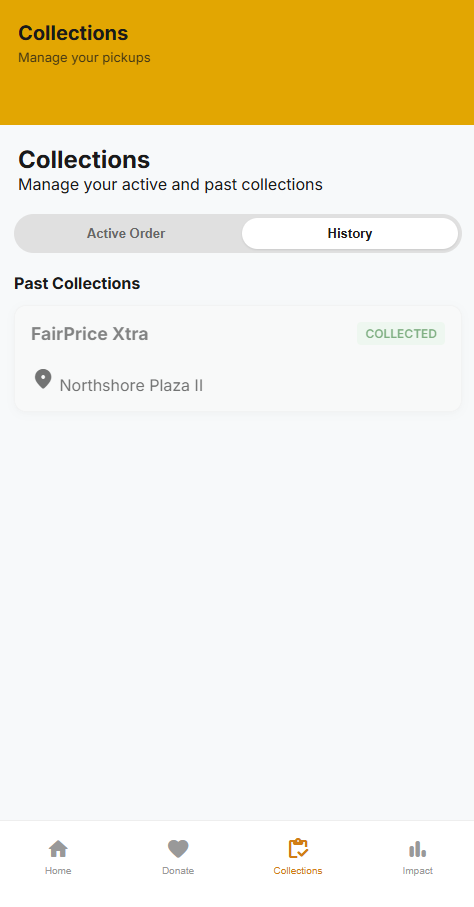
Collection History
-
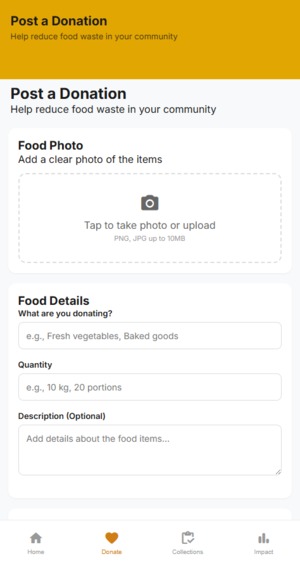
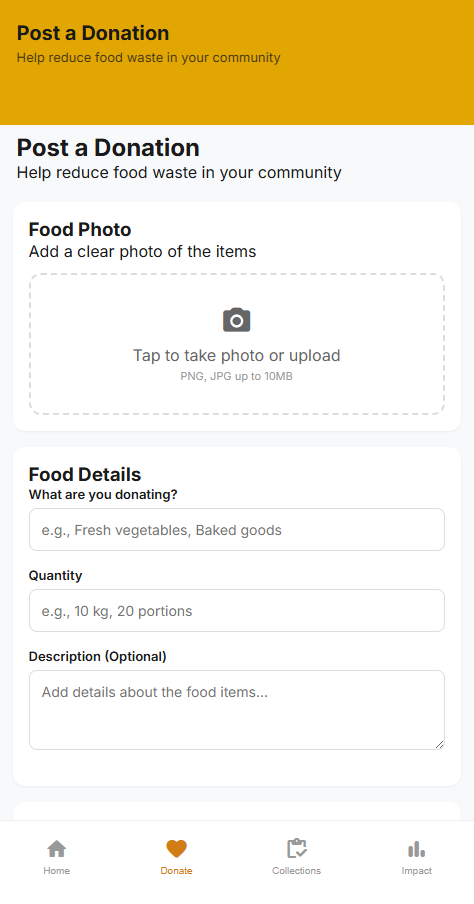
Add Donation Page
-
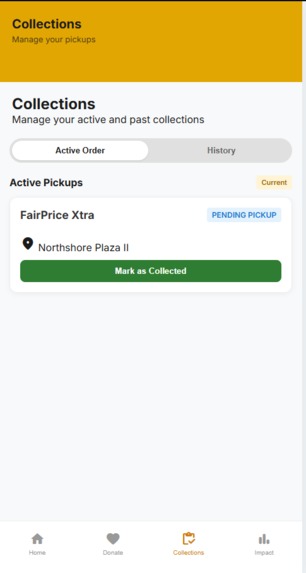
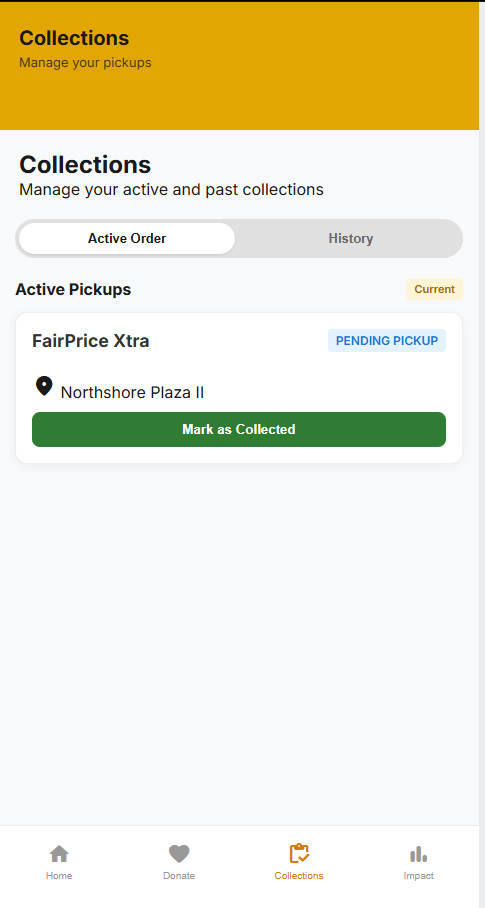
Active Collection
-
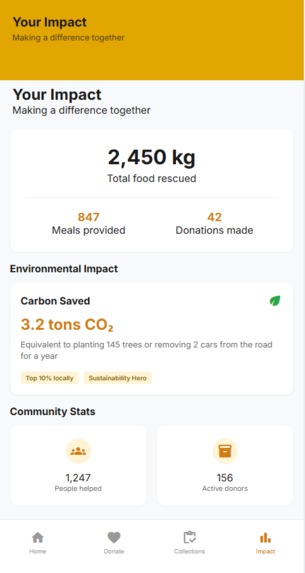
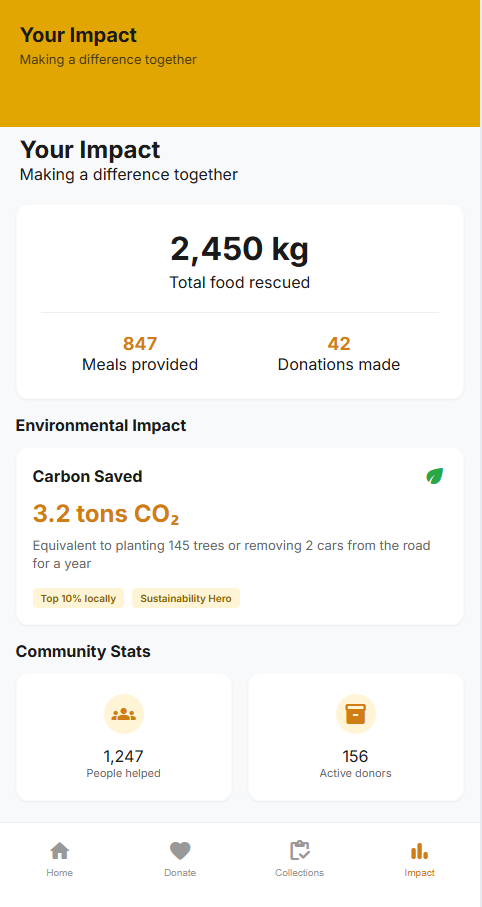
Impact made to the community
-
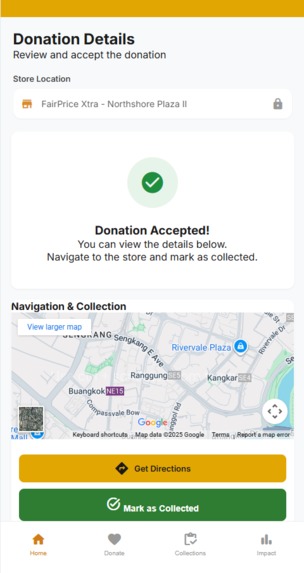
Donation Accepted
-
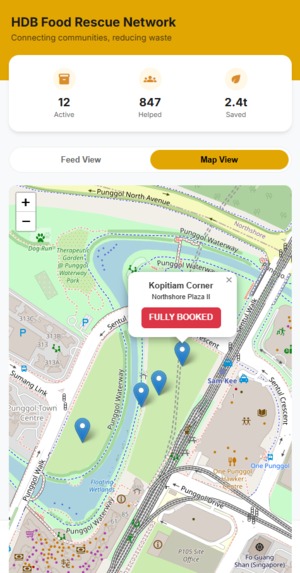
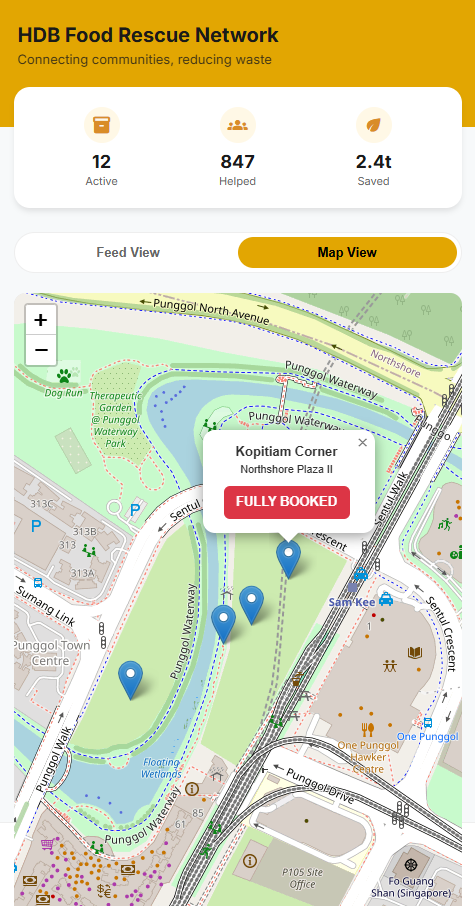
Map view homepage
-
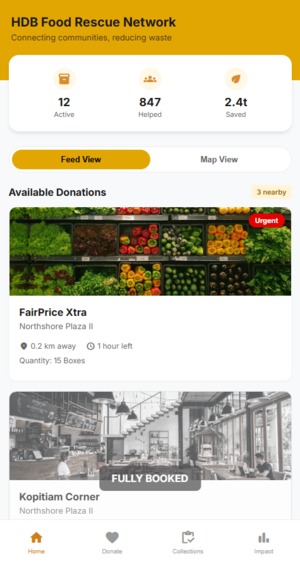
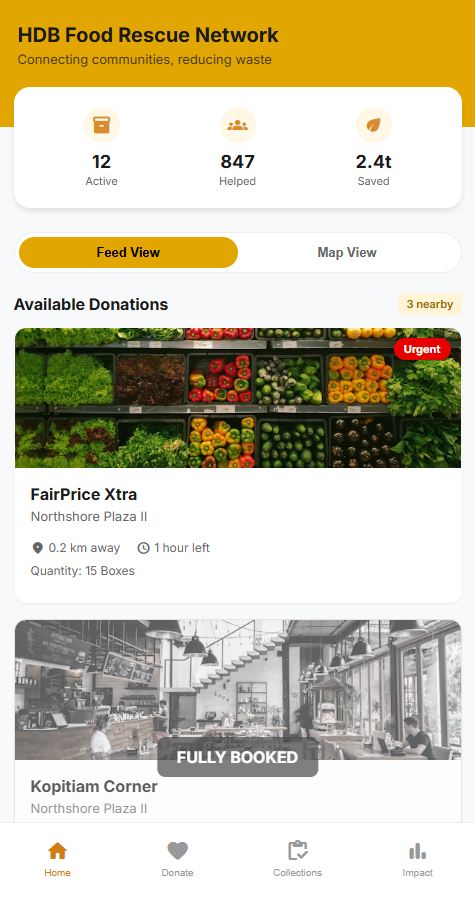
homepage
About the Project
Inspiration
Singapore generated 817,000 tons of food waste in 2022, but only 18% was recycled. Much of this discarded food was still edible. At the same time, thousands of families rely on food assistance every month.
We built a platform that directly connects surplus to need.
What It Does
- Real-time surplus listings from participating stores
- Slot-based pickup bookings for organisations
- Collection tracking to support redistribution
- Daily item limits to ensure fair distribution
The result: reduced waste and increased support for food-insecure communities.
How We Built It
Tech Stack
- React for a fast and modular frontend
- Node.js + Express for backend APIs
- Role-based authentication for stores, organisations, and admins
Core Features
- Store Listing Engine
- Booking Manager
- Organisation Dashboard
Challenges
- Designing a booking system that prevents slot conflicts
- Ensuring real-time availability updates
- Creating user flows that work for two very different roles
Accomplishments
- A functional prototype built within the hackathon timeframe
- A stable booking flow with accurate state handling
- A solution with measurable environmental and social impact
What We Learned
- Multi-role platforms require clear user journey mapping
- Real-time updates demand efficient state syncing
- Collaboration is strongest with clear task ownership
What’s Next
- Mobile app support
- Notification and reminder systems
- Partnerships with NGOs, bakeries, supermarkets, and cloud kitchens
- Impact analytics (waste diverted, CO₂ savings, beneficiaries served)
Fun Fact (LaTeX)
If Singapore reduces food waste by 10%, the amount saved is:
$$ 0.10 \times 817{,}000 = 81{,}700 \text{ tons} $$
In kilograms:
$$ 81{,}700 \text{ tons} = 81.7 \times 10^6 \text{ kg} $$
This is roughly:
$$ \frac{81.7 \times 10^6}{50{,}000} \approx 1.6 \text{ times the weight of an entire MRT train.} $$


Log in or sign up for Devpost to join the conversation.