Inspiration
After a long day at work or school, cooking can feel like another job.
You get home hungry and tired. There are ingredients in the kitchen, but you still have to decide what to make, find a recipe, check what is missing, and think about tomorrow’s meals. Sometimes, ordering takeout feels easier than making all those decisions.
We also know the feeling of eating something great at a restaurant and wishing we could make it at home.
ByteHacks brings those two ideas together: helping people cook with what they have and helping them try making dishes they love.
What it does
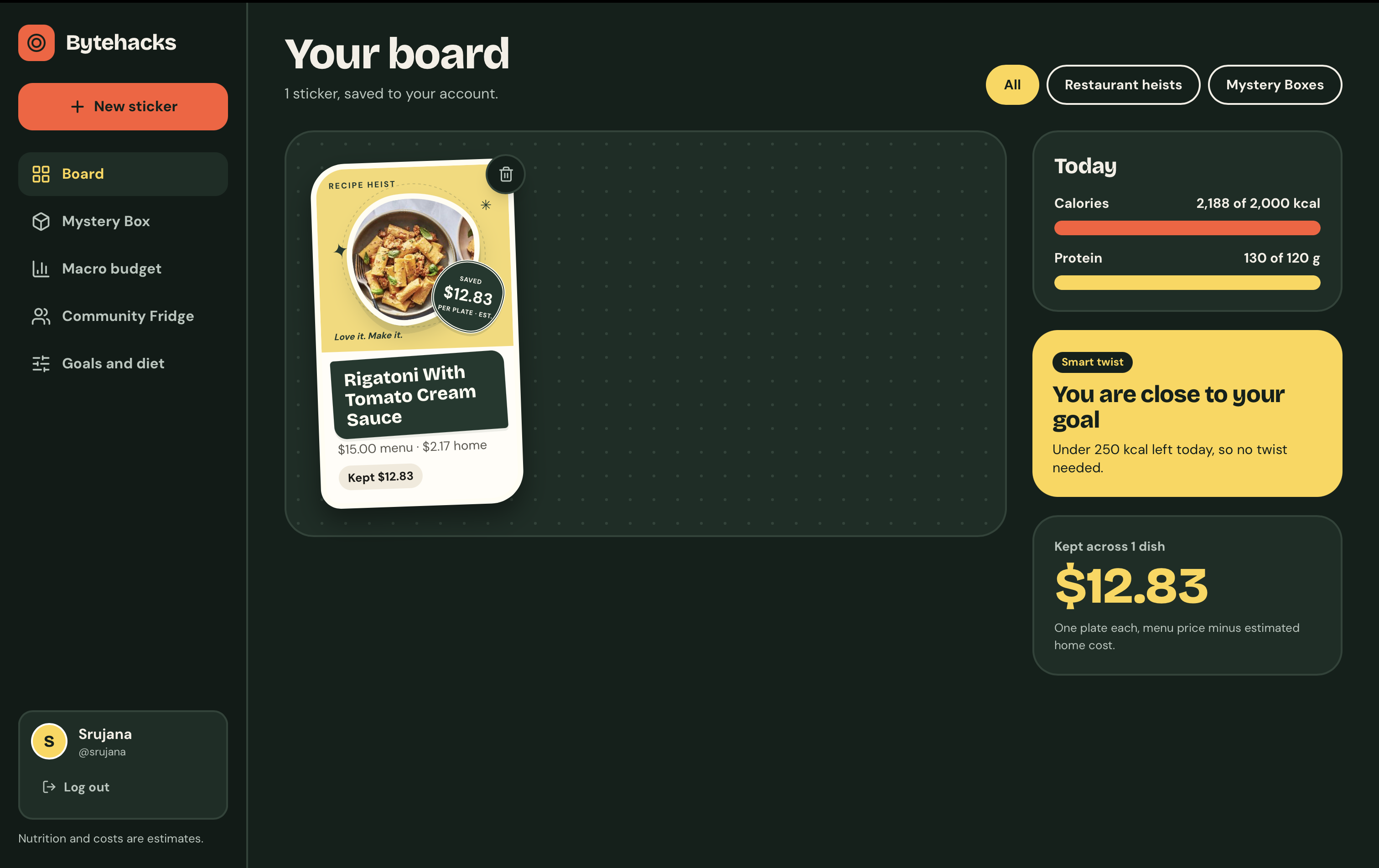
ByteHacks turns a food photo into a suggested home recipe, saved as a collectible recipe sticker.
Users can view ingredients, cooking steps, estimated nutrition, and estimated home cost. They can change servings, edit ingredient amounts, explore swaps, and check a shopping list.
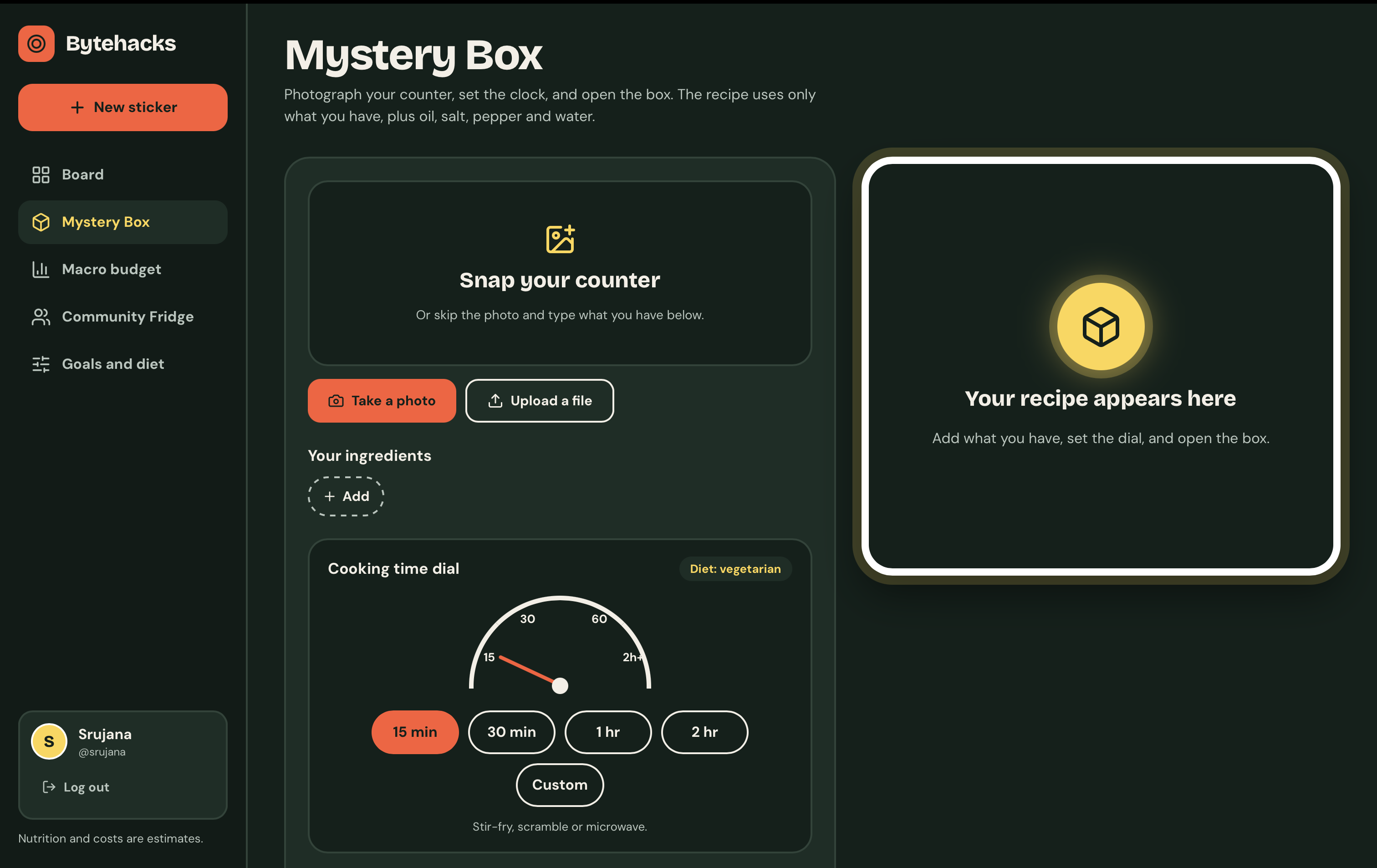
Mystery Box helps users make a meal from ingredients already in their kitchen. They can photograph those ingredients or enter them manually, then choose a cooking time—from 15 minutes to a custom limit of up to 10 hours.
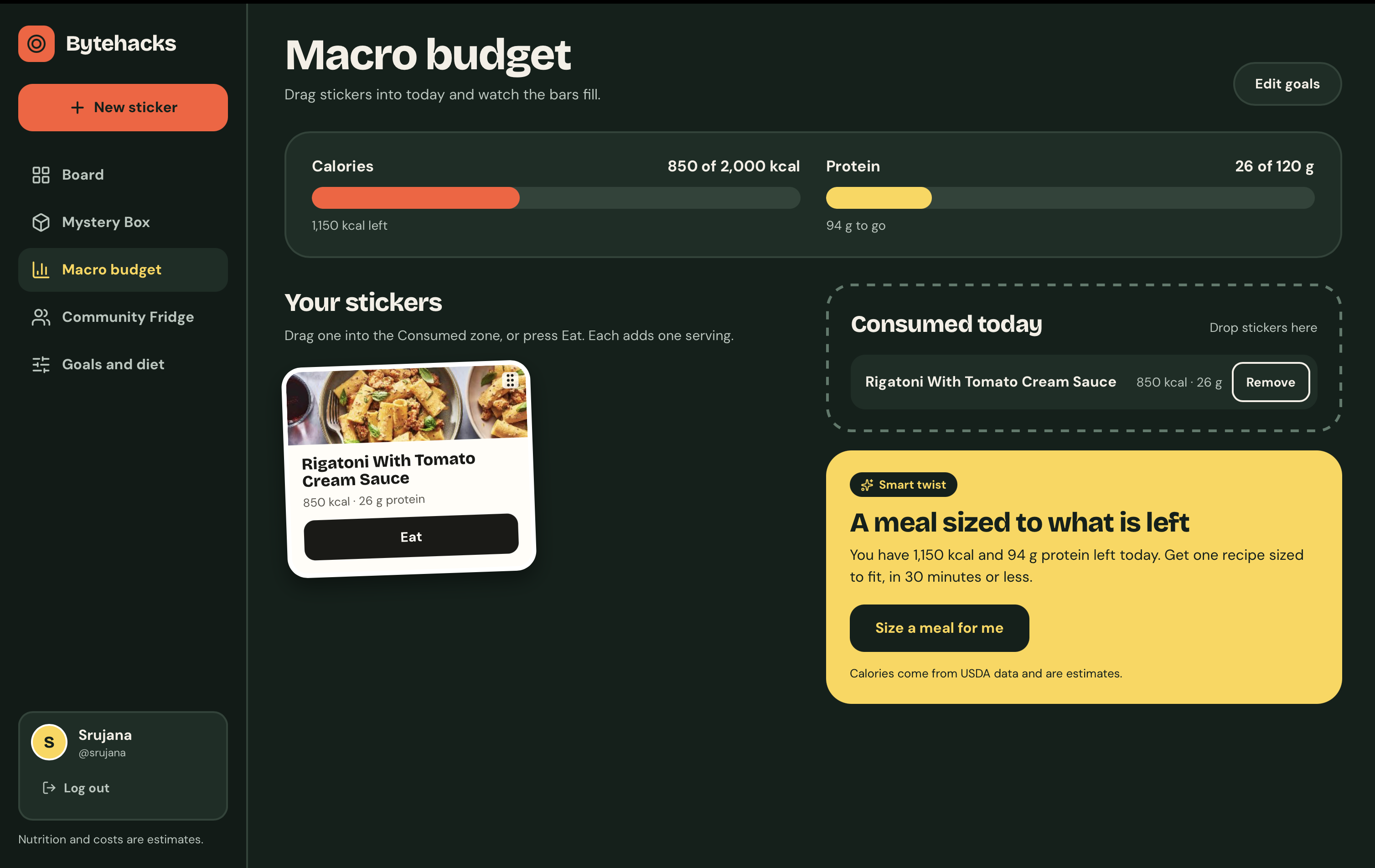
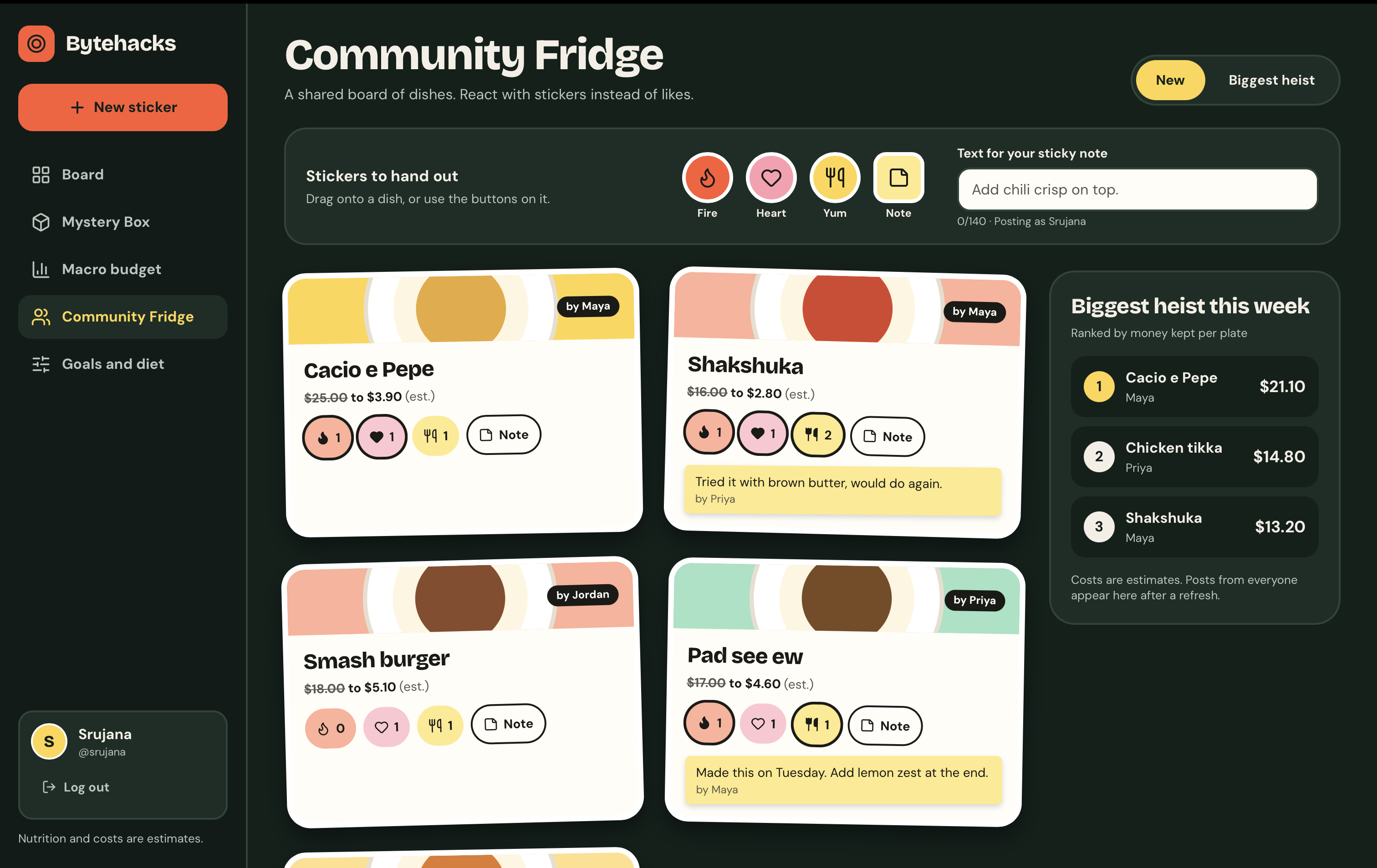
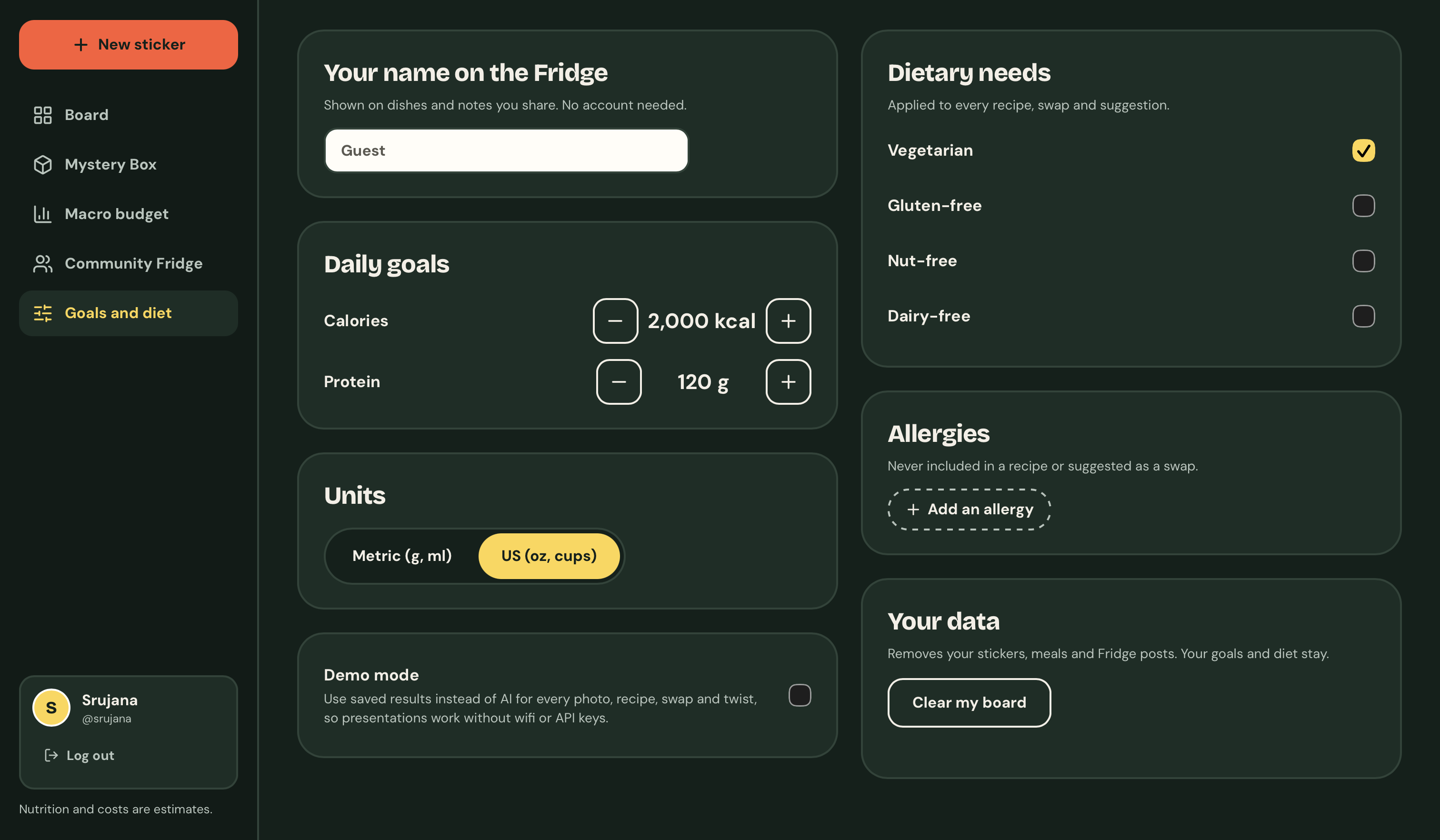
The app also includes a daily calorie and protein budget, step-by-step cooking mode with timers, and a Community Fridge where users can share dishes, react, and leave tips. Related YouTube cooking videos are available when the YouTube integration is configured.
How we built it
We built ByteHacks with Next.js, React, TypeScript, and Tailwind CSS. PostgreSQL and Prisma store recipes, ingredients, user settings, meal logs, and community posts.
OpenAI helps identify dishes and generate recipe suggestions. We validate the responses with Zod and additional recipe rules. Mystery Box checks that suggested ingredients come from the user’s list or the allowed pantry basics.
Nutrition comes from USDA FoodData Central when a suitable match is available, with model estimates as a fallback. Cooking costs come from an ingredient price table. The app calculates totals from ingredient amounts so serving changes and edits stay consistent.
We used Three.js and React Three Fiber for the animated landing page, Vitest for unit tests, and Playwright for browser tests.
Challenges we ran into
One challenge was handling the uncertainty in food photos. A picture cannot tell us every ingredient, exact weight, or cooking method, so we needed to present the result as a suggested home version.
Another challenge was keeping Mystery Box recipes within the user’s ingredients and time limit. We added validation and retry logic to catch responses that break those rules.
We also needed serving changes, ingredient edits, and swaps to update nutrition and cost estimates consistently. Calculating these values from the ingredient data helped keep them aligned.
Finally, we worked on making the interface useful on both phones and larger screens, especially during cooking.
Accomplishments that we're proud of
We built a connected experience that takes someone from “What should I cook?” to a recipe they can follow.
We’re especially proud of Mystery Box, flexible cooking times, serving adjustments, and the recipe sticker board. These features make the app feel personal while keeping the next step clear.
We also added demo recipes and automated tests to make the project easier to demonstrate and improve.
What we learned
We learned that generating a recipe is only one part of helping someone cook.
People also need to know whether they have the ingredients, how long the meal will take, what to buy, and how to follow the steps.
We also learned that AI suggestions need checks. Clear rules, consistent calculations, and honest estimates are important parts of a useful experience
What's next for ByteHacks
We want to expand ByteHacks from planning one meal to helping with the whole week.
Our next steps include weekly meal planning, combined grocery lists, pantry tracking, expiry reminders, and leftover suggestions. We also want to improve recipe personalization, ingredient pricing, food artwork, and hands-free cooking support.
Most importantly, we want people to cook with TasteHeist and tell us what works, what is confusing, and what would make their next meal easier.
Built With
- data
- next.js
- openai
- playwright
- postgresql
- prisma
- react
- react-three-fiber
- tailwind-css
- three.js
- typescript
- usda-fooddata-central
- vitest
- youtube
- zod
