-
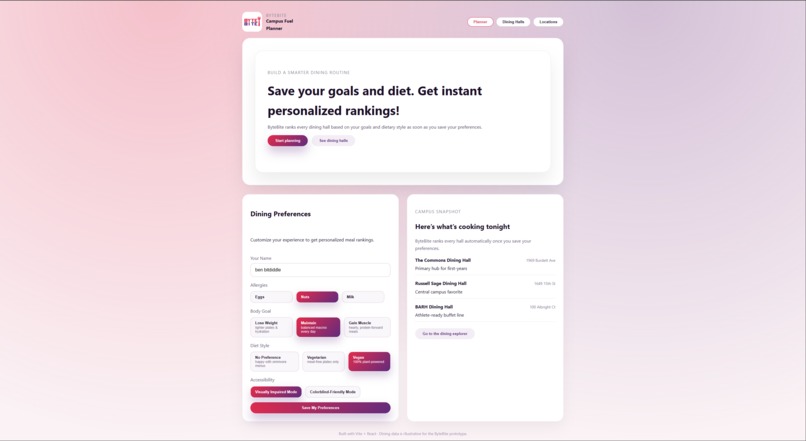
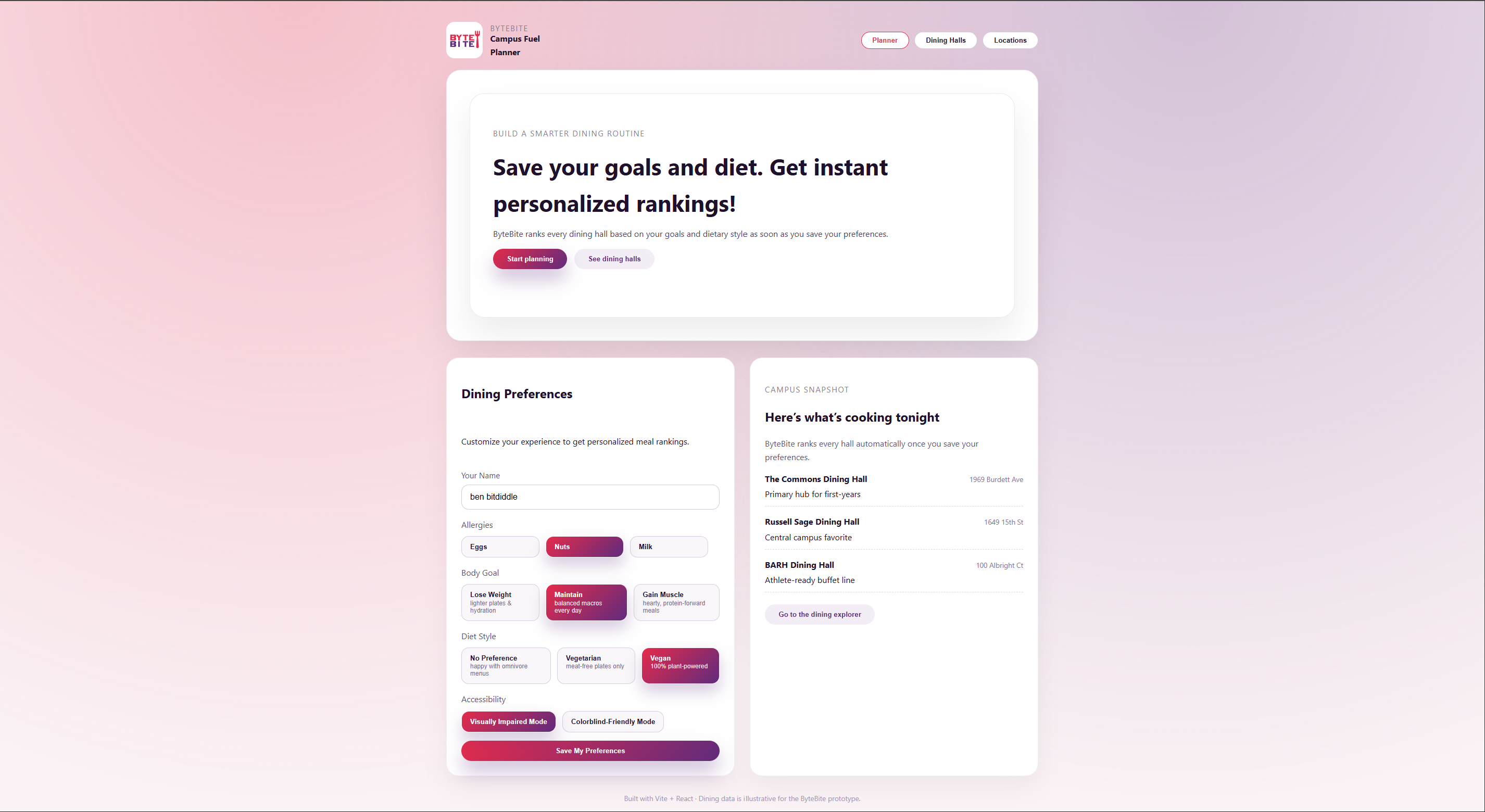
MainScreen
-
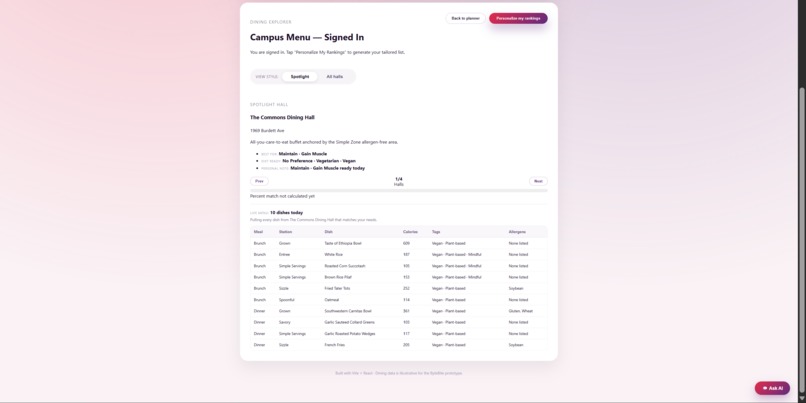
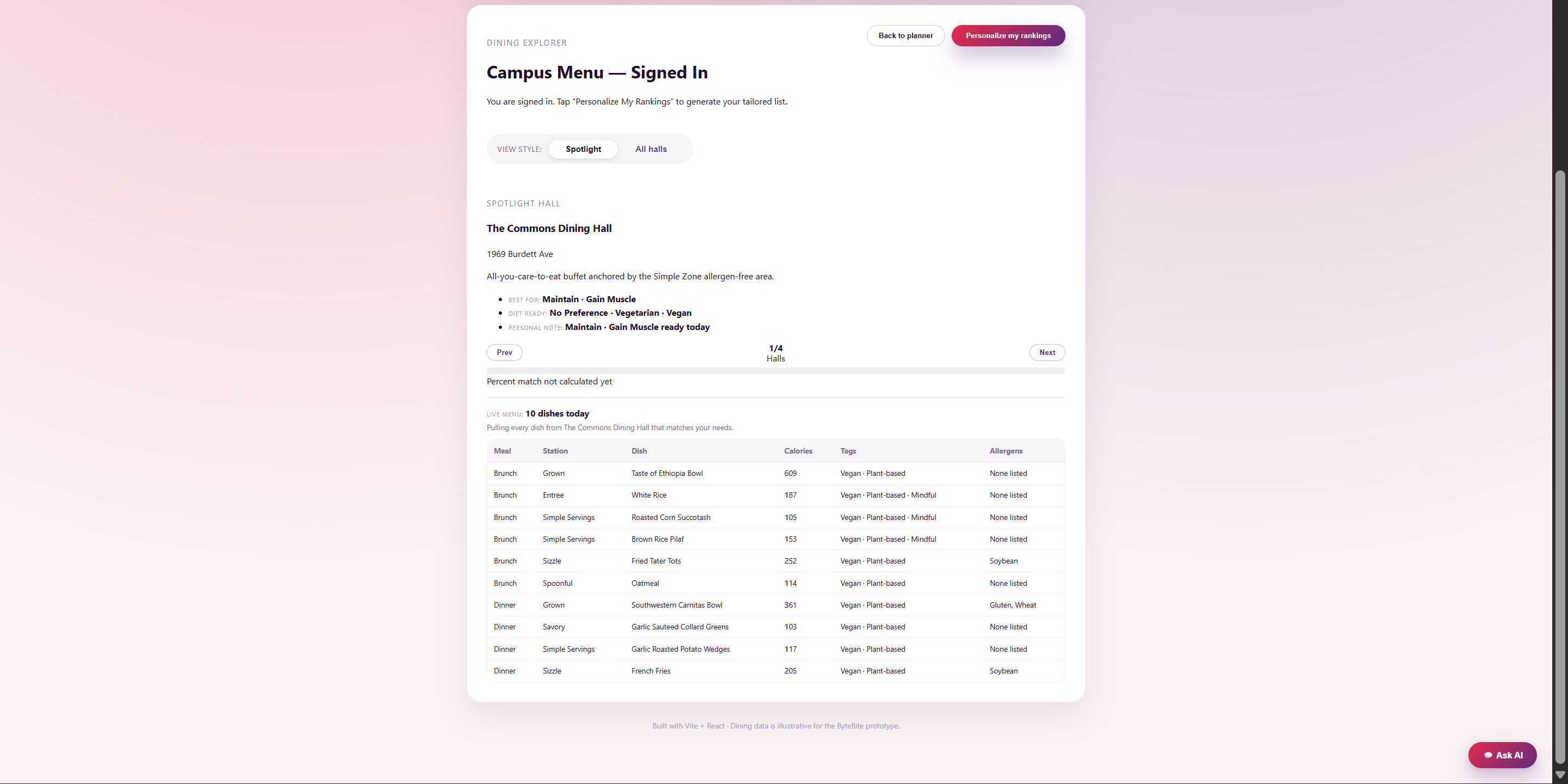
Menu Page
Inspiration
Campus dining is confusing, unpredictable, and rarely health-friendly. Students with allergies, athletes, and people with chronic conditions struggle to know what’s safe or good for them. We wanted to fix that.
What it does
ByteBite analyzes dining-hall menus and generates personalized meal recommendations, allergy alerts, and wellness-optimized options. It supports diabetic, low-sodium, and high-protein modes, plus mood-based tracking and a gamified health avatar.
How we built it
We combined a React front-end, a Python/Flask backend, Gemini AI for analysis, and automated menu scraping. User preferences (allergies, diet, goals) feed into a ranking engine that outputs personalized scores and health warnings.
Challenges we ran into
Messy dining-hall data, inconsistent menus, API rate limits, accessibility issues, and figuring out how to personalize recommendations without overwhelming users.
Accomplishments that we're proud of
Building a fully working nutrition assistant in under 24 hours, creating real-time allergy warnings, adding chronic-condition modes, producing clean UI/UX, and delivering a product that genuinely improves student health.
What we learned
How difficult but important it is to make health data accessible. We learned a ton about nutrition scoring, allergy detection, user onboarding, and combining AI with practical wellness features.
What's next for ByteBite
Expanding more health modes (gluten-free, IBS-safe, vegan strict), adding wearable integration, calorie tracking, a campus-wide API for dining services, and releasing ByteBite as a full wellness app across colleges.


Log in or sign up for Devpost to join the conversation.