-
-
Core Features
-
Gemini Usage
-
Byte
Inspiration
Grocery shopping, snacking, and eating, should all feel easy and safe. It’s a basic human right to eat freely without fear, but unfortunately that’s not the case for everyone–1 out of 10 adults and 1 out of 13 children have food allergies. Navigating ingredients lists has remained a challenge, especially for the visually challenged or younger children. Over 50% of allergy sufferers report that reading food labels is confusing or difficult according to foodinsight.org.
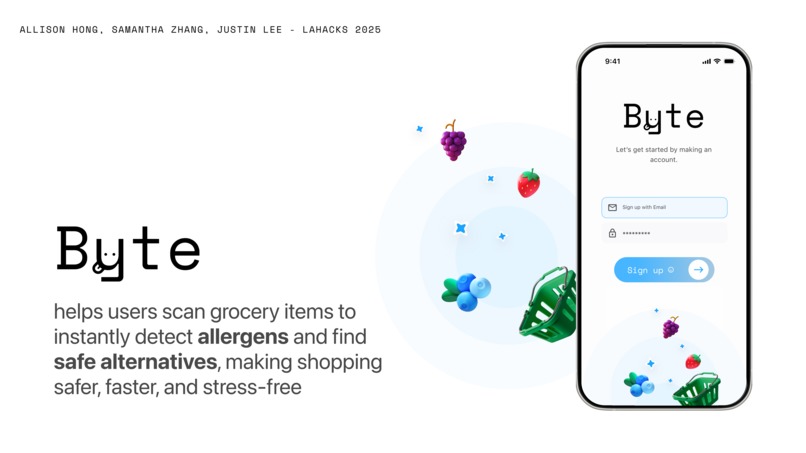
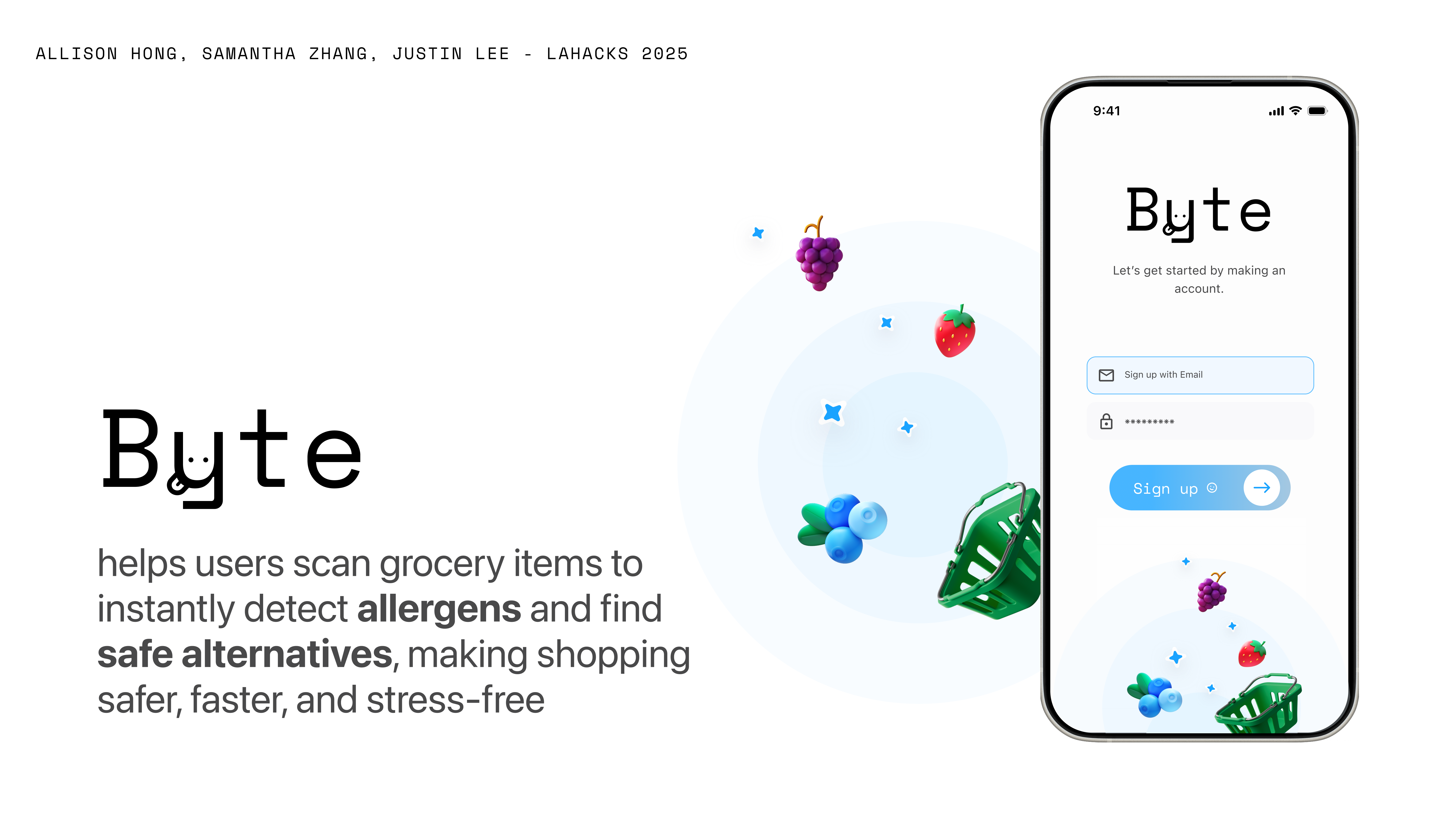
Byte aims to simplify the old label reading by leveraging AI and a beautifully crafted user experience to make allergen and dietary information more accessible and actionable for everyone affected.
What it Does
Byte is an Gemini-powered app that helps its users make safe and fast decisions on their food/ingredient choices.
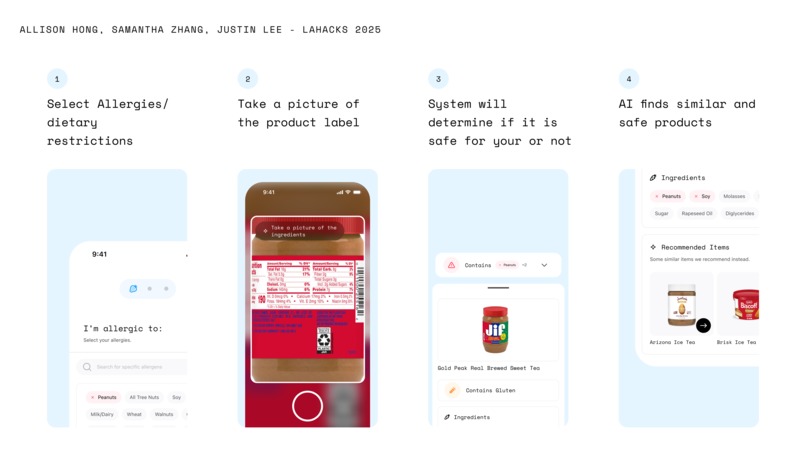
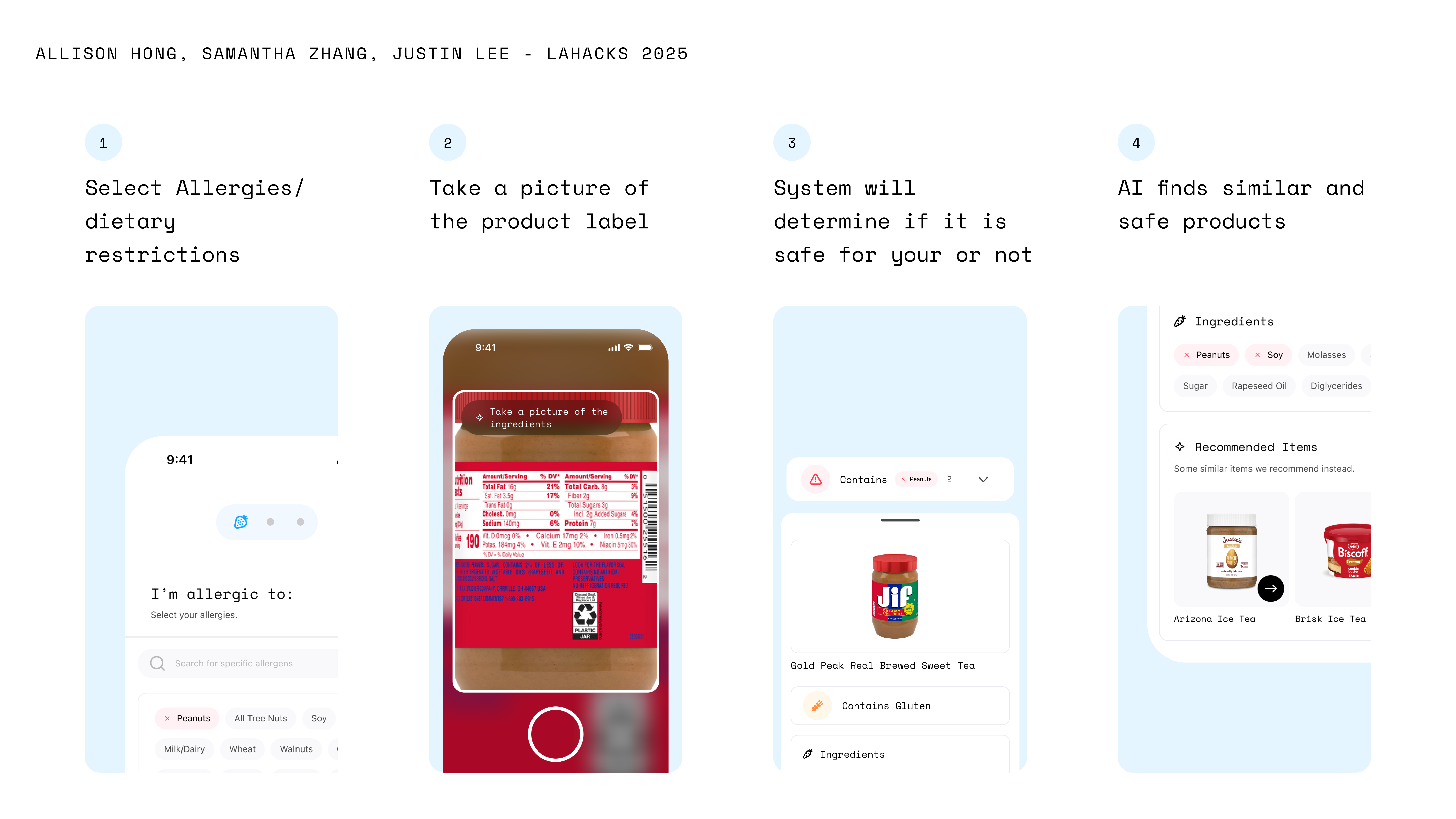
We designed the experience to be simple: users input their allergies/dietary preferences upon sign up, then scan a product using their phone camera. Byte uses Google’s Gemini 2.0 Flash to instantly read the ingredient label and cross-checks the ingredients against the user’s personal restrictions. Byte quickly delivers an alert if the product contains any harmful ingredients.
But it doesn’t stop there! If the product isn’t safe, Byte offers curated (and safe!) alternatives so the users can find substitutes without needing to hunt through the shelves themself. Byte’s goal is to make the shopping feel easy and quick, so you can get to eating the yummy foods faster.
How We Built It
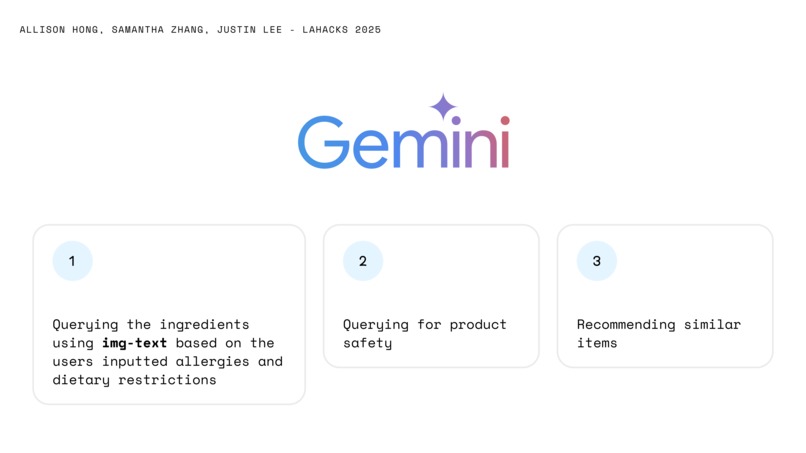
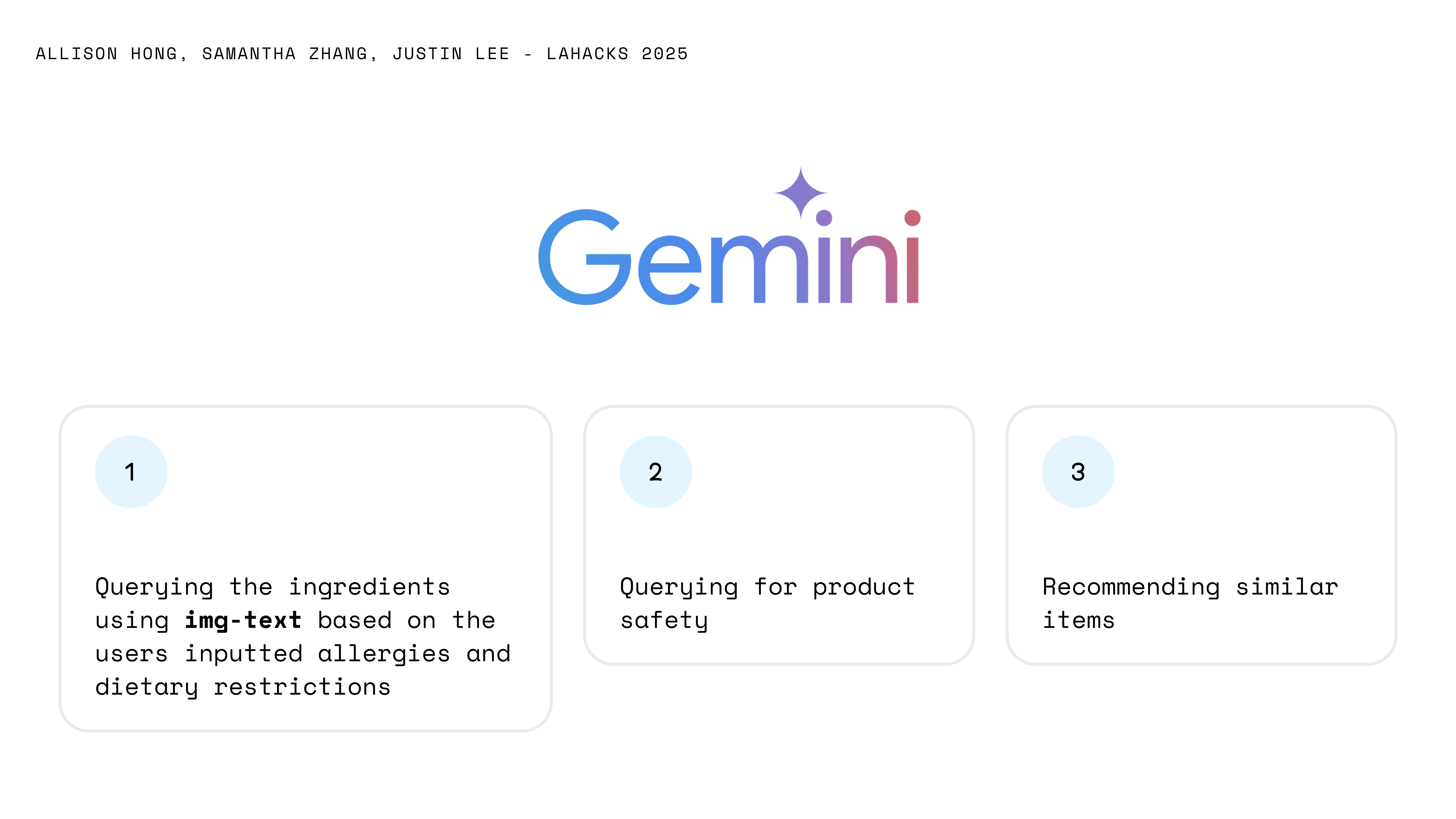
We developed our mobile app using Expo Go and React Native for the frontend and Firebase to power our backend. To make navigating food safety simple and empowering, we integrated Gemini 2.0 Flash to drive three AI-powered tasks:
- Image-to-text conversion: extracting ingredient lists from product photos.
- Allergen detection: cross-referencing ingredients with users’ personal restrictions.
- Personalized recommendations: offering safer, smarter product alternatives when needed.
Challenges
One of our biggest challenges was learning a new tech stack on the fly, because none of our team had much prior experience with mobile development. We had to quickly get up to speed with connecting our backend with our frontend and using new APIs (handling file uploads in a mobile environment and leveraging unfamiliar technologies such as Expo’s camera functionalities). Another key challenge was designing precise prompts for Gemini to ensure the generated responses were not only accurate, but also consistently structured and easy for the frontend to parse and display.
Accomplishments We are Proud of
- We are proud of being able to pick up and continue working with new tools and technology despite the learning curve.
- We are proud of being able to catch up with our working progress despite starting the project late.
- We are proud of exploring visual and motion design within our product (check out some of our cool and playful screens!).
- The developers are proud of not crashing out
- The designer is proud of merging two pull requests :D
What We Learned
Be adaptable and work beyond your skill sets! How to work together in a cross-functional team. Working fast without sacrificing quality. That the rightmost water jug at LAHacks is not water but coffee ☕️. (if only we could’ve scanned the ingredients information…)
What’s Next for Byte?
Severity Profiles, allowing users to set different severity levels to allergens and customizing the urgency of warnings accordingly. Detecting Hidden Ingredients, utilizing AI pattern recognition to flag ingredients that often hide allergens. Voice Command, more multi-modal functionality like reading out the allergens. Be more strategic and thoughtful with our AI models


Log in or sign up for Devpost to join the conversation.