-
-
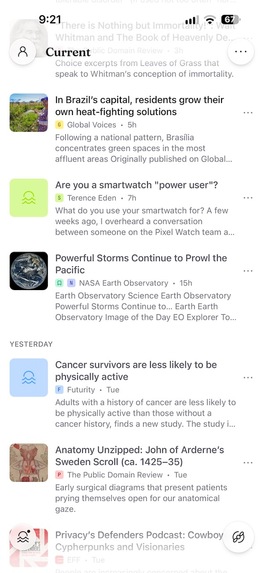
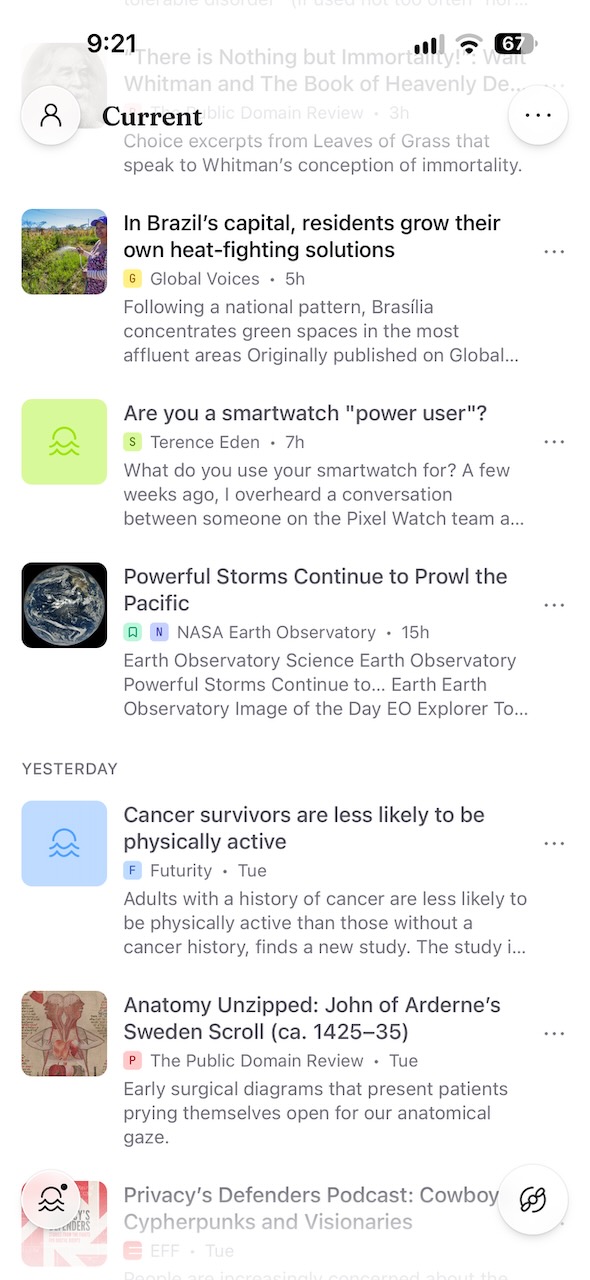
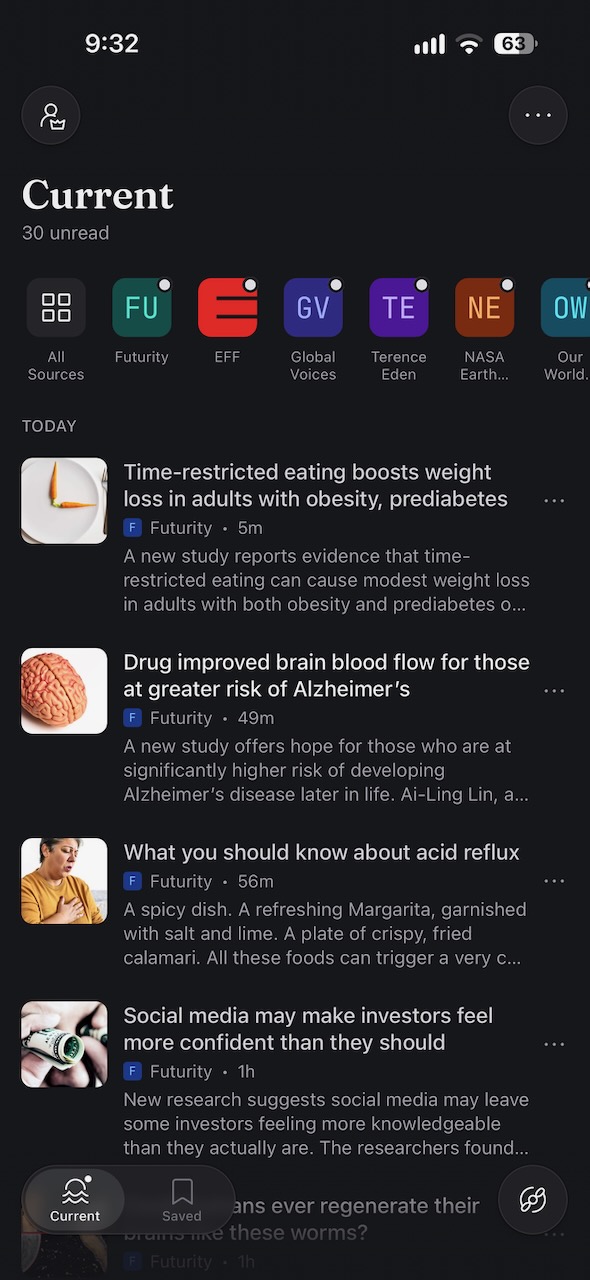
The Current, content from the sources you want headed your way, in one reliable place.
-
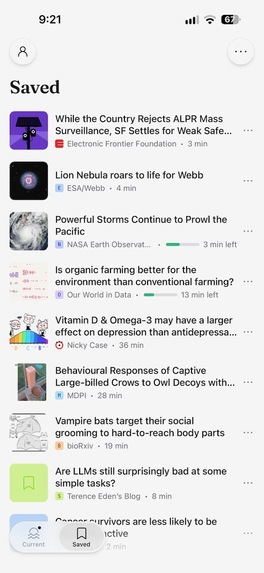
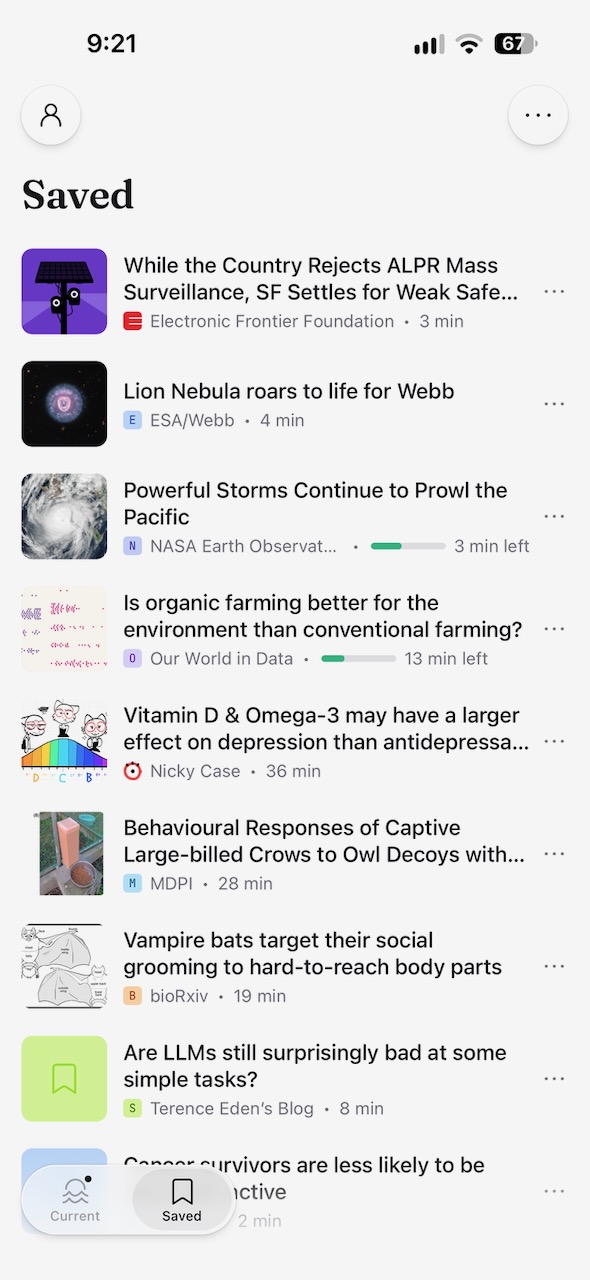
Your Saved list – all your individual reads are ready for you here.
-
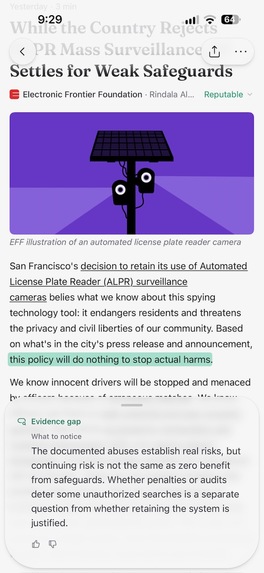
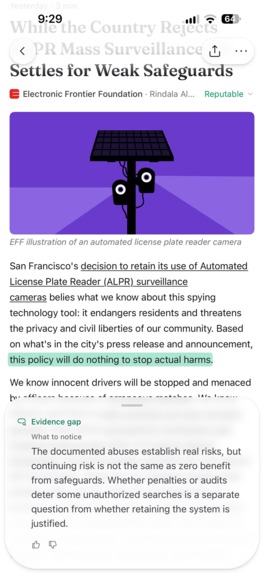
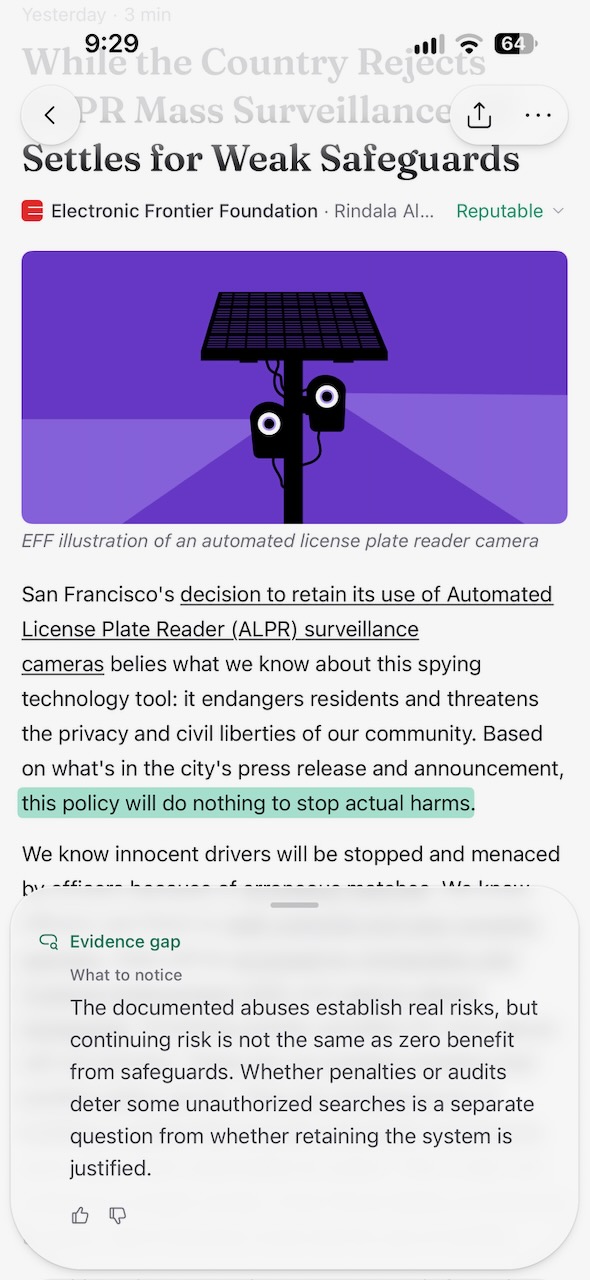
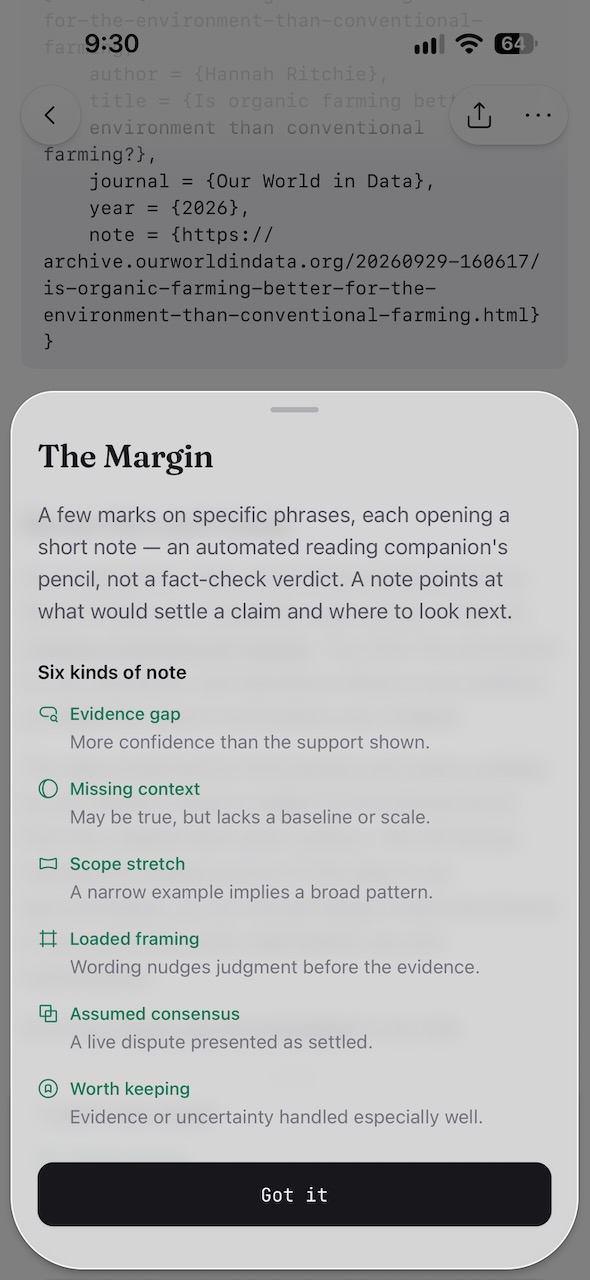
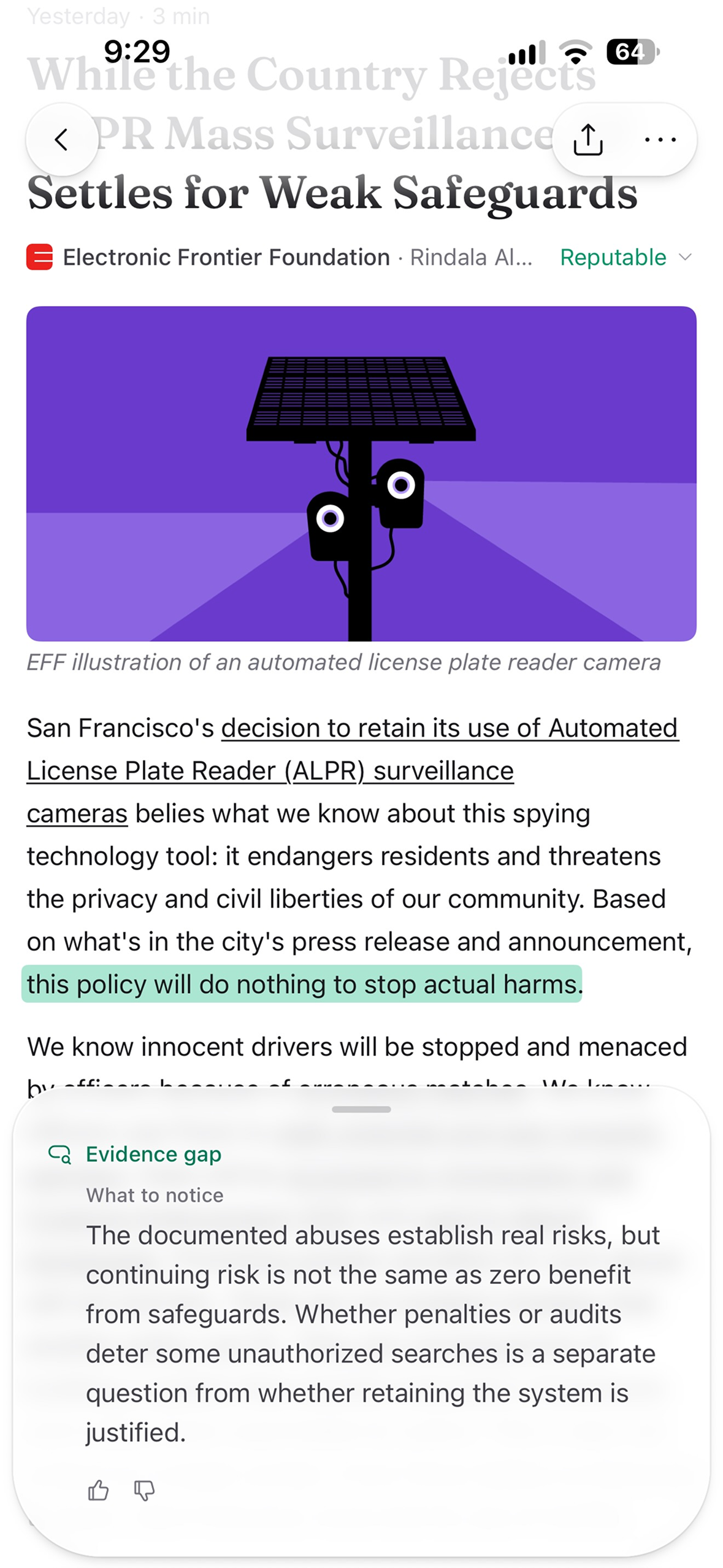
The Margin is the core of our value proposition. It helps you notice what you might otherwise miss, leaving judgement to you.
-
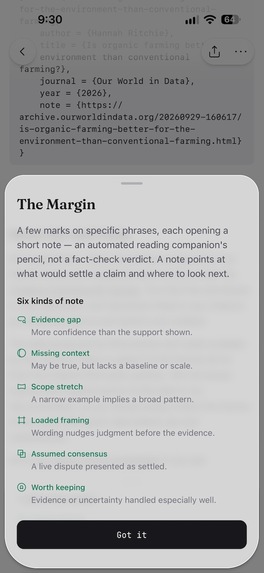
Six categotries of Margin's notes help you anchor your reading.
-
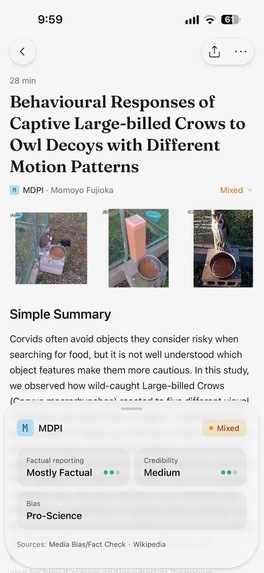
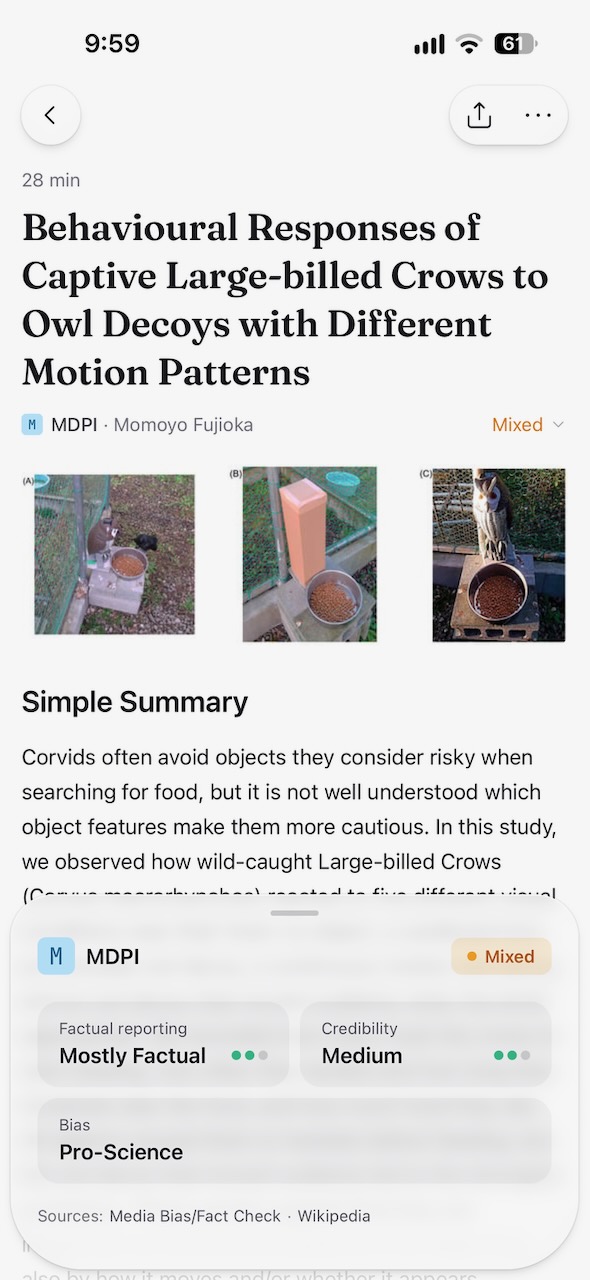
Independent source credibility rating completes the picture in tandem Margin's individual article notes.
-
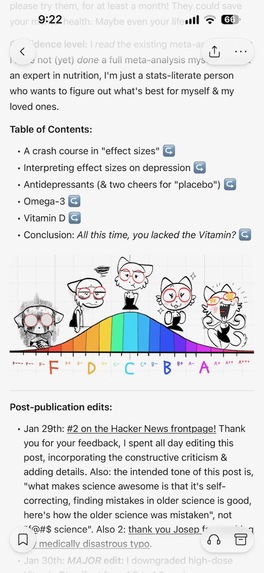
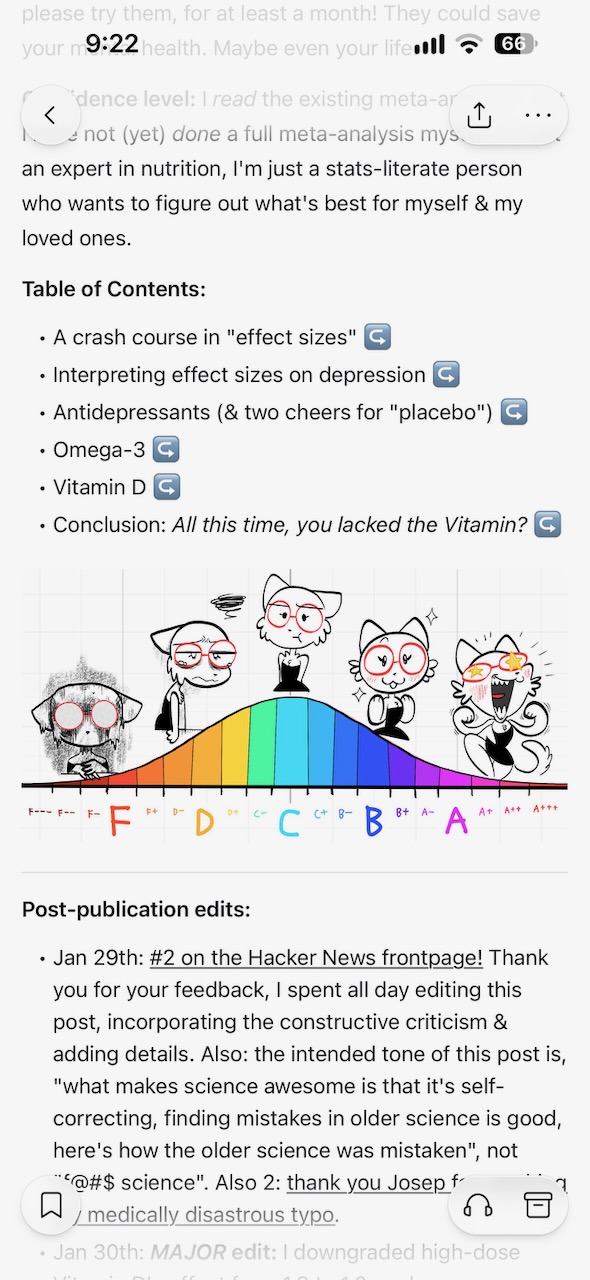
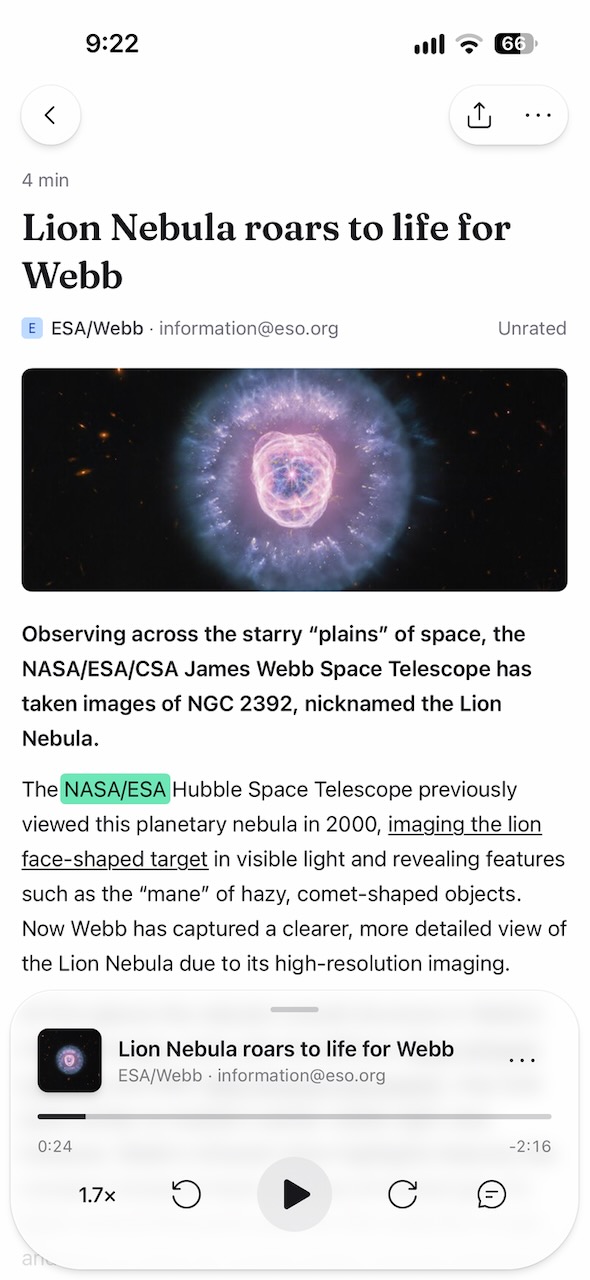
Reading experience puts content front-and-center while keepign relevant controls at your findertips
-

Text-to-speech with full background execution will accompany on you wherever you go.
-
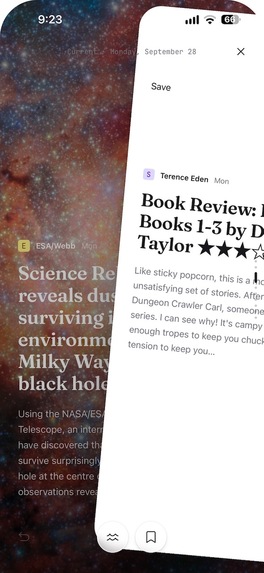
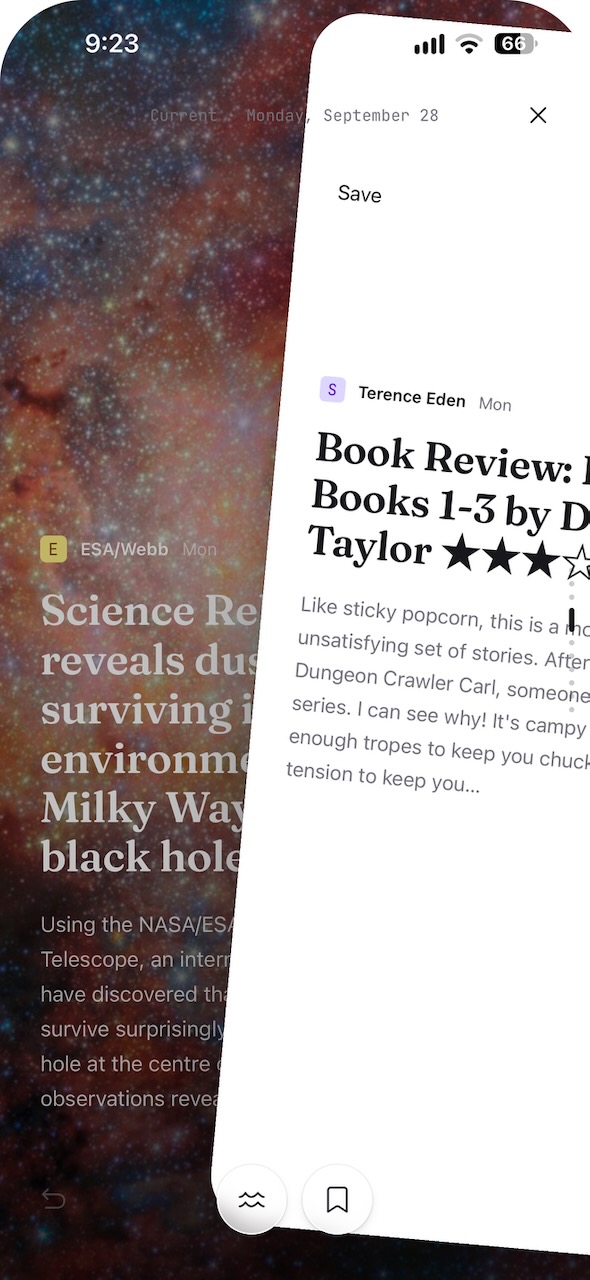
The Brief, an immersive way to breeze through what's new.
-
 GIF
GIF
The Brief – a preview of the immersive experience. Watch the video or try the app to get a feel of it yourself.
-
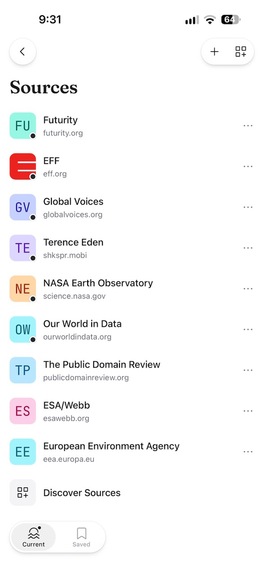
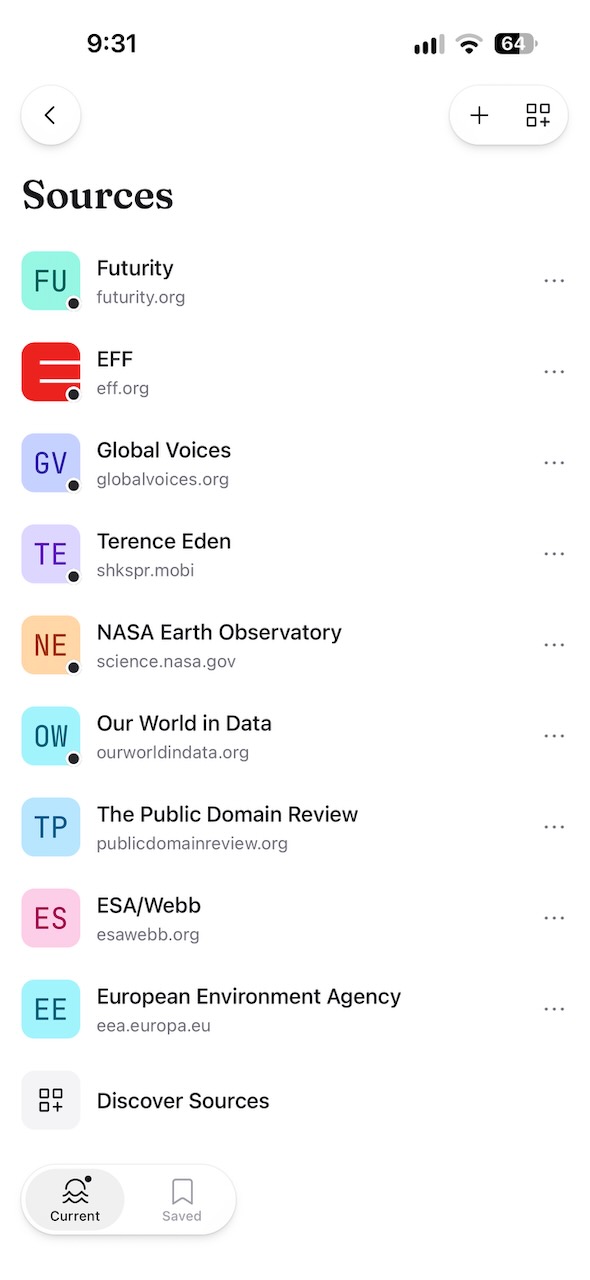
RSS and Atom feed inclusion allows you to leave the algorithm behind and subscribe to the sources you trust.
-
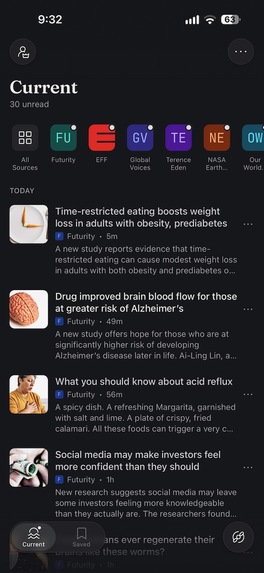
We couldn't ship with the creature comforts of a dark mode.
-

Not only fans of Space will appreciate dark mode across all Byline's surface areas.
-
One screenshot of the app at 1179px × 2556px with no device frame. Happy to provide more shots at this resolution if needed.
-

App Icon



Inspiration
We have more to read than ever, but surprisingly little context for deciding what to make of it.
A respected publication can publish a weak piece. An unfamiliar writer can publish an excellent one. A publisher's reputation is useful – but it can't tell you whether this particular article is well-supported, misleadingly framed, or mostly opinion.
That distinction became the core of Byline:
The source and the story are two different questions.
Byline helps with both – without trying to make the judgment for you.
What it does
Byline reveals both the source and the story.
- Source context: see who's behind what you read, how credible the publication is, and the independent assessments behind that signal.
- Article context: Byline puts AI to work analyzing the article's claims, framing and context – what kind of piece it is, what supports it, and where it may be worth slowing down.
- Your sources, not an algorithm:
Currentshows new pieces from publications you chose, in chronological order. - Finite catch-up:
The Briefsurfaces a small set of unread stories one at a time.Catch updoes the same for saved articles. - Read or listen: save from anywhere, read in a clean reader, keep articles offline on iPhone, or continue through audio, lock screen, AirPods or Siri.
The goal isn't a true / false verdict. It's to give you better context for making up your own mind.
How we built it
Byline spans an iPhone app, web app and browser extension, but much of the work happens underneath the reading experience:
- discovering feeds
- extracting clean articles from the messy web
- syncing libraries across devices
- preserving source metadata and credibility context
- supporting offline reading
- turning written articles into synchronized audio
Source credibility is not generated by an LLM. Byline uses independent assessments, keeps their provenance visible, and compresses them into a signal that's useful at a glance.
Article-level AI takes a different role: not "tell me whether this is true," but help me inspect this piece more closely.
Challenges we ran into
1. Compressing credibility without flattening it
A reading interface can't put an essay beside every headline.
Byline uses progressive disclosure:
one-word signal → detail → underlying sources
That sounds simple, but the edge cases matter. Unrated must not mean unreliable. Political bias must not be confused with factual accuracy. And a publisher-level rating must never become a verdict on every article it publishes.
2. Making AI useful without making it authoritative
LLMs are very good at sounding certain. That's dangerous in a product built around critical reading.
The easiest feature would have been an AI score or verdict. We deliberately went the other way: surface claims, support, framing and context – then leave the conclusion to the reader.
3. Adding context without adding noise
Byline adds information to reading, but it still needs to feel calm.
Credibility stays compact until you ask for more. Current stays non-algorithmic. The Brief and Catch up are finite. The article remains visually primary.
The hardest design constraint has been: show more, without making reading feel heavier.
Accomplishments that we're proud of
Byline shipped publicly during the Shipaton window, with its first App Store version released on August 20, 2026.
It now spans:
- iPhone
- web
- browser extension
- source following and credibility
Current,The Brief,SavedandCatch up- offline reading
- text-to-speech, Siri and lock-screen playback, all working seamlessly on background
- whole-library export
I'm proud that these pieces still feel like one product, not a pile of features.
The source signal is visible without taking over. The reading experience stays quiet. Long queues get natural stopping points. Listening feels like a continuation of reading.
And the original constraint still holds:
Help the reader see more without pretending to decide for them.
What we learned
Three things changed how I think about the product:
Source credibility and article quality must stay separate.
Knowing a publisher's track record is useful context, not a shortcut for judging an individual piece.AI can be more useful when it reveals questions than when it supplies answers.
A verdict is simpler. Showing claims, support and framing gives the reader more agency.The reading problem is also an attention problem. It should be fun!
Infinite feeds and infinite saved queues make it easy to accumulate information without ever feeling finished.The BriefandCatch upmoved Byline toward finite experiences with natural stopping points.
More content, or more AI, doesn't automatically mean more value.
What's next for Byline
We'll double down on voice and interactivity. The Brief is a visual immersive way to get the headlines, while we'd like to allow the user to converse with their content in a natural manner, even on the go. Text is important foundation, and LLMs make it easier than ever to transcend across media.
The following step is deeper article-level context without turning Byline into a verdict machine.
That means getting better at:
- identifying important claims
- showing what supports them
- distinguishing reporting, argument and summary
- surfacing framing and missing context
- making the analysis easier to inspect
I also want to keep improving the habit around it: choosing which sources deserve attention, deciding what's worth reading now, returning to what was deliberately saved, and reaching a point where you're actually caught up.
Whatever you choose to read or listen to, Byline should help you read it in perspective.
Built With
- claude
- codex
- expo.io
- pen.dev
- react-native
- swift

Log in or sign up for Devpost to join the conversation.