-
-
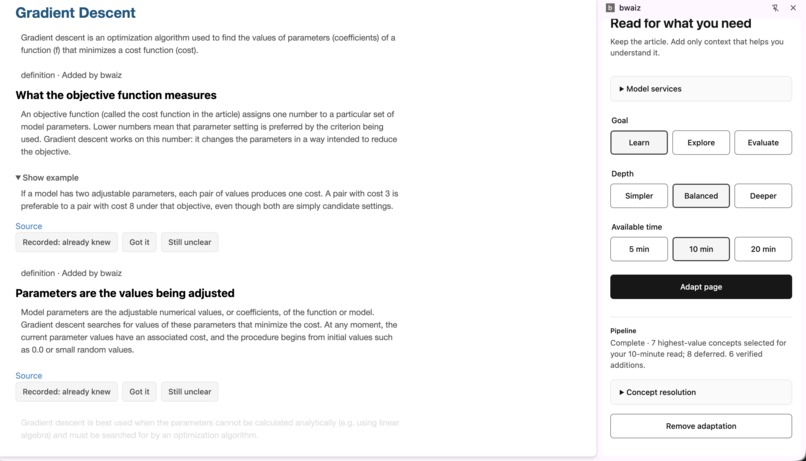
Rebuild the article record the user's knowledge of the concept details - gradient descent for machine learning
-
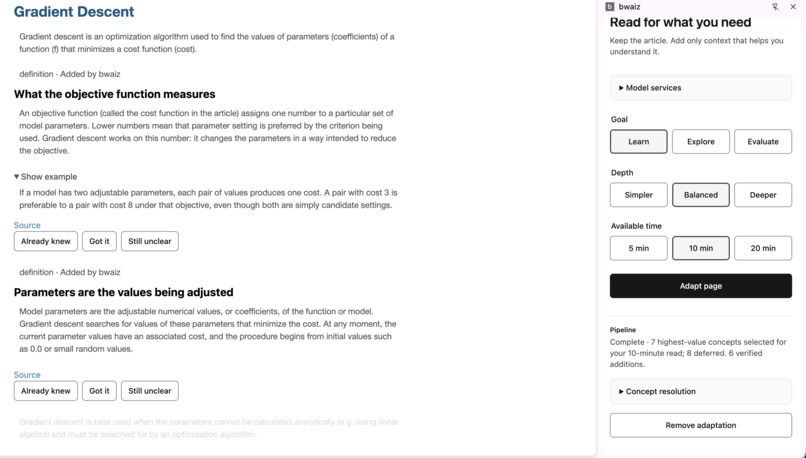
Rebuild the article add concept details - gradient descent for machine learning
-
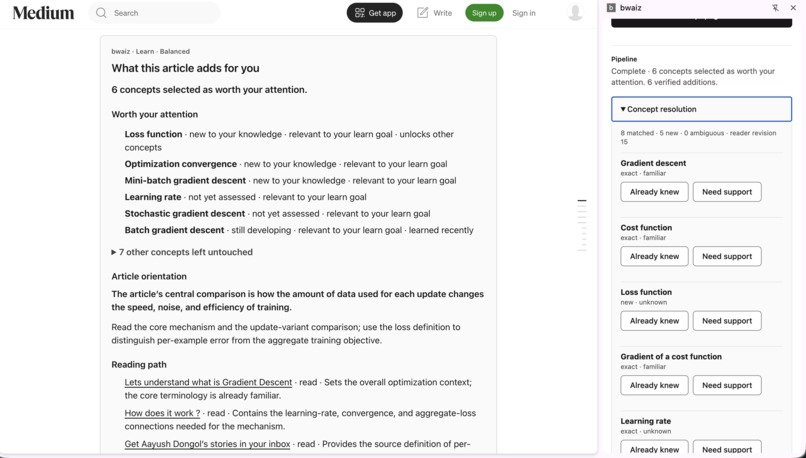
Scan a new article, reuse your knowledgebase - gradient descent for machine learning
-
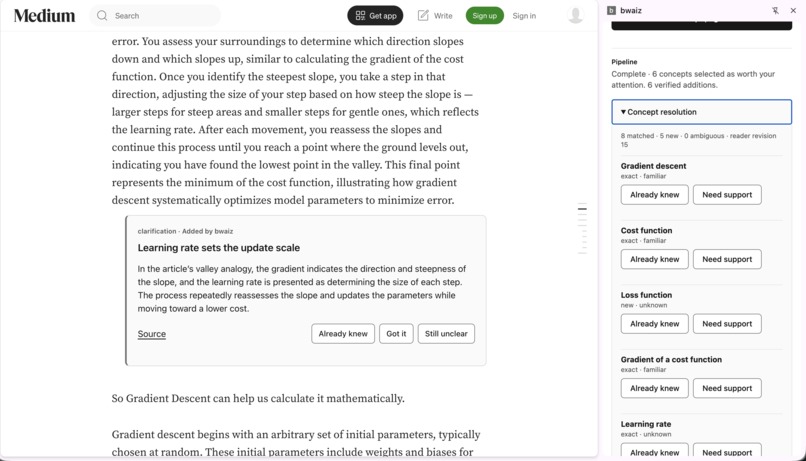
Scan a new article, reuse your knowledgebase - gradient descent for machine learning
-
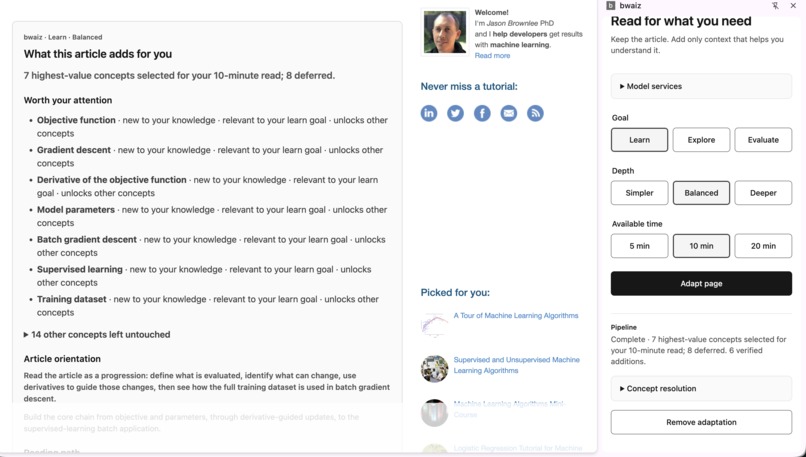
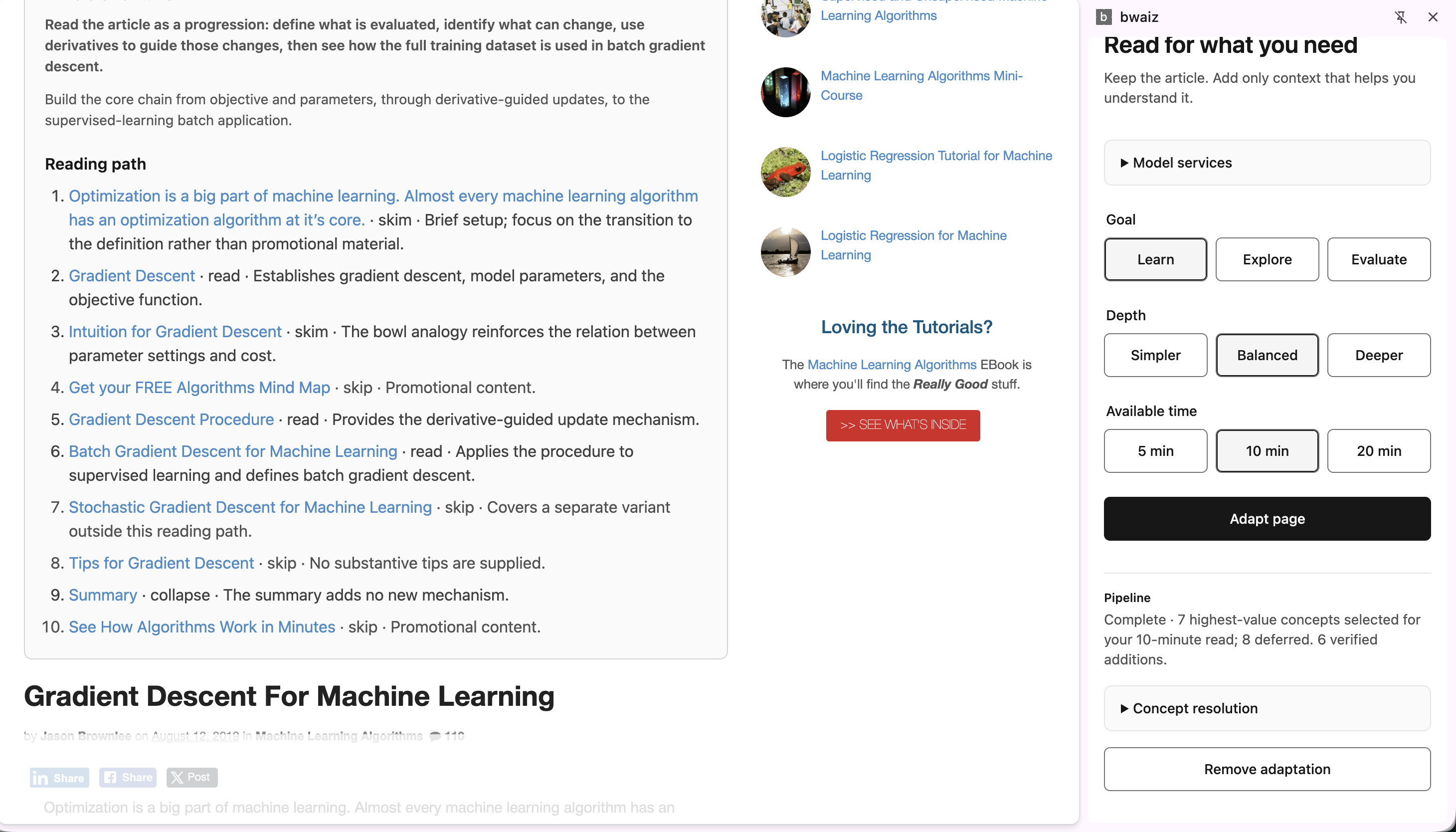
Rebuild the article reading path, what you should read - gradient descent for machine learning
-
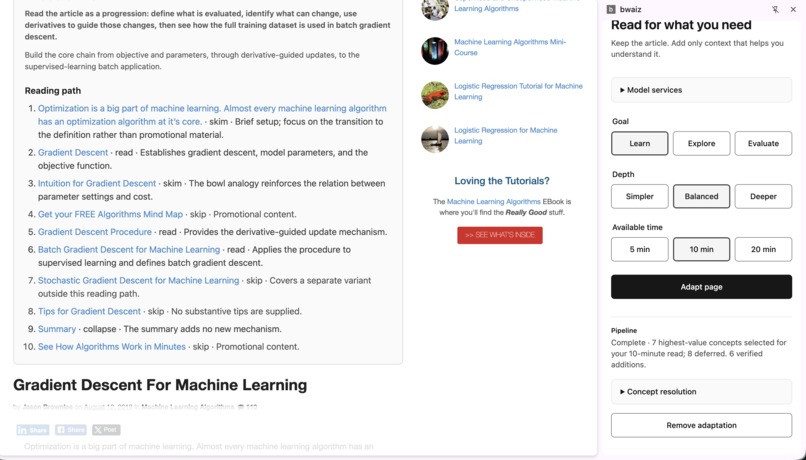
Rebuild the article reading path, what you can skip - gradient descent for machine learning
-
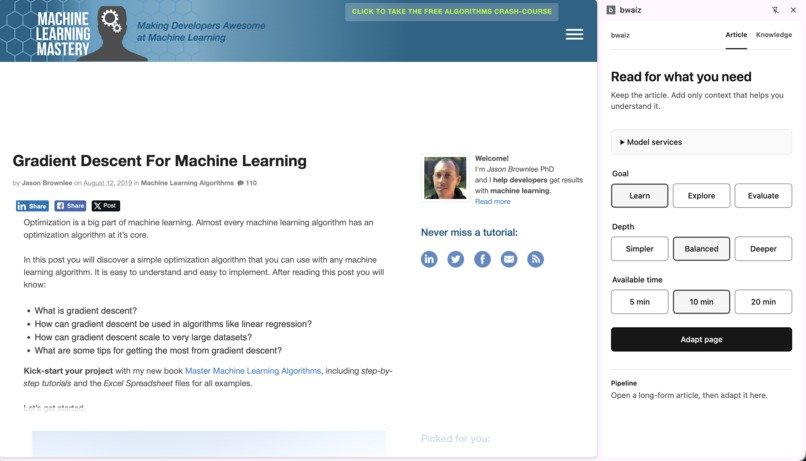
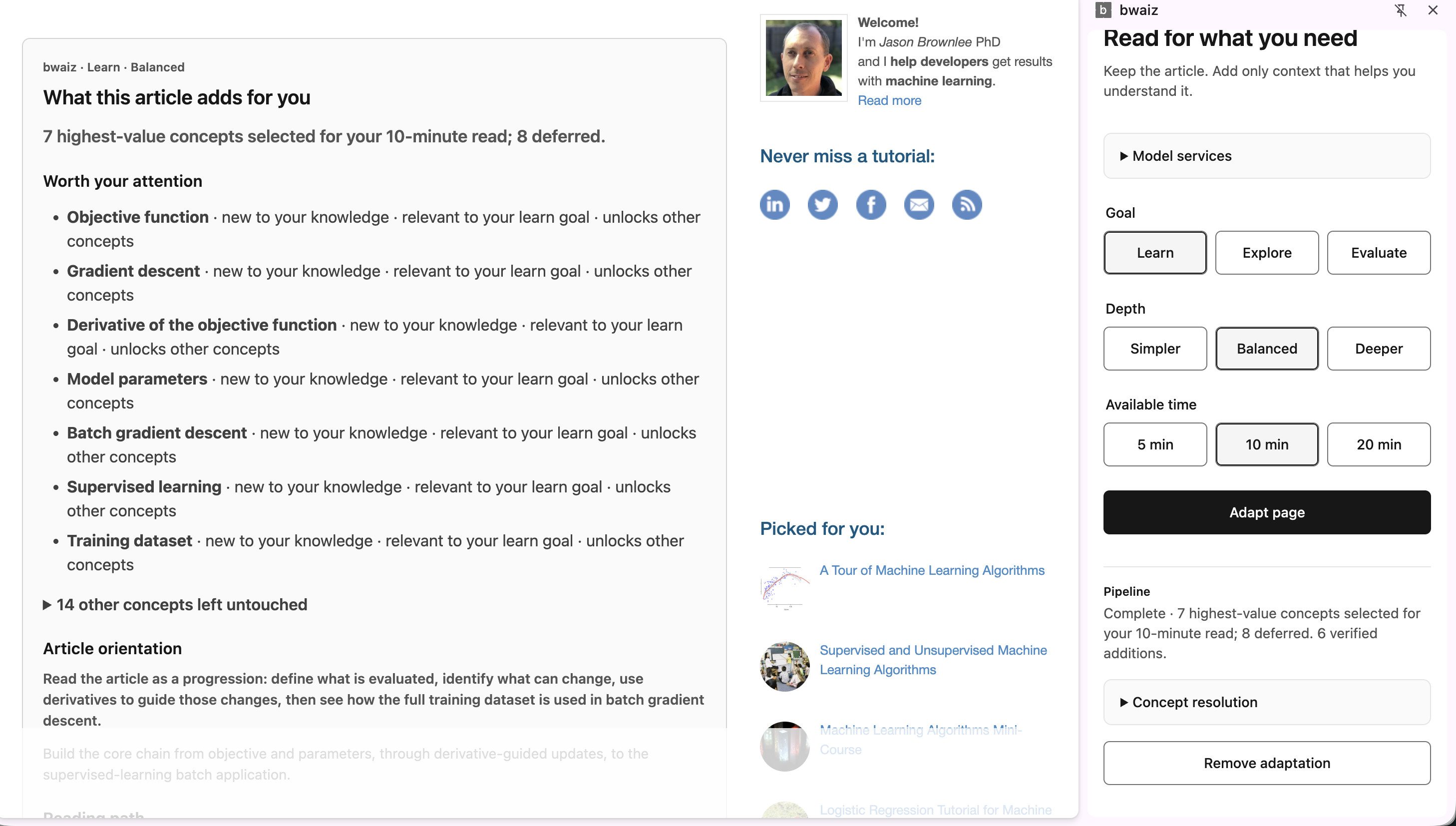
Start with a topic - gradient descent for machine learning
-
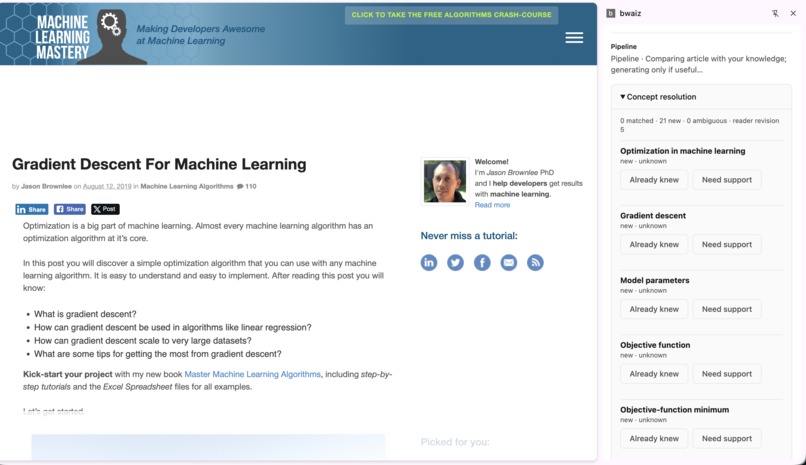
Start the adaptation and resolve concepts - gradient descent for machine learning
-
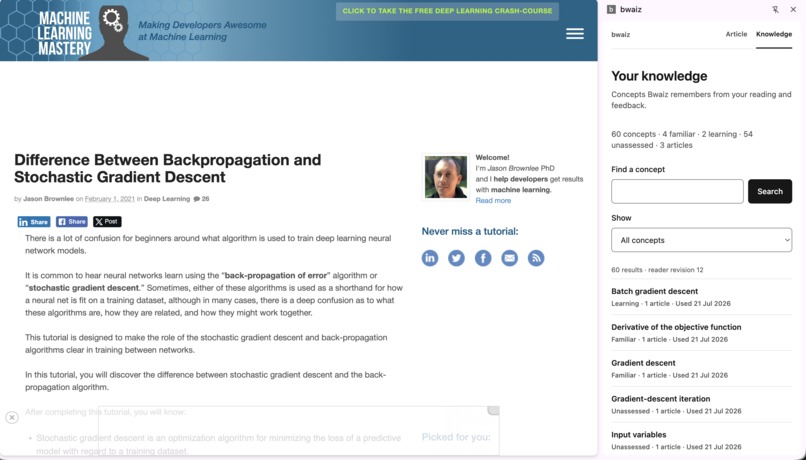
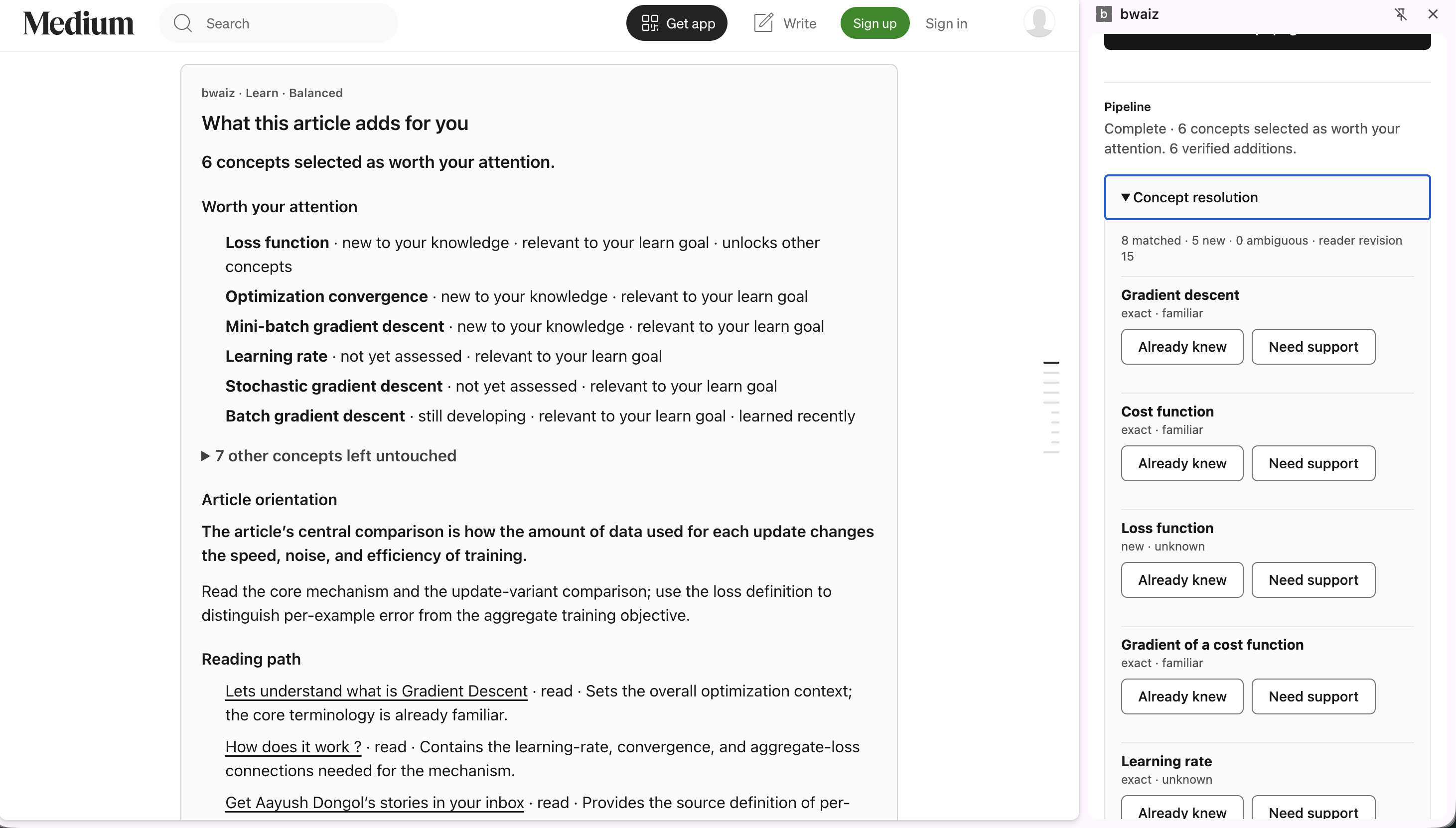
Check your knowledgebase - gradient descent for machine learning
-
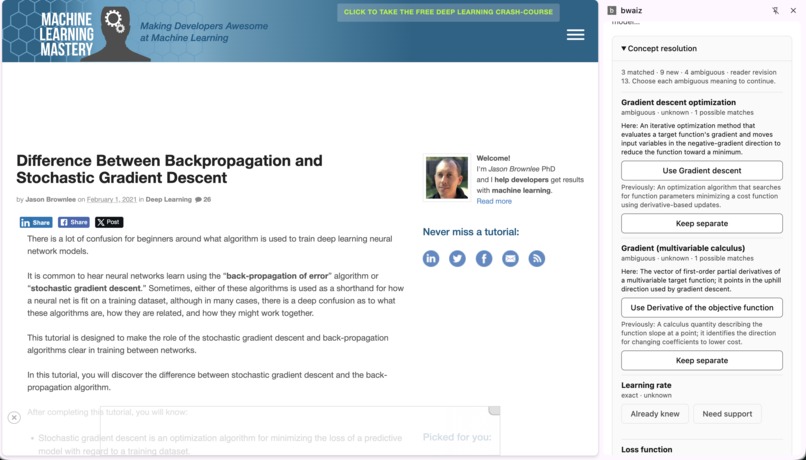
Scan a new article, reuse your knowledgebase - gradient descent for machine learning
Inspiration
- Every article assumes the same starting knowledge.
- E-reader vocabulary builders remember words; we wanted the web to remember concepts.
- Bwaiz asks: What does this reader need from this article?
Every article is written for an imagined reader — someone with the right prerequisites, the right vocabulary, the right amount of time. In reality, the reader either drowns in explanations they didn't need or hit the wall.
The tools that exist don't fix this mismatch. Summarizers shorten the article for everyone equally. AI sidebars answer questions but forget you the moment the tab closes. Chatbots have conversational memory — what did you say — but nothing on the web has an understanding model: what do you actually know, at what depth, based on what evidence?
The original inspiration came from e-reader vocabulary builders and xray: when a reader looks up a word, the device remembers it for later. The question became: what would happen if that idea extended beyond e-readers and to the web.
What if the browser could remember the concepts a reader understands, recognize them in future articles, and adapt the reading experience accordingly?
That became Bwaiz.
Bwaiz does not replace the article with a summary. It preserves the author’s original content and selectively adds context where it can help—definitions, prerequisites, examples, connections, evaluation notes, and checkpoints.
As the reader learns, Bwaiz becomes more selective. Familiar concepts stop receiving introductory explanations, unresolved concepts receive different support, and an article containing nothing useful at the concept level can be left untouched.
What it does
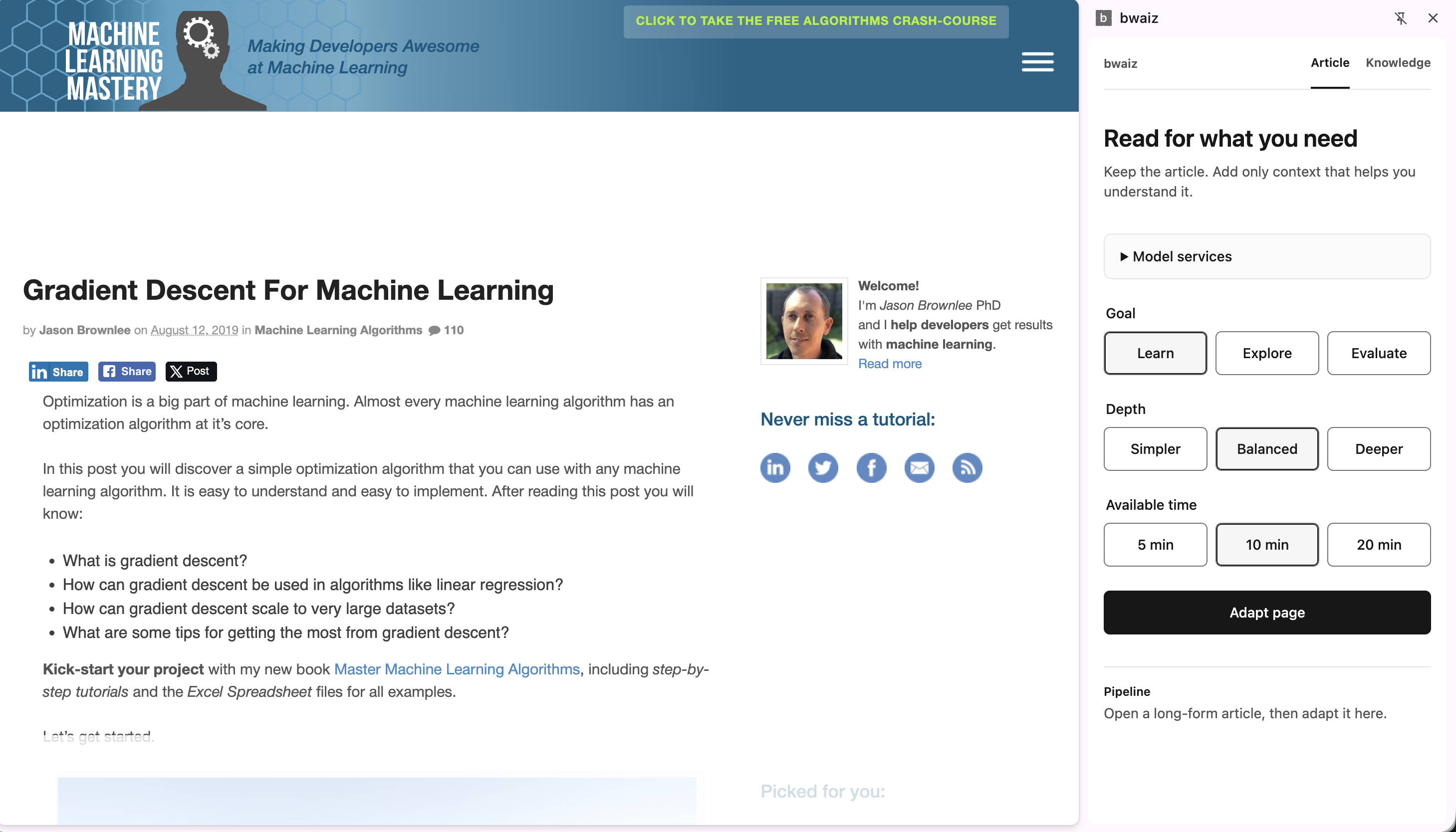
Bwaiz is a Chrome extension that adapts articles to what the reader already understands.
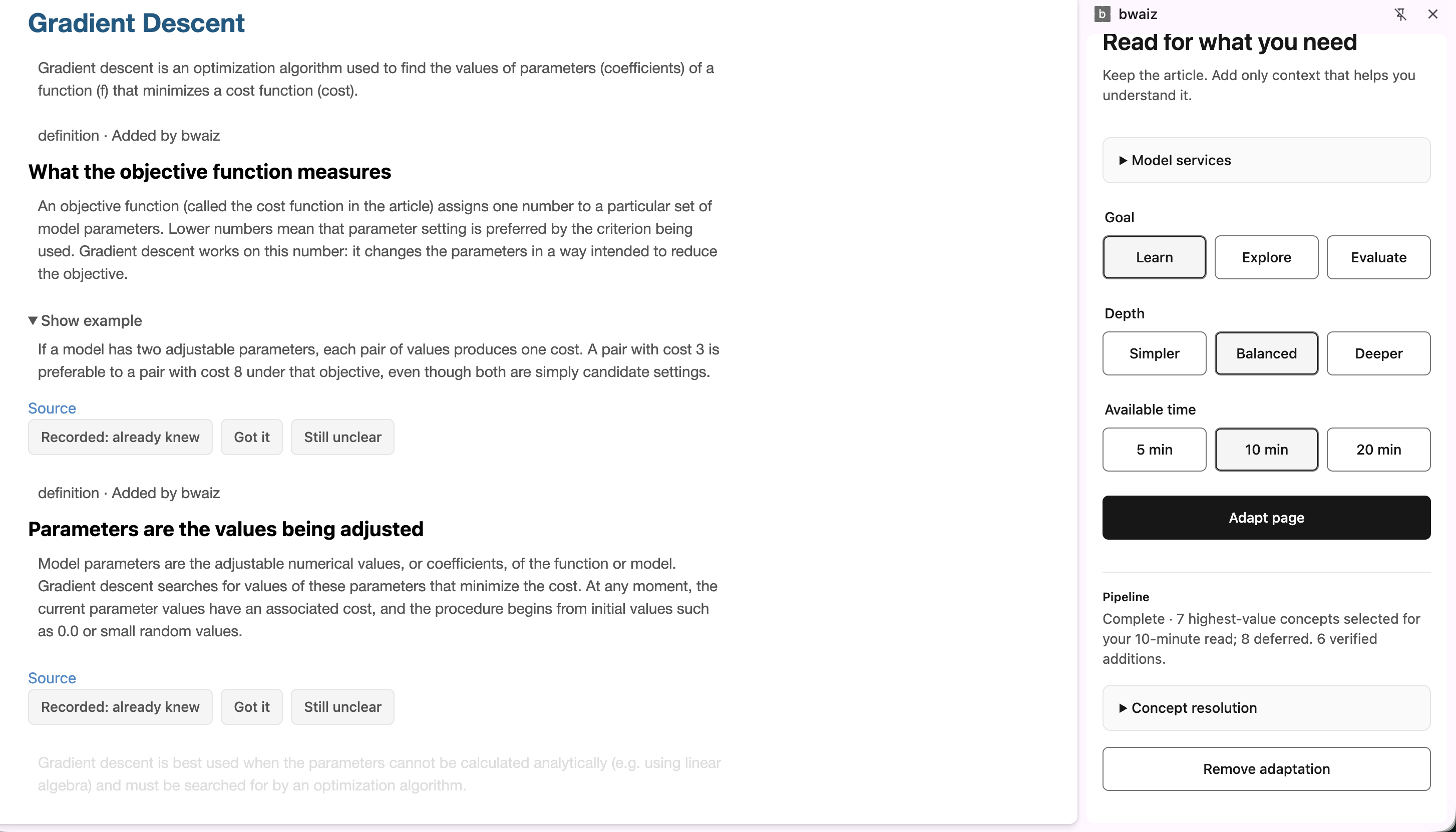
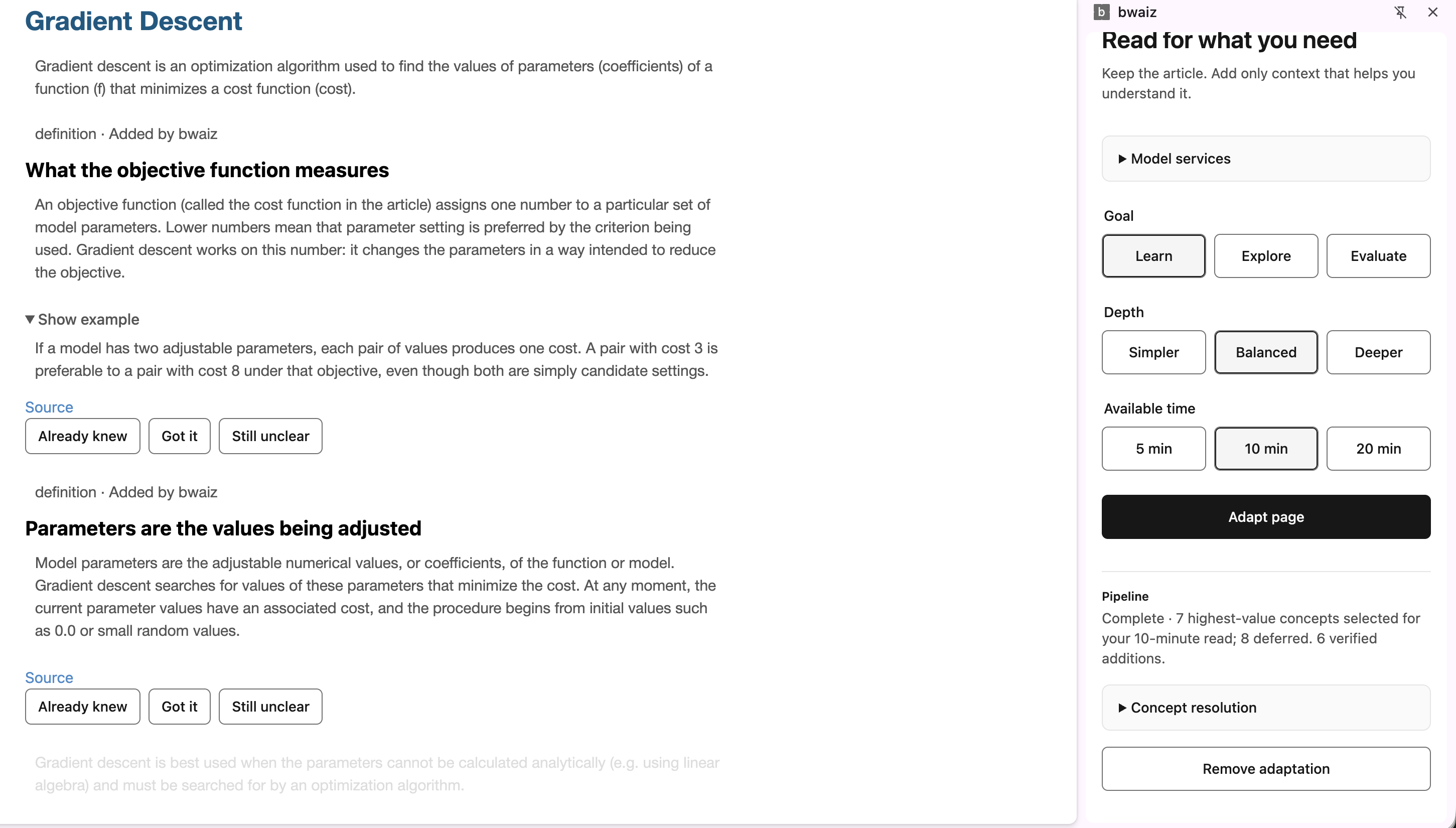
The reader chooses a goal—Learn, Explore, or Evaluate—along with the desired depth and available time.
Bwaiz then:
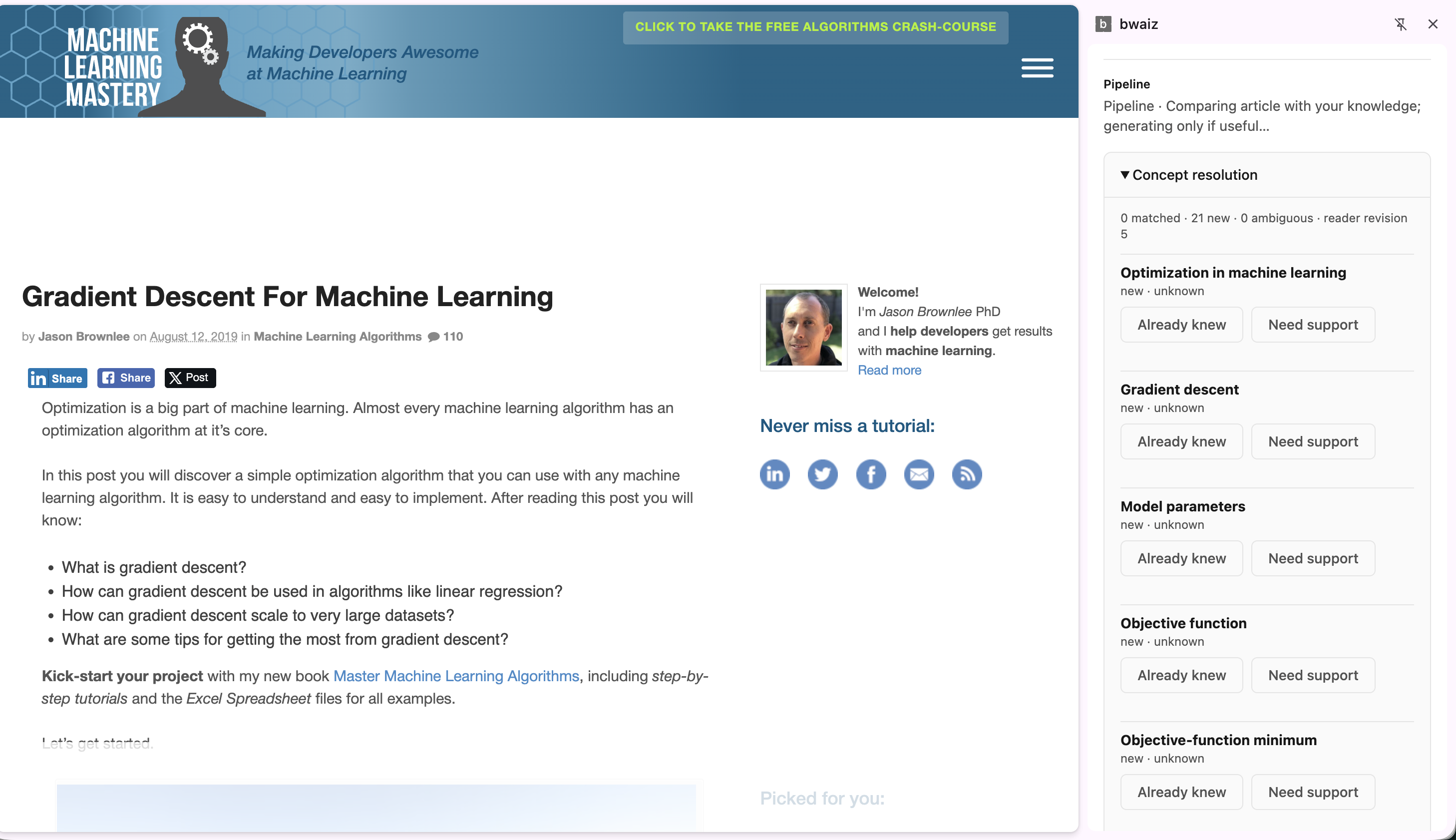
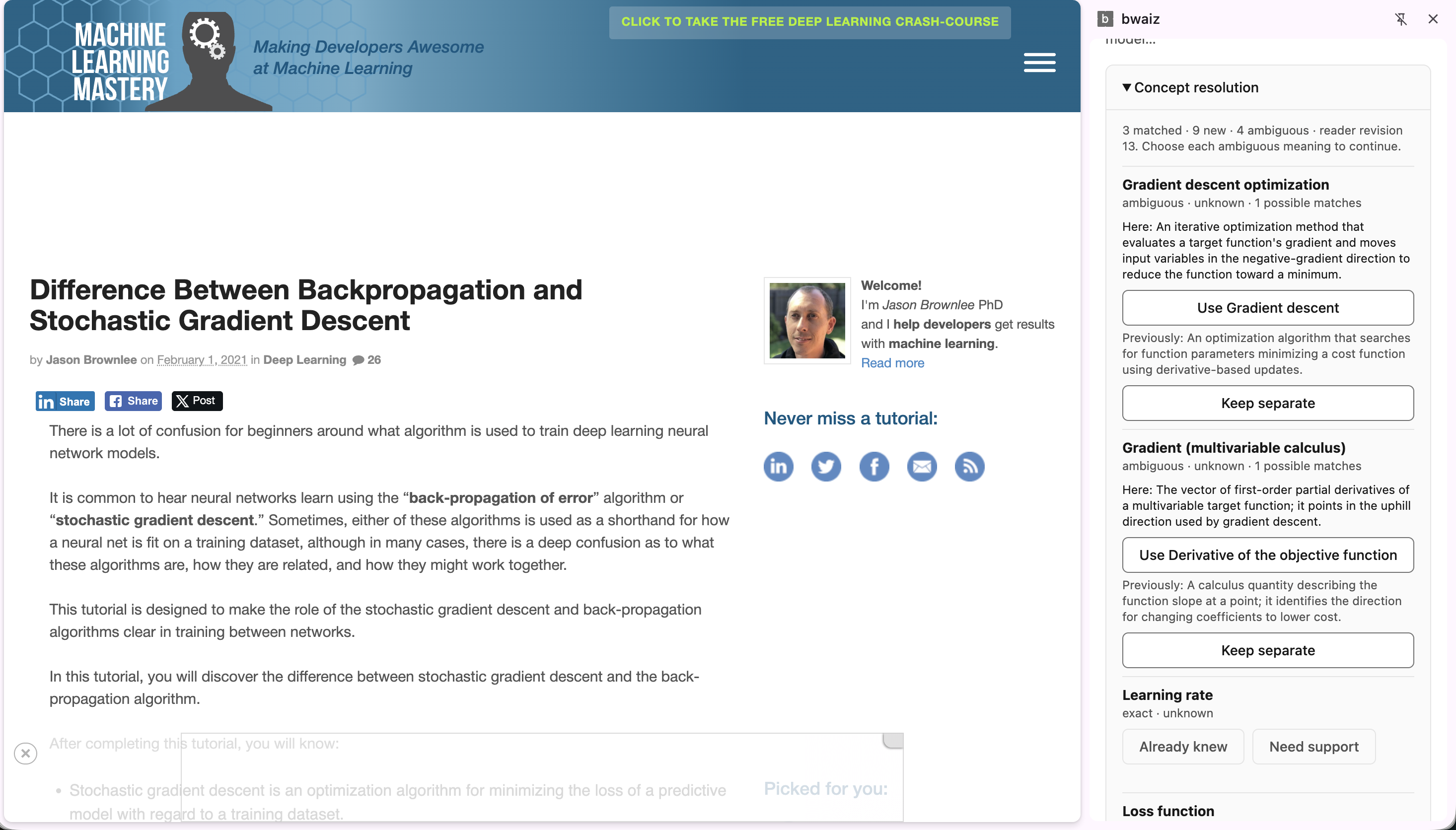
- identifies the article’s concepts, claims, relationships, and prerequisites
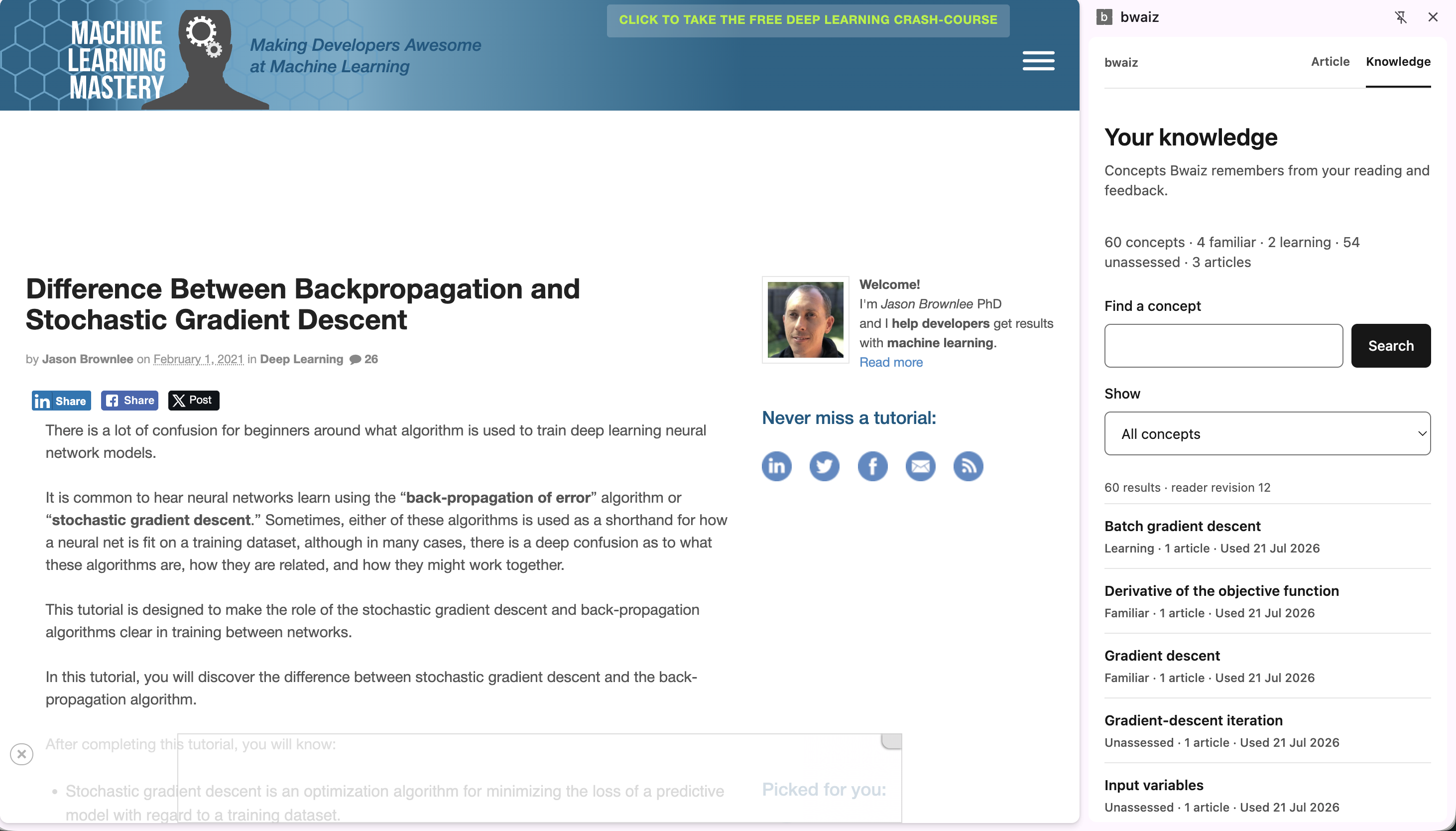
- compares them with an evolving model of the reader’s knowledge
- selects the concepts worth the reader’s attention
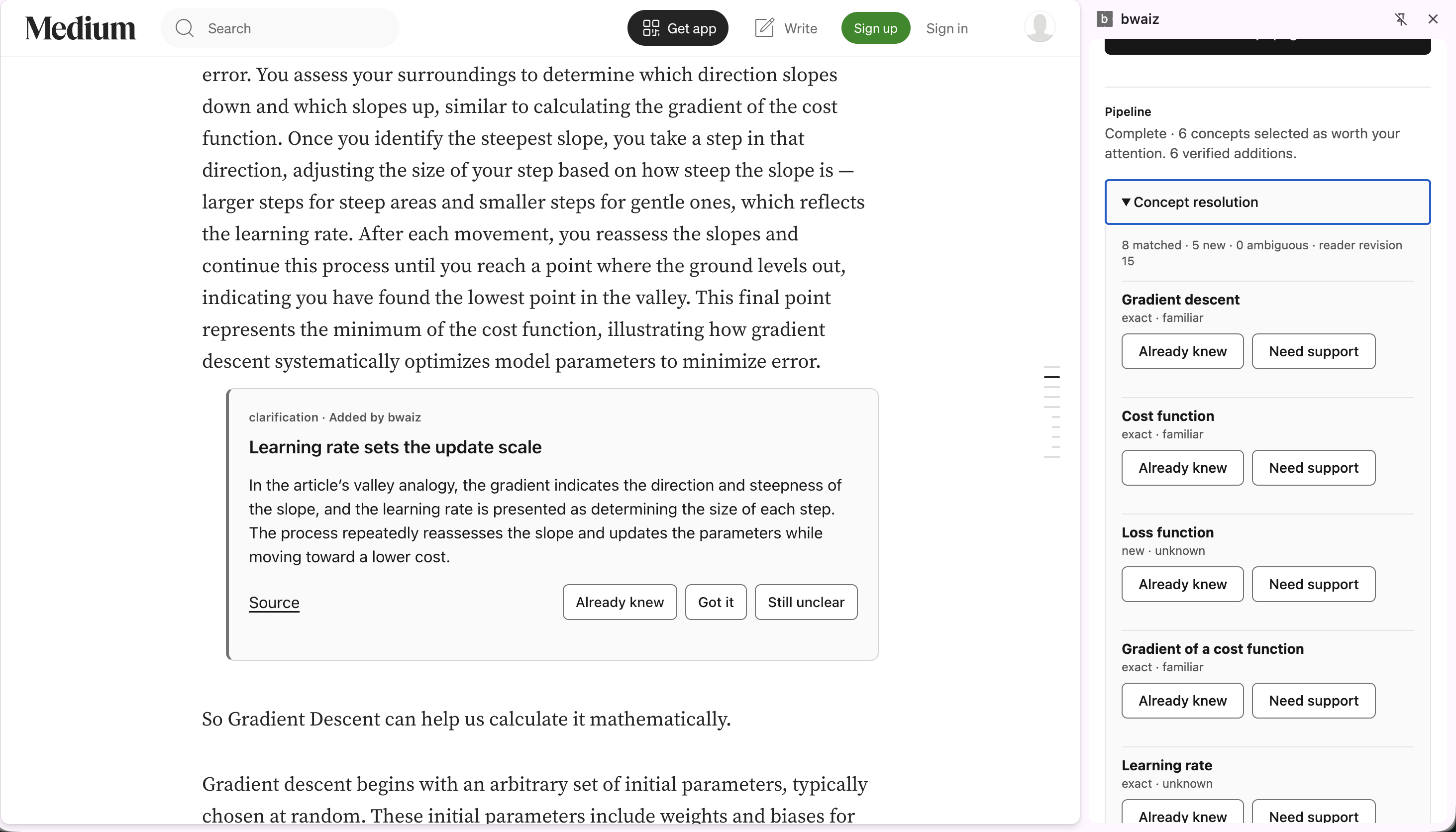
- inserts useful context beside the relevant source paragraphs
- preserves the original article and makes every addition removable
Readers can respond with actions such as Already knew, Got it, Still unclear, and Need support. This feedback becomes evidence that changes how future articles are adapted.
Unlike a summarizer, Bwaiz does not replace the article. It becomes more selective as the reader learns—and can conclude that an article contains nothing useful to add at the concept level.
How we built it
- Chrome Manifest V3 extension with a persistent side panel.
- TypeScript extension and Node.js API.
- PostgreSQL-backed concept and evidence model.
- Docker Compose development environment.
- GPT‑5.6 for document analysis, adaptation generation, and verification.
- Codex helped us design, implement, debug, and verify the product.
Challenges we ran into
- Preserving and safely modifying arbitrary article pages.
- Making the extension work well as a Chrome side-panel.
- Producing reliable structured outputs.
Accomplishments that we're proud of
- Generated content is placed within the articles as if it were part of the original article.
- Readers can inspect and correct their knowledge collection.
- Familiar articles can produce an honest zero-adaptation result.
What we learned
- Persistent knowledge matters more than isolated AI responses.
- Deterministic policy and generative models work well together.
- A good adaptive system should become quieter as the reader learns.
What's next for Bwaiz
- Allow the user to highlight the concepts they need explanation for.
- Validate the core learning loop across more subjects.
- Support secure accounts and multi-device knowledge.

Log in or sign up for Devpost to join the conversation.