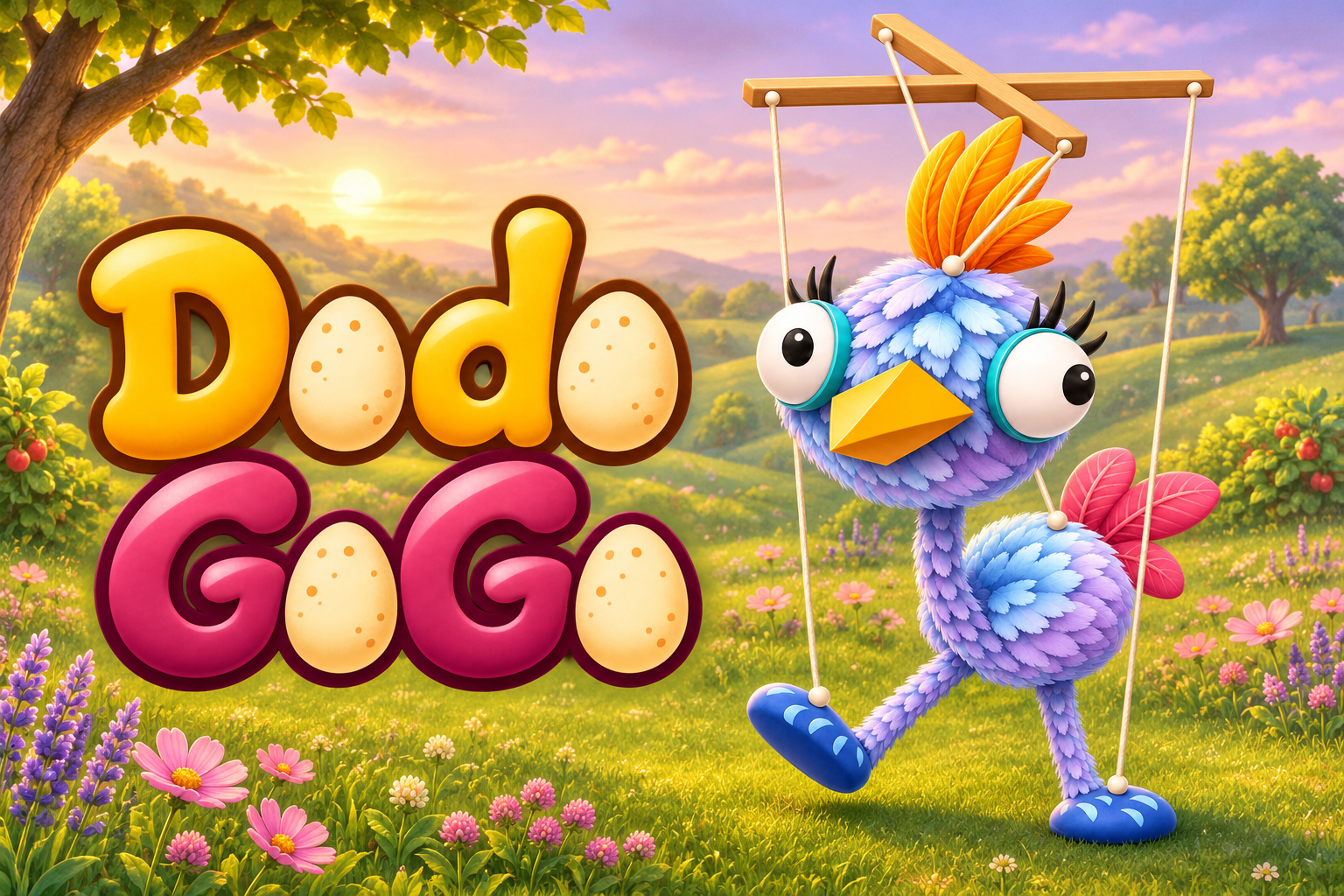
Inspiration
I’m a solo developer. About ten years ago, I spent a Global Game Jam weekend building a bird-marionette prototype for my homemade dataglove. Something about having a character physically drag its world around stayed with me.
I love physics: its open-ended interactions and the creative engagement of responding to a live system. More recently, that interest has drawn me toward digital puppetry. There’s a flow where you loosen your grip on intention and let the marionette almost animate itself—perhaps a little like a Ouija board.
The fourth wall becomes a Necker cube: one moment you identify with the bird; the next, you’re outside the scene, tossing it around. Experienced puppeteers could probably describe depths of that relationship I haven’t imagined. I’m here as a student, inspired in part by Basil’s words in this video.
My first aim was a convincing mixed-reality version of a beloved toy, entertaining simply to handle. Then: what if it had somewhere to explore?
What it does
Dodo GoGo is a cozy game in the spirit of James P. Carse’s “infinite games”: play whose purpose is to keep playing.
You hand-animate a bird through a suspended cross handle. Its planted feet drag the landscape beneath it. Bite berries, bend branches, pull fruit free, extract stretchy worms, and drink from pools. Eating drives growth, making the landscape smaller and opening access to larger plants and farther terrain. Eggs hatch into new environments.
The bird supplies its own small contributions: glances, blinks, pecks, and synthesized birdsong. You provide the performance.
How we built it
I built the Quest application in Unity 6 with OpenXR hand tracking, rigidbody physics, Shapes graphics, retained meshes, and animated feather cards. Controllers are optional.
React Three Fiber studies became tools for exploring procedural landscapes and tuning native level content, menus, and sound selections. A custom FAUST synthesizer supplies birdsong from authored control trajectories.
Challenges we ran into
The puppet needs enough freedom to feel alive without becoming uncontrollable. Lightweight limbs, weighted feet, suspension strings, and yielding plants all affect one another.
Growth compounds that problem: physical proportions, ground contact, and persistent food identities must survive changes of scale. Dense vegetation and fluffy feathers also demand careful budgeting on standalone hardware.
Accomplishments that we're proud of
A berry held in the beak, a bending branch, and a deliberate pull can create a surprisingly satisfying interaction.
I’m proud that the bird’s personality emerges partly from physical relationships—and that those relationships let players discover movements I never explicitly designed.
What we learned
Responsiveness doesn’t always mean obedience. Resistance, momentum, and unexpected motion give the player something to collaborate with.
Repeated headset testing also taught me how far “looks correct in the editor” can be from “feels right in your hands.”
What's next for Dodo GoGo
Clearer onboarding, richer habitats, more expressive behavior, and continued performance work. I want to learn from players—and actual puppeteers—while protecting the simple pleasure at its center: spending time bringing something to life.


