Inspiration
According to a 2012 Canadian survey on Disability, 35% of people with disabilities in Canada report being avoided or excluded at school because of their disability.
After a quick research, it became obvious that most of the dating apps aimed to include people with disabilities were catered only to them. It was as if we were excluding them, even from the dating world. As such, we wanted to create an environment where people with disabilities are not pushed aside and where healthy communication can be created to allow people to learn about life with various disabilities, and, more importantly, meet new people regardless of their abilities or disabilities.
What it does
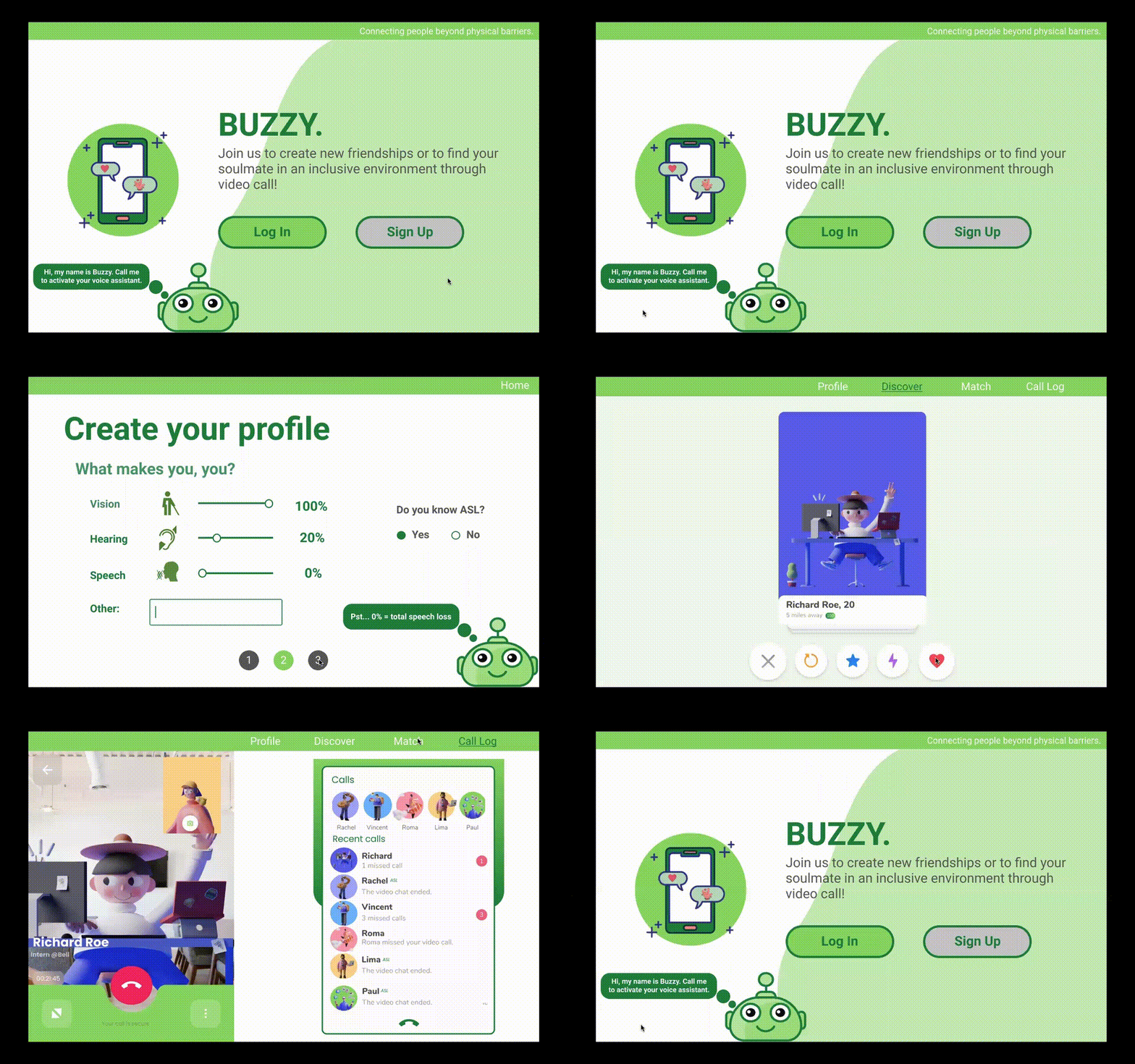
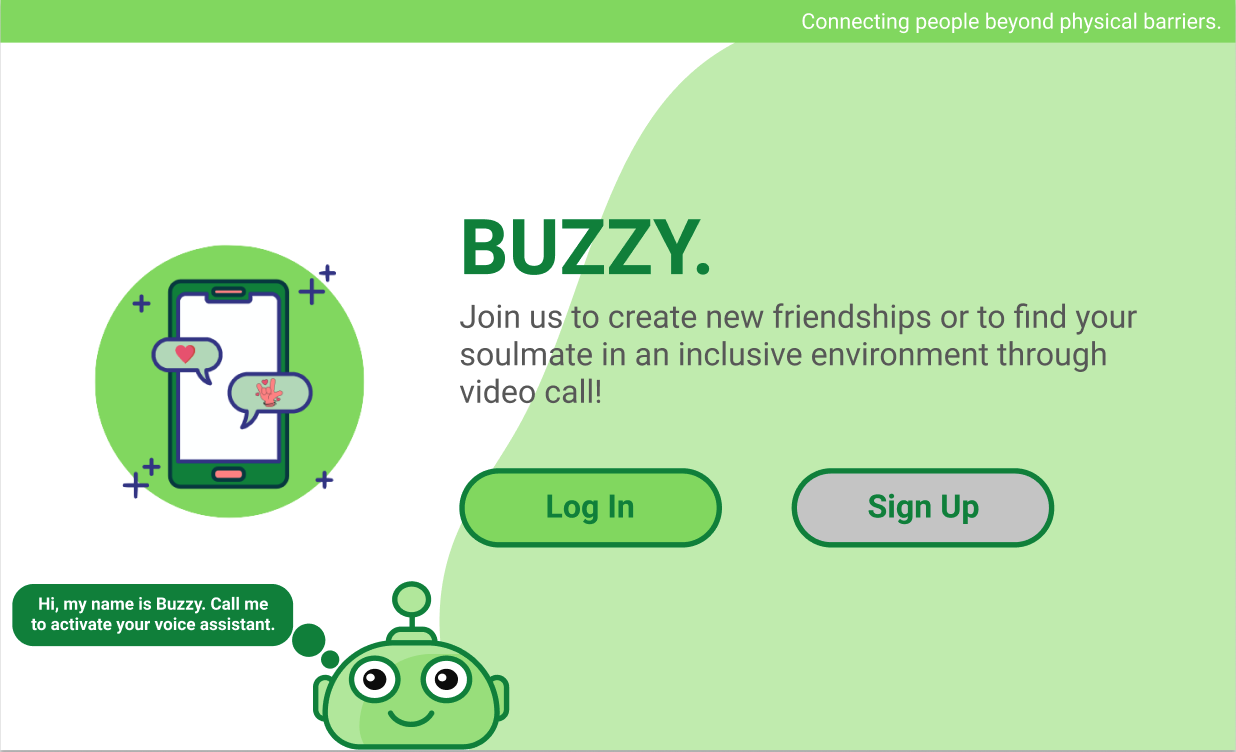
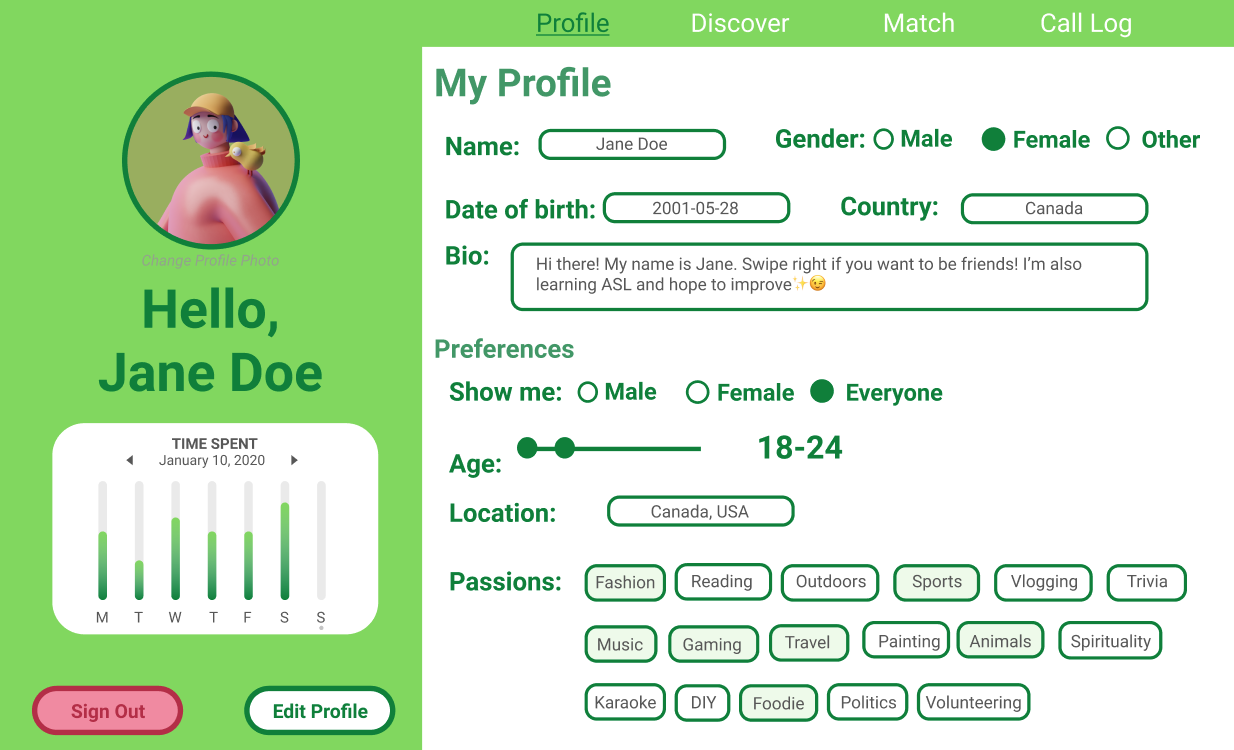
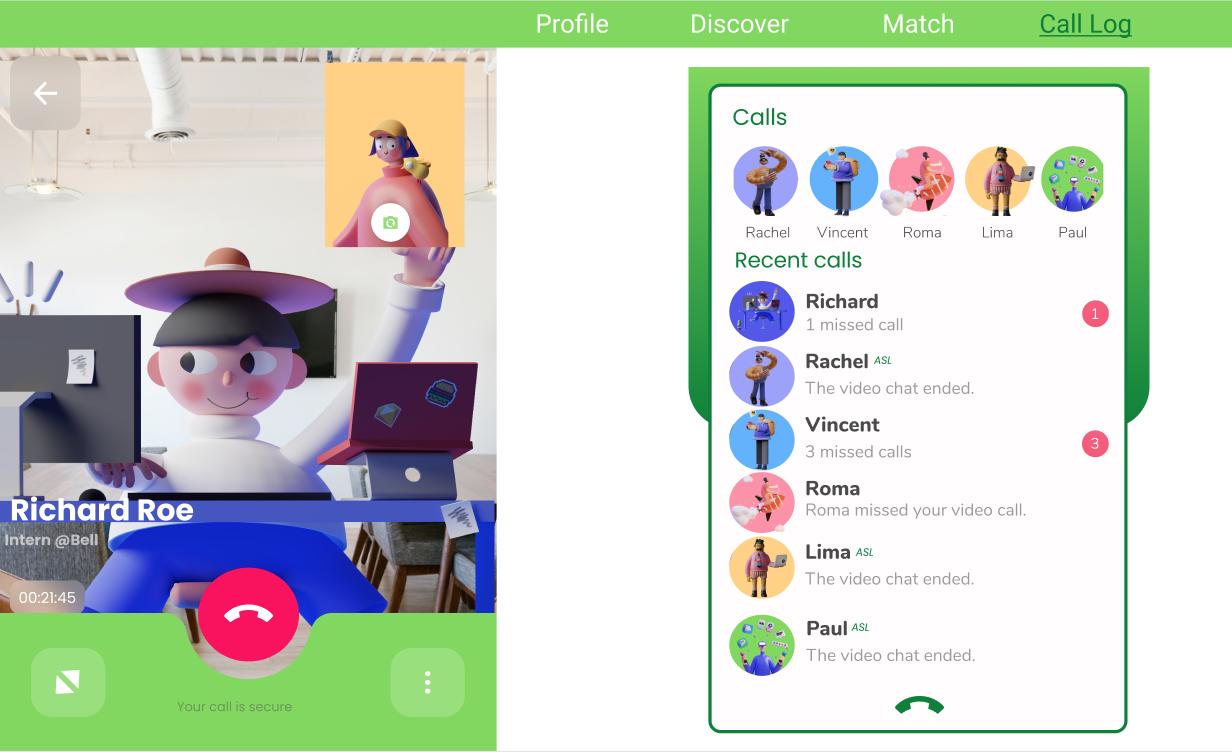
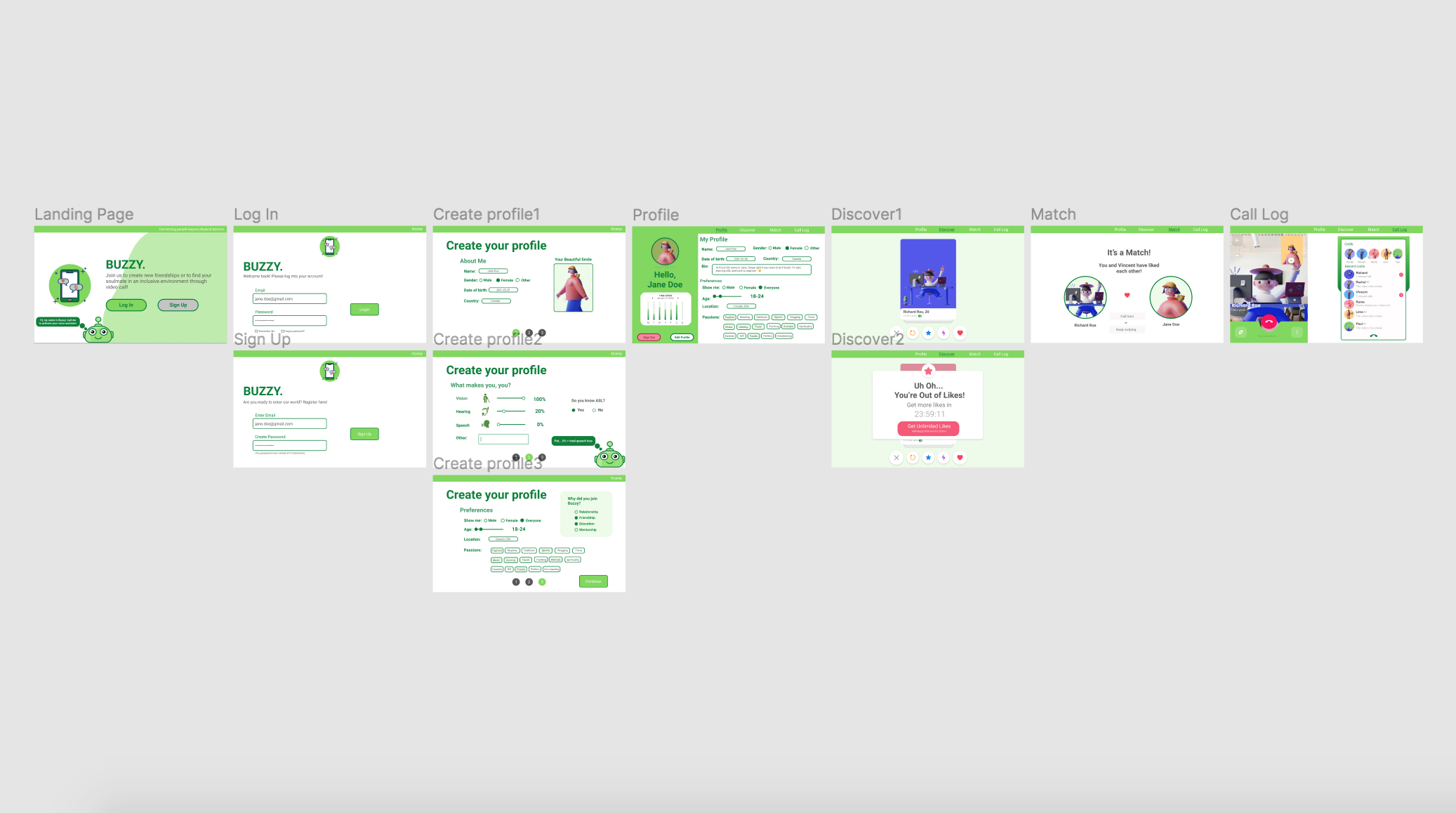
Buzzy aims to make meeting people more accessible than ever through accessible people matching features like Tinder with the added feature of video calling. Although it follows a similar train of thought as many virtual communication applications, Buzzy goes further to allow anyone, regardless of physical ability to use the program. The video calling feature is equipped with an automatic voice-to-text feature that will allow deaf and hard of hearing people to use our video calling features, and a text-to-voice and image descriptor to allow visually impaired people to enjoy our website. In addition to the accessibility features within the website itself, its virtual presence allows for its easy access from everywhere, regardless of anybody’s capacity to physically move.
Buzzy offers a wide array of ways to enjoy the program as well. It can be used to meet new potential romantic partners, a possible new best friend, a mentor, or just an educational opportunity. It allows able-bodied people to learn to socialize with people with disabilities and gives them a chance to learn about the realities of living with a disability and ultimately leading to a more open and accepting world for all types of disabilities.
How I built it
Buzzy was built using Figma, HTML, CSS and Canva. It was also built with the excessive help of internet forums and YouTube videos.
Challenges I ran into
To make the development more efficient, we had split the team into 2 subteams: one working on the demo program on Figma and the other working on a working website through HTML and CSS.
As first-timers, the learning curve was very steep. None of the four members had any coding/design experience or prior experience; thus, starting the project was challenging. We were mostly clueless during the first day of the hackathon, trying to figure out where to begin. Once we had agreed on developing our demo on Figma, it was time to learn how to use it. In addition to using the program, we also had to find good looking non-copyrighted images, which was a harder task than anticipated. Given that it was also our first time coding, it was quite a challenge to figure out how and where to start coding. After attending numerous workshops, asking for help from mentors, and searching online, we were able to figure out how to begin writing our code. Although it is not nearly as complete and visually pleasing as the Figma, we are extremely proud to have managed to develop an array of codes that allowed us to have multiple pages all hyperlinked together.
Accomplishments that I'm proud of
One of our biggest accomplishments is that, in a short time, we learned the basics of coding. We figured out how to use HTML and CSS to build our website. In addition, we are proud of creating a thorough prototype on Figma. We integrated several components to make the demo of our website accessible and most importantly inclusive.
What I learned
As mentioned previously, throughout the hackathon, we expanded our knowledge on Figma, HTML and CSS through the workshops on Hopin and YouTube. We also learned that it is possible to make a viable and presentable project in a very short amount of time, something we never thought would be possible. Although the beginnings were confusing and difficult, we came out of this hackathon with much more practical knowledge that could be applied to our future projects. We also learned that coding is not as easy as it seems. It requires a lot of patience and perseverance (and sleepless nights).
What's next for Buzzy
The next step for Buzzy is to further develop the website and to add more fun features. We would also like to add more functions to increase accessibility and to create a safer online environment for our users.
Built With
- css
- figma
- html
- javascript

Log in or sign up for Devpost to join the conversation.