Inspiration
The recent Odysseus and Athena lunar rover missions that nearly and did end in disaster due to failed landings on uneven, unpredictable terrain, costing NASA (and US taxpayers!) hundreds of millions of dollars.
What it does
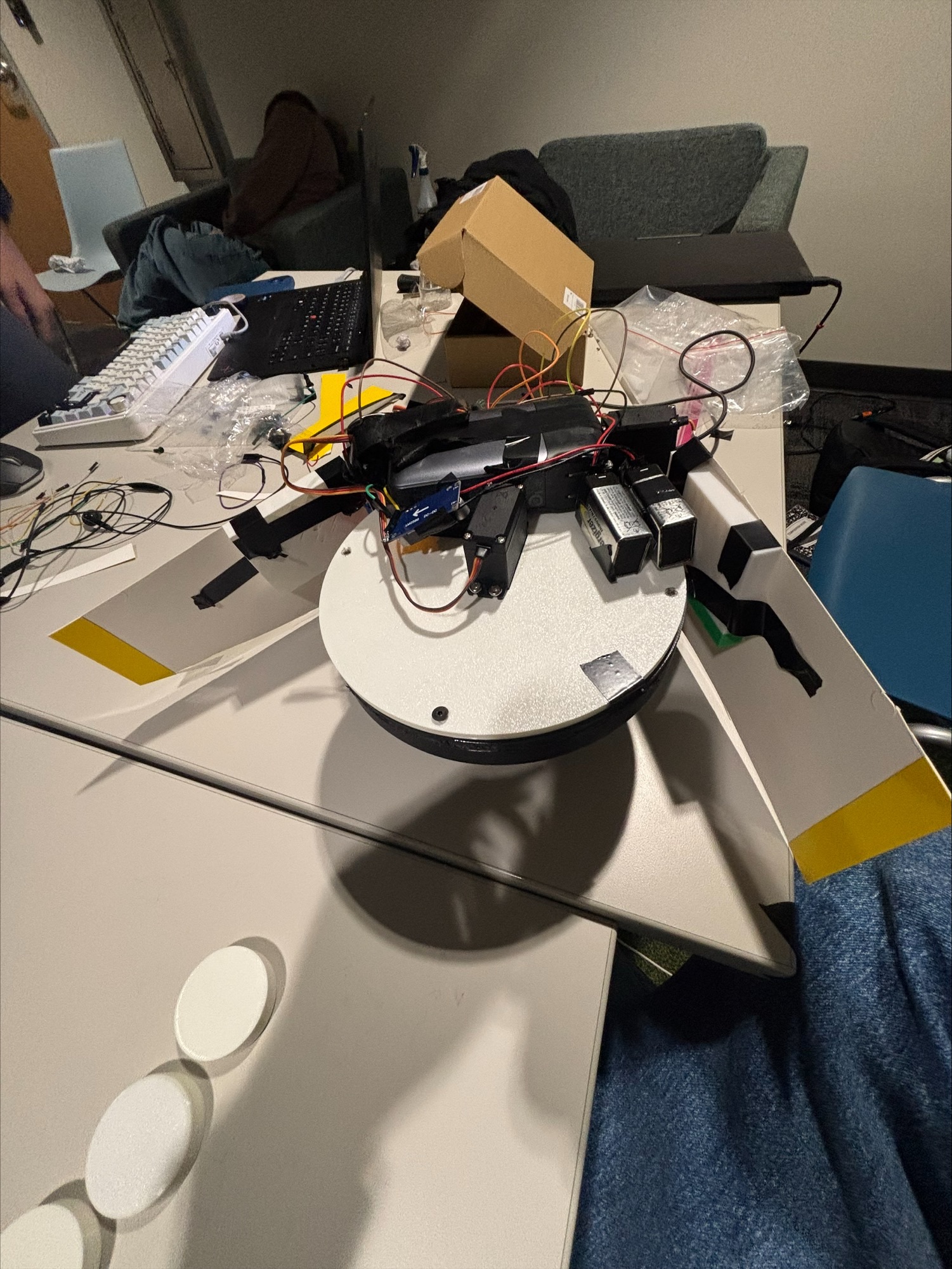
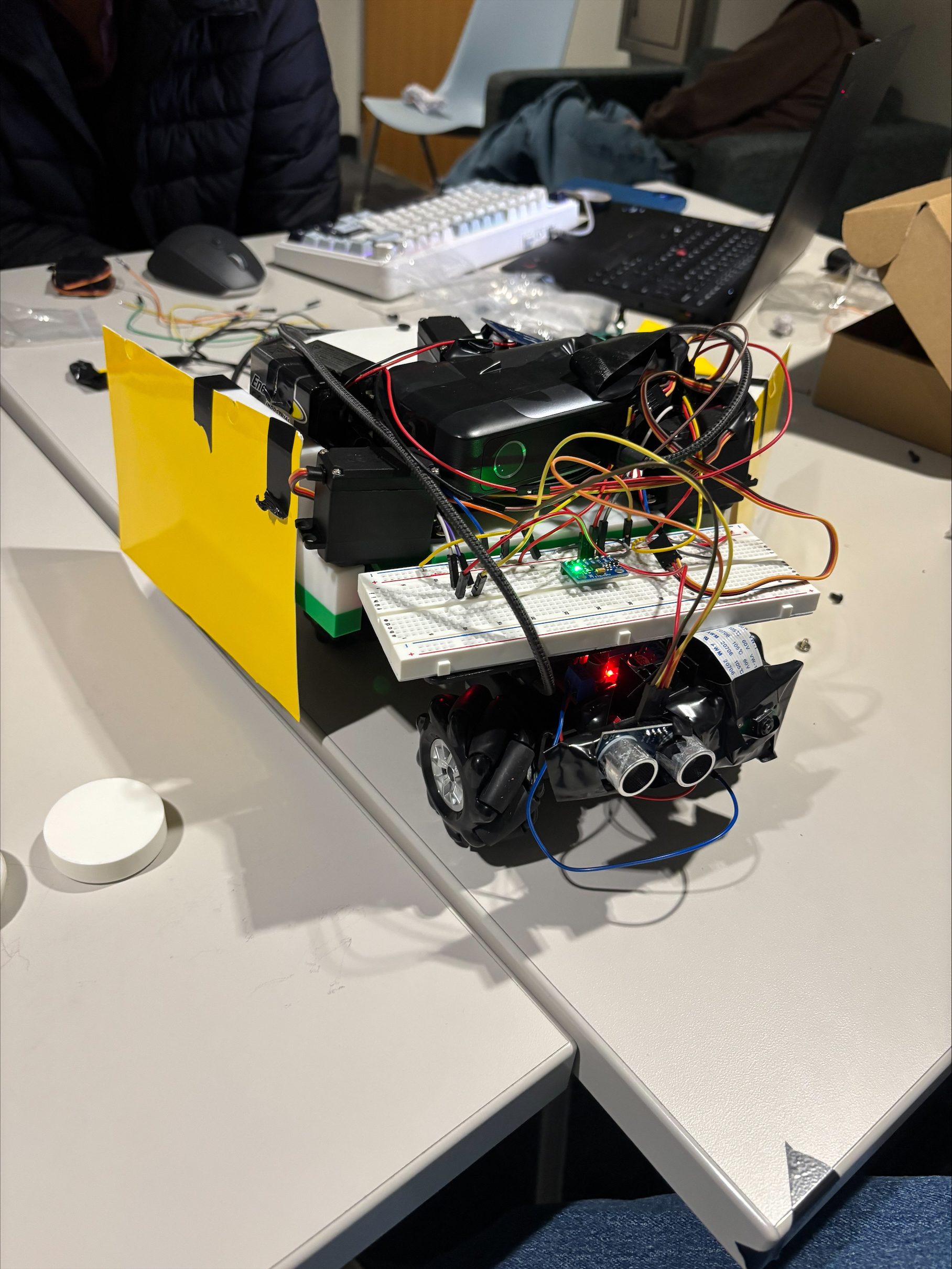
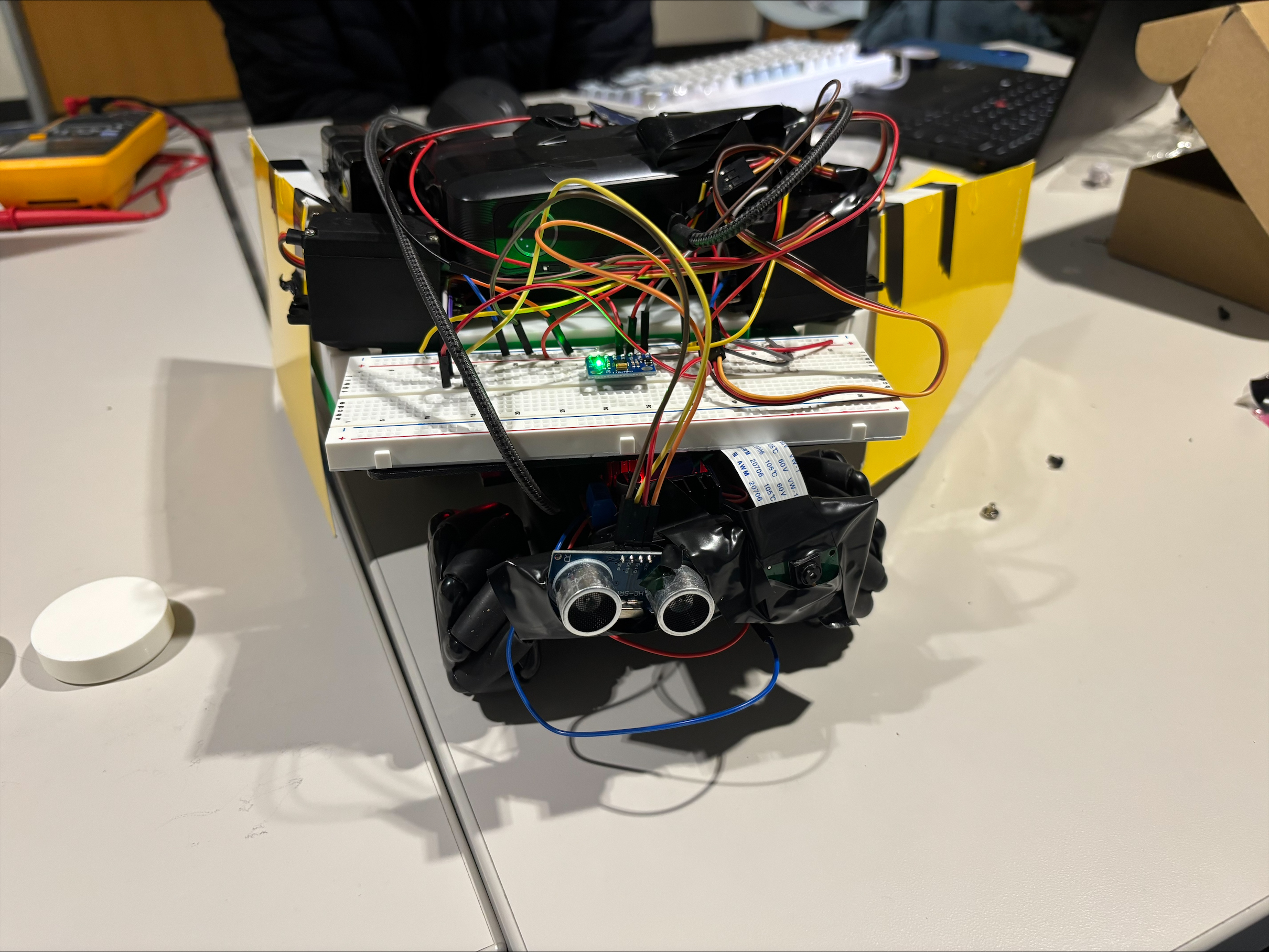
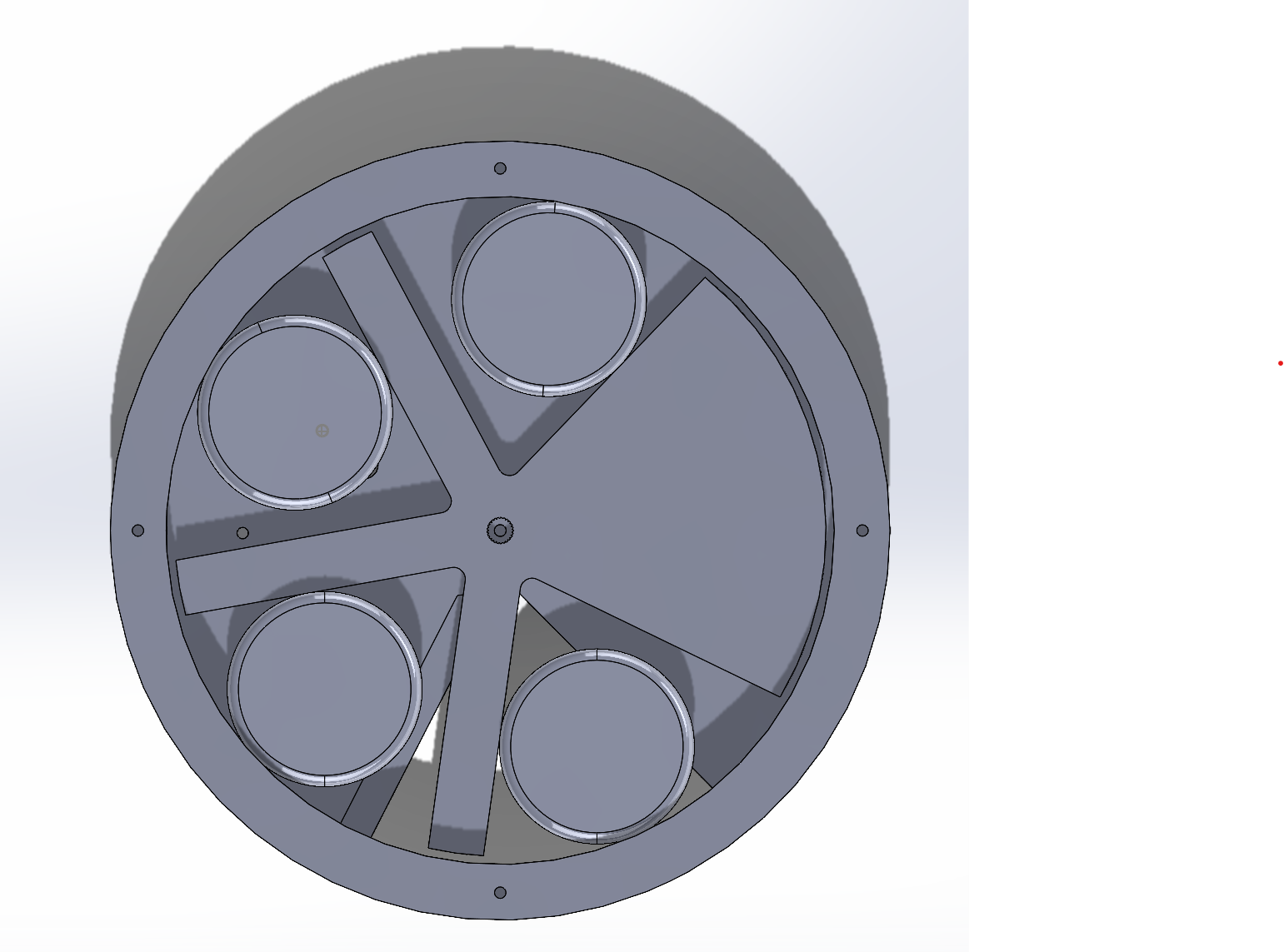
Our robot solves the problem of unpredictable landing by accurately and safely navigating to a designated landing area, identifying and removing debris from said area to clear out a flat ground, and deploying transponder beacons to communicate with the incoming spacecraft for a space landing.
How we built it
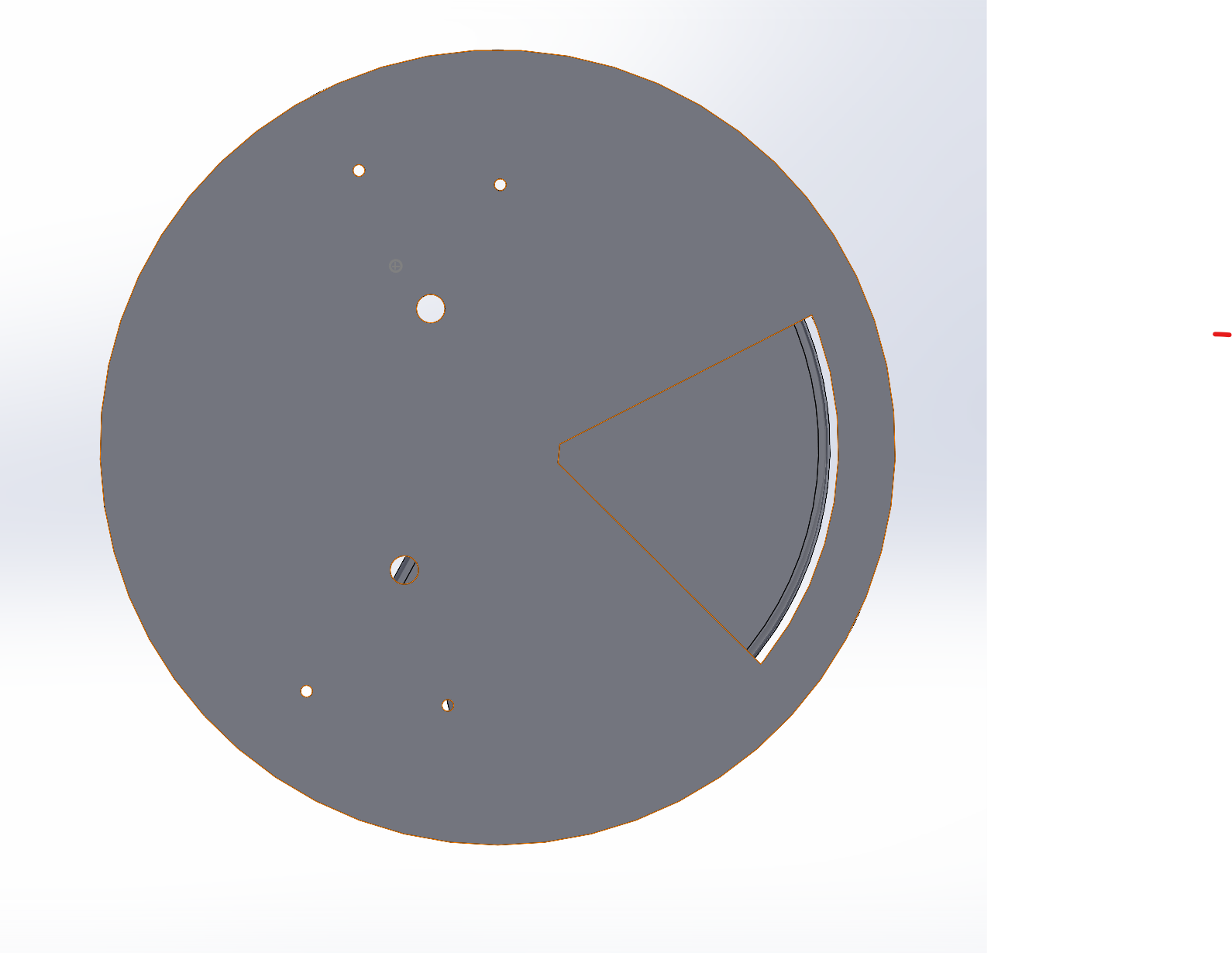
We primarily 3D-printed the robot using SolidWorks as the CAD software, including several DC motors, servos, a 6-degree inertial measurement unit, ultrasonic sensor, and a Raspberry PI 4B equipped with a camera.
We programmed the robot using Python. To accurately identify and track debris, we trained a YOLO object detection model on makeshift debris, resulting in a 95% detection and removal rate with our proprietary debris removal algorithm.
Challenges we ran into
The primary challenge we ran into was hardware maintenance. 3D prints took a very long time due to long printer queues. Low-infill plastic and poor wire quality resulted in numerous design changes. Restricted network access into the Raspberry PI was difficult due to poor network quality.
Accomplishments that we're proud of
Training our own machine learning image classification model, creating multiple successful subsystems as part of a fully functioning robot.
What we learned
We learned how to set up an entire mechanical, electrical, and software embedded system from scratch, as well as training our own machine learning model. We also balanced inter-team strengths and weaknesses and adapted to the numerous challenges that we faced (see above).
What's next for Buzzinga RoboTech Submission
We want to iterate on our design in the following ways: 1) Introduce a more efficient debris clearing algorithm - incorporating a Traveling Salesman style solution to reduce resource consumption. 2) Automatic pickup of spent transponders - companies like SpaceX have made their mission statement on sustainability and reusability. 3) Incorporating cleaner methods of energy such as solar power - considering a light detection model to orient the panel into the optimal position to receive the most light.

Log in or sign up for Devpost to join the conversation.