Inspiration
Our inspiration behind our idea came from personal experiences in using the current maintenance system and is based on a similar idea one of our teammates used in an internship to track issues.
What it does
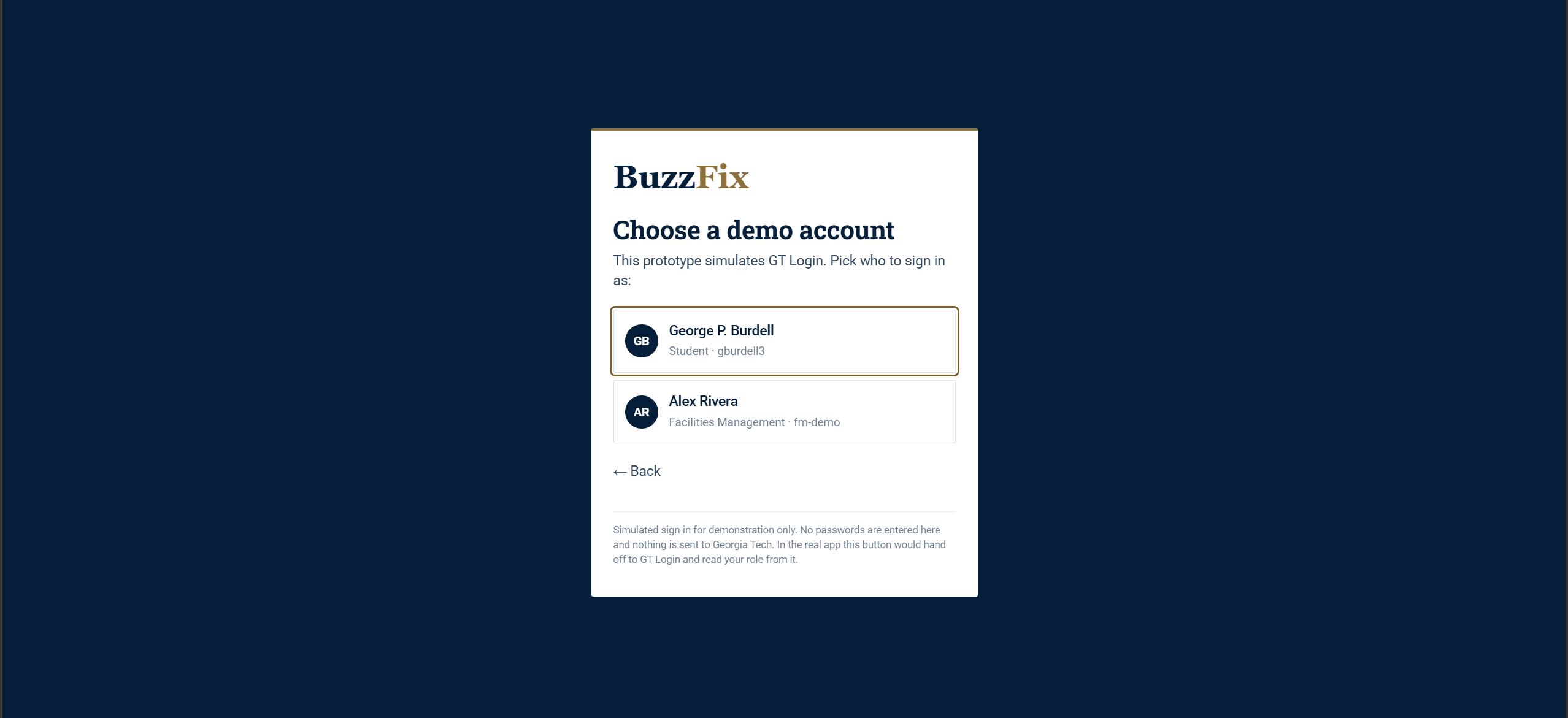
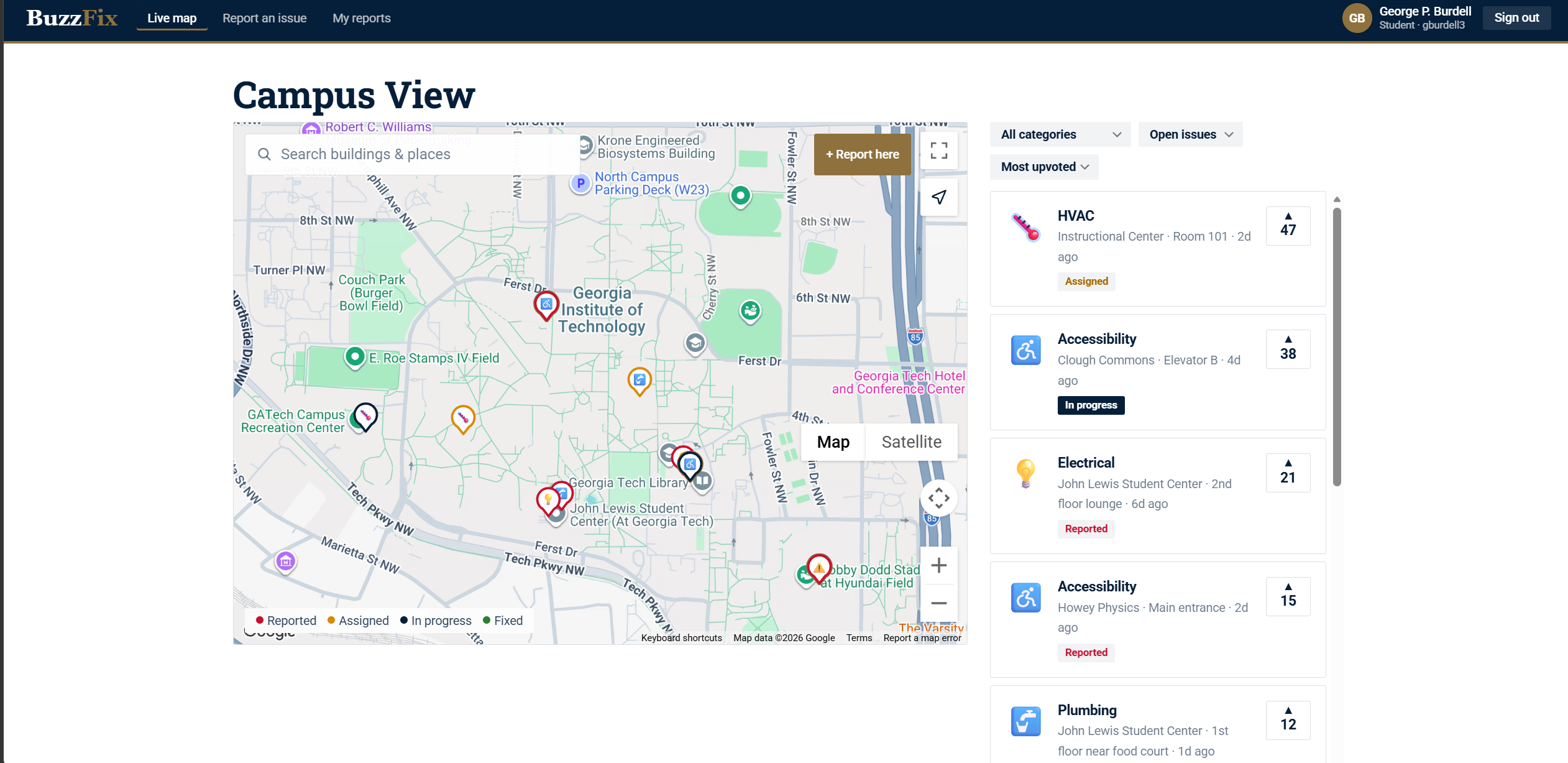
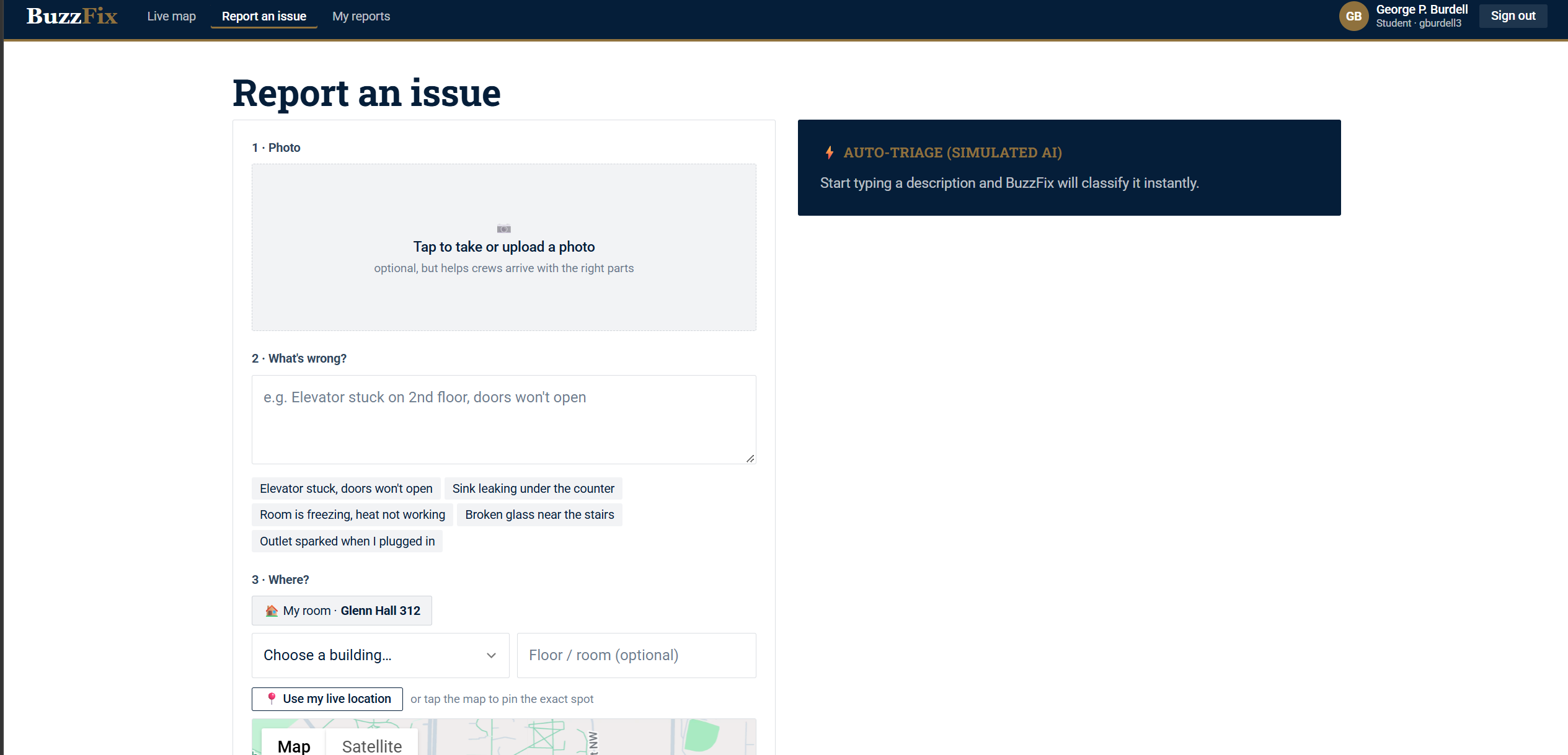
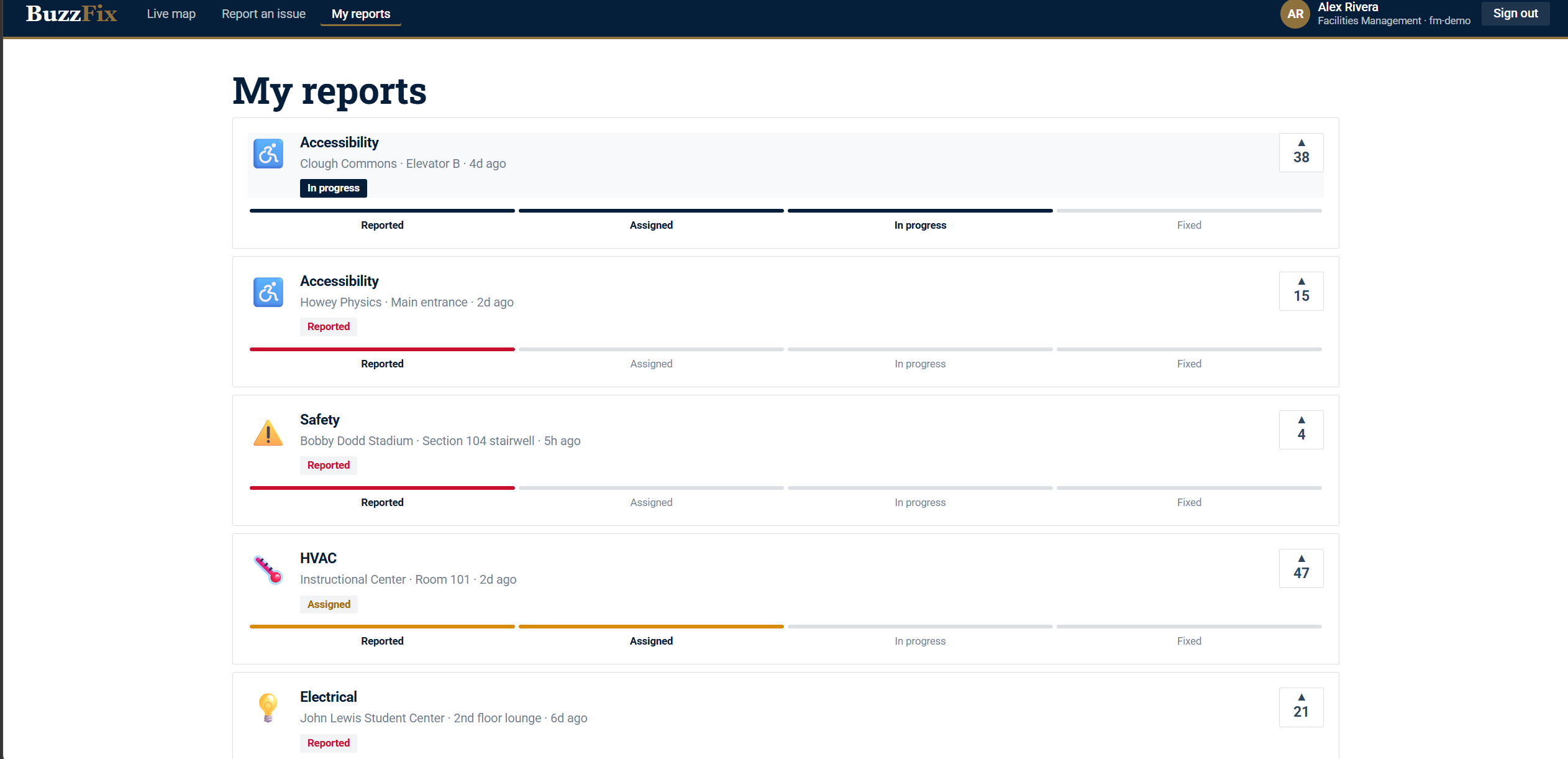
BuzzFix is a website where Georgia Tech students report broken things on campus, and maintenance staff see and manage those reports in one place. In order to this it uses a friendly user built design to make it simple for students and faculty to follow. Students can report an issue with a photo, a short description and the exact location by picking from about 150 GT buildings, dropping a pin or using their current location. BuzzFix automatically sorts each report by category, urgency and the team responsible for fixing it. If someone has already reported the same problem, students upvote it instead of filing a duplicate, then follow it to see its progress. A live campus map shows what’s broken right now and the status of each issue. Maintenance staff get one priority queue ranked by severity, how many people are affected and how long an issue has waited, with safety and accessibility issues first. One tap opens the exact location in Google Maps, and the dashboard shows insights like recurring hotspots and average time to fix by category.
How we built it
We built BuzzFix with HTML, CSS, Javascript as a single-page prototype, allowing us to iterate quickly on the design.
Challenges we ran into
Our first challenge was understanding how GT maintenance actually works. Requests are split across Facilities, Housing and the Student Center, each with its own process, so we designed BuzzFix to work alongside those systems instead of replacing them. Keeping the app simple was also hard, because every feature we added made it harder to follow, so we kept cutting until reporting took only a few taps. Getting pins onto the right buildings took a lot of testing. We also had to think about privacy, since reports about someone’s own dorm room shouldn’t be public and phone numbers need to stay protected. Finally, we learned that sending real texts requires a texting service and carrier registration, so we kept our prototype honest about what works today and made texting part of our next steps.
Accomplishments that we're proud of
We’re proud that BuzzFix is a working, deployed prototype with a real Google Map of campus, not just mockups. Our “Already reported?” feature turns duplicate reports into a count of how many people a problem affects, so maintenance knows what matters most. We built two complete experiences, one for students and one for maintenance staff, around how each group actually works, and we made sure safety and accessibility problems like a broken elevator or door opener get attention first.
What we learned
We learned that a good reporting experience matters as much as the repair itself, because if reporting is hard, problems go unreported. Maintenance staff need prioritization, not more tickets. Building for a real campus means thinking about policies, privacy, cost and existing systems, not just features. And talking to real users is worth more than adding features.
What's next for BuzzFix
First, we’ll want to interview maintenance staff and more students and update BuzzFix based on what we learn. Next, we’ll connect a real database such as Supabase so reports are saved and shared across devices, and add text and email updates through a service like Twilio. Then we’ll run a pilot in one small department or area, tracking service times, student usage and satisfaction to see if BuzzFix is working the way we want. Finally, we’ll make improvements based on that feedback and grow BuzzFix across campus.
Built With
- claude
- html
- javascript
- vercel


