-
-
Final Countdown
-
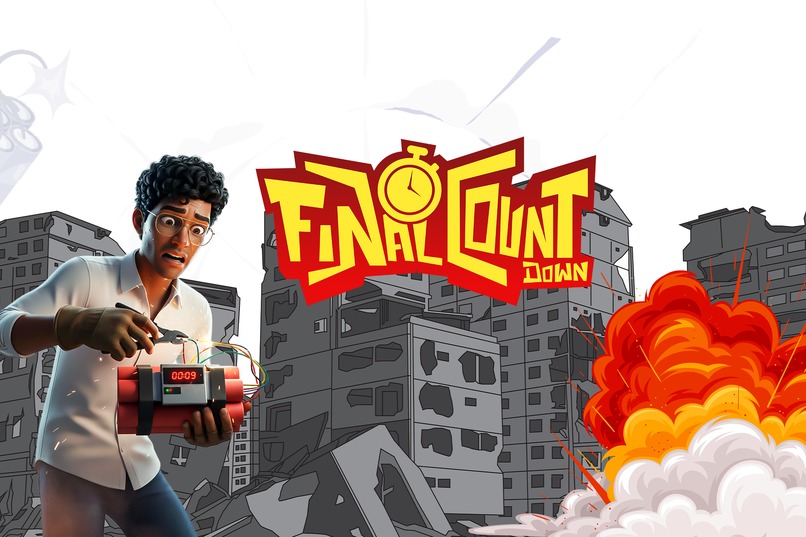
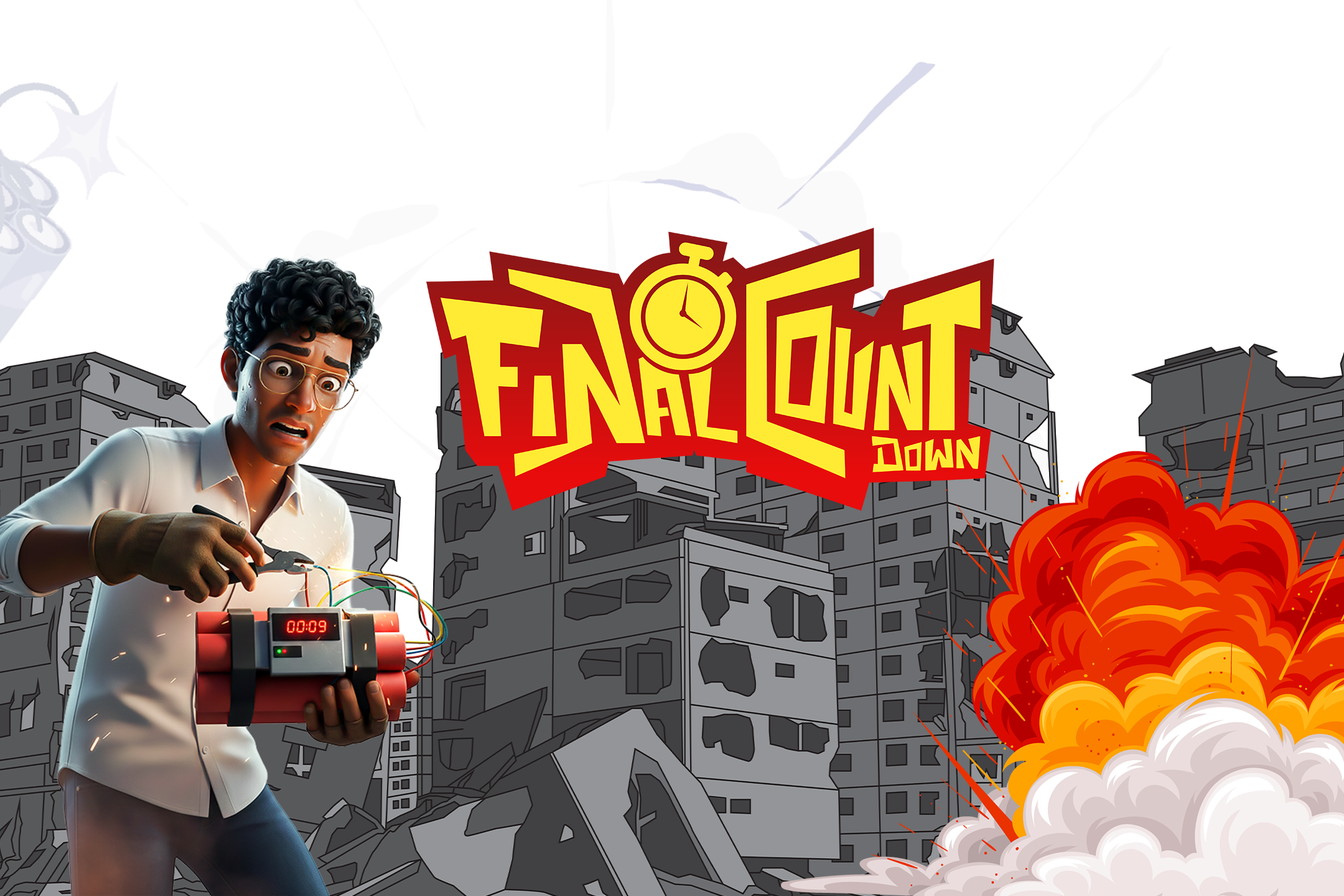
Your Room. Your Mission. Your Last Chance.
Inspiration
The idea for Final Countdown emerged from exploring the current landscape of Mixed Reality (MR) games. While many MR experiences focus on exploration, combat, or casual interactions, we noticed a scarcity of short, high-intensity bomb-defusal games. We wanted to create a time-boxed, tension-driven experience where players physically navigate their own rooms while solving puzzles under pressure. By combining real-world movement with interactive MR elements, the game delivers a unique thrill that engages both mind and body.
What it does
Final Countdown turns your real environment into an interactive puzzle arena. Players explore their room, find hidden bombs, and use MR tools like kettles and UV torches to solve puzzles and defuse devices before time runs out.
- Level 1: Cartoon-style TNT—find the bomb and extinguish the fuse.
- Level 2: Mini time bomb—pour water from a kettle to deactivate it.
- Level 3: Digital time bomb—discover invisible numbers with a UV torch and enter the code.
The game blends physical movement, spatial problem-solving, and real-time tension, delivering short, adrenaline-filled sessions that fully integrate with the player’s environment.
How we built it
The experience was developed in Unreal Engine 5.5.4 for Meta Quest 3/3S, using a combination of Blueprints and C++. We leveraged Meta XR Passthrough and Scene APIs from the v78 SDK to integrate the real world into gameplay. The team started with Meta’s Unreal Passthrough (PTLighting) and MR Utility Kit (RandomPlacement) sample projects, then customized them so bombs and interactable objects spawn dynamically on detected surfaces while the passthrough underlay keeps the real room visible. Our workflow combined spatial surface detection, dynamic object spawning, interactive puzzles, and real-time feedback to ensure players remain fully immersed in a room-scale defusal experience.
Challenges we ran into
Stabilizing MR interactions across different rooms, lighting, and surfaces was a major challenge, ensuring bombs, clues, and tools stayed convincingly anchored. Balancing performance and comfort on standalone hardware while combining passthrough rendering, scene understanding, and dynamic gameplay required extensive iteration. These challenges pushed the team to refine both technical and design approaches for a smooth, immersive MR experience.
Accomplishments that we're proud of
- Successfully integrated bombs, clues, and tools into players’ real rooms for full MR immersion.
- Created three handcrafted levels with escalating difficulty and unique mechanics.
- Developed dynamic object placement that adapts to different room layouts.
- Designed short, high-intensity sessions that challenge both reflexes and problem-solving.
- Stabilized MR interactions across lighting conditions and surfaces while maintaining smooth performance on Meta Quest hardware.
What we learned
Designing around a player’s real room was a key challenge. Every object—bombs, tools, and UI—needed to feel anchored to real surfaces, pushing the team to rethink MR design. Players move, crouch, and interact with their environment to solve puzzles, rather than just using floating objects. We learned how to use visual and audio cues effectively and gained deeper insight into room-scale design, spatial interactions, and dynamic puzzle placement in MR.
What's next for Final Countdown
Future Improvements Looking ahead, we plan to expand the game with additional bomb types, multi-room scanning, co-op multiplayer, story-driven missions, and endless challenge modes. Player tools and puzzle mechanics will be enhanced to increase replayability, while improved room-adaptive placement will make every session feel unique.
Built With
- android
- blueprintvisualscripting
- c++
- metaquest
- metaxr
- passthroughapi
- sceneapi
- unreal-engine


Log in or sign up for Devpost to join the conversation.