-
-
Logo
-
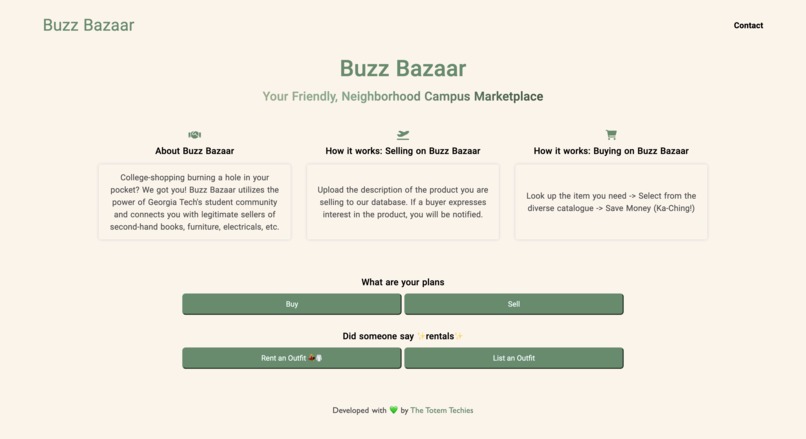
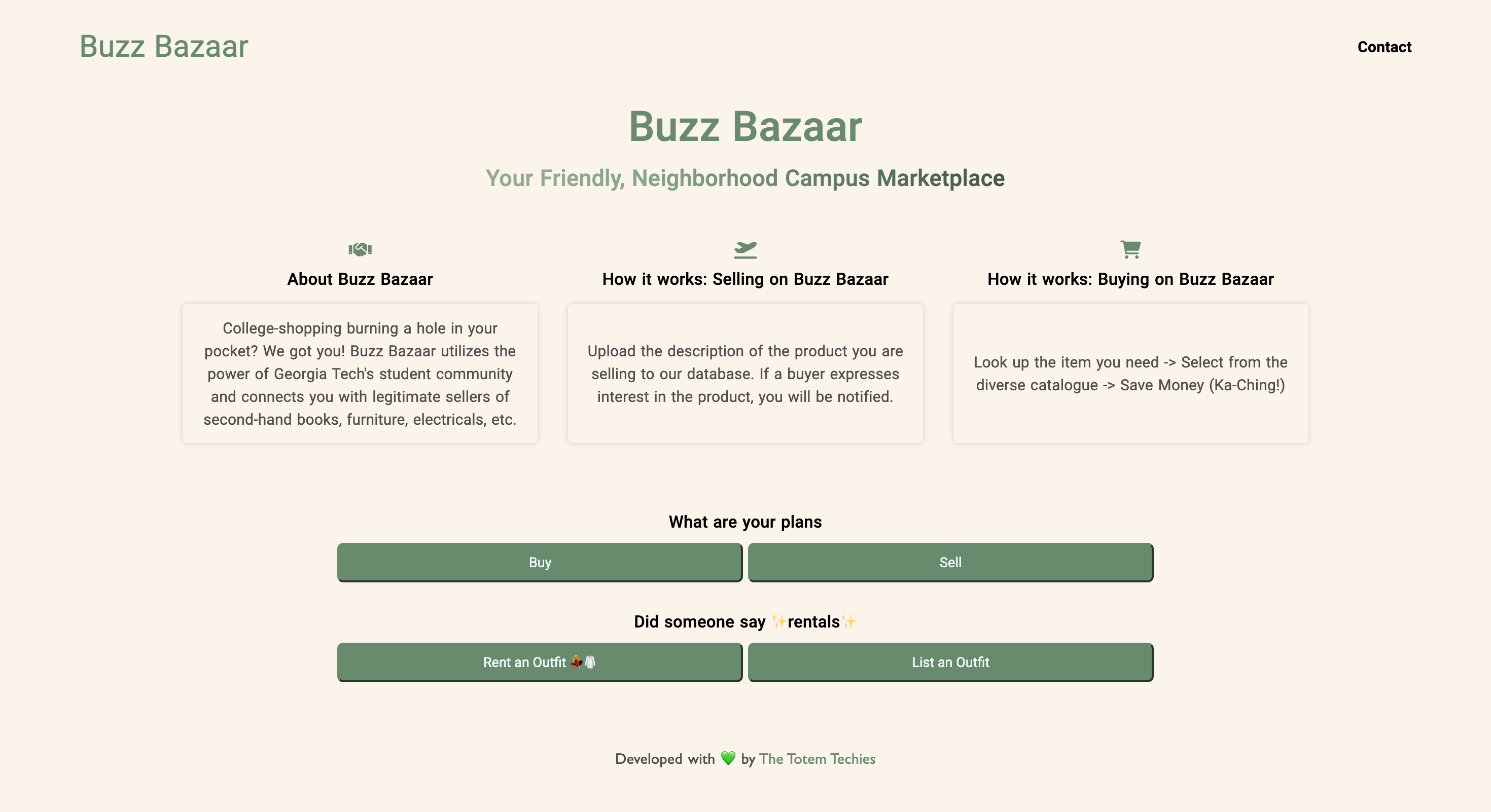
Landing Page
-
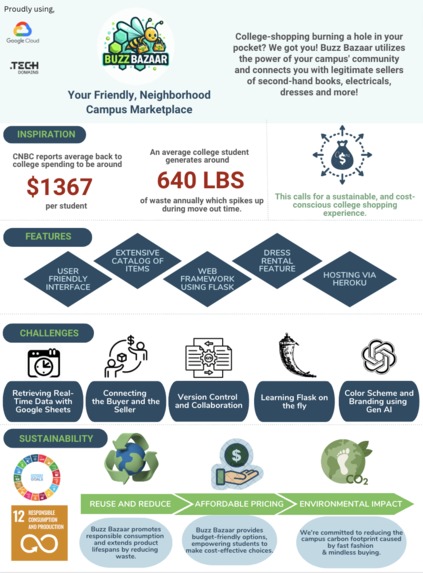
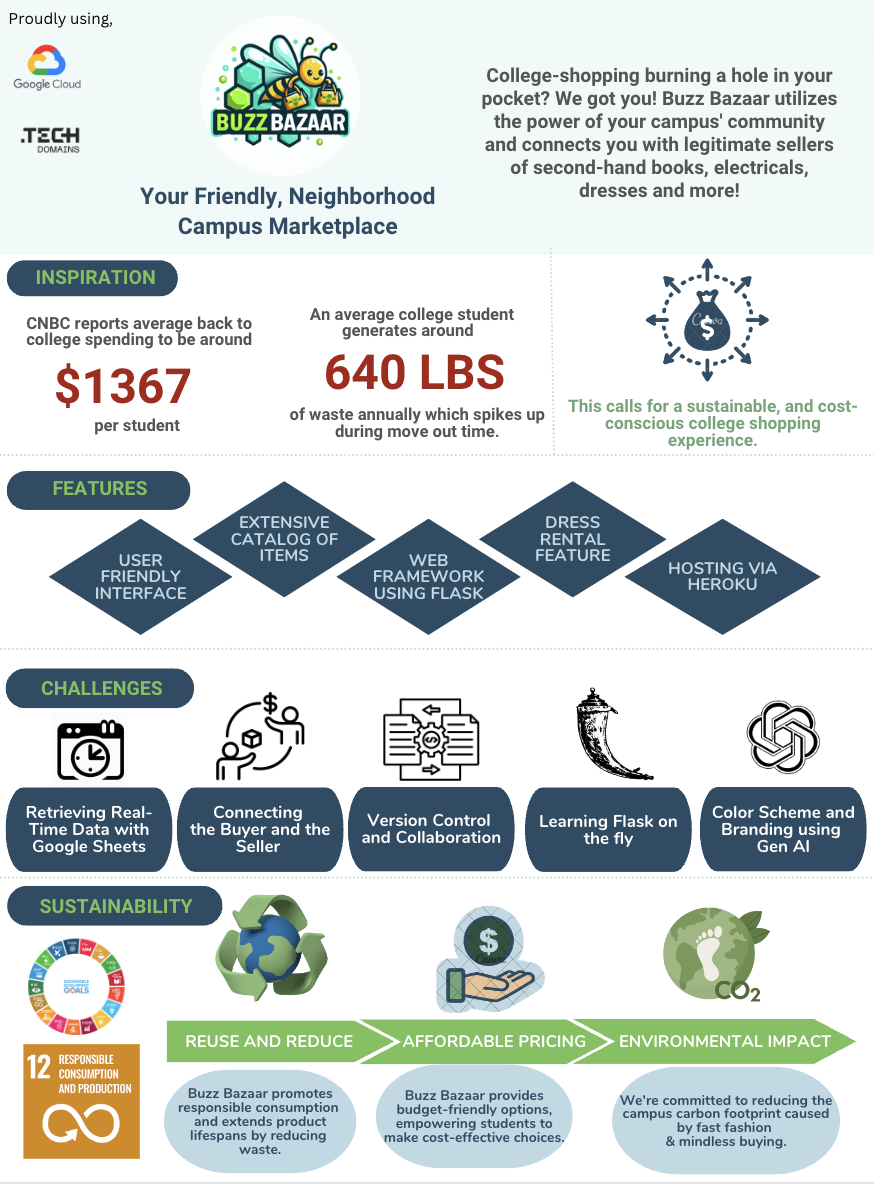
Poster for Submission
-
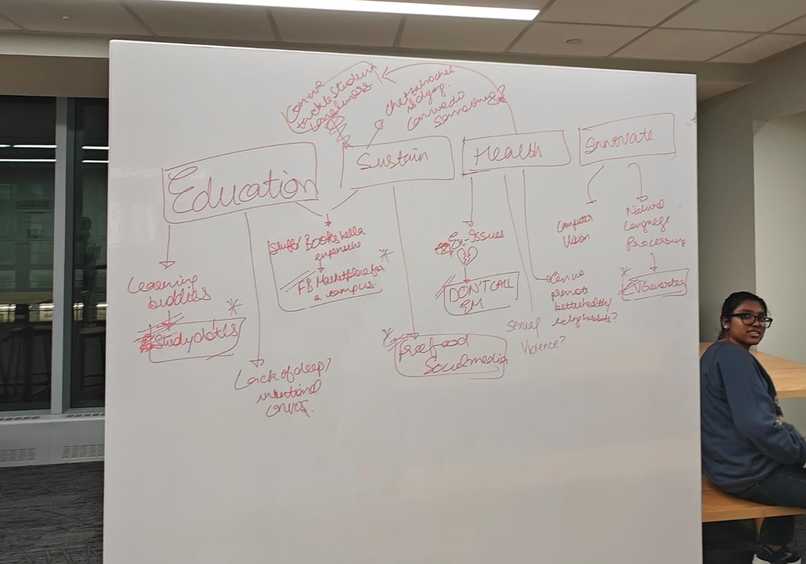
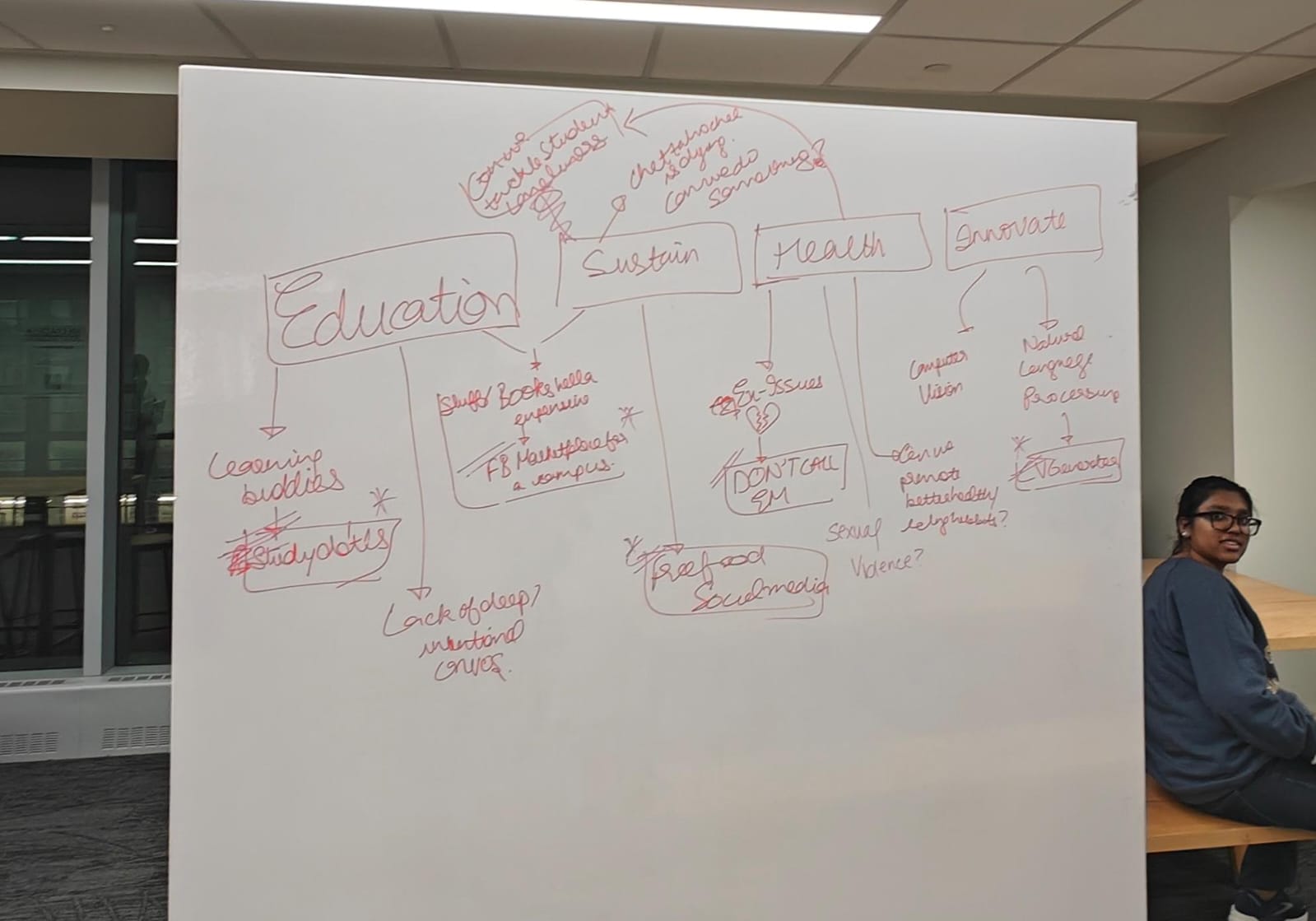
Brainstorming Session
-
Compuslory Group BeReal
Inspiration
1. The need for affordable college shopping
Textbooks, outfits and mini-fridges (to sneakily store alcohol in)--uni students have to shop for a lot! College shopping can burn a hole in students' pockets. In fact, CNBC reports a significant increase in back-to-college spending, with an average of $1,367 spent per student on dorm decor and electronics.
Buzz Bazaar aims to ease this financial burden by connecting students with legitimate student sellers of second-hand books, furniture, electricals, etc., around campus.
2. Reducing wastage of goods and SDG 12
Buzz Bazaar also promotes a culture of "reuse." Students graduating from university or moving away from their dorms often look for buyers for their belongings, discarding the belongings if the buyer is not found. Because of this, the average college student generates around 640 pounds of waste annually.
By connecting the buyer with the seller, Buzz Bazaar fosters an ecosystem where items not needed anymore by one person find new life in the hands of others. This is in line with Sustainable Development Goal 12, titled "responsible consumption and production."
How we built it
1. Brainstorming
We started off with a brainstorming session to come up with project ideas. Reflecting over college-specific problems, we started discussing how much we spent buying stuff for our dorms, and how much of it would go to waste when we would move out. This led to Buzz Bazaar.
2. Wireframing
In order to model the web app’s design, we created a wireframe on a whiteboard. Buzz Bazaar’s design is simple, a single landing page with 4 intent-based buttons.
3. Selling on Buzz Bazaar
A user can visit our website with the intent to either sell or buy their items. For the first case, the user is directed to a Google form where they can input details about the product that they want to sell. The submitted data is stored in Google Sheets.
4. Buying on Buzz Bazaar/Web development with Flask
Furthermore, we retrieve real-time data from the Google Sheets and store it in a Python list using the Google Sheets API. We used the Google Cloud credits provided by HackGT.
The items stored in the Python list were to be dynamically displayed in the form of a catalog for our buyers to see. To display the contents of the Python list on our app’s front end, we used the Flask framework with Python.
5. Outfit Rental & Fast Fashion
As our project took shape, we decided to add new features. With Homecoming 2023 around the corner, we introduced an Outfit “Dress Rental” feature. This feature benefits not just the renter but the rentee (as they get to earn passive income.)
Through this feature, we aim to reduce the campus' carbon footprint caused by fast fashion & mindless buying.
Challenges we ran into
1. Deciding on a form software
While crafting a user-friendly form for sellers to input their product details, we initially considered TypeForm for its sleek and aesthetically pleasing interface. However, the software’s free version did not allow image uploads. Thus, we decided to use Google Forms, which stored the user entries in Google Sheets.
2. Programmatically accessing the Google Sheets’ contents
In order to use the data in the Google Sheets for our web app, we had to retrieve it programmatically. For this purpose, we used google sheets API.
3. Developing dynamic web pages and Flask
After connecting our Python code with Google Sheets, we struggled with displaying the data on the Python list on the frontend of our app. Soon, we discovered and learned about Flask, a Python microframework to develop dynamic webpages.
4. Branding and color scheme
We were keen to give our project a unique and relevant brand identity. Given the time constraints and our lack of experience with branding, we turned to generative AI tools such as Bing.ai and the Bing Image Creator to generate logos and a color scheme that would authentically represent our project's goals and aesthetics.
Accomplishments that we're proud of
- Learning how to incorporate Google Cloud API into our project
- Creating web pages that update in real-time as users enter data into a form
- Translating our collective interest towards frugal living and resistance against irresponsible buying/consumption into an app.
Some Lessons we Learned
- Use AI to query into your buggy code if you are working with a new language/framework. ChatGPT came in clutch so many times.
- However, use AI to supplement your abilities, not replace them or you will fall trap to its generic or sometimes wrong generations.
- Version control your code using tools like GitHub; Github also allows you to collaborate with your teammates.
- Coding is NOT the most important part of the Hackathon. Take a moment to think deeply about the problem and user interface.
- Building is an iterative process. Create simple modular code blocks and assemble them together gradually. Don't aim for a perfectly robust and complex app in your first iteration
What's next for Buzz Bazaar
- We aim to develop filters for product category and pricing (like the ones found on Amazon.com), so buyers have an easy time looking for their desired product.
- We are also looking to create an in-built messaging system that allows the buyer and seller to connect within the app.

Log in or sign up for Devpost to join the conversation.