-
-
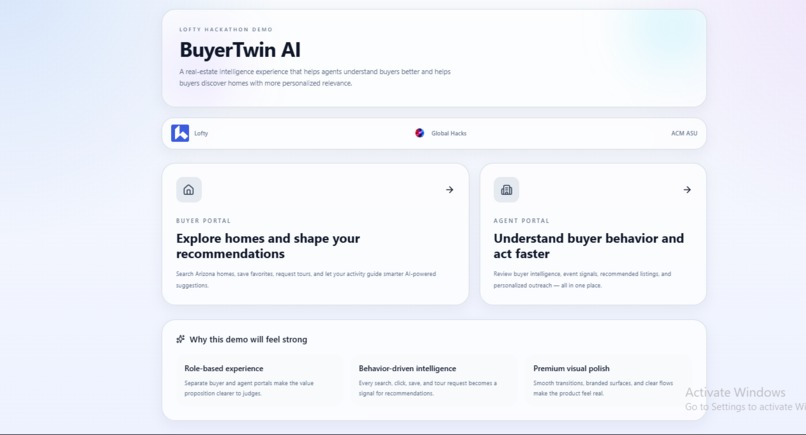
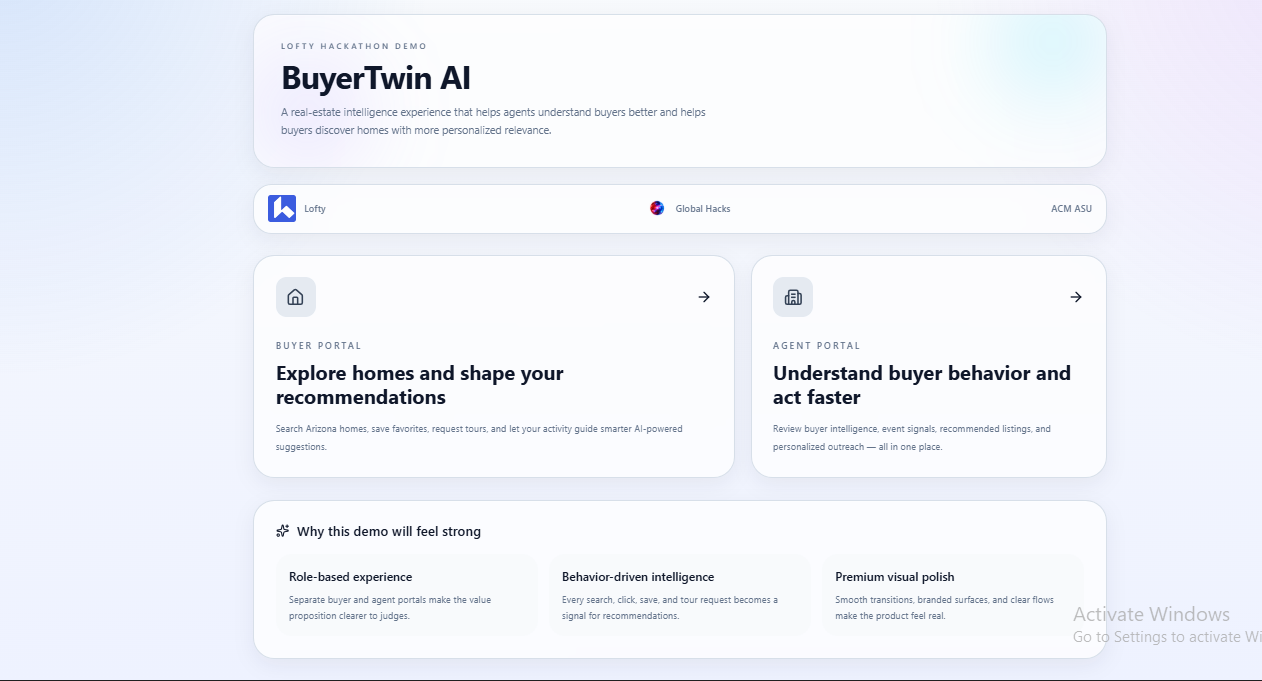
Home page
-
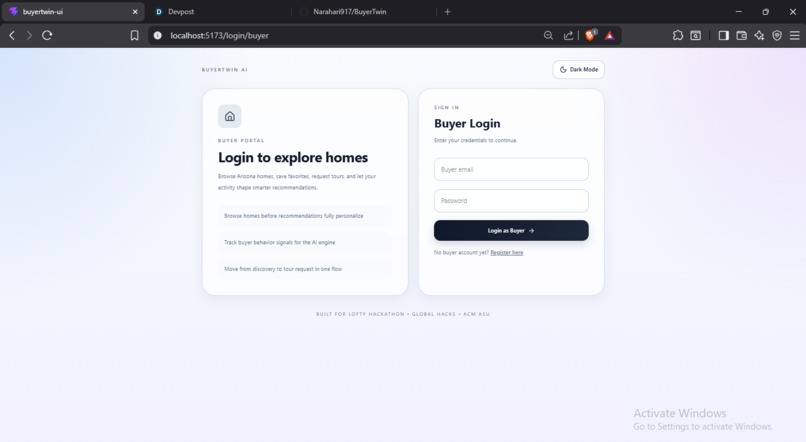
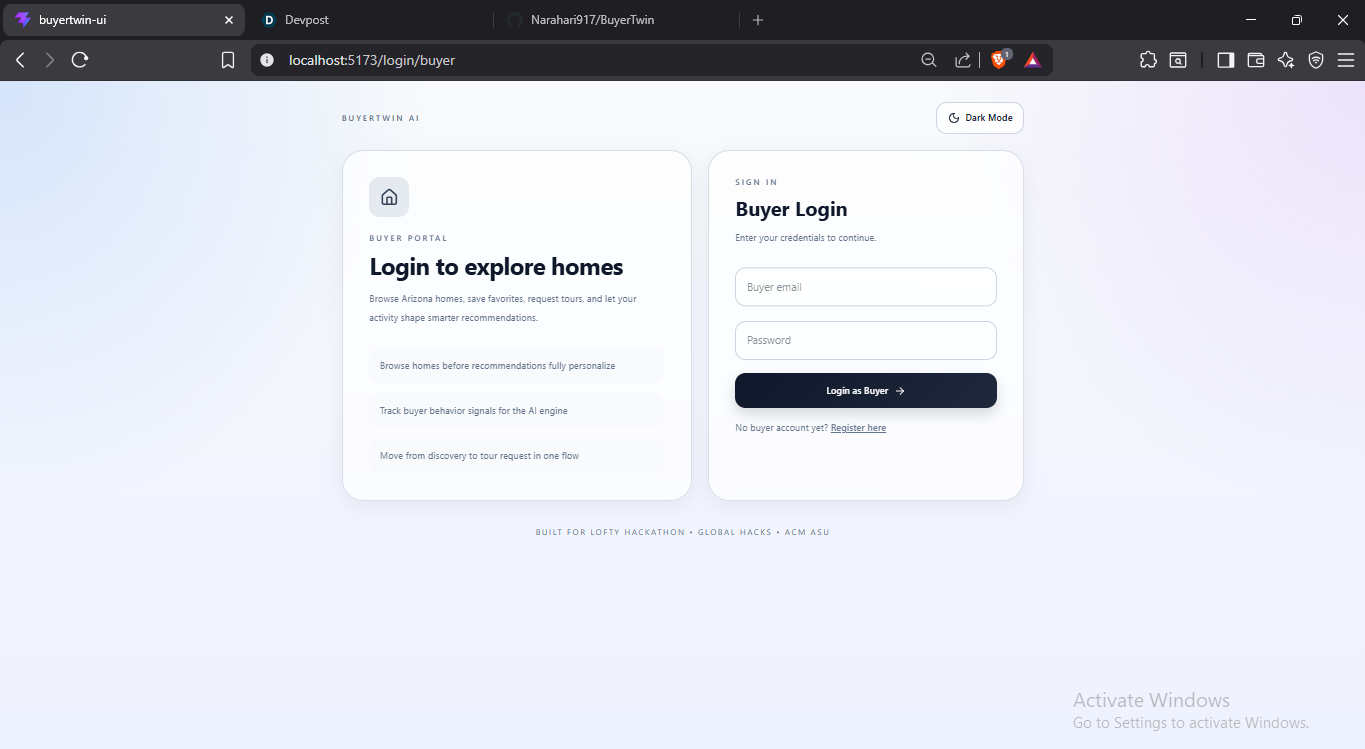
Buyer Login
-
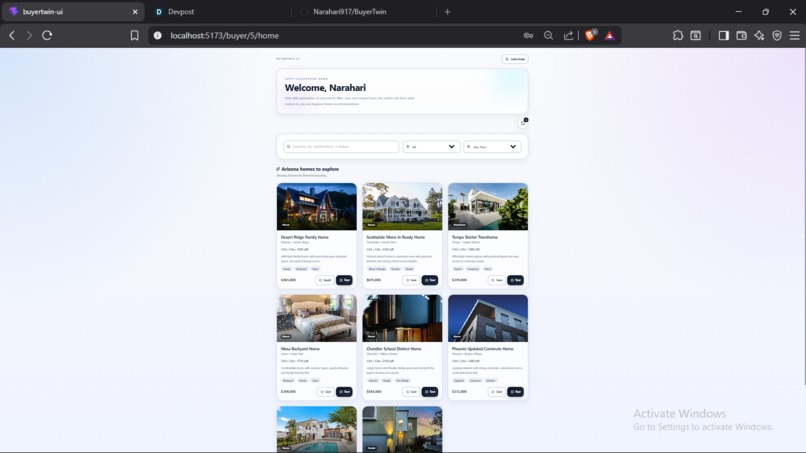
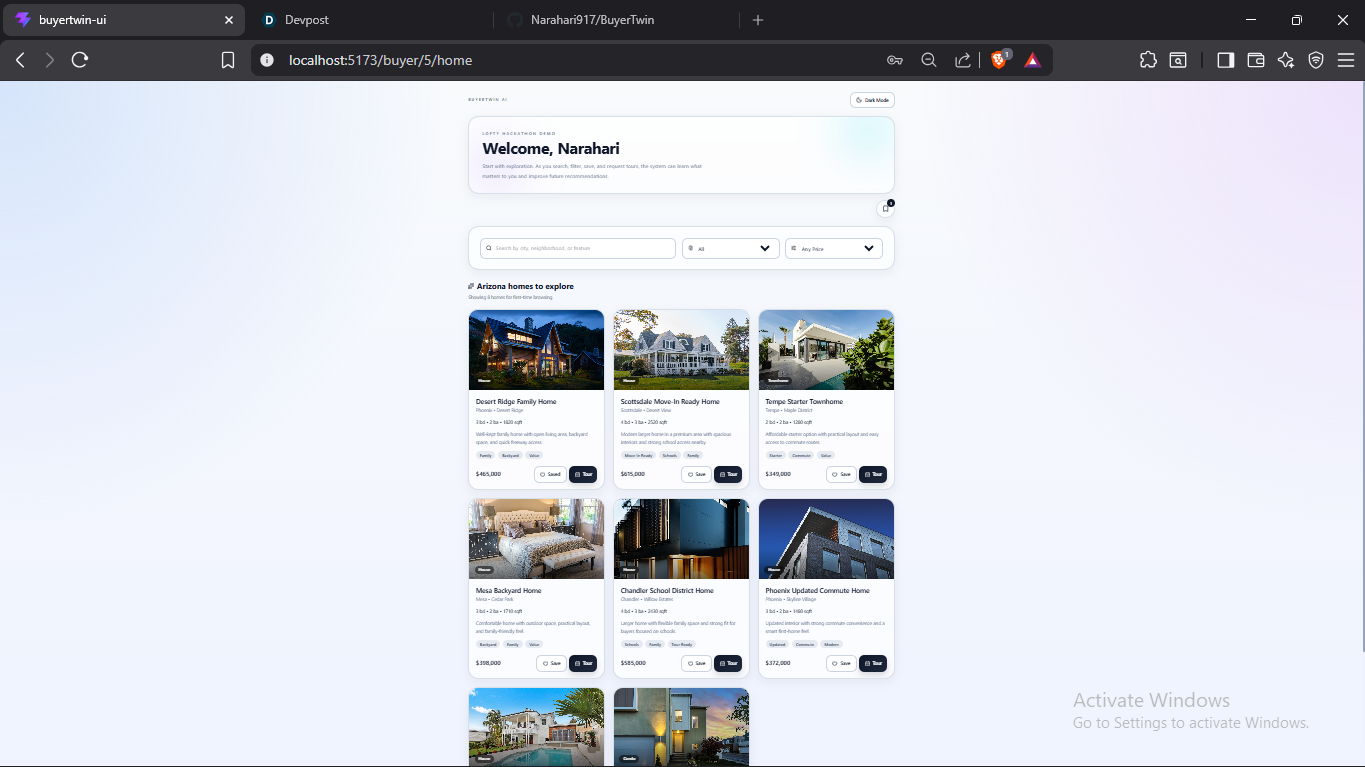
Buyer Home page
-
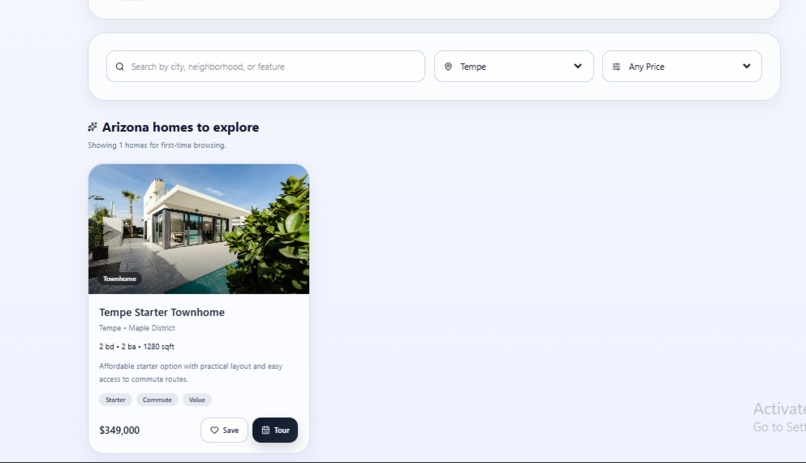
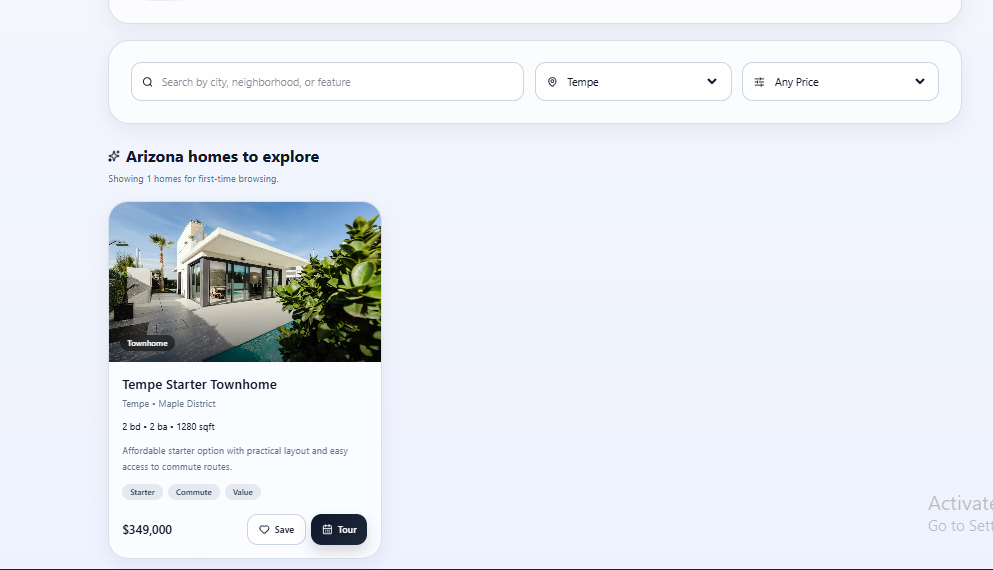
Filtered properties
-
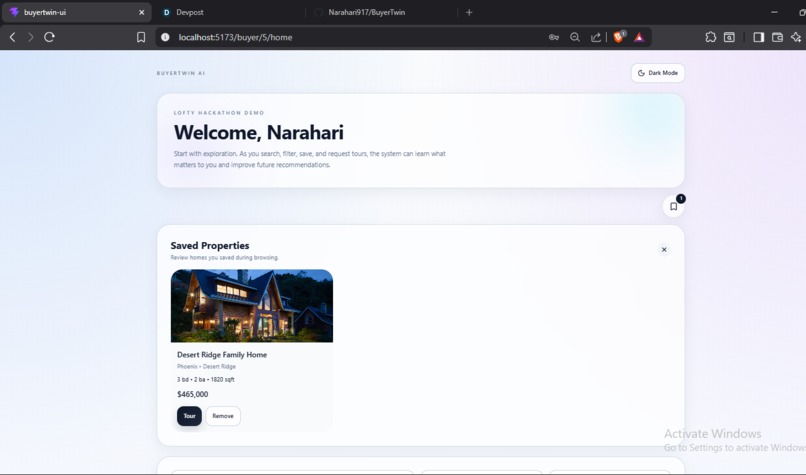
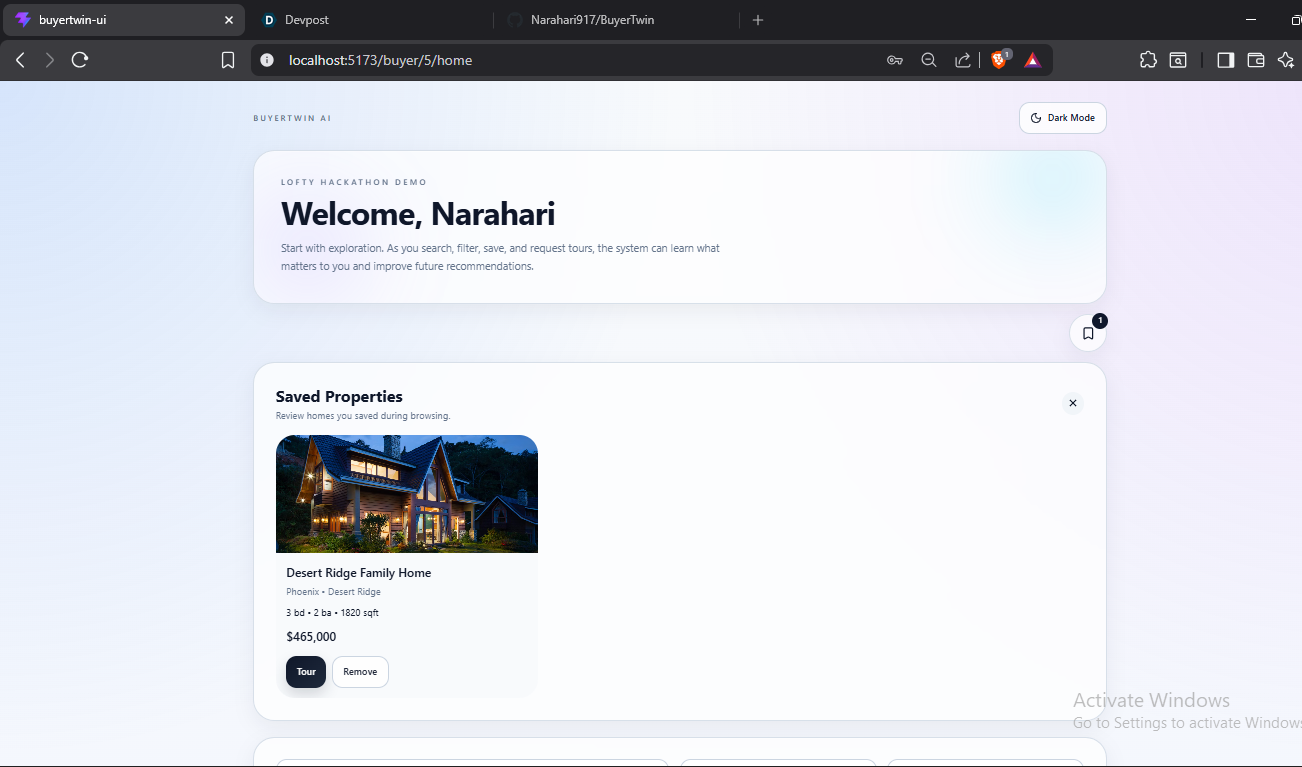
Saved properties
-
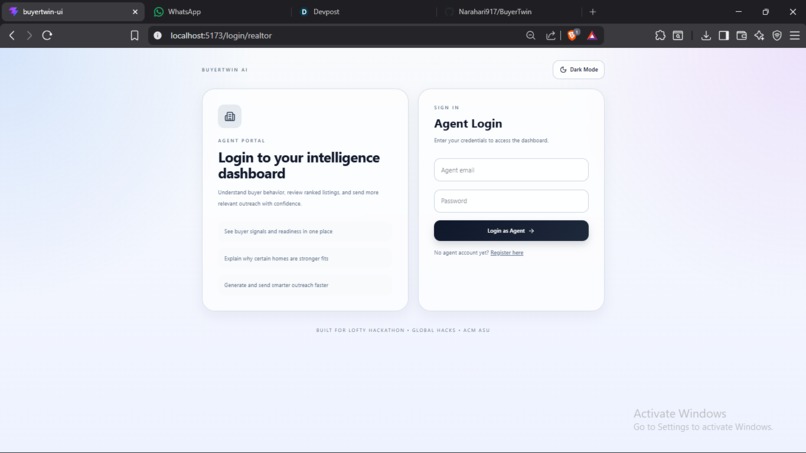
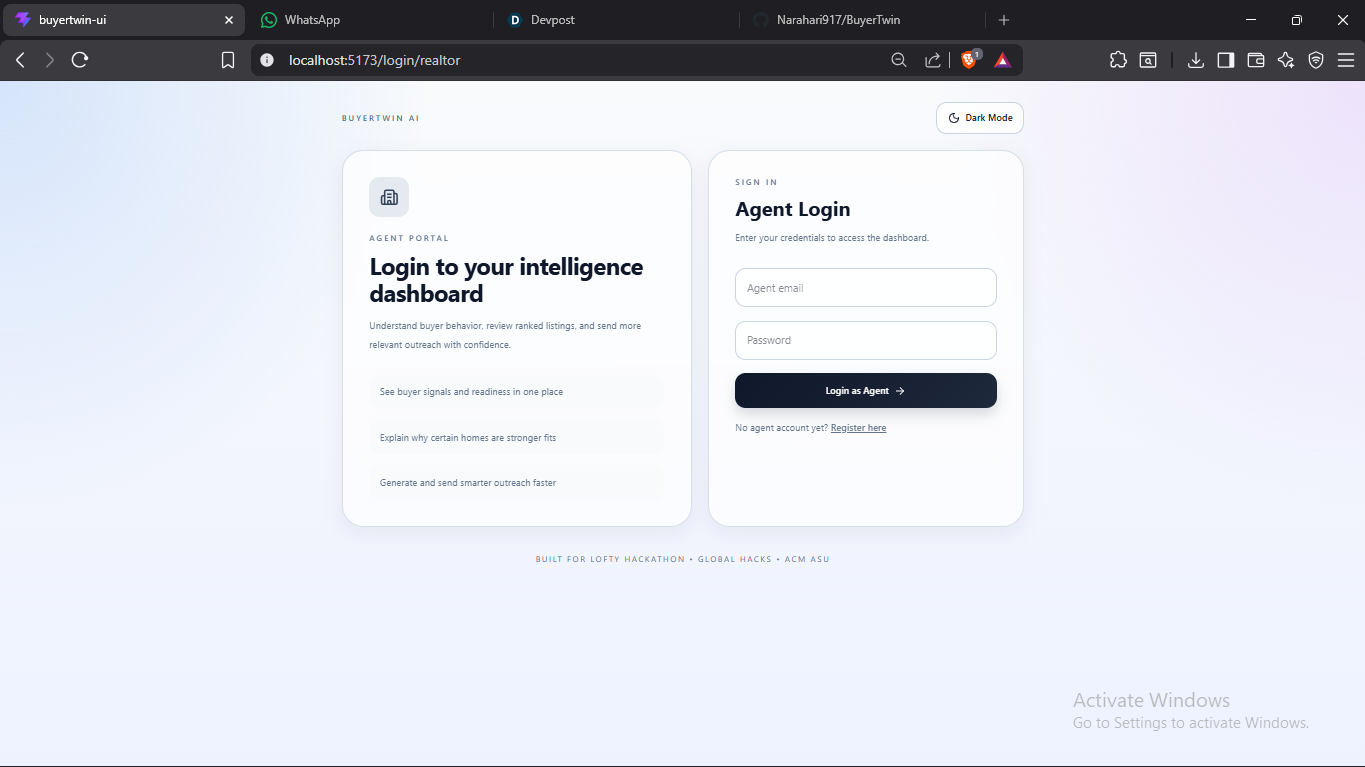
Agent Login
-
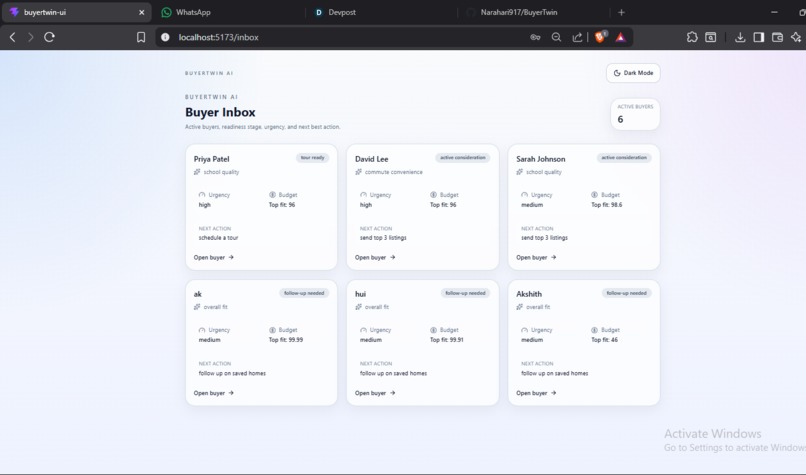
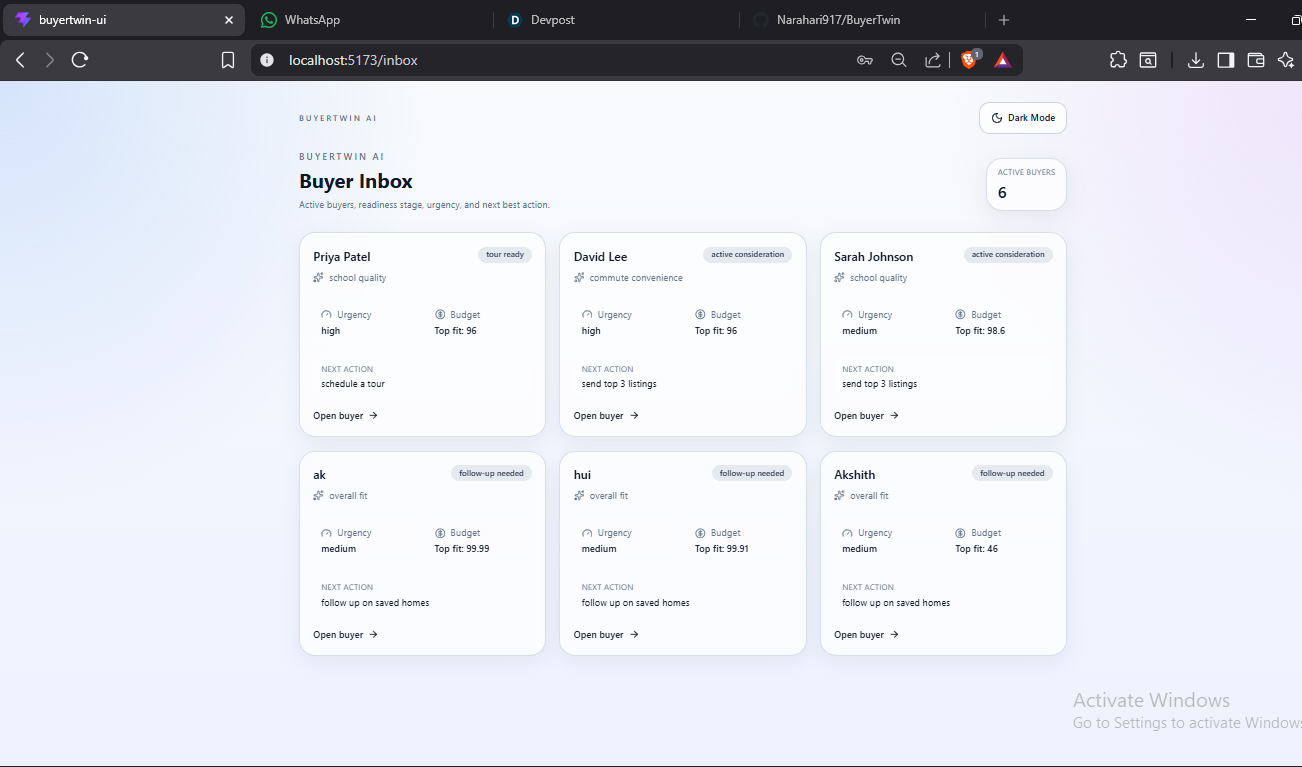
Inbox page
-
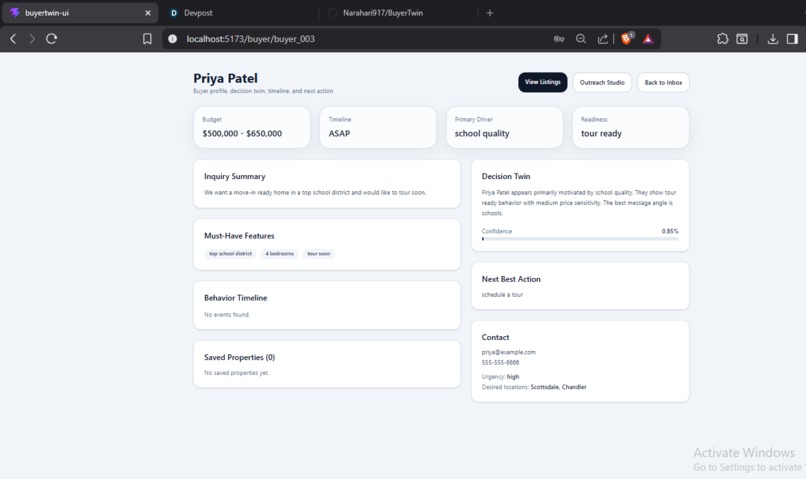
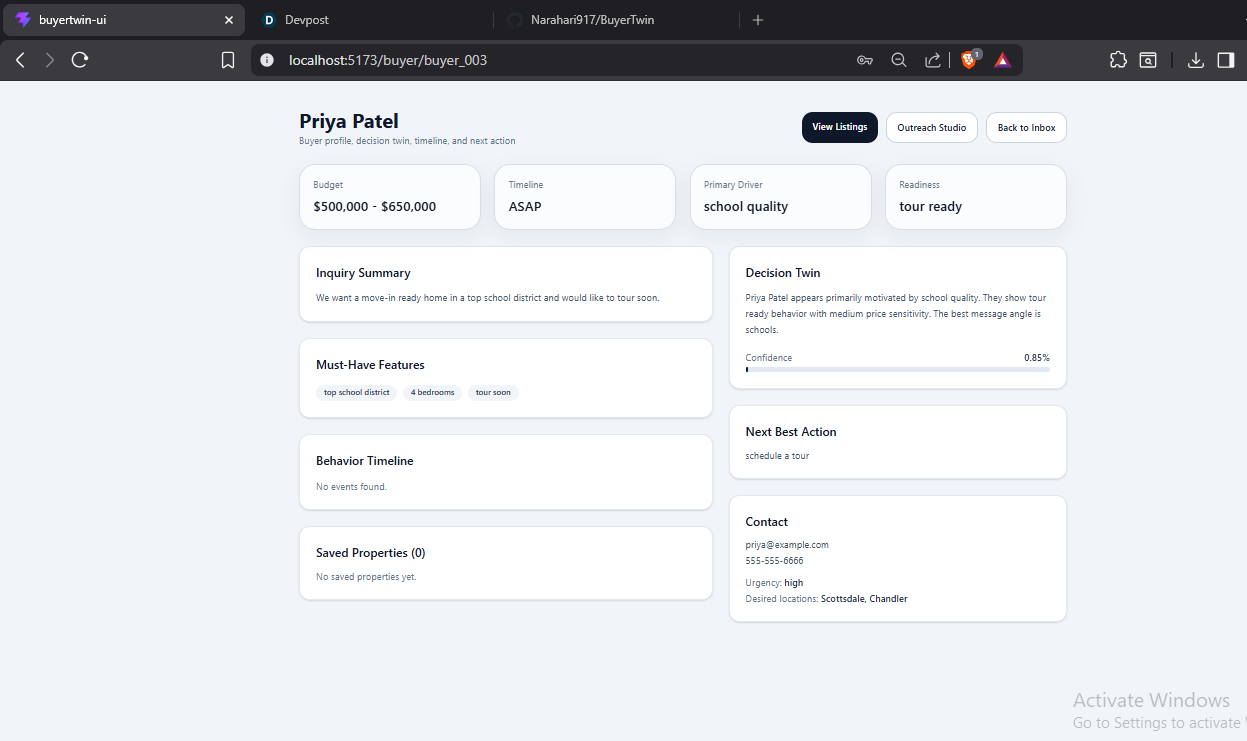
Buyer 1 details
-
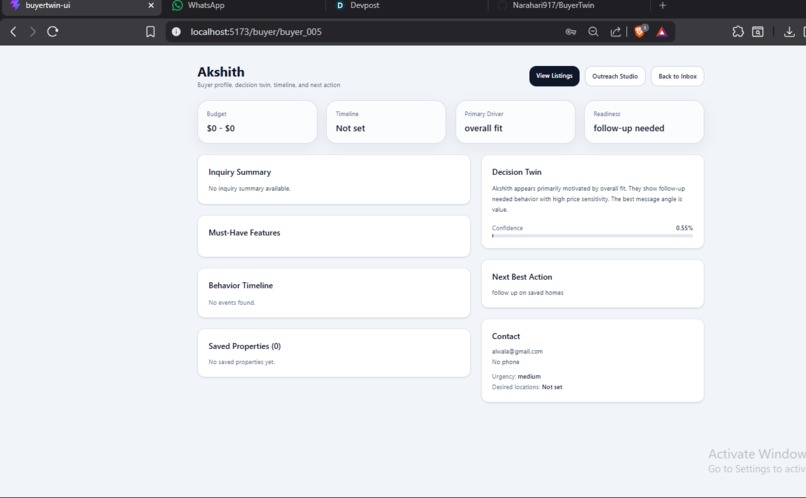
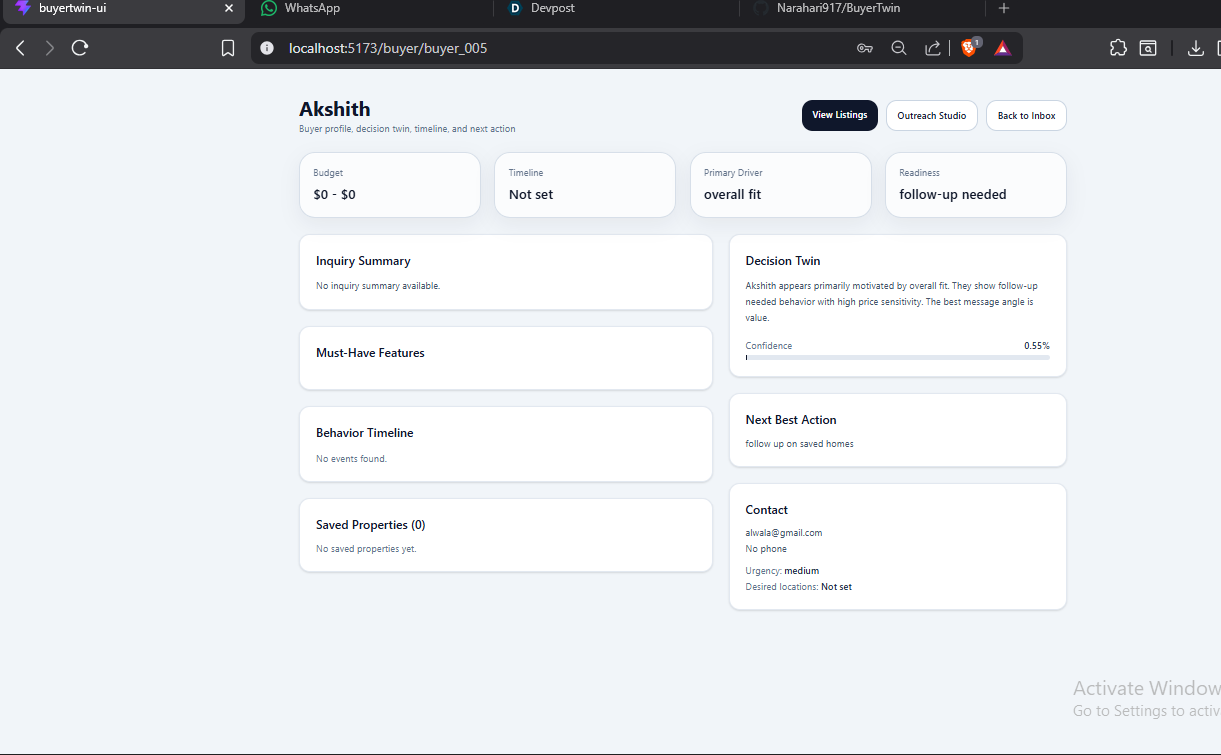
Buyer 2 details
-
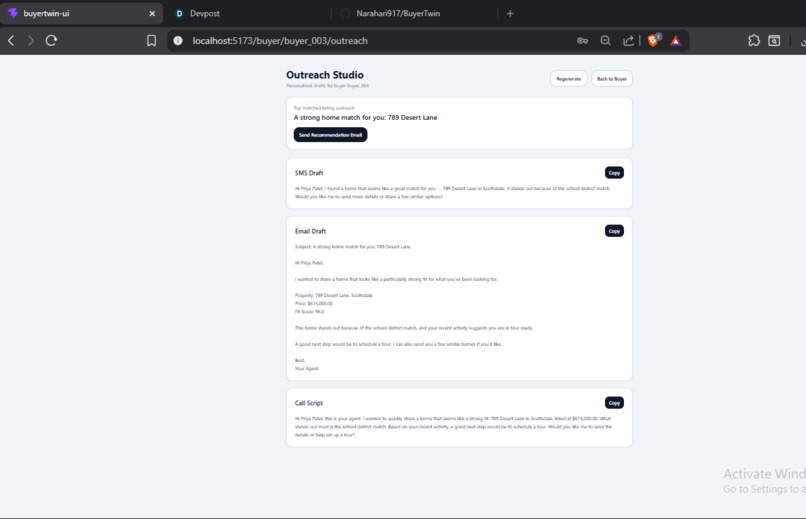
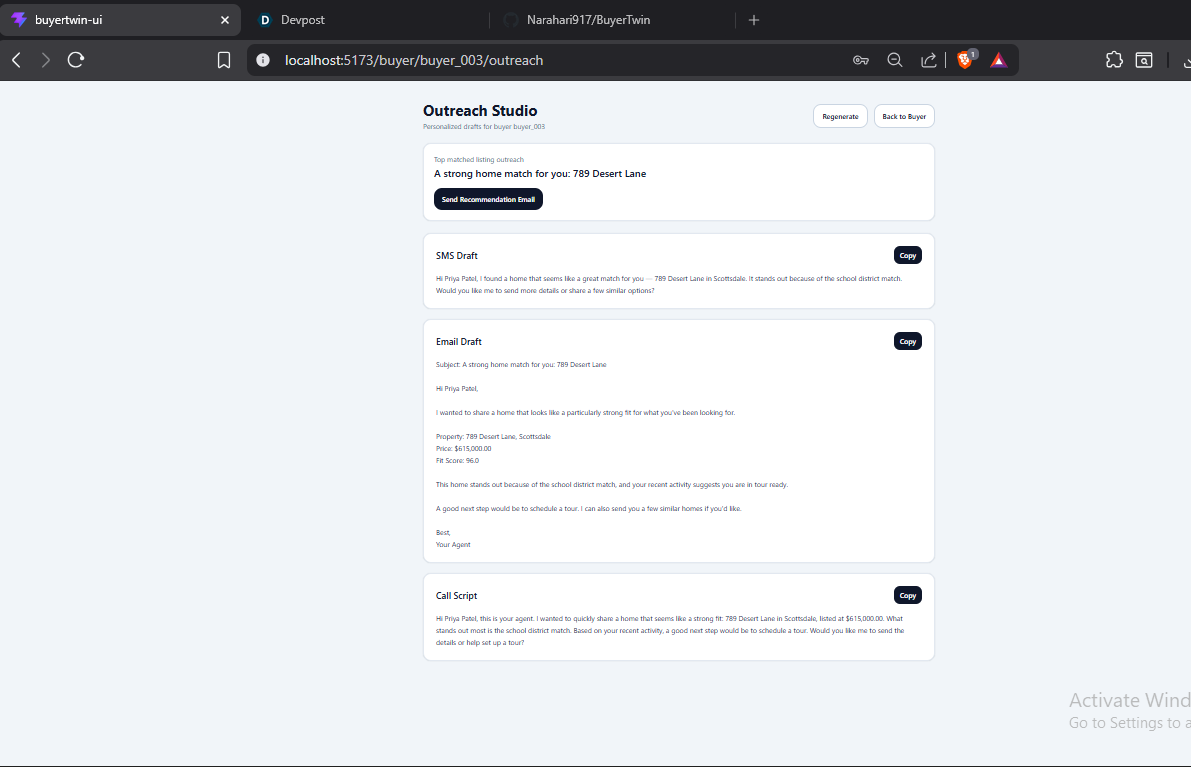
outreach details
-
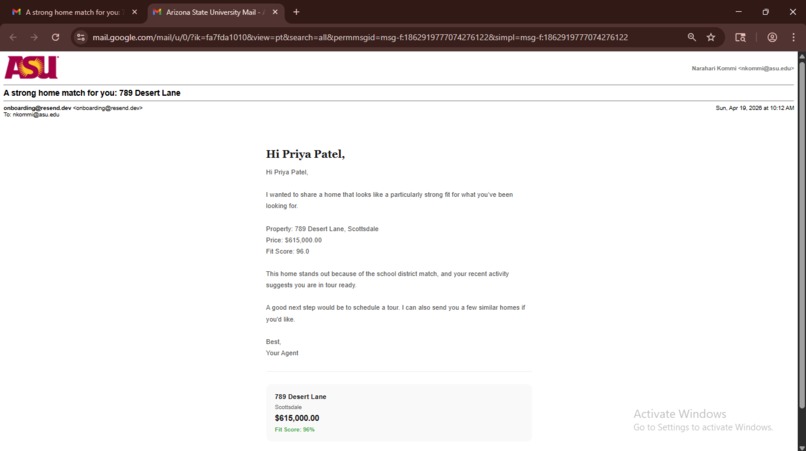
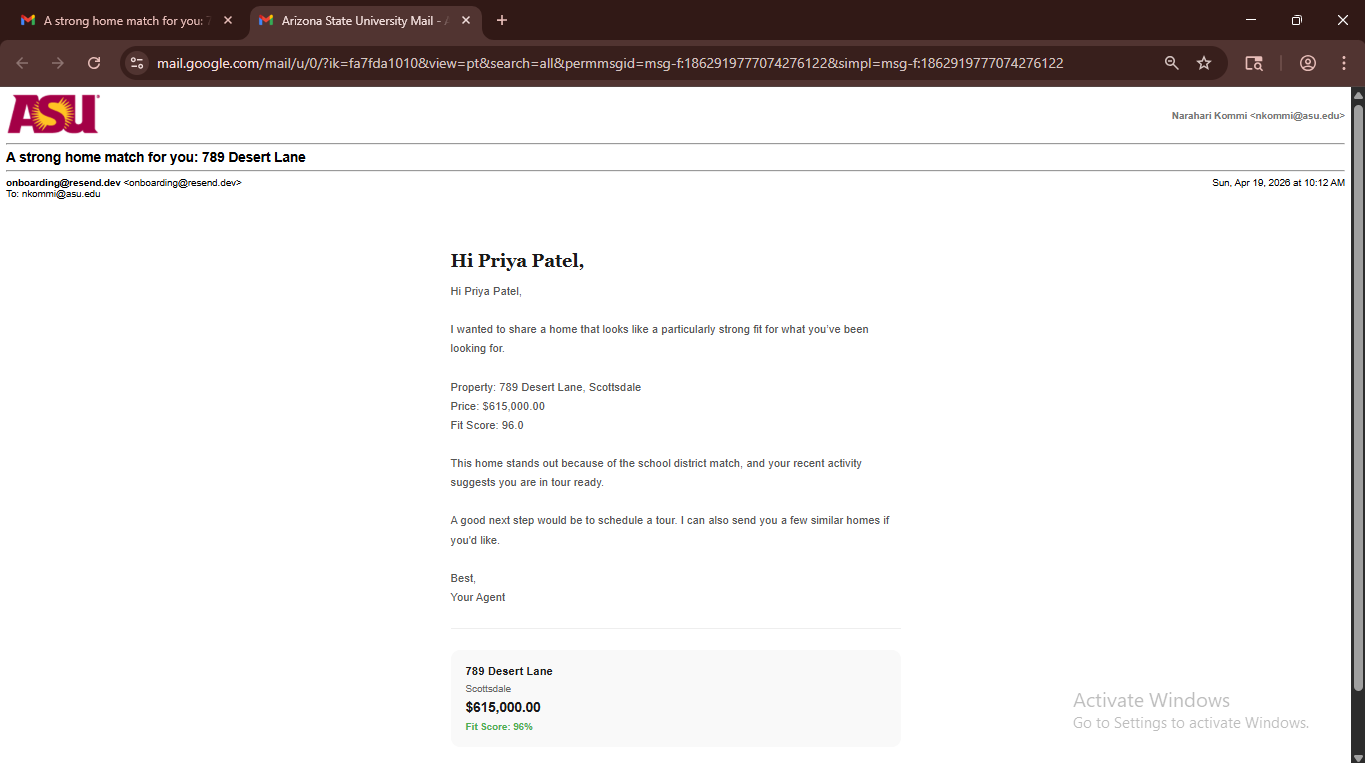
Email screenshot
Inspiration
Real estate agents already have CRMs, lead forms, listing portals, and automation tools — but they still spend too much time guessing which buyers are actually serious, which homes will resonate most, and what kind of outreach will move the conversation forward.
We were inspired by that gap. Most tools either store data or automate messages, but very few help agents understand buyer decision behavior in a practical, actionable way. We wanted to build something that acts like an AI decision copilot for agents: a system that learns from buyer activity, builds a dynamic buyer profile, ranks the best-fit listings, and helps agents respond with more context and confidence.
That idea became BuyerTwin AI.
What it does
BuyerTwin AI creates a “decision twin” for each buyer by combining structured preferences with behavioral signals such as searches, clicks, saves, and inquiries.
Using that twin, the system:
- infers what the buyer likely cares about most
- ranks listings by fit
- explains why a property matches
- estimates buyer readiness
- generates personalized outreach for the agent
Instead of treating every buyer the same, BuyerTwin helps agents prioritize the right leads, match them with the right homes, and take the right next action.
How we built it
We built BuyerTwin AI as a layered system across frontend, backend, and AI/ML components.
Frontend
We used React to build the buyer-facing and agent-facing experience, including:
- buyer and agent workflow screens
- recommendation views
- decision summaries
- outreach presentation
The goal on the frontend was clarity: show intelligence in a way that is easy to demo and easy for an agent to act on quickly.
Backend
We used FastAPI as the backend layer to manage:
- buyer and listing data
- API endpoints
- orchestration between frontend and AI services
- structured request/response handling with schema-based design
We used PostgreSQL for persistent structured data storage.
AI / ML Layer
Our intelligence layer combined different approaches for different tasks:
- XGBoost for ranking and scoring buyers/listings
- rule-based and structured feature logic for inferred preferences
- an LLM workflow for personalized outreach generation and natural-language summaries
This hybrid setup was important for us. We did not want to use generative AI for everything. Instead, we used structured ML for ranking and decision support, and used LLMs where language generation actually adds value.
Challenges we ran into
One of the biggest challenges was deciding where AI should be used and where it should not.
At first, it was tempting to push too much into the generative layer. But for a product like this, trust matters. Agents need outputs that feel grounded and explainable. So we shifted toward a more practical architecture:
- scoring and ranking from structured logic / ML
- generation only for summaries and outreach
Another challenge was turning a broad idea into a demo-friendly MVP. Real estate workflows are complex, and there are many directions we could have taken — recommendations, buyer psychology, financial readiness, CRM automation, and more. We had to stay disciplined and focus on one sharp use case: helping agents understand buyers better and act faster.
We also faced the common hackathon challenge of balancing:
- product design
- model logic
- backend integration
- presentation quality
Making all of those pieces work together in a short time was one of the hardest parts of the project.
Accomplishments that we're proud of
We are especially proud that BuyerTwin AI is not just a chatbot or a search filter.
It is a more complete intelligence workflow:
- it interprets buyer behavior
- translates that into recommendations
- and turns those insights into action for the agent
We are also proud of the architecture choice. Using XGBoost for ranking and a separate LLM-powered generation layer made the system feel more realistic, trustworthy, and product-oriented.
Finally, we are proud that the project was built as a coherent end-to-end concept: not just a model, not just a UI, but a workflow that demonstrates how AI could fit into an actual real estate product.
What we learned
This project taught us a lot about building AI-native products beyond just calling an LLM.
We learned:
- when structured ML is more appropriate than generation
- how important explainability is in decision-support products
- how much product value comes from workflow design, not just model quality
- how to connect frontend, backend, and AI layers into one usable experience
We also learned that in hackathons, simplicity wins. A focused, clear product with strong reasoning behind the architecture is often more powerful than a system that tries to do everything.
What's next for BuyerTwin AI
There are several directions we would explore next:
- deeper CRM integration
- live behavioral event ingestion
- stronger recommendation explainability
- buyer readiness tracking over time
- team analytics for brokerages
- tighter agent workflow integration inside existing platforms like Lofty
Longer term, we see BuyerTwin AI as part of a broader category of decision intelligence for real estate — helping agents not just manage leads, but truly understand them.
Built With
- api
- css
- fastapi
- groq
- html
- javascript
- postgresql
- python
- react
- xgboost

Log in or sign up for Devpost to join the conversation.