-
-
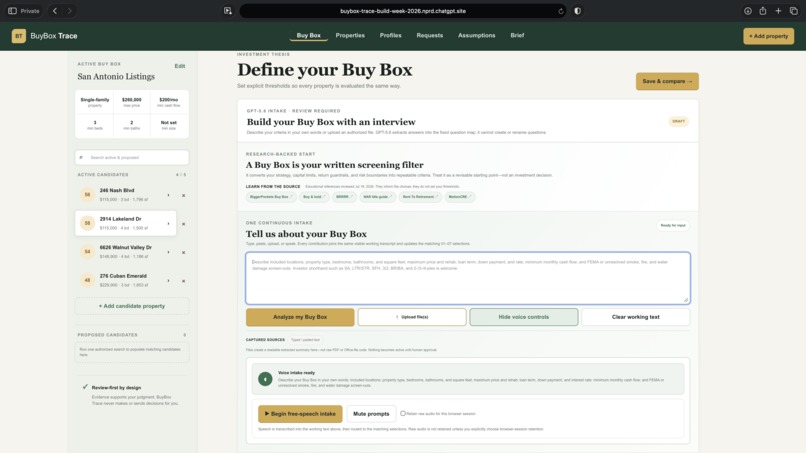
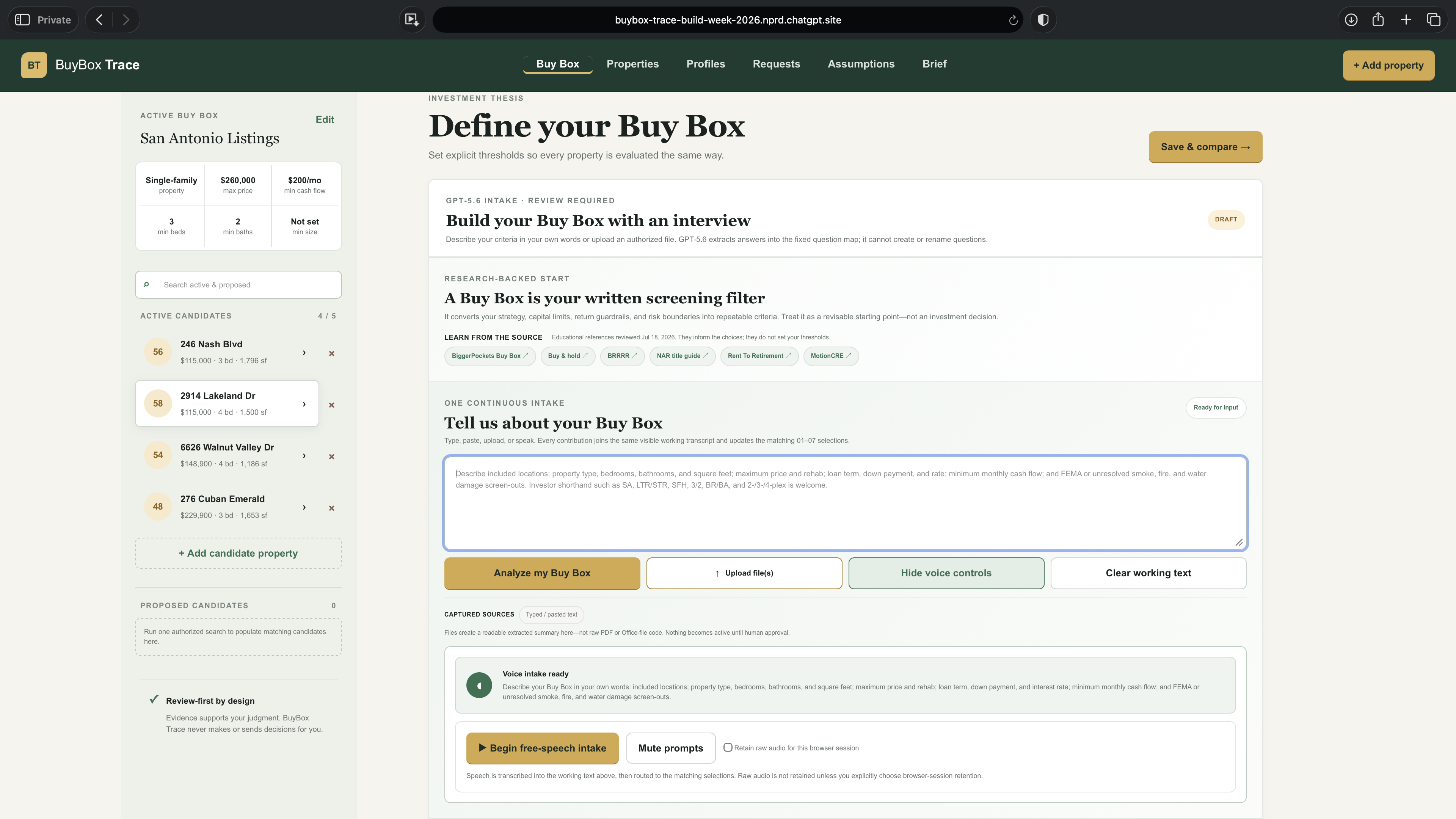
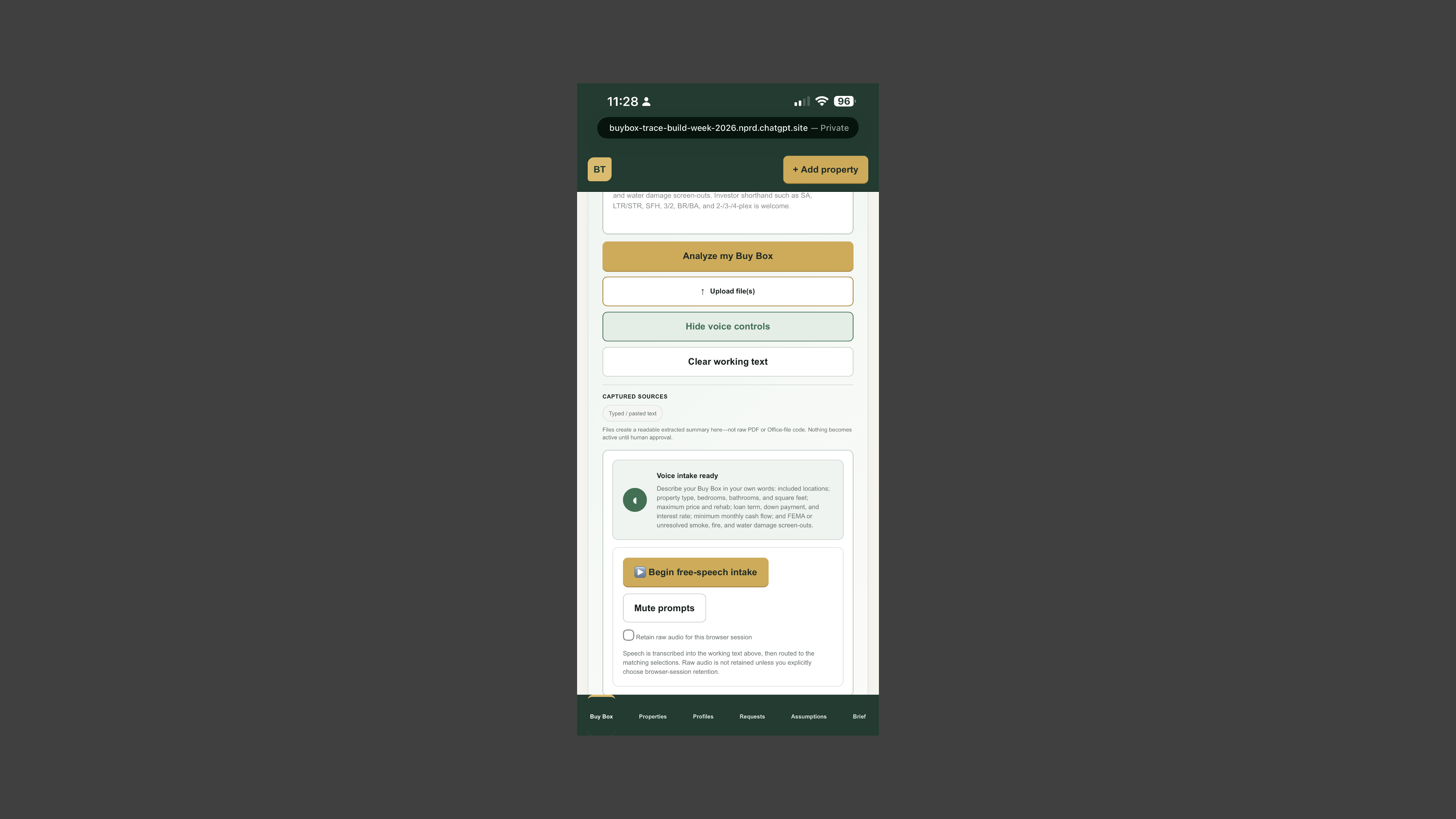
GPT-5.6 turns speech, text, documents, screenshots, and notes into a structured Buy Box for human approval.
-
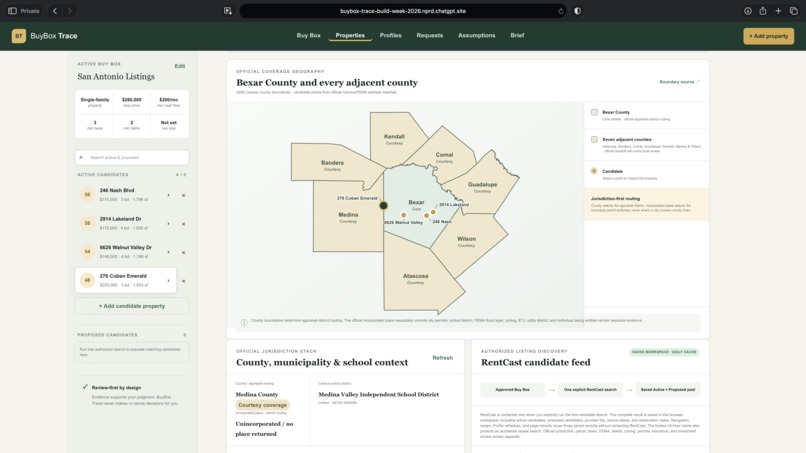
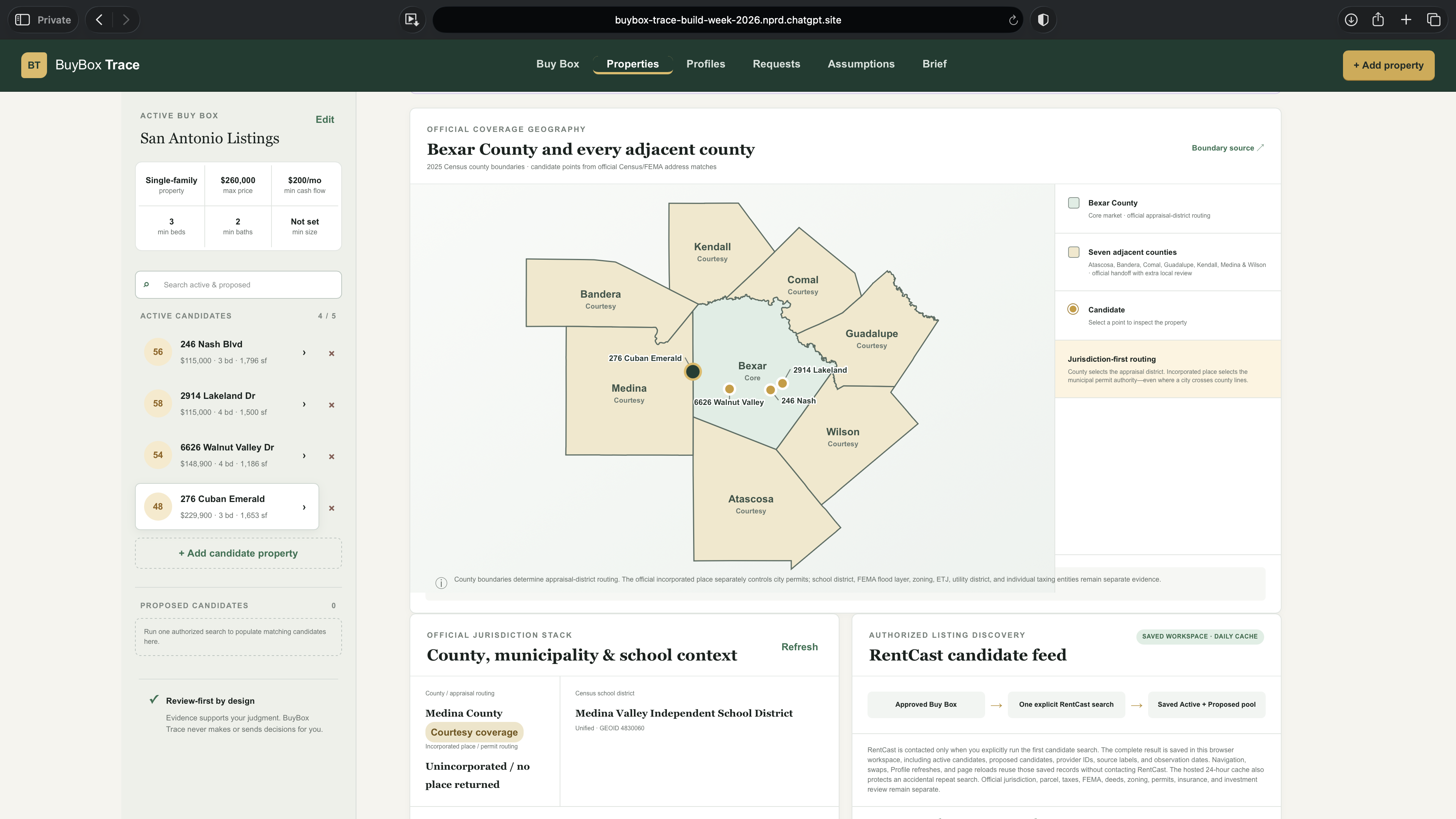
BuyBox Trace routes a San Antonio mailing address to the correct authority: Medina County, not assumed Bexar County.
-
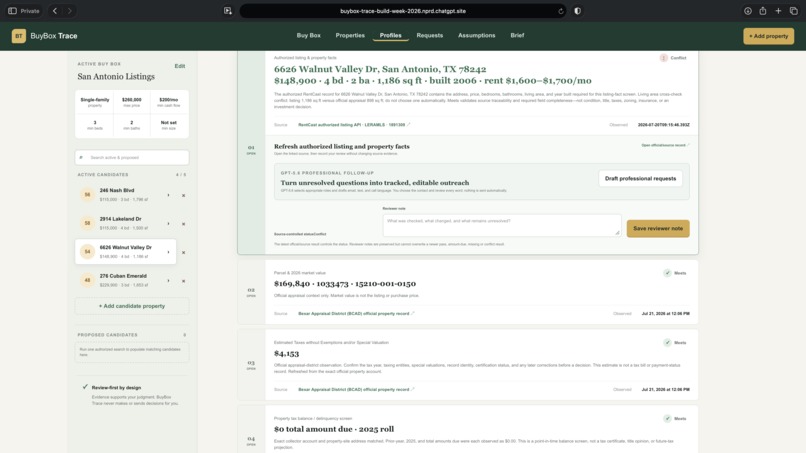
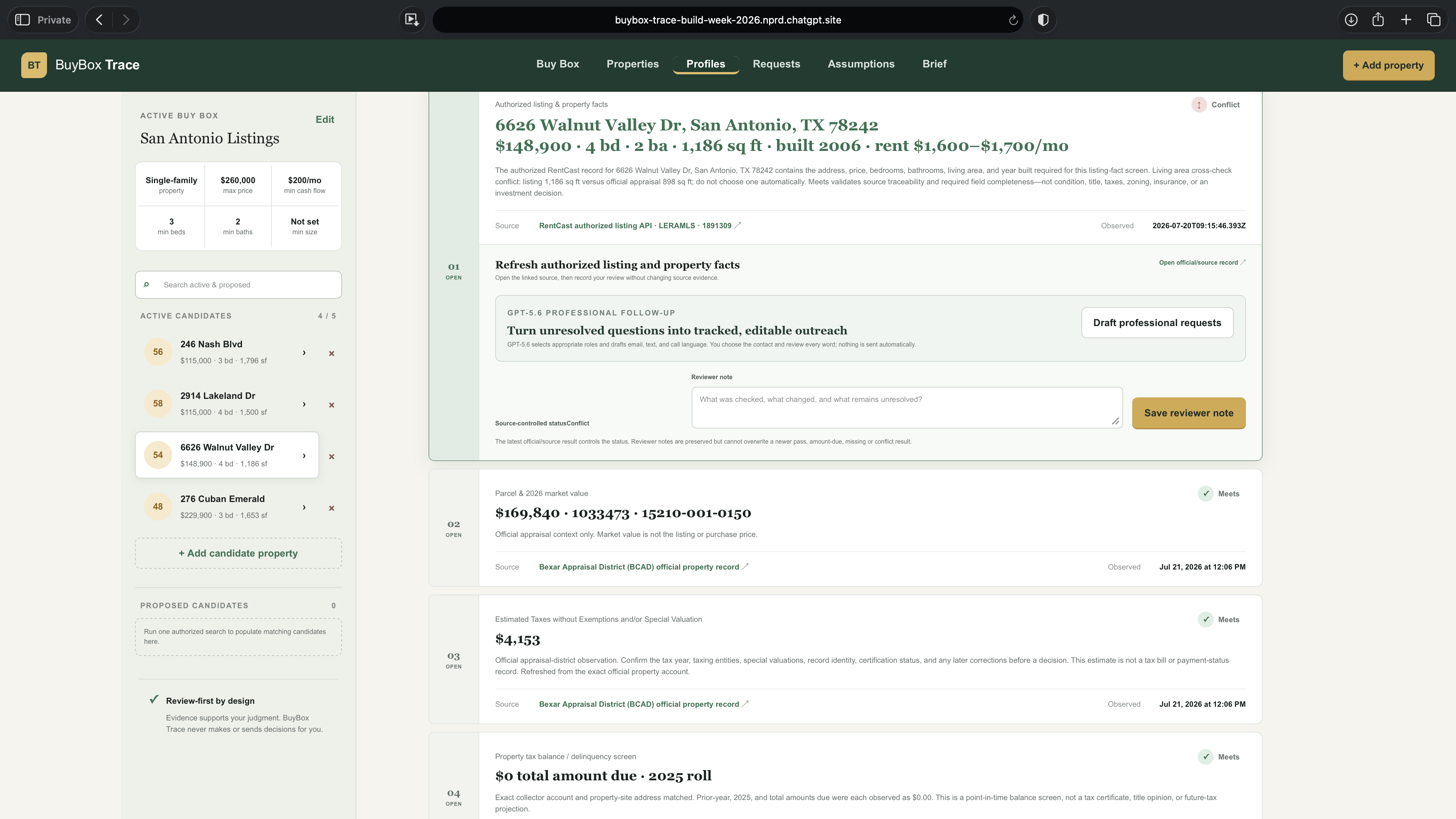
RentCast says 1,186 sq ft; BCAD says 898. BuyBox Trace preserves both, flags the conflict, and requires review.
-
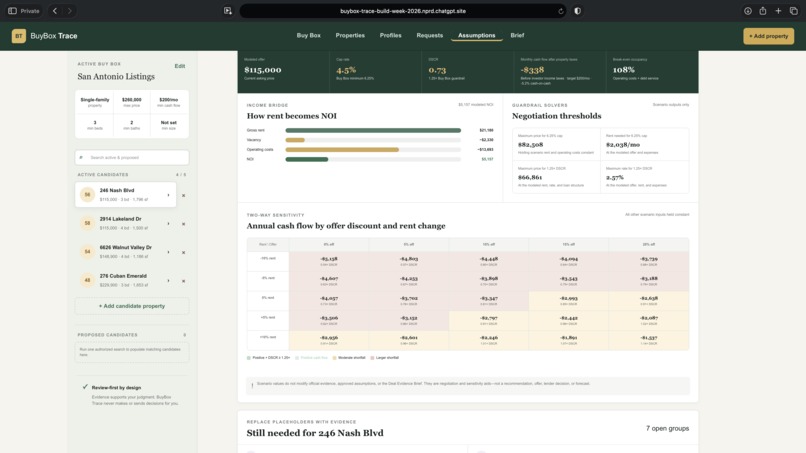
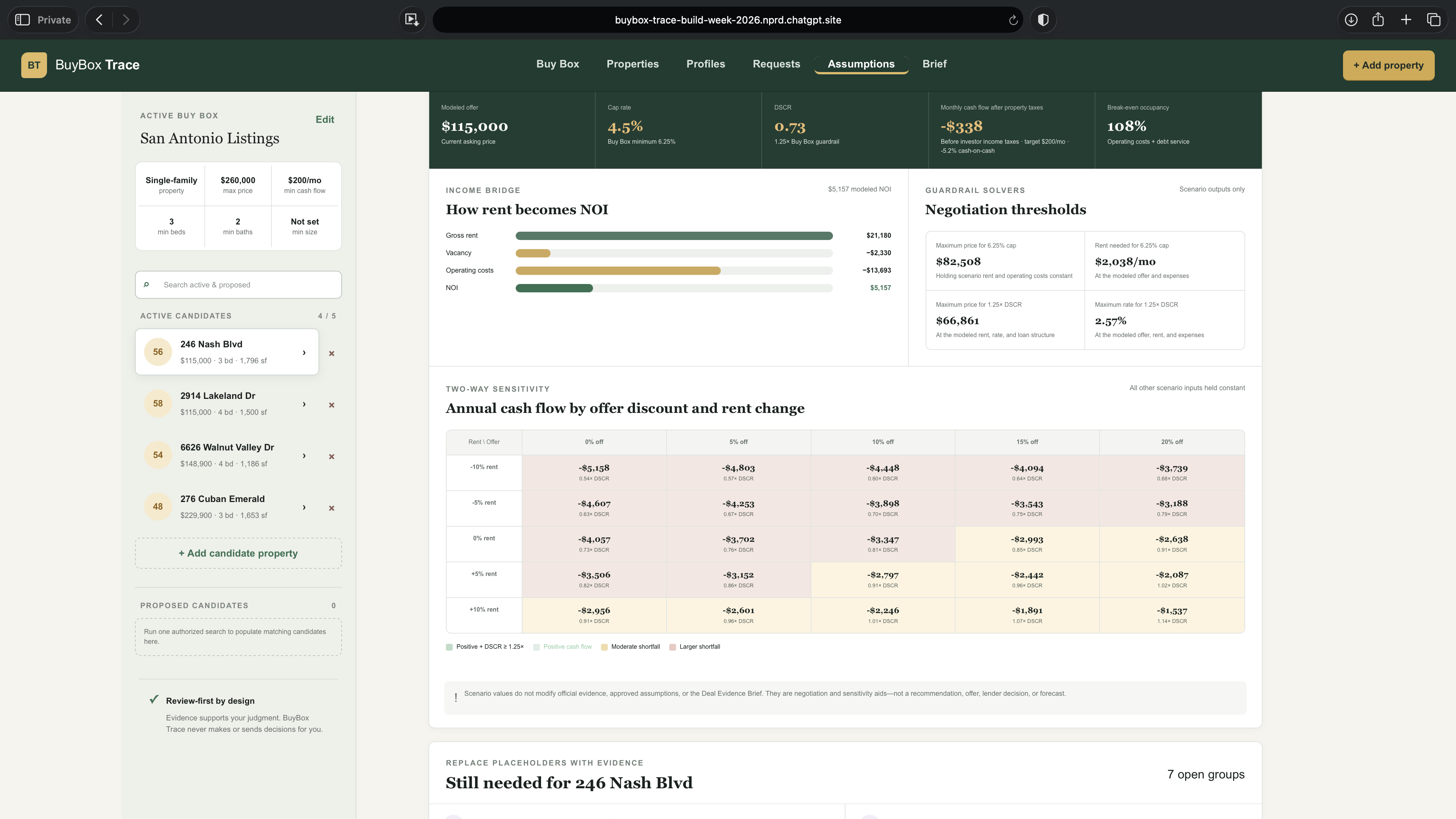
Approved assumptions drive NOI, cash flow, cap rate, DSCR, negotiation thresholds, and sensitivity analysis.
-
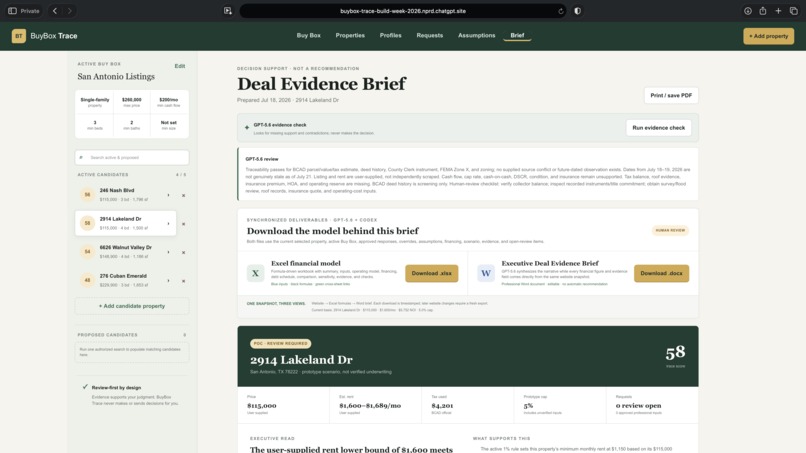
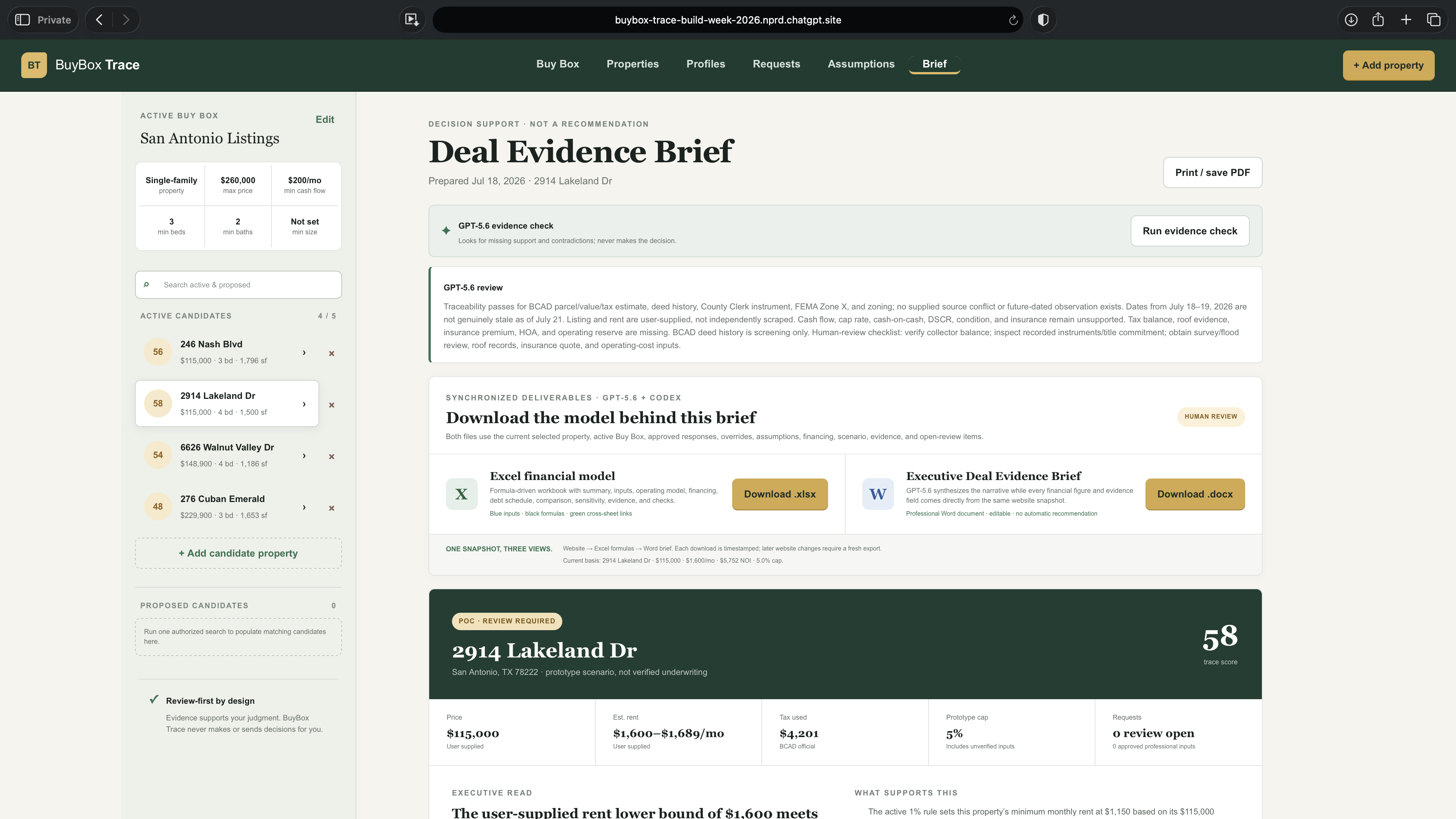
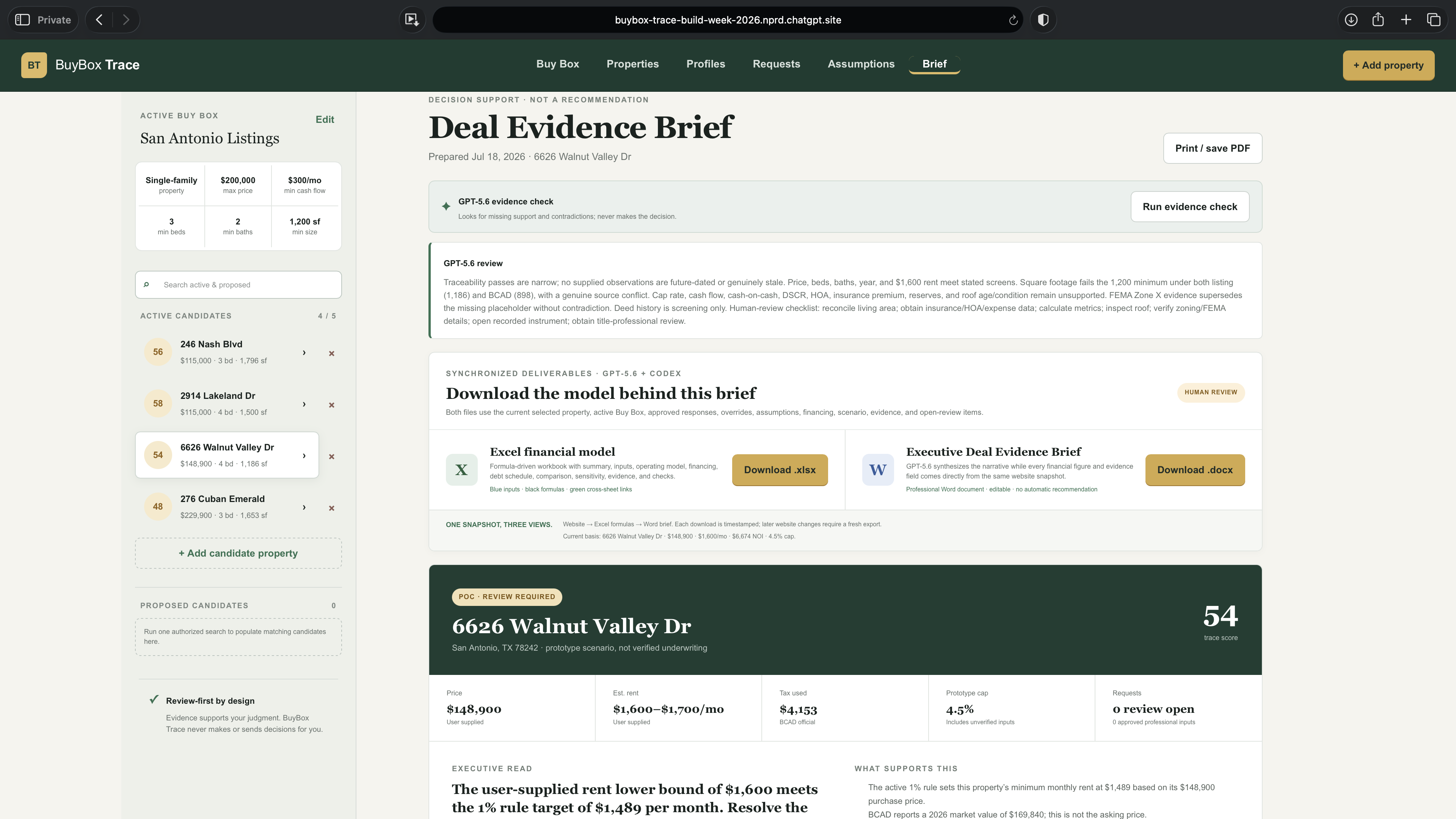
One evidence snapshot produces aligned Excel financial modeling and an editable Word Deal Evidence Brief.
-
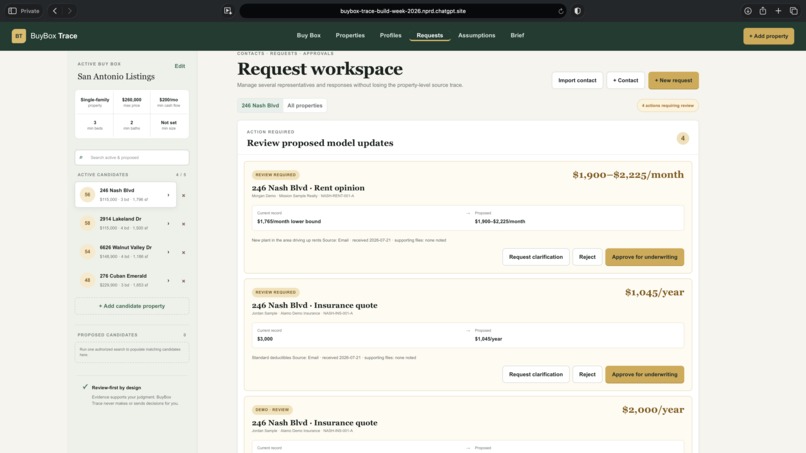
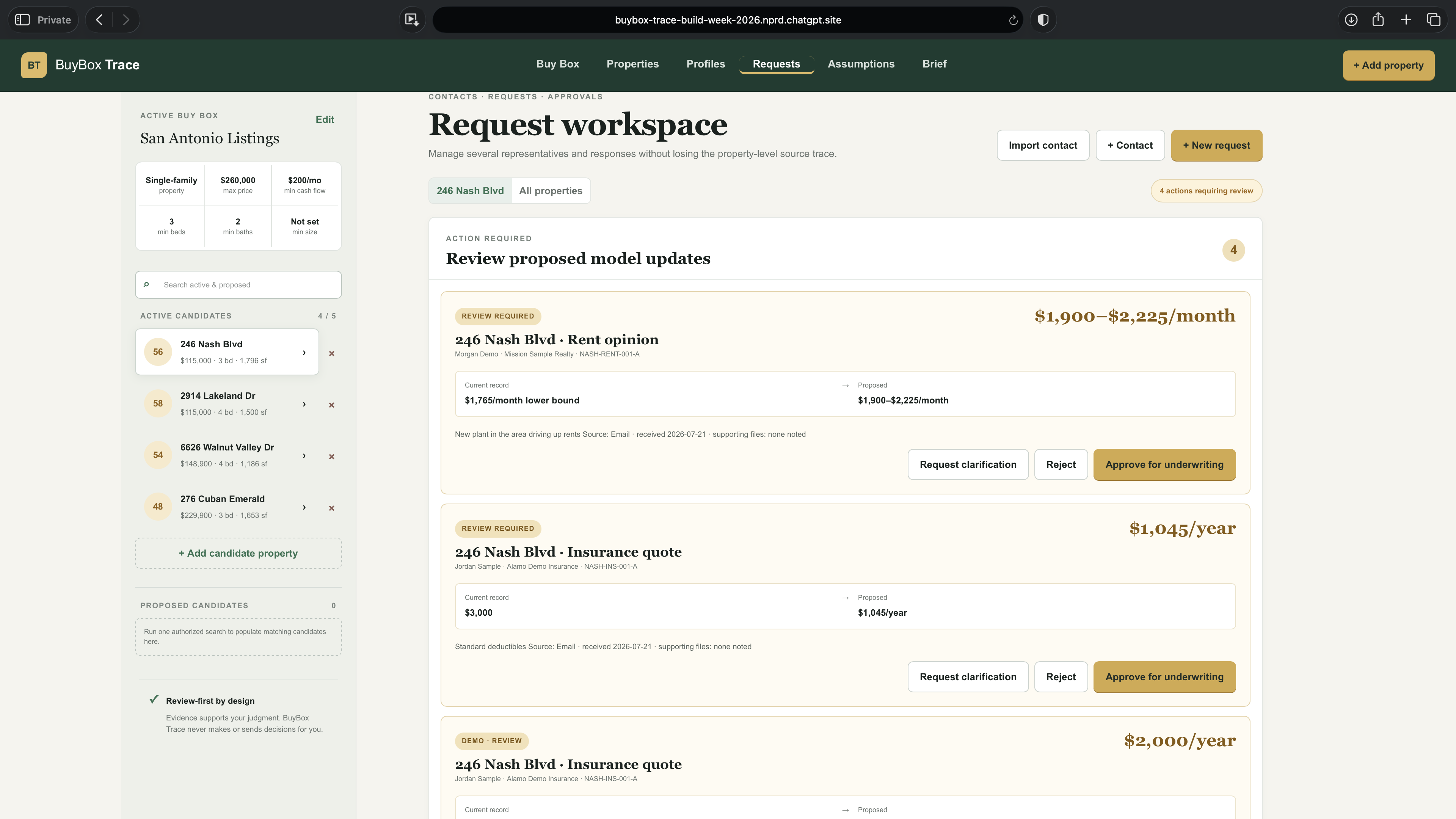
GPT-5.6 proposes rent and insurance updates; the investor must approve, reject, or request clarification.
-
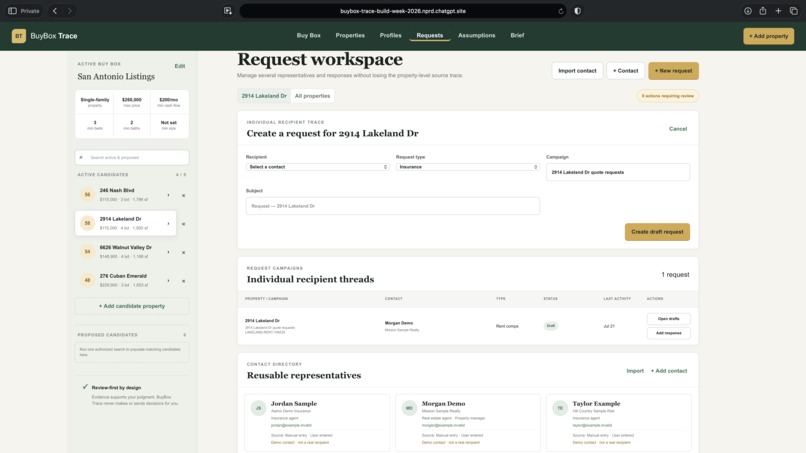
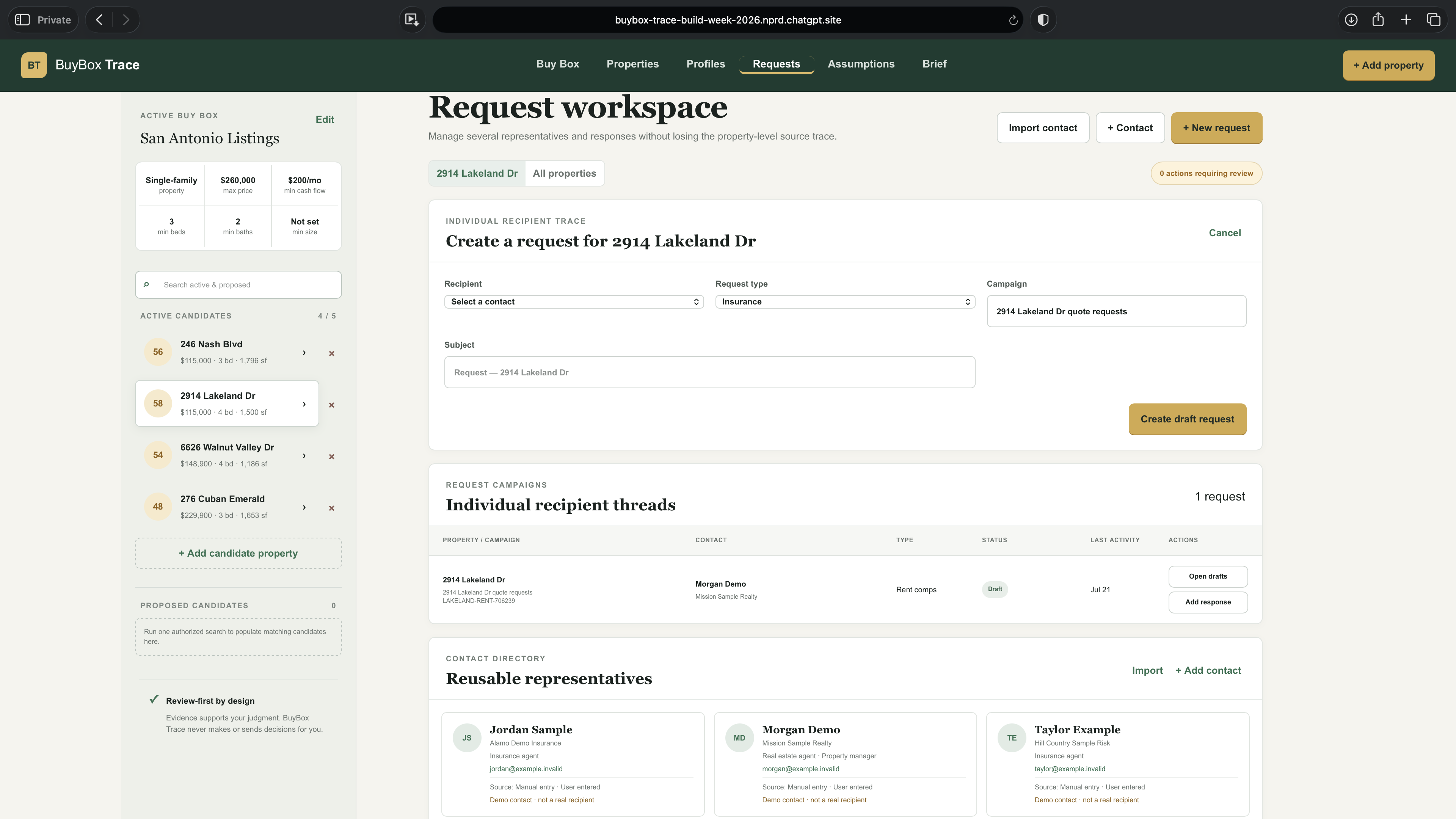
Create property-specific requests, choose a professional, and keep every outreach thread tied to its source record.
-
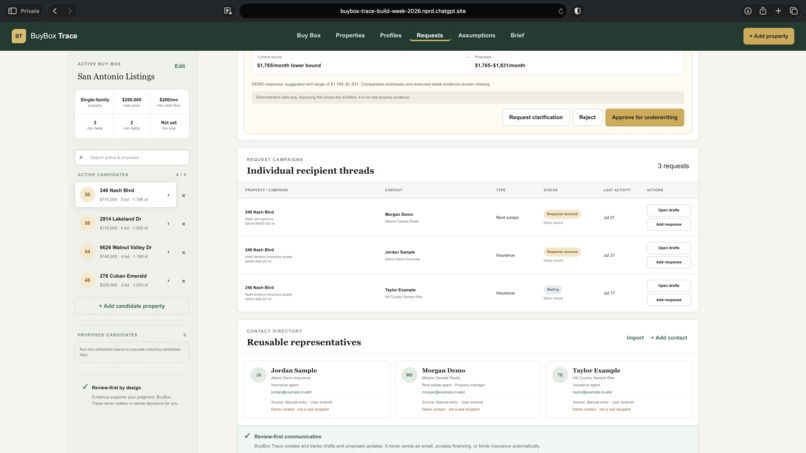
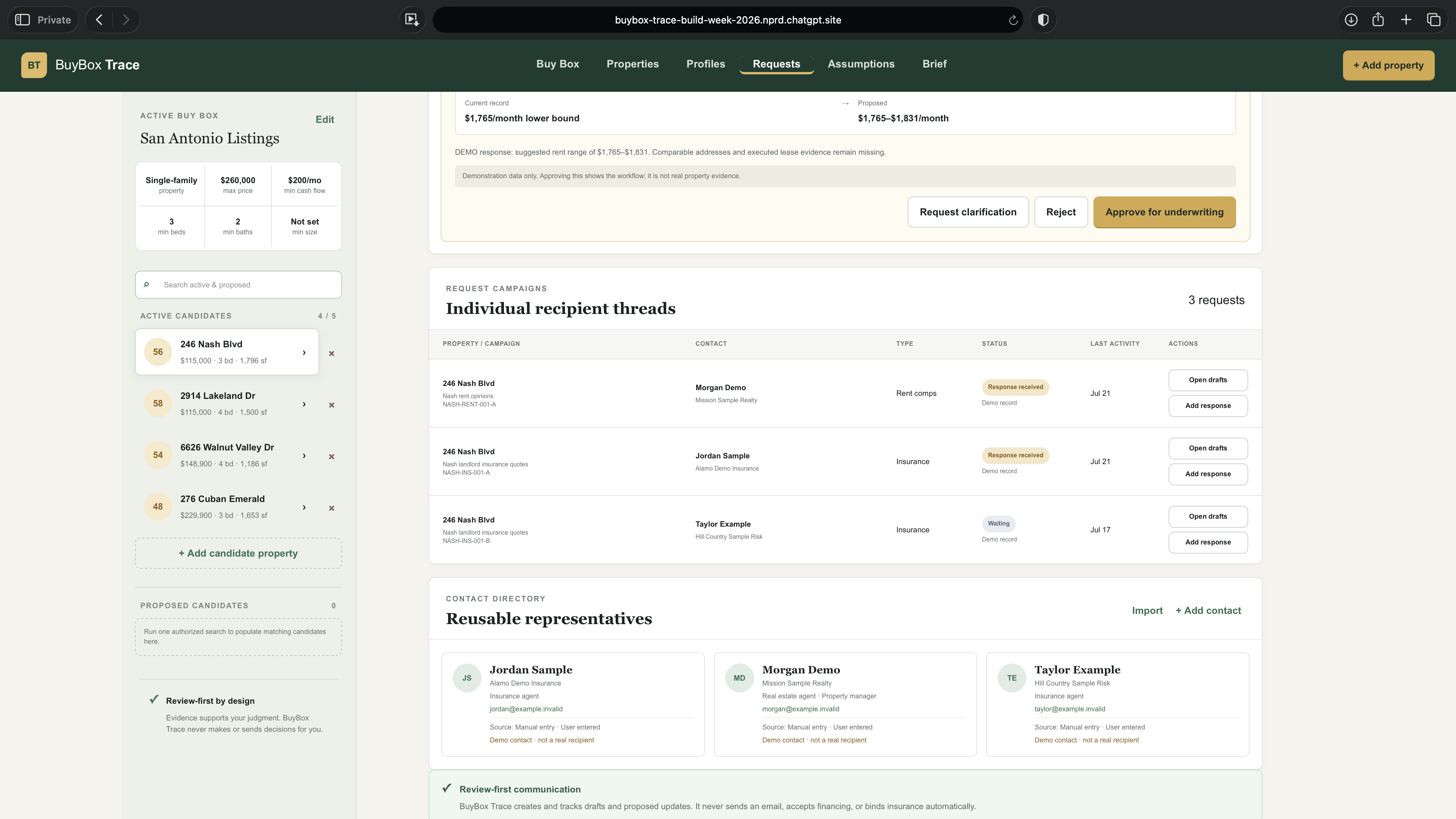
Track recipients, request types, response status, and proposed model updates without losing the property-level audit trail.
-
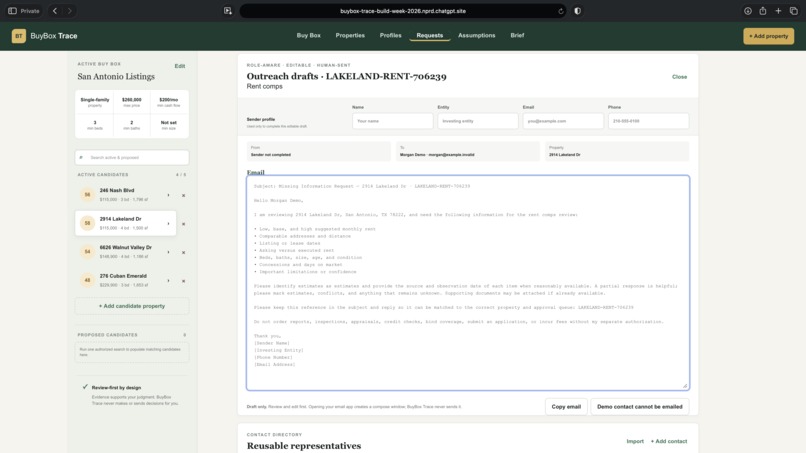
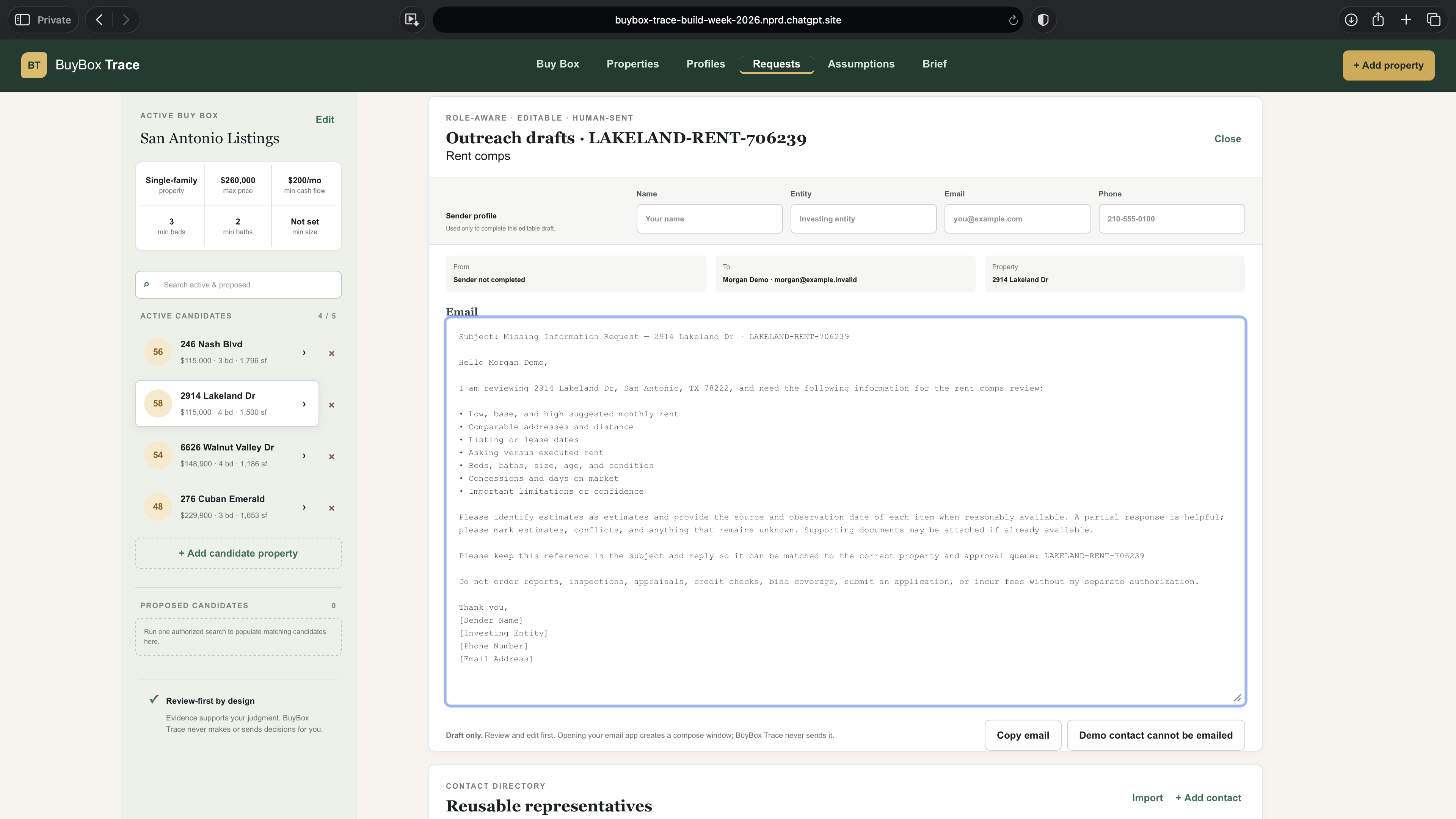
GPT-5.6 drafts editable, role-aware requests for missing evidence; the investor reviews and sends every message.
-
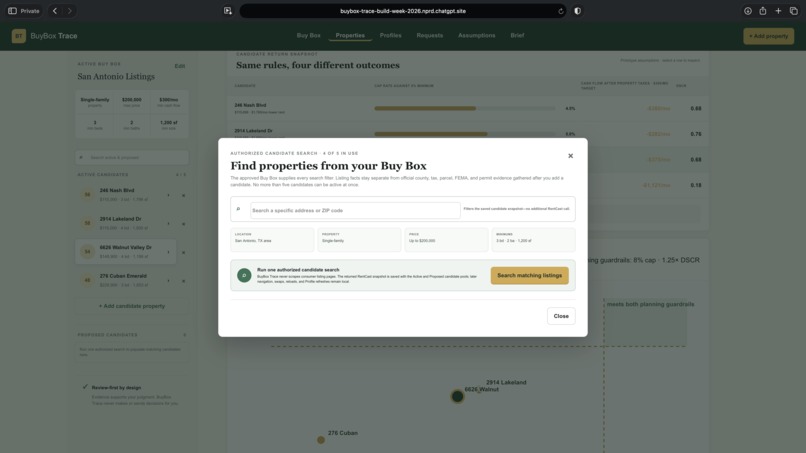
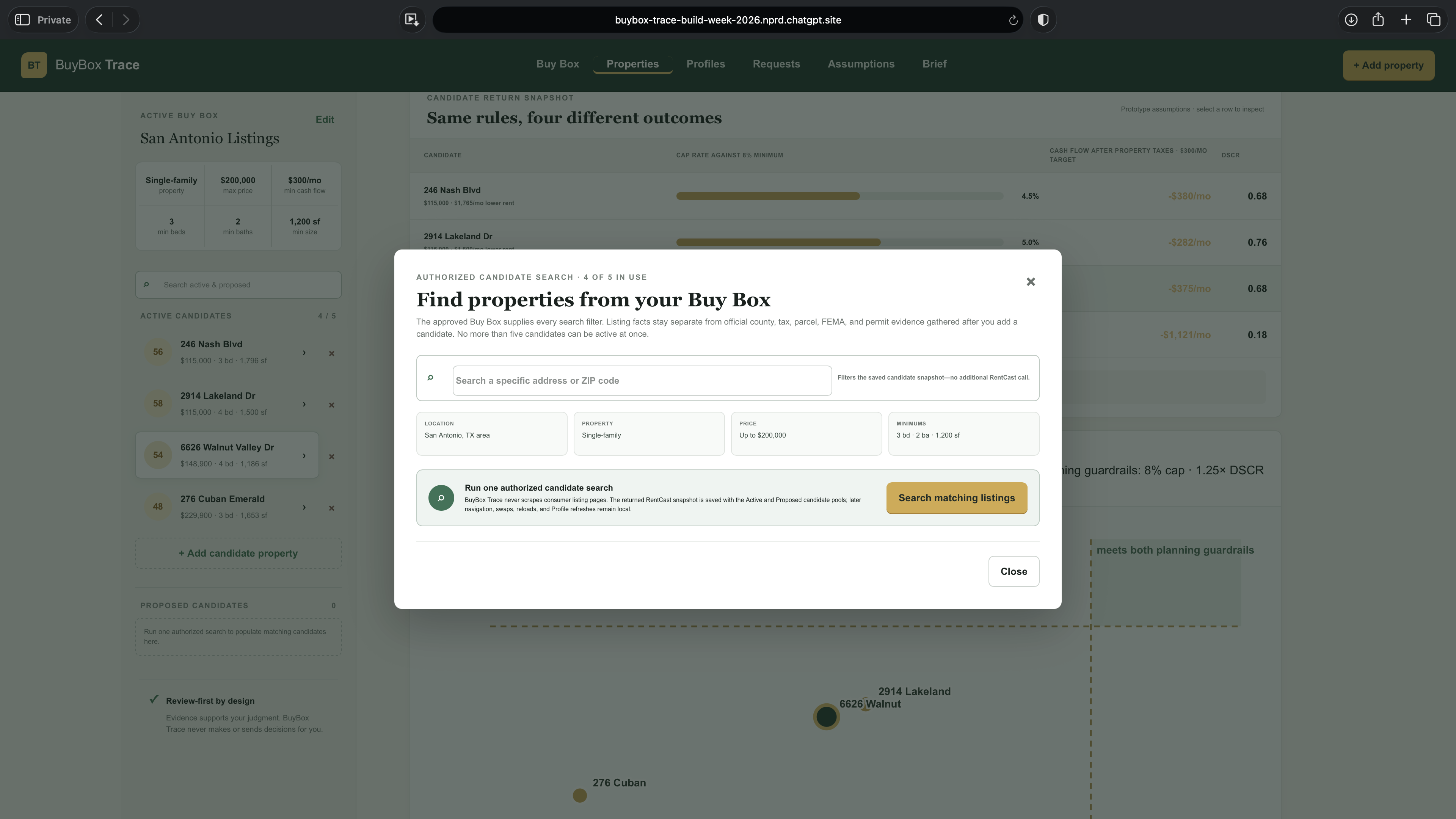
Apply the approved Buy Box to an authorized listing search, then save results for active and proposed candidate review.
-
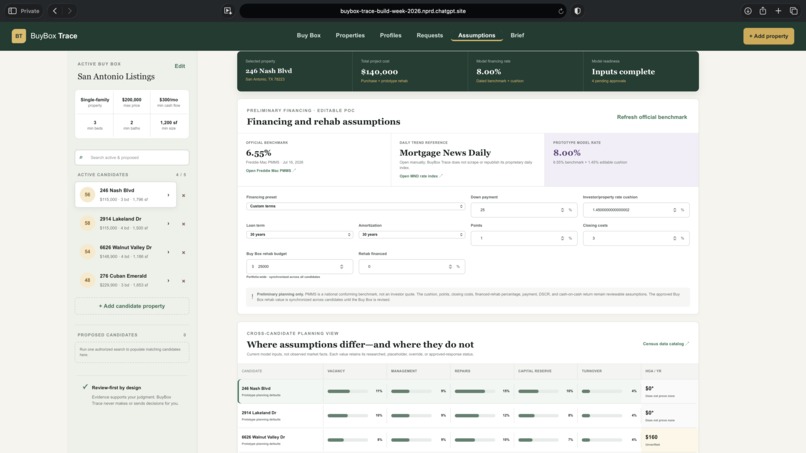
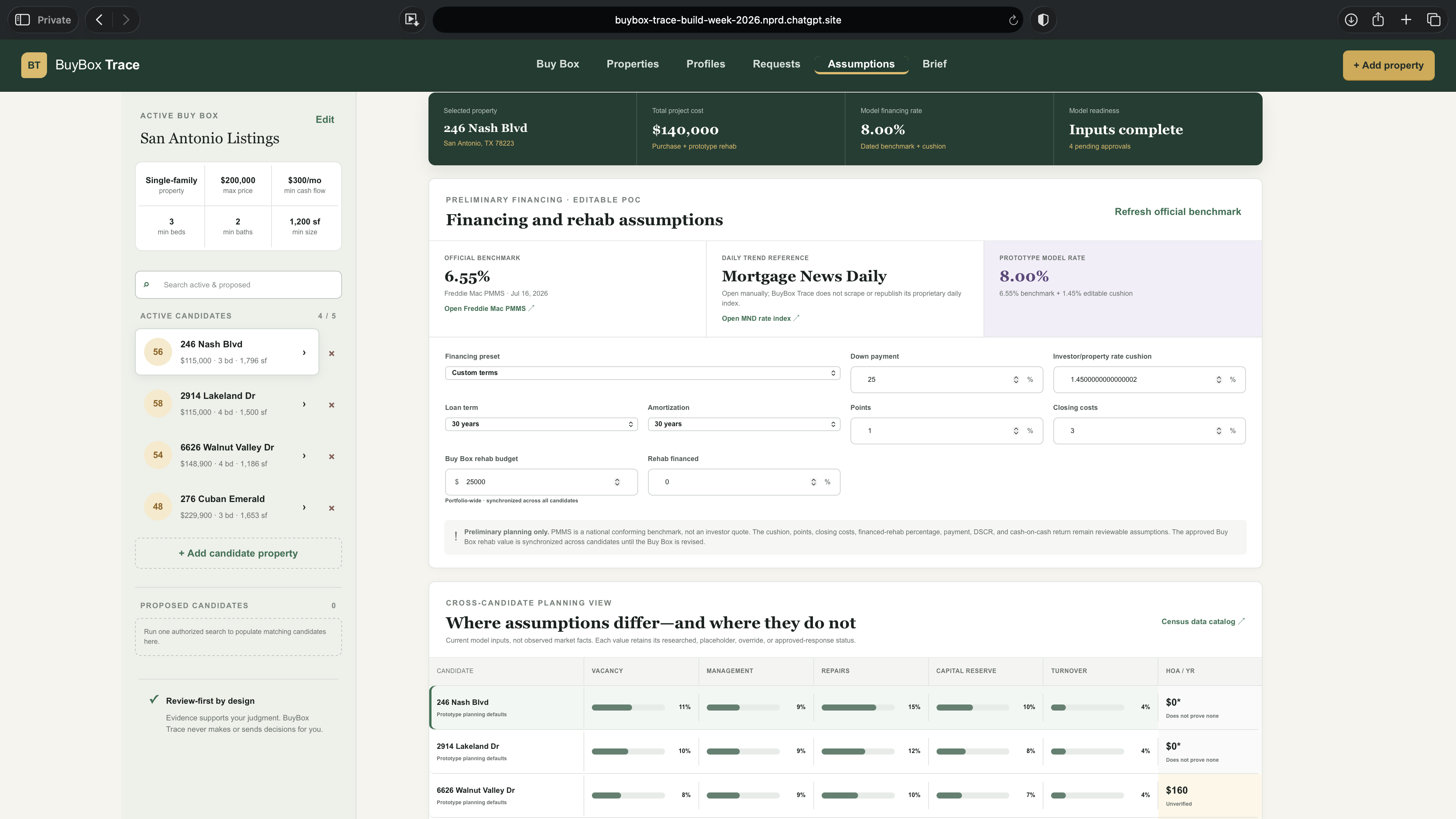
Combine dated rate benchmarks with editable financing, rehab, vacancy, management, repairs, reserves, turnover, and HOA assumptions.
-
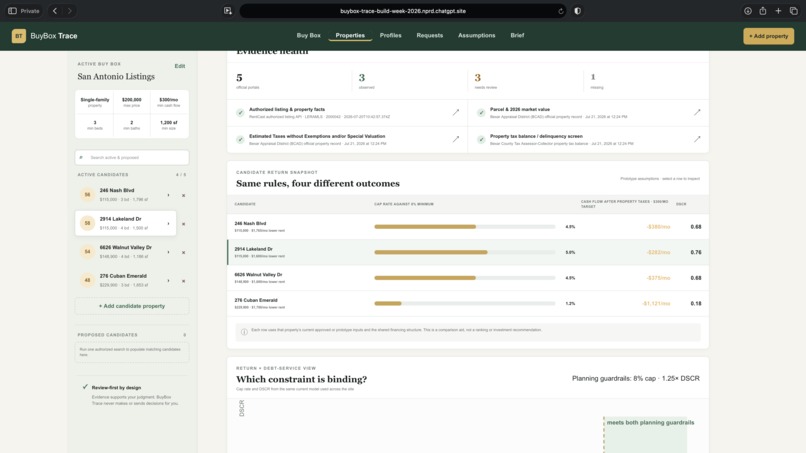
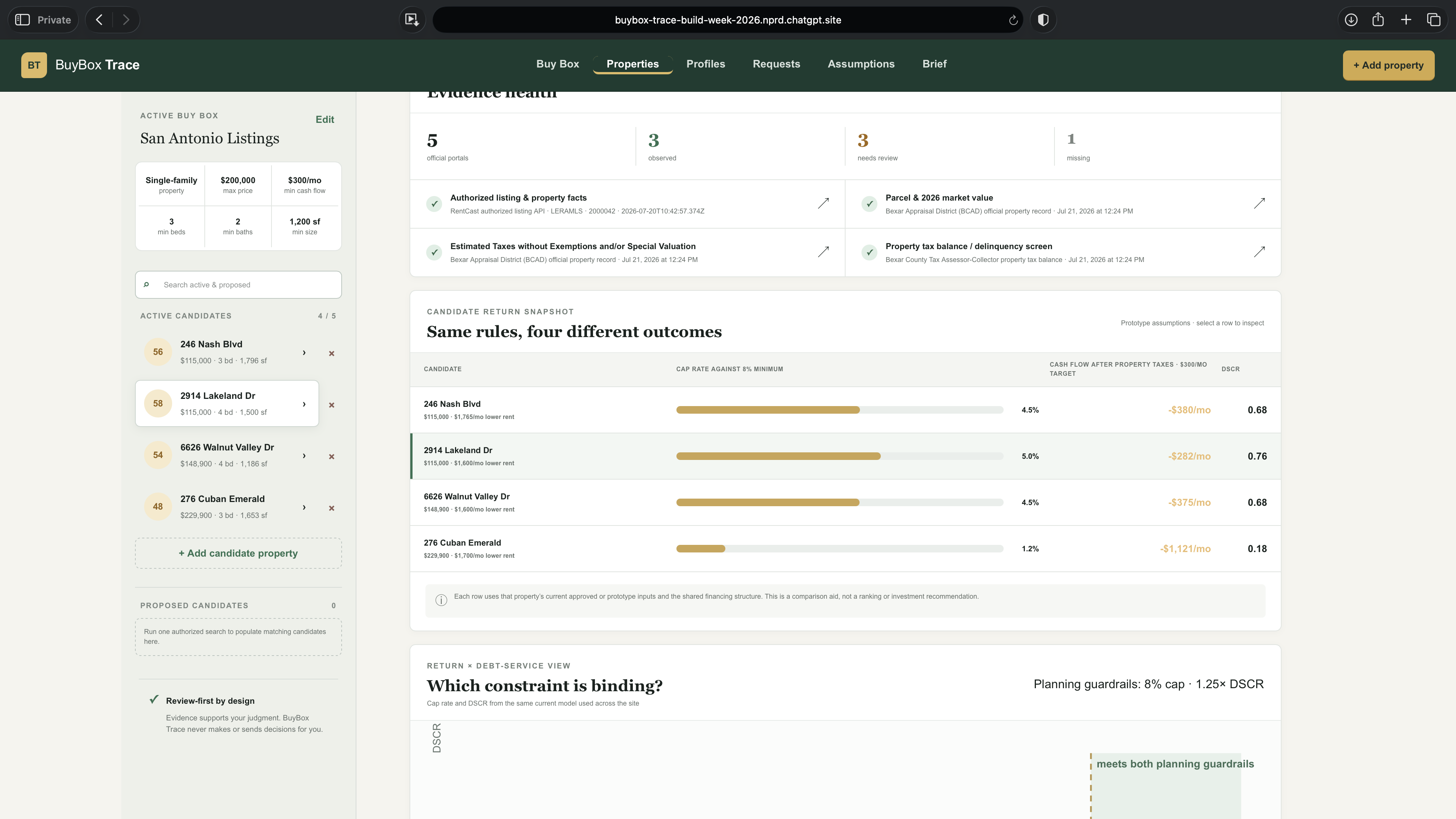
Compare active candidates under one Buy Box using projected returns, screening results, and visible evidence readiness.
-
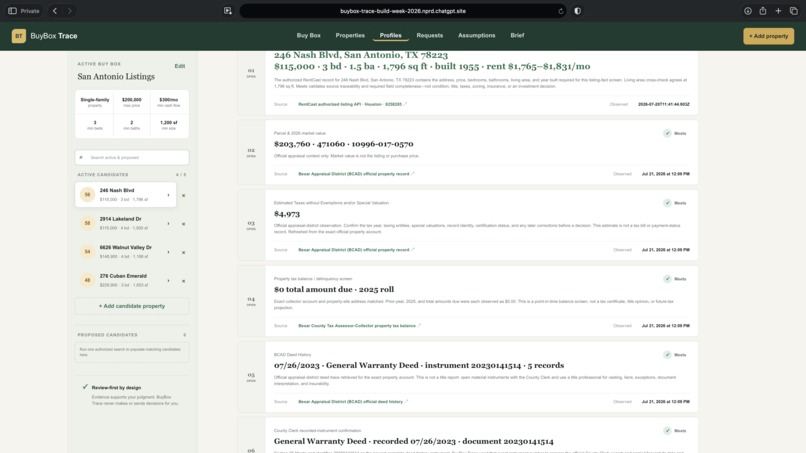
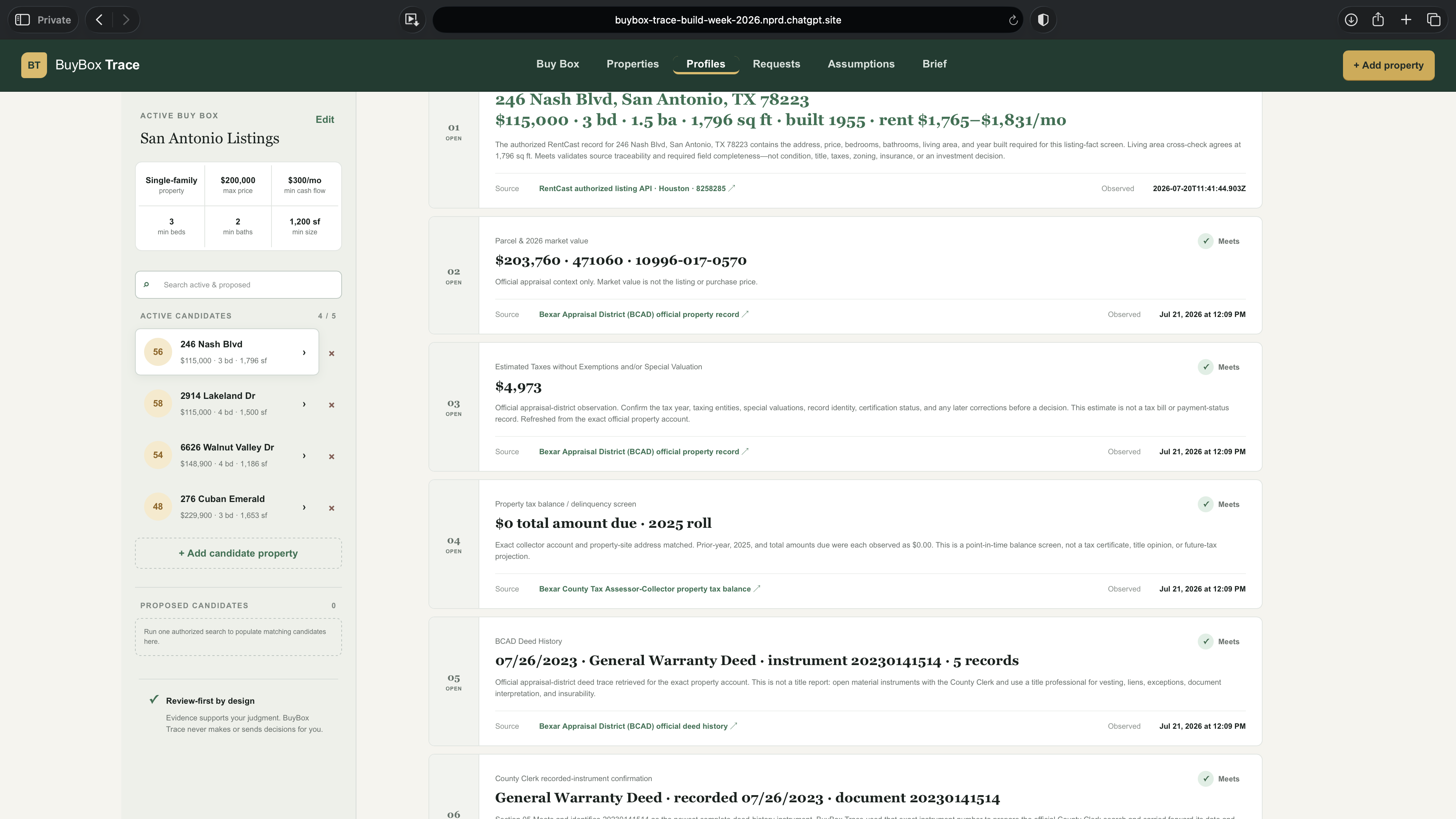
Nash shows the clean path: official evidence checks complete, sources linked, dates preserved, and review status visible.
-
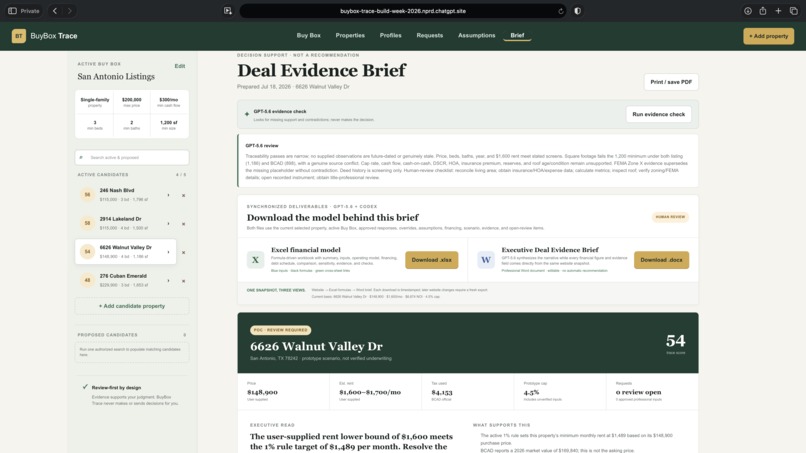
GPT-5.6 checks the Deal Evidence Brief for gaps and contradictions while leaving every investment decision to the user.
-
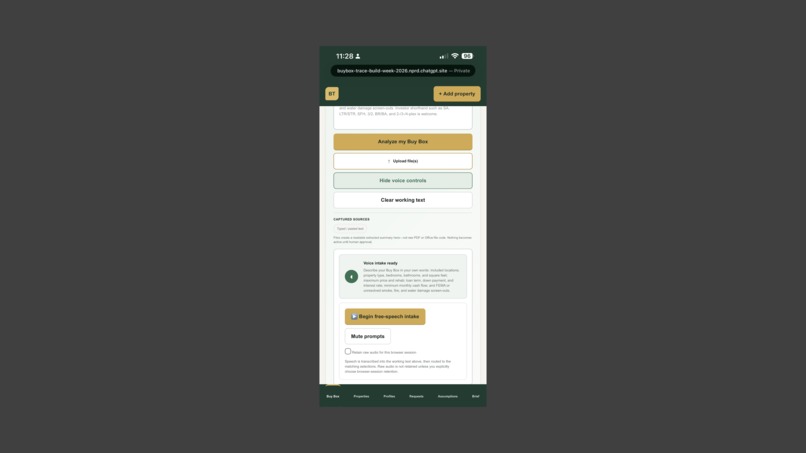
Responsive mobile design keeps candidate screening, evidence review, and decision support usable on an iPhone.
Inspiration
Real estate investors often begin with a Buy Box—a set of criteria for evaluating potential deals. Unfortunately, the information needed to make those decisions is frequently fragmented, conflicting, outdated, or missing. Essential evidence such as property records, tax information, FEMA flood zones, and insurance considerations lives across separate systems.
I have encountered this problem repeatedly while negotiating real estate deals. Finding a property that appears to fit the Buy Box is only the beginning. The harder task is doing Due Diligence: assembling reliable evidence, identifying unresolved questions, and deciding whether and how to proceed.
BuyBox Trace brings that process into an approachable web application, beginning with San Antonio area.
What it does
BuyBox Trace turns an investor’s acquisition criteria into an evidence-backed property review.
A user defines a Buy Box using factors such as:
- Purchase-price range
- Property type
- Bedrooms and bathrooms
- Minimum square footage
- Age
- Flood and damage risk preferences
- Repair budget
- Target cash flow or return
The user can then enter candidate properties for evaluation. BuyBox Trace compares each property with the Buy Box and gathers available evidence from official property, tax, parcel, and FEMA flood sources.
Instead of presenting an unexplained score, the application produces a traceable Deal Evidence Brief showing:
- Which Buy Box requirements match
- Which requirements do not match
- The official sources supporting each input
- When each source was checked
- Conflicting or unavailable information
- Items requiring human review
- Questions to raise with licensed insurance and mortgage professionals
BuyBox Trace can also prepare user-editable insurance quote requests, financing inquiry emails, and other communications with your extended deal team. Nothing is sent automatically; the investor reviews every draft and remains in control.
How I built it
I built BuyBox Trace as a responsive web application using Codex and GPT-5.6.
The product is organized around four stages:
- Define — Capture the investor’s Buy Box and underwriting assumptions.
- Trace — Gather official property, tax, parcel, and flood evidence.
- Evaluate — Compare the evidence with the Buy Box using transparent calculations.
- Act — Generate a Deal Evidence Brief and prepare the investor’s next inquiries.
Each evidence record retains its source, observation date, status, and applicable warnings. Missing information is never silently treated as a successful match.
Codex accelerated product planning, interface development, evidence-adapter implementation, testing, documentation, and iteration. I made the key decisions concerning product scope, source precedence, Buy Box logic, responsible-use boundaries, and where human review must remain mandatory.
Challenges
The largest challenge was not generating a recommendation—it was determining when the available evidence was reliable enough to support one.
Government property systems differ in structure, terminology, update frequency, and availability. An assessed value may not equal the current tax balance. Listing details may conflict with official parcel records. Flood information must be interpreted carefully rather than presented as an insurance determination.
Another challenge was maintaining responsible product boundaries. BuyBox Trace does not scrape restricted listing platforms, make lending decisions, sell insurance, negotiate financial terms, or automatically contact third parties. It organizes evidence and prepares drafts so the user can make informed decisions and communicate with licensed professionals.
Finally, the short Build Week timeline demanded disciplined scope. Delivering one coherent, demonstrable workflow was more valuable than building a large collection of partially completed features.
What I learned
The most important lesson was that trustworthy AI products need to clearly show uncertainty.
A useful real estate assistant should not simply say that a property “passes.” It should show what passed, which source supports that conclusion, what remains unknown, and what requires professional review.
I also learned that showing where the information came from is an important part of the user experience. When investors can check the source behind each conclusion, they can make decisions faster while still using their own judgment.
Accomplishments
I am proud that BuyBox Trace:
- Translates investment criteria into a structured Buy Box
- Separates listing claims from official evidence
- Makes property-matching logic understandable
- Preserves source information and observation dates
- Surfaces missing and conflicting information
- Produces an actionable Deal Evidence Brief
- Keeps insurance and financing outreach under user control
- Establishes a foundation that can expand beyond San Antonio
What’s next
The next step is expanding BuyBox Trace to additional Texas counties and public-record systems while preserving the same evidence and human-review standards.
Future versions could add portfolio comparisons, scenario modeling, repair-budget sensitivity, rent evidence, team collaboration, and integrations expressly authorized by their data providers.
The long-term vision is simple: every potential real estate deal should include a clear trail from investment criteria to supporting evidence.

Log in or sign up for Devpost to join the conversation.