-
-
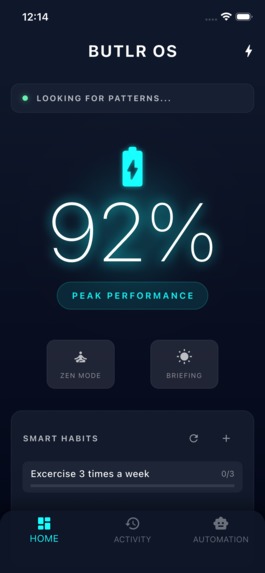
Home Screen
-
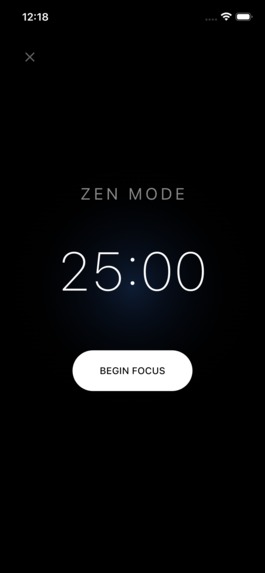
Zen Mode Timer
Inspiration
We live in a world obsessed with output. We have dozens of apps to manage our time, our tasks, and our code. We have tools to squeeze every ounce of productivity out of our day. But we completely ignore the one resource that actually runs it all: Our Energy.
I realized that while my computer has an operating system to manage its resources and prevent overheating, I didn't. I was pushing myself until I hit "panic mode" (burnout). I wanted to build something that shifts the focus from managing time to managing energy.
Inspiration came from the concept of a "Bio-Energy" monitor—a dashboard for the human machine. What if we could visualize our current mental state just like a battery icon on a phone? What if our to-do list adapted to us, rather than us forcing ourselves to adapt to it?
What it does
ButlrOS is a personal automation assistant designed to prevent burnout before it happens. It serves as a layer between you and your work, actively managing your "Human Battery."
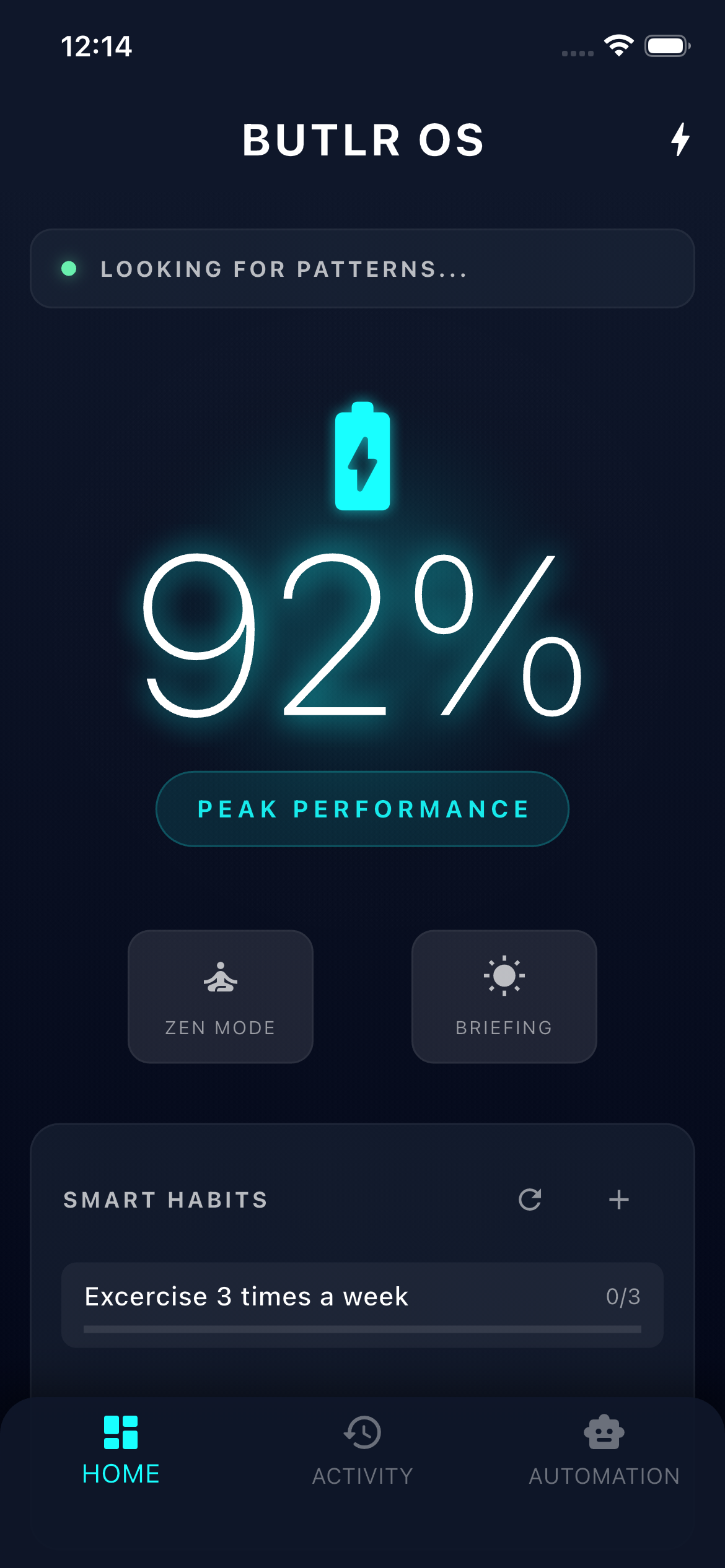
- The Bio-Energy Core: A living, pulsing visualization of your current energy levels. It aggregates data from your sleep, activity logs, and work sessions to verify your "charge." If you're drained, it turns red and pulses urgently. If you're rested, it glows cyan and breathes calmly.
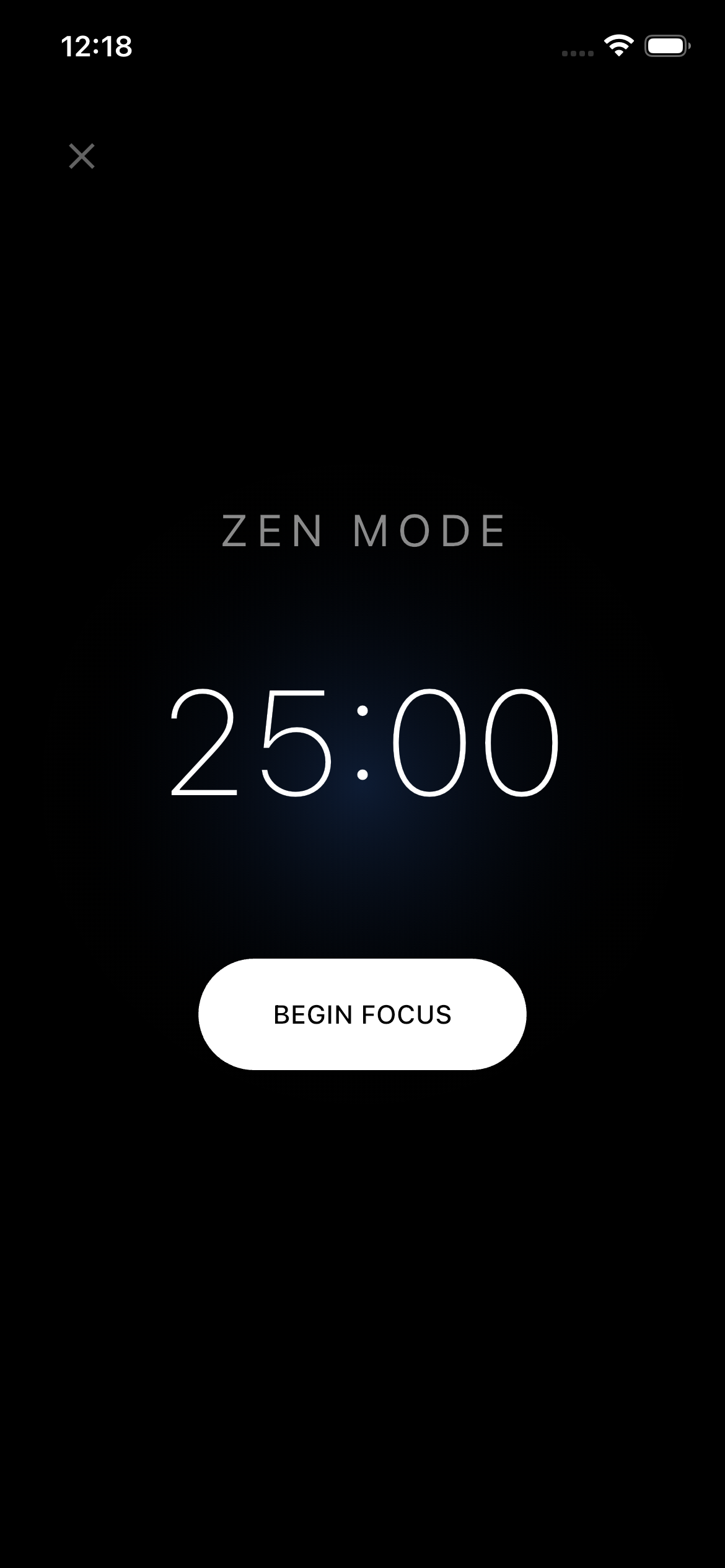
- Zen Mode (Active Recovery): A shielded environment for deep work. It silences the noise, provides a breathing guide, and monitors your session. Unlike a standard timer, completing a Zen Mode session credits energy back to your core score, gamifying the concept of efficient, non-frantic work.
- Morning Briefing (Powered by Gemini): Instead of a dumb list of tasks, ButlrOS uses Google's Gemini AI to generate a morning briefing. It analyzes your previous day's energy expenditure and your current state to suggest how to approach your day (e.g., "Tackle the hard coding task first, your energy is 90%").
- Insight Engine: A background service that identifies patterns in your behavior (e.g., "You always crash on Tuesdays at 2 PM") and proactively suggests schedule adjustments.
How we built it
ButlrOS is a full-stack Dart application, leveraging the power of Serverpod 3.0 for a seamless end-to-end type-safe experience.
- Backend: Built with Serverpod. We used its robust ORM for storing
UserLogsandBioMetricStates, and its Future Calls to run the background "Insight Engine" cron jobs. - Frontend: Built with Flutter. We focused heavily on Flutter Animate to create the "Bio-Energy Core"—using multiple layered animations to simulate a living organism.
- AI Integration: We integrated the Google Generative AI (Gemini) / OpenAI SDK into the Serverpod backend. This allows us to pipe user logs directly into Gemini Pro and OpenAI ( fallback since Gemini credits not availalbe) to generate natural language briefings and analysis without exposing raw data logic to the client.
- State Management: Riverpod handles the real-time state synchronization, ensuring that when the backend calculates a drop in energy, the UI reflects it instantly.
Challenges we ran into
- Quantifying "Burnout": The biggest challenge was the algorithm for the Bio-Energy Core. How do you translate "I feel tired" into code? We had to iterate on a weighted scoring system that taxes your "battery" heavily for high-focus tasks and recharges it for sleep and 'Zen Mode'.
- Visualizing Data Organically: We didn't want a progress bar. Making a Flutter widget that "breathes" non-linearly to represent stress required complex animation (tweaking curves, opacity, and scale simultaneously).
- Latency in AI: Generating a Morning Briefing with Gemini takes a few seconds. We had to design a "Skeleton Briefing" UI state that kept the user engaged while the AI was "thinking," ensuring the app didn't feel sluggish.
Accomplishments that we're proud of
- The Design: We are incredibly proud of the UI. It breaks away from the standard "Material Design" look with a custom, glowing, futuristic aesthetic that feels premium.
- The "Living" Core: Seeing the Bio-Energy core actually change pulse speed based on mock stress data was a huge "aha!" moment. It makes the data feel real.
- Full-Stack Speed: Using Serverpod allowed us to move incredibly fast. We generated endpoints and client libraries automatically, saving hours of boilerplate code.
What we learned
- Input > Output: We learned that optimizing for the human input (energy) is a more sustainable way to increase output than just forcing more tasks.
- AI as a Suggestion Engine: AI works best when it offers gentle nudges (suggestions) rather than commands. The "Briefing" format feels much more natural than an auto-scheduler.
- Serverpod Capabilities: We deepened our understanding of Serverpod's Future Calls for background processing, which is essential for any "smart" assistant that needs to think while the user is away.
What's next for ButlrOS
- Wearable Integration: We plan to hook into Apple Health / Google Fit. Instead of estimating energy based on logs, we want to drive the Bio-Energy Core with real Heart Rate Variability (HRV) data.
- Team Analysis: A "Squad Mode" for managers to see the aggregate energy levels of their team, helping to prevent collective burnout before a deadline.
- Desktop Native: Since we used Flutter, releasing a MacOS menu-bar version of ButlrOS is just a build command away.

Log in or sign up for Devpost to join the conversation.