FooBer
🚀 Inspiration
I noticed how hard it is for people to find authentic, affordable home-cooked meals—especially in a world filled with expensive takeout and generic fast food. At the same time, I knew there were amazing home cooks who wanted to share their food and earn extra income. That gap inspired FooBer: a platform to connect hungry consumers with local home chefs.
🍽️ What it does
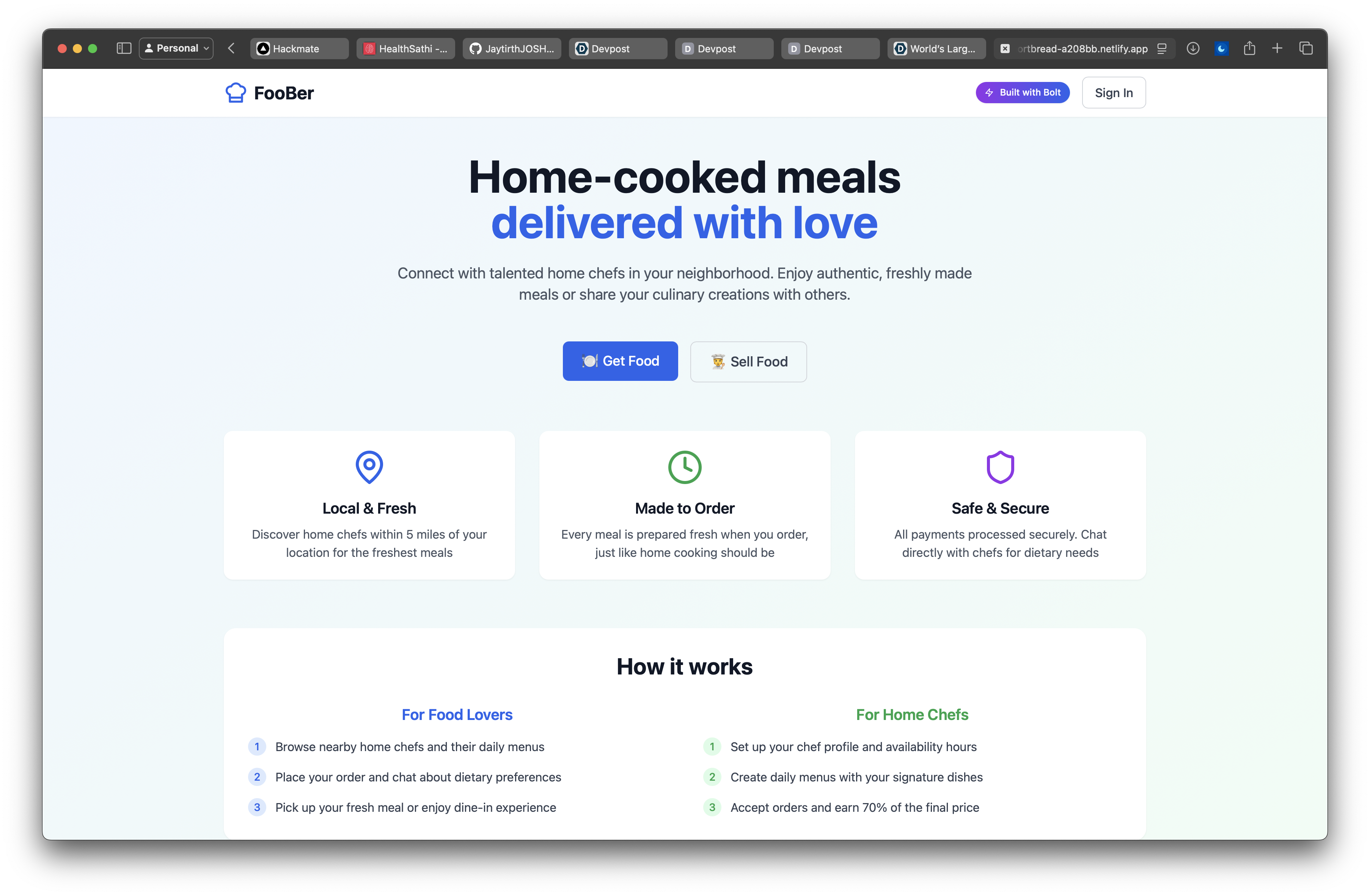
FooBer is a three-sided food marketplace with:
- Consumers: They can browse local home-chef menus based on cuisine, diet (veg/non-veg), and dining type (pickup or dine-in). They can set allergies and taste preferences, choose time windows, and pay directly through the app.
- Sellers (home cooks): They can list meals, set their availability, choose whether to allow dine-in or pickup, and chat with buyers. They set their own prices, and the platform handles the rest.
- Admins: A lightweight admin interface helps moderate the platform, respond to user issues, and ensure safety.
All interfaces are integrated into one modern, mobile-first web app.
🛠️ How we built it
- Frontend: React + Tailwind CSS (mobile-first design)
- Backend: Supabase (PostgreSQL, auth, real-time DB)
- Payments: RevenueCat SDK (Stripe) for handling transactions and taking a 30% platform fee
- Deployment: Netlify (serverless support + continuous deployment)
Users log in via Google or email, select their role (consumer or seller), and immediately begin exploring or offering food.
⚠️ Challenges we ran into
- Balancing three user journeys (buyer, seller, admin) in one app without overwhelming the UX
- Enforcing fair pricing rules (min $5 after platform fees) automatically
- Managing real-time chat and coordinating dine-in vs. pickup logistics
- Designing flexible filters for cuisine, preferences, and dietary restrictions
🏆 Accomplishments that we're proud of
- Built a full-stack, real-time food platform in under a day
- Clean, intuitive UX that mirrors the feel of Uber or DoorDash
- Fully integrated pricing engine that respects platform margins while empowering local sellers
- Made it easier for anyone—especially home chefs—to earn and share their food safely
📚 What we learned
- How to rapidly build scalable backends using Supabase
- Managing marketplace logic with flexible user roles
- Creating fast, responsive UI with minimal overhead
- Real-time messaging and order coordination between users
🔮 What's next for FooBer
- Launching in select U.S. cities with verified home chefs
- Adding location-aware pickup spot suggestions for public meetups
- Introducing loyalty rewards and dynamic pricing
- Partnering with local food safety programs to certify sellers
- Building native mobile apps using Capacitor
Built With
- capacitor-(planned)
- google-oauth
- maps
- netlify
- postgresql
- react
- revenuecat-sdk
- supabase
- tailwind-css
- vite

Log in or sign up for Devpost to join the conversation.