-
-
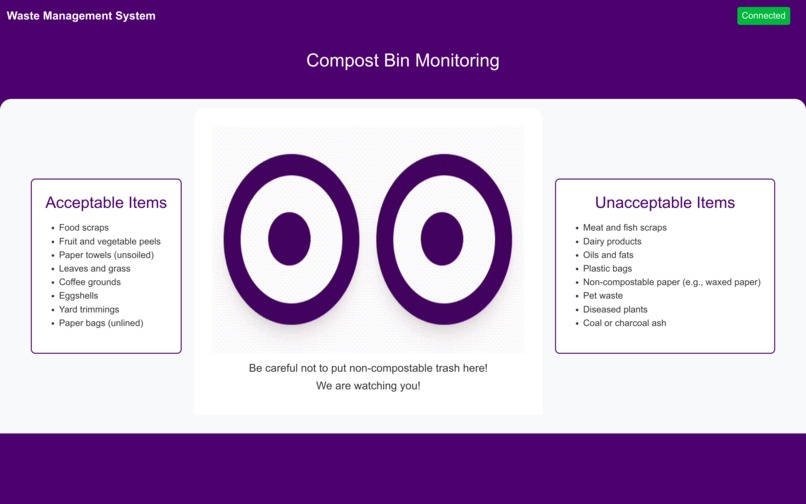
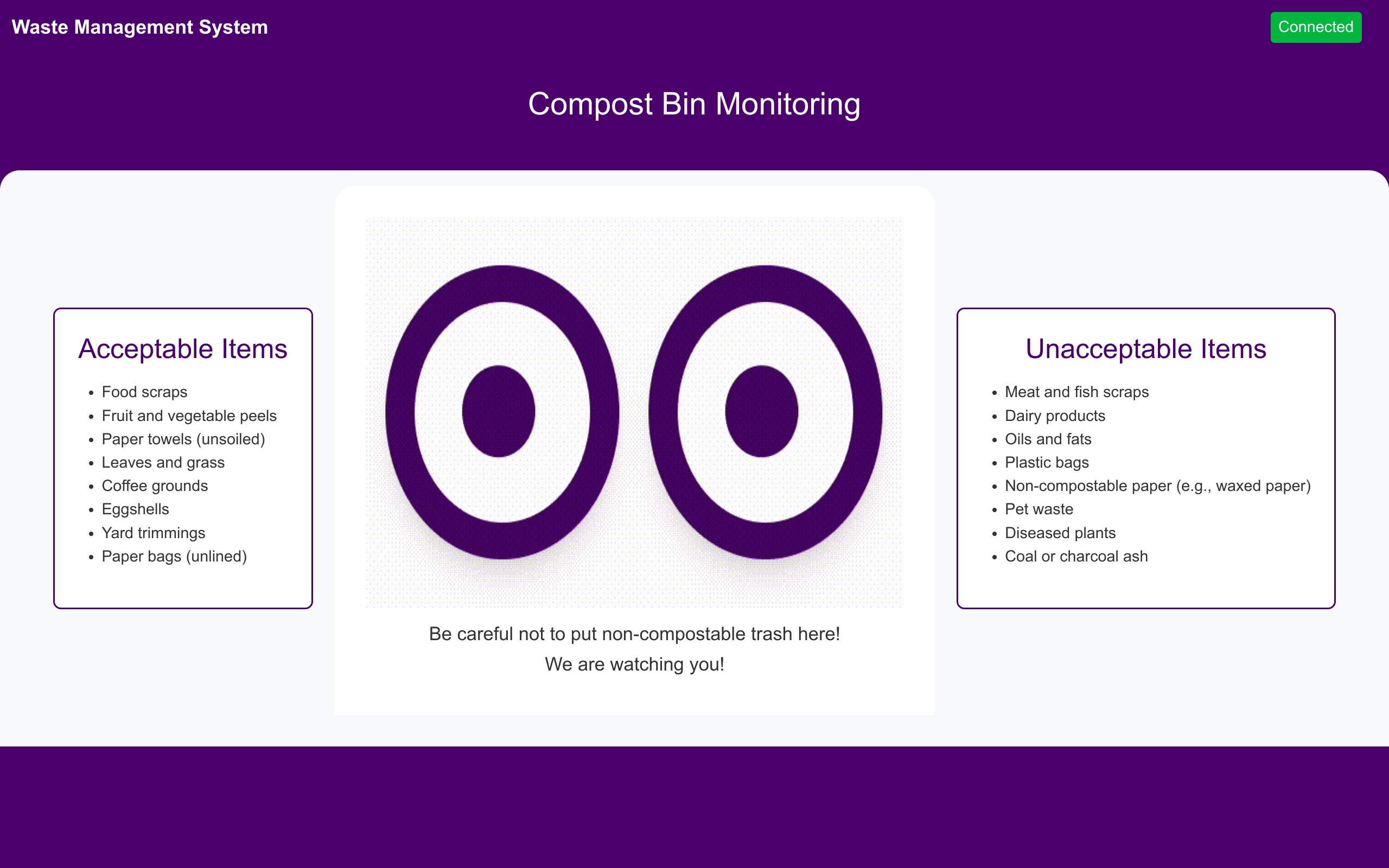
website interface - final version
-
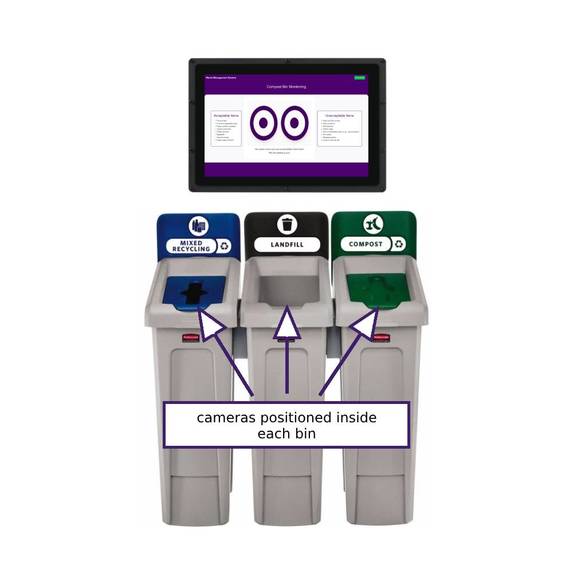
Busted Usage
-
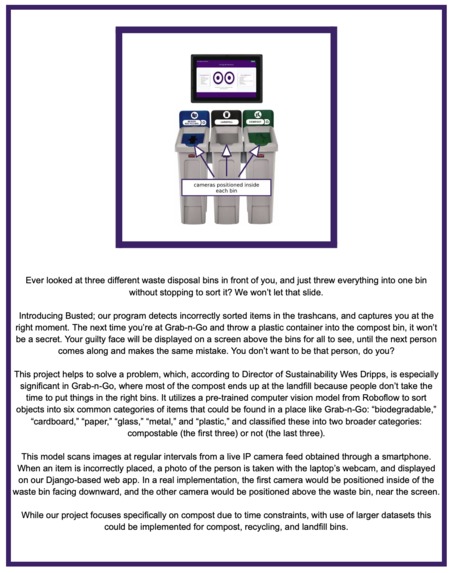
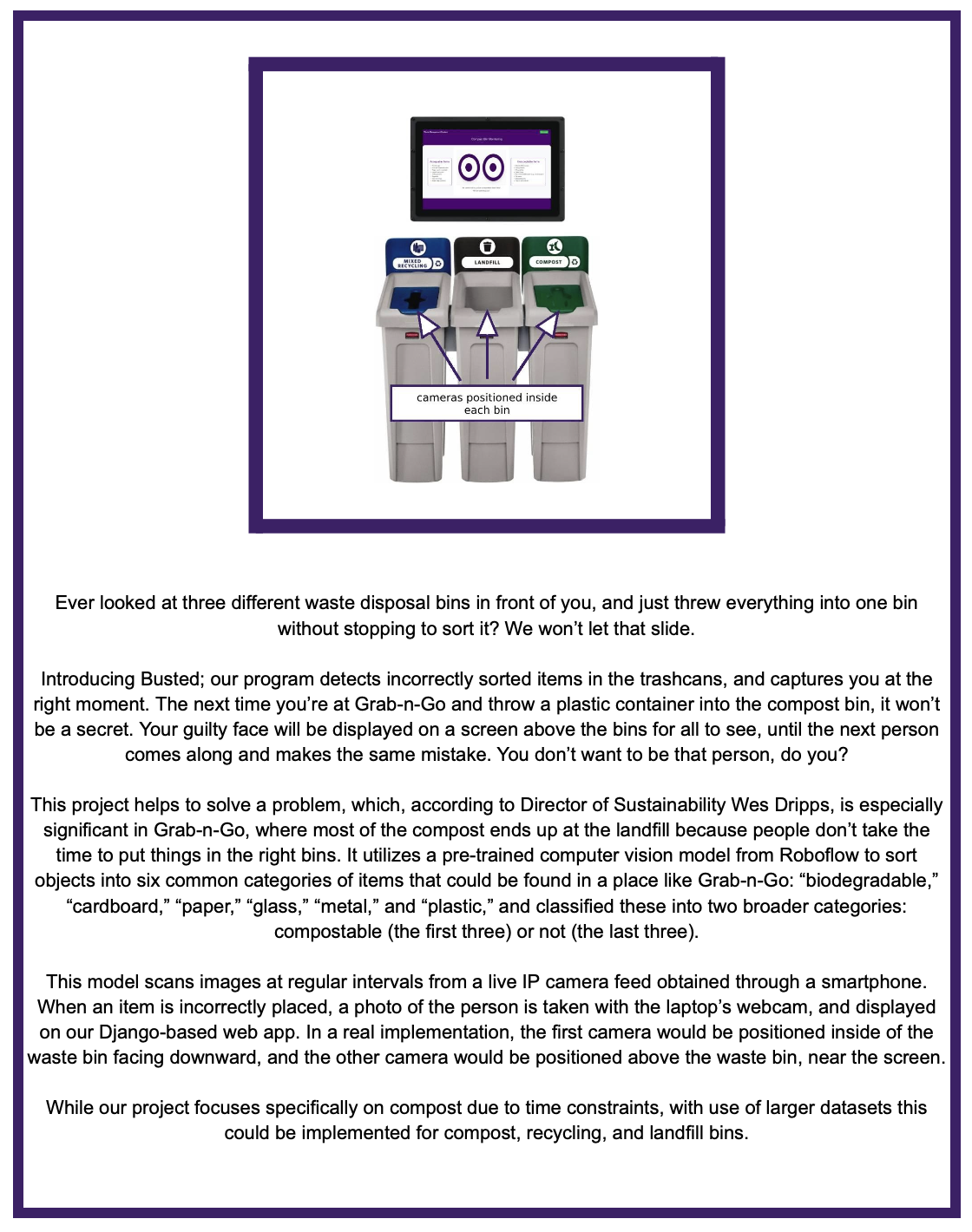
project description
-
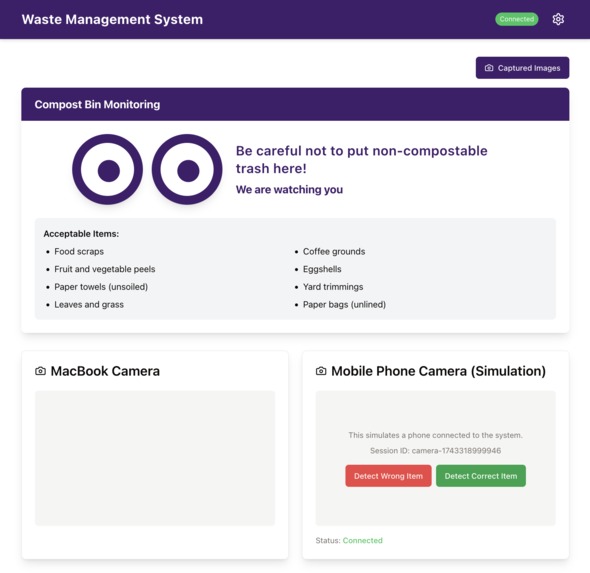
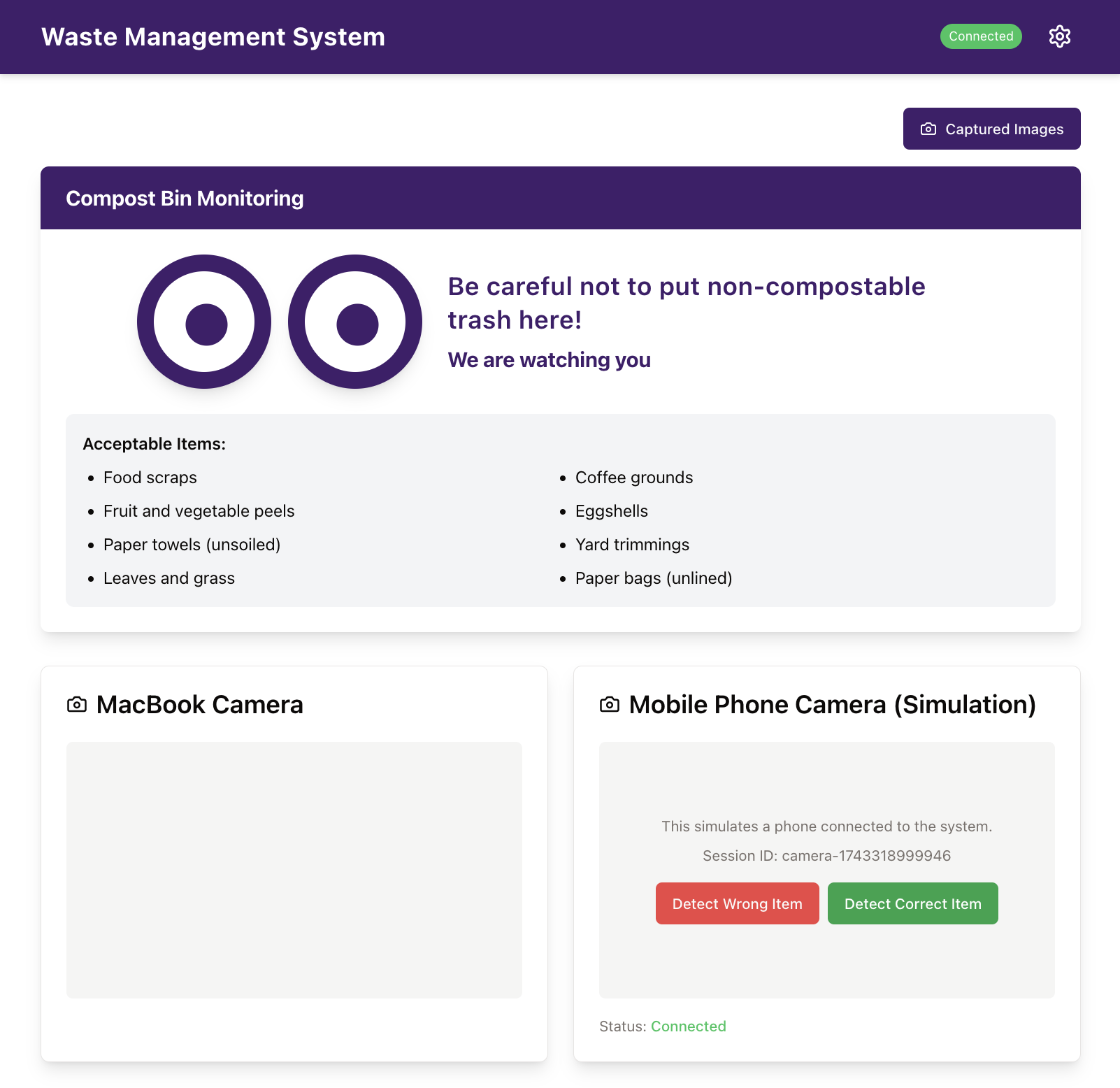
website interface - initial version
Inspiration
At Amherst, whenever we try to trash something, we find every trashcan containing incorrect items inside. We were wondering, "Why are students not caring enough to put the trash in the correct bin?" When non-compostable items, such as plastics, metals, or synthetic materials, are put into compost bins, they contaminate the compost pile, making the entire pile unusable for agricultural purposes or soil enrichment. And even when biodegradable plates are put in landfills, they decompose in landfills anaerobically, producing methane and contributing to climate change. So, we came up with a fun and promotional idea of raising students' awareness of these trash throwing out actions, by warning them when they incorrectly sort waste.
What it does
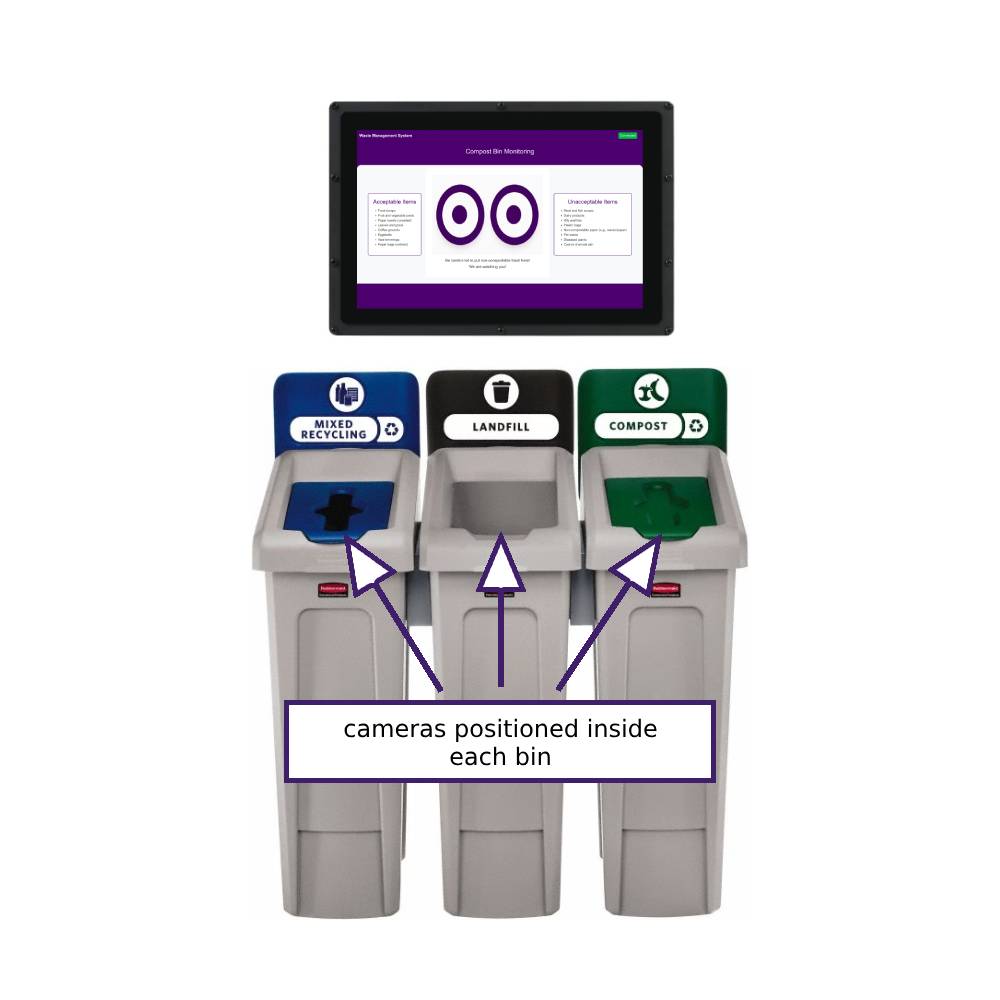
Our system, "Busted", detects incorrectly sorted items in each trash bin. When a student throws a plastic container into the compost bin, it captures the student's picture at the right moment, displaying on a screen above the bins for all to see. It might not go away until the next person comes and makes the same mistake! If students do not want their guilty face to be shown to everyone, they should make sure to put the trash in the right bin.
How we built it
This model scans images at regular intervals from a live IP camera feed obtained through a smartphone. When an item is incorrectly placed, a photo of the person is taken with the laptop’s webcam, and displayed on our Django-based web app. In a real implementation, the first camera would be positioned inside of the waste bin facing downward, and the other camera would be positioned above the waste bin, near the screen. While our project focuses specifically on compost due to time constraints, with use of larger datasets this could be implemented for compost, recycling, and landfill bins.
Challenges we ran into
We were initially fine-tuning a ViT(Vision Transformer) model in Hugging Face, to sort the items with higher accuracy at Amherst. We collected more than 150 pictures of compostable plates and containers to train the model; however, even with four repeated trials, the biases were occurring due to disproportionate data. So, we pivoted to using the existing API for the MVP.
- https://colab.research.google.com/drive/1IDQ6ETNUEPT7-cthSCTORd8XuiXDIyx9?usp=sharing
- https://huggingface.co/rubysmac/compostable-plates-classifier-v0/tree/main
We also tried three other languages/frameworks to develop the front-end to find the optimal way to connect with two cameras and ML model we were using.
Accomplishments that we're proud of
We are proud of putting in an amazing effort into this project in a team of three. All of our teammates stayed up all night in the classroom for the entire duration of this hackathon. We had a passion to study new things and apply them to our project.
What we learned
We learned how to make a web app using Django, and also how to fine-tune the model in Hugging Face.
What's next for “Busted!" - incorrect waste classification warning system
We would like to update the model into fine-tuned model.
Video Demo Link (YouTube)
https://youtube.com/shorts/xmZbeYUmmoE?feature=share
Initial Version Website Interface Link
https://af37c701-77b0-4820-8b57-a09051da850a-00-158jrm4g4vwqs.riker.replit.dev/


Log in or sign up for Devpost to join the conversation.