Inspiration
SaltPay challenge
What it does
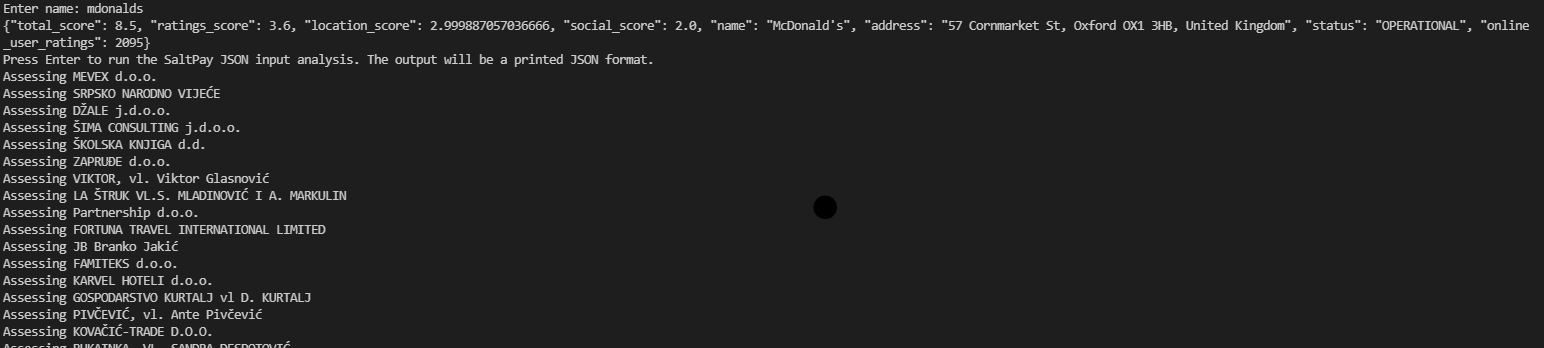
Gets user input and searches the internet for reviews, location accessibility (against the centre of where it's based, so places further away from the centre of a town will have a lower score), and their social media presence (based upon how many search results come up on Facebook, Twitter, TikTok, LinkedIn and Instagram).
It uses these scores to generate a final total score out of 10 which is displayed to the end-user along with information about the business (such as the name and address) so that the user can be sure that the analysed business was the correct one. If not, they can be more specific with their search.
How we built it
Native Python (no dependencies) connecting to Google Cloud Web APIs to scrape the entirety of Google's web-spider model.
Challenges we ran into
We tried to implement an Android app to give the end-user some UI and UX to easily use the app. However, the team decided to use Java to achieve this without first researching that the Python backend wouldn't be natively compatible on an Android device.
Accomplishments that we're proud of
Learning cloud infrastructure and HTTP calls to interact with available APIs.
What we learned
Cloud infrastructure and HTTP calls to interact with available APIs. The importance of researching compatibility.
What's next for Business Information, Rating and Data
Develop the User Interface using Python to easily connect to the backend.
Utilize a database to store customer's own ratings, this can be a major factor into the "total score" given by the app. This will, in turn, have businesses promoting themselves on our app such to raise their score, driving further users and engagement.
Connect to an advertisement provider such as AdSense to passively earn.

Log in or sign up for Devpost to join the conversation.