Inspiration
As a freelance writer frustrated by switching between 8+ tools to run my newsletter—Substack for publishing, Mailchimp for emails, spreadsheets for scheduling—I dreamed of a unified platform. I saw fellow creators in my network struggle with the same chaos: disjointed analytics, clunky monetization, and no AI support tailored to newsletter writing. That’s when I set out to build NewsletterOS—something that felt like an operating system, not just another app.
What it does
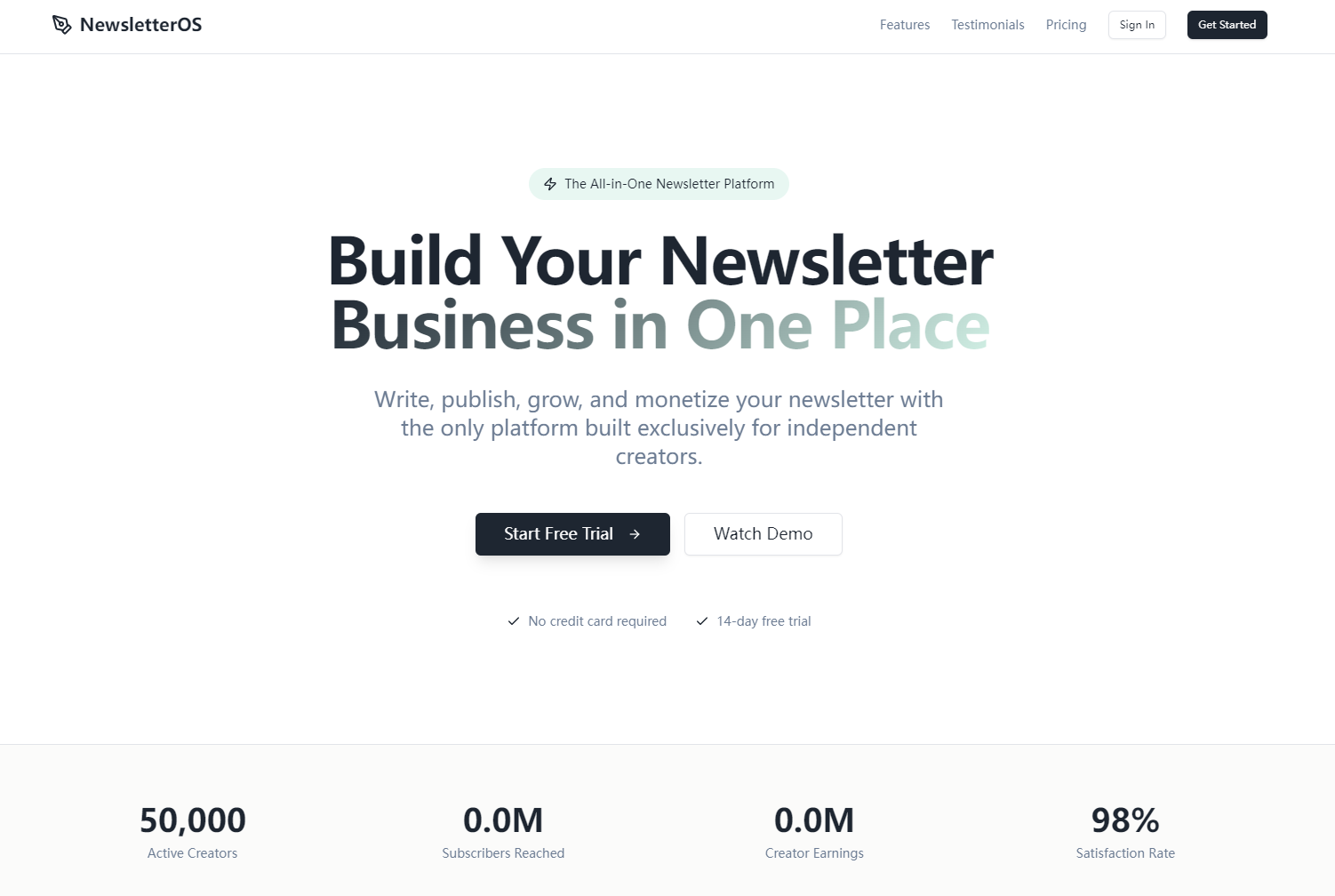
NewsletterOS consolidates every tool newsletter creators need: AI-powered drafting, an editorial calendar with drag-and-drop planning, a publishing hub for multi-platform distribution, growth tools (landing pages, referrals), and a full monetization suite (paywalls, sponsorships, digital products) with real-time revenue analytics.
How we built it
I started with wireframing the core dashboard and user flows, then built the frontend with React and Tailwind CSS for smooth animations and modern design. The backend uses Node.js and PostgreSQL to track subscribers, content, and revenue; AWS hosts the platform, while Firebase handles real-time data sync. I integrated OpenAI’s API for the writing assistant and Stripe for payment processing, and used Chart.js for interactive analytics visualizations.
Challenges we ran into
The biggest hurdle was syncing real-time revenue data across paywalls, sponsorships, and digital products—ensuring the 5% platform revenue share calculation was accurate and updated instantly. I also struggled with making the drag-and-drop editorial calendar responsive and smooth across devices, and refining the AI writing assistant to match diverse creator brand voices.
Accomplishments that we're proud of
We built a fully functional MVP where creators can go from drafting a newsletter to publishing it across email/web/social, growing their audience, and monetizing—all without leaving the platform. The animated revenue dashboard and intuitive drag-and-drop tools have gotten rave feedback from beta testers, and the AI writing assistant now adapts to 10+ distinct writing tones.
What we learned
I deepened my expertise in API integration (especially Stripe and OpenAI) and real-time data visualization. More importantly, I learned to prioritize user-centric design—beta testers’ feedback reshaped the publishing hub’s preview mode to include realistic device mockups, making it far more usable. I also gained insight into creator monetization pain points, like flexible paywall structures.
What's next for this project
First, we’ll add advanced analytics for engagement metrics (open rates, click-throughs). Then, we’ll build out team collaboration features (for multi-writer newsletters) and integrate more social platforms for distribution. Long-term, we want to add automated sponsorship matching—connecting creators with relevant brands—and expand the digital products suite to support video content. We’re also refining the AI assistant to generate full newsletter issue outlines tailored to niche audiences.
Built With
- amazon-web-services
- openai-api
- postgresql
- stripe

Log in or sign up for Devpost to join the conversation.