-
-
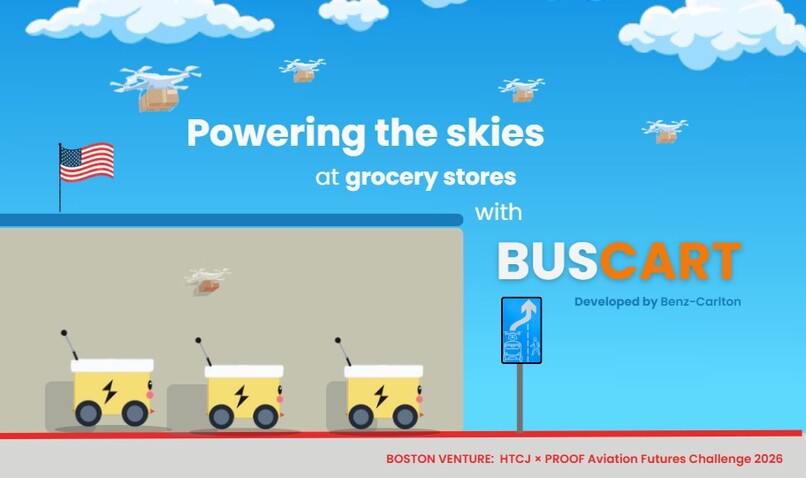
BUSCART: Project Banner
-
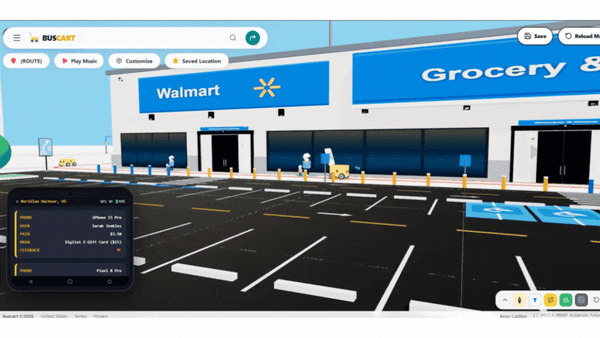 GIF
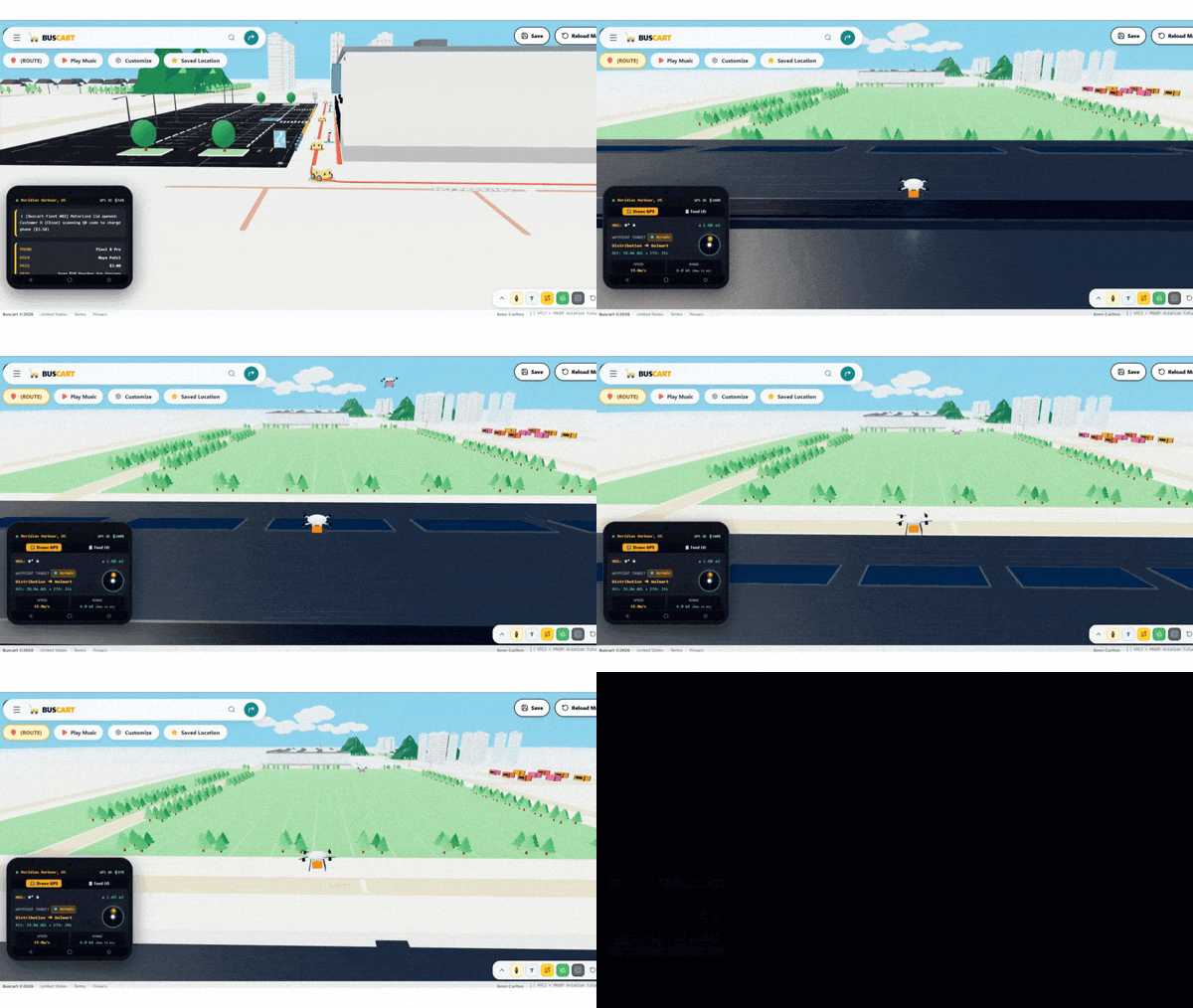
Fleet & Grocery Store Sidewalk (Preview)
-
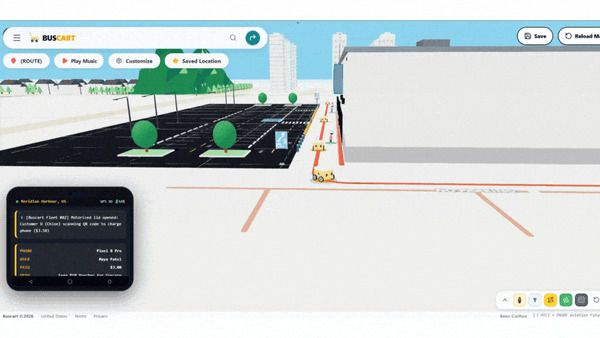 GIF
Simulated Flight Path
-
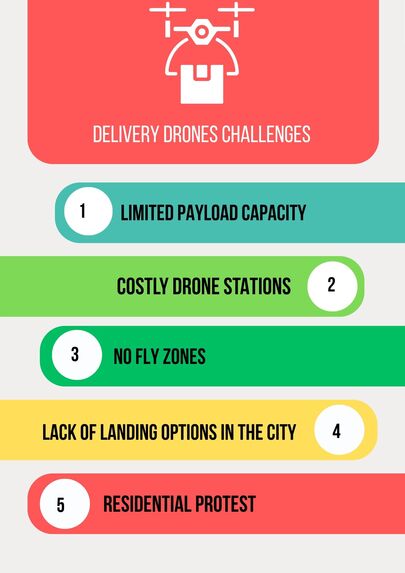
Problems
-
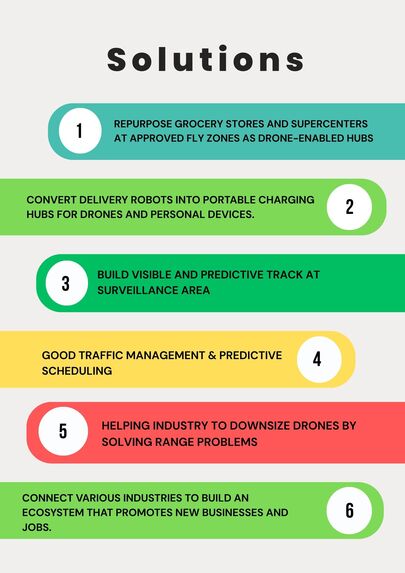
Solutions
-
 GIF
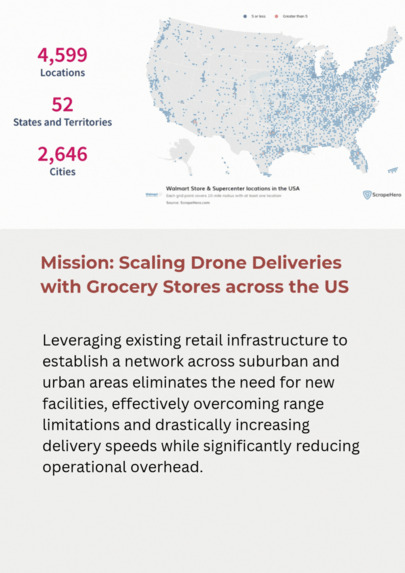
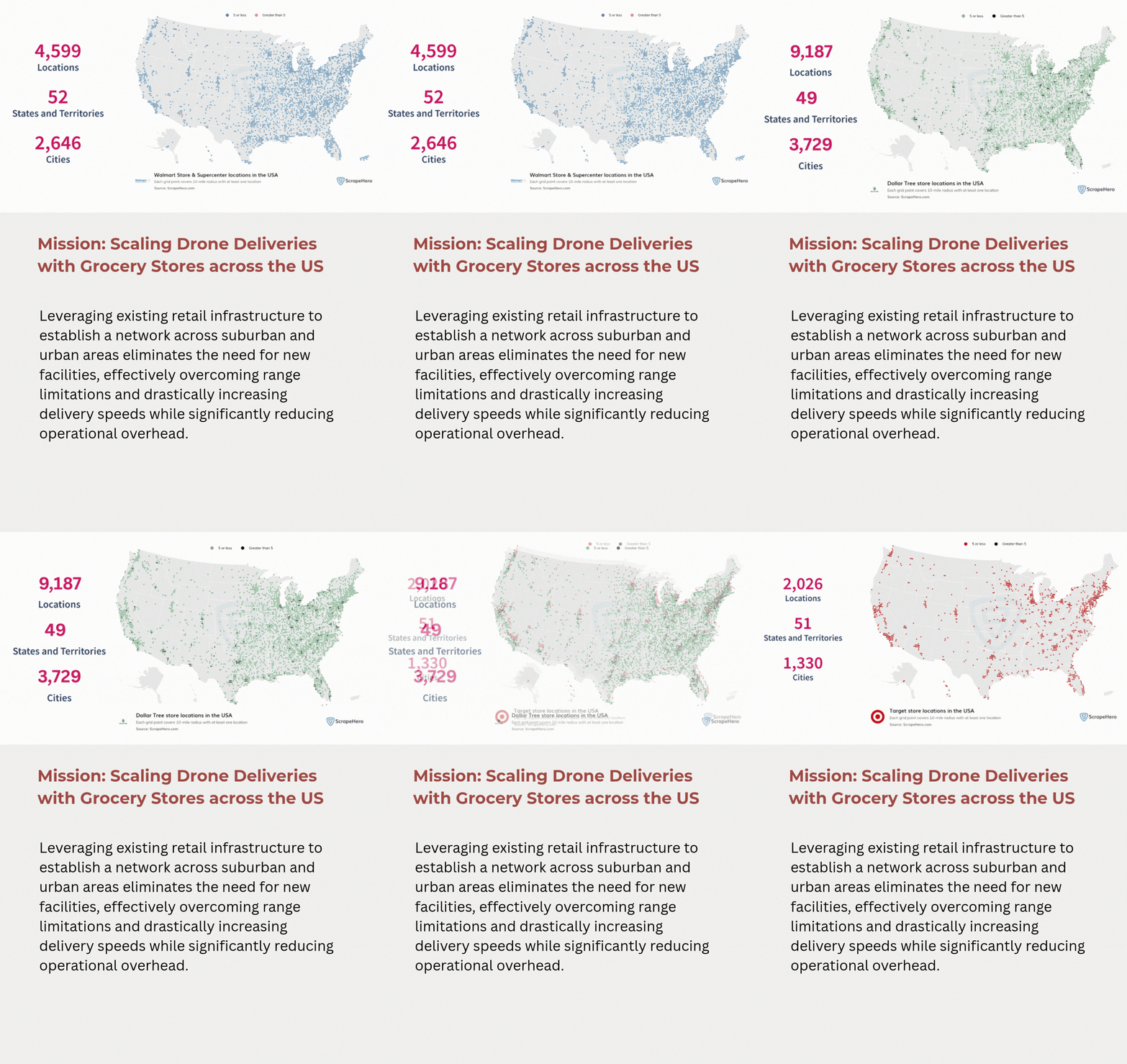
U.S. Store & Location Footprint (Market Scale Analysis)
-
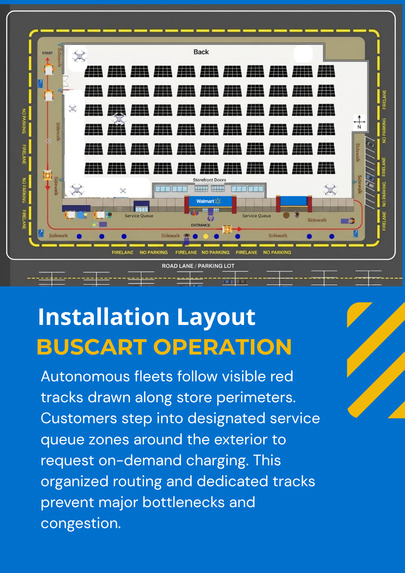
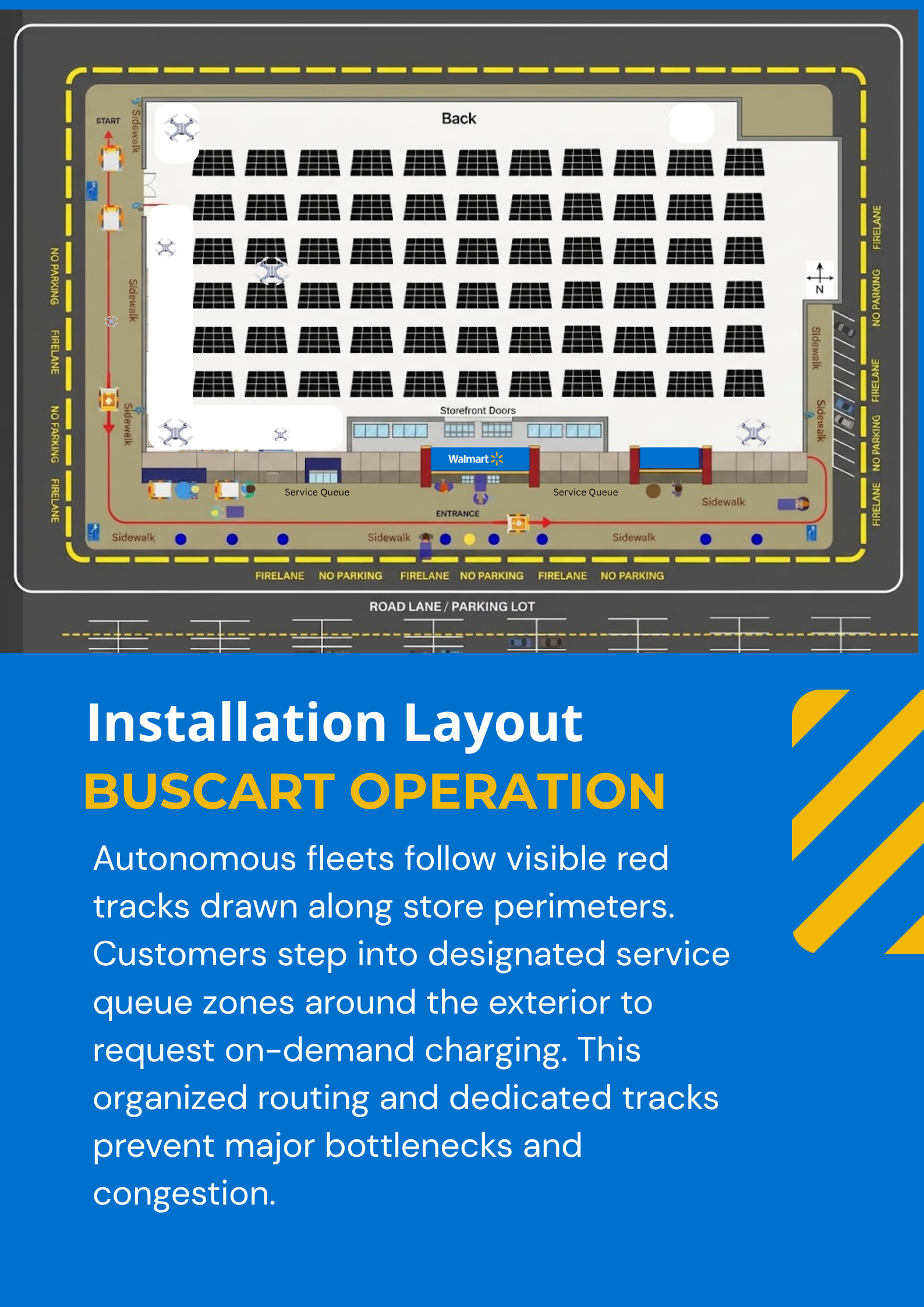
Real World Deployment | Installation Architecture
-
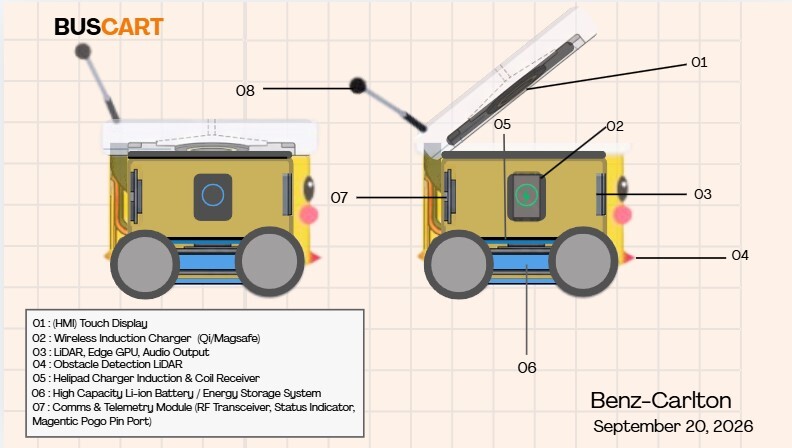
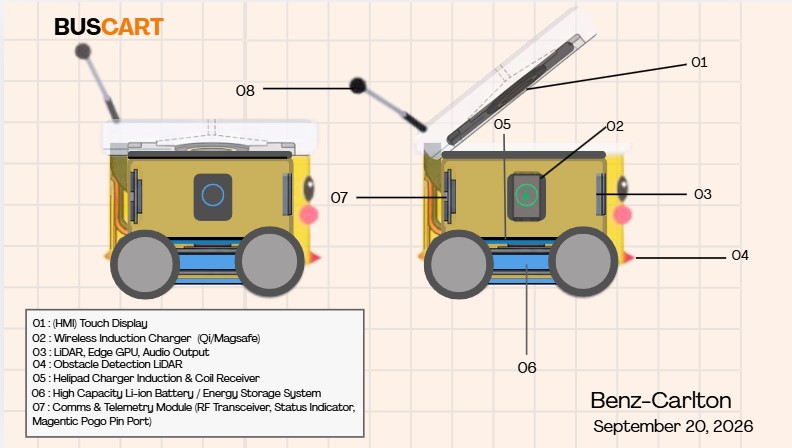
Mechanical Component Diagram
-
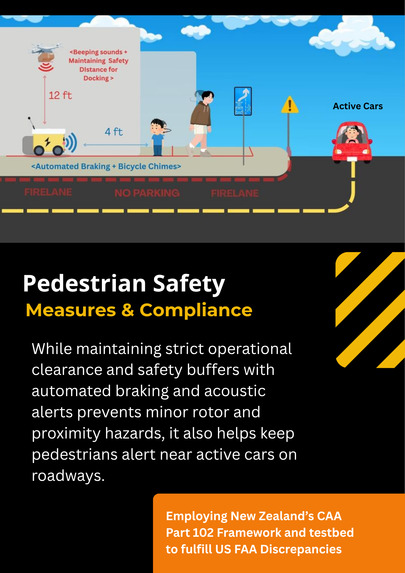
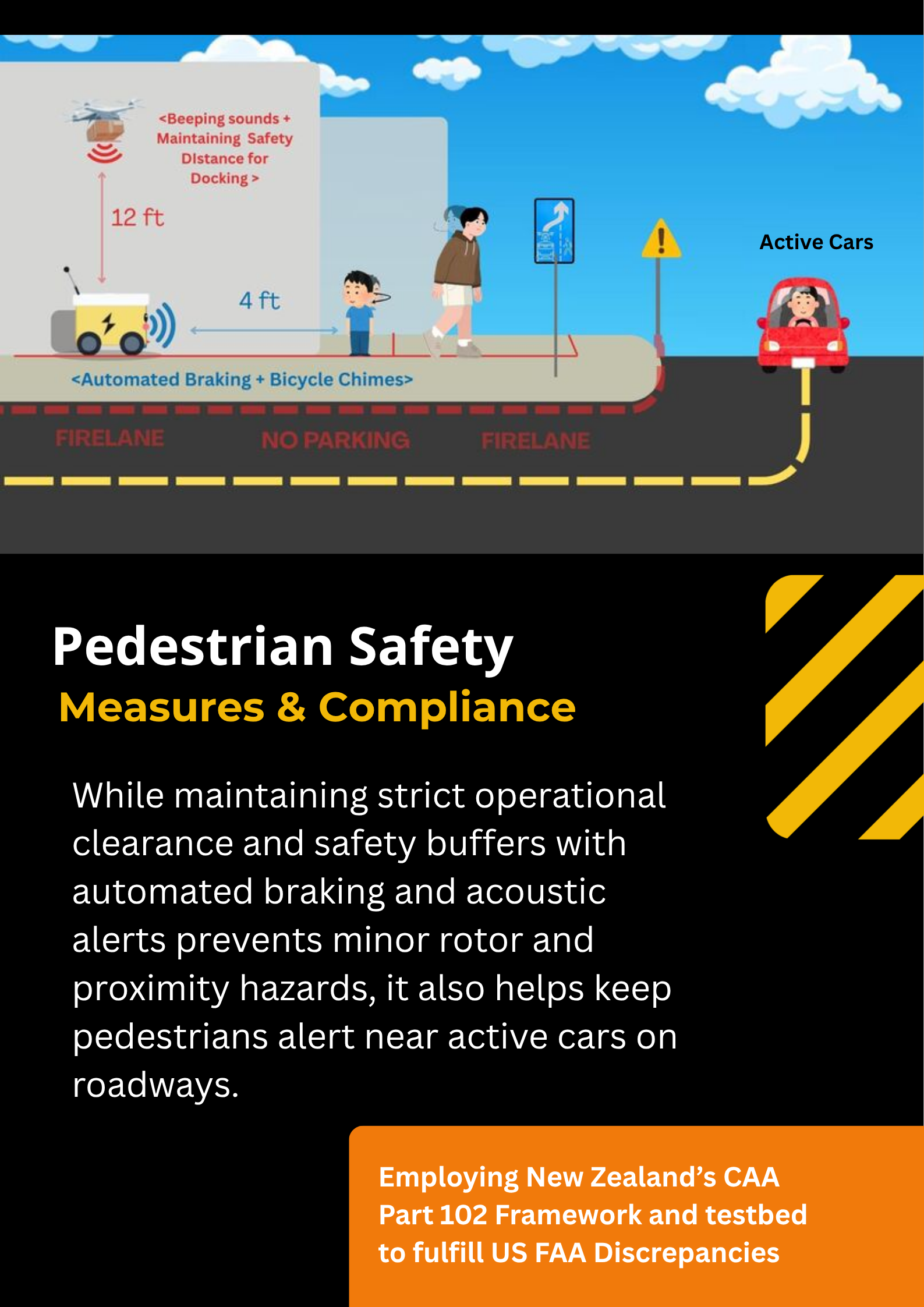
Pedestrian Safety | Measures & Compliance
-
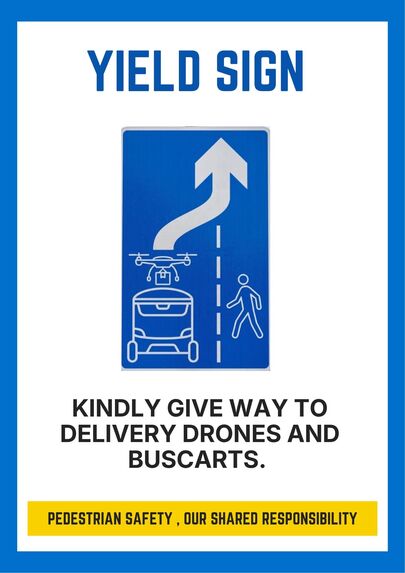
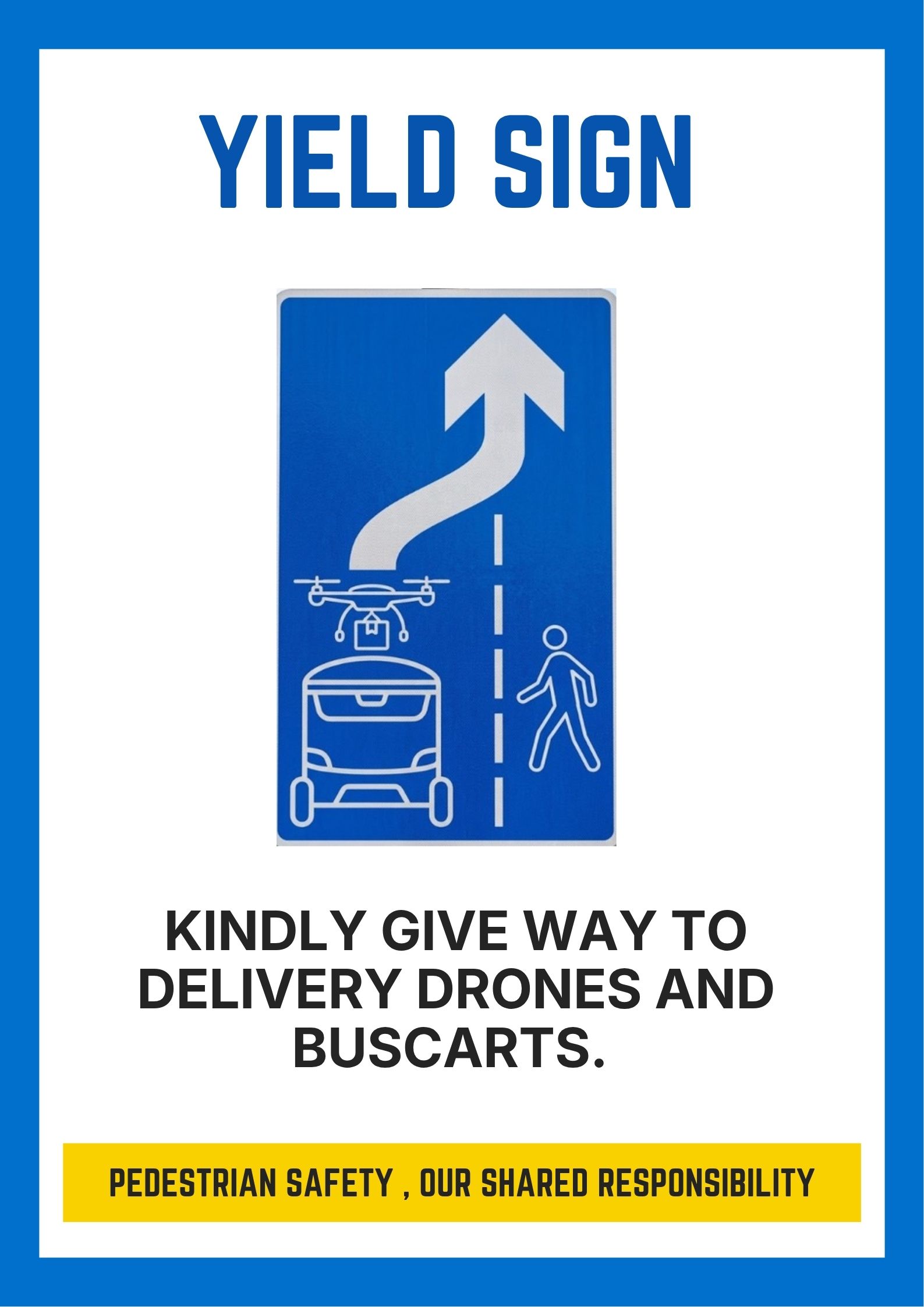
Proposed Yield Sign for Traffic Management
-
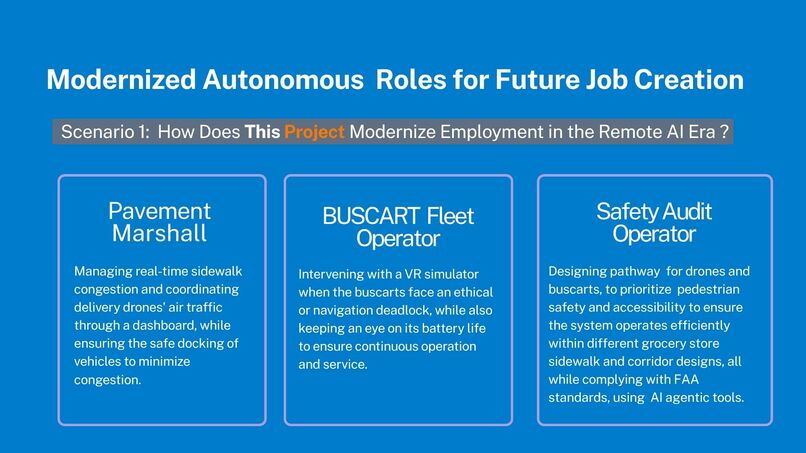
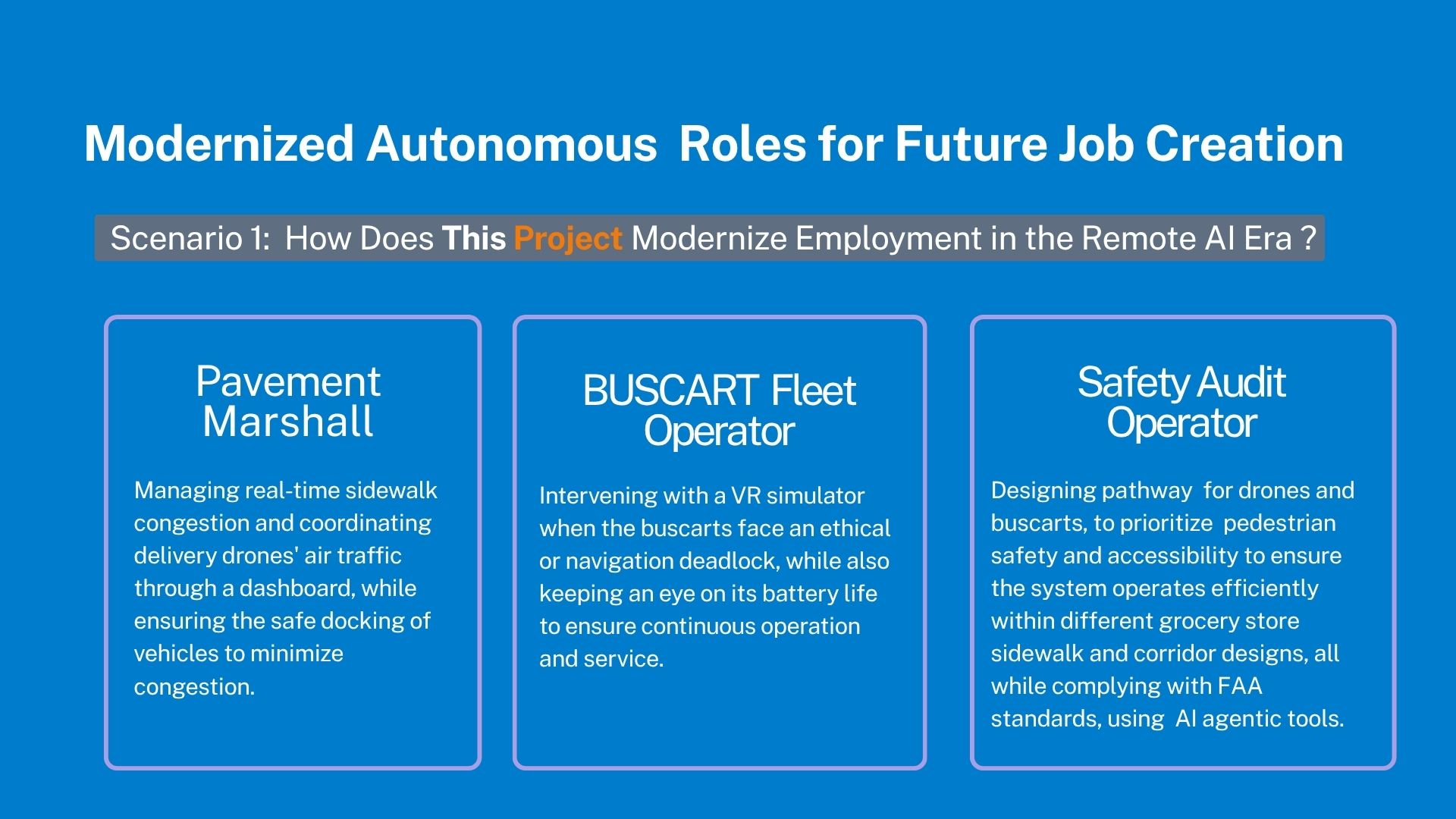
Future Workforce & New Job Creation
-
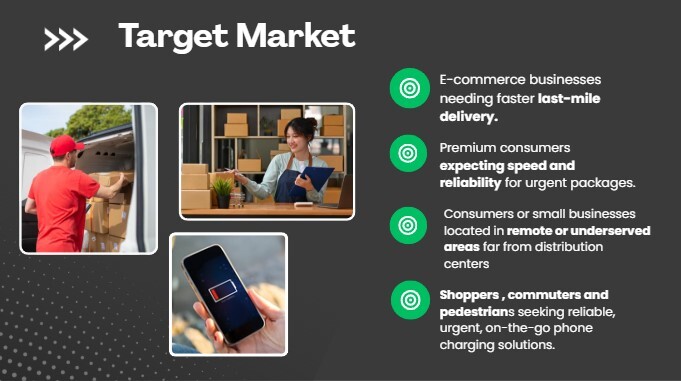
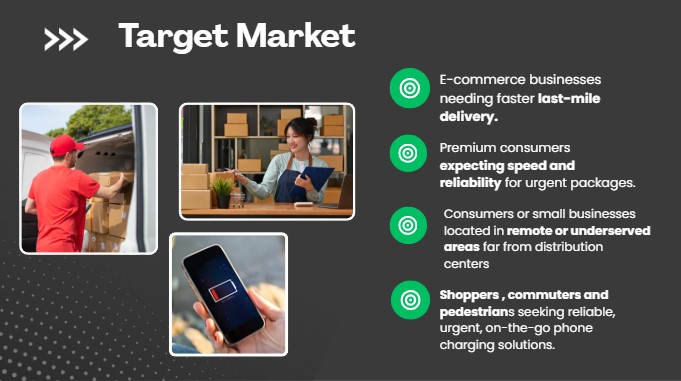
B2B & Retail Target Ecosystem
-
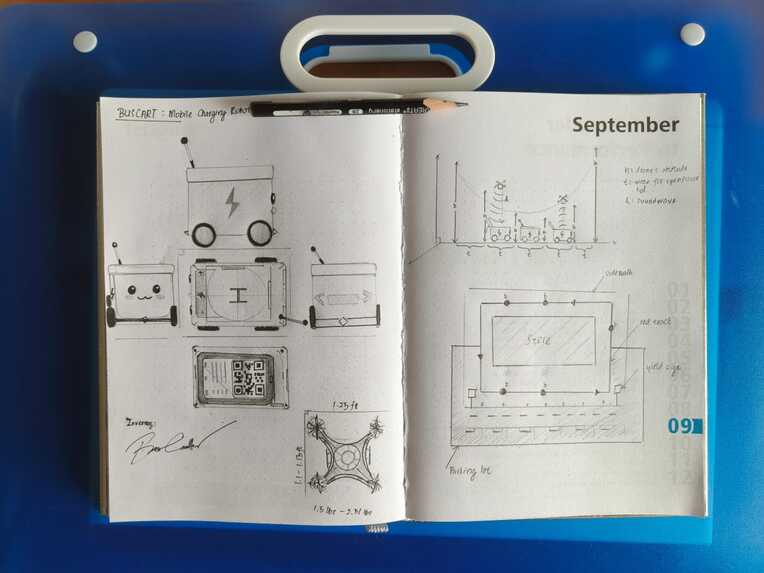
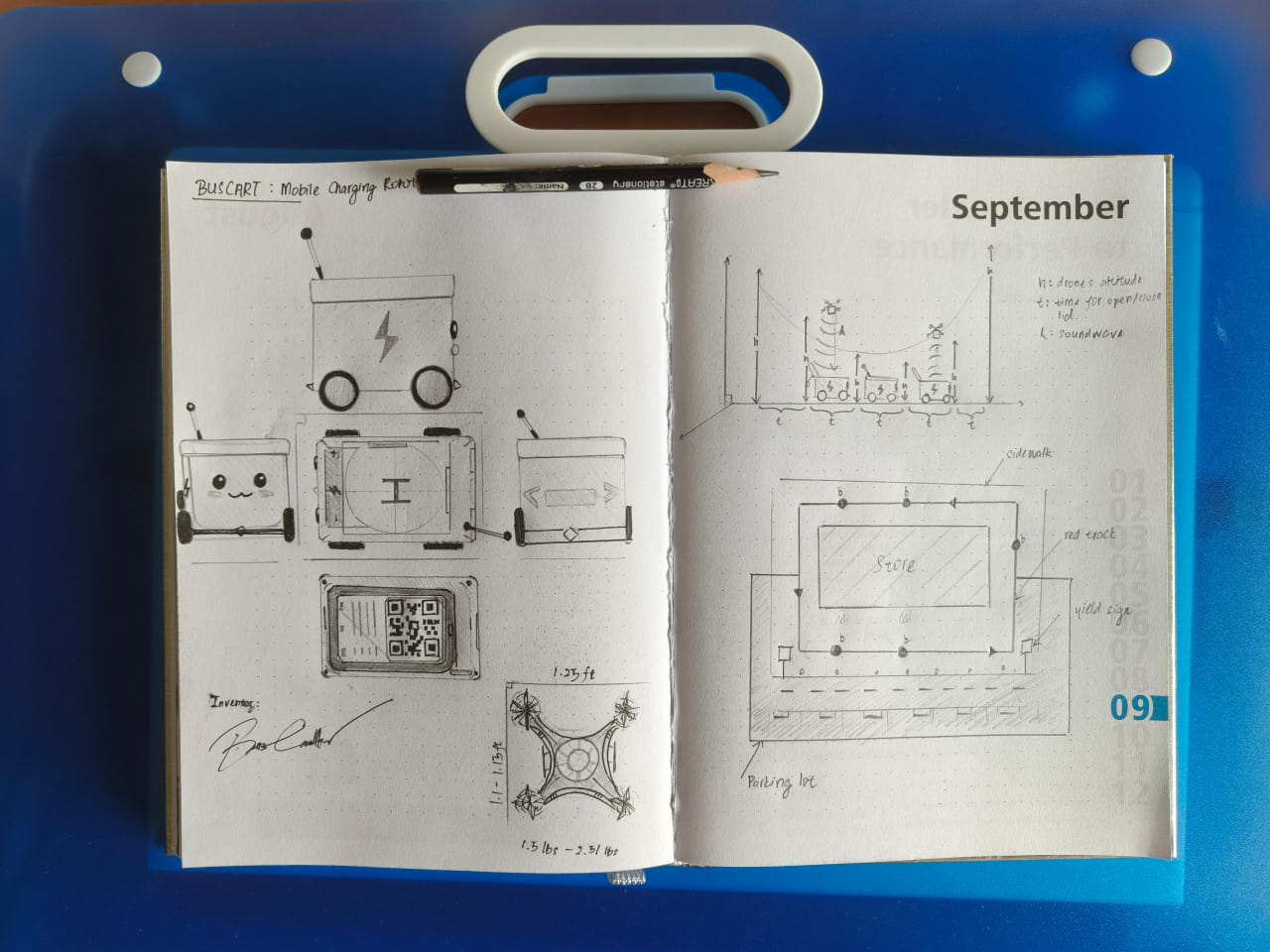
Initial Concept Ideation & Sketches
-
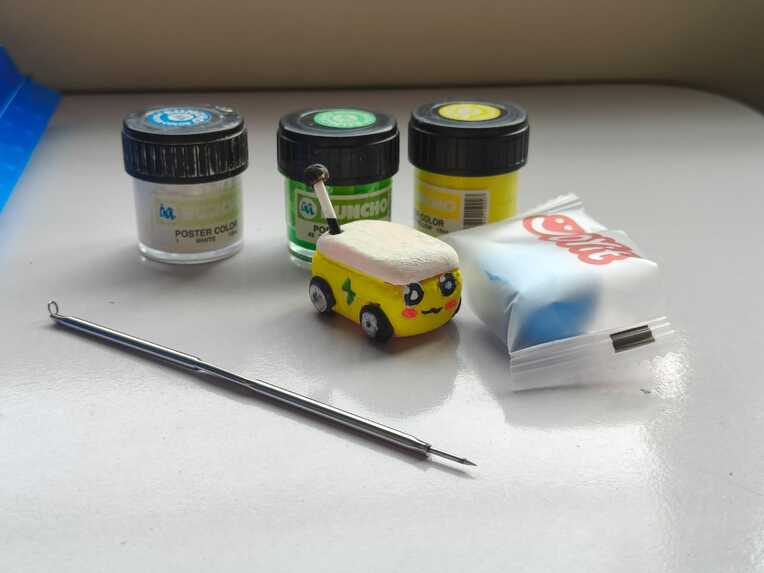
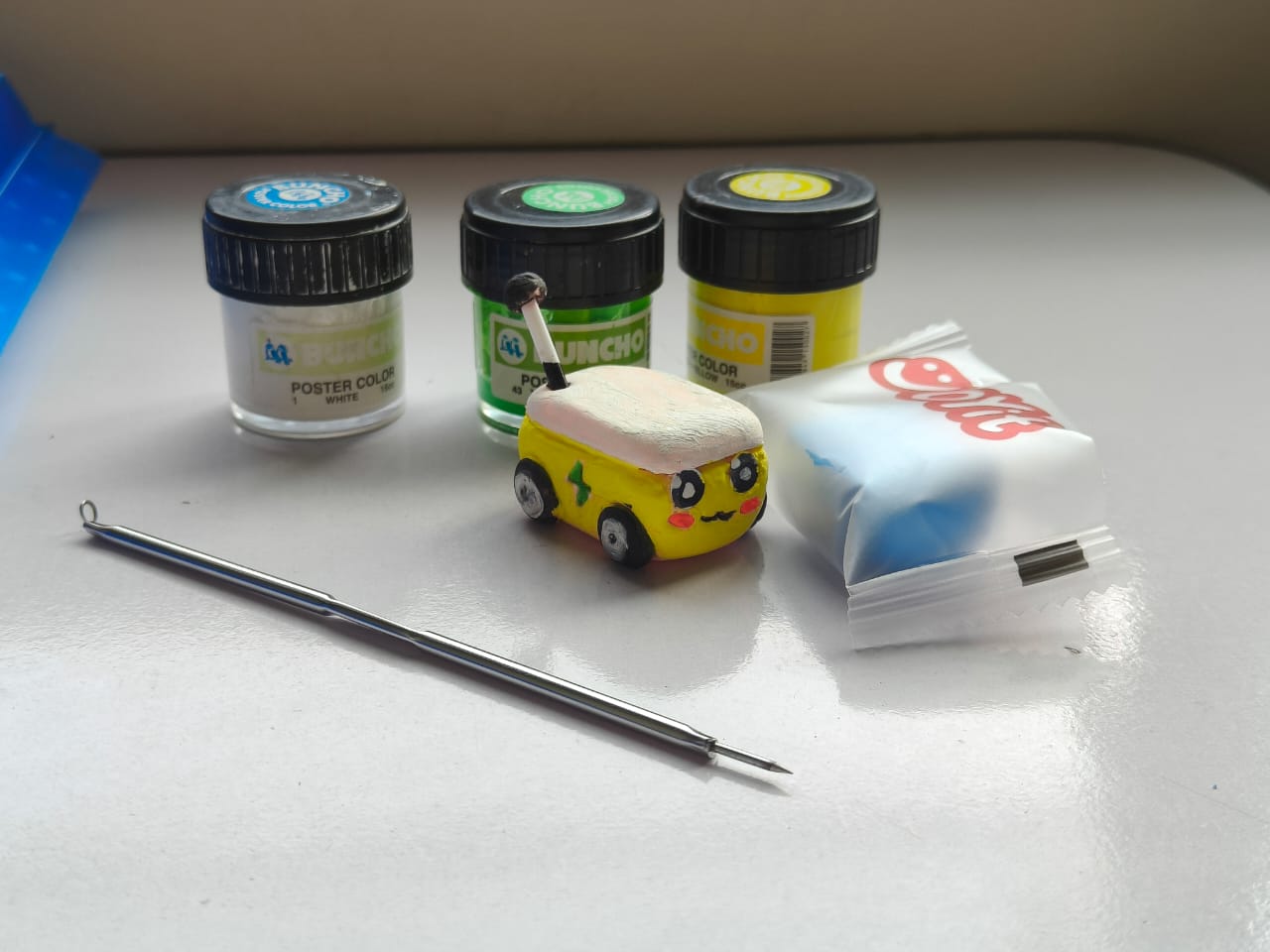
Physical Prototyping & Clay Modeling Phase
Problem Statement
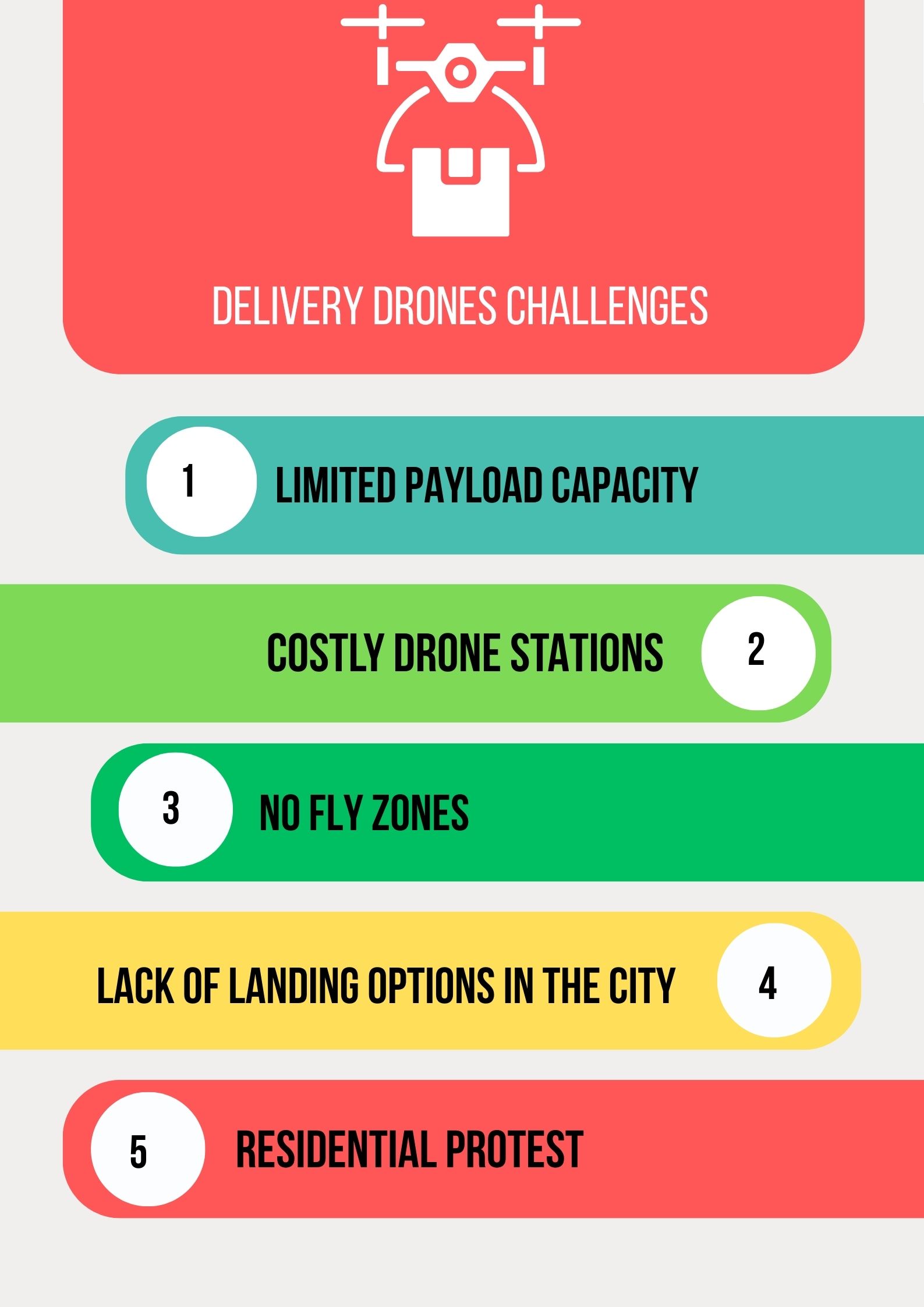
Commercial drone delivery has advanced rapidly, spearheaded by pioneers like Zipline, Wing, Amazon Prime Air, and DoorDash. However, the industry remains bottlenecked by structural limitations:
The Range & Infrastructure Barrier: Commercial delivery drones are restricted to a ≈ 6-mile radius from their launch origins due to battery life and energy depletion. Scaling coverage to entire urban/suburban areas requires building expensive, centralized drone depots and rooftop hubs, creating massive CapEx hurdles and poor ROI.
Community Friction & Fixed-Asset Dilemmas: Fixed drone towers and parking lot stations suffer from a fleet sizing dilemma—turning into costly stranded assets during low-demand periods.
Judicial Case Study (Westborough, MA - October 2026): Commercial drone deployment faces severe municipal pushback. Local voters overwhelmingly passed a town bylaw banning commercial drone launch pads, landing pads, and drop zones by a vote of 510 to 13, driven by intense resident opposition over privacy and noise.
Methodology: The Socio-Technical Framework
To scale high-density automated delivery, global logistics often look to international testbeds like Shenzhen’s smart-city networks and Singapore’s ultra-dense urban sandboxes. However, these implementations reveal systemic vulnerabilities by failing to achieve sustainable profitability, proving that rigid, airspace-dependent delivery cannot scale seamlessly.
Simultaneously, soaring rental fees and e-commerce dominance have left many local grocery stores struggling, even though they feature spacious sidewalks and ideal physical positioning between regional distribution networks and urban neighborhoods.
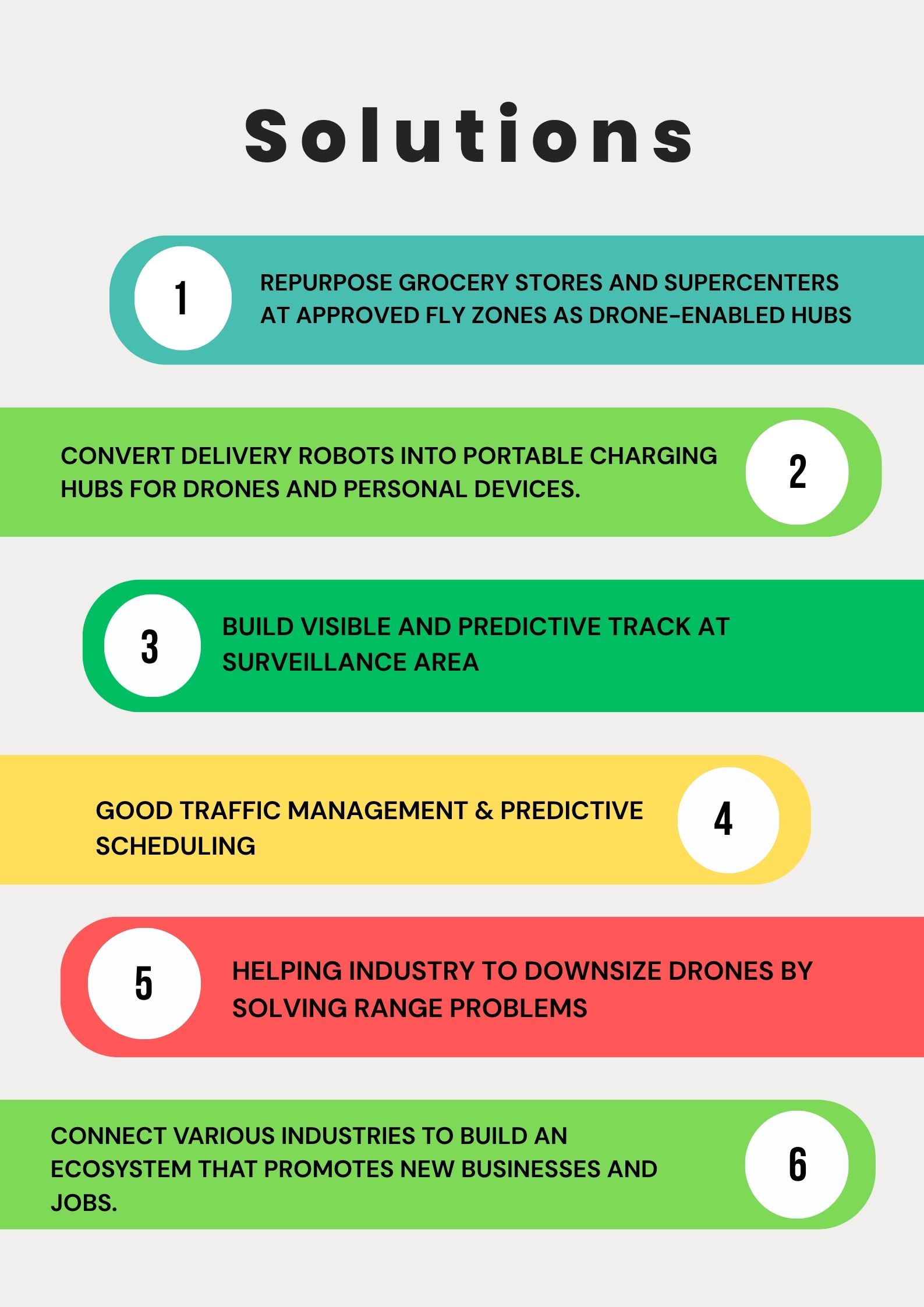
The Solution: Transforming underutilized retail footprints and grocery sidewalks into decentralized, mobile staging hubs for urban delivery fleets.
Solution: Meet BUSCART
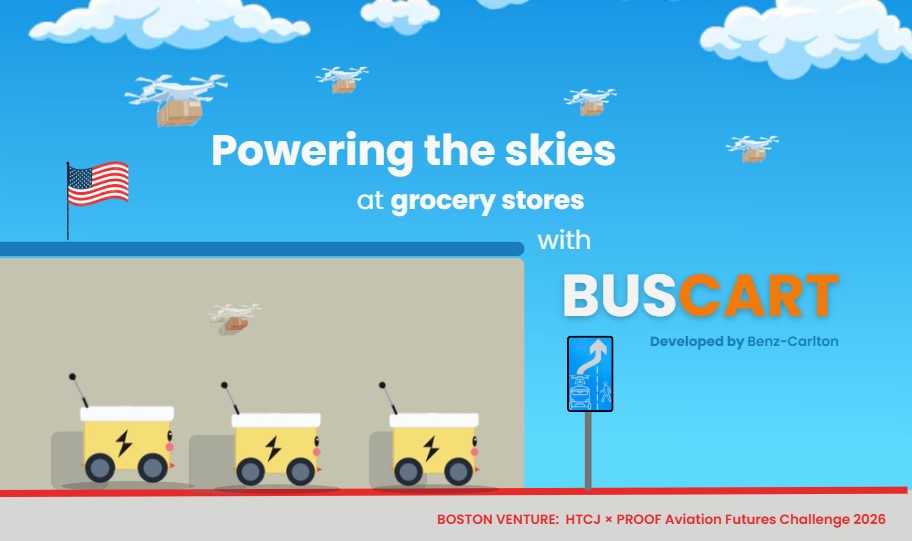
Buscart adapts the standard shopping cart footprint into a secure, mobile drone-charging station.
Wireless Induction & Drop-Offs: Incoming drones safely land on the cart to deposit packages while simultaneously engaging in wireless induction charging.
Public Utility & Micro-Hubs: During off-peak delivery hours, commuters can stand at a designated sidewalk zone to hail patrolling carts and charge their phones for a small fee. Shoppers can also use Buscart to place last-minute drone delivery orders from regional branches when local stores face out-of-stock items.Additionally, shoppers can interface with the cart's digital screen to participate in sponsored, instant-win lucky draws, turning local logistics stops into gamified marketing channels and retail reward touchpoints
Regulatory Compliance & Safety Framework
Step 1: Overcoming Regulatory and Infrastructure Hurdles in Drone Delivery
While federal guidelines under the FAA's Operation of Small Unmanned Aircraft Systems Over People Rule enforce strict kinetic energy and skin-laceration protections (Federal Aviation Administration, 2021), micro-logistics hubs like Buscart bridge this compliance gap. By utilizing localized ground-docking carts equipped with active acoustic alerts and proximity sensors, operators minimize open-air assembly risks and keep transit hops short, safe, and transparent for nearby pedestrians.
- Acoustic Safety: Incoming drones use directional beeping and echolocation to dodge obstacles, while Buscarts emit melodic tones and gentle bell chimes, providing a clear, high-frequency sound that politely alerts pedestrians and prevents collisions in noisy shared spaces.
- - Traffic Management & Predictive Scheduling: Custom yield signs along visible red tracks guide pedestrians smoothly around the autonomous units. Furthermore, operations integrating real-time weather forecasting and dynamic scheduling timetables via dashboard to regulate fleet deployments, automatically scaling back or pausing rooftop/sidewalk transit during high-wind or severe weather events while optimizing delivery schedules around peak retail foot traffic.
- Visual Identity: A bright yellow kawaii aesthetic and friendly audio cues make sidewalk operations visually engaging and welcoming to shoppers.
Step 2: Leveraging International Flight Data & Exemption Pathways
A primary hurdle for cutting-edge drone companies based in the U.S. is the lack of robust historical flight data required by regulators. To circumvent this, companies can leverage New Zealand’s flexible Part 102 framework and its rapid-testing Part 107 rules for advanced research organizations to accumulate thousands of hours of accident-free autonomous flight data.
When facing an FAA regulatory discrepancy, such as when Drone Company A cannot meet a specific prescriptive hardware requirement, operators can utilize the flight logs, risk assessments, and software validation gathered under the New Zealand CAA to submit a well-supported, data-driven Petition for Exemption to the FAA.
- Accumulate Real-World Flight Data Abroad: Deploy Buscart and autonomous delivery fleets within New Zealand’s flexible Part 102 Framework to conduct extensive, accident-free trials in mixed-use suburban environments.
- Capture Dynamic Docking Metrics: Record precise flight logs and software validations showing how the mobile ground-docking carts handle crosswinds, pedestrian proximity sensors, and wireless induction charging.
- Compile Comprehensive Risk Assessments: Package the safety data, acoustic alert performance, and pedestrian traffic management metrics gathered during the international trials.
- Submit a Data-Driven Petition for Exemption: Present the New Zealand Civil Aviation Authority (CAA) data directly to the FAA to overcome prescriptive U.S. hardware rules that traditionally require rigid, static landing pads.
Prototyping & Simulation
Operating as a pre-seed founder, the core objective was leveraging WebGPU to dynamically illustrate structural engineering and MVP functionality:
- Physical Prototyping: Bypassing restrictive CAD software, initial design was built using hand-drawn sketches and lightweight PVA clay models to anchor AI-driven simulation graphics.
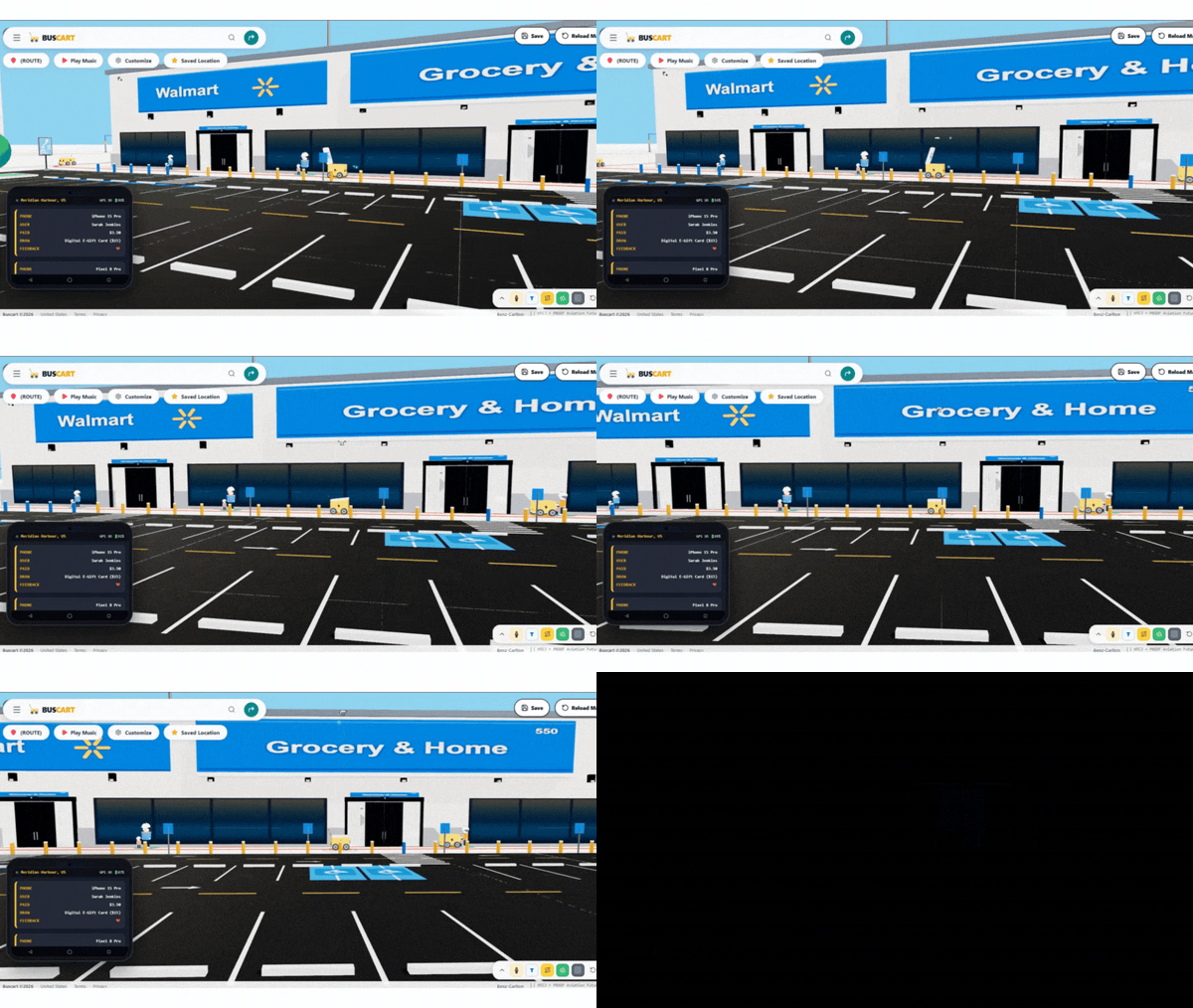
- Geospatial Site Analysis: Using Google Maps, retail footprints for major US retailers (Walmart, Target, Costco, Whole Foods) were analyzed to build a universally intuitive, editable sandbox environment.
- Simulated Execution: The live WebGPU simulation models real-time kinematic interactions and delivery workflows. (Note: Rare graphical or kinematic glitches are isolated anomalies caused by WebGPU browser rendering limits and do not impact core simulation functionality).
(Note: The Try it out link requires a desktop browser with WebGPU support for the full simulation experience.)
Commercial Stakeholders & Ecosystem Participants
Who Can Buy It (Enterprise Retailers): Major supermarket chains and retail conglomerates (e.g. Walmart, Target, Dollar Tree, Cotsco, Kroger) that operate private sidewalk infrastructure and localized distribution networks.
Who Can Use It (End-Users & Partners): Commercial drone operators, EV companies, hardware manufacturers, and everyday shoppers utilizing public phone charging and delivery services.
Who Can Advertise Through It (Media & Brands): Consumer brands leveraging mobile cart footprints for dynamic, hyper-localized Out-of-Home (OOH) digital advertising and TikTok-driven viral marketing campaigns, alongside airline and fintech partners sponsoring instant-win digital rewards, ticket discounts and payment integrations.
Roadmap to Field Validation & Commercial Deployment
BUSCART is currently positioned at the Pre-Seed / Concept-to-Validation Stage. Transitioning from simulation to a physical pilot involves a phased, risk-adjusted roadmap:
- Power Architecture & Thermal Efficiency: Partnering with hardware manufacturers to engineer sub-10-minute high-density induction charging protocols.
- Energy Density & Dual-Tier Power Architecture: Scaling lightweight battery cells for the Buscart's fleet and drone , while co-evolving ultra-fast MagSafe and Qi wireless charging protocols (sub-10 to 20-minute windows) with mobile manufacturers for public sidewalk kiosk utility.
- Commercial GTM & Infrastructure Integration: Securing deployment agreements with major retailers to pilot mobile robotic hubs within controlled private perimeters.
- Dynamic Deck Engineering: Developing weather-hardened, IP67-rated active cooling systems and high-current wireless power transmitters housed within the four-wheel autonomous cart chassis.
- Payload-Safe Energy Transfer: Designing modular induction pads with offset multi-coil geometries to route power securely around suspended cargo pods and handle real-time crosswind adjustments during landing.
- Global Regulatory Sandboxes: Establishing pilot programs leveraging flexible frameworks like the Civil Aviation Authority of New Zealand Part 102 Certified Process to accumulate real-world flight safety, proximity sensor, and acoustic telemetry.
- Gamified Engagement & TikTok Integration: Deploying interactive sidewalk kiosks where waiting customers charging their phones participate in instant-win lucky draws, leveraging TikTok and fintech partnerships to drive organic user acquisition, promotional rewards, and out-of-home advertising engagement.
Path Forward & Collaboration
Developed as an independent, bootstrapped pre-seed initiative using WebGPU simulation architectures. This project bridges the urban drone delivery range gap by transforming retail sidewalk infrastructure into mobile charging hubs.
Challenges:
Building physical hardware and autonomous robotics as a solo founder brings immense resource constraints, networking hurdles, material shortages, and a lack of advanced local software tools and computing power. Beyond prototyping in simulation, I am actively seeking a strategic partnership through the HTCJ × PROOF Boston organization , alongside pilot agreements with major grocery retail networks. My goal is to secure challenge incubation support, pilot funding, and co-development opportunities to deploy Buscart’s first controlled-perimeter sidewalk and drone-docking field test in the Boston area or New Zealand.
Work Enquiries: [email protected]
References
Parseghian, A. (2026, October 22). Westboro, Massachusetts approves new bylaw to restrict Amazon drone deliveries: "Like David and Goliath". CBS Boston.
Yang, F. (2025, August 12). City in the Sky: Drones, Shenzhen, and the "Low-Altitude Economy". Made in China Journal.
Unmanned Airspace. (October 24, 2026). Singapore suspends drone model and operator after crash.
Civil Aviation Authority of New Zealand. (n.d.). Part 102 Certified: The Step-by-Step Process.
Fortune Business Insights. (2026, October 5). Drone package delivery market size, share, & industry analysis, by drone type, by payload capacity, by range, by application, by end-user, and regional forecast, 2026–2034. Fortune Business Insights Market Research.
Triggs, R. (2026, October 21). Silicon-carbon batteries have changed the game — Apple and Samsung need to catch up. Android Authority.
Federal Aviation Administration. (2021). Operation of small unmanned aircraft systems over people (Docket No. FAA-2018-1087; Amdt. Nos. 11-64, 21-105, 43-51, 107-8). Department of Transportation.
Junaid, A. B., Konoiko, A., Zweiri, Y., Sahinkaya, M. N., & Seneviratne, L. (2017). Autonomous wireless self-charging for multi-rotor unmanned aerial vehicles.
Built With
- google-ai-studio

Log in or sign up for Devpost to join the conversation.