-
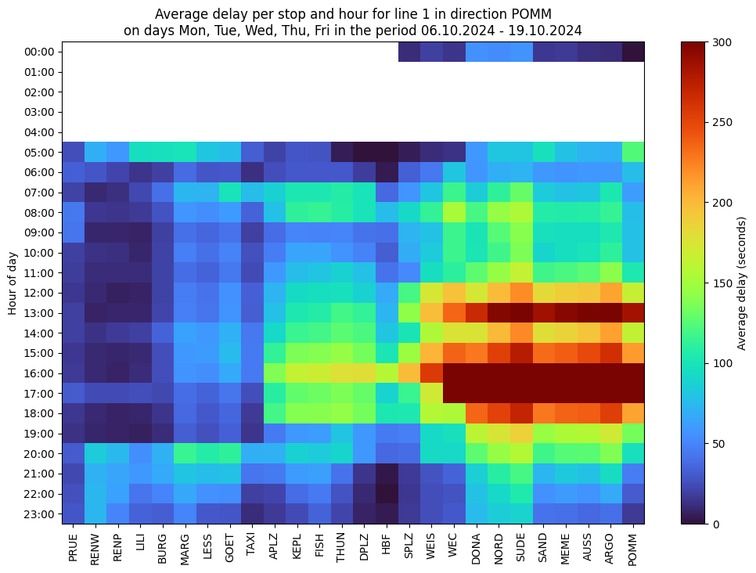
Delay of bus line 1 Pommernstraße by hour of day on working days. Nibelungenbrücke is a clear bottleneck here.
-
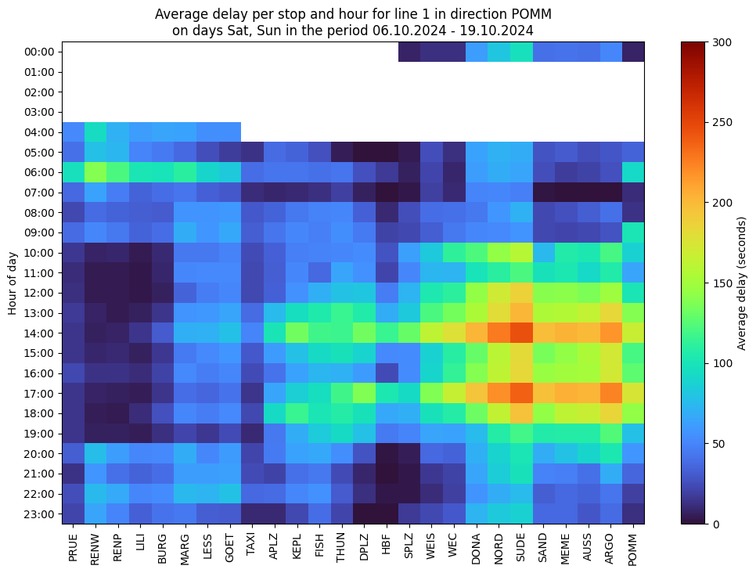
Delay of bus line 1 Pommernstraße by hour of day on weekend. Nibelungenbrücke still sticks out, even though the delays are less extreme.
-
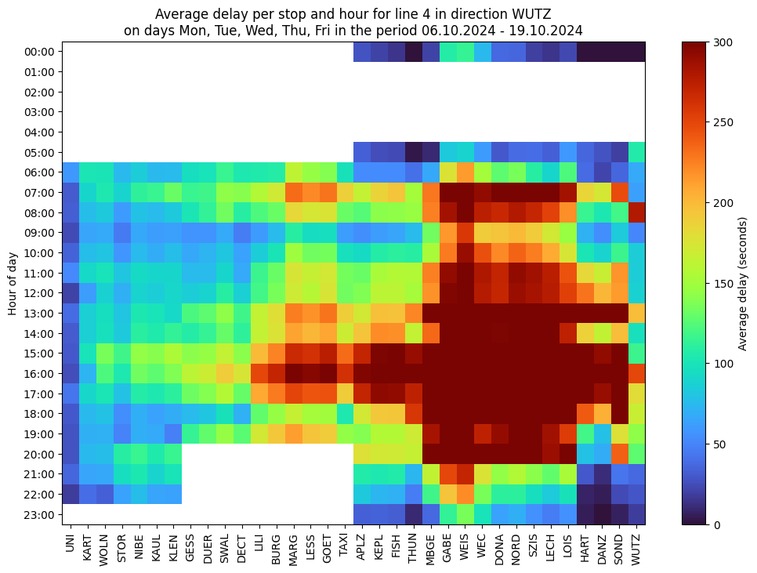
Delay of bus line 4 Wutzlhofen by hour of day on working days. Heavy delays.
-
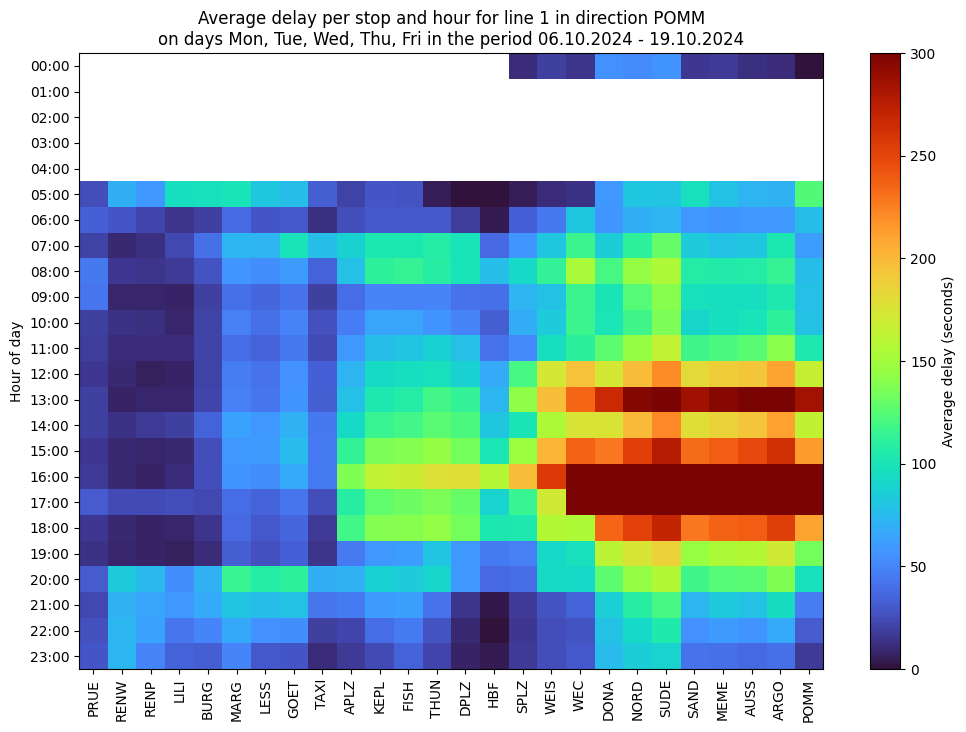
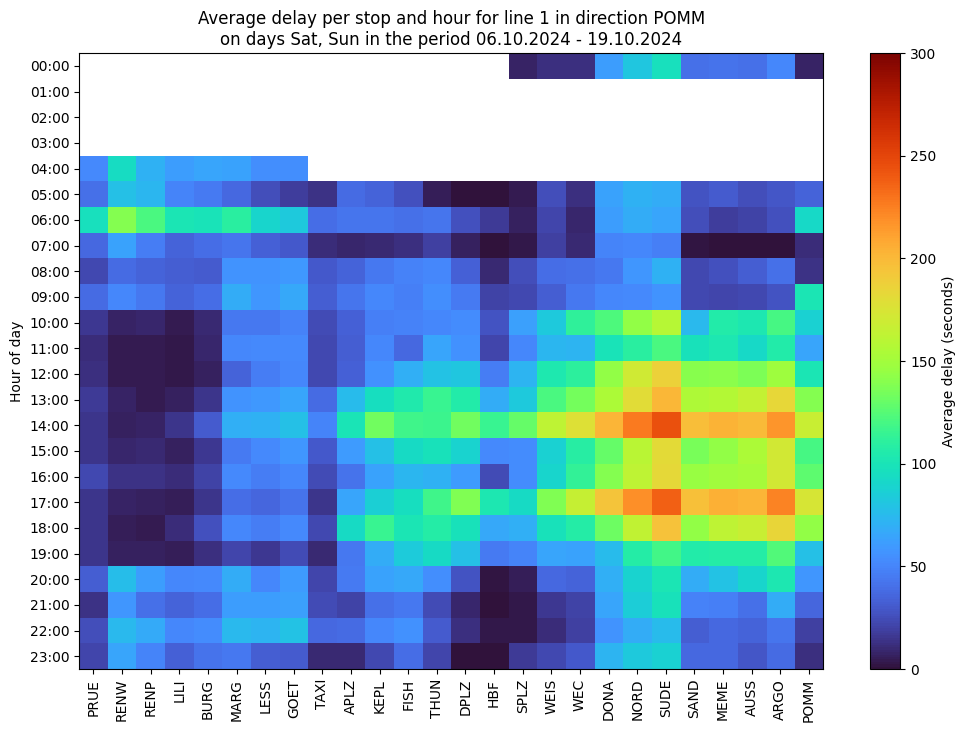
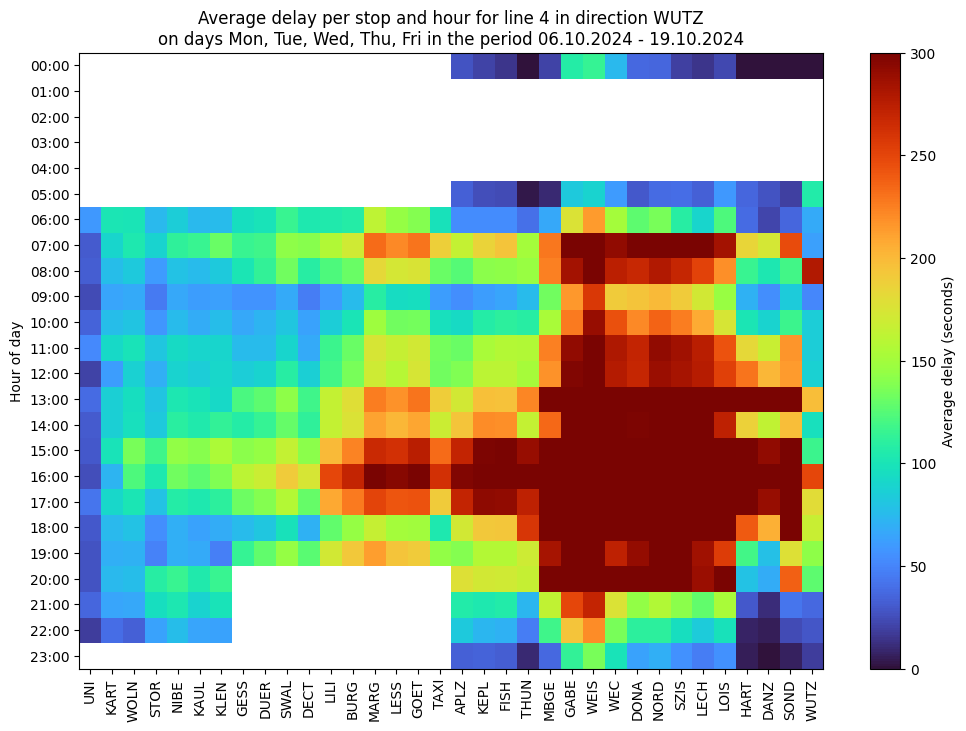
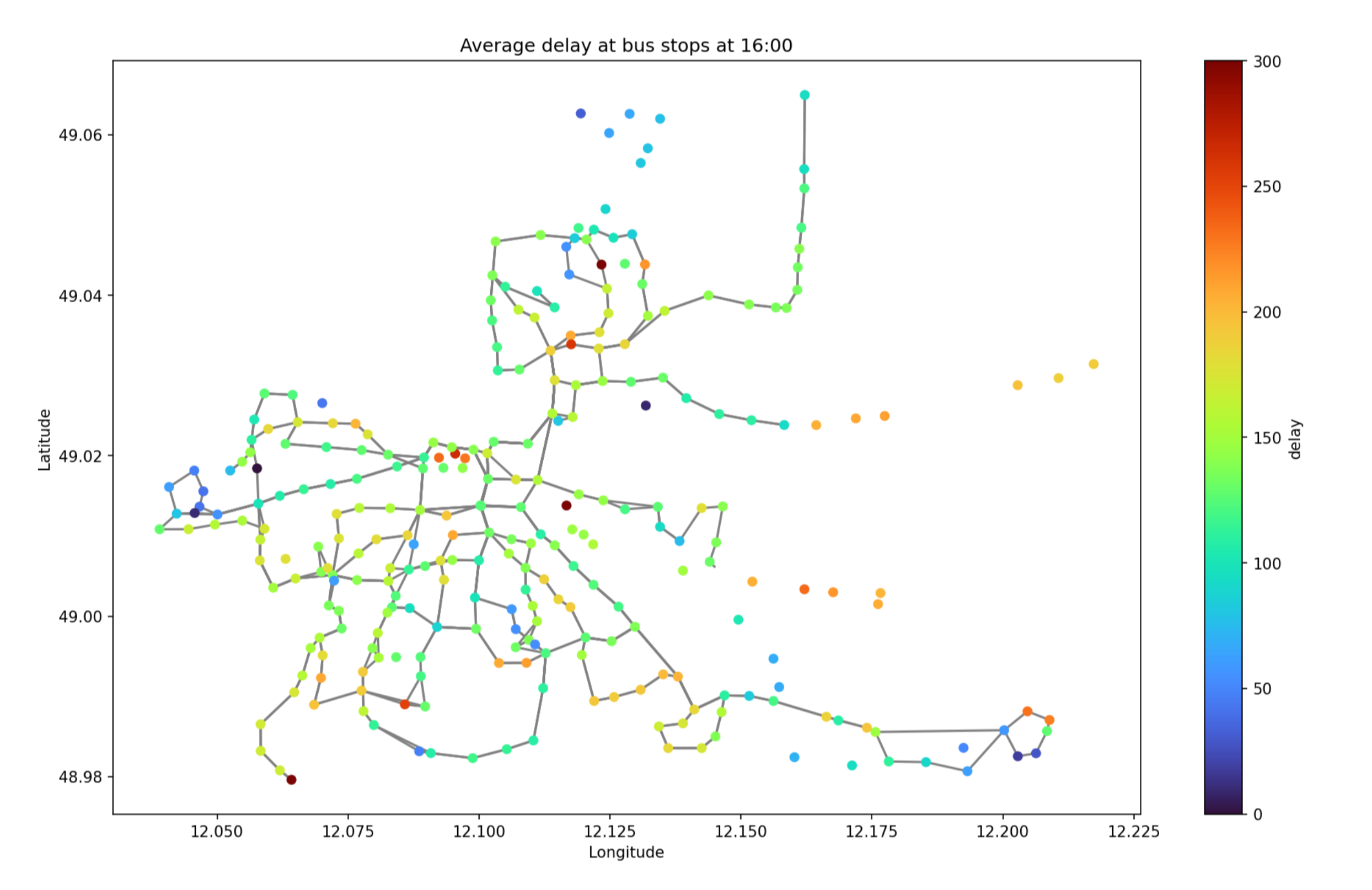
During this Hackaburg, we worked with a large public transport dataset of "Das Stadtwerk" to explore how delays are distributed across space and time. Our main goal was to gain a clearer understanding of where and when disruptions tend to occur in the network.
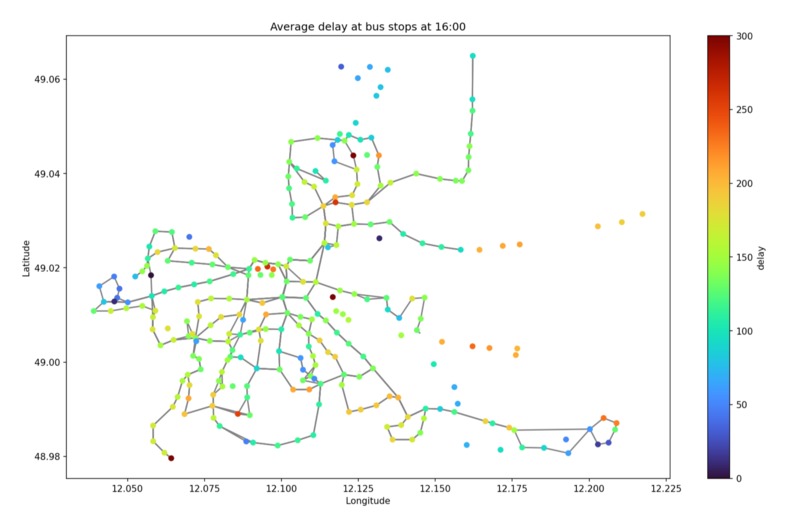
We focused on building interactive visualizations to make complex patterns more accessible. In particular, we generated several heatmaps showing delay intensity across different locations and time periods. These helped highlight recurring hotspots where delays are more frequent. In addition, we created a map-based visualization of bus routes at different times to provide structural context and to connect delay patterns with the underlying transport network.
A significant challenge early in the project was that the dataset was not provided in a ready-to-use format. Considerable time had to be spent on data cleaning and preprocessing before any meaningful analysis could be performed. This included handling inconsistencies, missing values, and restructuring the data into a format suitable for geospatial visualization. While time-consuming, this step was essential for ensuring the reliability of all subsequent results.
From the beginning, we made a decision not to apply AI-based delay prediction models. Given the relatively static nature of bus routes and schedules, we concluded that prediction would offer limited practical value for improving traffic flow or operations in this setting. Instead, we prioritized interpretability and actionable insight through visualization.
It would be helpful if the company takes a closer look at our results and uses them to identify the most problematic areas in the network. This could support better planning and help reduce delays in places where they happen often.
Improving traffic flow in these areas can also support sustainability. Fewer delays mean less idling buses, lower fuel consumption, and therefore reduced emissions. This makes the system not only more reliable for passengers, but also more environmentally friendly.


Log in or sign up for Devpost to join the conversation.