-
-
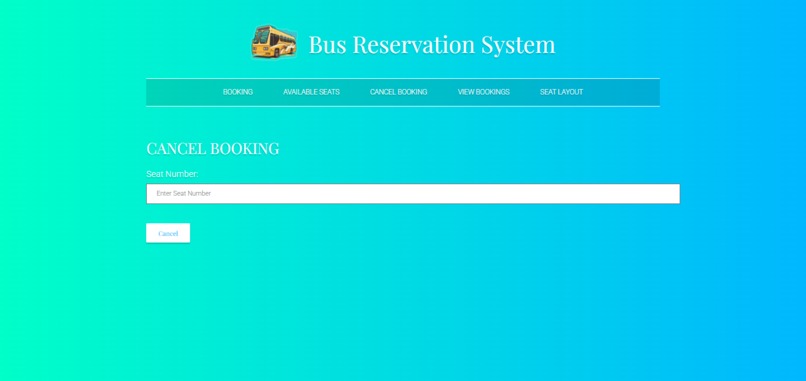
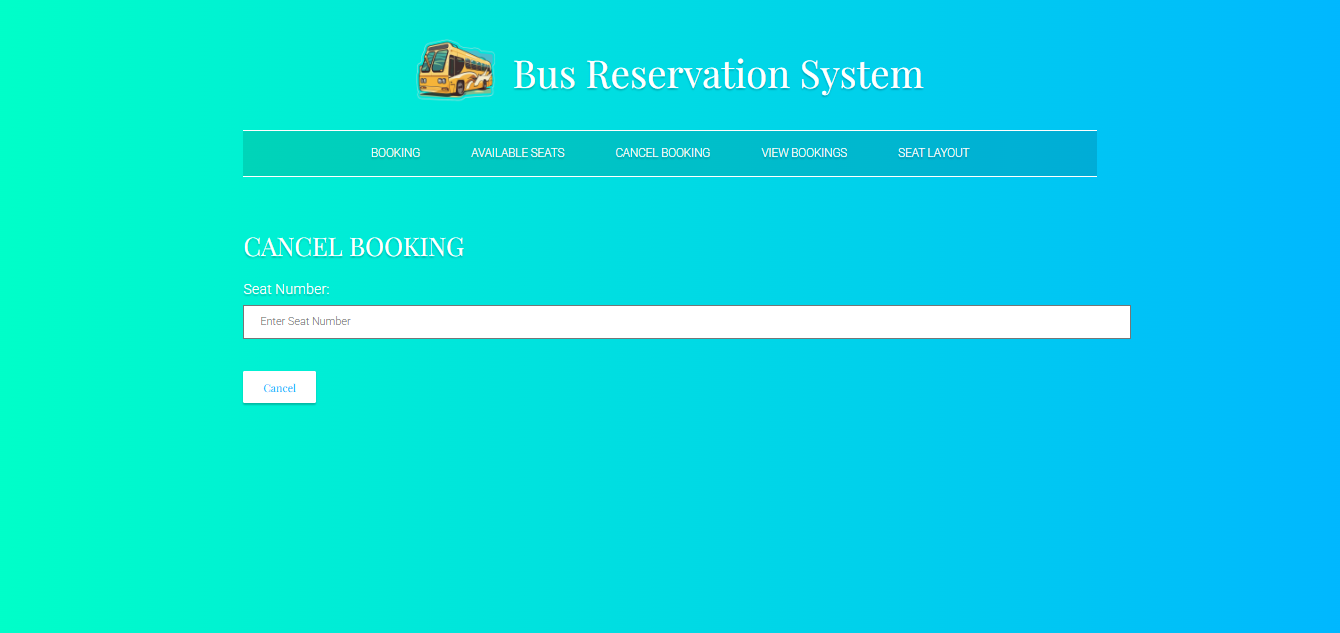
Cancel Booking page
-
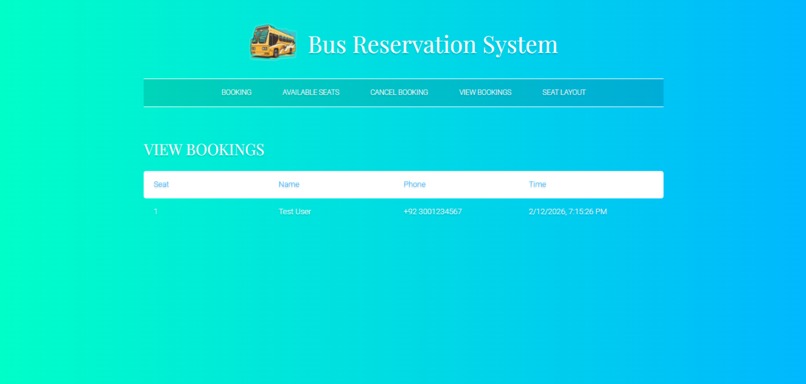
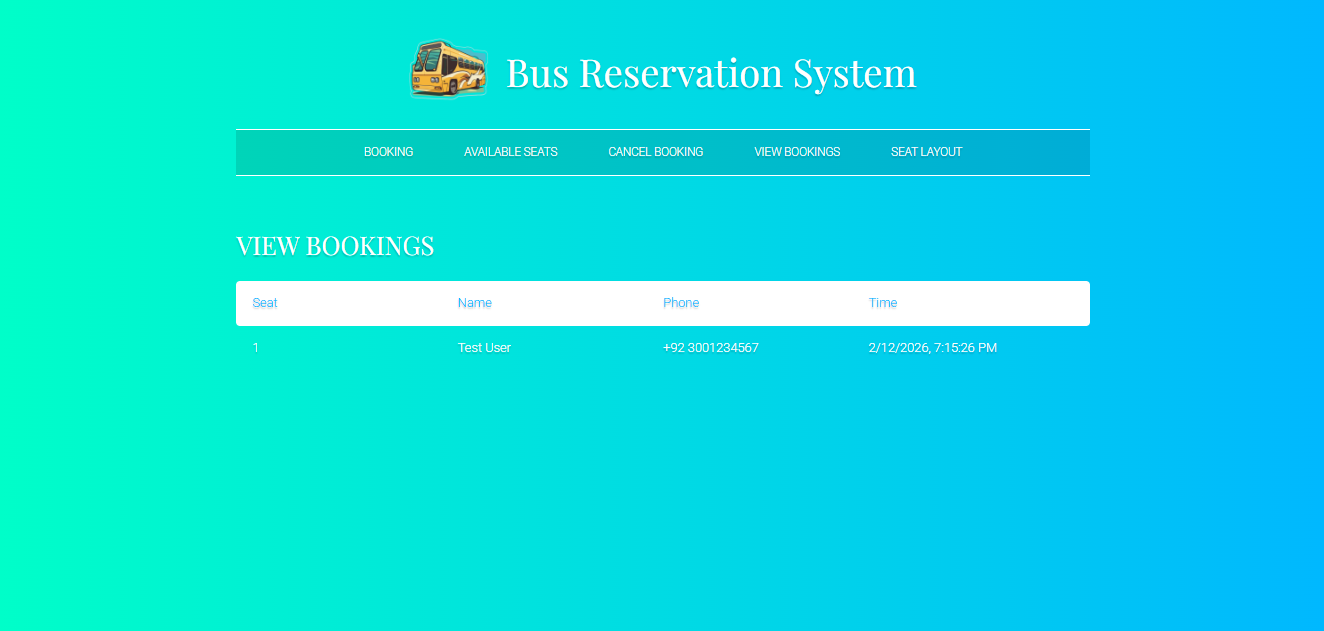
View Bookings page
-
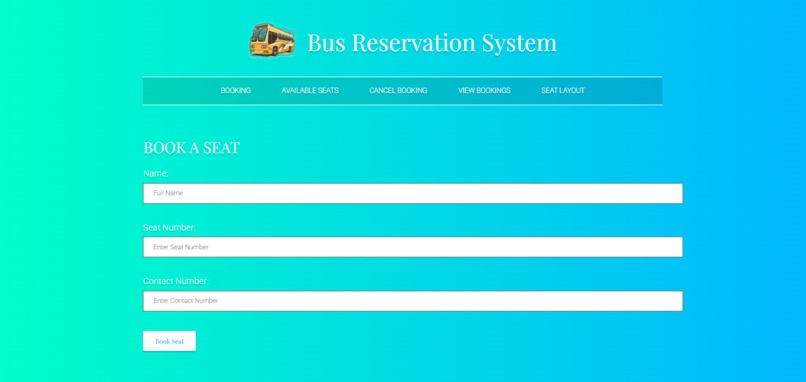
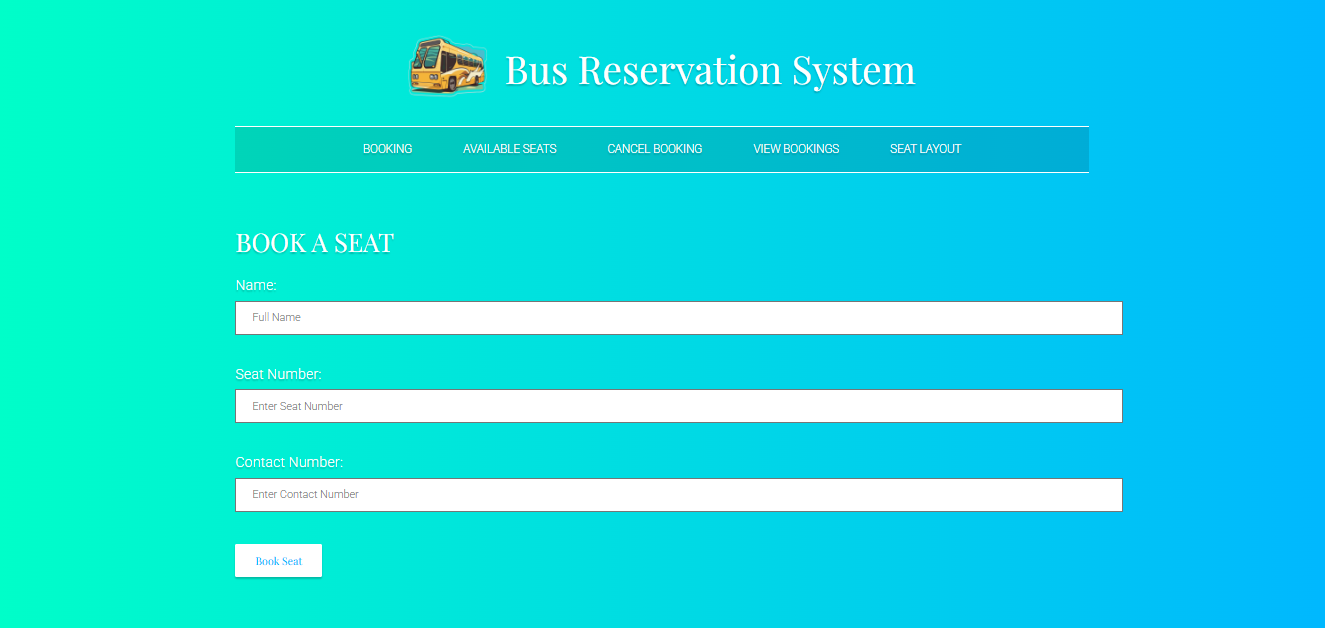
Booking page
-
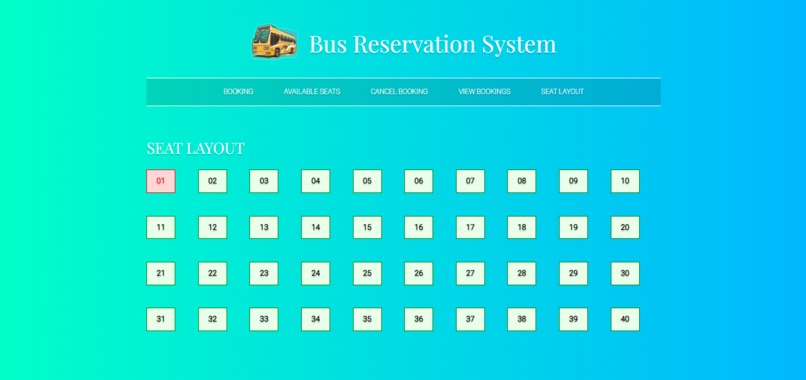
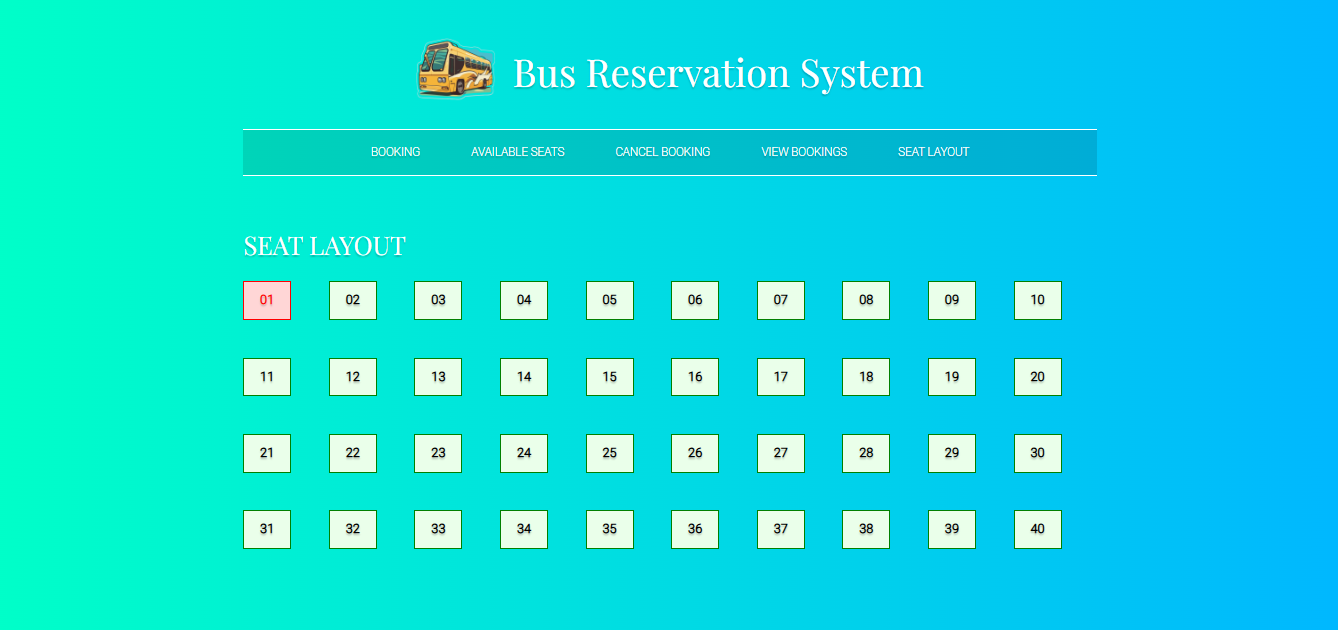
Seat Layout page
-
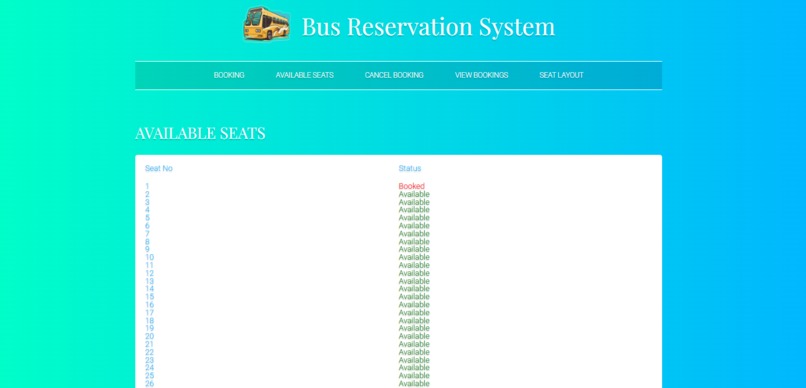
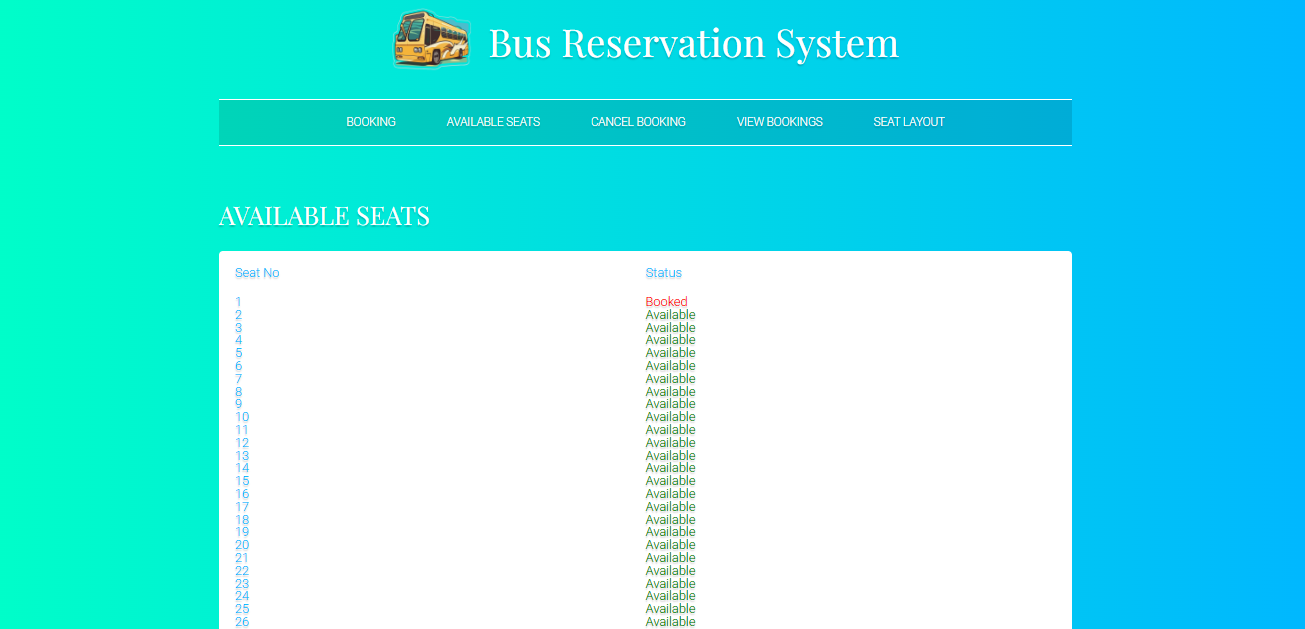
Available Seats page
-
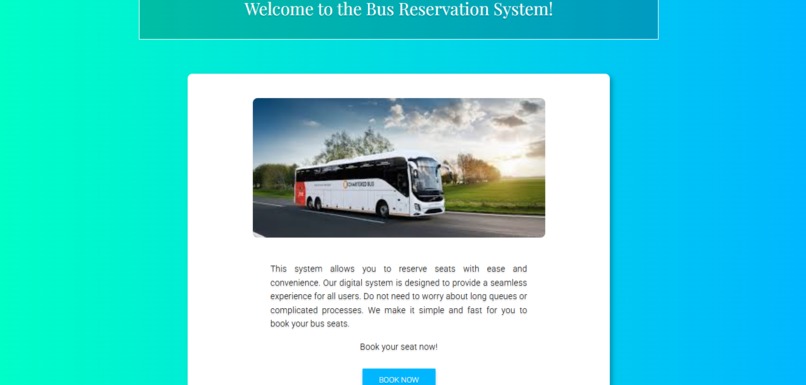
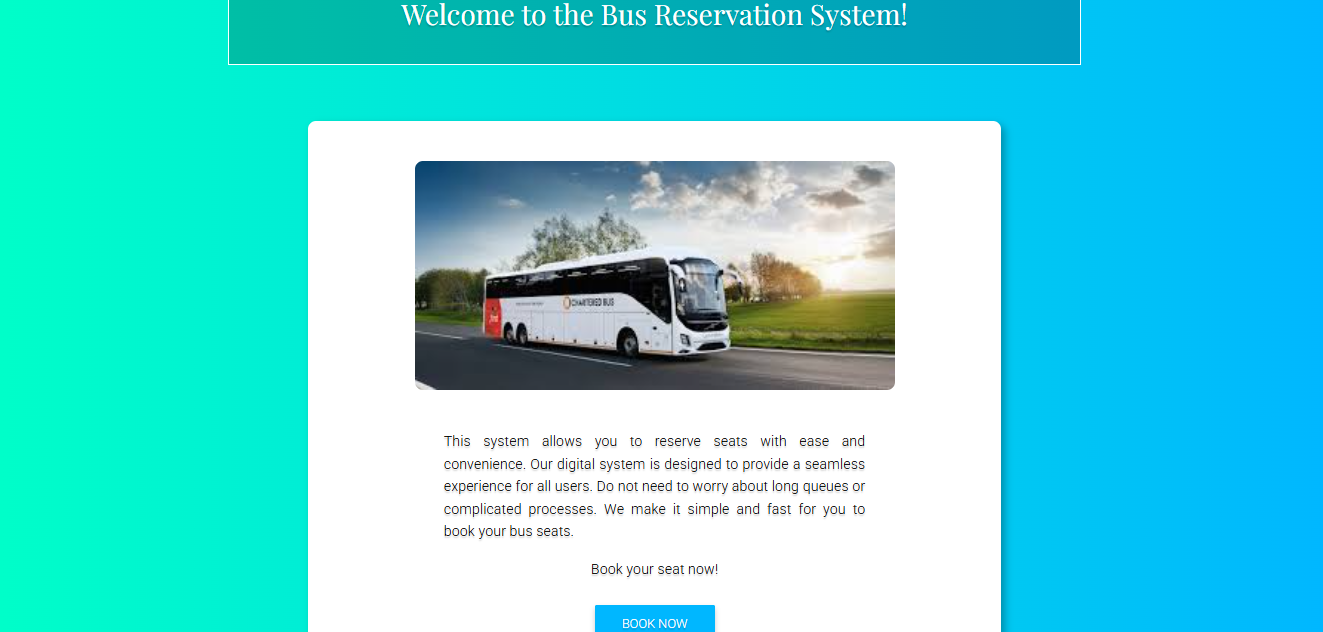
Home page
Inspiration
This project began as a simple academic exercise in C programming — a console-based Bus Reservation System using structs and file handling.
While the program worked, it felt limited. It relied on a text-based menu.
I challenged myself with a question:
What if I could transform this traditional procedural C program into a modern, interactive web application?
This project is the result of that transformation — a complete migration from console-based logic to a full-stack web architecture using Node.js and JavaScript.
What it does
The Bus Reservation System is a full-stack web application that allows users to:
• Book a seat • Cancel a booking • View passenger details • Check available seats • Visualize seat layout
Unlike the original C program, this version:
• Uses RESTful APIs • Dynamically renders data in the browser • Stores data persistently in a JSON file • Adapts to desktop, tablet, and mobile devices
How I built it
- Backend Architecture:
I rebuilt the C file-handling logic using:
• Node.js • Express.js • File System (fs module)
I designed a structured JSON-based storage system (bus.json). Each seat object contains:
{
  "seat_no": 1,
  "is_booked": false,
  "name": "EMPTY",
  "phone": "-",
  "time": ""
}
I also created REST API routes:
• GET /seats • GET /passengers • POST /book • POST /cancel
These APIs replaced the original C switch-case menu system.
- Frontend Design:
The frontend was built using:
• HTML5 • CSS3 (with responsive media queries) • Vanilla JavaScript (Fetch API + DOM manipulation)
Instead of printf, I dynamically generated elements using JavaScript and updated the DOM in real time.
Seat layout rendering was redesigned visually:
🟢 Green → Available 🔴 Red → Booked
- Responsive Design:
I implemented three layout modes:
• Desktop (Global View) • Tablet View • Mobile View
Using CSS media queries, grid systems were adjusted dynamically to prevent horizontal scrolling and ensure usability across devices.
Challenges we ran into
- Internal Server Errors (500):
While fetching seat data, the browser received HTML instead of JSON. The issue was traced to invalid or missing JSON files.
Fixed by validating file structure and handling errors properly.
- Type Mismatch Bugs:
Seat numbers from HTML inputs were strings, while JSON stored numbers. Strict equality comparison failed.
Fixed by converting values using Number() before comparison.
- Static File Routing Issues:
Images initially failed to load because I used local file paths instead of Express static routing.
Fixed by properly organizing assets inside the public folder.
- Function Not Triggering:
The cancel button initially did nothing because no event handler was attached.
Fixed by properly binding onclick and understanding event-driven behavior.
Accomplishments that I'm proud of
Successfully transformed a console-based C program into a full-stack web application Migrating procedural C logic into an event-driven Node.js architecture required rethinking how data flows and how user interaction is handled.
Built a working file-based persistence system Implemented structured JSON storage that mimics C structs and maintains booking data across sessions without using a database.
Connected frontend and backend using REST APIs Designed API routes that allow seamless communication between browser UI and server logic — replacing traditional console input/output.
Created a responsive, user-friendly interface Implemented desktop, tablet, and mobile layouts using CSS Grid and media queries to ensure accessibility across devices.
Solved real-world debugging challenges Diagnosed and fixed issues such as JSON parsing errors, type mismatches, static asset routing problems, and event handling bugs — strengthening practical debugging skills.
Designed a dynamic seat visualization system Built an interface that visually reflects booking status in real time, making system behavior intuitive and interactive.
Organized a scalable project structure Structured the project into backend logic, public assets, and data storage — mirroring real-world full-stack project architecture.
Completed an end-to-end system independently From backend APIs to UI design and responsive styling, this project represents a full development lifecycle rather than isolated features.
What I learned
This project significantly expanded my understanding of:
• Converting procedural logic into event-driven architecture • Frontend–backend communication using Fetch API • File-based data persistence in Node.js • JSON as a structured data format • RESTful API design principles • Responsive web design using CSS Grid and Media Queries • Debugging 500 errors and JSON parsing issues
Most importantly, I learned how different programming paradigms (C vs JavaScript) approach problem-solving differently.
Conclusion
This project represents more than just a reservation system.
It represents my transition from learning syntax to understanding systems — from writing programs that run in a terminal to building applications that users can interact with through a browser.
Transforming a procedural C application into a full-stack web system strengthened my understanding of architecture, debugging, and modern software development practices.


Log in or sign up for Devpost to join the conversation.