-
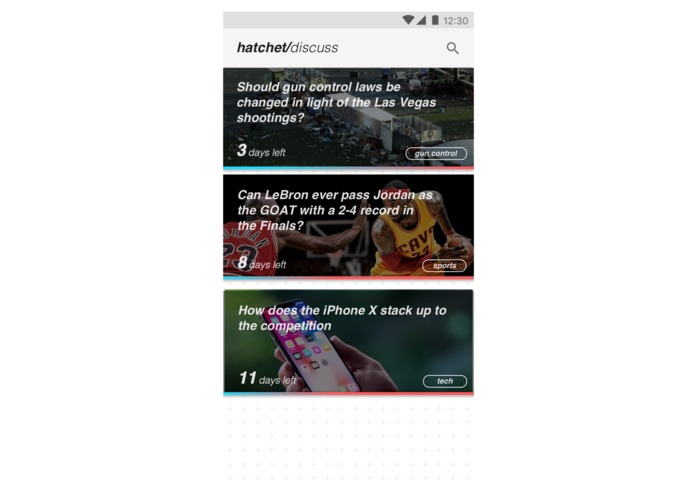
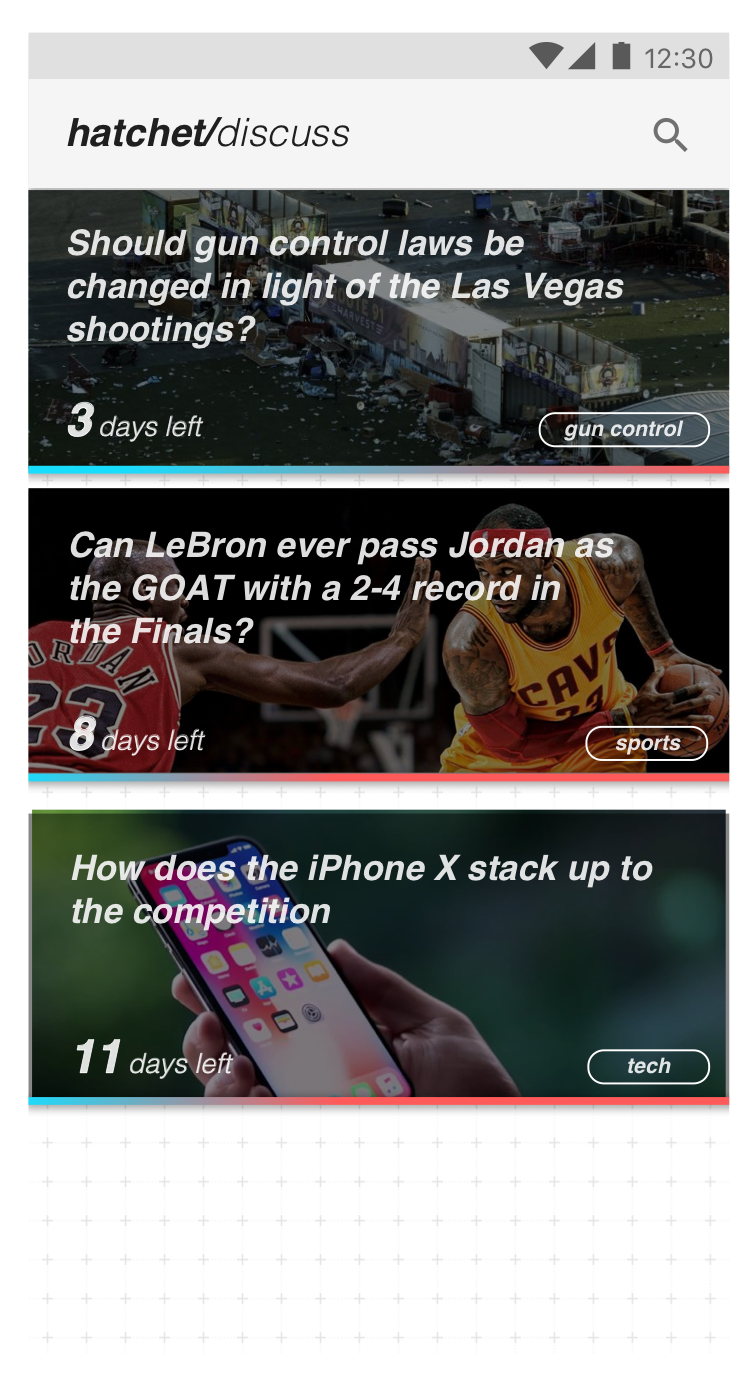
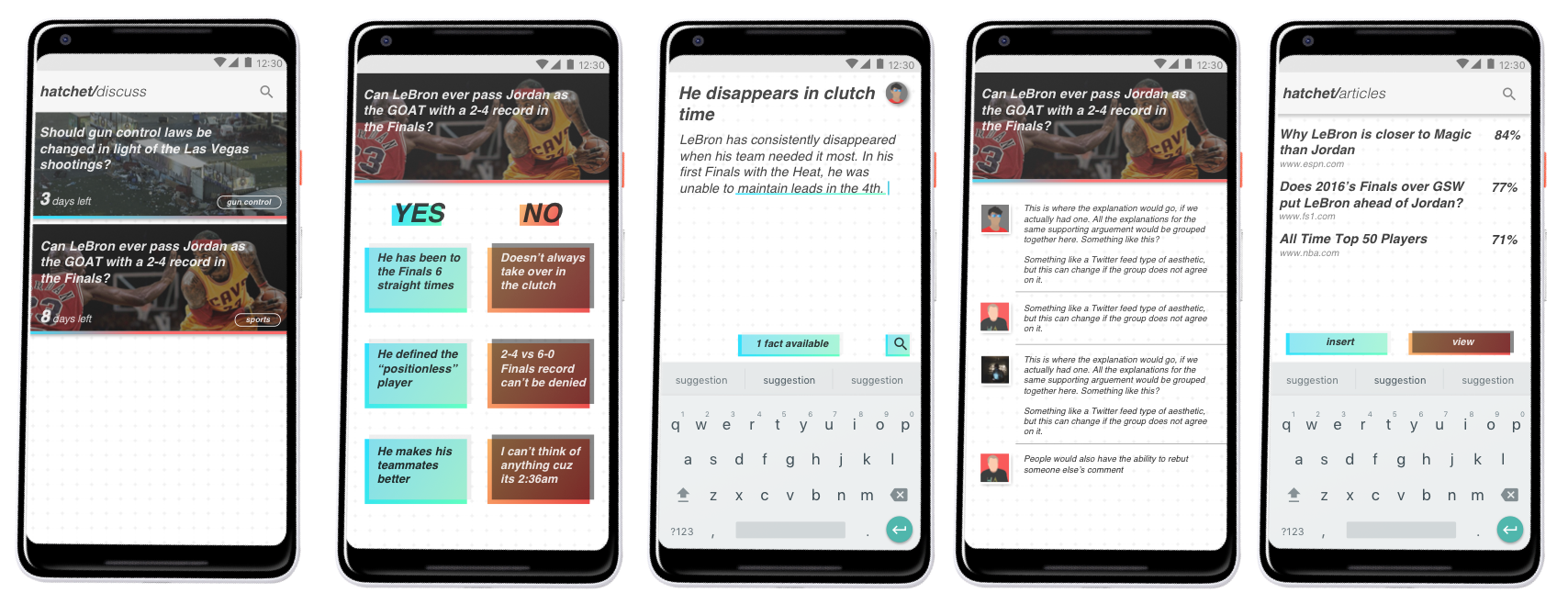
Android home screen
-
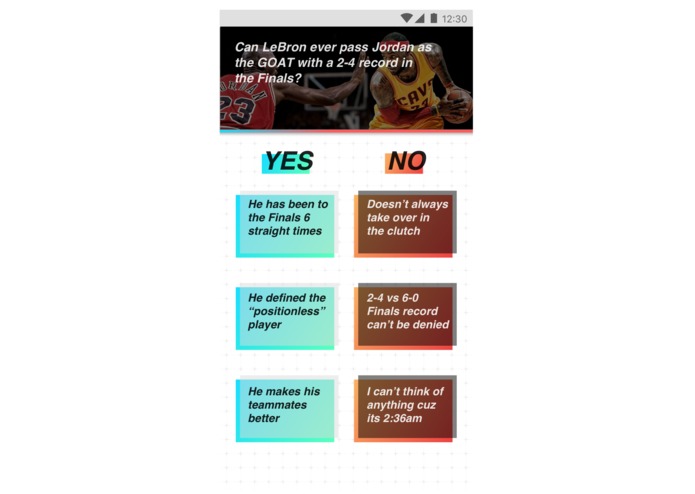
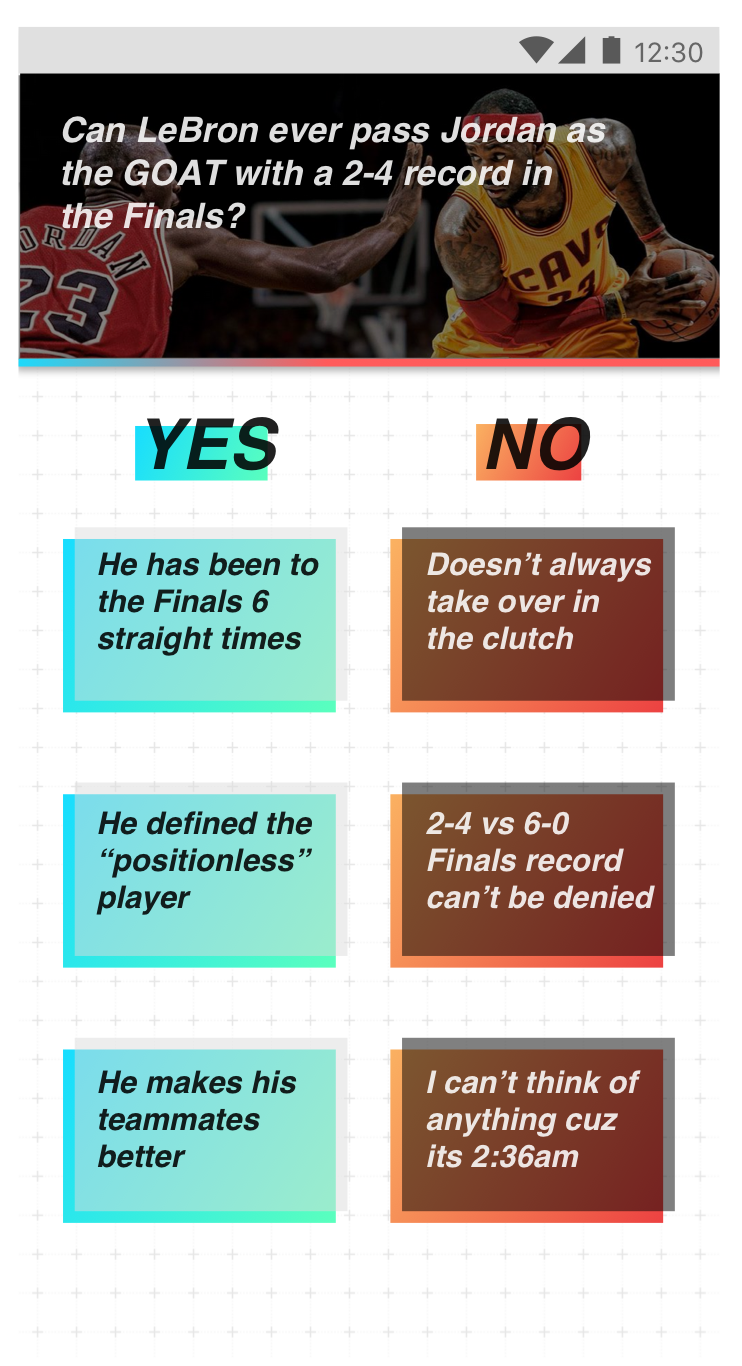
Screen with summarized discussion, using NLP
-
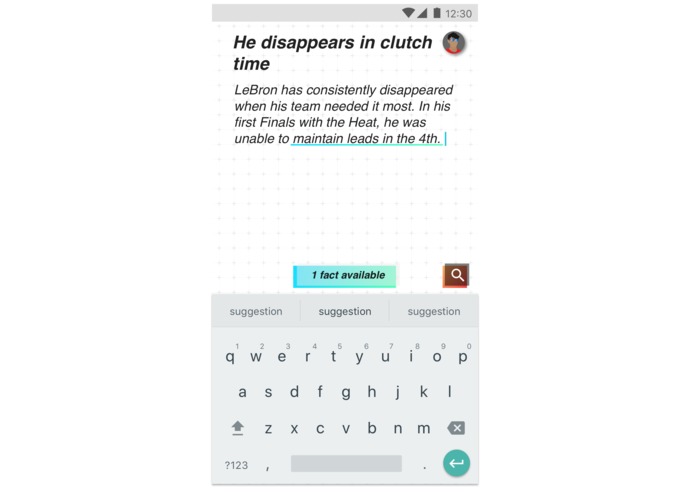
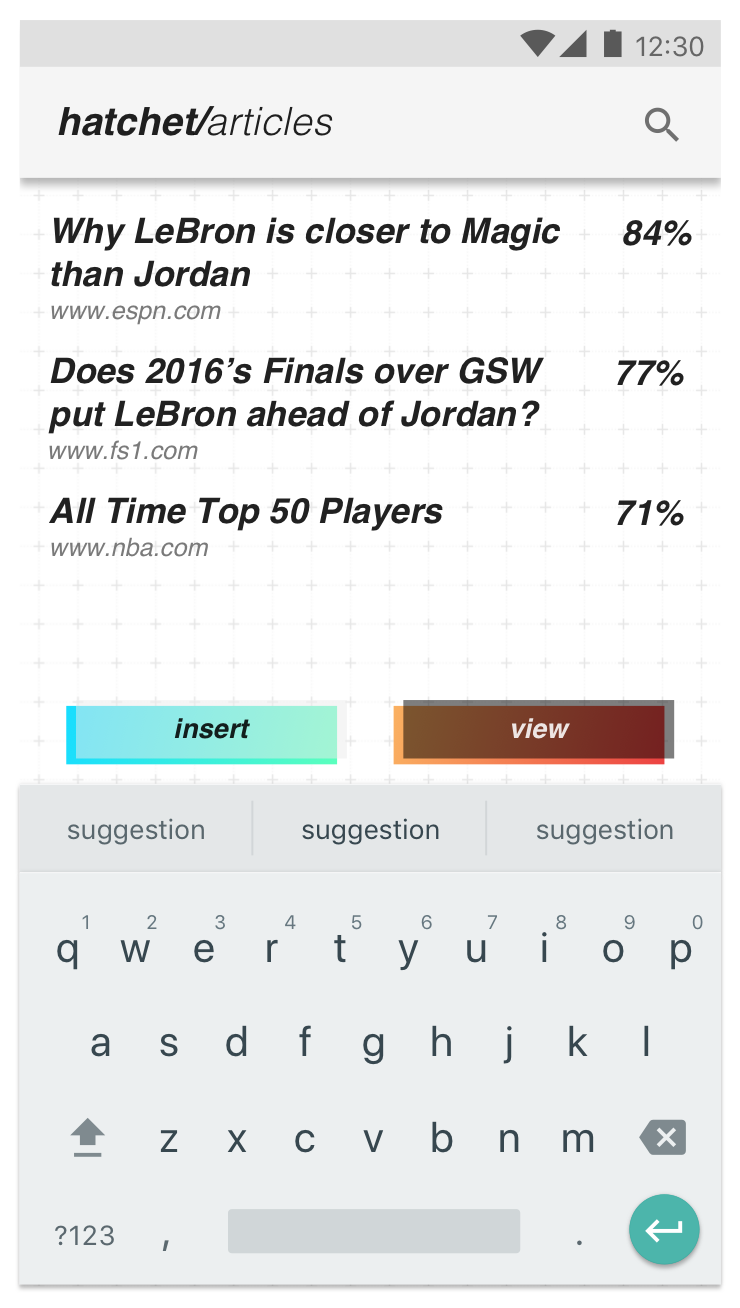
Post page with evidence tracking
-
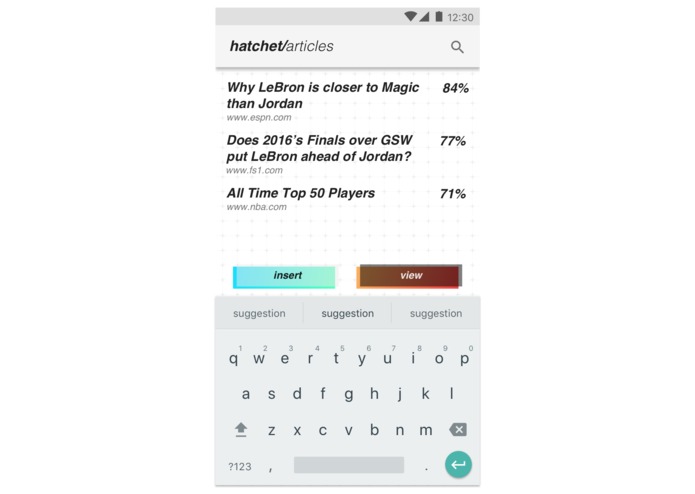
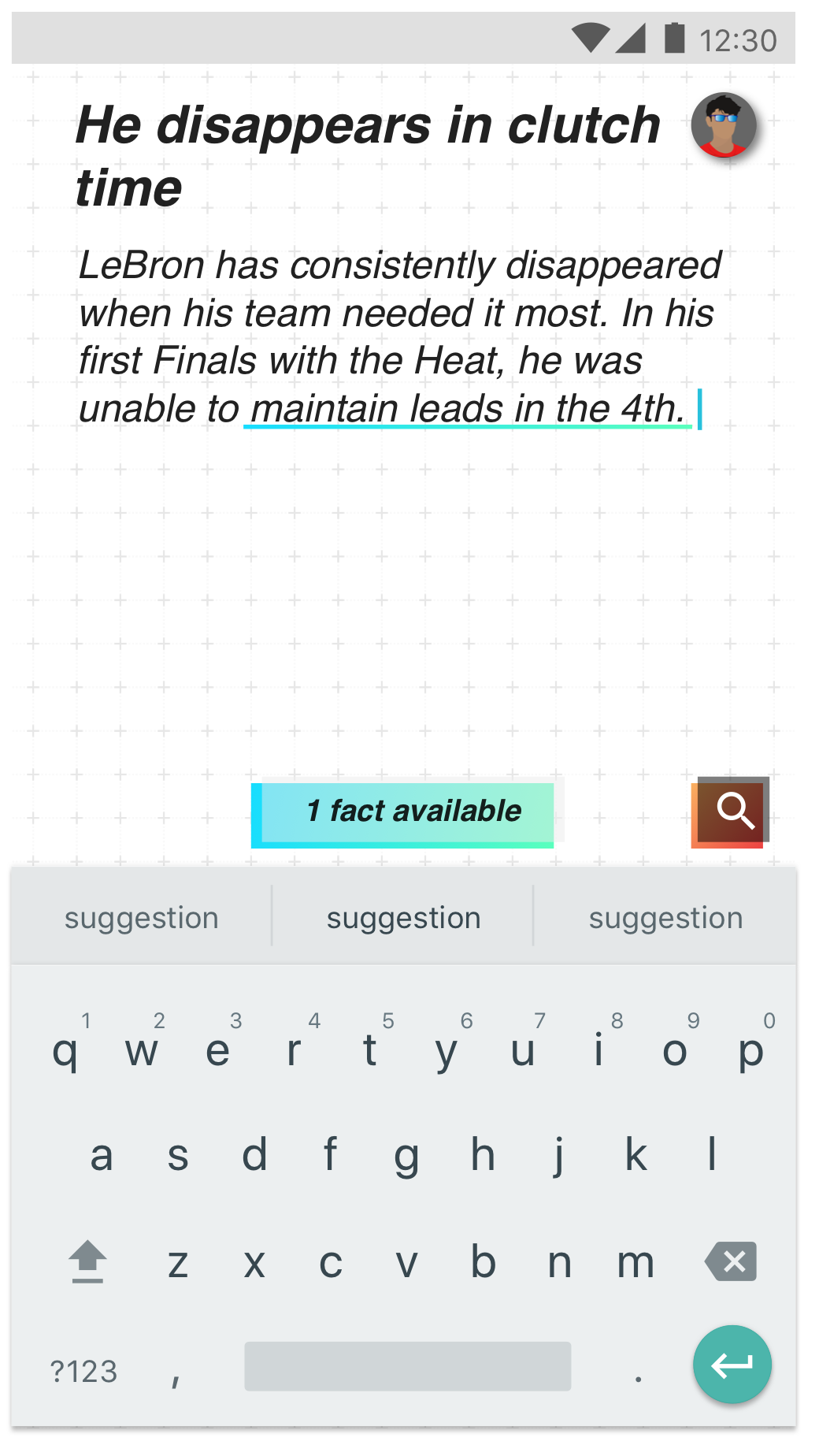
Evidence recommendation as you write
-
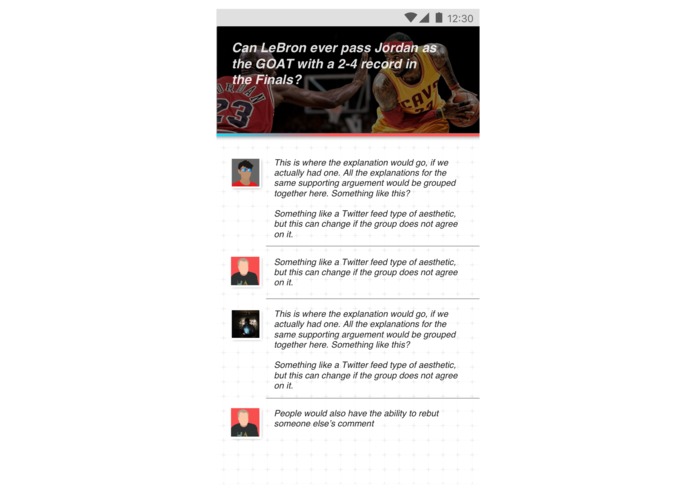
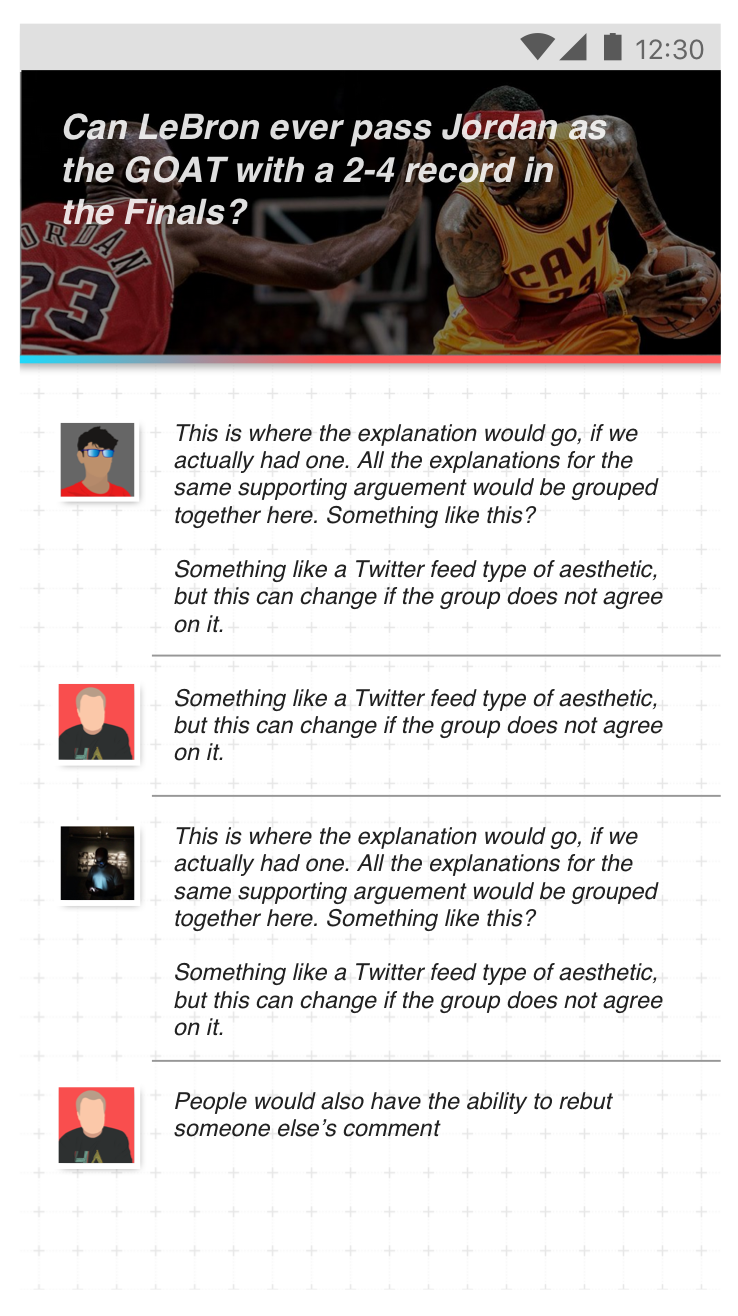
Posts supporting an argument
-
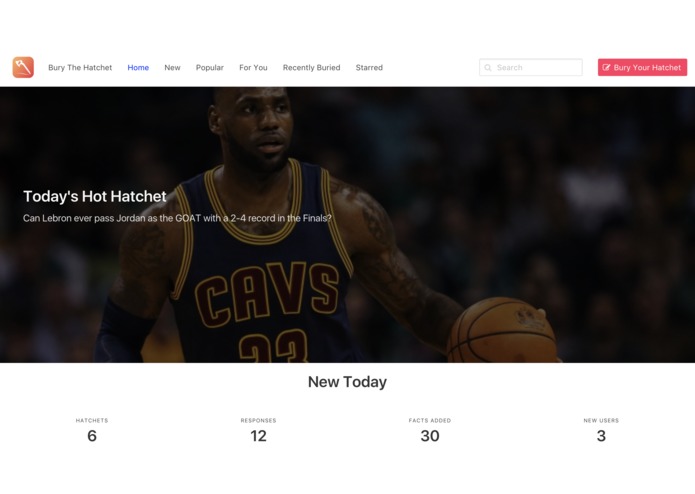
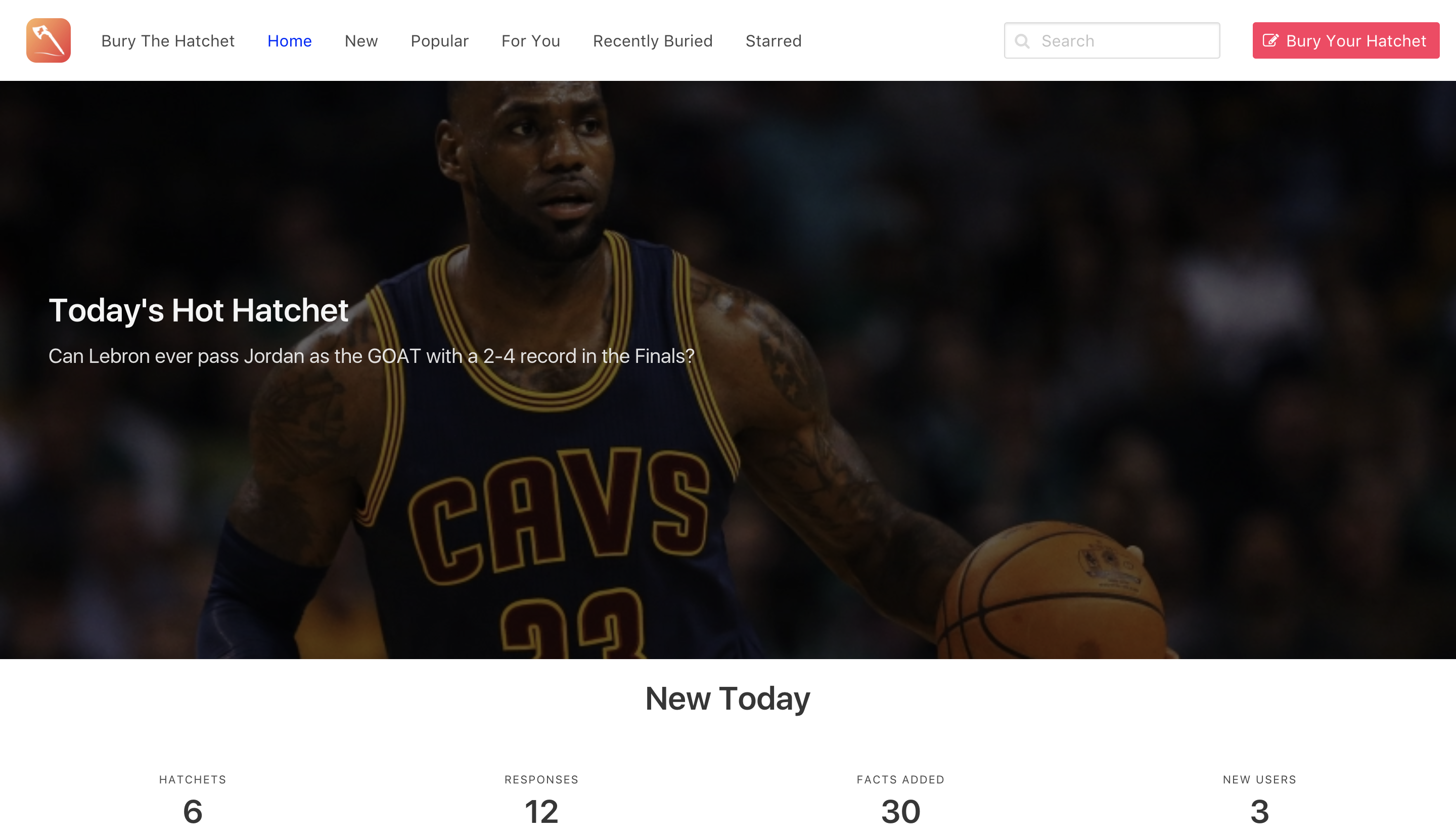
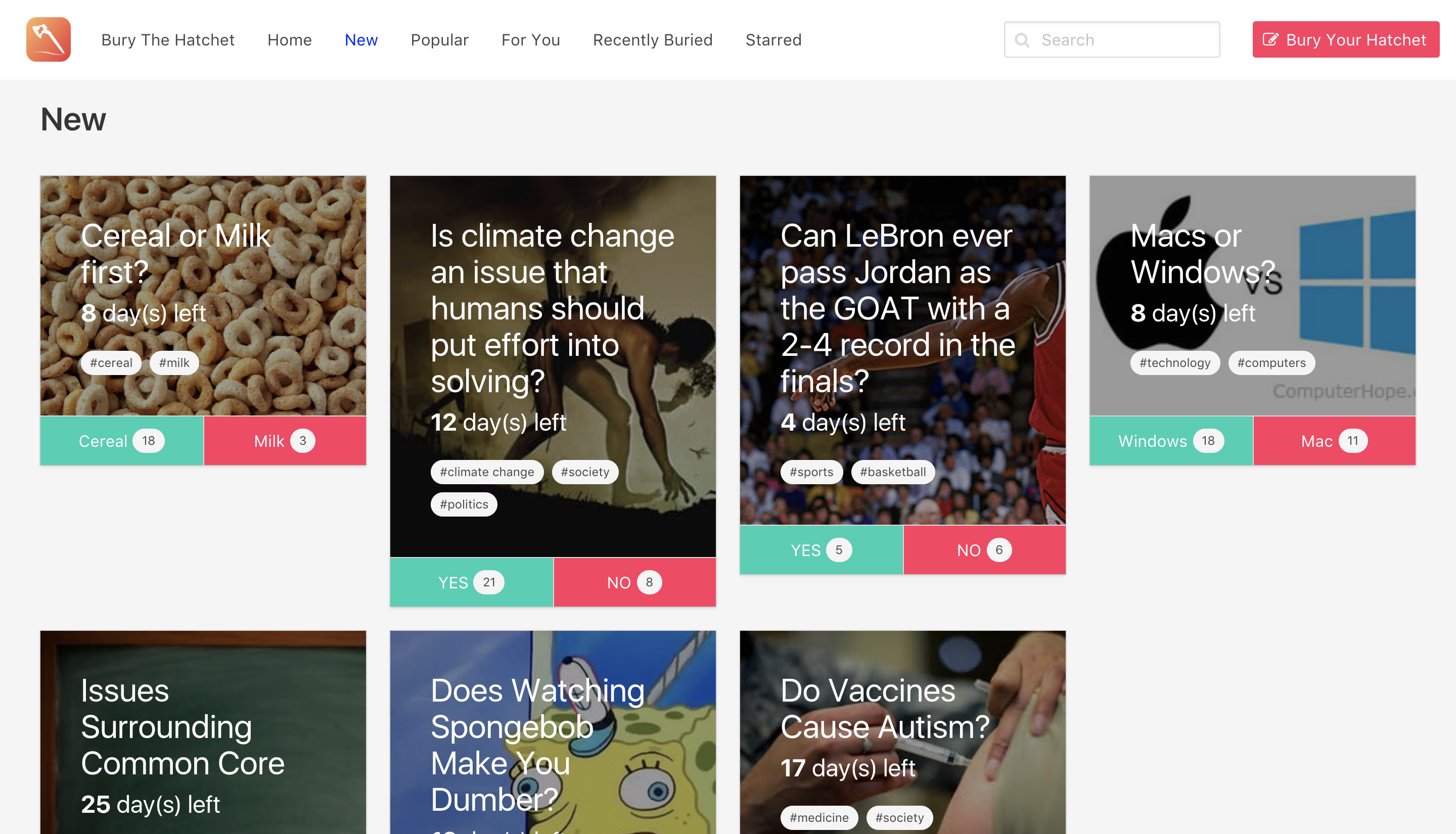
Homescreen for the web platform
-
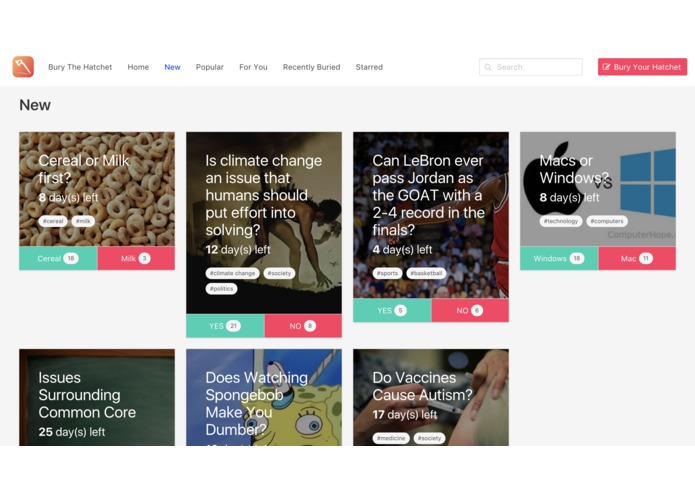
A list of new topics that people are discussing.
-
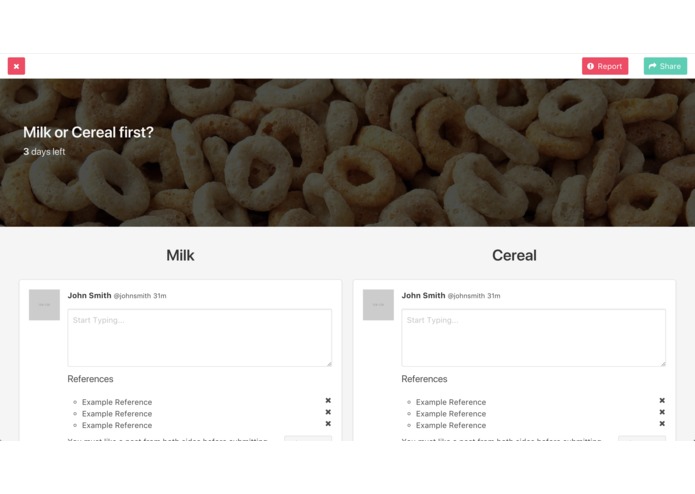
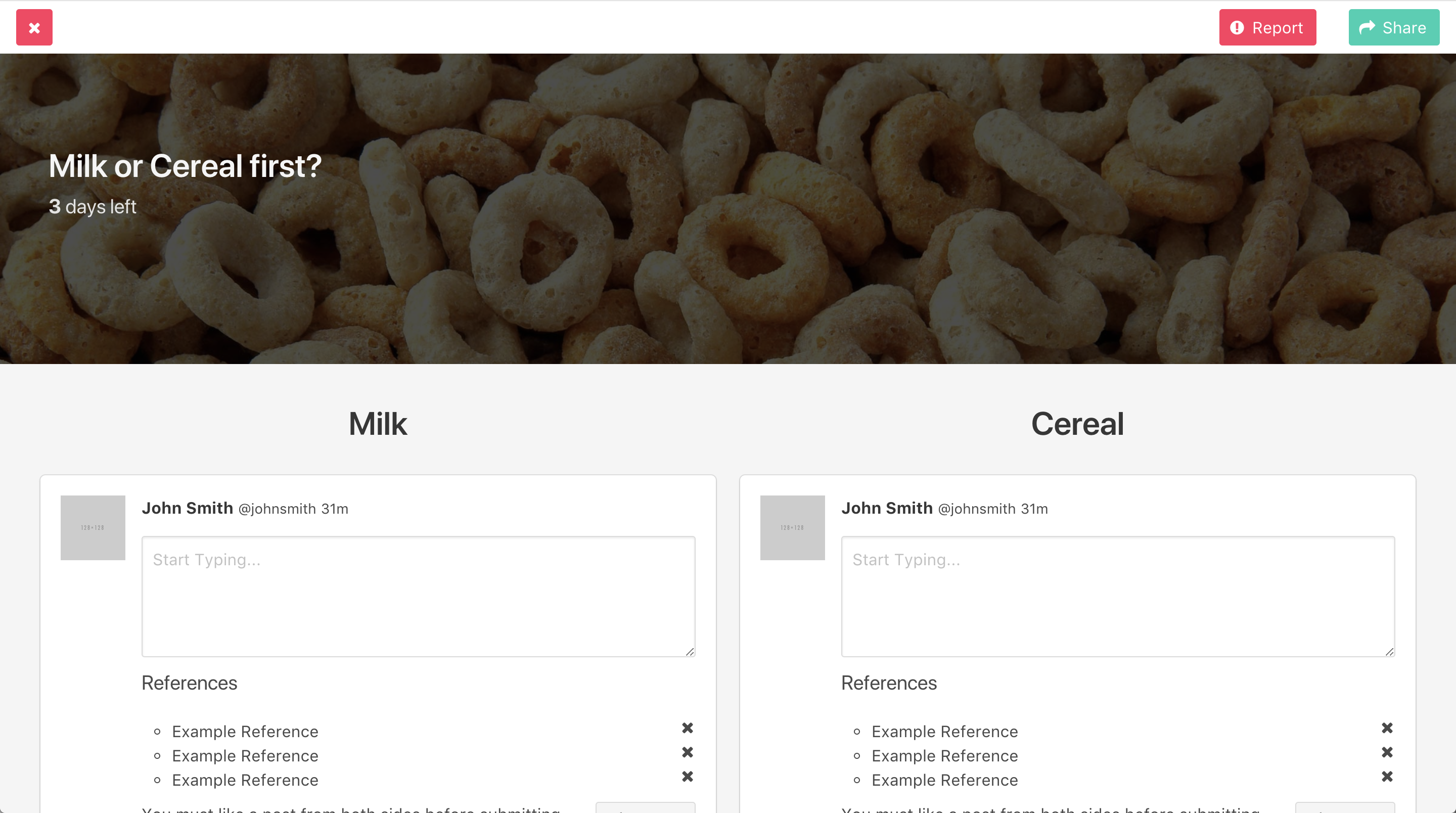
The arguments created by people for an issue.
-
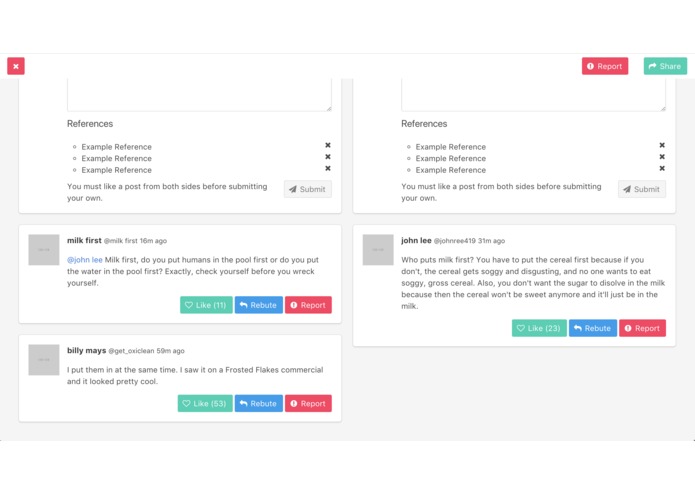
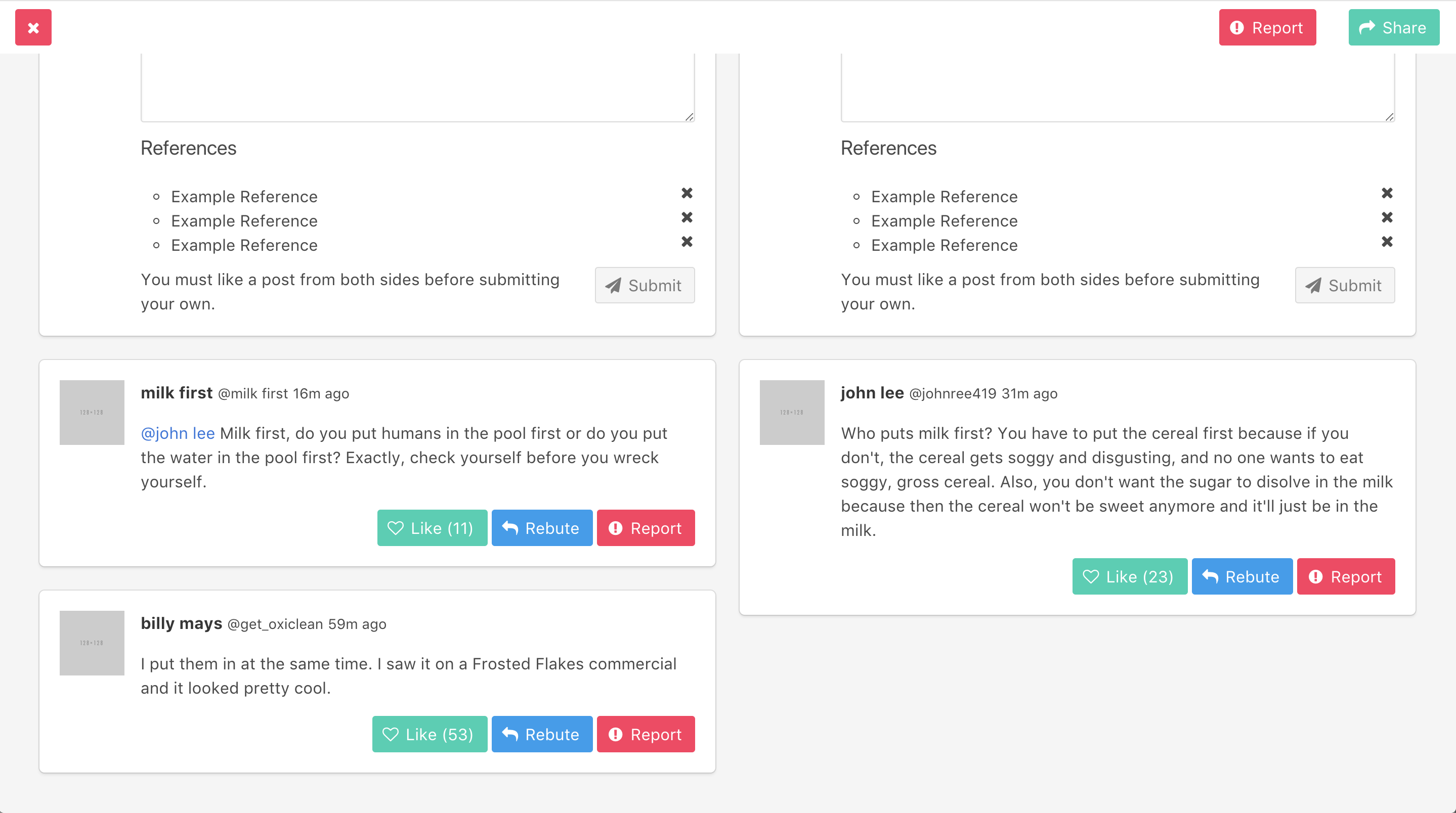
More example posts with evidence
-
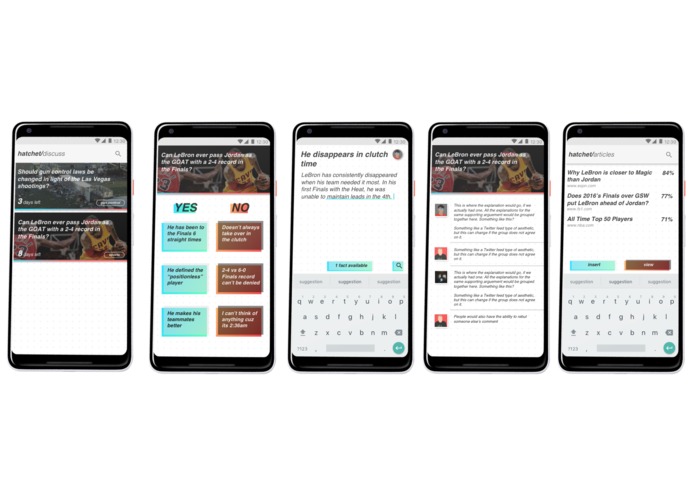
Screens from the Android application
Inspiration
In light of recent events with unverified and factually-weak conversations on social media, we thought that it would be a fun challenge to tackle the idea of helping people conduct conversations with factual support. The idea is that people would be able to post arguments in debates, automatically attach data or evidence to their claim (processed using natural language processing), and view summaries of the discussion.
What it does
Bury the Hatchet is the ultimate civil discussion platform, for fact-checked conversation and evidence-supported claims. Just like other discussion sites, users can create posts and contribute to discussion, but they must link in verified data sources to support their claim.
This may sound like an annoying task, but this data linking is done seamlessly and almost automatically using natural language processing. Post are continuously processed through keyword extraction to find relevant data from our database of valid sources. Pieces of evidence, called "facts", are recommended as you type, and can be linked into relevant regions of your argument.
When all is said and done, an NLP algorithm related to extractive summarization is used to create a succinct list of arguments from the discussion, giving readers a solid overview of the discussion and evidence used throughout. These summaries can then be sent to officials such as congressman.
How we built it
The platform was built on a few different platforms. The server, hosted on Digital Ocean (with a migration on AWS) and at the domain http://burythehatchetwith.tech, was built using Node.js and Vue.js. The server also ties into cortical.io for NLP functionality. All of our data is stored using PostgreSQL.
The Android application was built with Kotlin, as well as a few libraries such as Anko, Fuel, and Picasso. The application talks to the server through a RESTful API.
Challenges we ran into
We ran into some interesting challenges during this hackathon. For one, our team had a wide range of experience, with some of us as first-time hackers. We decided to use this as a learning experience, and took the time to learn new frameworks (such as Kotlin and Vue.js) and new design methods.
Accomplishments that we're proud of
We are proud of coming up with a novel idea, creating all mockups required for the application, having a fully functional backend, and creating two front-end platforms for interacting with the platform
What's next for Bury the Hatchet
We plan on developing Bury the Hatchet into a full product with more breadth in the support that it offers to the web. It would be great to see Twitter and Facebook comments/plugins, such as "Continue the discussion on BTH". Overall, we also would like to improve the user interface, backend design, and usage of natural language processing.
Built With
- android
- cortical.io
- digitalocean
- kotlin
- node.js
- postgresql
- vue.js


Log in or sign up for Devpost to join the conversation.