Inspiration
We’ve all been there: scrolling late at night, seeing a headline or video that makes your blood boil, but not knowing if it’s the whole truth. Platforms like Instagram blur content, deciding what we should or shouldn’t see. Twitter’s Community Notes rely on strangers to fact-check, often creating more noise than clarity. Ground News offers bias insights, but outside the apps people actually use.
The problem is clear: we’re drowning in information but starving for perspective. Gen Z, who live on these feeds, want instant clarity without disruption. That gap is where Burst comes in.
What it does
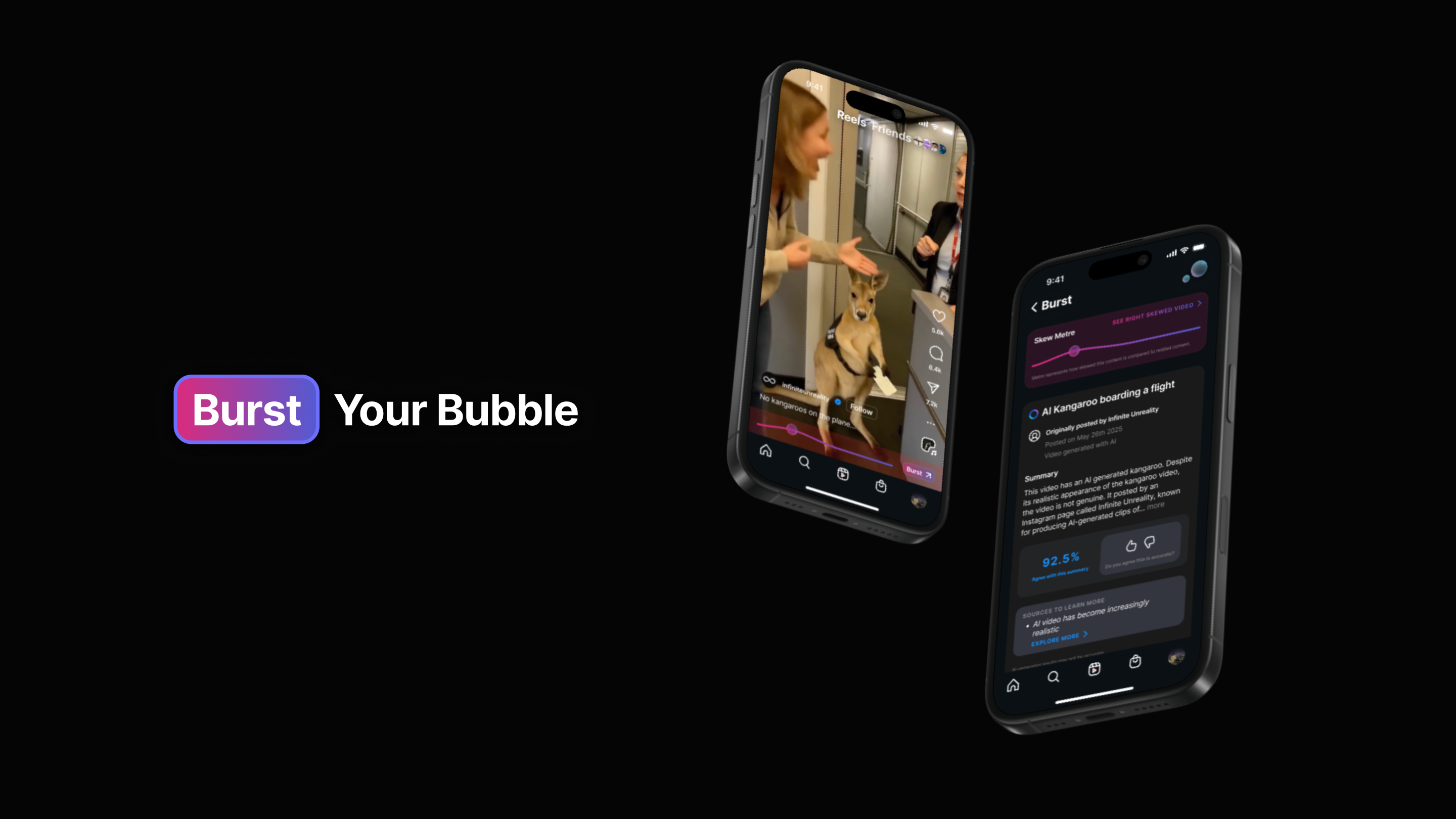
Burst makes hidden perspectives visible. With one tap, users can see how different sides frame the same story. It doesn’t blur, censor, or overload. Instead shows balance where algorithms push extremes. The goal isn’t to tell users what’s true, but to give them tools to think critically in the moment.
How we built it
We started by studying how existing systems: fact-checkers, community notes, and bias meters succeed and fail. From there, we designed an interface that feels like a natural extension of scrolling, not a disruption. Our prototype combines AI summaries, perspective sliders, and credibility cues that sit seamlessly inside the feed, making fact-checking feel effortless.
Challenges we ran into
The hardest part was feasibility. Building trust means more than building features. We wrestled with how to surface multiple perspectives without overwhelming users, and how to balance AI assistance with human context. Another challenge was time: designing for Gen Z requires speed, yet designing for credibility demands care.
Accomplishments that we're proud of
We created a system that doesn’t just correct misinformation but invites reflection. In user testing, people said Burst helped them “not look at videos from face value.” That shift from passive scrolling to active thinking is exactly what we set out to achieve.
What we learned
We learned that clarity isn’t about handing users “the truth.” It’s about building confidence in their own judgement. Users don’t want to feel lectured or blamed; they want lightweight cues that empower them to pause, question, and keep scrolling smarter.
What's next for Burst
Our vision is to scale. First, by expanding Burst to other platforms Facebook, TikTok, even the metaverse so context follows wherever content lives. Next, by adapting to other demographics like older adults, who struggle even more with digital literacy. And eventually, by building a universal toolkit that helps anyone, anywhere, pop the bubble of algorithmic bias.
Built With
- figma


Log in or sign up for Devpost to join the conversation.