-
-
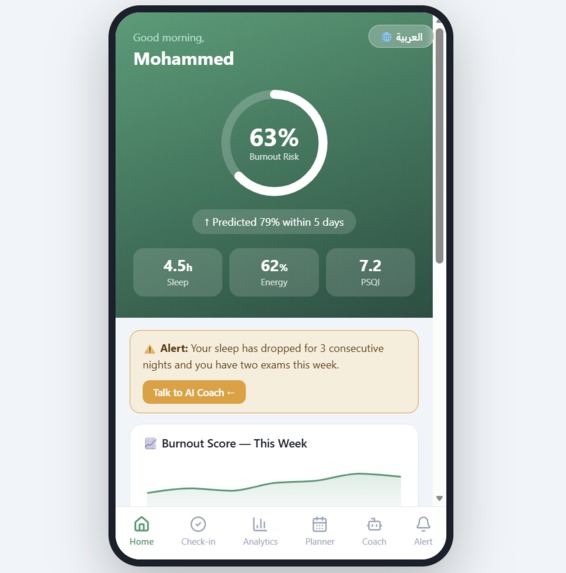
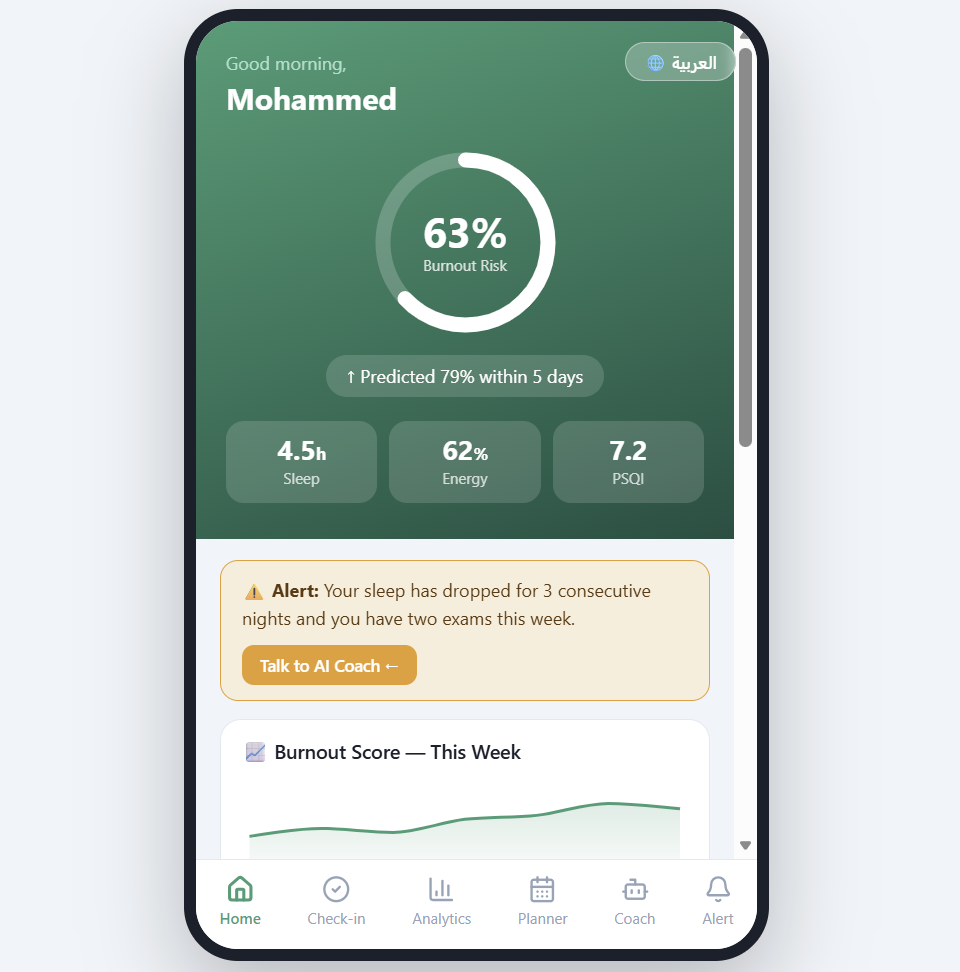
The home dashboard shows the student's current overload at a glance, with sleep, energy and a 5-day outlook. (Sample data)
-
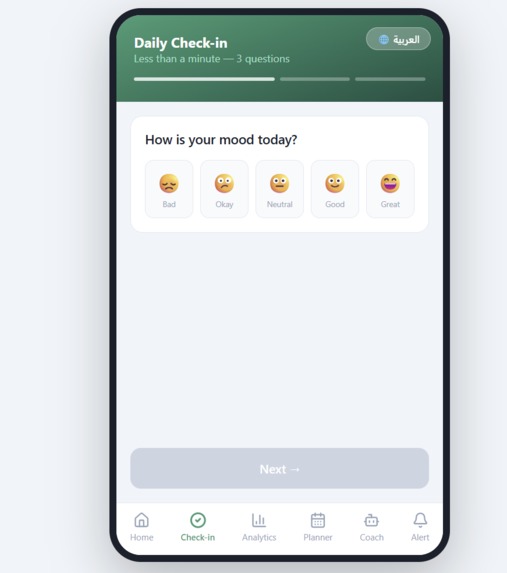
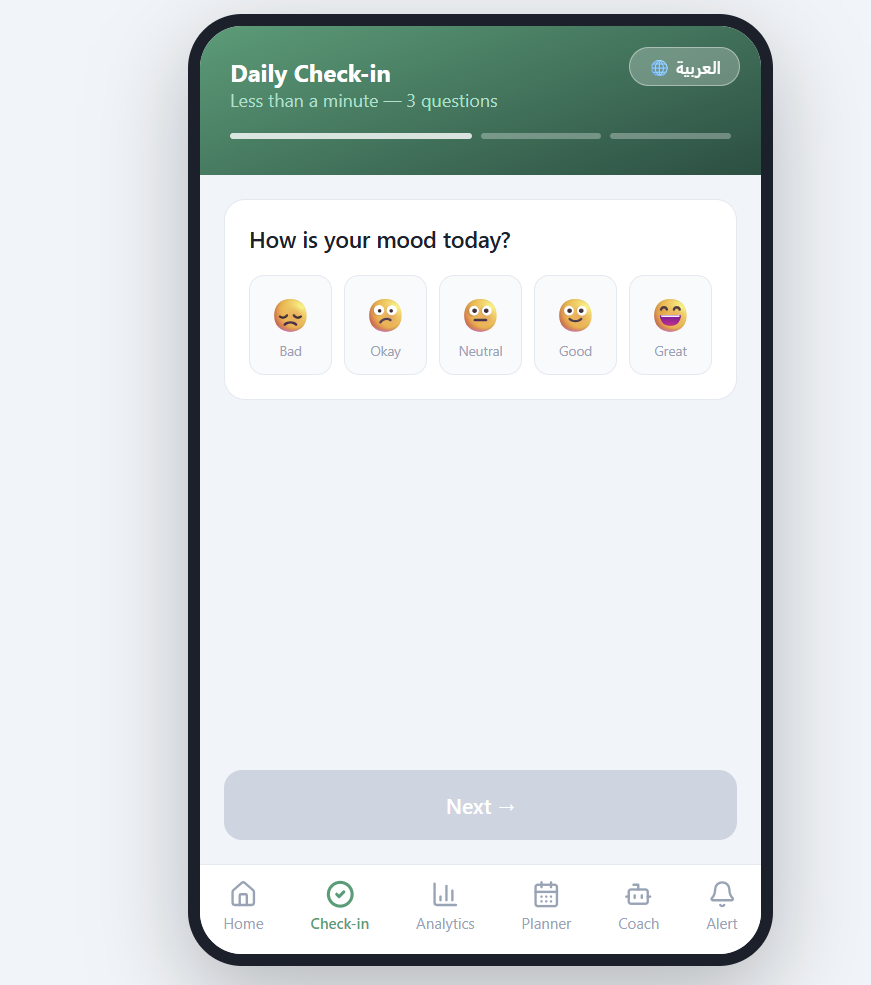
A quick daily check-in — under a minute, three questions — that feeds the student's mood into PulseMind's signals.
-
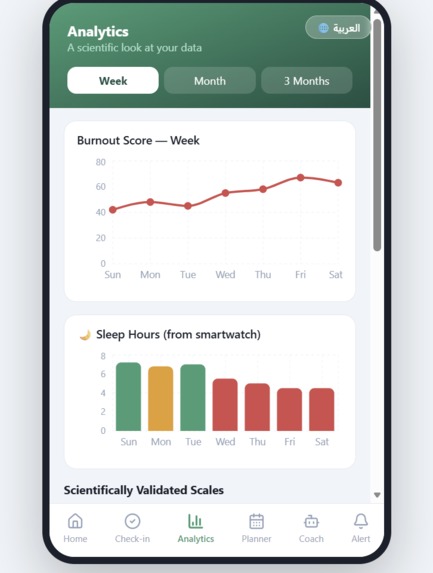
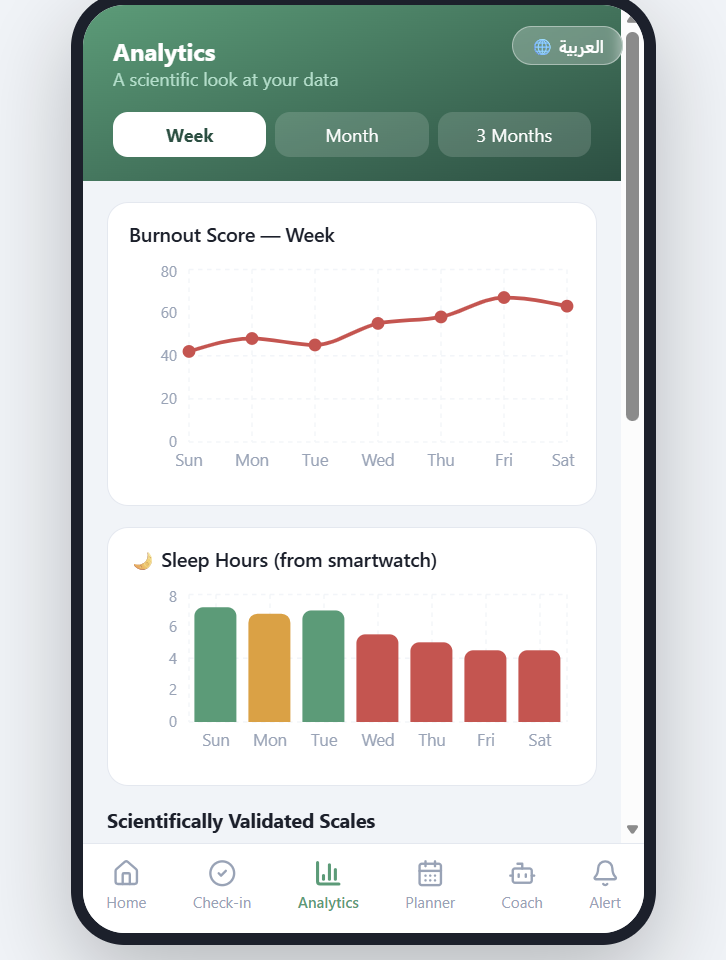
Analytics view: overload and sleep trends over the week, month, or three months, so patterns become visible early.
-
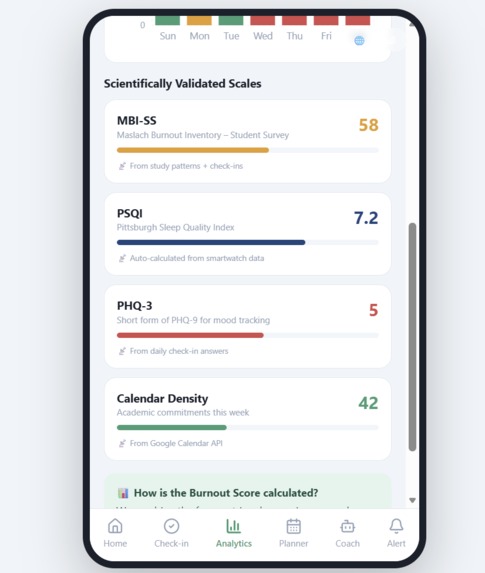
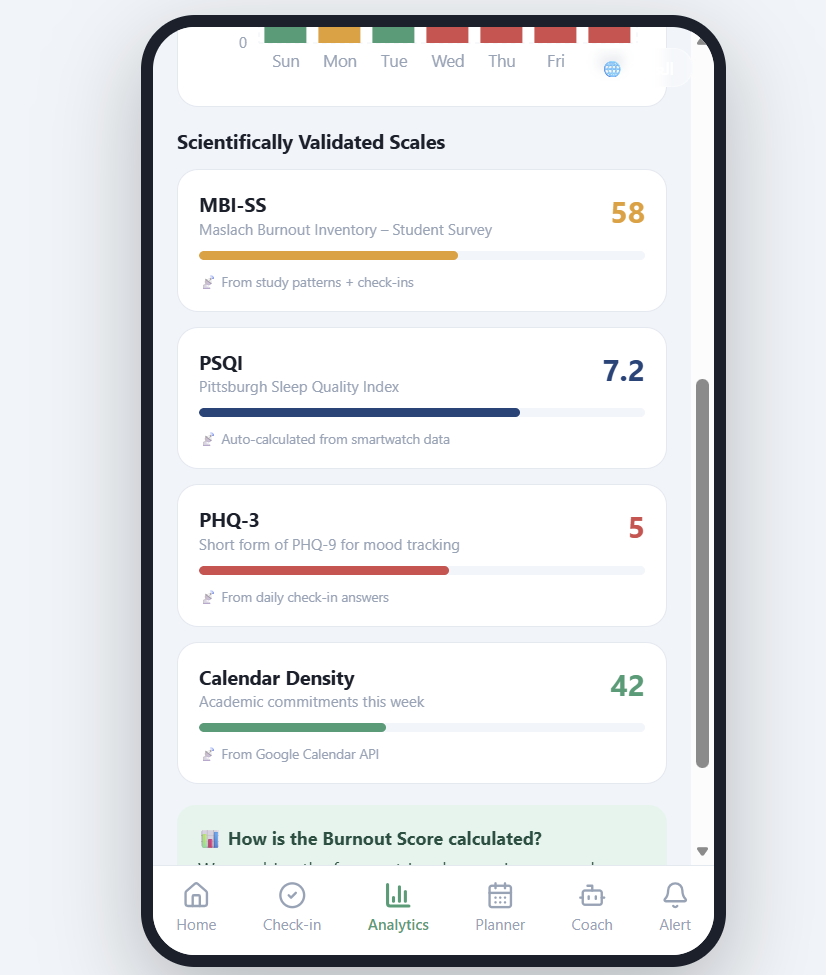
Recognized wellbeing indicators (MBI-SS, PSQI, PHQ-3, calendar density) translate raw signals into a readable picture.
-
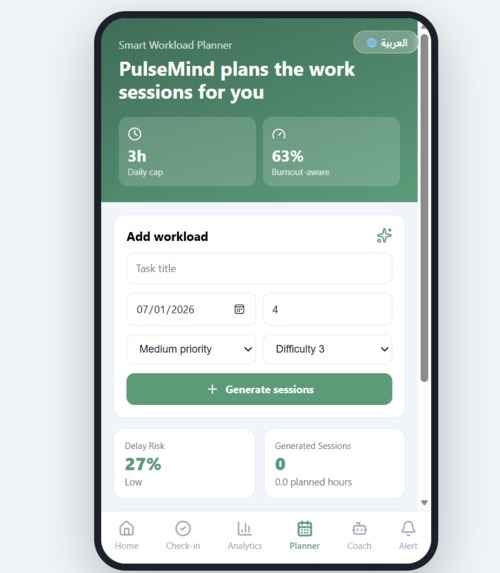
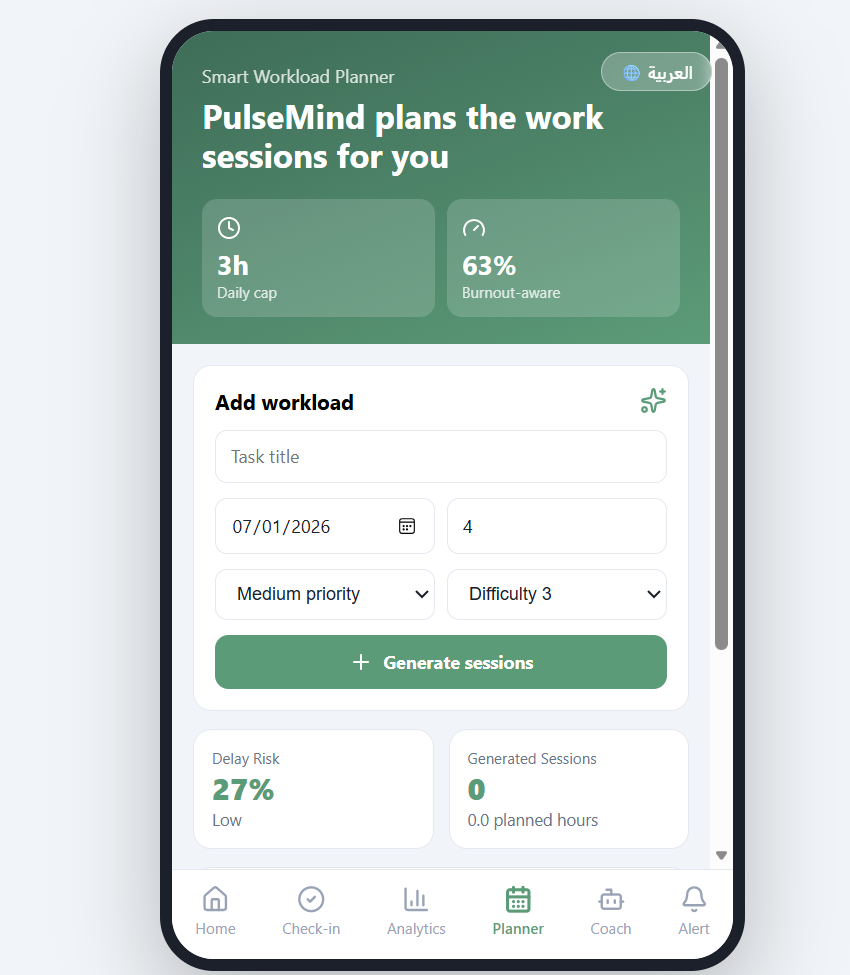
The Smart Workload Planner: add a task and PulseMind generates balanced work sessions within a healthy daily cap.
-
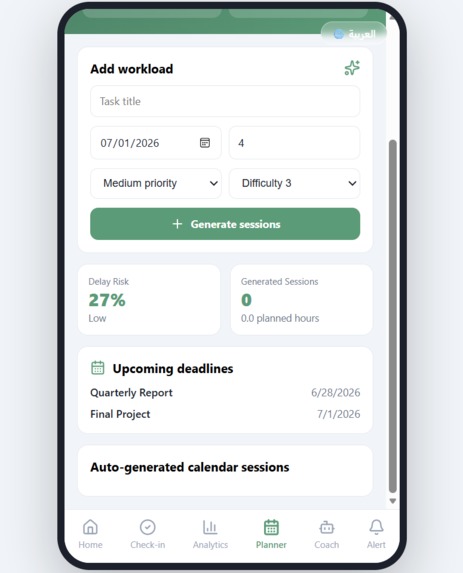
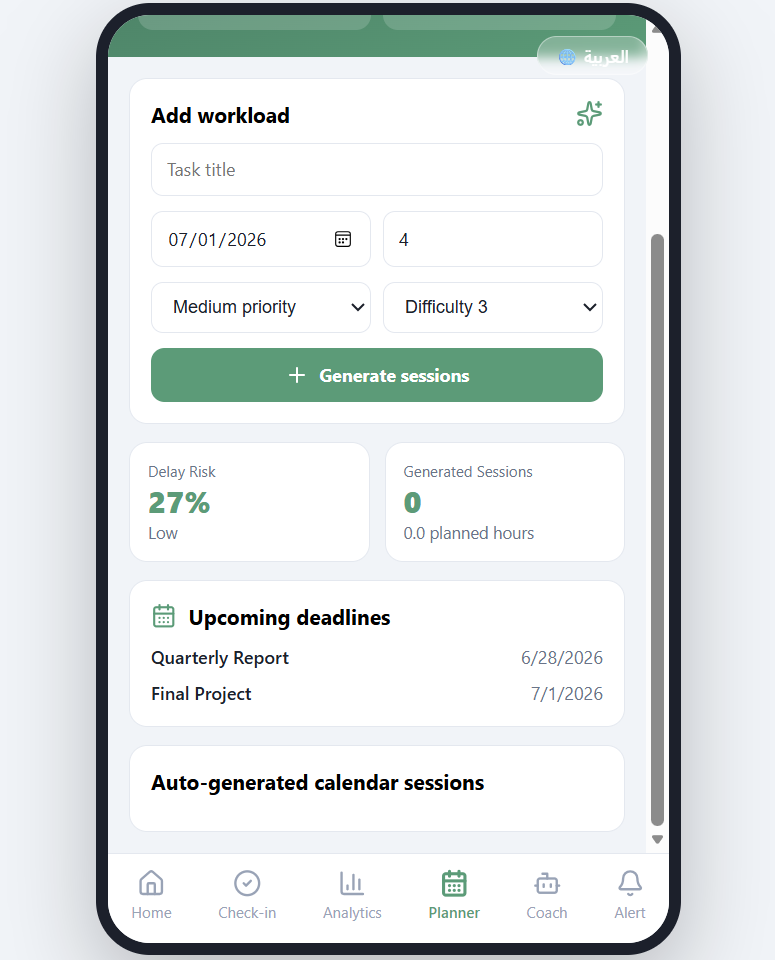
PulseMind weighs delay risk against upcoming deadlines and auto-generates calendar sessions around the student's load.
-
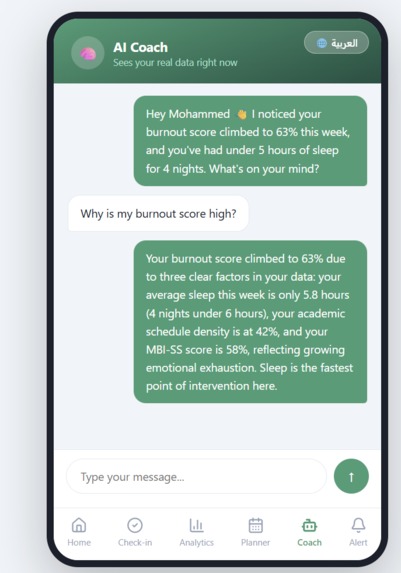
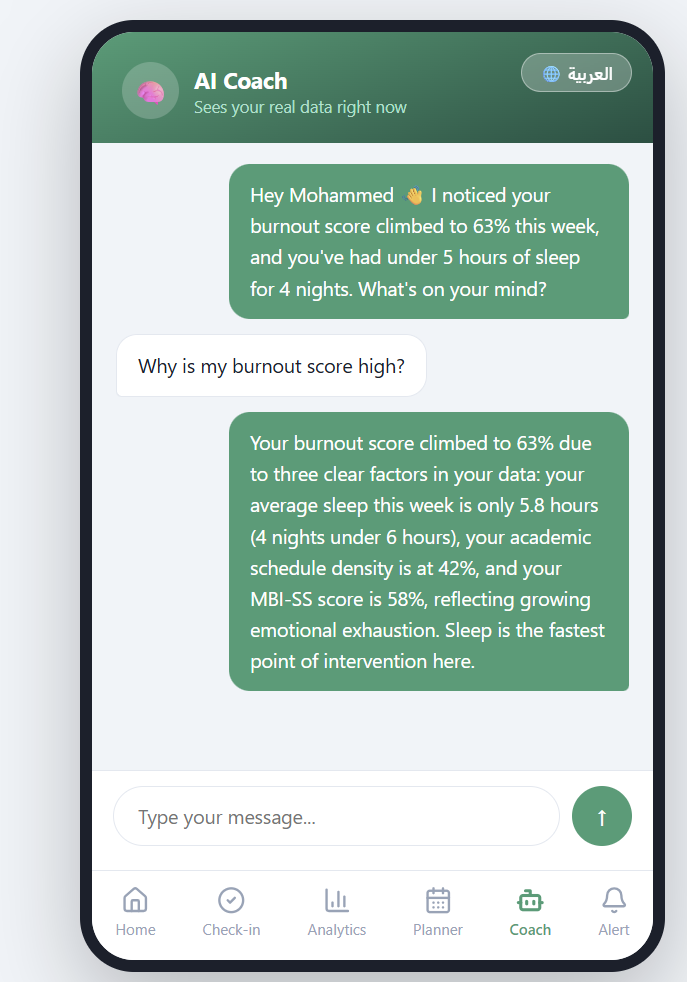
The AI coach reads the student's live data and explains, in plain language, why their overload is rising — and what to do first.
-
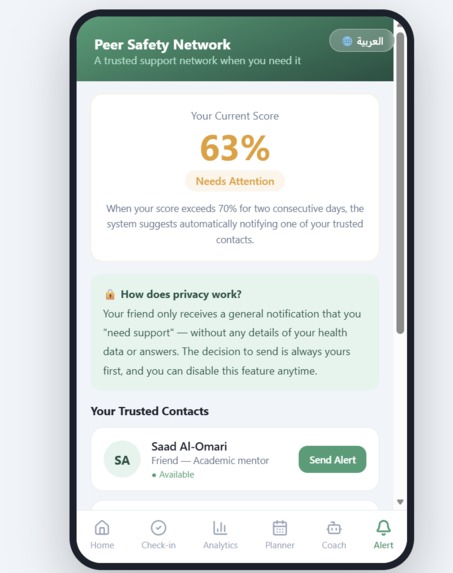
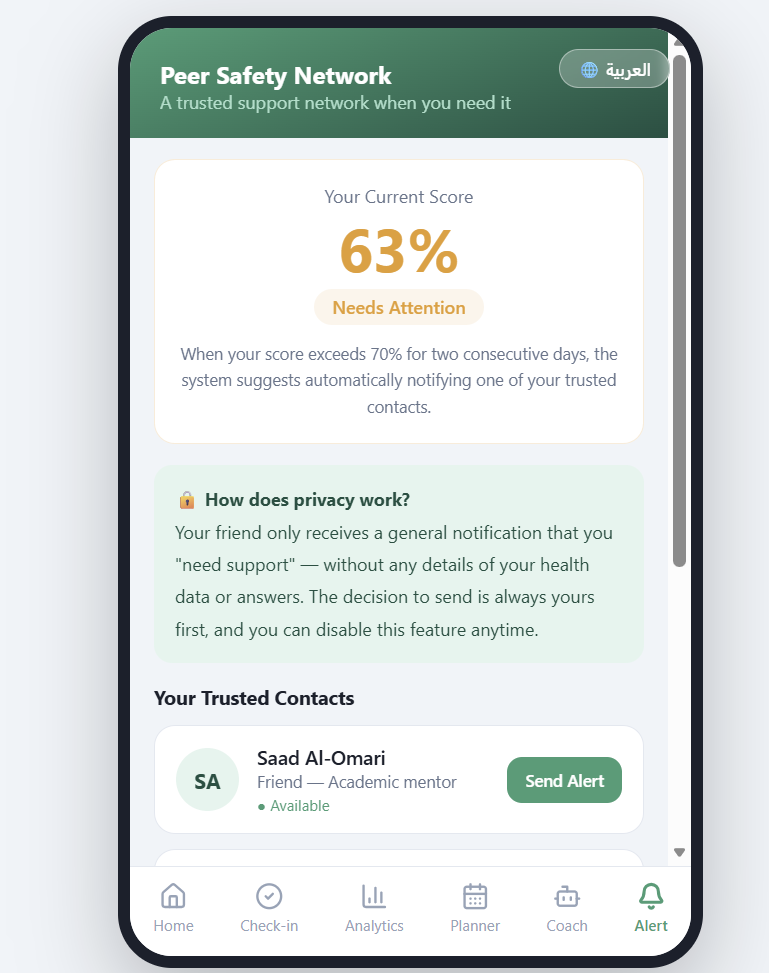
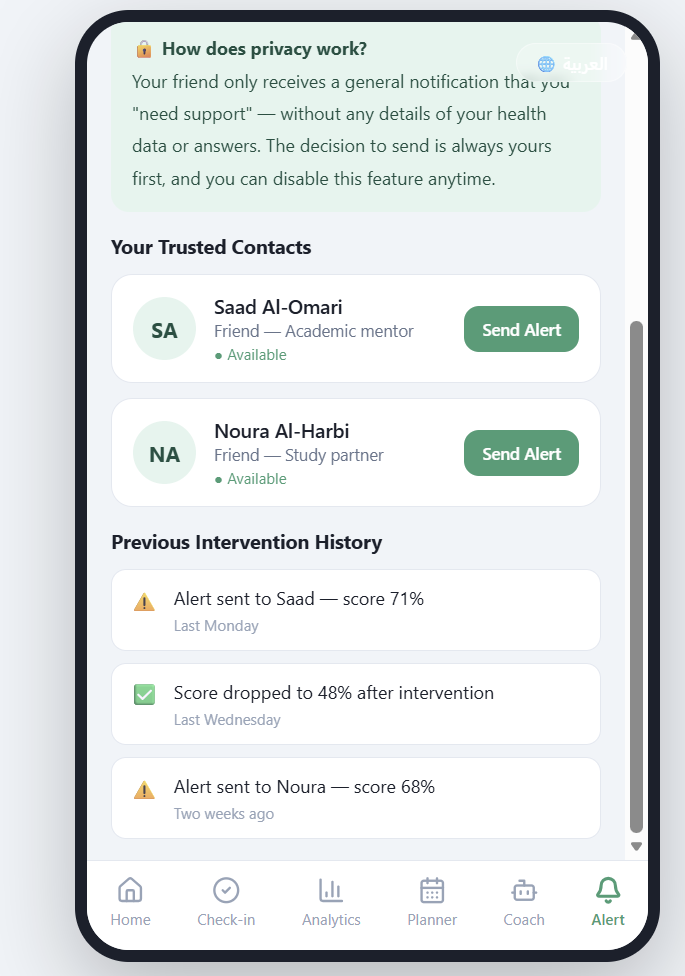
The Peer Safety Network can alert a trusted contact when overload stays high — always with the student's consent first.
-
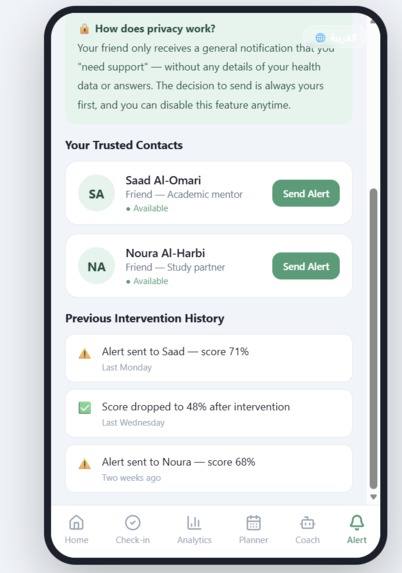
Trusted contacts get only a simple "needs support" signal — no health details — keeping the student in full control.
Inspiration
PulseMind was inspired by someone close to our team.
She was once a highly motivated student with strong grades. She studied for long hours and believed that working more was always the answer. But she did not have a clear plan for how to distribute her workload, protect her energy, or decide what could wait.
Over time, that pattern changed her. She began struggling to focus, losing motivation, procrastinating more than usual, and feeling exhausted even after sleeping. Her academic performance dropped, and the harder she tried to catch up by studying continuously, the more overwhelmed she became.
What stayed with us was that there was no single dramatic moment. It was a series of small daily decisions: accepting one more task, delaying a deadline, studying late instead of resting, and trying to do everything at once. She could see that she was falling behind, but she could not see which decision would help her recover.
That is why we built PulseMind.
What it does
PulseMind is an AI life-decision simulator for students. It helps students understand how workload choices may affect their capacity, focus, and risk of overload before they commit to them.
A student can enter their deadlines, exams, schedule, sleep, energy, and mood, then ask questions such as:
Can I keep everything on my schedule this week? What happens if I delay this task? Should I split this project into smaller sessions? Can I take on one more commitment without overloading myself?
Instead of giving generic productivity advice, PulseMind compares possible choices and shows their trade-offs. It then creates a more realistic plan that balances academic progress with wellbeing.
PulseMind does not diagnose burnout or make decisions for students. It makes the likely cost of each option visible, so students can make informed choices earlier.
How we built it
We built PulseMind as a full-stack web application.
The frontend was built with React, where students can view their schedule, workload signals, simulation results, and revised plan. The backend was built with Node.js and Express to process user inputs and connect the different components.
For the simulation engine, we built a rule-based model that evaluates patterns across workload, deadlines, sleep, energy, and mood. It compares the relative overload of different choices — keeping a task, delaying it, or redistributing it — across the days ahead, so a student can see the trade-offs of each path before committing.
We also integrated the Google Gemini API as an AI coach. It turns the simulation results into clear, supportive, and actionable guidance. To keep the experience reliable, we added a local rule-based fallback engine that takes over when the API is unavailable, so the coach never goes dark.
Because real student wellbeing data is sensitive, our prototype uses illustrative, self-generated sample data. This let us demonstrate the full product flow while keeping privacy at the center of the design.
Challenges we ran into
Our biggest challenge was building something more meaningful than a task planner.
Many productivity tools can organize tasks after a student has already made a decision. We wanted PulseMind to help before that moment — when a student is deciding whether to accept another commitment, delay a task, or sacrifice sleep.
Another challenge was responsible AI. Workload, sleep, mood, and energy are personal signals. We designed PulseMind so the student owns their data, chooses what to share, and stays in control of every decision. The system does not diagnose mental-health conditions and does not autonomously contact anyone.
Finally, working with illustrative sample data meant we had to be transparent about what the prototype can and cannot claim. Our goal was not to present a clinically validated health tool, but to build a working decision-support experience that can be validated responsibly with consented, real-world data in the future.
Accomplishments that we're proud of
We successfully built a working prototype that goes beyond traditional task management by helping students evaluate decisions before committing to them.
We are particularly proud of creating a rule-based simulation engine that compares multiple workload scenarios, automatically generates balanced work sessions, and integrates them into a student's schedule.
We also designed the system with responsible AI principles in mind, ensuring that students remain in control of their decisions while receiving clear and actionable guidance through the Gemini-powered chatbot.
What we learned
We learned that productivity is not always about doing more. Sometimes the most valuable support is helping someone see that doing less — delaying one task, or protecting their sleep — is the smarter decision.
We also learned that AI is most useful when it explains trade-offs rather than replacing human judgment. PulseMind does not tell students what to do. It helps them see the possible consequences of their choices and choose a healthier path for themselves.
What's next for PlusMind
The current prototype relies on a rule-based simulation engine rather than a trained machine-learning model.
Next, we want to partner with universities and student wellbeing programs to validate PulseMind using consented, real student data.
A key step is evolving the rule-based engine into a trained predictive model once that real data becomes available. The system architecture has already been designed to support this transition.
We also plan to evaluate whether PulseMind helps students make more sustainable workload decisions while maintaining academic progress. Future versions will include stronger privacy controls, on-device scoring, deeper calendar integration, and more personalized planning based on each student's routines, goals, and workload patterns.
Our vision is simple: students should be able to understand the cost of a decision before they have to live with it.
Built With
- claude
- codex
- express.js
- google-gemini-api
- illustrative-sample-data
- javascript
- node.js
- react
- rule-based-fallback-engine
- rule-based-simulation-engine


Log in or sign up for Devpost to join the conversation.