-
-
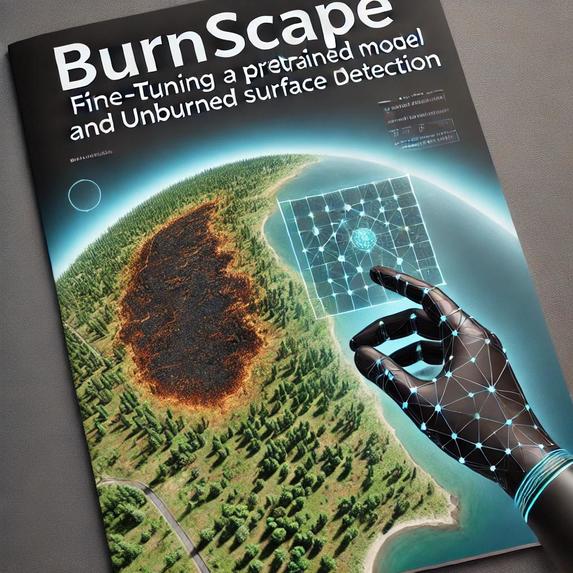
Project logo
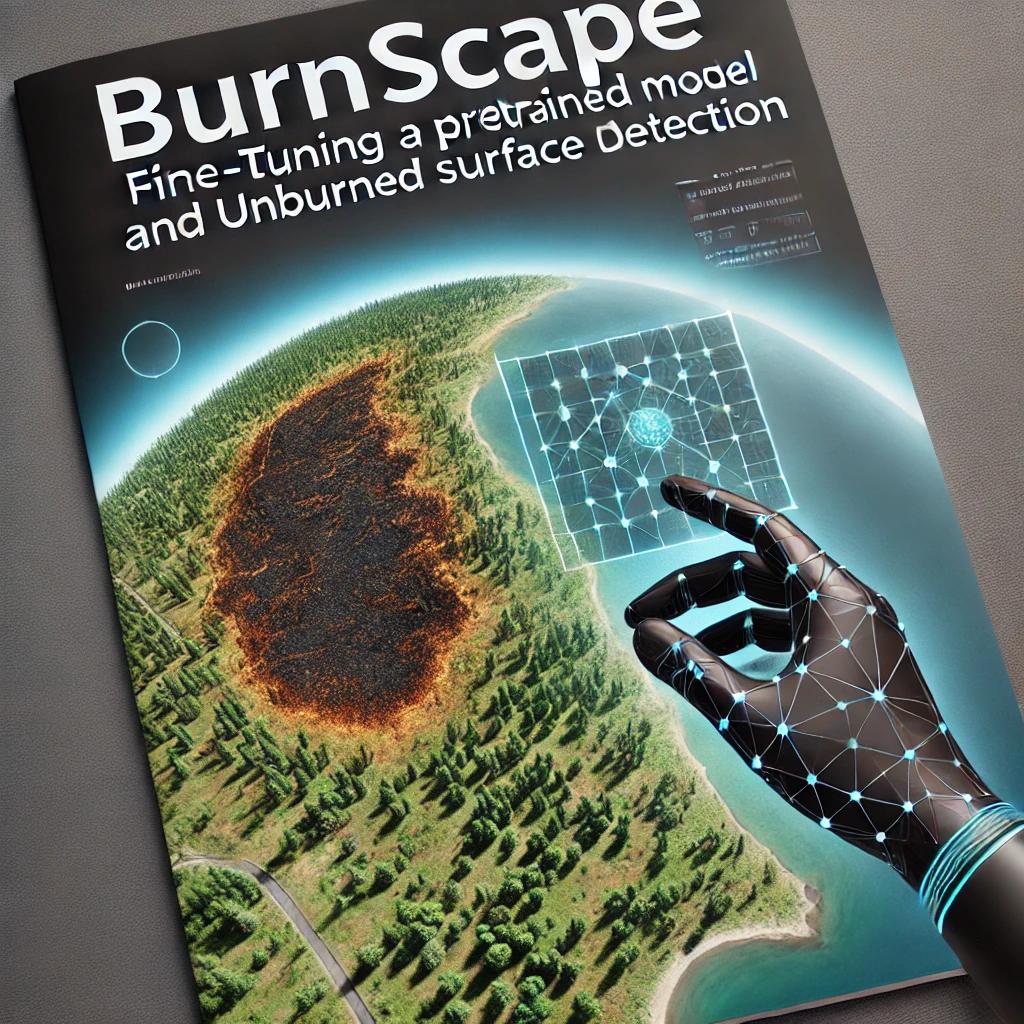
Project: BurnScape – Fine-Tuning a Pretrained Model for Burned and Unburned Surface Detection
Inspiration
The inspiration for BurnScape came from the increasing frequency and severity of wildfires worldwide. We wanted to contribute to addressing this issue by leveraging technology, particularly AI, to help monitor and assess damage caused by wildfires. Geospatial data, combined with advanced machine learning models, offers a powerful tool for managing wildfire risks, enabling timely decision-making in land use and forest management. Our interest in environmental sustainability and AI-driven solutions fueled our passion for this project.
What We Learned
This project has been a learning journey in several areas. We deepened our understanding of geospatial image segmentation, pretrained model fine-tuning, and evaluation metrics for machine learning. We also gained hands-on experience working with high-resolution satellite imagery and grasped the importance of hyperparameter tuning in improving model performance.
How We Built the Project
The project started by selecting the PrithviT_100m pretrained model, well-suited for high-resolution geospatial tasks. Using the Forest Burn dataset, we cleaned and preprocessed the data, creating balanced training, validation, and test sets. We designed the model architecture around PrithviT_100m, fine-tuning the segmentation head for a two-class classification task (burned vs. unburned). For optimization, we tested various hyperparameters (learning rate, batch size, and weight decay) and employed early stopping to avoid overfitting.
Challenges Faced
One of the major challenges we faced was dealing with the imbalanced dataset. Burned areas made up a small portion of the dataset, leading to difficulties in accurate classification.
Another challenge was working with geospatial data for the first time, which required us to understand its unique characteristics and manage the large datasets effectively.
Additionally, we encountered issues with our SSH connection to the supercomputer, which prevented us from visualizing logs and learning curves through TensorBoard on our local machines. This made it harder to track the model's progress during training and forced us to rely on alternative ways to monitor performance.
Despite these challenges, the project was a rewarding learning experience, and we are excited about the potential applications of AI in environmental management and disaster response.


Log in or sign up for Devpost to join the conversation.