Our inspiration
Burhan began with something I kept experiencing as an engineer on a recent project. On a busy day, I inspect tens of villas. A contractor calls to say the work is complete and asks me to inspect it. When I arrive, I often find obvious mistakes that could have been caught before that call.
The work needs correcting, and I have to return for another inspection. Across a project of this size, those avoidable visits interrupt the day and delay the next step.
We wanted to help contractors check their own work before requesting an inspection. If they find an issue, they can fix it and check again before calling the engineer.
We also saw a need on the buyer’s side. Someone who has bought a villa may want to walk through it themselves, but may not know what to check or how to explain a concern. They need guidance and a clear way to document what they find.
That became Burhan’s purpose: better prepared subcontractors and better informed buyers.
What it does
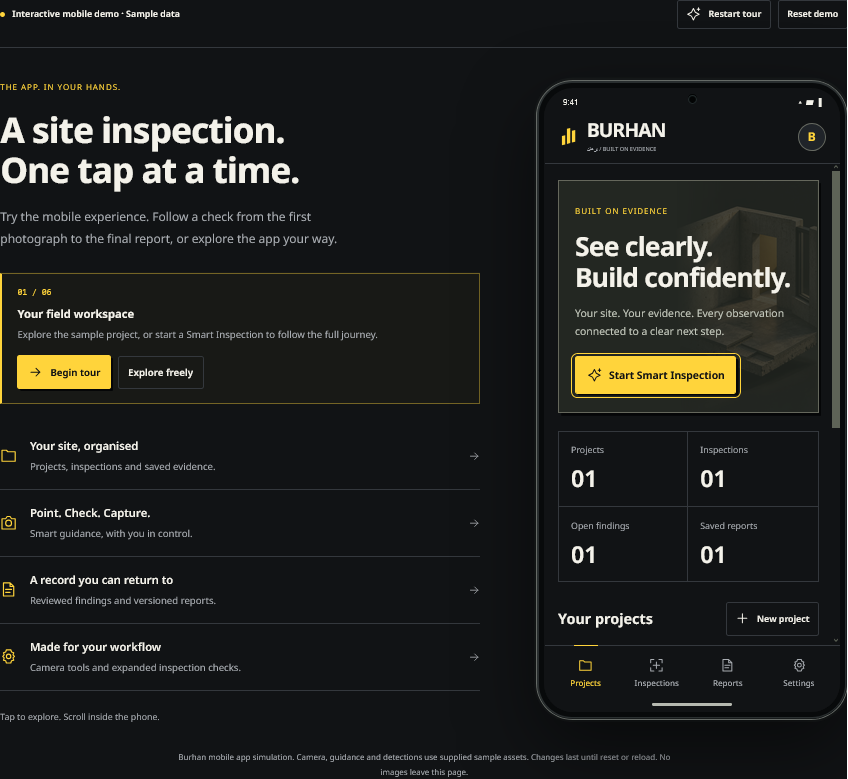
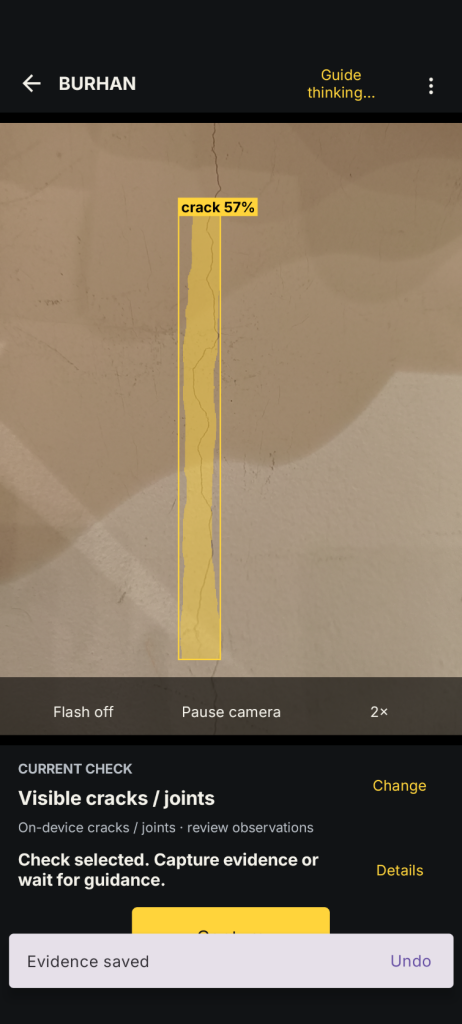
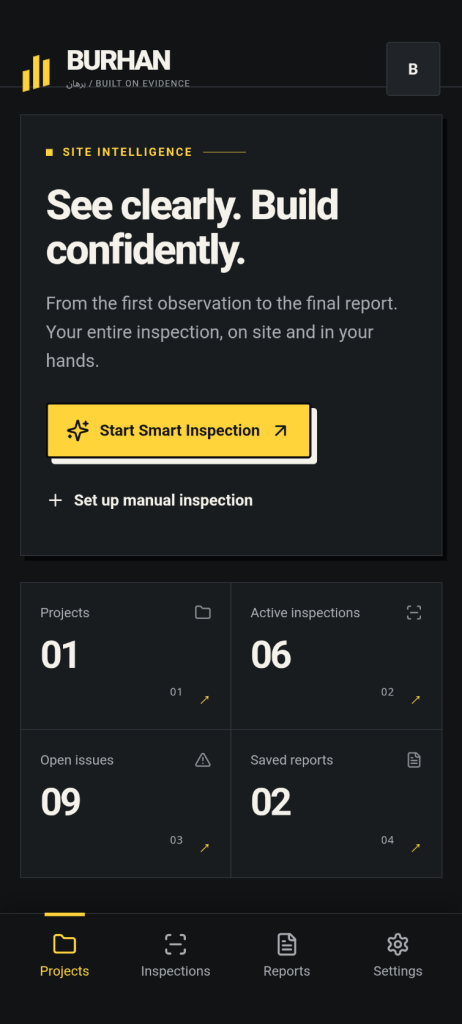
Burhan is a mobile construction inspection app built around Smart Inspection, its agent mode. It interprets the camera view and inspection context, suggests relevant checks, and guides the user toward the evidence to collect next. It can ask for a clearer view, propose a supported visual detector, or guide a manual check.
- For contractors: it supports a self-check before calling the engineer. Users can review potential issues, record corrective actions, attach follow-up evidence after repairs, and recheck the work.
- For villa buyers: it guides their own walkthrough, helps them record possible issues, and creates evidence they can discuss with the contractor or engineer.
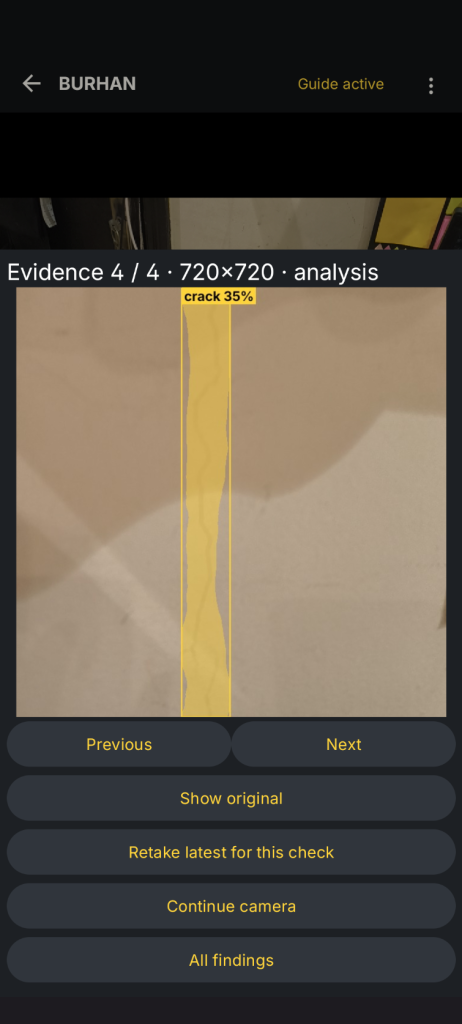
Supported visual models suggest possible cracks and surface conditions. Users review those suggestions and can confirm or dismiss them, or add a finding manually. Original and annotated images stay connected to the inspection, location, notes, and corrective action.
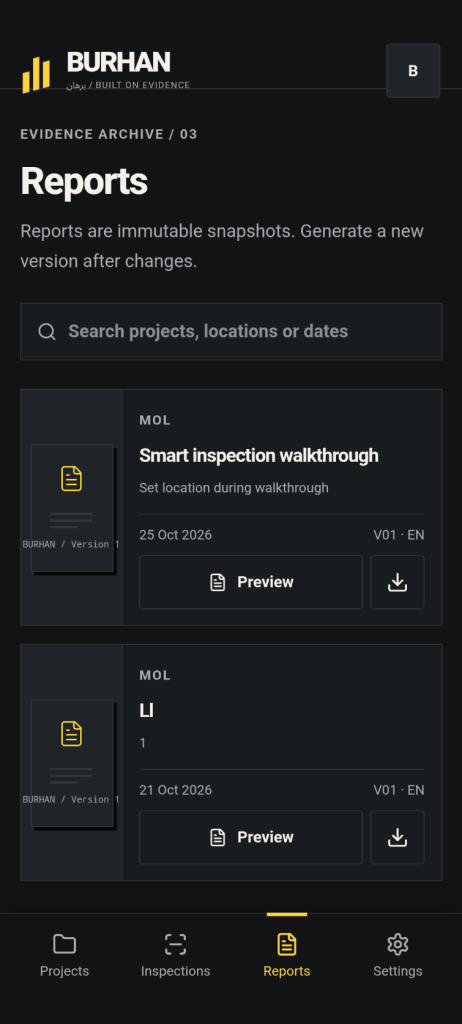
Findings can move through Open, In progress, and Resolved. Users can generate English, Arabic, or bilingual reports, save report versions, and export through PDF printing.
The intended outcome is fewer avoidable repeat visits and clearer conversations about what needs fixing. The engineer retains professional inspection and final judgment.
How we built it
We connected a mobile workspace, local computer vision, and an online inspection agent so that a camera observation can become a reviewed finding and a report.
| Layer | How it works |
|---|---|
| Mobile app | React and TypeScript provide the shared workspace. Capacitor hosts it on Android, with native Java and CameraX handling the phone camera. |
| Local computer vision | OpenCV 5 prepares images, measures image quality, and processes detector masks. ONNX Runtime runs the bundled visual models on the device. |
| Agent guidance | A Python FastAPI backend combines selected snapshots, image-quality measurements, detector observations, and inspection context. Provider adapters support Amazon Bedrock with Nova 2 Lite |
| Evidence and reports | Android stores records in Room/SQLite and evidence in local files. Report snapshots preserve the findings and evidence from the time each version was generated. |
Smart Inspection follows a perception, decision, action, and feedback loop. The agent proposes a relevant next step, the user chooses the active check, and the resulting evidence or user response informs subsequent guidance. Plans are validated against the app’s available capabilities before they reach the user.

Log in or sign up for Devpost to join the conversation.