
Inspiration
When i arrived in Berlin coming from Morocco in 2024, I found myself alone with no network of contacts and no idea how the German bureaucratic system worked. I had to sort out residence papers, insurance, proof of address and endless bureacracy things. The process was a constant source of anxiety that stopped me focusing on my work or enjoying my new life here in Berlin.
In 2025 I built a small simple AI agent on my own computer. I gave it the context of my situation, the official sources to rely on, and a clear system prompt. The result was genuinely remarkable: that simple tool lifted a heavy weight of anxiety off my shoulders. Today, whenever I need something bureaucratic in Berlin, I just state my goal and get clear, step-by-step guidance on how to reach it.
That is when I started seriously considering turning the agent into a general-purpose app, something that could handle bureaucratic tasks for other people and ease the same burden it had eased for me. OpenAI Build Week (July 13-21) was the opportunity to actually build it, and the excitement of the competition is what got it finished.
What it does
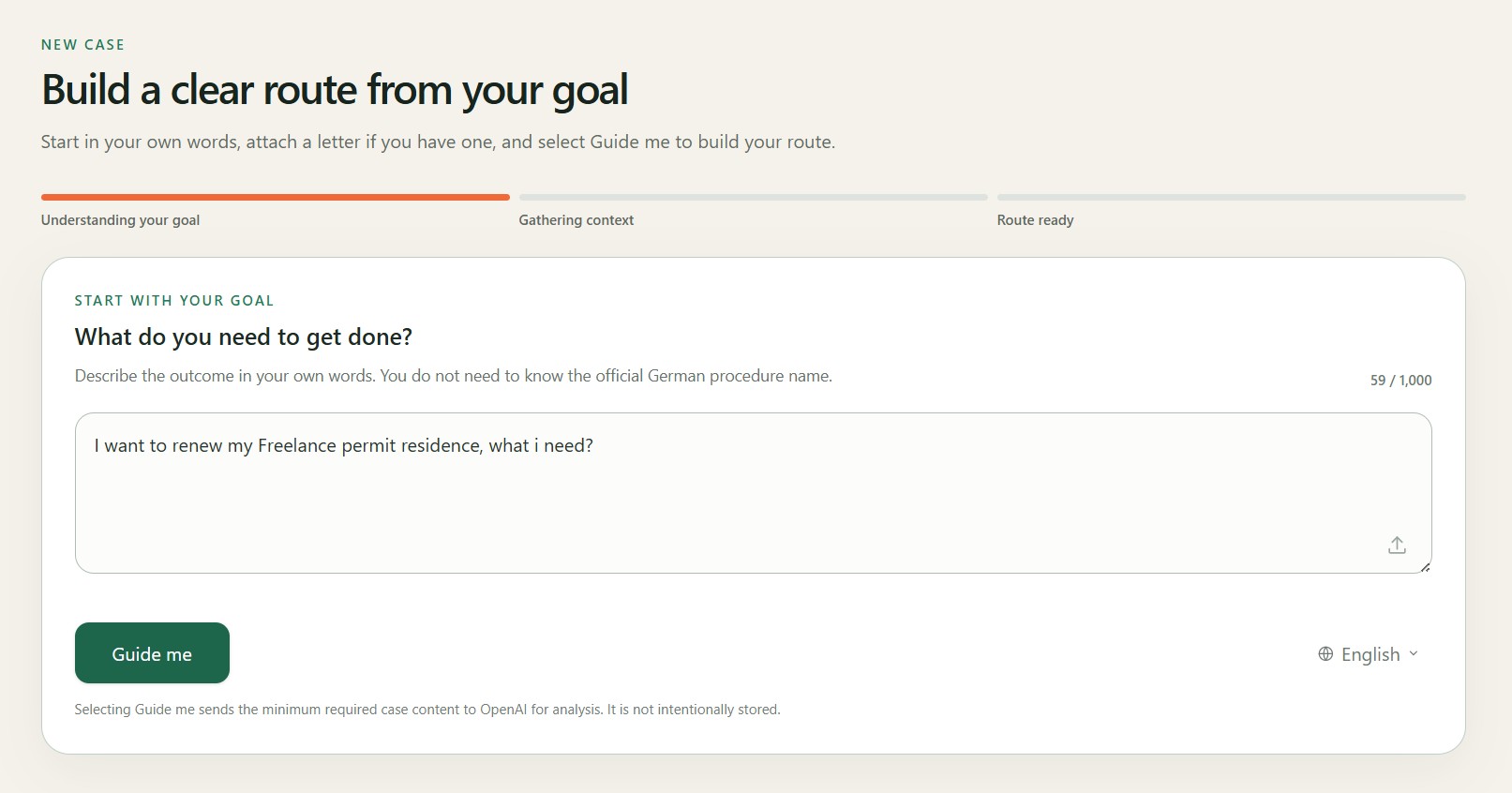
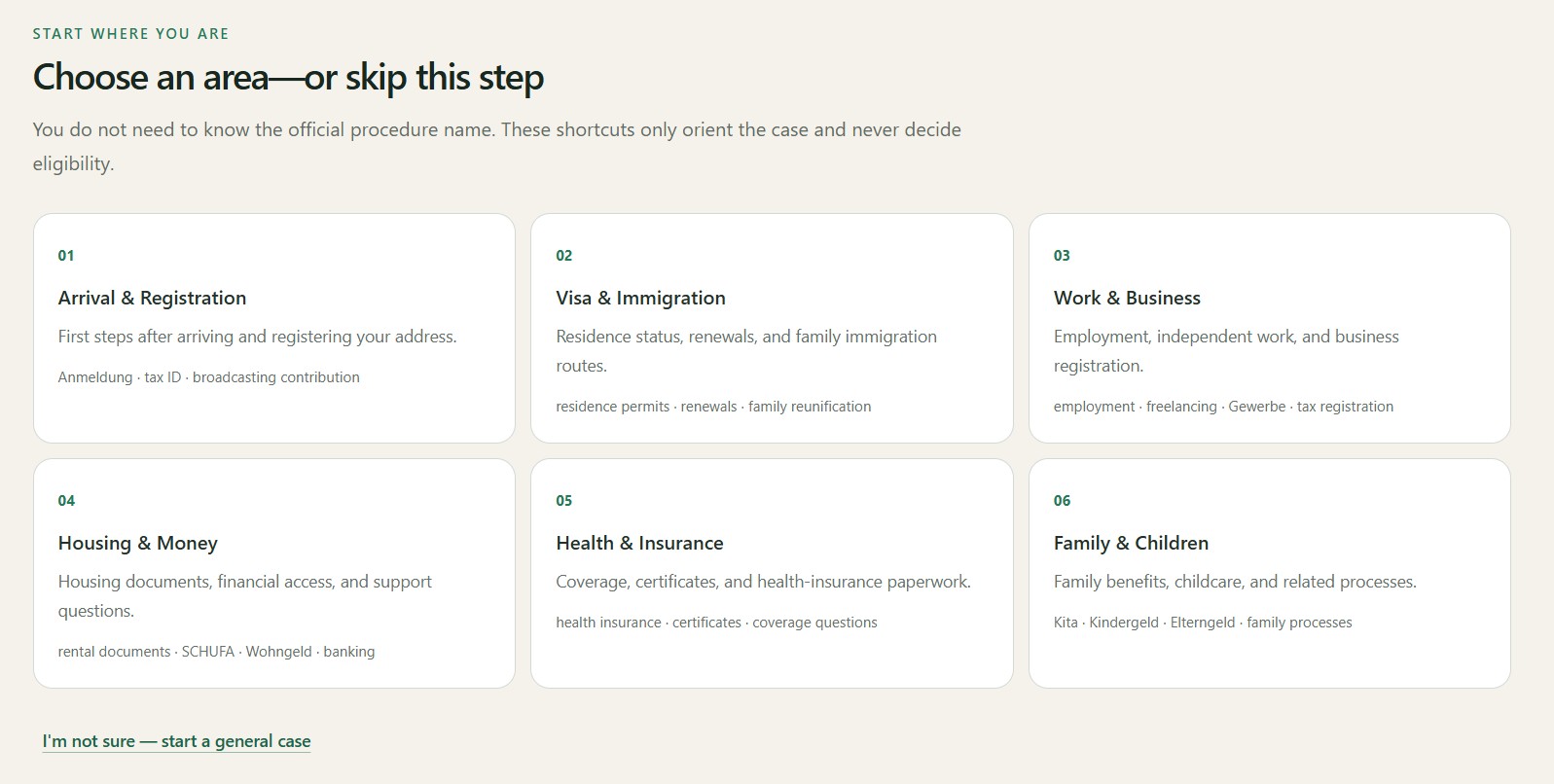
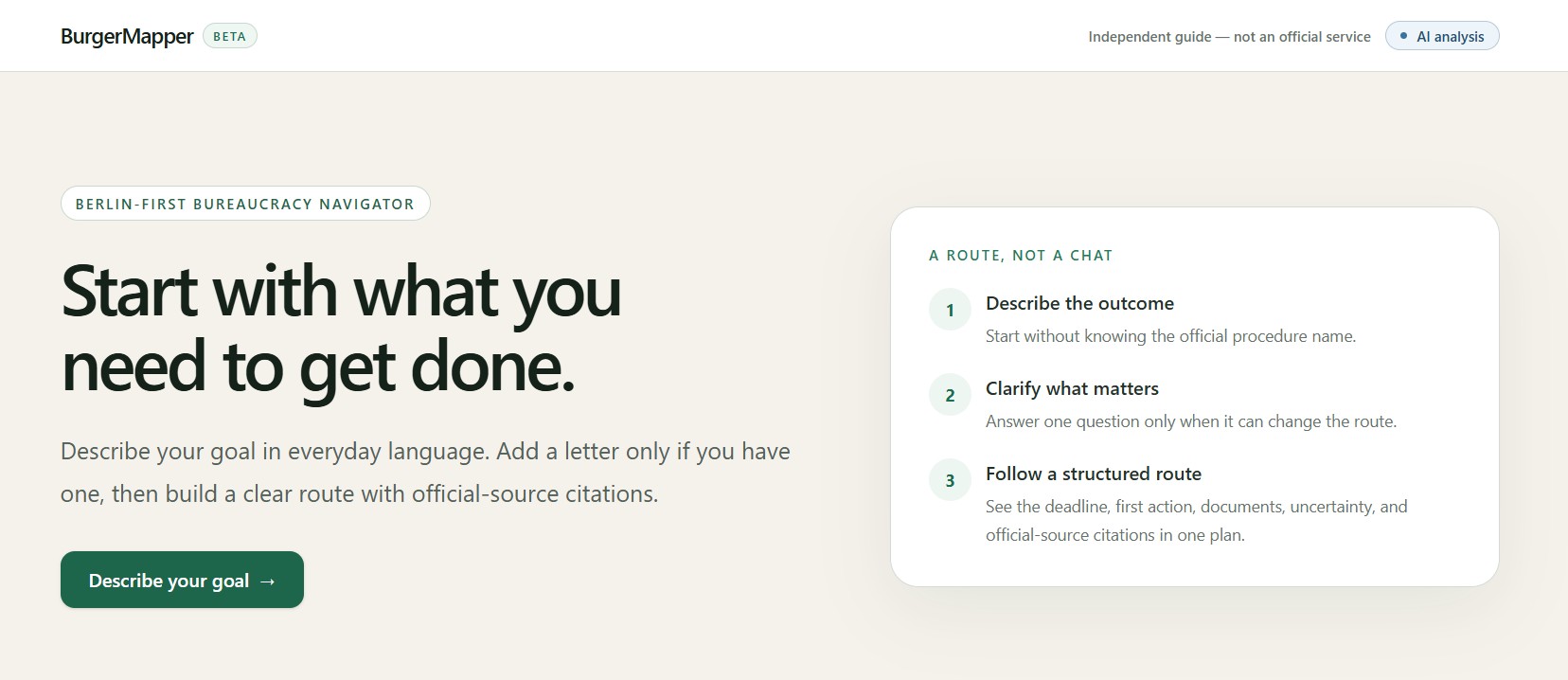
BurgerMapper is a goal-first bureaucracy navigator. You describe your goal in plain words, optionally attaching a relevant attachement, and it builds a personalized route, not a chat transcript:
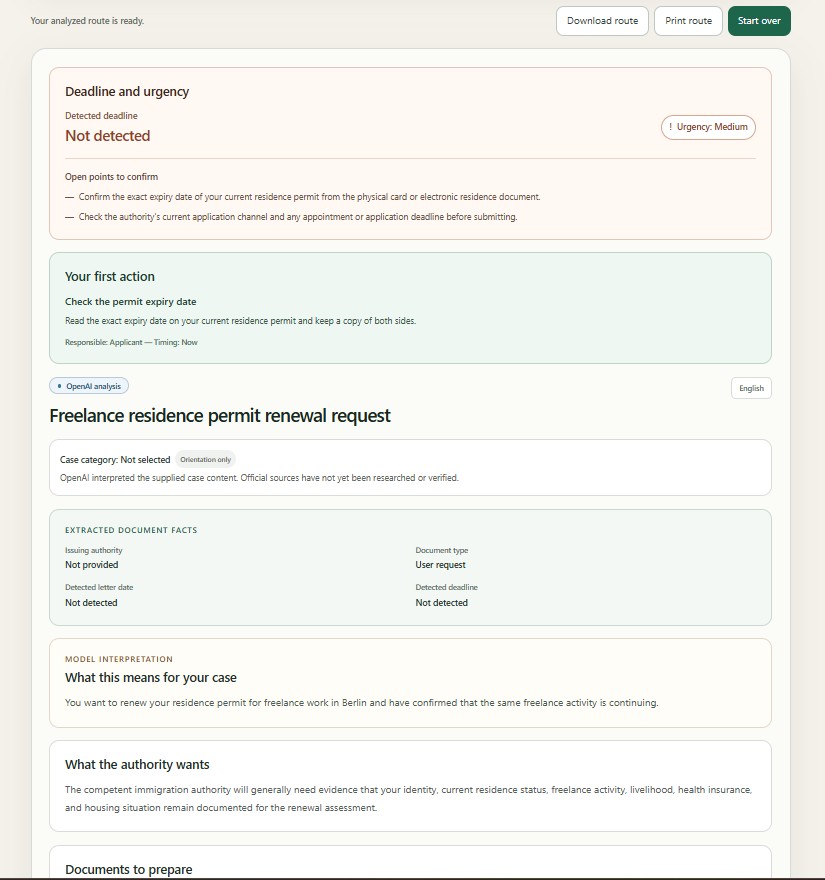
- Deadline and urgency come first, then your single next action, before any summary.
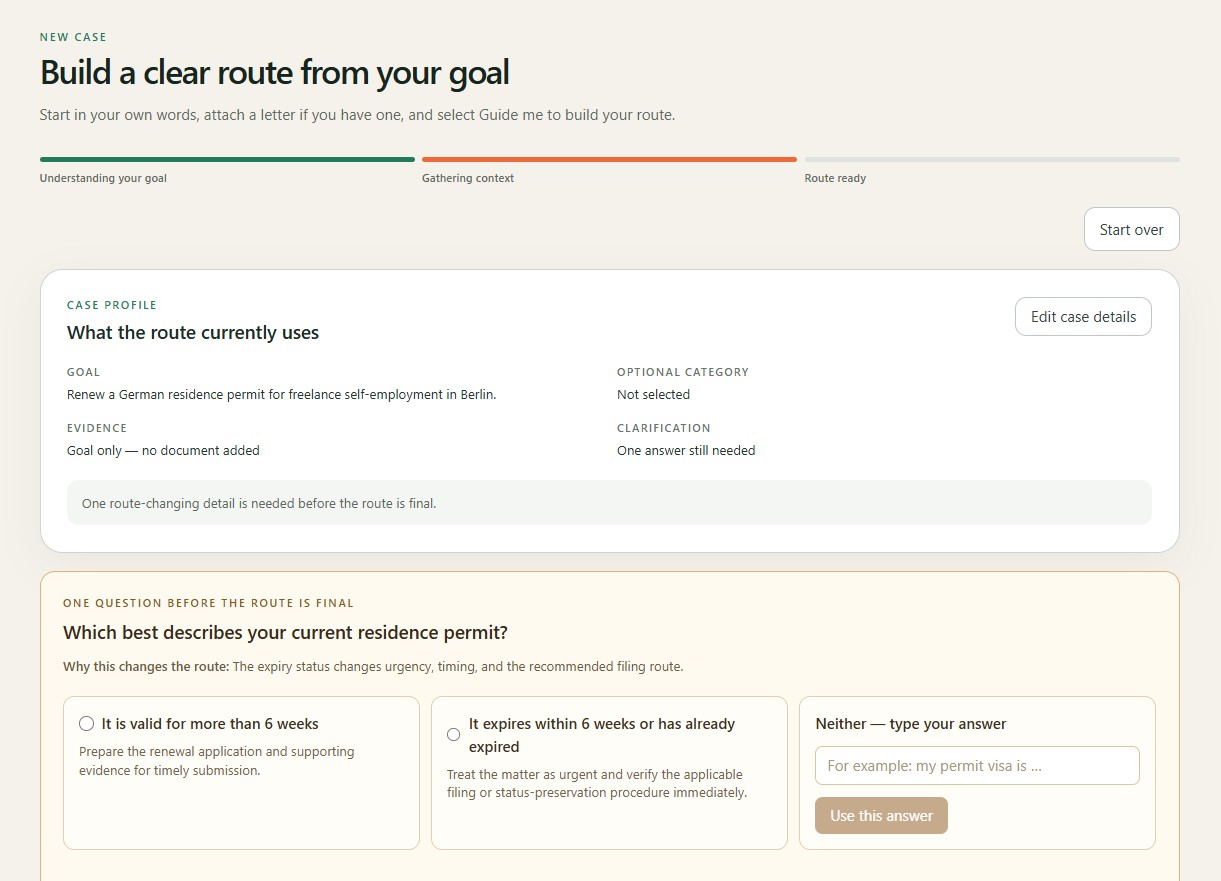
- Then it asks relevant questions, in order to gather the real context of the user case.
- After that, it does a deep Live Search based official sources to gather reliable and relevant information.
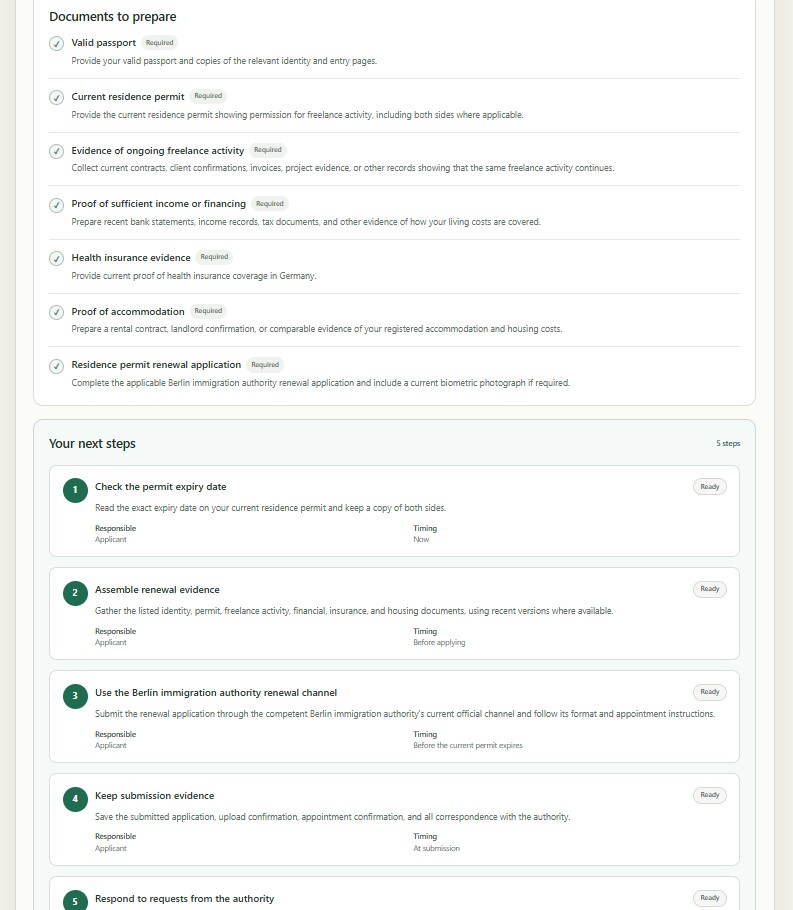
- Then it results organized guide, including actions needed, requirements documents, and the whole process route.
- Output shows up in English, German, or Arabic, with real RTL layout where URLs and dates stay readable, plus print and a privacy-safe plain-text download built entirely in the browser.
- Privacy by architecture: input is processed in memory and never logged or stored, and the intake states exactly what will be sent, nothing leaves your browser until you select "Guide me".
How we built it
I started with ChatGPT (GPT-5.6), not with code. Through an iterative back-and-forth, discussing the idea and giving the model specific research tasks to bring back information and perspectives I did not have, the vision gradually got sharper, until I had settled on a simple, effective workflow: the kind of thing someone actually looking for bureaucratic advice would want.
Then I moved to Codex CLI, also running Sol 5.6. First, I used it to set up the working environment inside the project folder; defining the context, the instructions, and the build plan (AGENTS.md plus a master build plan). From there I fed tasks to Codex to execute that plan systematically, stage by stage, until it was done: nine phases, each with its own prompt, quality gates, and exactly one dated commit, from the mock-first workflow through the secure multimodal boundary to the real GPT-5.6 integration. And in the end, I had to do the editting, so i tested it by myself and i gave note again and again to Codex in order to fix problems that showed up in the real test user or improve some features. Actually, Codex handled almost all of the work and produced the git evidence. On a few rare occasions, after I exhausted my Codex token allowance, I brought in Claude to continue that incmopleted task.
GPT- Luna 5.6 powers the real analysis server-side through the Responses API with strict Structured Outputs, validated again at runtime with Zod — for document interpretation, the ask-or-proceed decision, and the final route. Letters and retrieved pages are treated as untrusted content with prompt-injection guards, and a narrow verification pass exists only for high-risk routes.
Reliability is enforced, not hoped for: a versioned 11-case synthetic evaluation gate (npm run eval) release-blocks on question quality, citation integrity, injection containment, Arabic RTL, latency, and cost budgets — alongside 165 automated tests, anonymous rate/concurrency limits, and content-free cost metrics.
Challenges we ran into
Making an AI product reliable is harder than making impressive interface. The most hard part is crafting the user experience so that the process become extremely simple yet effective. Plus, making the process reliable with useful info and respecting users's privacy. As for the coding aspect, thanks to Codex, this task has become slightly easy, even i don't have a technical background.
Accomplishments we're proud of
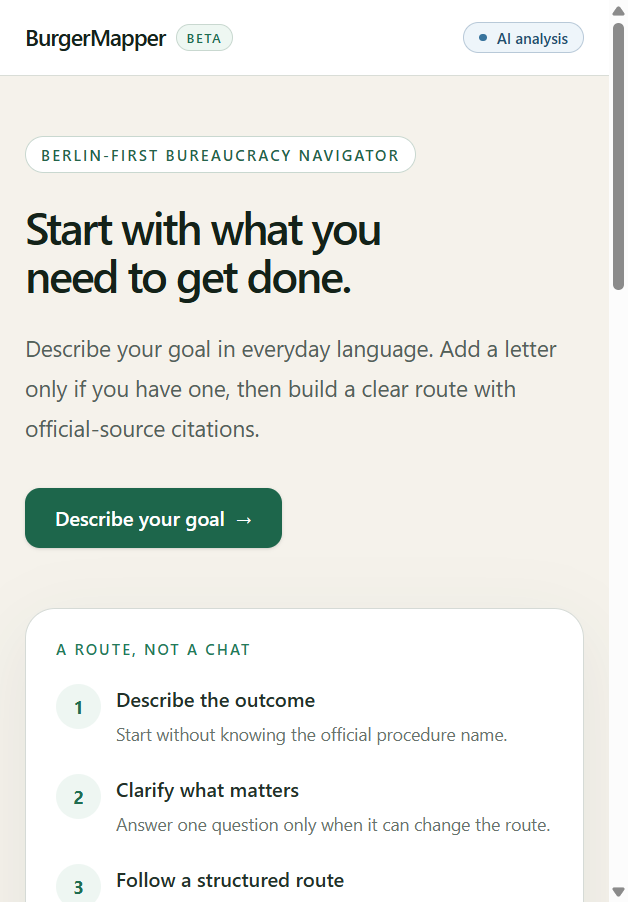
A production deployment with real mode that ready to use by people on desktop and mobile also, with a 0-vulnerability audit and three languages with honest uncertainty everywhere, and a commit history where every phase of the Build Week collaboration is traceable.
What we learned
I learned that the most critical aspect of building an application is crafting a workflow that is highly simple and effective before writing a single line of code—a process requiring deep reflection, visualization of the user experience, discussion, and inquiry. So i had to sketch the longchain of steep for the whole process. The second key lesson is to go to MVP quickly, then continuously improve the application based on user experience rather than chasing perfection. A week is enough!
What's next
The next step is to put it in front of a group of people, get them using it, and gather real feedback — then improve it based on what they run into. My goal is to turn this into a professional app that helps millions of people around the world navigate the painful bureaucratic processes that eat away at our peace every single day, just like the way Google Maps helps us navigate roads.
Built With
- codex
- gpt-5.6
- next.js
- node.js
- openai
- react
- tailwindcss
- typescript
- vercel
- vitest
- zod

Log in or sign up for Devpost to join the conversation.