-
-
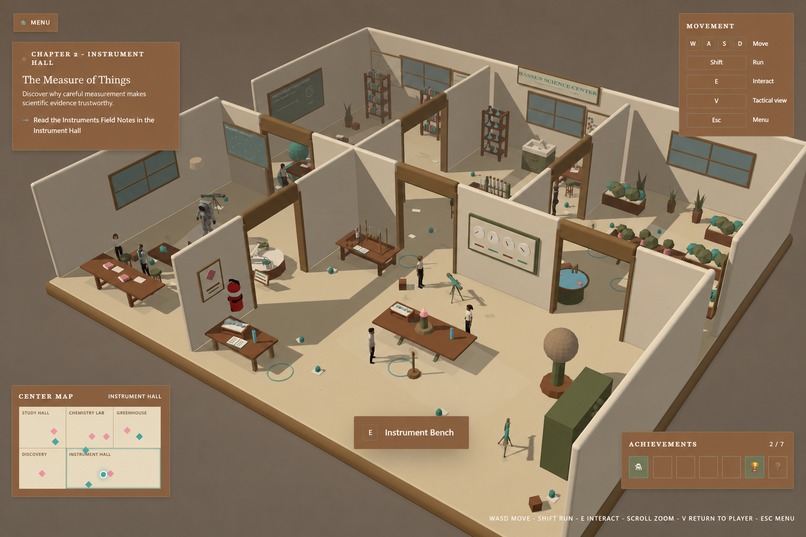
Bunsen Hall
-
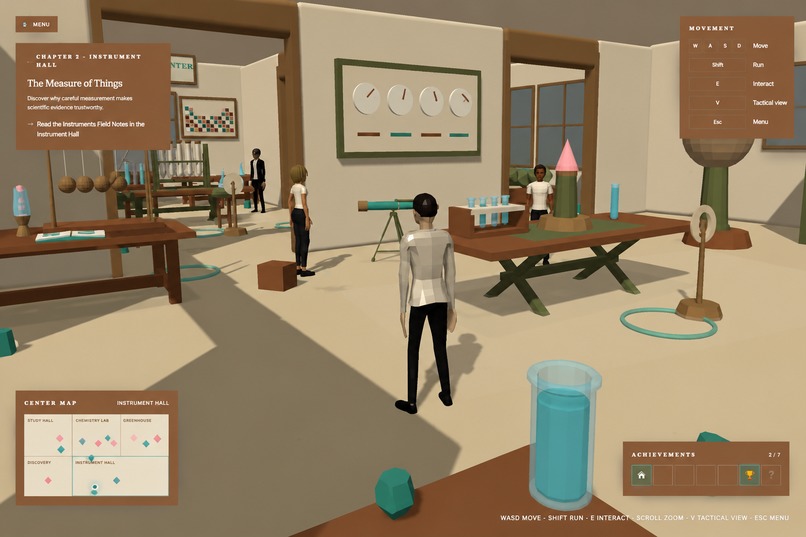
Instrument Room
-
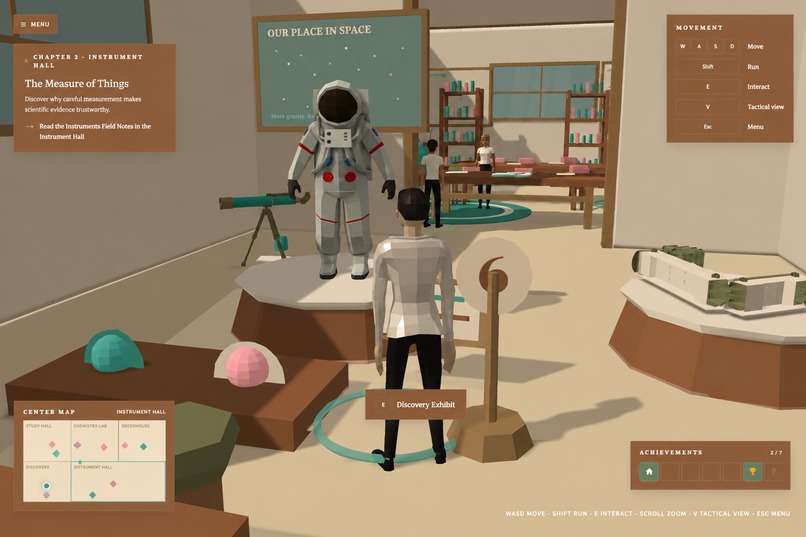
Discovery Room
-
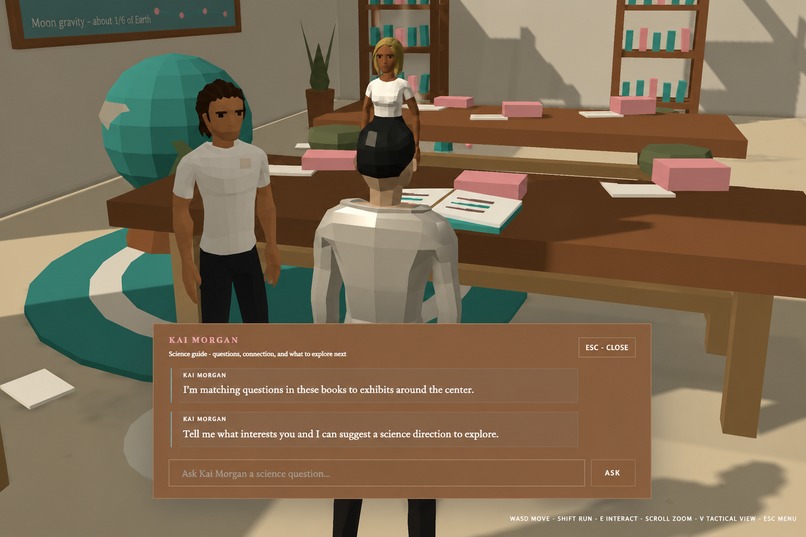
Science Guide
-
Experiment Bench
Inspiration
I'm a Bangladeshi developer who educated myself. There was never a good science lab at my school. I never performed a titration; instead, I learned about it from a textbook diagram. The majority of students here are in a similar circumstance. I had a straightforward notion when I was given access to Codex and GPT-5.6 for this hackathon: create the lab I had never had in the web.
What it does
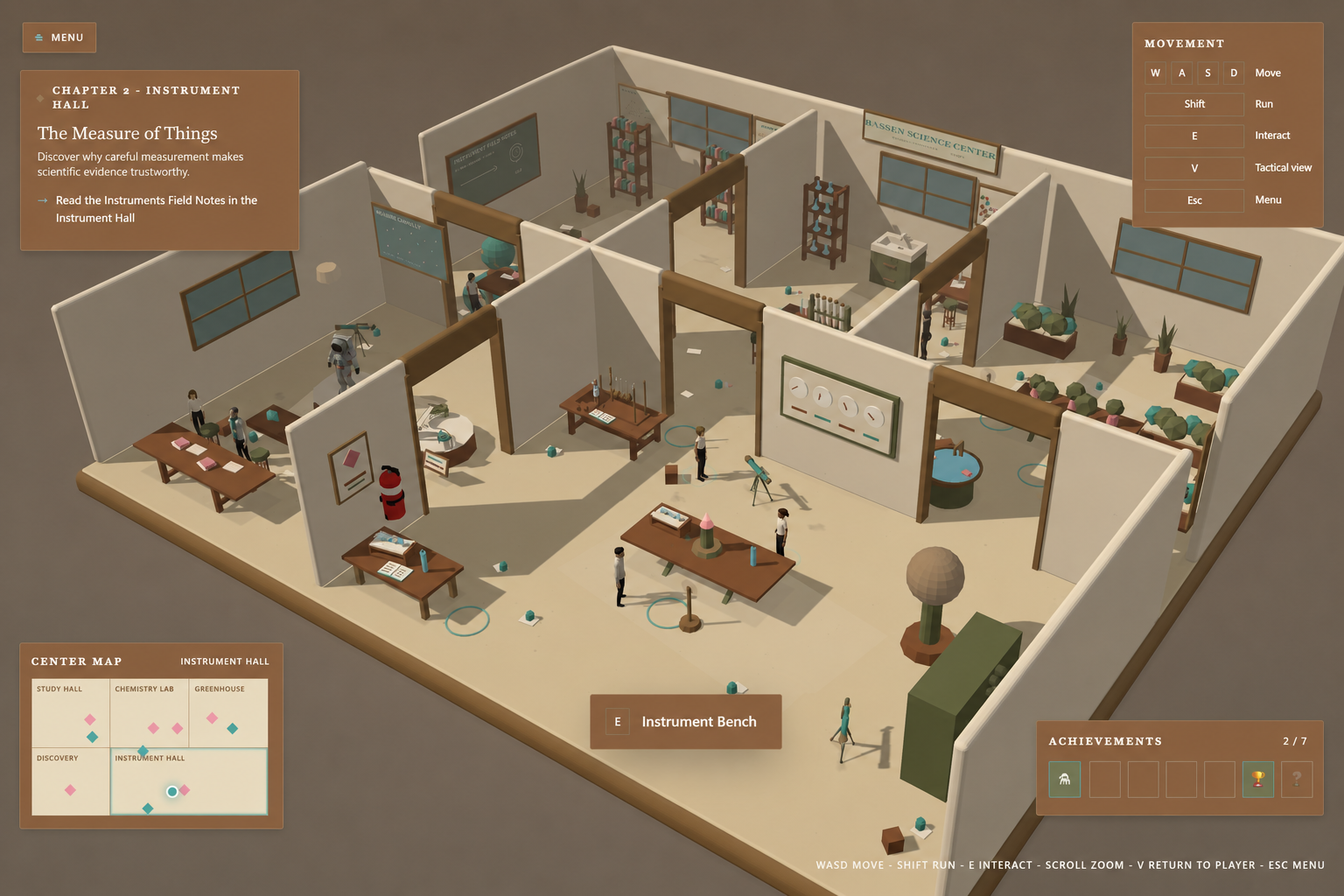
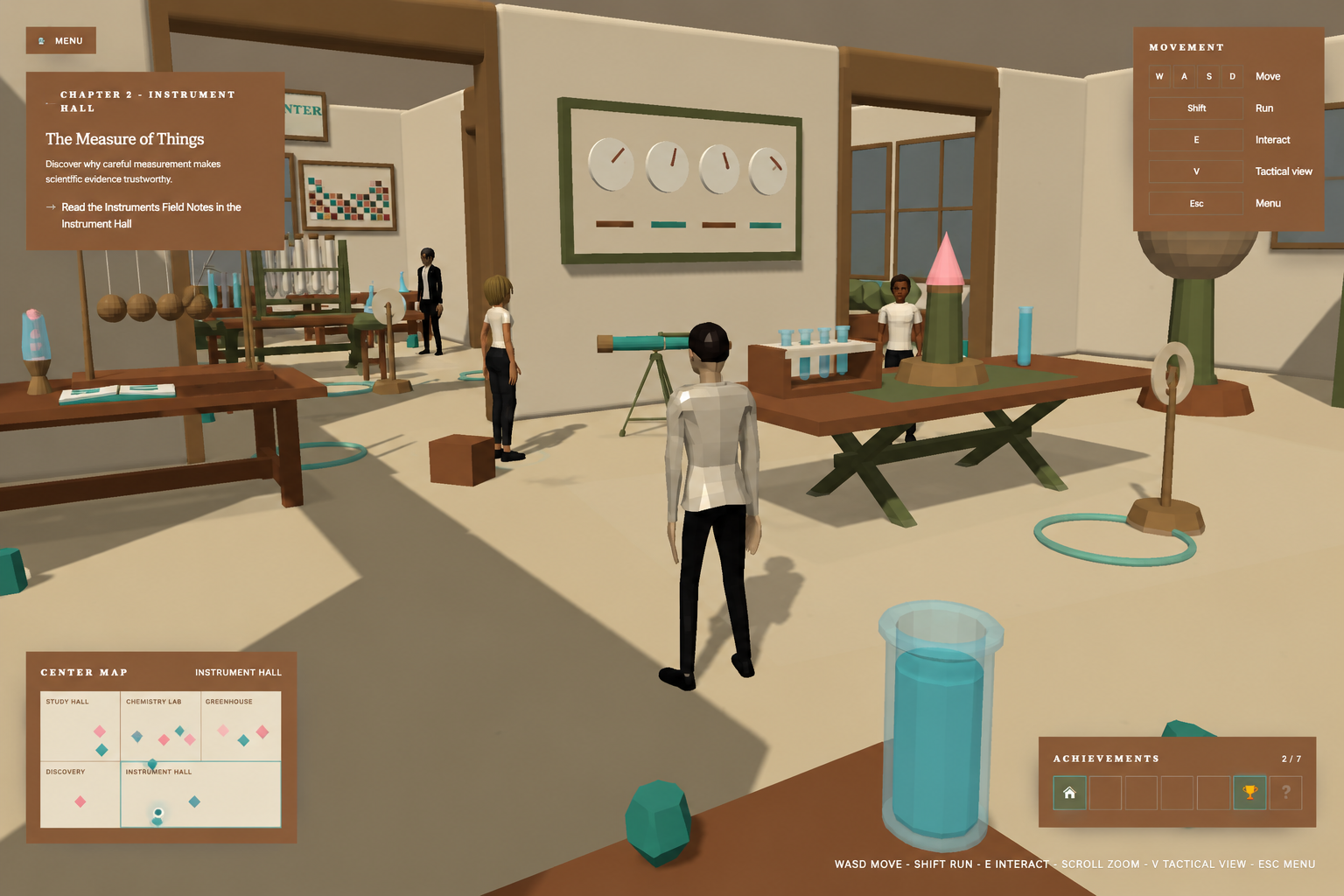
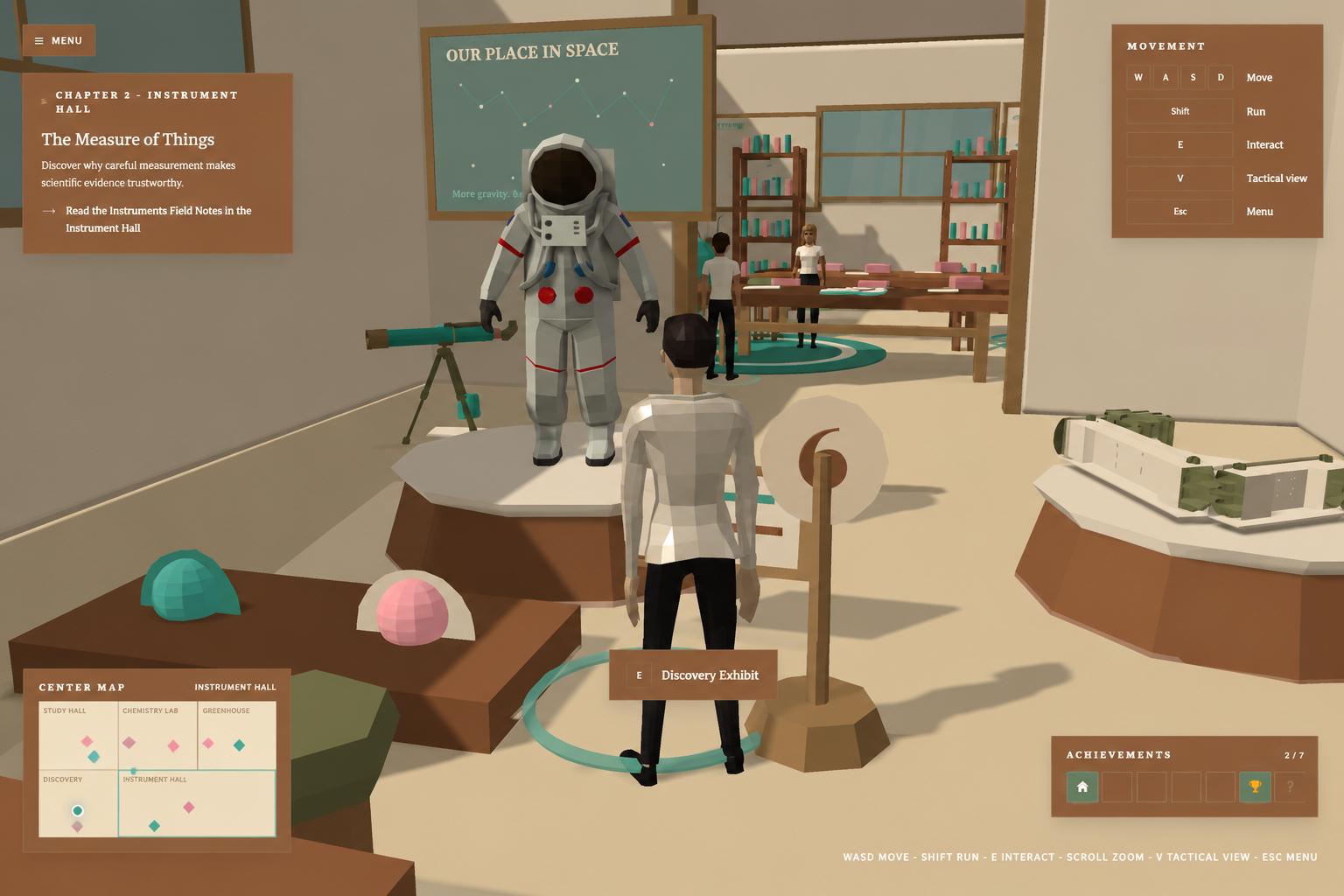
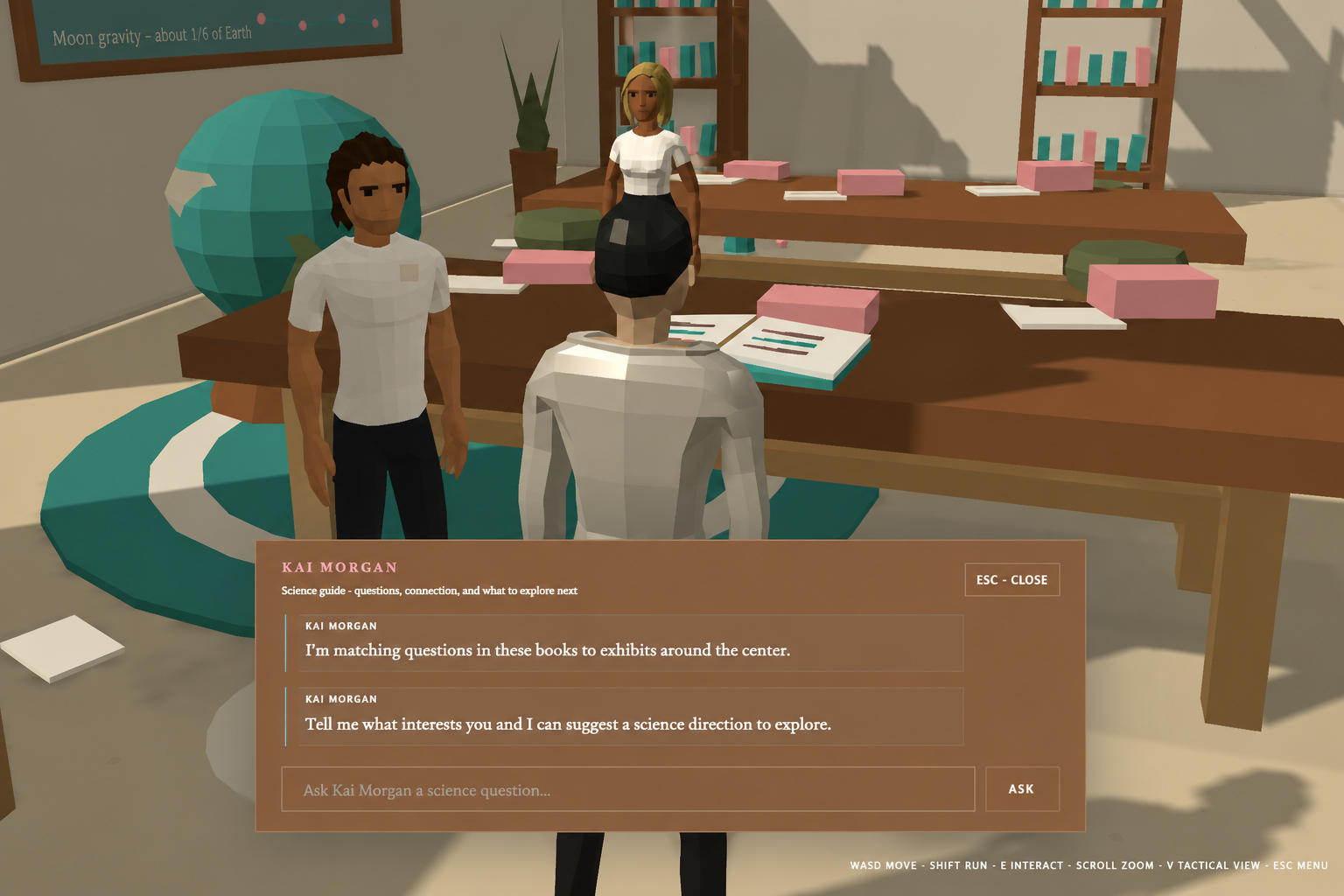
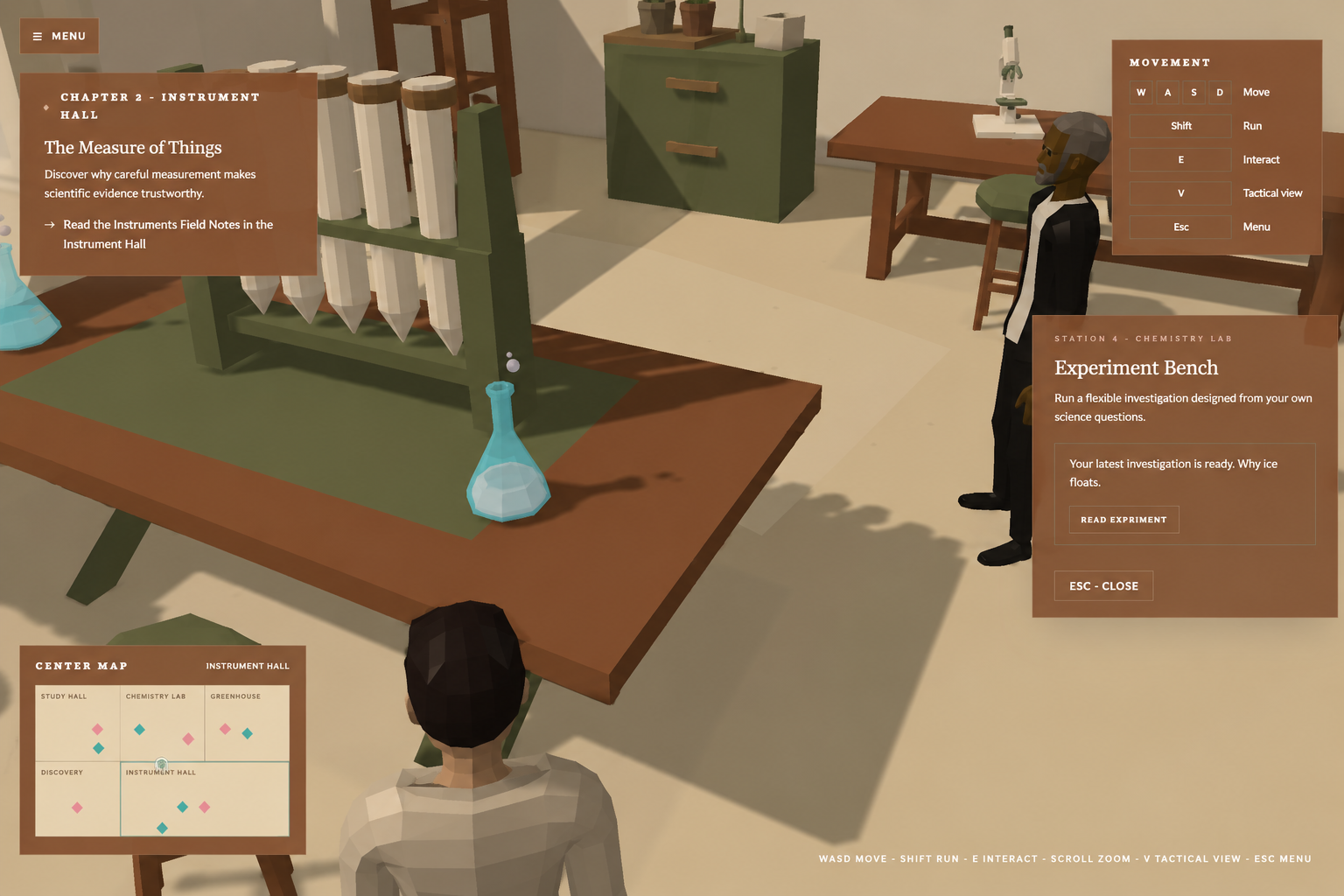
Bunsen is a center for 3D science. As a student, you navigate the Chemistry Lab, Study Hall, Greenhouse, and other rooms.
At the stations, you can conduct actual experiments. There is a gravity experiment, a flame test, and an acid-base titration. Not merely an animation, each one is a proper state machine with steps, failure outcomes, and surprise outcomes.
Professor Quill is an AI tutor. You approach him, hit E, and ask him anything. He can observe the situation of your experiment right now, but he won't offer you the solution. Instead, like a true teacher, he poses a guiding question to you. It required numerous prompt iterations to get that portion correct.
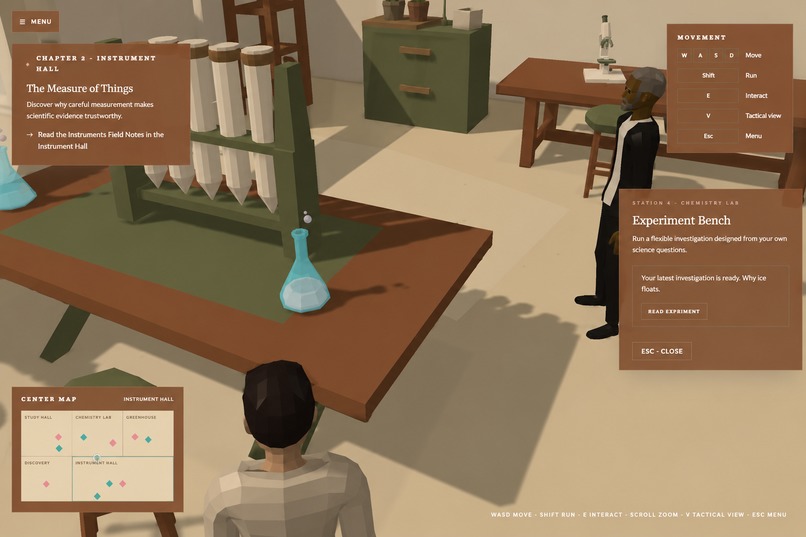
The Research Desk is the area I'm most proud of. GPT-5.6 creates an entirely new experiment for any science question you type, such as "why does ice float"? Zod verifies the output against a rigorous schema; if validation is unsuccessful, it attempts again with the precise field errors. Playable right now, the generated experiment loads into the same runner as the built-in ones.
Additionally, there is a five-chapter story mode that takes you from your initial titration to the conclusion, when you ask your own inquiry and finish the experiment that the AI created for you. Additionally, there are NPCs moving around, accomplishments, and field notes to read.
How I built it
Next.js 14, TypeScript, React Three Fiber and Drei for the 3D, Zustand for game state, Tailwind for UI. Two GPT-5.6 models at runtime: gpt-5.6-terra streams the tutor dialogue token by token, gpt-5.6-sol generates the experiments.
In a few days, I used Codex to build the entire thing. The Socratic tutor behavior, the safety restrictions on created experiments, the chapter layout, and the low-poly art direction were all product decisions that I made, and Codex collaborated with me to write and test the code. To be honest, there was no other way I could have completed a project this magnitude in this amount of time as a lone developer. The README has specifics.
Challenges I ran into
The most challenging issue is that the game must never be broken by a created experiment. Strict Zod schema, stringent generation limitations (only known equipment props, known visual effects, three to five safe classroom steps), and one automated correction attempt with field-level faults comprised my solution. Bad generations essentially stopped after that.
Making the instructor instruct rather than respond is the second most difficult. You have all the answers you needed in the early editions. "One question or one nudge, never the solution" was the result of numerous prompt changes.
It also required a lot of optimization work to maintain a 5-zone 3D world with NPCs, audio, and streaming AI in a browser.
What I learned
An AI can transform from a chatbot into a content engine if it is sufficiently constrained. The project's central concept was the Zod validation loop, which transforms GPT-5.6 output into something a game can rely on.
What's next
Additional subjects (biology, physics circuits), a teacher dashboard for assigning chapters, multiplayer mode where students explore the lab and complete experiments together, and multilingual support so students can learn in their native language.
Built With
- codex
- gpt-5.6
- next.js
- node.js
- openai
- react-three-fibe
- tailwind-css
- three.js
- typescript
- zod
- zustand


Log in or sign up for Devpost to join the conversation.