-
-
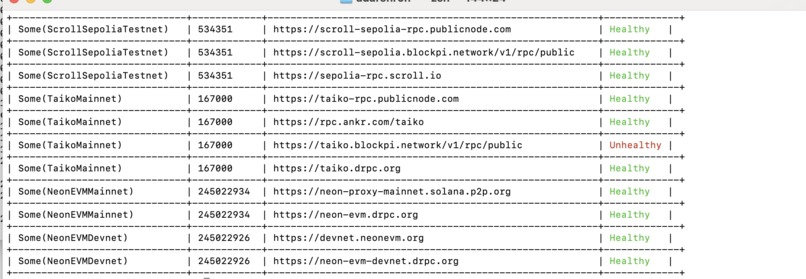
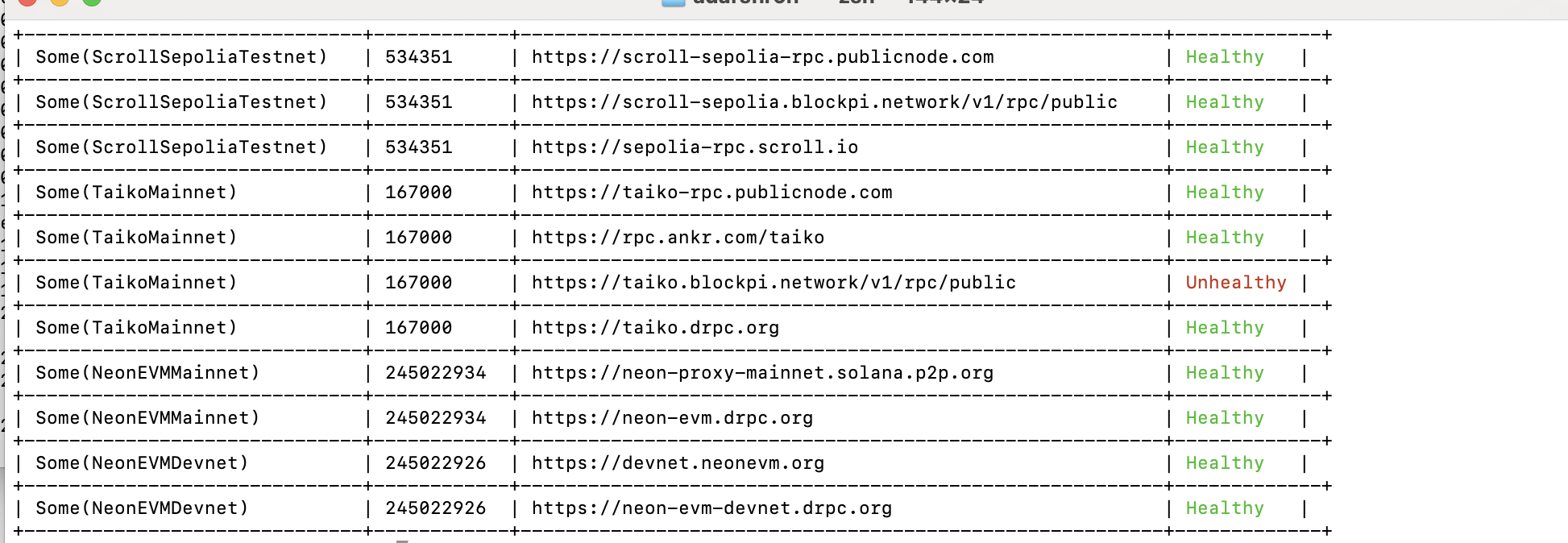
Bunsan health report
-
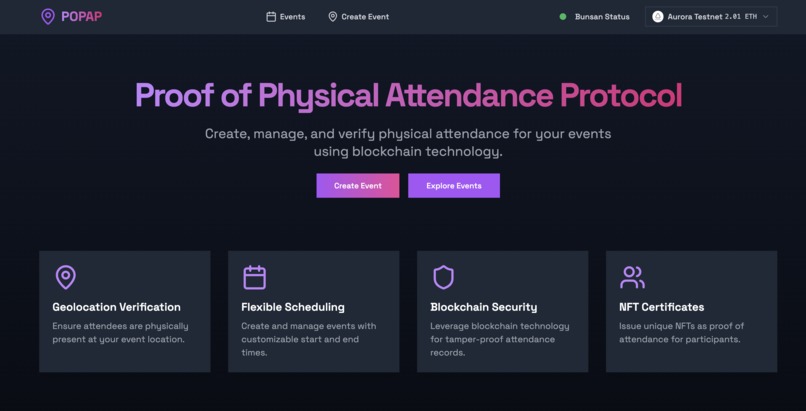
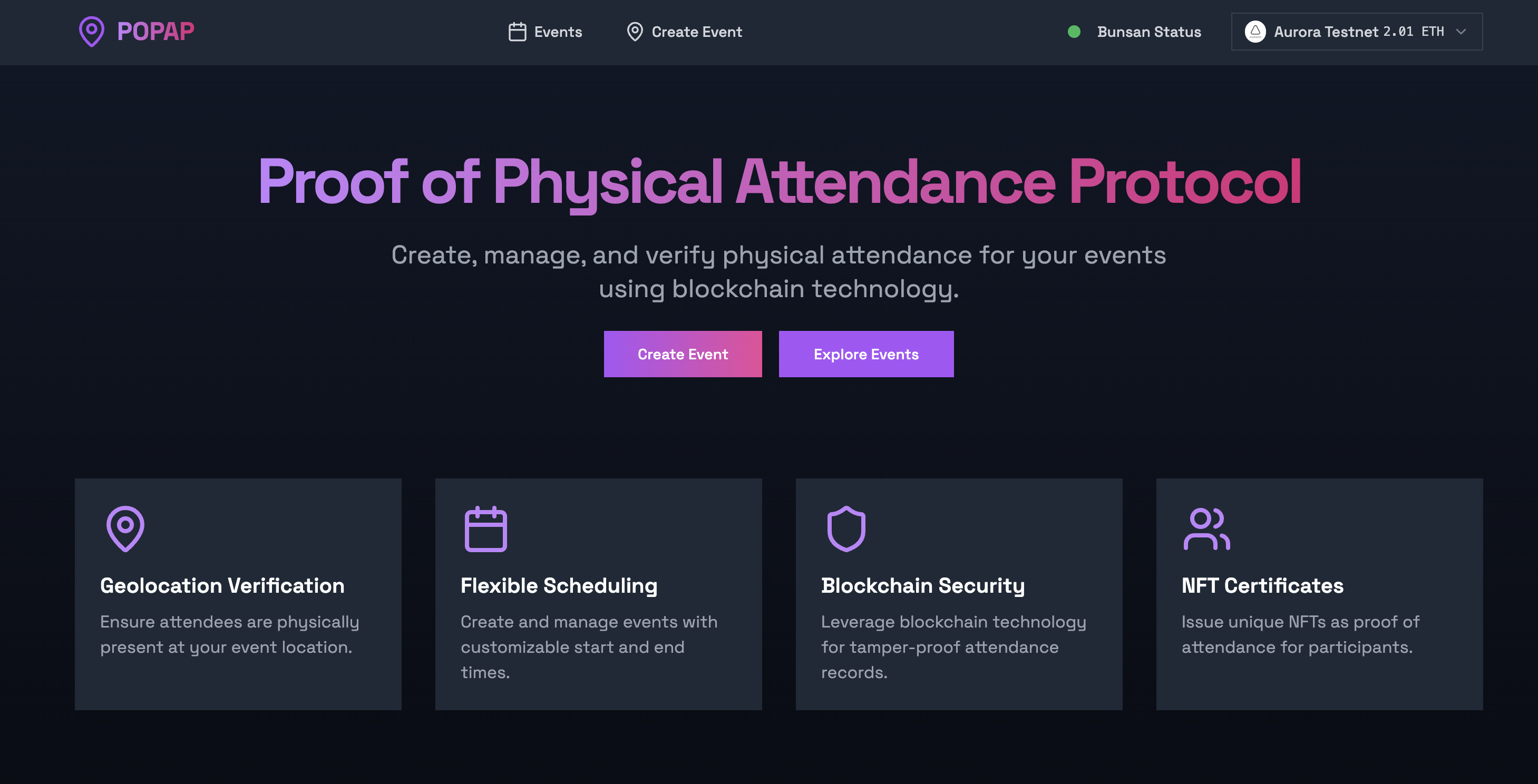
PoPAP Home
-
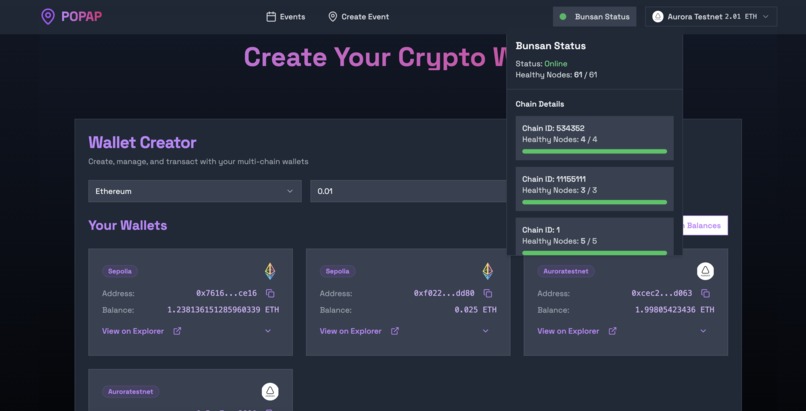
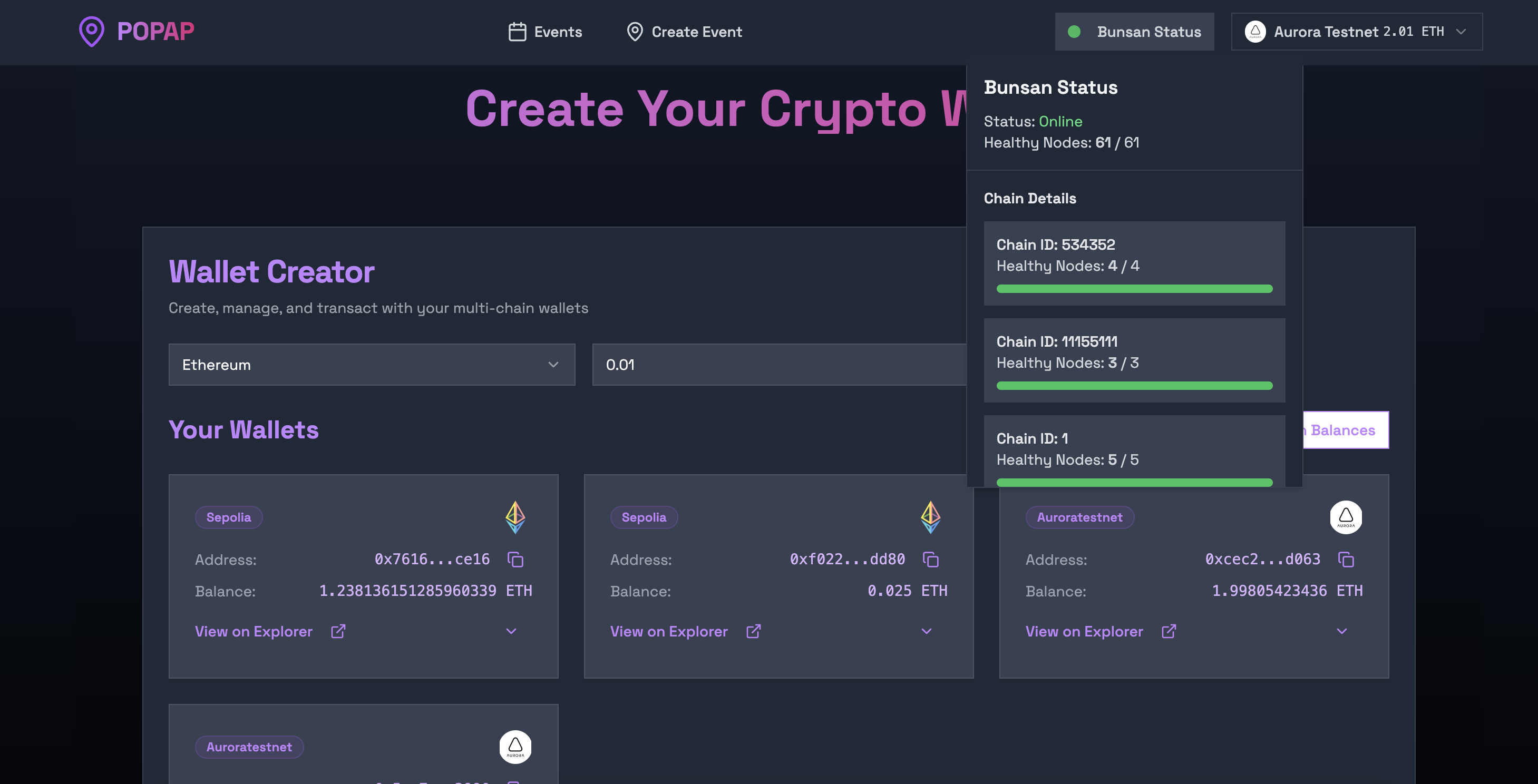
MPC Wallets
-
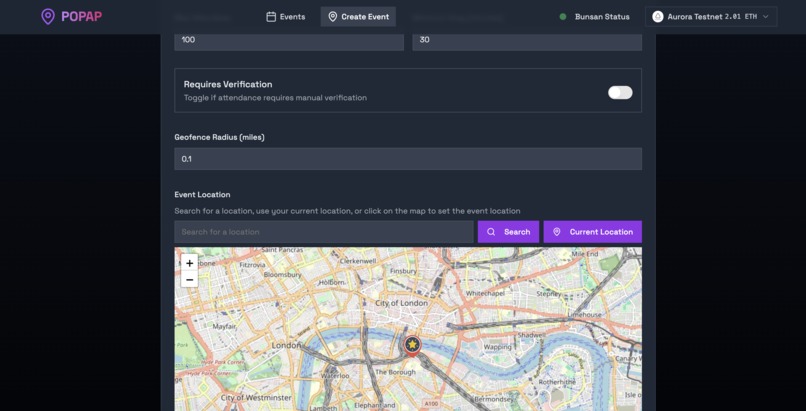
Create Event
-

Event List
-
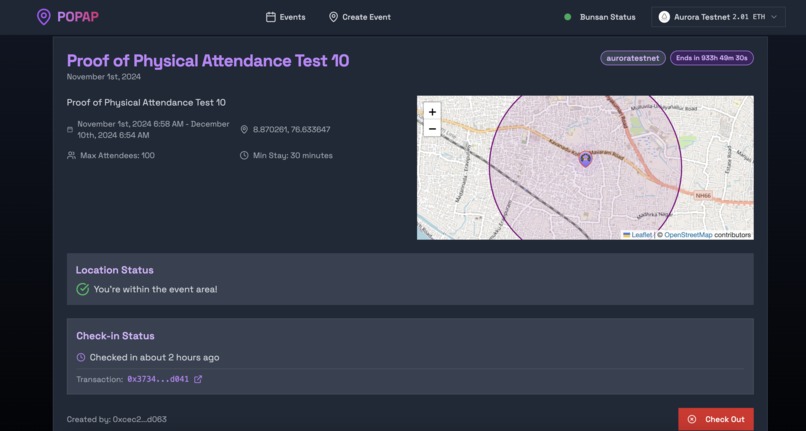
Event detail

Inspiration
The Web3 ecosystem faces a critical challenge: reliable access to blockchain networks. While building decentralized applications, I have seen teams who repeatedly encountered issues with RPC node reliability, unexpected downtime, and inconsistent performance. The existing solutions were either too simple (basic round-robin proxies) or too complex (requiring extensive infrastructure). I needed something in between - a robust, developer-friendly tool that could handle multiple chains while remaining lightweight and efficient. Additionally, I wanted it to be extensive enough to support various web3 operations like wallet management, transaction management, contract interactions, etc.
What it does

Bunsan is a high-performance RPC load balancer specifically designed for EVM-compatible blockchain networks(20 EVM networks including Aurora Testnet) with support for NEAR MPC Wallets via Bunsan Extension(installable via Bunsan CLI itself). The power of Bunsan is its extensibility via Extensions. The near-mpc-accounts extension allows it to expose API endpoints that make it super easy to use NEAR chain abstraction via Chain Signatures.

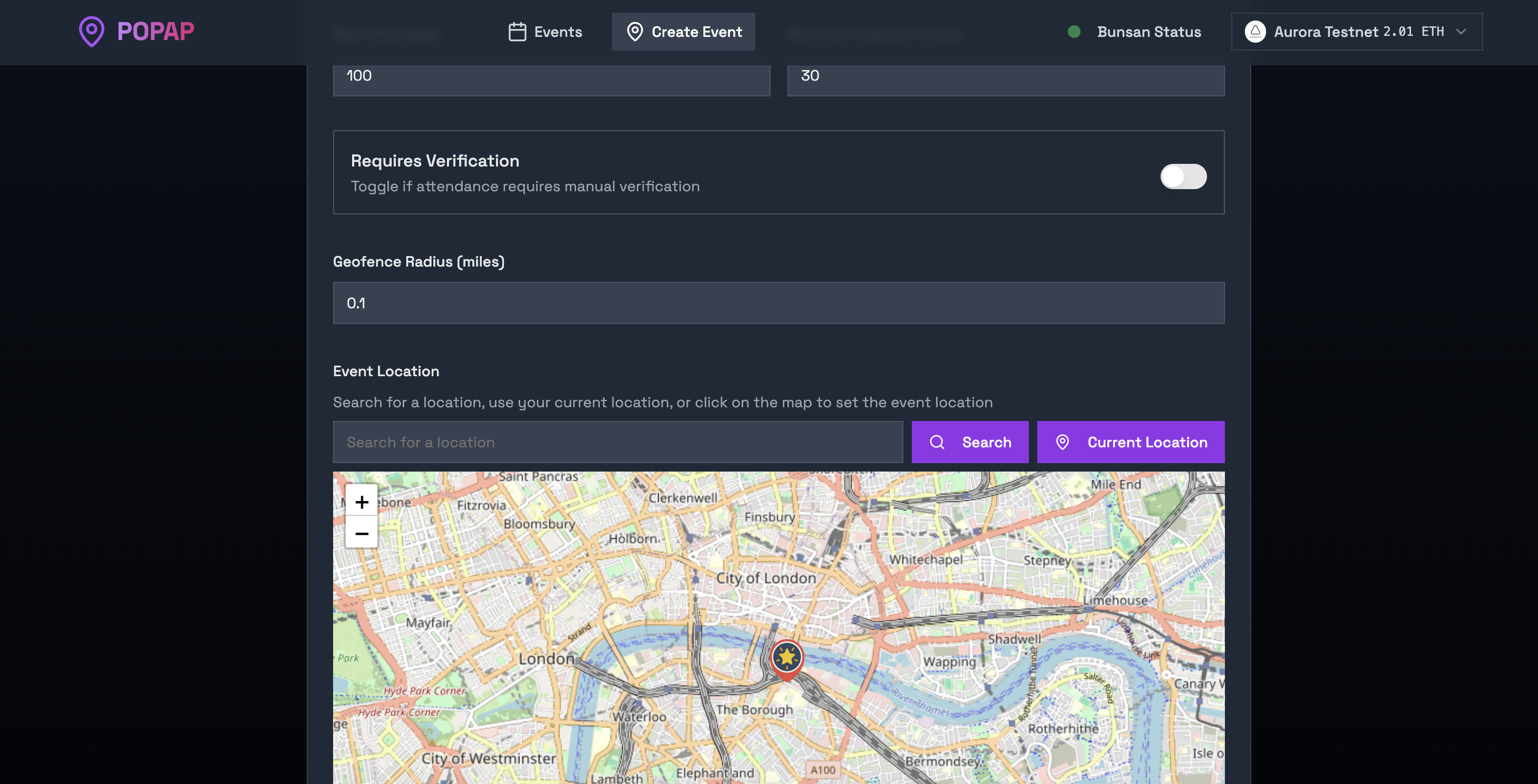
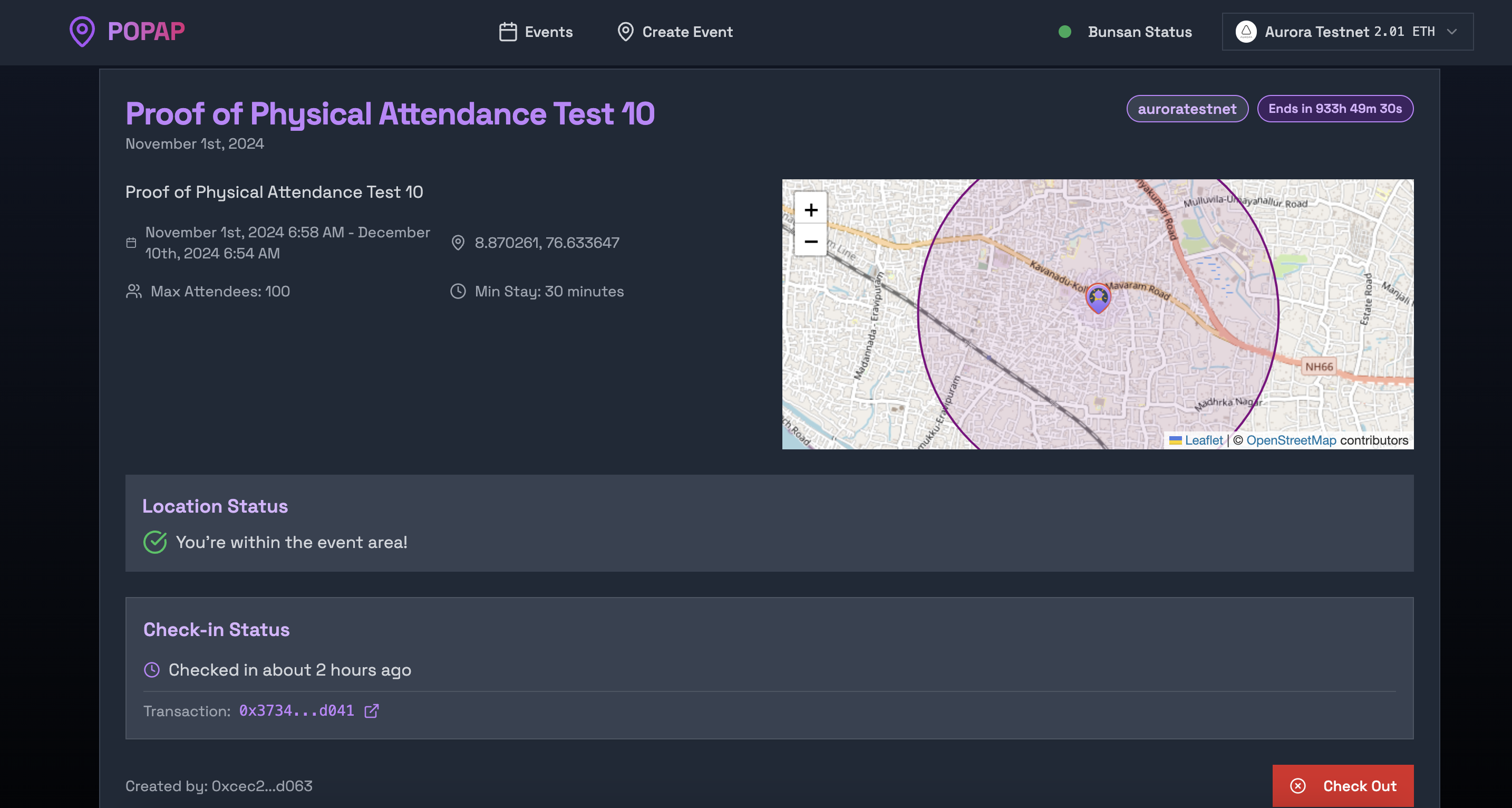
The Bunsan APIs were integrated into a fully working dApp called POPAP (Proof Of Physical Attendance Protocol) that allows users to manage NEAR MPC backed wallets on chains like Aurora Testnet and Sepolia Testnet, deploy contracts programatically and create Events(personal/business) that are Geo-fenced to allow users to mint NFT on Aurora and other EVM networks(contract interactions).
How we built it
- Core: Rust for its performance, safety, and excellent concurrency model
- Web Framework: Actix-web for high-performance HTTP handling
- Configuration: TOML for human-friendly config management
- Async Runtime: Tokio for scalable async operations
- Extensions: TypeScript-based Plugin system with cross-platform binary support
Challenges we ran into
Getting the extensions to works seamlessly with core Bunsan was the first major challenge.
Since the plan for Bunsan was to be multi-chain, the extension had to be developed in such a way that it supports MPC wallets for both EVM chains like Aurora, Ethereum, as well as Bitcoin.
I also faced issues with the NEAR MPC Signer a lot of times, but was eventually able to understand the issues and were able to solve them.
Apart from core Bunsan and the NEAR MPC extension(was really hard to make this a generic system for Bunsan), I also wanted to have a really good demo dApp that shows how to integrate and use Bunsan. For this I chose to build a new proof of attendance protocol backed by geofencing called Proof of Physical Attendance Protocol(POPAP). The contract was bit tricky, but with a robust test suite, I was able to get it done working well.
Accomplishments that we're proud of
A solid production-grade RPC loadbalancer with over 1100+ downloads as of today. 6 releases were done to crates registry during the hackthon period.
Seamless NEAR MPC(Chain Signatures) integration with Bunsan via extensions. The extension system is generic and could be scaled to its own extensions store/registry. To support wider adoption of extension development, the extensions were built with TypeScript.
A complete working demo app(an actual consumer facing app called Proof Of Physical Attendance Protocol - https://github.com/ronnakamoto/popap) that showcases Bunsan's power via a protocol that can be used by people in real life. The UI and UX were designed with care.
What we learned
- More about Rust
- A lot about NEAR ecosystem
- Generic plugin architecture
- MPC and Chain Signatures
What's next for Bunsan
- Custom load balancing strategies
- Decentralized RPC Marketplace
- Extensions store




Log in or sign up for Devpost to join the conversation.