-
-
bunq mate 2.0 logo
-
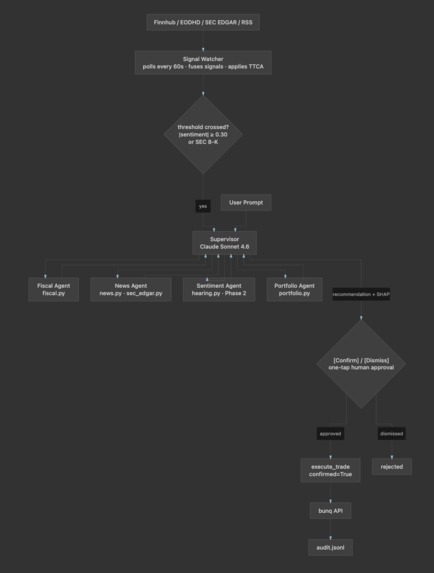
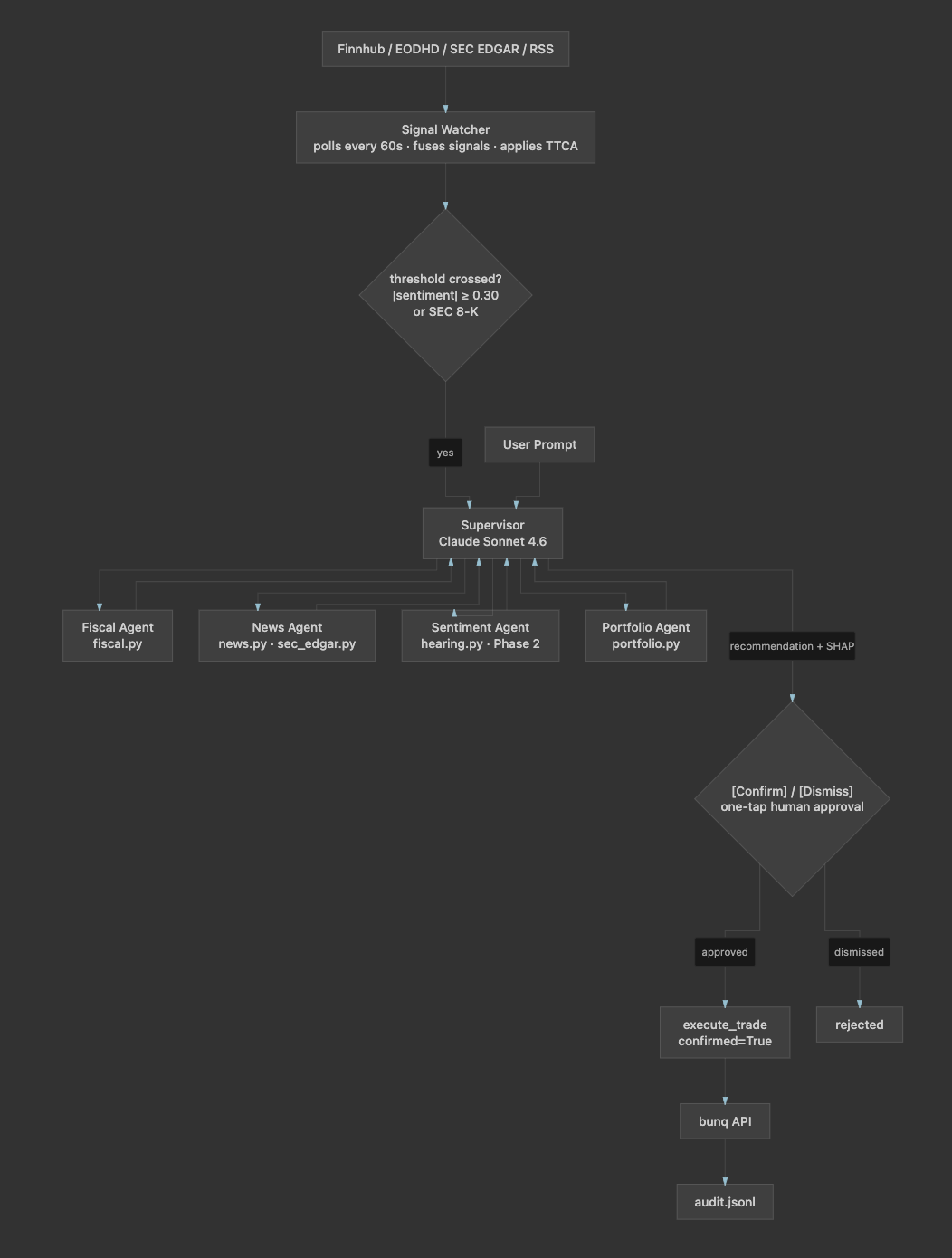
Architecture
-

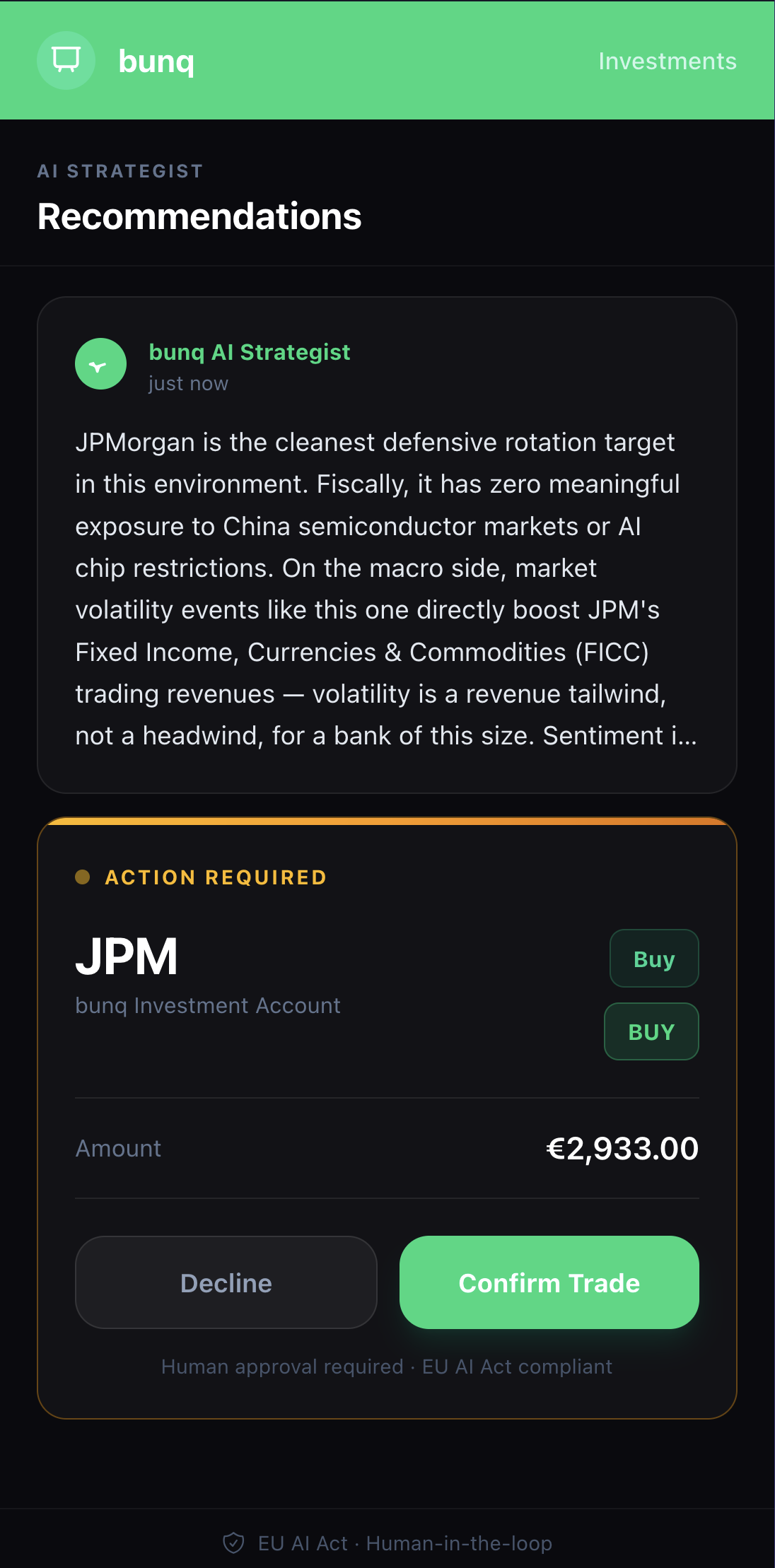
Execution Model
-
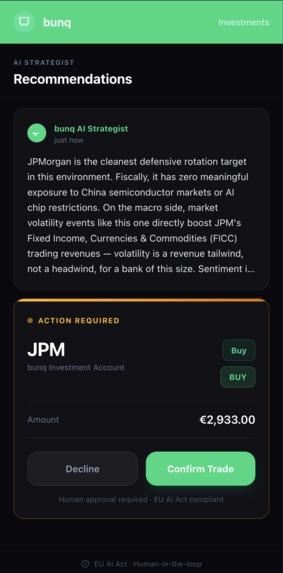
Demo Snapshot
-
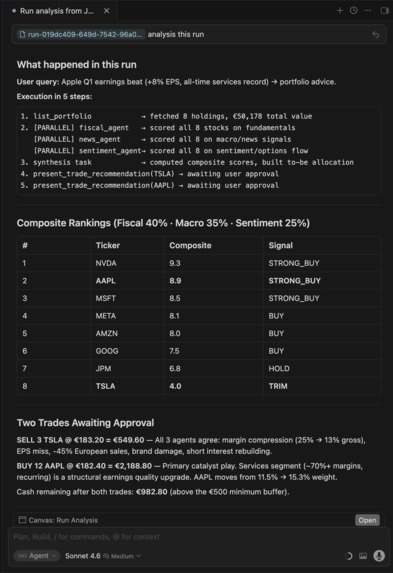
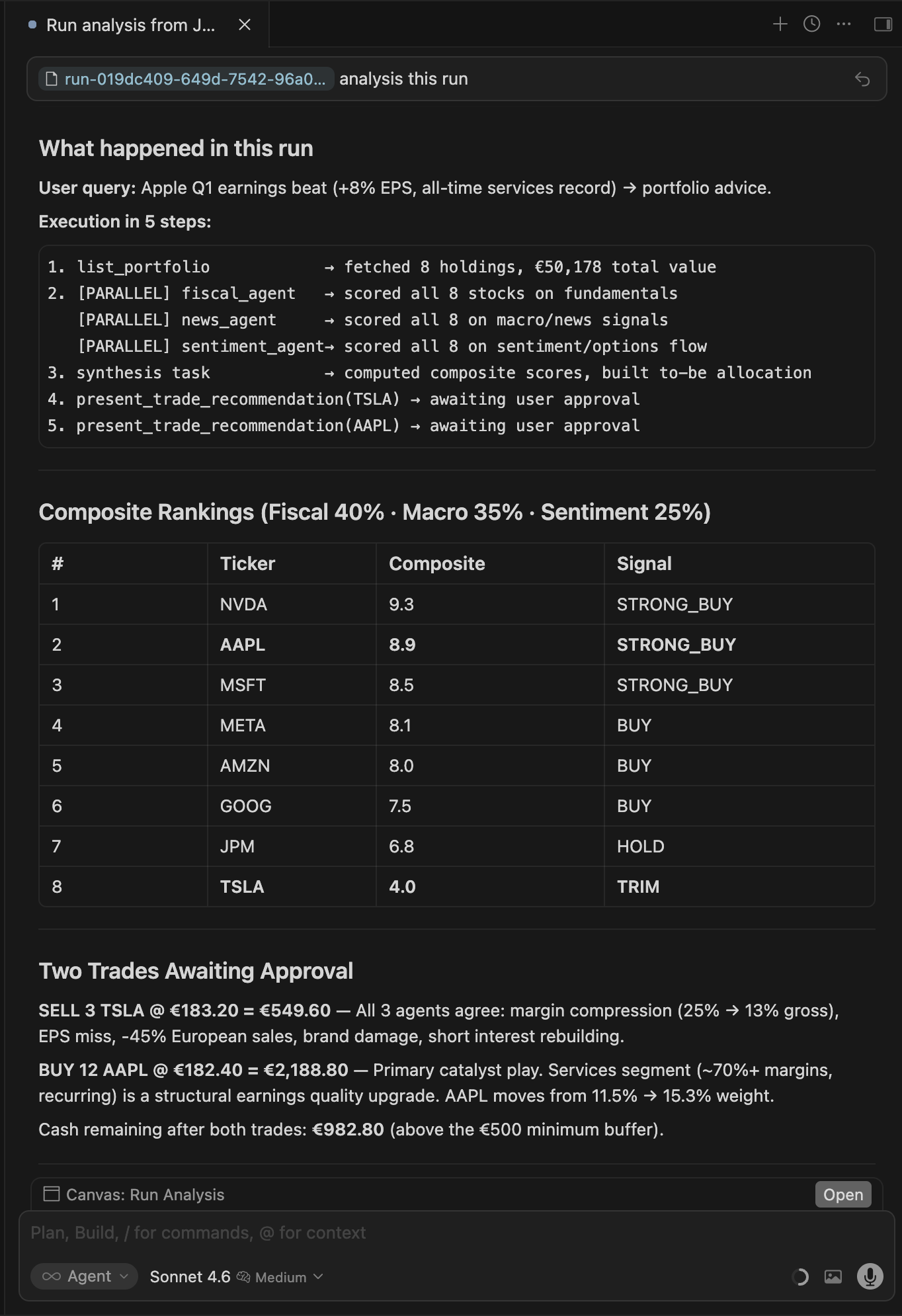
Back end run analysis
-
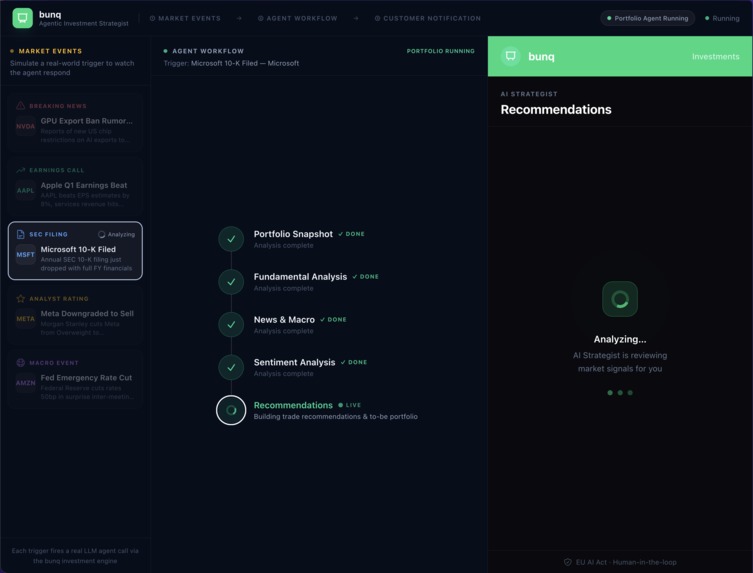
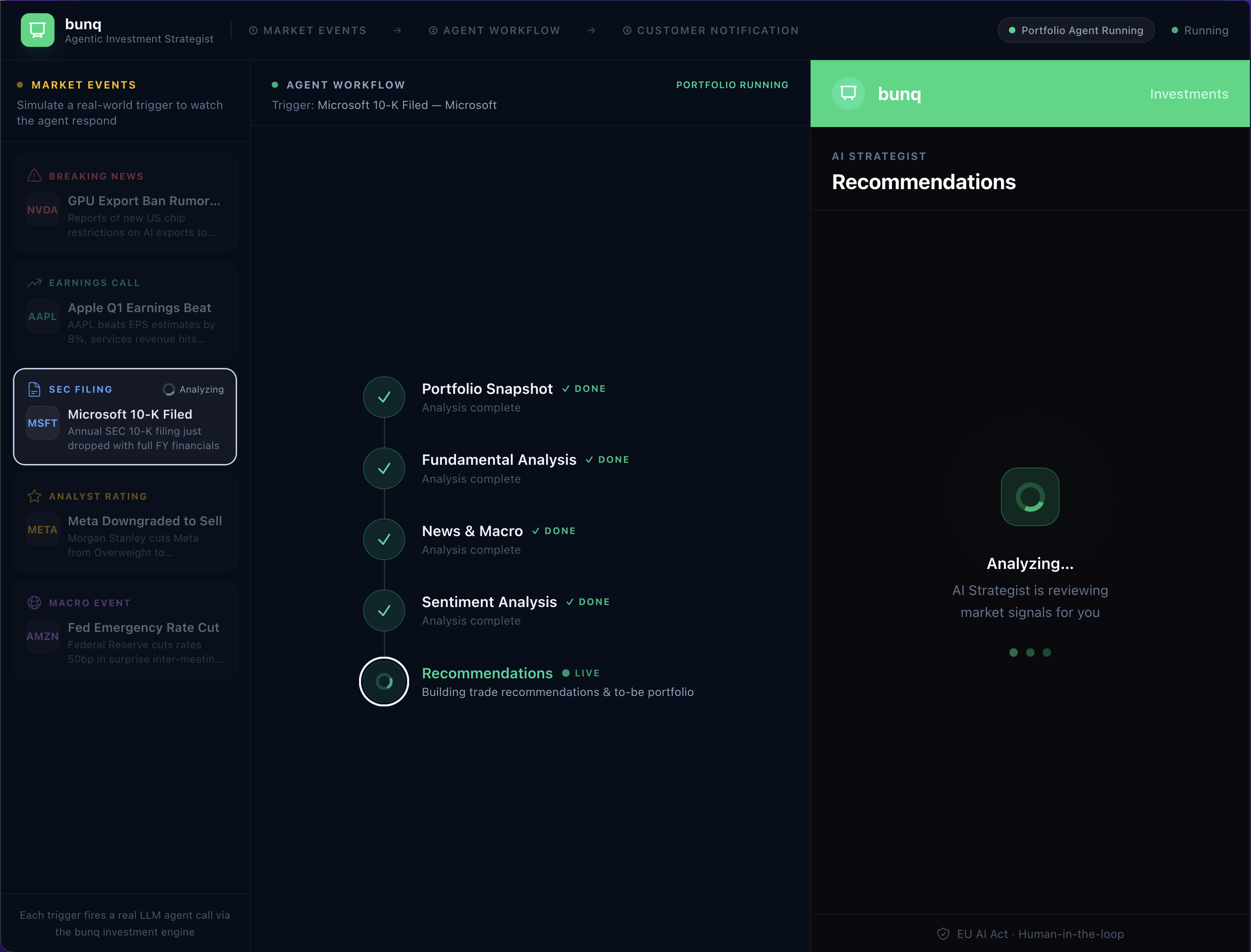
Agent running snapshot

Inspiration
Our team (of two) represents the two ends of the investment spectrum: one of us lives and breathes wealth management full time, while the other stopped investing years ago, overwhelmed by the complexity. This project was born from a simple personal goal: for the wealth manager to inspire their teammate to start investing again for a more secure future. We realized that if we could solve the "fear and friction" for one teammate, we could solve it for bunq’s 30 million+ users.
What We Learned
Comparing our experience this year to building bunq mate 1.0 the speed at which we can now code and ship using advanced LLMs has completely transformed the development lifecycle. We also gained a deep appreciation for Amazon's cloud level growth potential; seeing Claude thrive on Amazon’s custom chips highlights a massive synergy in the AI hardware space. Also we felt the absence of Ali and the traditional midnight pizza at the start but the energy of the crowd kept us fueled.
How We Built It
We analyzed where bunq could scale most effectively in the USA and identified wealth management as the "golden feature". It captures high-margin customers and allows bunq to compete with both traditional banks and specialist brokers. To reach 100 million users by 2027, bunq needs more than just storage; it needs an intelligence layer. We used Fiscal.ai as our knowledge center to ensure every decision is grounded in reliable, structured financial data rather than brittle OCR. We built a hierarchical multi agent multi modal fleet where four specialized sub-agents (Fiscal, News, Sentiment and Portfolio) report to a central advisor agent. Another example we utilized Amazon Nova Sonic to "hear" the emotional tone of earnings calls, detecting management anxiety before it hits the headlines.
Challenges Faced
Being a team of only 2 made time management our biggest challenge. Every hour spent on logic was an hour taken from UI polish. We might not be as young as some of the crowd, but we proved that age is just a number when you have a clear vision (and enough Redbulls). Our biggest technical hurdle was ensuring we weren't just building a Claude wrapper that could be replaced tomorrow. We focused on the Cross Modal Temporal Alignment for example modeling that critical 8–9 minute lag in USA-European market propagation to create a tool with a genuine, lasting competitive edge. Hence solving complex integration errors before the demo was a race against the clock, but it ensured our Human-in-the-Loop execution model was rock solid for regulatory compliance.
What's next for bunq mate 2.0
Marry Finn ;)
Built With
- fastapi
- fiscal.ai
- langgrapgh
- python

Log in or sign up for Devpost to join the conversation.