-
-
Yet Another AI
-
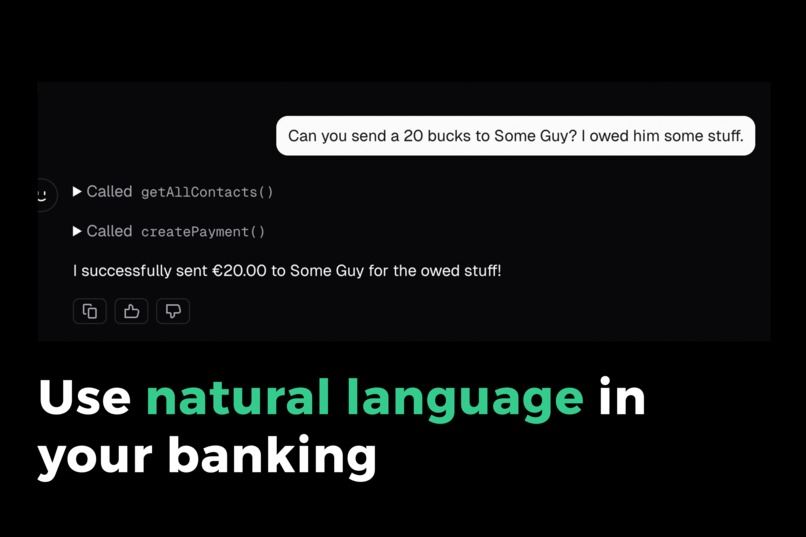
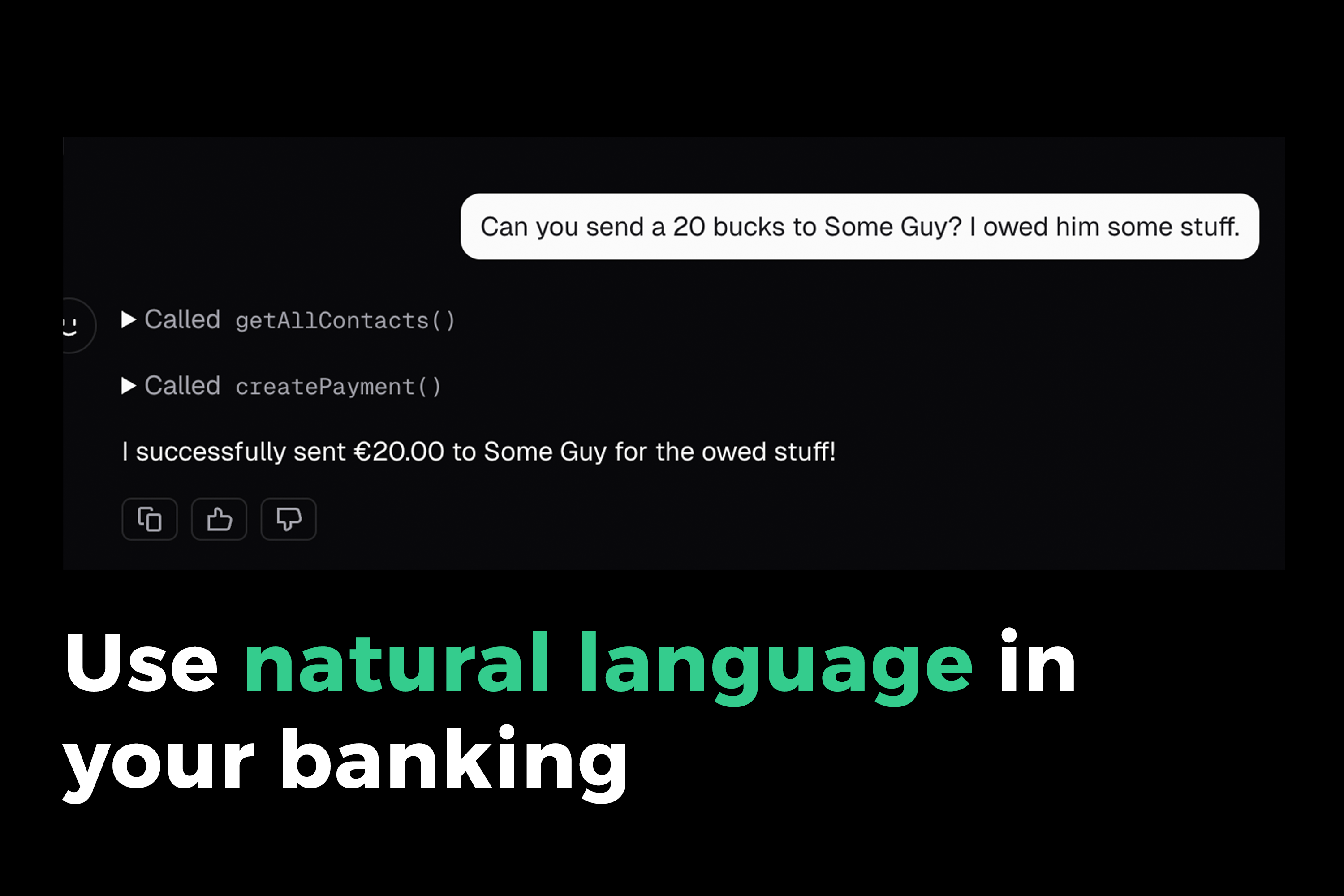
Use natural language in your banking
-
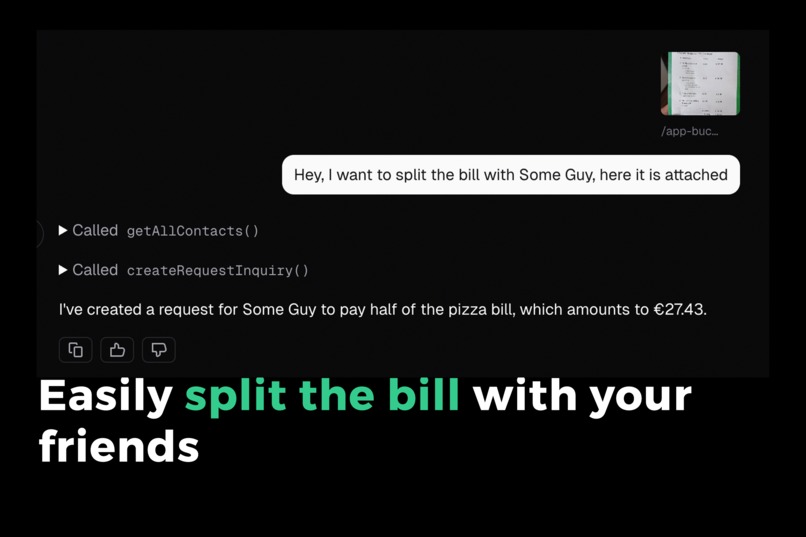
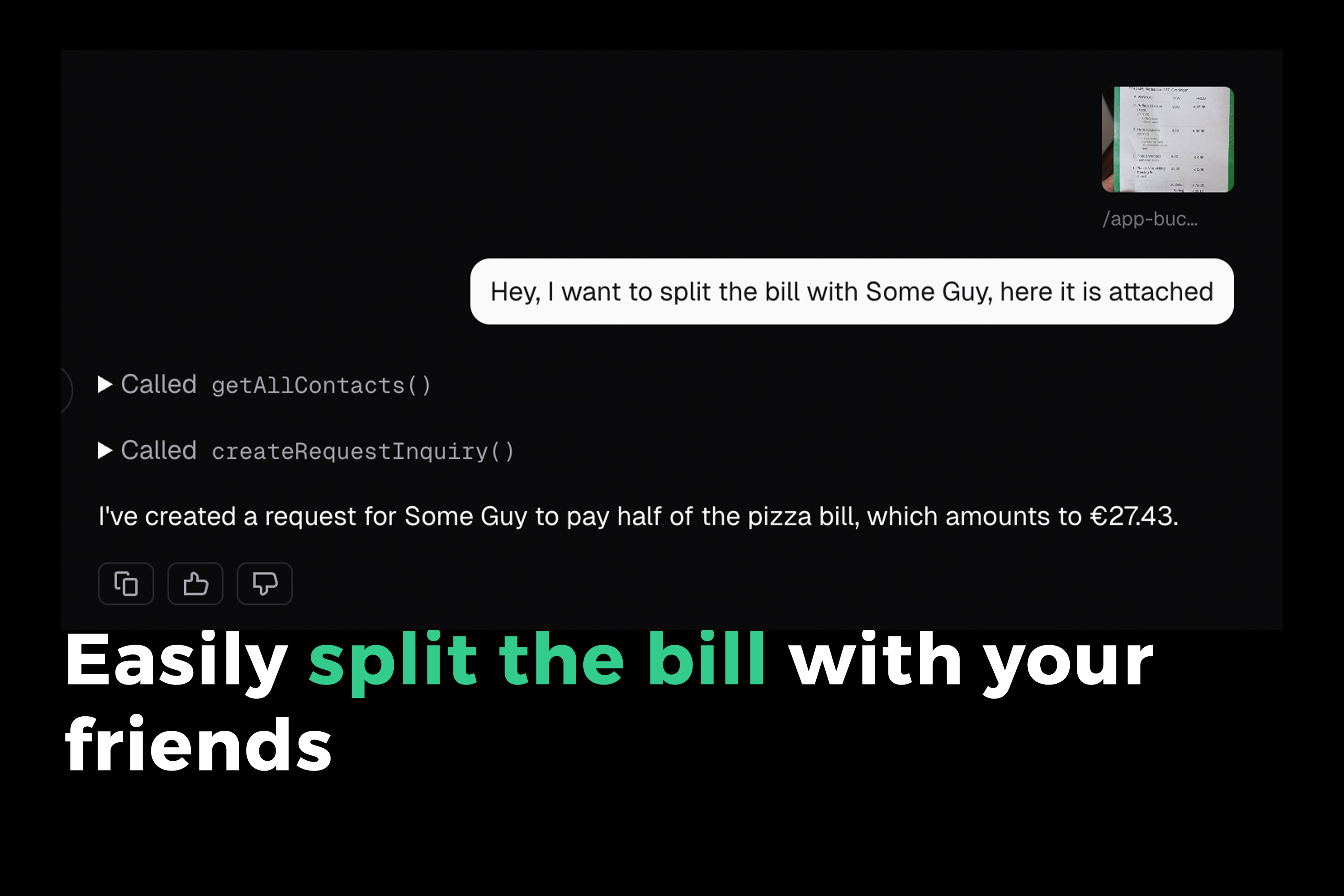
Easily split the bill with your friends
-
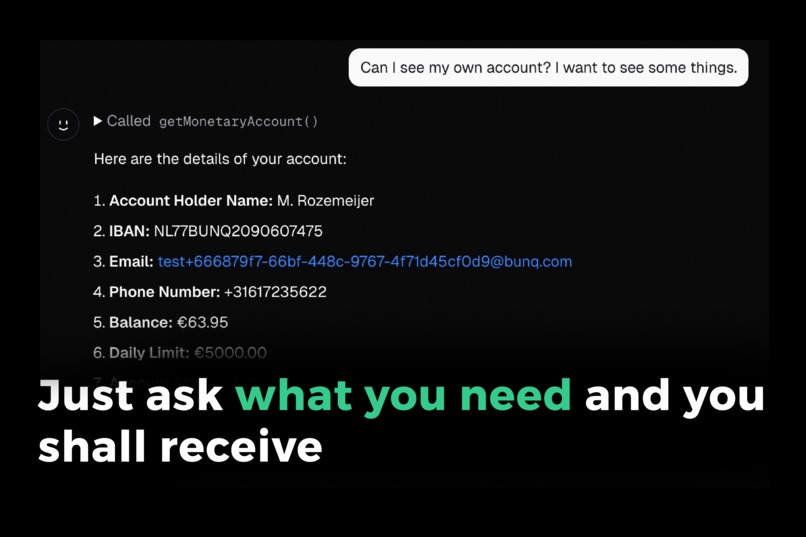
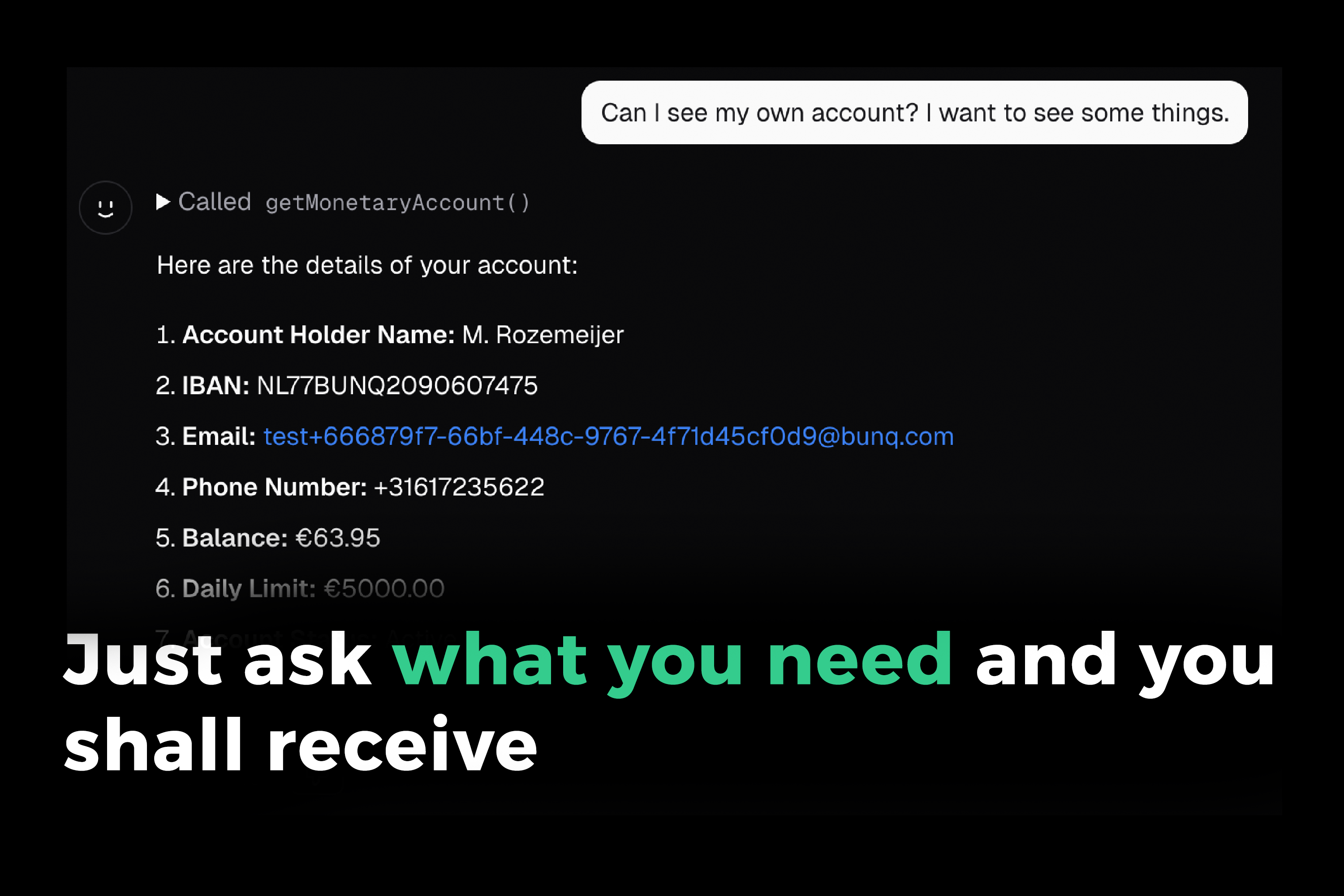
Just ask what you need and you shall receive
TO TRY OUT THE UI CREATE A FREE ACOUNT!!! http://bunq-yaai.ddns.net/login
Inspiration
Our project was inspired by the problems below:
- Time Wasted Navigating: Users waste time navigating the app to do basic tasks.
- Lack of Real-Time Financial Awareness: Users often make spending decisions without understanding the impact on their budget, leading to overspending or regret.
- Difficulty Making Budget-Friendly Choices: It's hard for users to evaluate spending options in everyday situations, like dining out, without context-aware financial insight.
What it does
Our YAAI Agent:
- Understands natural language
- Executes actions such as payments, info requests, and contact lookup
- Provides real-time context-aware financial insights
You can ask him, in natural language, how much money you have, to send or receive money, about different transactions, even split the bill with a friend.
How we built it
To build YAAI Agent, we leaned heavily on existing tools and frameworks that helped us move fast without reinventing the wheel.
We used the AI SDK, which gave us a standardized interface for working with various LLM APIs. It also came with built-in support for agents, tool execution, and memory/context persistence (MCP) out of the box—this helped us focus on writing functionality instead of boilerplate.
For the frontend, we used Vercel’s ChatUI template, which gave us a clean, ChatGPT-style UI. It also came bundled with Postgres, Auth, blob storage, and AI tooling—all of which were super helpful. We mainly extended it by building tools (custom backend APIs) the agent could call.
The backend was built using FastAPI, which gave us a clean, async-first structure for defining our endpoints. For interacting with the banking layer, we used the bunq Python SDK. The SDK had decent documentation, and we were able to implement most features without much friction. However, it lacked Pydantic support—so we wrapped it ourselves to make our FastAPI code fully typed and more maintainable.
We wrote prompts for each tool to give the AI enough context about what each one does, when to use them, and how to chain them logically. The system prompt helped tie everything together so that the agent could reason across tools and complete multi-step tasks.
We hosted the app on DigitalOcean, uploading the build manually in the end—after wasting 4+ hours trying (and failing) to get AWS + GitHub Actions + CI/CD working. Let’s call that a skill issue. For blob storage, we used MinIO, a self-hosted S3-compatible option that ChatGPT actually suggested—and it worked well for our needs.
For models, we used a mix of OpenAI’s APIs:
- gpt-4o-mini for image understanding tasks
- gpt-4o for complex reasoning and task chaining
- gpt-4.1-nano for lightweight things like generating chat titles
Challenges we ran into
While building YAAI Agent, we encountered a few challenges that gave us a deeper appreciation for the complexity of the tools we were using—and gave us ideas for how they could improve.
Working with the bunq Python SDK was mostly smooth, but we did run into a few limitations. Some API objects were missing or undocumented, which made it tricky to understand what certain fields represented. The SDK also lacked support for Pydantic, which would have made it easier to integrate directly into FastAPI. We worked around this by creating our own wrappers to enforce typing and validation.
Authentication was another sticking point. We created an application in the bunq developer portal, but it wasn’t recognized in the sandbox or production environments. Eventually, we were able to retrieve and use our real API key directly from the bunq app, which was a nice workaround, but it highlighted that the developer onboarding could be a bit more intuitive.
We also spent a lot of time trying to set up CI/CD pipelines with GitHub Actions and AWS. After hours of wrestling with configuration issues, we decided to go with a manual deployment to DigitalOcean for the sake of time. While not ideal, this experience reminded us that automation should only be introduced once it's saving more time than it's costing.
Overall, these challenges pushed us to understand our stack more deeply and shaped some of the architecture decisions we made along the way.
Accomplishments that we're proud of
- We setup an LLM chat bot with tools that are actually used in a working environment api (bunq), and eventually managed to use it on a real bank account
- We setup custom tools for vibe-coding which made the process of mapping from the SDK to the routes and later to tools much quicker and allowed us to implement a good portion
What we learned
- We learned how to use FastAPI,
- We learned about MCP protocols and tooling for agents
- We learned about how much prompting the LLM Agents matters
What's next for YAAI Agent
The next logical step for this project is to:
- Expand functionality
- Test with real users
- Measure impact on CSAT, support volume, engagement
Built With
- bunq-python-sdk
- digital
- fastapi
- nextjs
- openai
- vercel-ai-sdk


Log in or sign up for Devpost to join the conversation.