
Inspiration
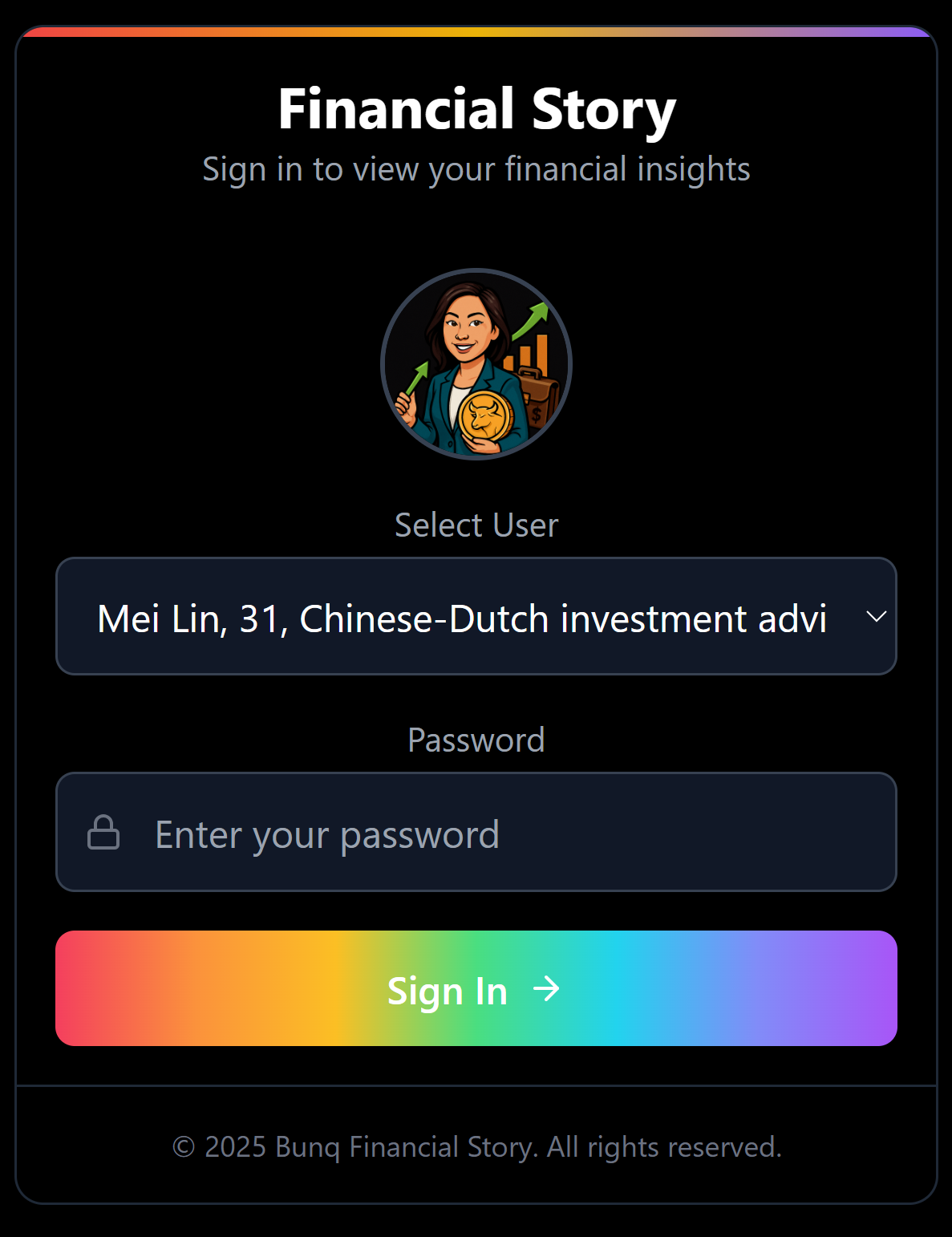
We were inspired by the year-end magic of Spotify Wrapped and the idea that banking could offer a similarly engaging “memory lane” experience. While brainstorming at the bunq 6.0 hackathon kickoff, we realized that most people never get a holistic, fun summary of their own spending habits. That “aha” moment drove us to build a single dashboard that transforms raw transaction data into a rich, personalized recap.
What it does
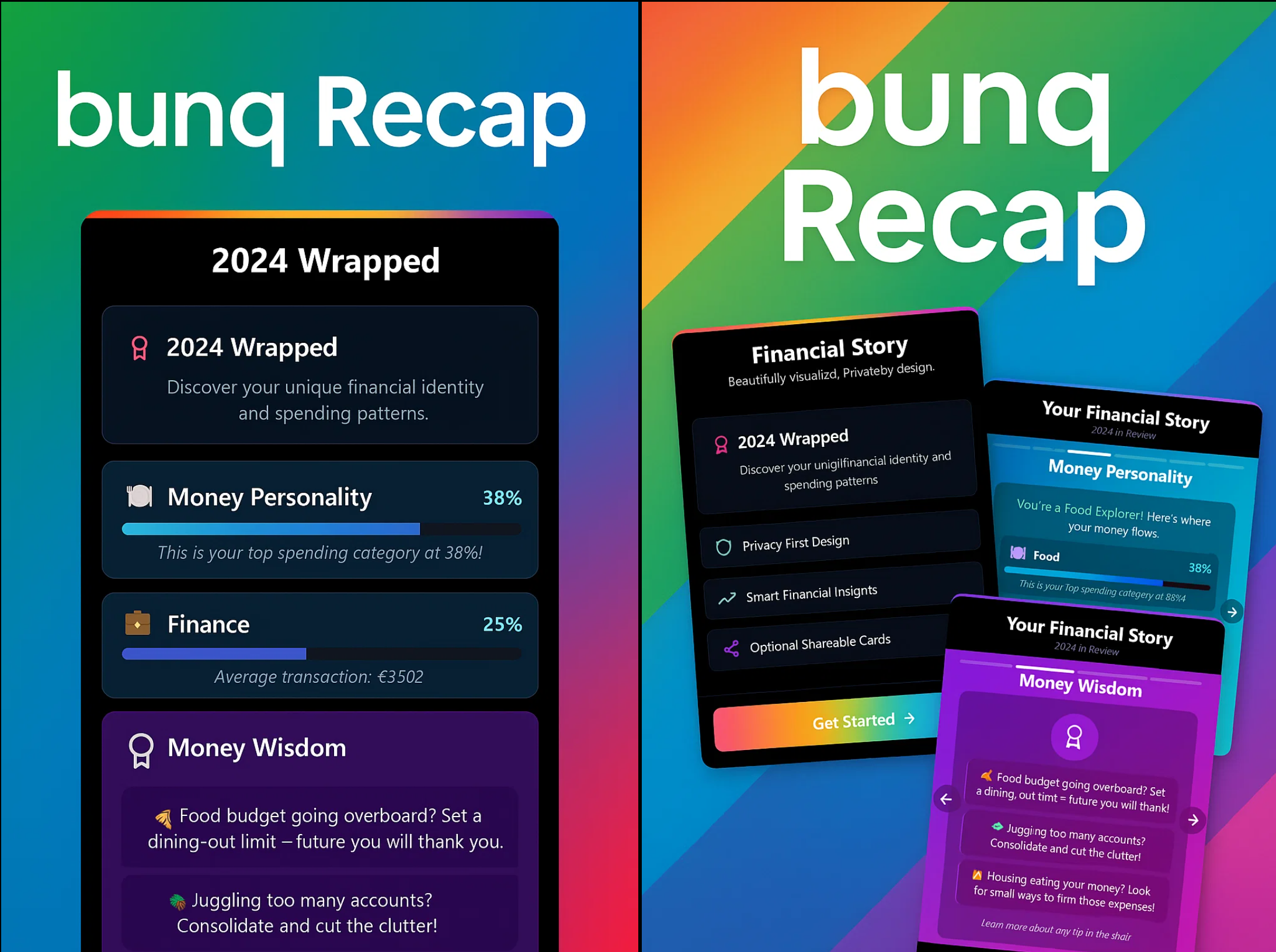
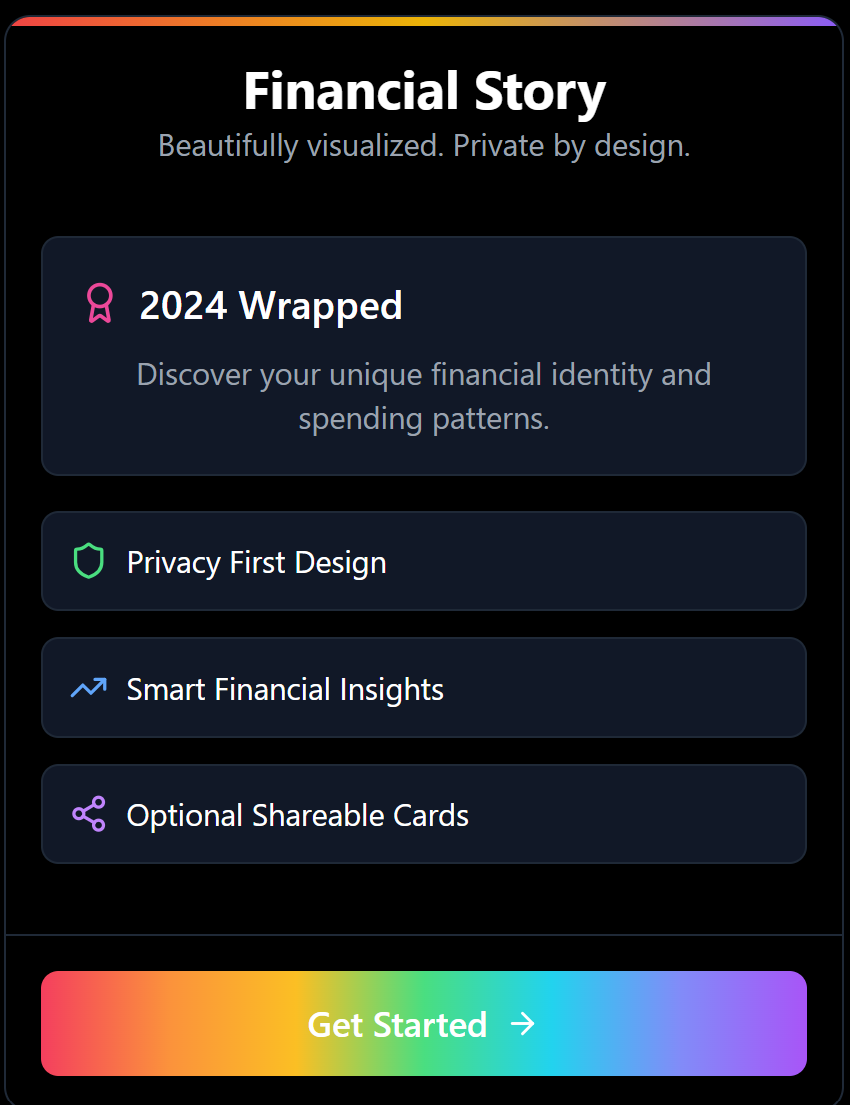
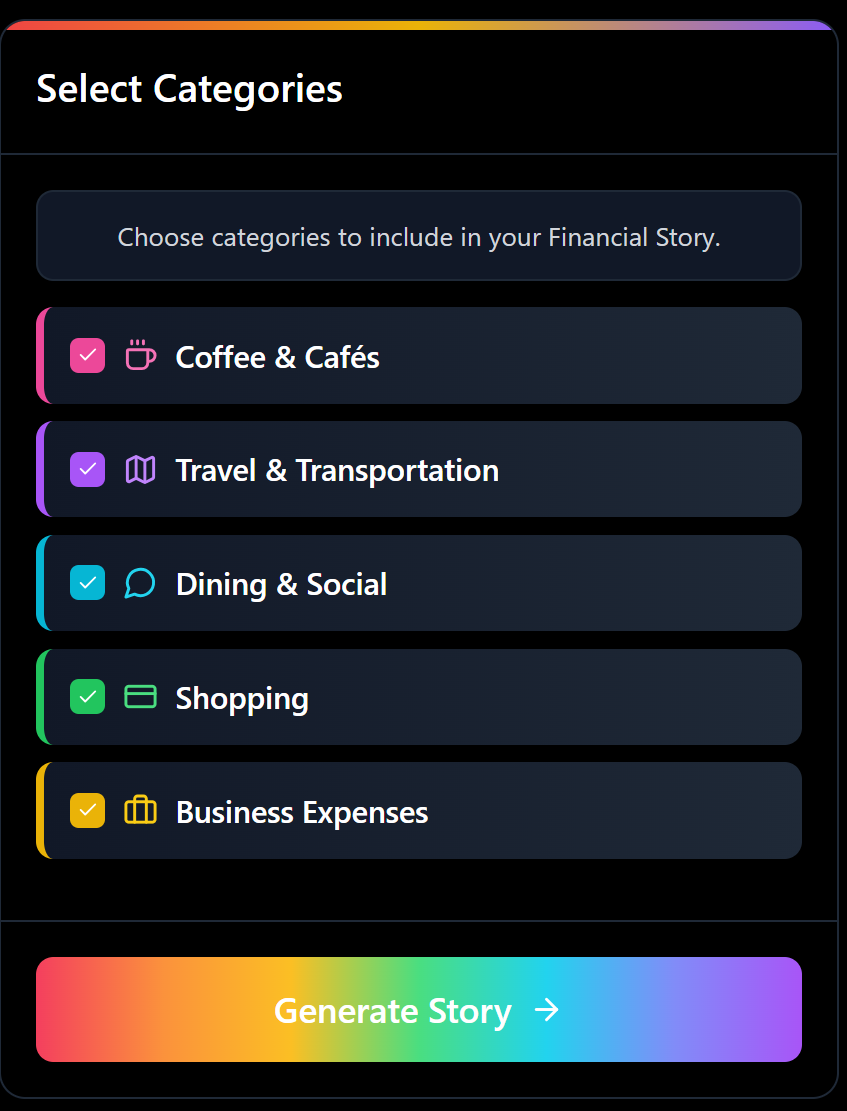
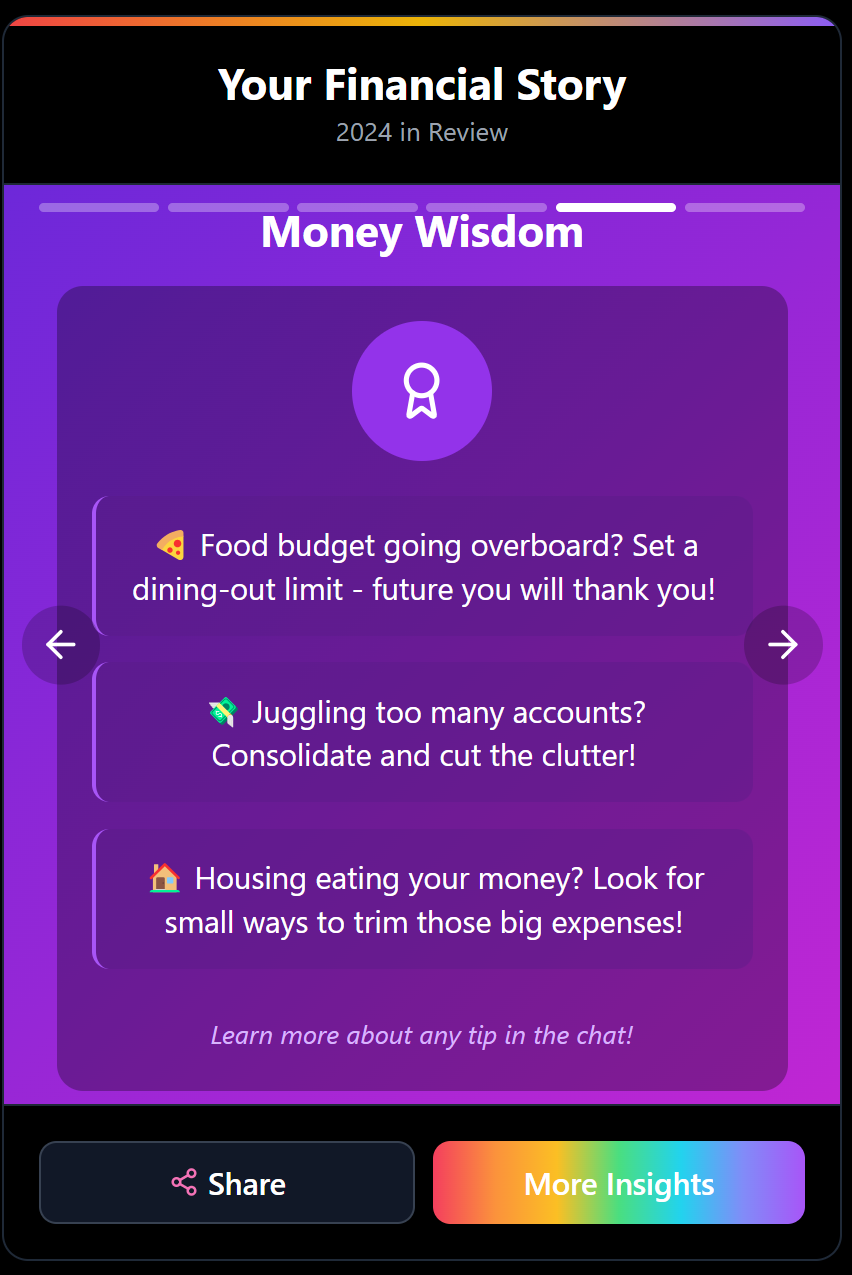
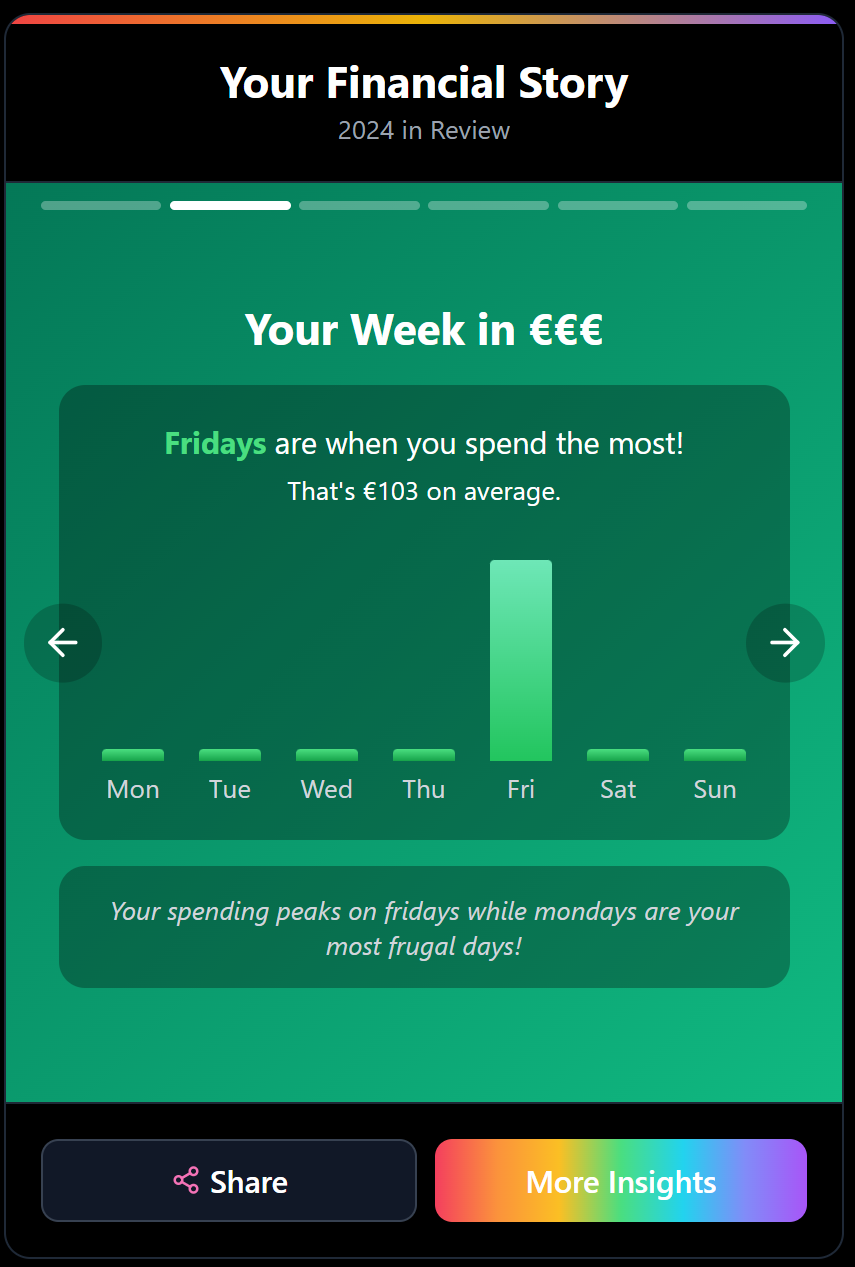
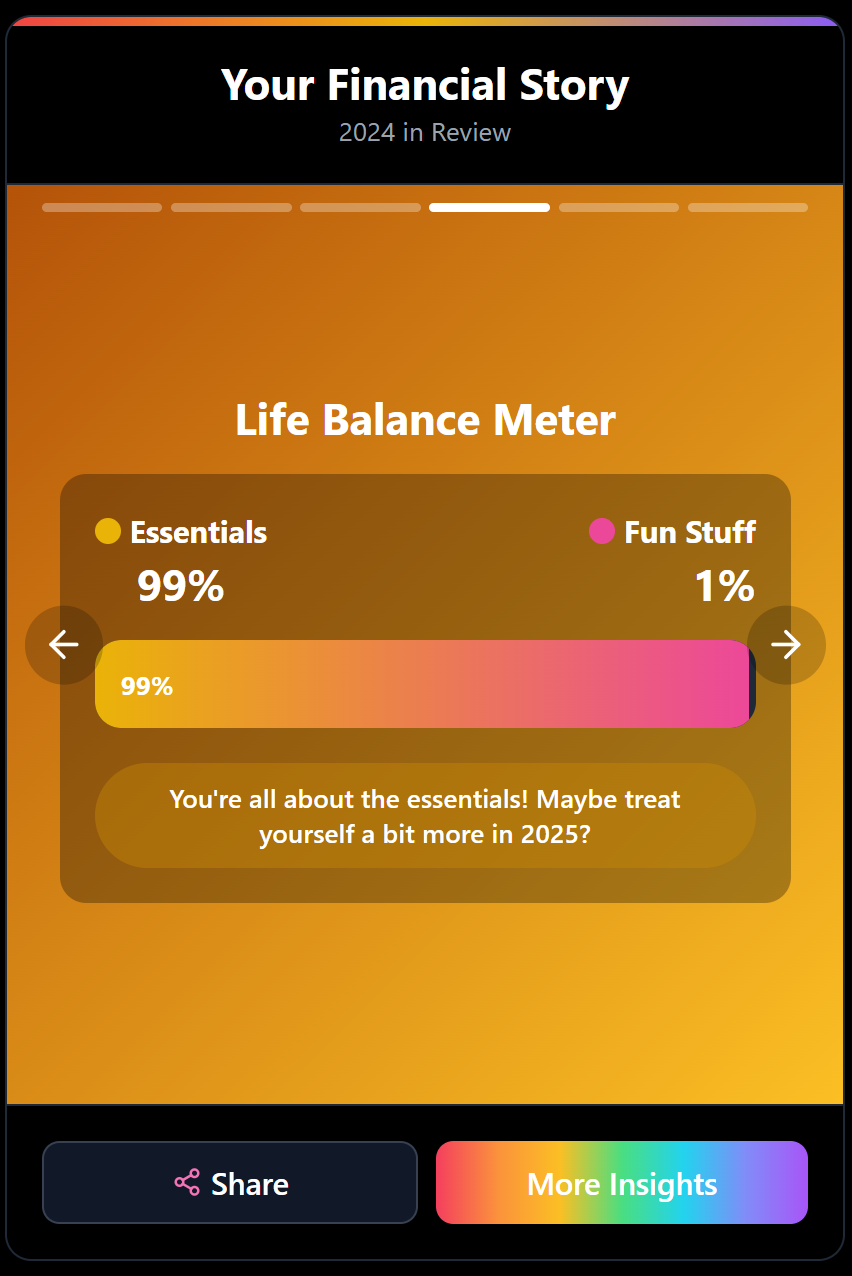
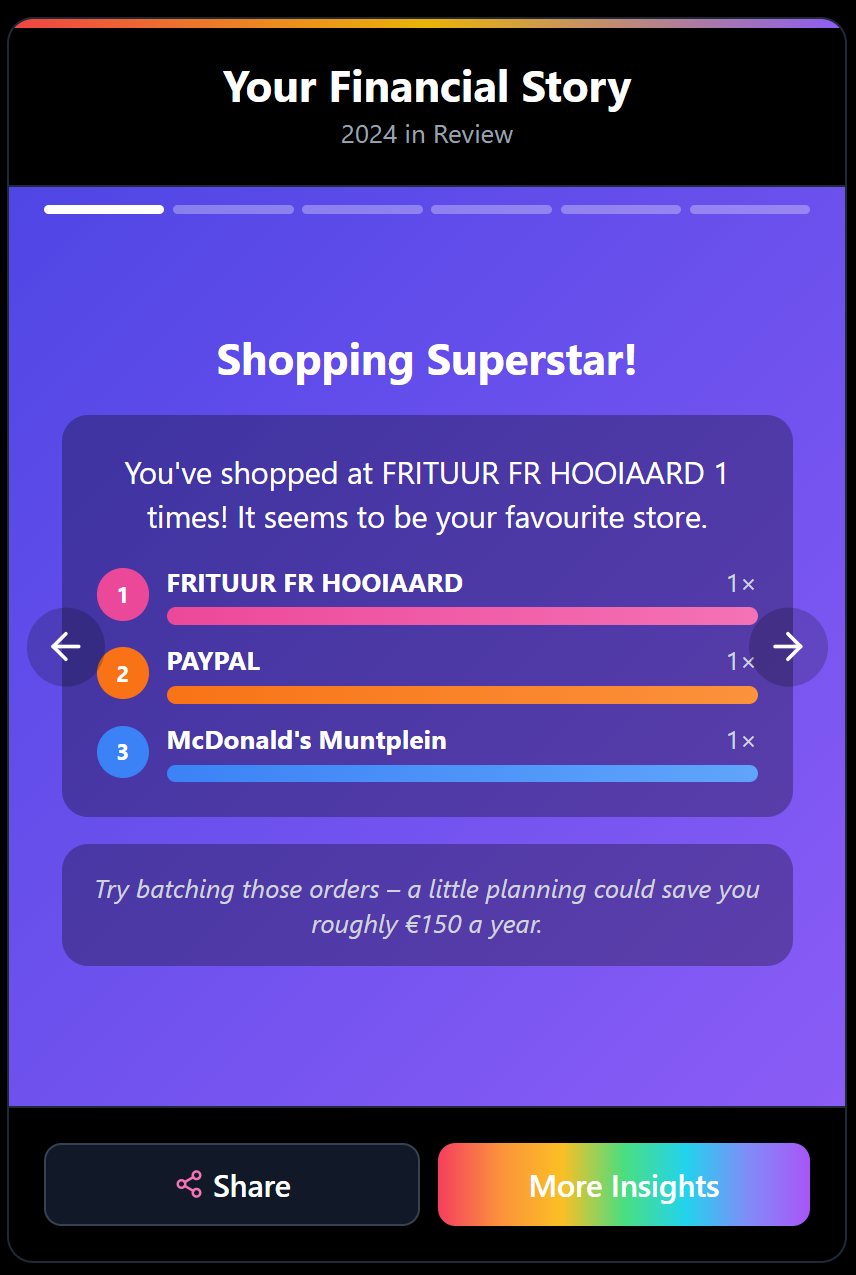
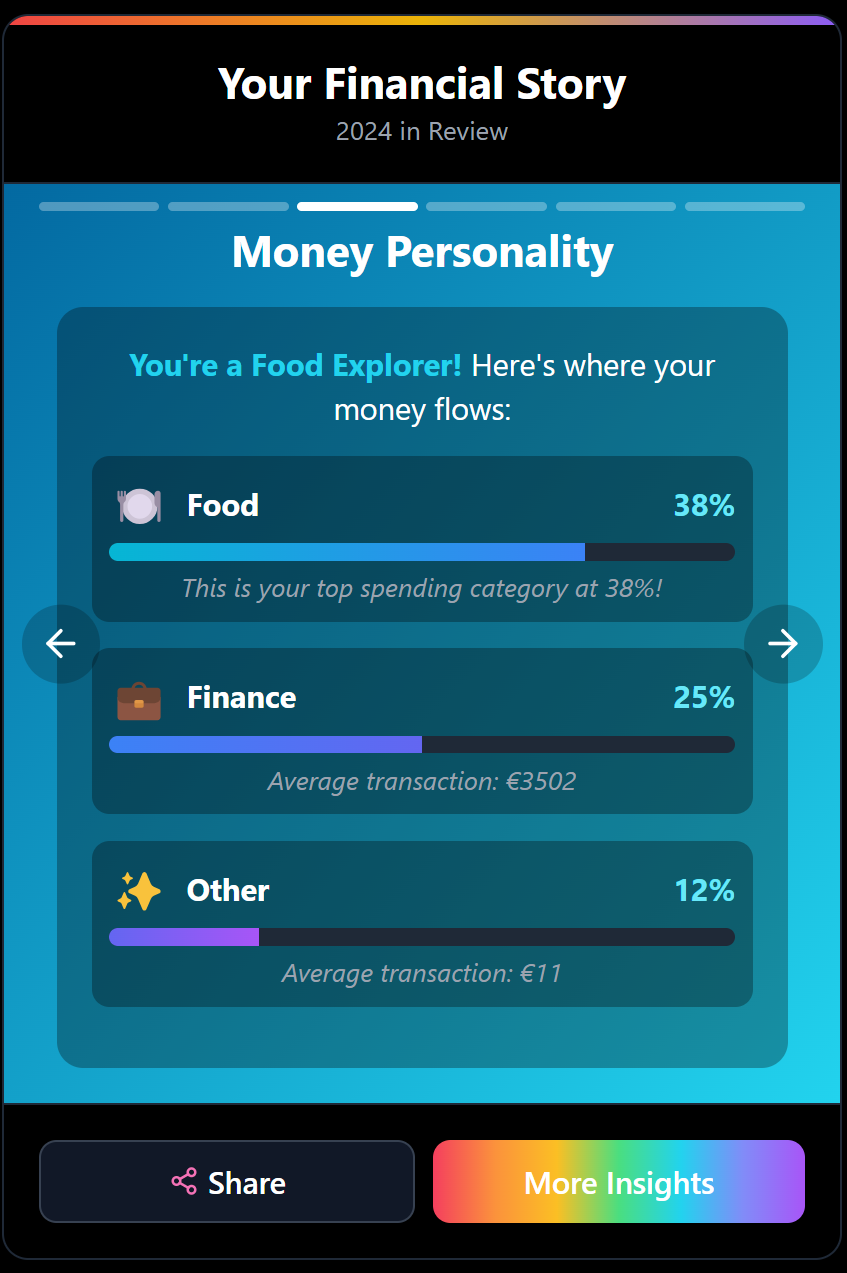
bunq Memories: Aggregates your bunq transactions over time and presents them in a visually compelling “wrapped” format—top merchants, favorite spending categories, peak months, and memorable one-off purchases.
bunq AI Playground: a unique AI agentic setup to hear different povs when it comes to financial decisions so you can make a more informed and well rounded choice.
How we built it
We used multiple LLMs and agents with the bunq api and sdk and used different providers to maximise results.
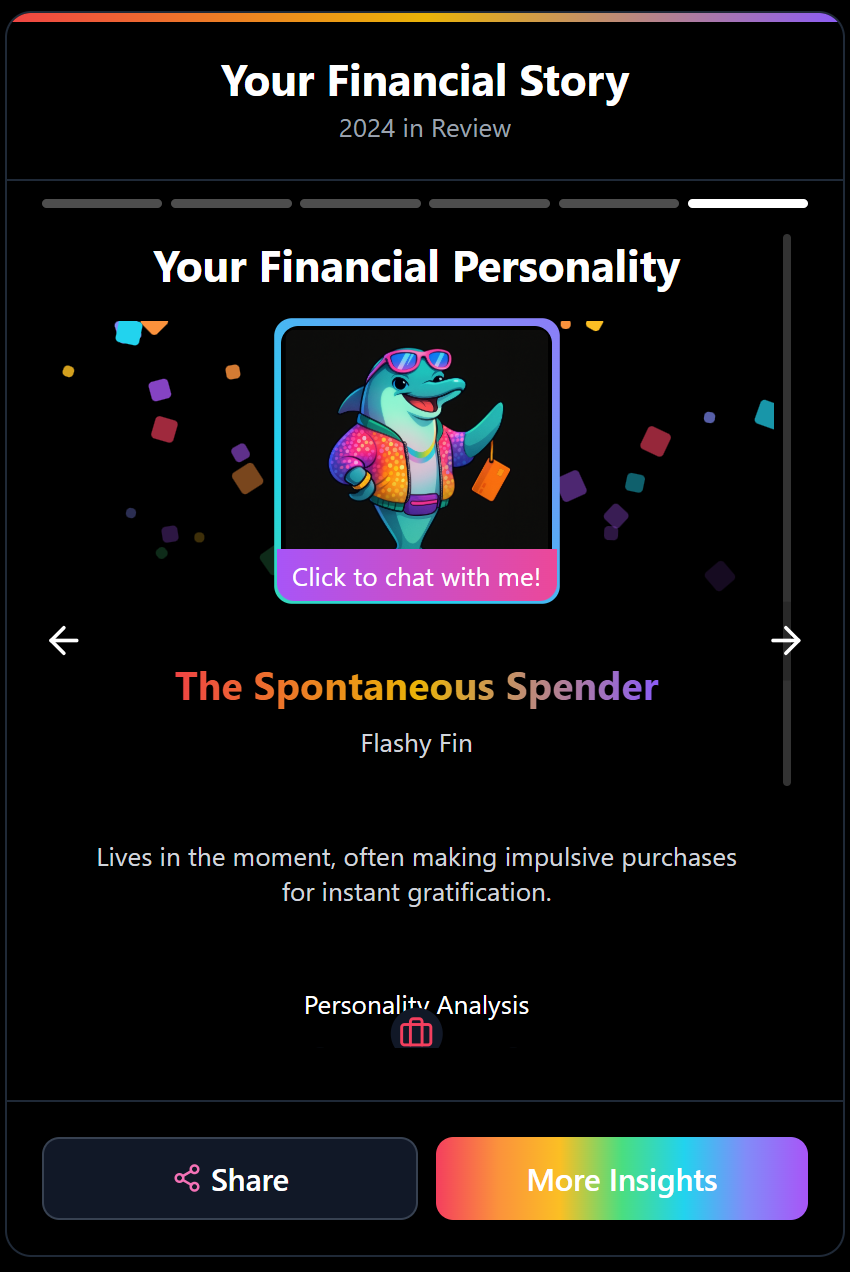
We leveraged the open source Bunq SDKs to extract transaction information and passed them through a pro-processing model and a classifier for category and details prediction. This was them passed into our recommendation engine which estimates the likelihood of each of our generated personas and also gives advise based on their spending habits.
For the AI Playground we leveraged synthetic generate data and agentic models by OpenAI
Challenges we ran into
API quirks: Handling bunq’s pagination and rate limits required careful back-off logic to avoid dropped requests. UX complexity: Designing an interface that presents dense financial data without overwhelming the user pushed us to iterate rapidly on mockups and user flows.
Accomplishments that we're proud of
Delivered a fully functional MVP covering all three pillars—Memories, Subscription, Sustainable—in under a day.
Created an intuitive, shareable “wrapped” summary card that users can download and send to friends.
What we learned
We learned how important it is to work in a team and delegate responsibility equally. Exposure to the bunq API was great and was indicative of how such technology is deployed at scale
What's next for buniq
We are hoping to continue with it under bunq's guidance and build it out as a feature for them.


Log in or sign up for Devpost to join the conversation.