-
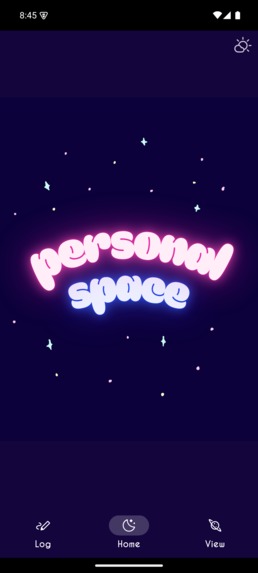
Homepage
-
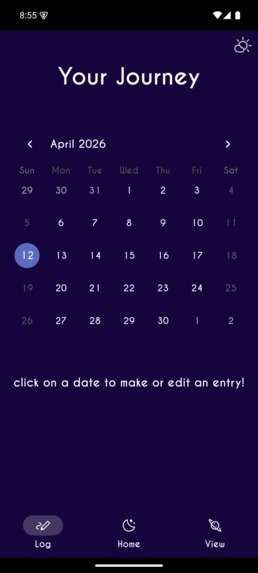
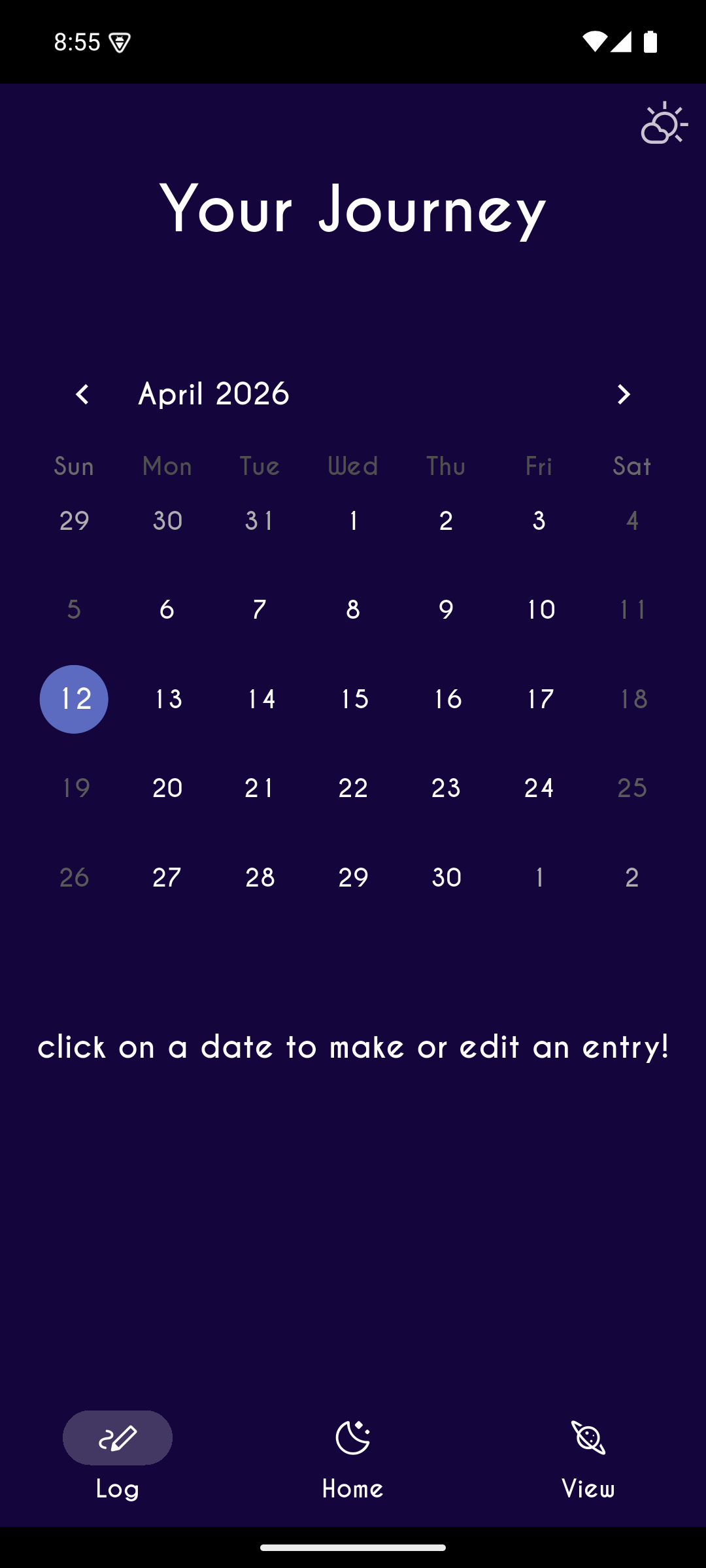
Log calendar
-
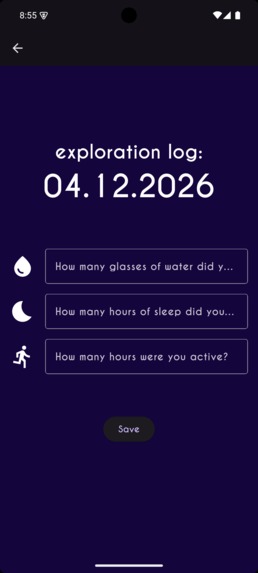
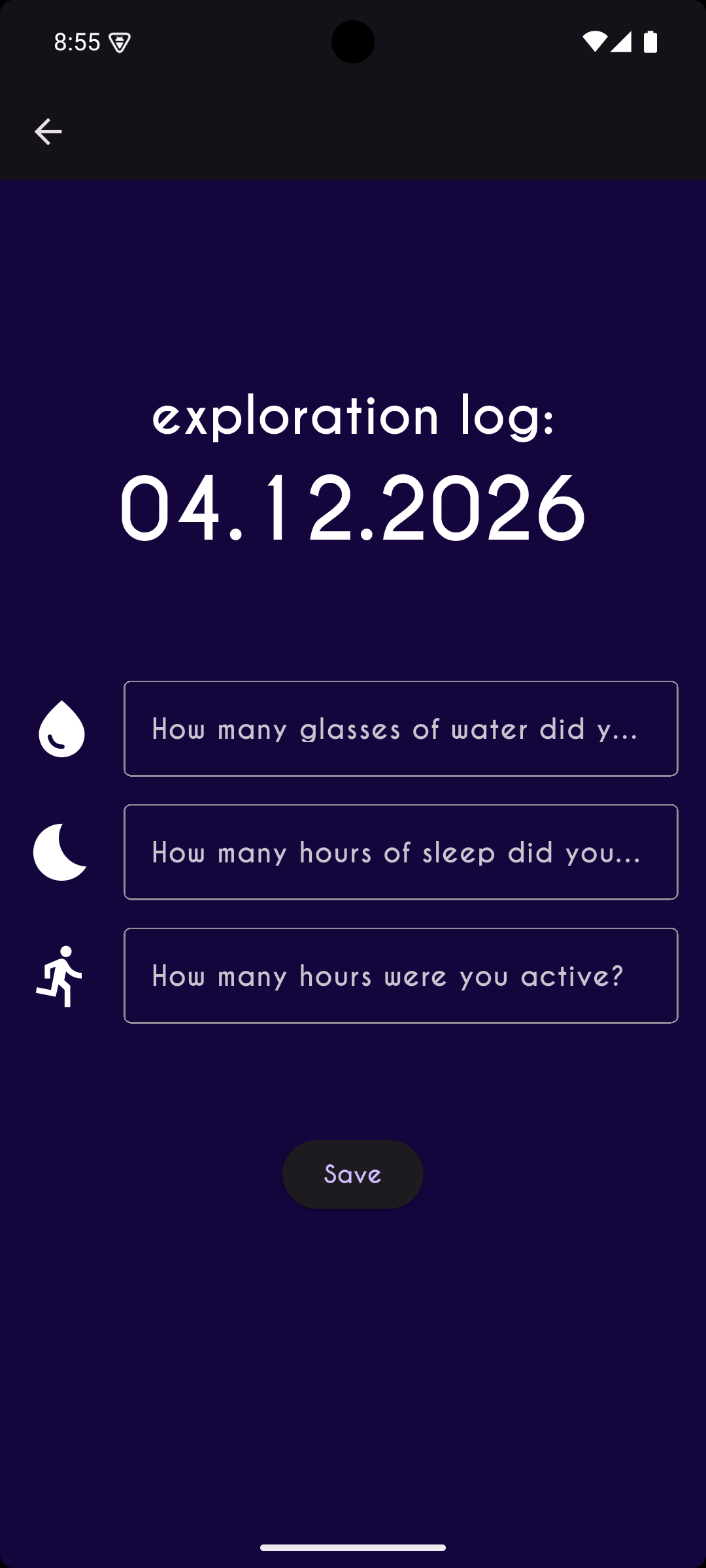
Log interface
-
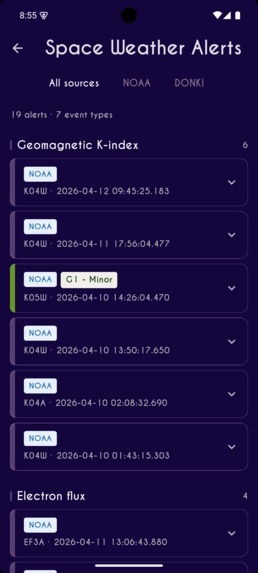
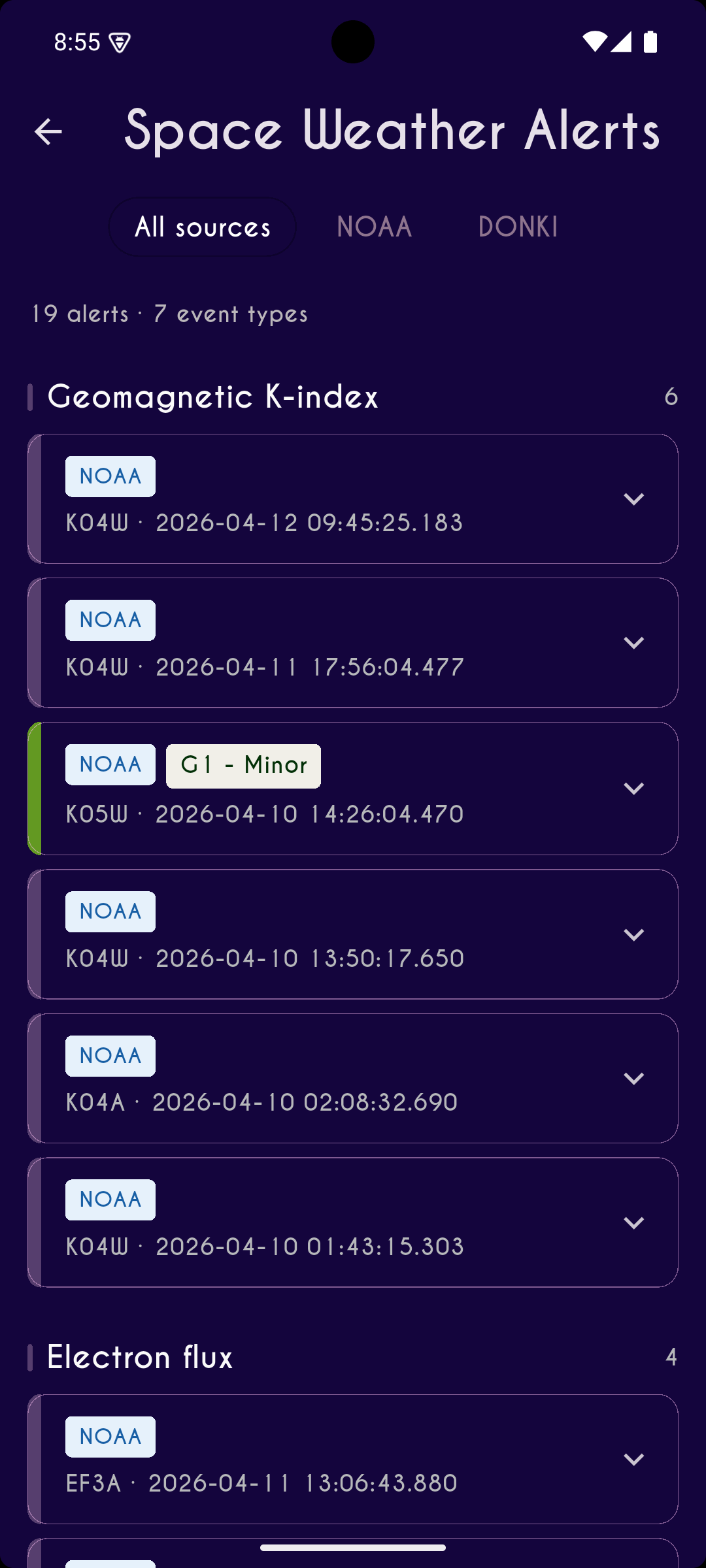
Live space events
-
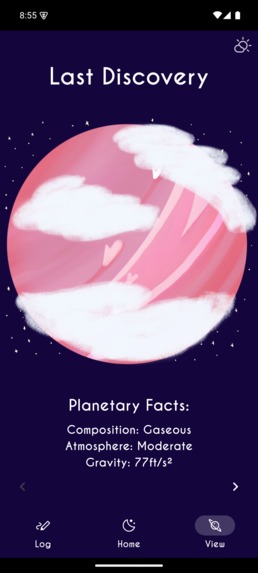
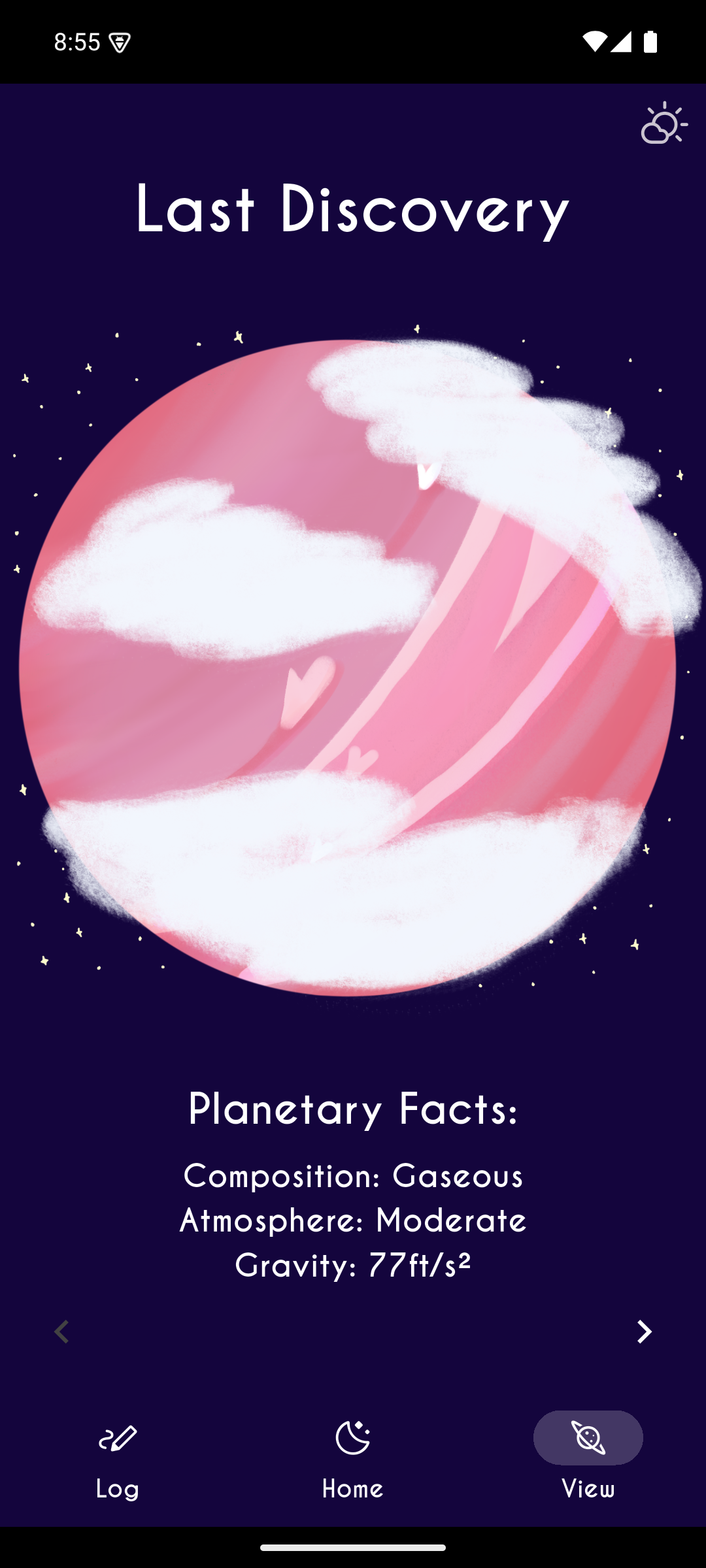
See your planet!
-
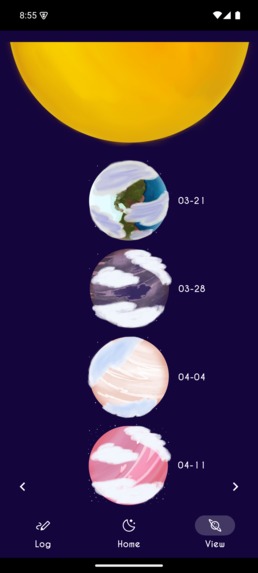
Recent planets
-
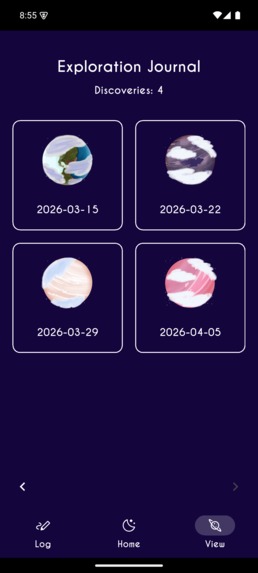
Gallery
Inspiration
There are many self-care apps that exist to improve mental health, but they vary in effectiveness at improving people’s day-to-day lives, quickly becoming another daily task to overlook. We built Personal Space as an application concept to improve upon daily habits without the pressure of a streak or daily commitment.
What it does
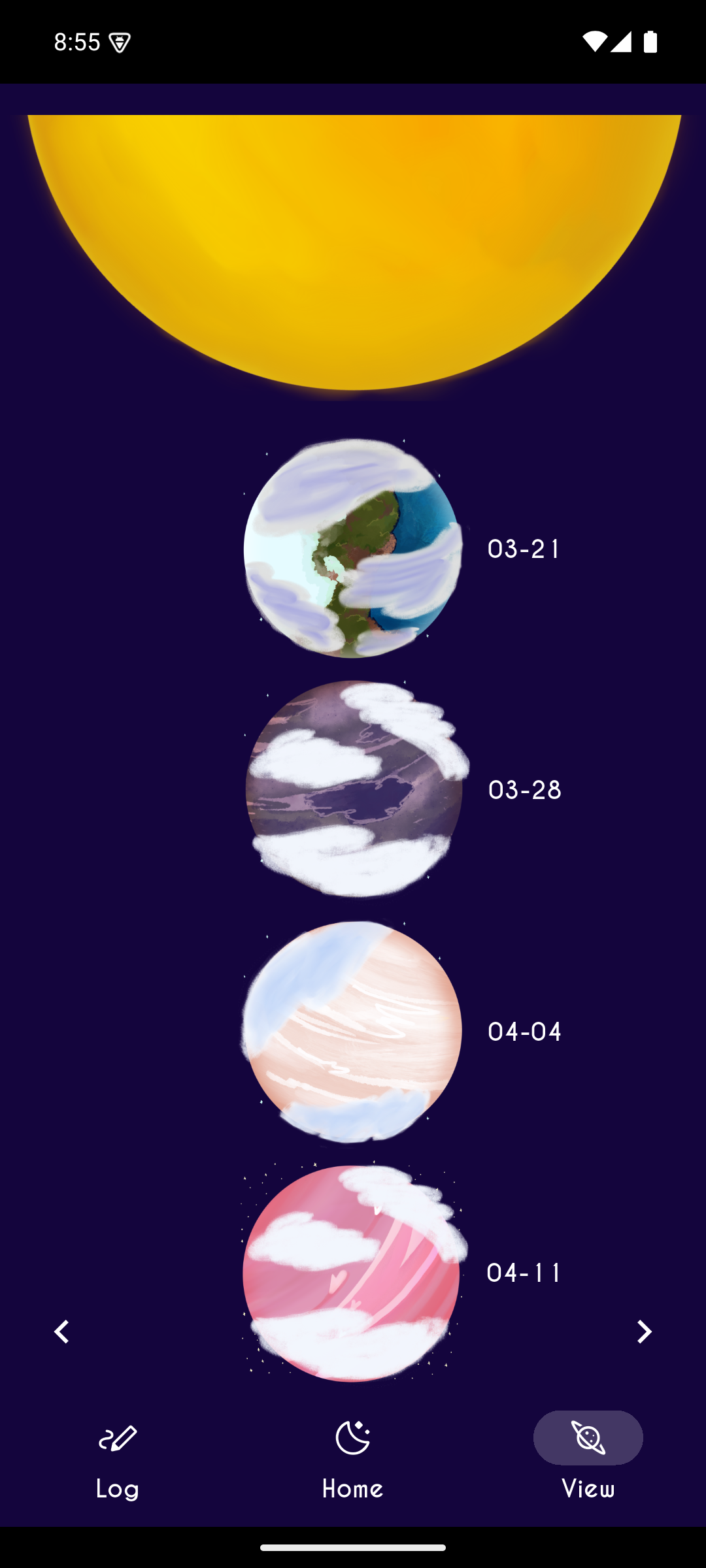
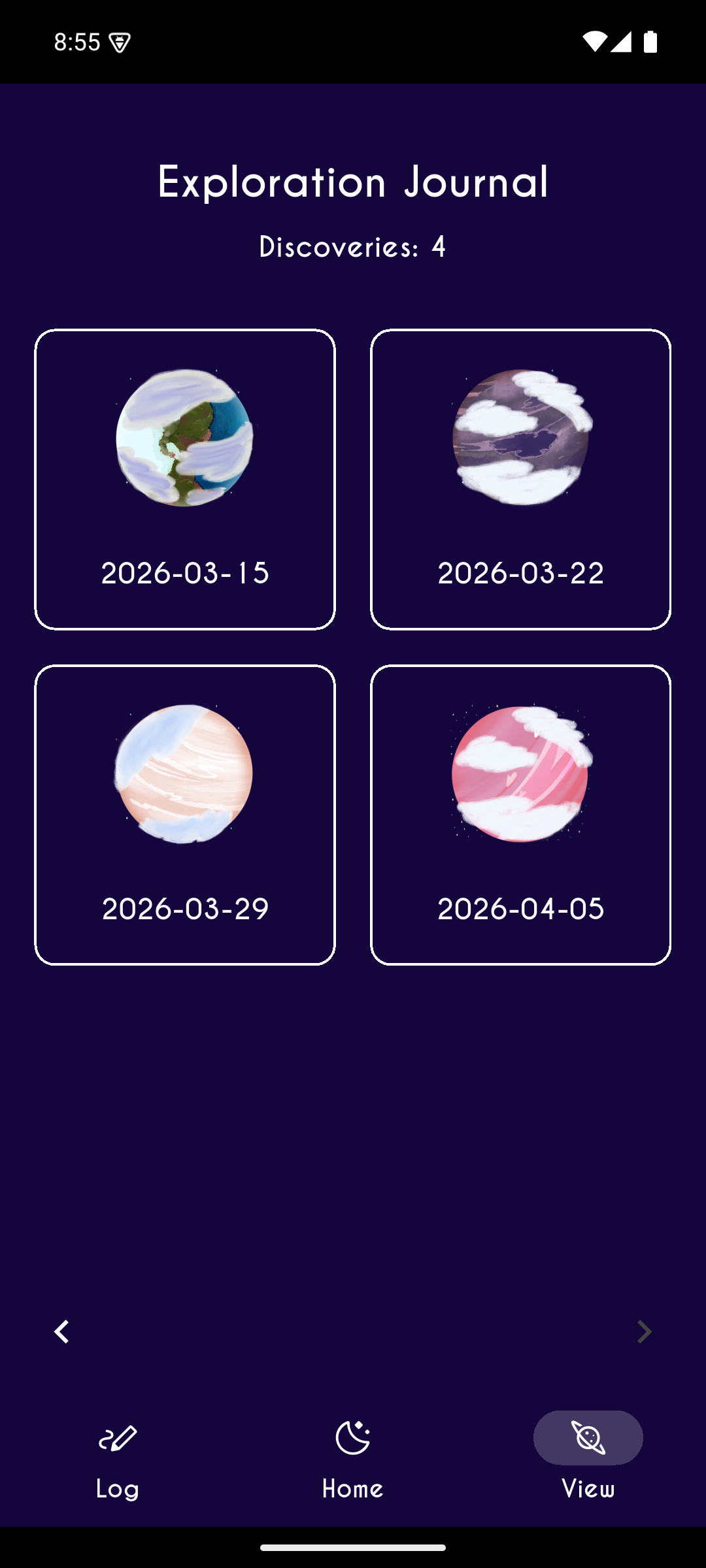
Personal Space is a mobile app partially inspired in concept by Finch, a popular self-care, habit-tracking, and mental health app. While Finch is an extensive ecosystem in taking care of a virtual pet, Personal Space takes user-submitted logs and averages them to create a unique "weekly" planet based on the user's habits. The better the user's habits are, the more habitable their weekly planet is, and users can see their weekly creations in a gallery while also having access to the latest space events that are occurring real-time to contemplate the mysteries and happenings of the stars.
How we built it
We used Flutter and Dart to build the app's framework and UI. Before we started coding, we created mock-ups for all the pages we wanted to be part of the app, including but not limited to the calendar, the log entry page, a solar system month page (which chronicles the planets you encountered during the month), a "space facts" page, and so on. We also created a list of features and tracked our progress throughout the weekend, fulfilling our main goals while leaving avenues open for future work and a more extensive app.
Challenges we ran into
One of our members had limited experience with Flutter and had to learn the language quickly to code the project. Another issue was ensuring persistence in our app's data so the application could accurately retrieve and update data. It was an interesting challenge to draw layers of planets that corresponded to input components, and the entire team took part in brainstorming, designing, and coding.
Accomplishments that we're proud of
The app sources data from two APIs: DONKI (a NASA API that provides near-real-time analyses of space weather observations, model outputs, and notifications) and NOAA (the USA's official space weather prediction center) to tell users what weather is currently occurring in Space. The app averages the user-submitted logs to generate a weekly plan that aligns with their habits, choosing from several hand-drawn templates of planets, clouds, and stars with the potential to expand with more.
What we learned
All of us gained experience working with Flutter and Dart to create a cross-platform app, which we tested on both Android and iOS emulators. We gained experience using GitHub to manage a collaborative project that other users continually update as well as completing a working application prototype during Bitcamp.
What's next for Personal Space
We plan to improve Personal Space by adding more user functionality. Creating user accounts would allow others to share and visit each other's solar systems. Furthermore, we plan to add more user personalization to Personal Space (for example, allowing users to create custom factors that help determine the resulting planet), so that the User's Space is truly personal and can target the daily goals and habits that are most important to them. Some stretch goals that could make for future expansions include custom animations for loading screens and page transitions, probability-based layering, and optimization of data storage.
Built With
- android-studio
- canva
- dart
- donki
- flutter
- noaa

Log in or sign up for Devpost to join the conversation.