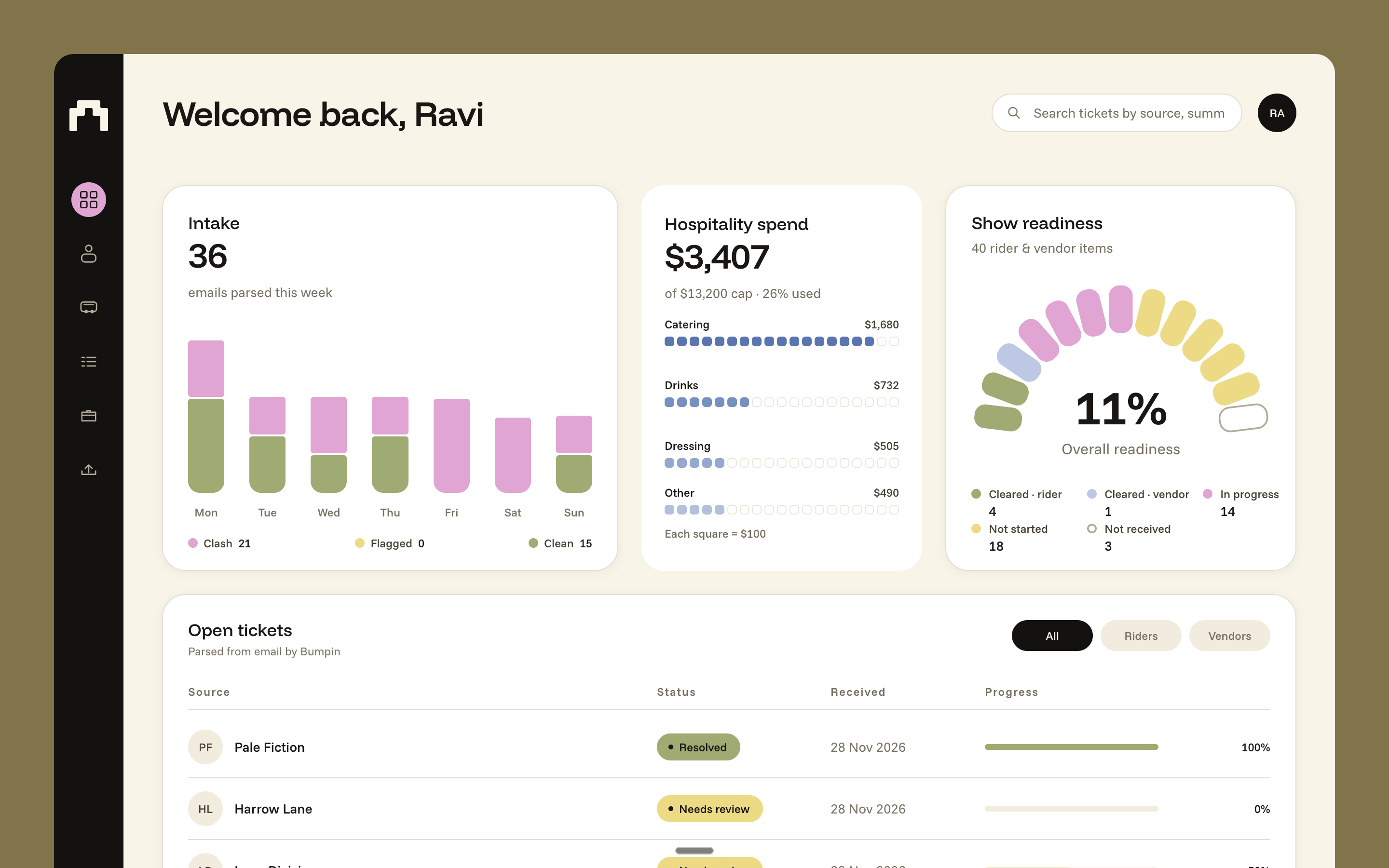
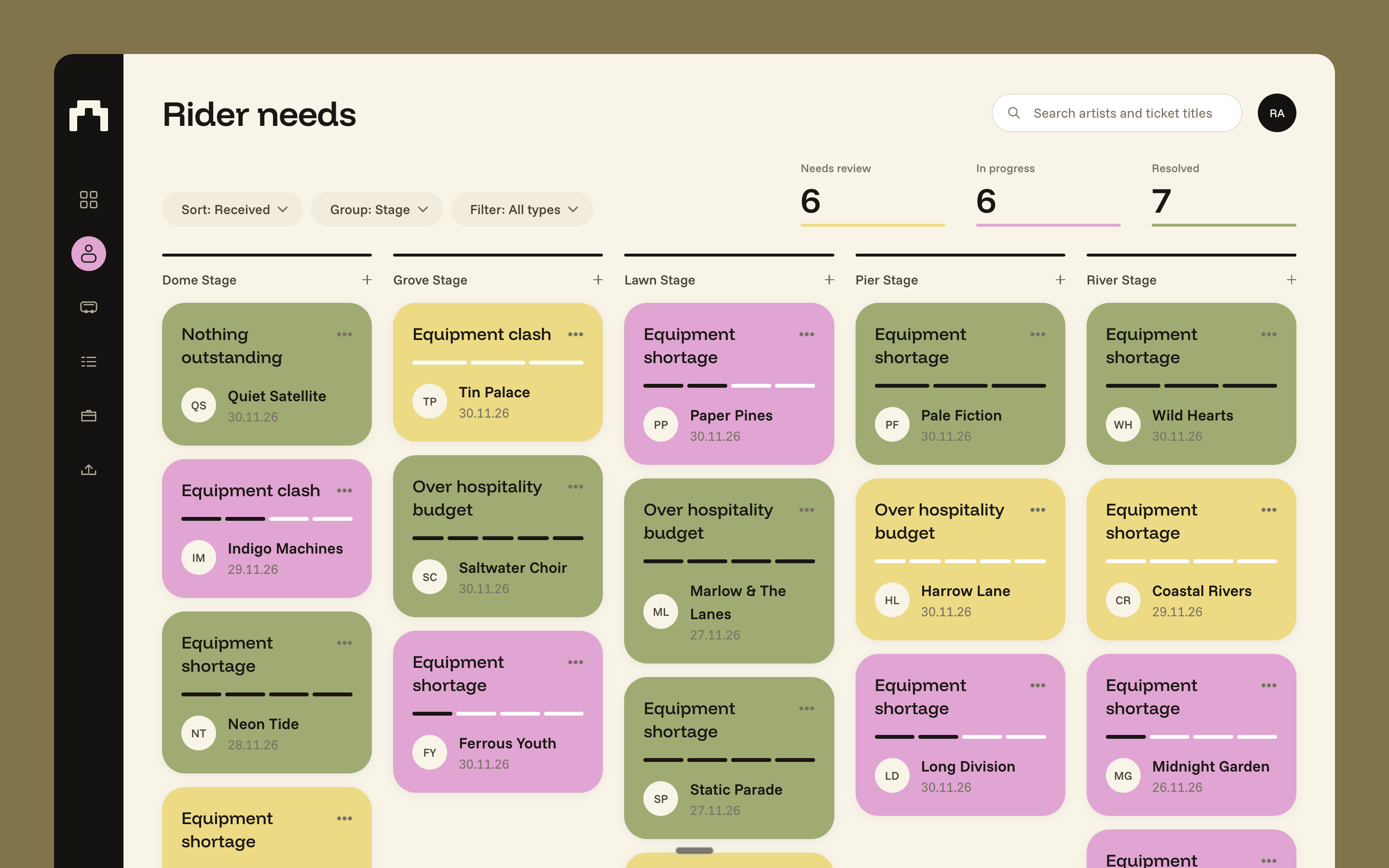
The problem
Vendor and artist advancement is a huge bottleneck in festival planning:
- Festival data (policies, requirements, etc.) is scattered across different platforms.
- Rider/vendor paperwork arrives in different formats.
- Catching conflicts means opening multiple documents and comparing them line-by-line.
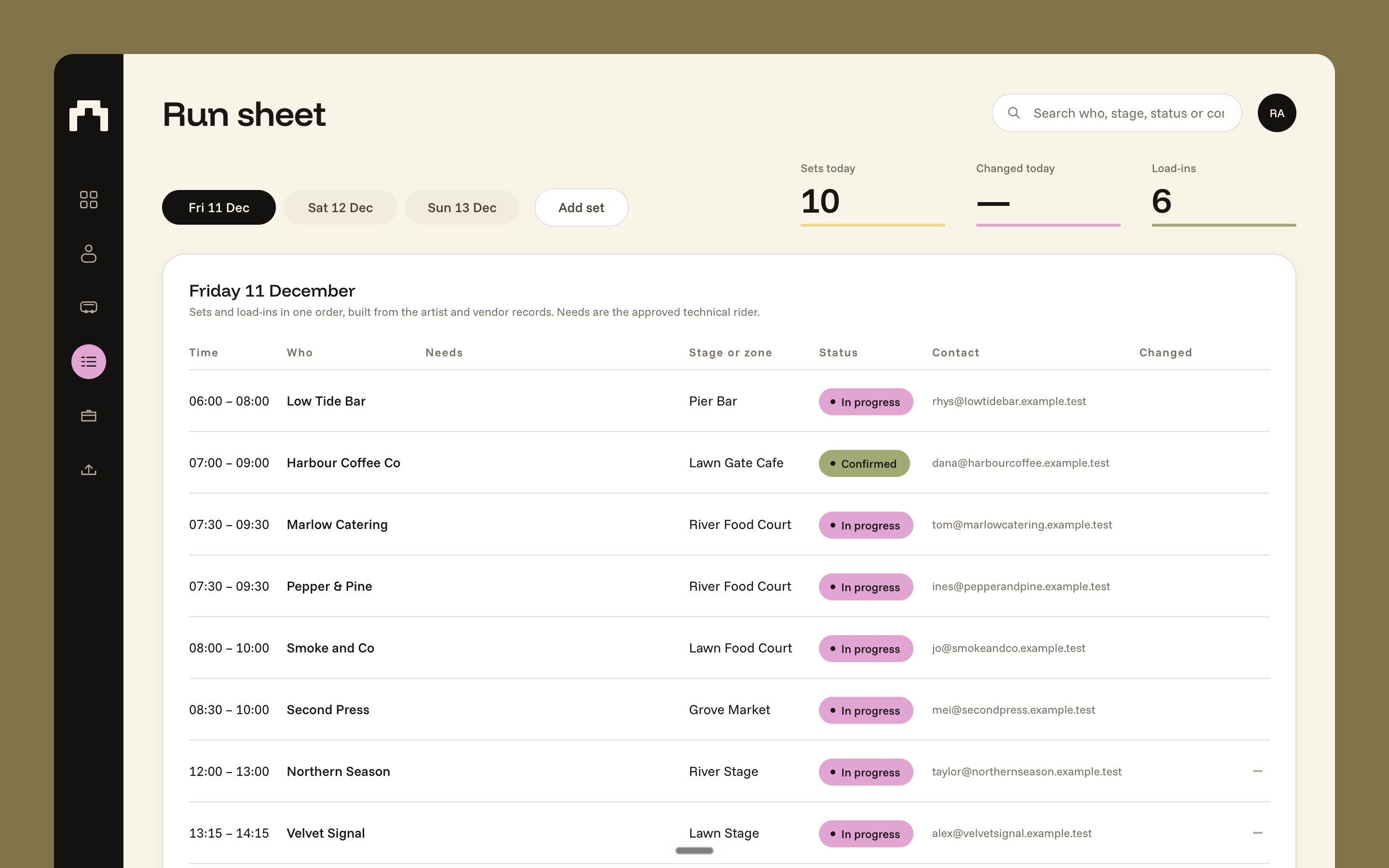
- Changes mean round trips to inventory, run sheets, etc.
- The work can happen when users leave their desk.
The user
Jesse, Ravi, festival managers:
- Users answer the same questions from memory every time.
- Documents are read and retyped, which is slow and error-prone.
- Comparing documents line by line or finding a missed conflict is expensive.
- After every single reply, users have to work out how it impacts records.
- If a user is on site for a while, anything needing a laptop is held up.
What we built
An AI-powered CRM built for festival managers to streamline vendor/artist advancing and festival planning. Capabilities are mapped to problems listed previously:
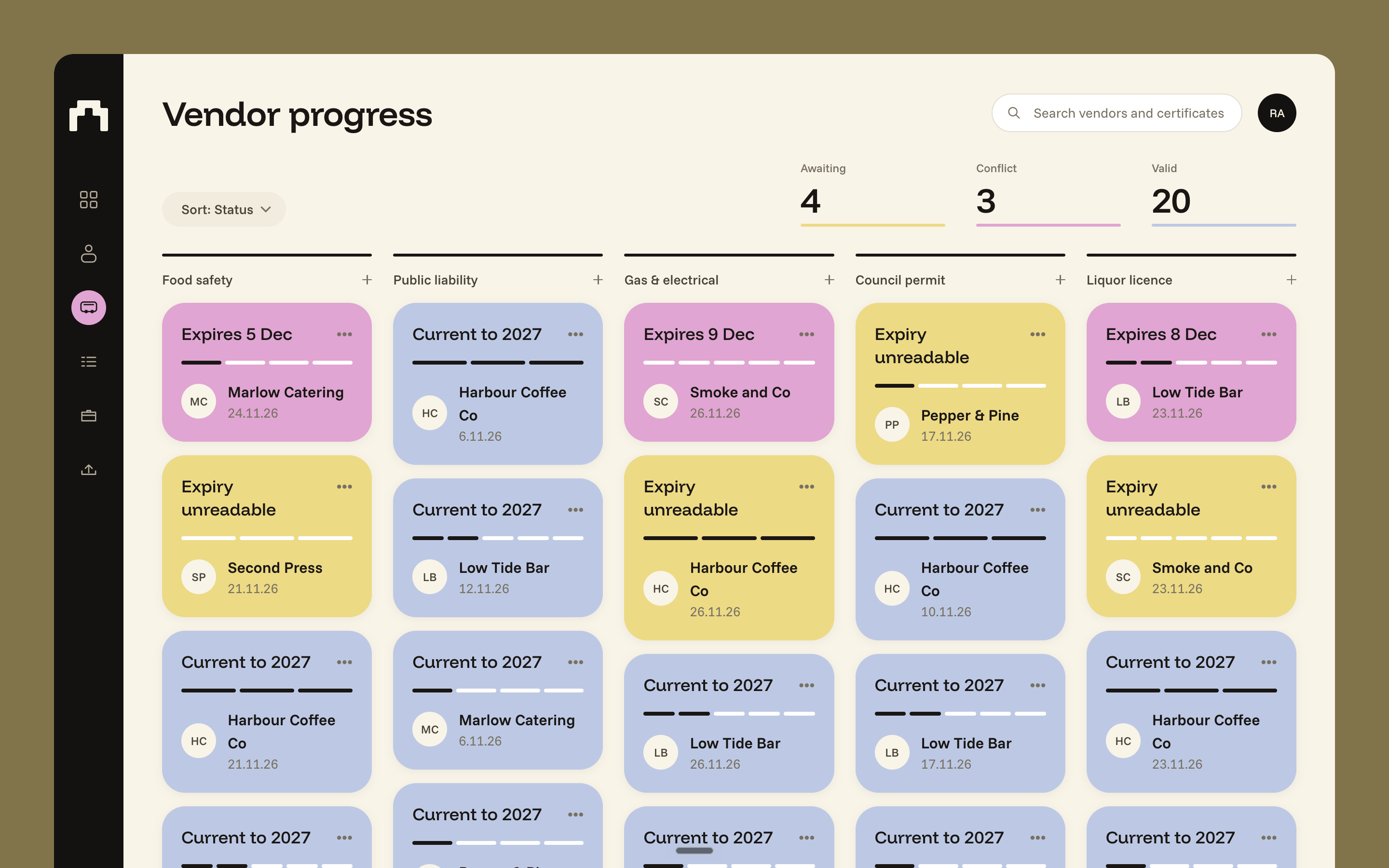
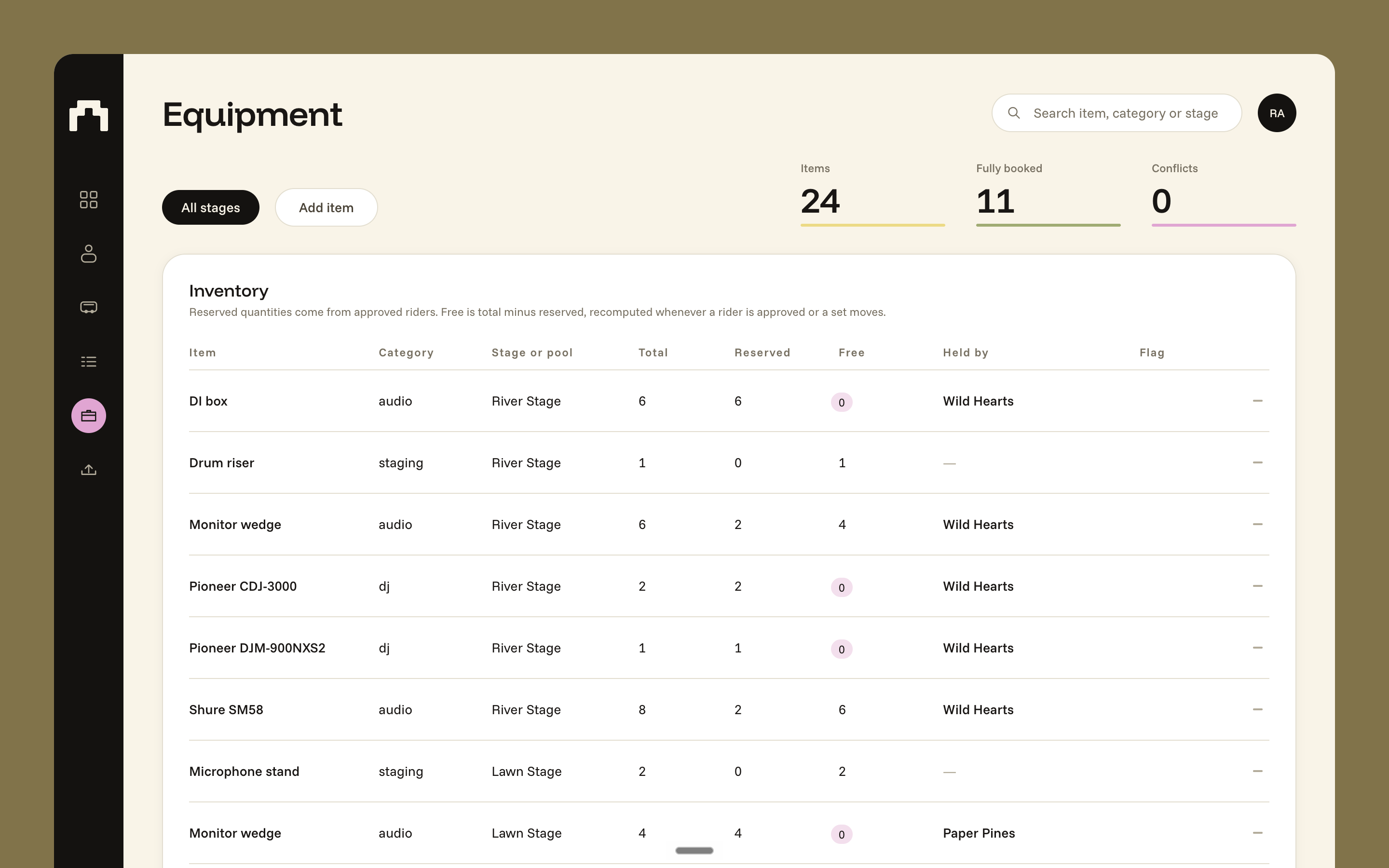
- Persistent memory: users upload what the festival owns and allows (inventory, policies, etc.). Inventory is read into its own mutable subtab, and the rest become context for future AI decision-making.
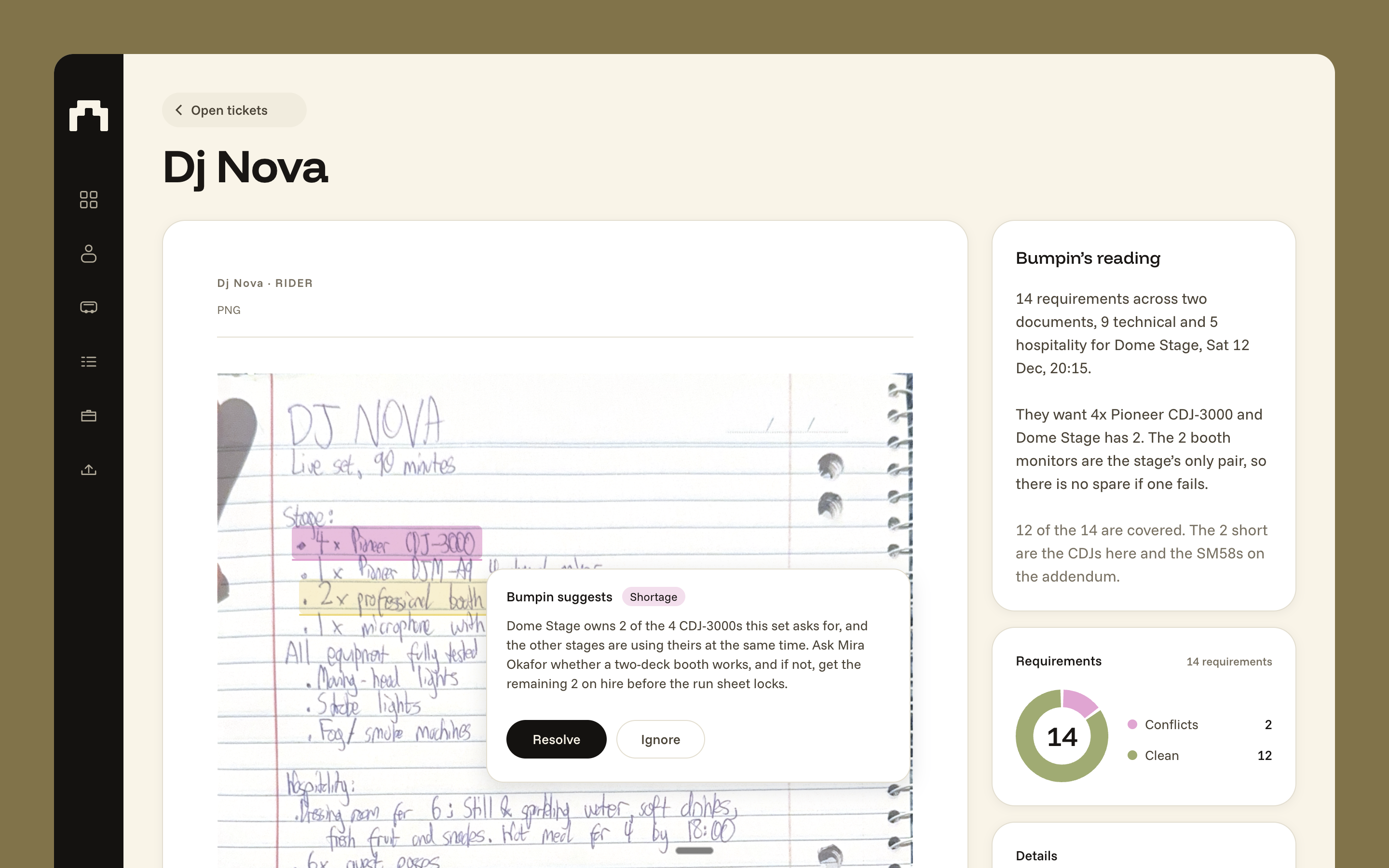
- Constant format: riders/vendors turn up PDFs, spreadsheets, photos of handwritten notes, long email threads, etc. Bumpin parses them into the same shape for conflict recognition.
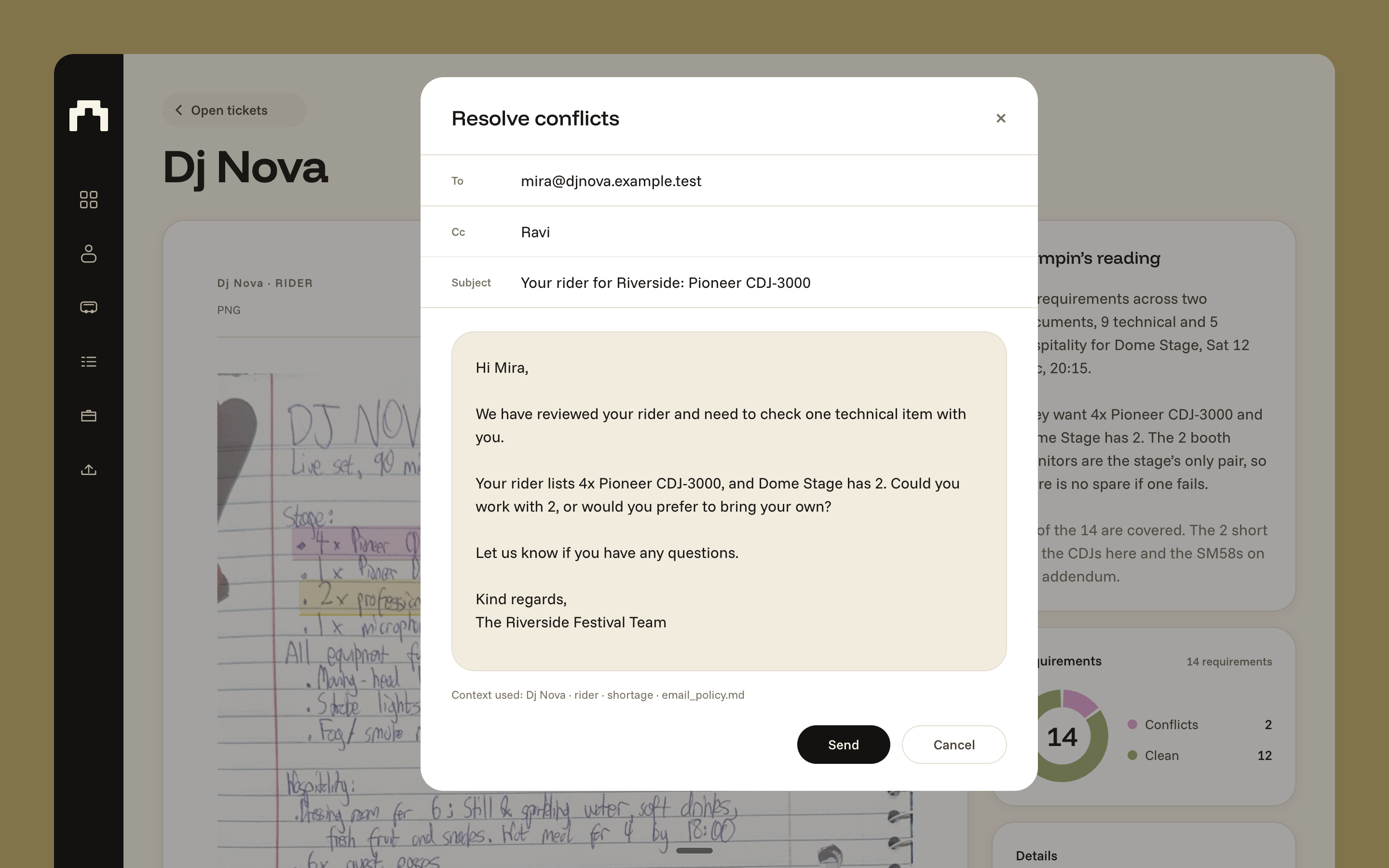
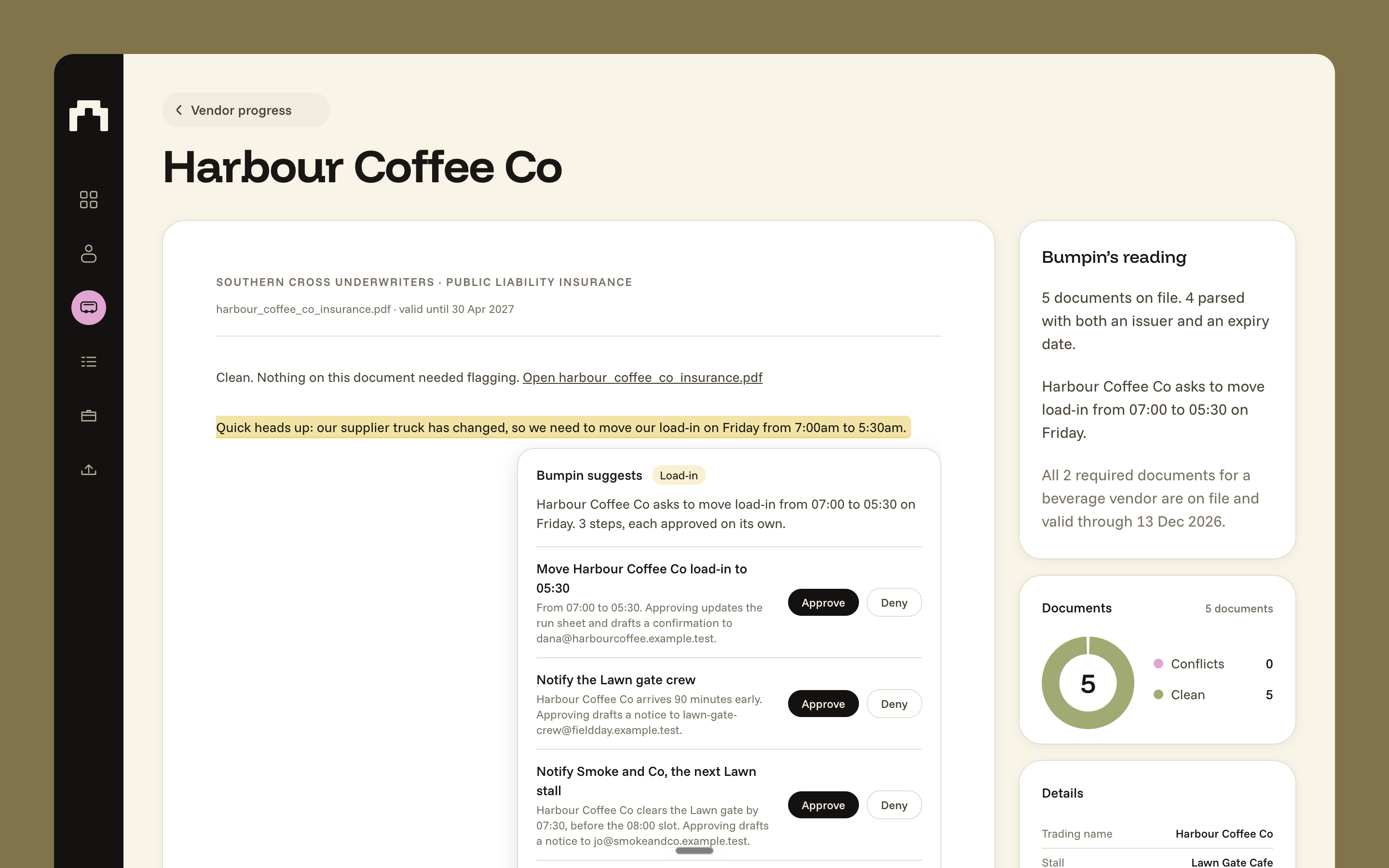
- Dynamic conflict recognition and resolution: Bumpin's AI actively searches for conflicts in the client request and festival ecosystem. These include requests for unavailable equipment, overlapping equipment windows, invalid certificates, etc., which Bumpin resolves with tailored emails and schedule changes. Users make final calls to keep trust and accountability with a person.
- Object synchronization: Each relevant change made with riders/vendors affects inventory accordingly.
- Cross-platform support: Bumpin works on laptops and mobile.
How AI is used
The AI reads, compares, and drafts rider/vendor input. It reads PDFs, long email threads, and photographs and flags conflicts using OCR (capability 3).
Each email becomes a ticket with a confidence score and a label from a fixed list. The classifier is built on TypeSafe's Jev model, with Groq as a backup. The AI approximates quote coordinates to highlight exact quotes in the source document. It explains the problem and suggests a fix using current context (uploaded files, history).
It writes replies during ticket resolution and their descriptions.
Ideas we considered
Track 2 Problem: traffic gets really congested in large festivals, negatively impacting user experience and safety. Solution: use AI to route traffic by recommending festival locations to LED trailers. Users will access this link using a QR code with a small payload (to account for the patchy signal).
Track 3 Problem: synchronous walkie-talkie communication and few authoritative employees mean loss of information and slow response times. Solution: enable asynchronous communication by ingesting multiple reports into structured tickets with AI. These appear on a dashboard with an action based on policies retrieved via RAG. The decision is completely in the hands of the dashboard operator.
Tools we used
Figma, Claude Code, Capcut, Codex, VSCode.

Log in or sign up for Devpost to join the conversation.